Spider Plant Propagation: Plantlets Guide
Spider Plant Propagation: Plantlets Guide
Spider Plant Propagation: Plantlets Guide
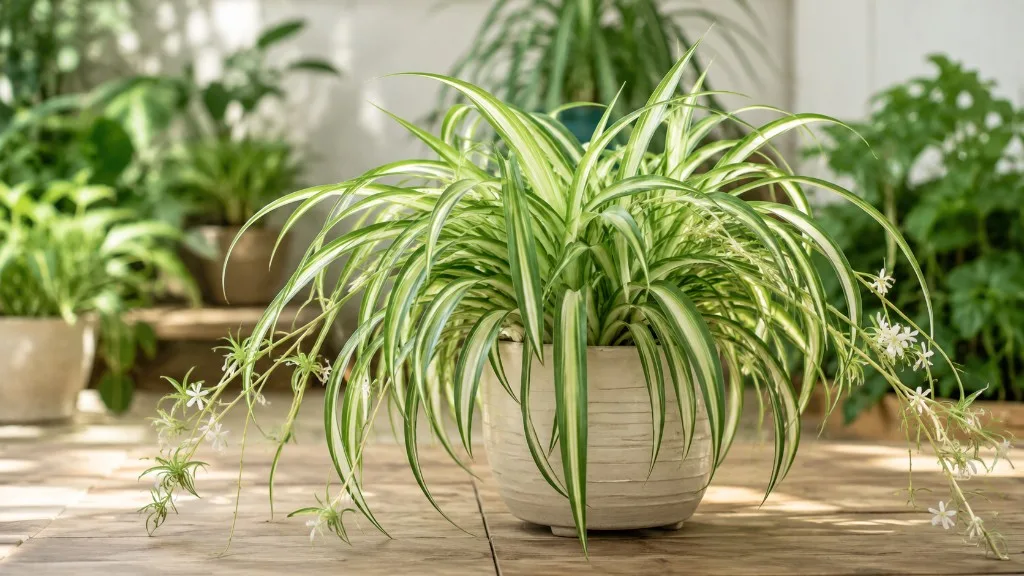
Spider plant propagation from plantlets is one of the most approachable projects in houseplant care because the plant does much of the work for you. A mature Chlorophytum comosum - the species behind nearly every classic hanging spider plant - sends out long arching stolons (runners) tipped with miniature copies of itself. Those dangling plantlets, also called spiderettes, spiderlings, or pups, arrive with leaves already formed and often with tiny root nubs visible at the base before you touch a pair of scissors. You are not coaxing reluctant tissue into rooting from a bare node; you are finishing a process the parent plant already started.
That biological head start is why spider plant babies root faster and more reliably than cuttings from many other houseplants. The practical decision is not whether propagation works - it almost always does with healthy material - but which method fits your setup: water for visible root watching, soil for a single-step finish, or pinning while still attached for maximum energy from the mother plant. This guide covers readiness signals, every propagation route, aftercare through the fragile first month, and the mistakes that turn an easy project into a rotting jar of yellow leaves.
What Are Spider Plant Plantlets and Why They Root So Easily
Spider plants belong to Asparagaceae, a family that includes asparagus and many tough, clumping perennials adapted to seasonal drought and regrowth from stored reserves. In the jungles of South and West Africa, Chlorophytum comosum spreads partly by producing aerial offspring on trailing stems - a strategy that lets a single parent colonize space without waiting for seed. Indoors, that same habit becomes free plants for gifts, hanging baskets, and shelf edges.
The parent does not produce plantlets immediately. Most specimens need at least a year of stable bright light before flowering and stolon formation begin, though a well-fed mature plant in a slightly snug pot often outpaces that timeline. Once stolons appear, they can carry multiple plantlets along a single runner, each a genetically identical clone of the parent. That matters for variegated cultivars: a ‘Variegatum’ baby keeps the same stripe pattern as its mother, which is why plantlet propagation is preferred over seed for preserving appearance.
Spiderettes, Pups, and the Stolon That Connects Them
Anatomy is simple once you see it labeled. The stolon is the thin, wire-like stem arching from the main rosette - sometimes two feet long on a happy plant. At intervals along it, or most commonly at the tip, a plantlet forms: a small rosette of narrow leaves with a compressed stem base where roots emerge. Until you cut it free, the plantlet draws sugars and water through the stolon from the parent root system. That connection is why tiny babies survive on the runner for weeks while they bulk up, and why pinning (rooting while still attached) often outperforms early detachment.
Root initiation on plantlets is adventitious - roots form from stem tissue rather than from a pre-existing root system. You will see this as pale root nubs or short white bumps at the base of the plantlet once it matures. Those nubs are the green light for propagation. A plantlet with only leaves and no nubs can still root, but it relies entirely on stored energy and takes longer, with higher failure rates in water especially.
The Royal Horticultural Society describes spider plant propagation by offsets as one of the easiest houseplant multiplication methods, recommending either detaching rooted plantlets or pinning them into moist compost while still connected. That official guidance matches what most experienced growers observe: plantlets are pre-rooting modules, not conventional cuttings you must nurse from zero.
How Plantlets Differ From Ordinary Stem Cuttings
Treating spider plant babies like generic stem cuttings causes predictable errors. A pothos cutting needs a node submerged; a spider plant plantlet needs its base in moisture while all leaves stay above the waterline or soil surface. Burying the crown - the point where leaves emerge - invites rot because spider plant tissue is soft and stores less water than succulent stems.
Plantlets also carry functional leaves from day one, so they photosynthesize while rooting. That speeds the process in Spider Plant light guide but means submerged foliage in a jar will decay and foul the water within days. Stem cuttings often lose older leaves during rooting; spider plant babies should stay green throughout unless something is wrong with the setup.
Another difference: no callus period is required. Succulent and cactus cuttings must dry before planting; spider plant plantlets are not wounded tissue waiting to seal - they are living mini-plants. Cut the stolon with clean snips and move directly to water or soil. Waiting days to “heal” only dehydrates a plantlet that was still connected to a hydration source minutes ago.
Finally, plantlet propagation is not universal across all Chlorophytum species sold as spider plants. Cultivars such as Chlorophytum capense ‘Variegatum’ and C. orchidastrum ‘Green Orange’ are handsome foliage plants that do not produce stolon plantlets per RHS guidance. If your plant never sends runners, division of the main clump - covered later - is the correct path, not waiting indefinitely for babies that will never come.
When a Plantlet Is Ready to Propagate
Timing separates effortless rooting from a two-month stall. The calendar matters less than plantlet maturity and parent vigor. A healthy mother in active growth can support propagation almost any month indoors; a stressed parent or immature baby will struggle even in peak summer.
Readiness is a checklist, not a guess. Before you cut or pin, confirm the plantlet has multiple leaves (typically at least three to four full leaves, not just two tiny starter leaves), visible root nubs at the base unless you plan to pin while attached, and firm green tissue with no yellowing or soft spots. If the baby still looks like a miniature bud on a thin stolon, leave it attached and let the parent keep feeding it.
Root Nubs and Leaf Count as Maturity Signals
Root nubs are the most reliable signal that a detached plantlet will root quickly. They appear as small white or pale bumps at the base of the rosette - sometimes already elongating into short aerial roots on plantlets left hanging for weeks. In water, nubs usually extend into visible roots within seven to fourteen days in warm bright conditions. Without nubs, expect two to four weeks or longer before you see progress, and watch closely for base rot in the meantime.
Leaf count proxies for photosynthetic capacity. A plantlet with only cotyledon-scale leaves has limited energy reserves once severed from the stolon. Wait until leaves reach a length comparable to small mature foliage - often 5–8 cm (2–3 inches) on standard cultivars - before detaching. Variegated forms with less chlorophyll per leaf may benefit from extra time on the runner even when nubs appear.
If you are using the pinning method, you can start slightly earlier because the stolon continues supplying the plantlet while roots grow into the adjacent pot. Pin when the base can sit flat on moist compost and the plantlet can hold itself upright with minimal support. A U-shaped piece of wire or a floral pin holds the base against the soil without crushing the crown.
Best Season and Parent Plant Health
Spring through early summer remains the fastest window for spider plant propagation from plantlets in most homes. Warmth in the 18–27°C (65–80°F) range accelerates root cell division, and lengthening daylight supports both parent and offspring. Autumn propagation works indoors with stable heat and bright light; winter succeeds too but expect slower root elongation and a higher risk of overwatering in cool dim rooms where evaporation drops.
The parent plant must be worth propagating from. Check for firm rosette growth, no widespread yellowing, and no sticky honeydew suggesting aphids on soft new stolons. Spider plants under chronic overwatering or root rot on Spider Plant stress may still produce plantlets - reproduction is a last-resort survival strategy - but those babies carry the same weakness. Fix the parent’s drainage and light first, or take plantlets only from the healthiest stolon on an otherwise recovering plant. Clemson HGIC advises detaching plantlets once roots have formed before potting into moist growing mix.
Also consider aesthetics. Removing every plantlet at once can leave long bare runners that look awkward until new ones form. Stagger propagation across a few weeks if you want both new pots and a decorative trailing display. If the parent recently shipped or was repotted, wait two to three weeks before heavy propagation so it exits transplant shock.
Tools and Supplies You Need Before You Start
Spider plant propagation requires minimal gear, but cleanliness and right-sized containers improve outcomes more than any product marketed for “instant roots.” Gather supplies before you cut so plantlets are not sitting out drying on the counter.
You need sharp pruning snips or scissors, 70% isopropyl alcohol or a flame for sterilization, small pots with drainage holes, propagation jars if water-rooting, and labels if running multiple batches. Optional extras include rooting hormone powder (helpful but not required), a clear plastic bag for humidity during soil rooting, and rainwater or filtered water if your tap water is heavily fluoridated.
Choosing Pots, Mix, and Sterile Cutters
Start plantlets in 10 cm (4-inch) pots - large enough for initial root spread, small enough that lightly moist mix dries on a useful schedule. Terracotta works well because it breathes; plastic nursery pots are fine if you watch moisture carefully. Never use a decorative pot without drainage for the rooting phase; soggy bottoms are the main killer of new spider plants.
For soil propagation, prepare peat-free multi-purpose or houseplant compost amended with 20–30% perlite for extra aeration. Spider plants tolerate a range of mixes, but heavy, compacted peat holds water too long around a rootless plantlet. Pre-moisten mix until it holds together when squeezed but does not drip - evenly damp, not wet.
Sterilize blades before cutting stolons, especially if you previously trimmed diseased foliage on the same plant. One clean snip 1–2 cm (about half an inch) below the plantlet base is enough; avoid tearing the stolon by hand, which crushes vascular tissue and slows recovery on the parent runner.
Water Propagation for Spider Plant Plantlets
Water propagation is the most popular spider plant propagation method for good reason: roots are visible, progress is measurable, and the setup fits a kitchen windowsill aesthetic. It works best on plantlets with root nubs already showing, and it remains the top choice when you want to share a rooted baby at a specific event or teach a child how roots form.
Success depends on three non-negotiables: only the base touches water, water stays fresh, and light is bright but indirect. Violate any one and you get yellow submerged leaves, cloudy bacterial water, or a plantlet that sits unchanged for weeks.
Setting Up a Clean Water Rooting Jar
Fill a clear glass or jar with room-temperature water - tap water is acceptable in most areas, but if your spider plant parent already shows brown leaf tips, suspect fluoride or chlorine sensitivity and switch to rainwater, filtered water, or tap water left uncovered overnight to off-gas chlorine. The RHS notes that fluoride in tap water can contribute to tip browning on spider plants, and propagation jars concentrate exposure at the submerged base.
Place the plantlet so only the base and emerging nubs sit below the waterline. All leaves must stay above the surface; even partial submersion of leaf tips rots quickly and clouds the water. A narrow-neck jar that cradles the plantlet on the rim prevents it from sliding deep - one of the simplest fixes for beginners who “full submerge” by accident.
Position the jar in bright indirect light - an east window or several feet back from south glass. Direct sun heats the water and encourages algae. Change the water every two to three days, rinsing the jar and gently rinsing the plantlet base if slime appears. Fresh water supplies oxygen; stale water breeds bacteria that attack soft stem tissue before roots extend.
Rooting timeline: first visible root growth often appears within one to two weeks on mature plantlets with nubs. Allow roots to reach 2.5–5 cm (1–2 inches) before potting - shorter roots transplant fine in warm active growth, but very short roots struggle in dry mix edges. Total time from cut to pot-ready is commonly two to four weeks, depending on warmth and light.
When to Move Plantlets From Water to Soil
Transplanting is where water-started plantlets face their hardest test. Water roots are structurally different from soil roots - softer, adapted to liquid oxygen - and they can shock or break when buried in mix. Minimize trauma by potting into pre-moistened, well-draining mix in a small pot, watering thoroughly once after planting, then letting the top centimeter dry slightly before the next drink.
Plant so the base sits at the same level as in water - crown at or just above the soil surface, never buried deep. The first seven to ten days after transfer need consistently lightly moist mix, not wet saturation. Some growers tent a clear bag over the pot for five days to raise humidity while soil roots initiate; remove it once new growth appears or condensation becomes heavy.
Do not fertilize until the plantlet pushes new leaves or resists a very gentle tug at the base after two to three weeks. Early fertilizer on a limited root system burns tissue. Bright indirect light continues through hardening; avoid moving immediately to harsh direct sun.
Direct Soil Propagation for Plantlets
Direct soil propagation skips the jar stage and produces sturdier initial roots adapted to mix from the start. It is the method experienced growers often prefer when multiplying several plantlets at once - less daily water changing, less transplant shock, and easier batch care on a propagation tray.
The trade-off is visibility. You will not see roots until a gentle tug test or new leaf growth confirms success, usually in two to four weeks during active growth. Patience and moisture discipline replace the entertainment of a rooting jar.
Best Potting Mix for New Spiderettes
Use the same light, peat-free, perlite-amended mix described earlier. Some growers add 10% orchid bark for extra chunk in humid homes where even perlite-heavy mix stays wet too long. Fill a small pot, poke a 2–3 cm (1-inch) deep pilot hole with a pencil, and insert the plantlet base.
Rooting hormone containing indole-3-butyric acid is optional. Dust the base lightly if nubs are absent or you are propagating in cool weather; tap off excess powder before planting. Hormone speeds initiation but does not rescue immature or diseased plantlets.
Set the pot in bright indirect light. If the mix was pre-moistened, wait one day before the first light watering around the edge of the pot so you do not flood a rootless base. Thereafter, water when the top 1–2 cm (half inch to inch) of mix approaches dry - frequency might be every three to five days in warm bright conditions, less in cool months.
Keeping Moisture Steady Without Overwatering
The soil propagation failure mode is constant sogginess. A plantlet without active roots cannot drink much; excess water sits around the base, excludes oxygen, and causes base rot that smells sour when you unpot. Your goal is even lightly moist mix - think wrung-out sponge, not mud.
A clear humidity dome or loose plastic bag propped on stakes (not touching leaves) helps in dry homes below 30% humidity. Vent daily to prevent mold. Remove cover once you see new growth or after ten to fourteen days, whichever comes first.
Confirm rooting with a very gentle tug after three weeks - slight resistance means roots anchored. New pale leaves emerging from the center are an even better sign. If the plantlet yellows while mix stays wet, reduce water immediately and improve light; if mix dries in hours, the pot may be too small and hot, or light may be too strong combined with low humidity.
Pinning Plantlets While Still Attached to the Parent
Pinning is the method the RHS highlights as especially reliable: leave the plantlet connected to the parent stolon, press its base into a pot of moist compost beside the parent, and secure with a U-shaped wire or floral pin until roots bind the mix. The stolon continues delivering energy while adventitious roots grow - the highest-success approach for slightly immature plantlets or growers who dislike detaching too early.
Place a filled pot of pre-moistened mix next to the hanging or shelf parent. Rest the plantlet base on the surface, nestle it 2–3 cm deep without burying the leaf crown, and pin the stolon gently - not so tight that you cut into the runner. Keep the mix lightly moist and provide bright indirect light to both pots.
After two to four weeks, test with a gentle upward tug on the plantlet. Resistance means roots have formed. Snip the stolon between the parent and the new pot, as close to the baby side as clean scissors allow. The parent runner will often produce another plantlet from a remaining node; the new pot now grows independently with an established root system and minimal shock.
Pinning also solves the “where do I put the jar?” problem for hanging baskets. The baby pot sits on a shelf below the parent while gravity does the rest. It is the best default when you are unsure whether nubs are large enough for detached water rooting.
Aftercare for Newly Propagated Spider Plants
A rooted plantlet is not yet a mature cascading specimen - it is a young rosette with a small root ball that needs steady, boring care for the first month. Treat weeks one through four as stabilization: protect from extremes, avoid fertilizer, and resist Spider Plant repotting guide into a huge hanging basket before roots colonize the starter pot.
Light should remain bright indirect throughout hardening. Spider plants tolerate moderate low light once established, but young propagations stretch and weaken in dim corners. Temperature in the 18–24°C (65–75°F) range suits active root growth; cold drafts below 13°C (55°F) slow metabolism noticeably.
Water when the top 2–3 cm (1 inch) of mix dries - roughly every five to ten days depending on pot size, season, and air dryness. Empty saucers after watering so roots never sit in runoff. Humidity near 40–60% matches typical indoor comfort; extreme dryness may crisp tips but rarely kills a rooted baby if watering is correct.
Hold fertilizer until new leaves appear beyond the initial rosette, then use quarter-strength balanced liquid feed monthly during spring and summer only. Upsize pots one size at a time when roots circle the drainage hole - often two to four months after successful propagation. Spider plants are listed as non-toxic to cats and dogs by the ASPCA, which makes sharing plantlets with pet-owning friends straightforward - though nibbling still messes up foliage.
Quarantine new pots two weeks if the parent ever had aphids on stolons or soft growth; sap-suckers transfer on plantlets silently. Inspect leaf undersides weekly during quarantine.
Division When Plantlets Are Not Available
Not every spider plant produces dangling babies. Non-offset species and cultivars - including some broad-leaved Chlorophytum sold under similar common names - multiply only by division of the main root clump. Division also rescues overgrown pot-bound parents that produce fewer stolons because they have exhausted space for new runners.
Unpot a mature plant when mix is dryish for easier handling. Thick fleshy roots often resist gentle pulling; use a clean knife to slice through the clump into sections, each with at least one healthy rosette and attached roots. Repot sections into individual pots with fresh peat-free mix, water thoroughly once, and place in bright indirect light.
Division is faster than plantlet rooting in calendar terms - new growth often appears within two to three weeks - but it stresses the parent more visibly. It is the correct spider plant propagation path when plantlets never appear after a year of good light, or when you deliberately want to rejuvenate an old specimen the RHS describes as slowing once pot-bound.
Common Propagation Mistakes and How to Fix Them
Even an easy propagator fails when basic rules stack wrong. Most spider plant propagation problems trace to immature material, wet leaves in water, or overwatered soil before roots exist - not bad luck.
Rotting base in water usually means leaves dipped below the surface or water unchanged for a week. Trim any mushy tissue with sterile snips, restart in a clean jar with only the base submerged, and change water every two days until roots appear.
Cloudy smelly water signals bacterial bloom. Dump, rinse, shorten submerged base if soft, and restart fresh. If the plantlet is firm with nubs, recovery is likely; if the base is black and soft, discard and choose a more mature baby on the same parent.
Yellowing plantlet in soil with wet mix means overwatering or too little light. Let mix dry one knuckle deep, move brighter, and reduce watering frequency. Confirm the crown is not buried.
No roots after four weeks on a detached tiny plantlet often means it was taken too early. Re-evaluate maturity, or switch to pinning while attached if the stolon is still intact. Cool dim rooms also slow progress - add warmth and light before assuming failure.
Brown tips after transplant from water may combine fluoride exposure, transplant shock, and dry air. Use filtered or rainwater for the first month, keep mix evenly moist, and avoid direct sun. Tips can be trimmed cosmetically once growth stabilizes.
Propagating from a pest-infested parent spreads aphids to every new pot. Wash stolons with lukewarm water, treat the parent, then propagate only from clean runners.
Expecting plantlets from the wrong species leads to years of waiting. Confirm your plant is a stolon-producing Chlorophytum comosum cultivar, not a non-offset relative.
Conclusion
Spider plant propagation from plantlets works because Chlorophytum comosum evolved to reproduce on dangling stolons - and your job is to finish what the plant started. Wait for mature plantlets with visible root nubs, choose water for visibility, soil for sturdier roots, or pinning for maximum energy from the parent, and keep leaves dry while the base stays lightly moist. Spring and summer speed the timeline, but healthy material and clean moisture matter more than the calendar.
If you remember only three rules, make them these: do not detach immature babies, never submerge foliage in water, and match pot size and watering to a root system still under construction. Get those right and spider plant babies become one of the easiest plants to multiply - new rosettes for every shelf, gift, and hanging basket, rooted with confidence rather than hope.
When to use this page vs other Spider Plant guides
- Spider Plant overview - Start here for whole-plant context before deep-diving this topic.
- Spider Plant problems hub - Jump to symptom-specific fix guides when this care topic does not resolve the issue.