Sunburn Scorched Leaves on Snake Plant: Causes, Checks &
Quick answer
Sunburn on Snake Plant happens when harsh direct sun-especially hot afternoon glass-bleaches and scorches Sansevieria leaves into pale yellow or brown crispy patches. First step: move to bright indirect light; trim severely damaged leaves at soil level; acclimate gradually if increasing light.
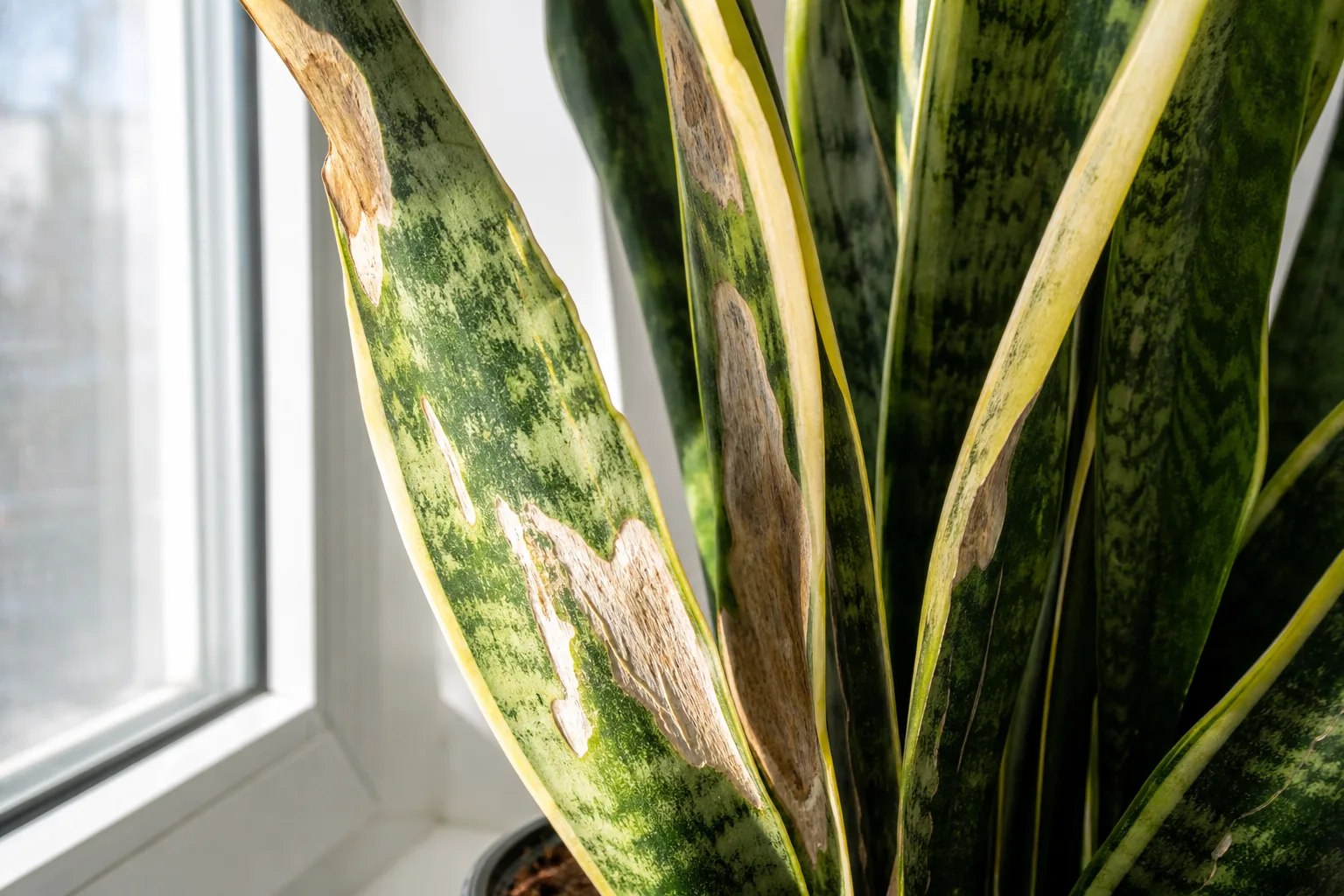
Sunburn Scorched Leaves on Snake Plant: Causes, Checks & Fixes
This guide covers sunburn / scorched leaves on Snake Plant. See also the general Sunburn / Scorched Leaves guide, watering, and light pages for this plant.
Sunburn Scorched Leaves on Snake Plant: Causes, Checks & Fixes
Quick answer
Sunburn on Snake Plant happens when harsh direct sun-especially hot afternoon glass-bleaches and scorches Sansevieria leaves into pale yellow or brown crispy patches. First step: move to Snake Plant light guide; trim severely damaged leaves at soil level; acclimate gradually if increasing light.
Snake Plant (Dracaena trifasciata) is marketed as low-light tolerant, but that does not mean it belongs on a blazing windowsill. Penn State Extension is direct: snake plant enjoys bright indirect light but you should keep it out of the direct sun, as it can burn. The difference is timing-sunburn follows a light increase, not a watering mistake.
Why Snake Plant gets sunburn scorched leaves
Snake Plant evolved in tropical western Africa as an understory-adapted succulent. In habitat it receives filtered light, not hours of unbroken midday rays. Missouri Botanical Garden guidance for indoor culture is clear: protect from hot afternoon sun. NC State Extension lists its light preference as partial shade-direct sunlight only part of the day, 2 to 6 hours-not all-day exposure through glass.
The most common indoor trigger is a south- or west-facing windowsill in summer. Window glass concentrates heat and UV. A Snake Plant that tolerated spring morning sun may scorch once afternoon intensity rises. Variegated cultivars like ‘Laurentii’ and ‘Moonshine’ often show damage first because lighter leaf sections contain less chlorophyll to handle excess light.
Outdoor moves cause the same pattern. Mississippi State Extension notes that while snake plants can summer outside, direct afternoon sun scorches the leaves, so protection under a porch, patio, or tree canopy is important. A plant pulled from a dim office corner and placed in full patio sun within one day is a classic sunburn setup.
Sudden care changes amplify the risk. Removing sheer curtains, cleaning windows, rotating the pot so a previously shaded face points outward, or placing the plant too close to grow lights can all bleach leaves within days. Snake Plant stores water in thick leaves, but that storage does not shield tissue from photodamage-it only helps the plant survive after the burn.
What sunburn scorched leaves look like on Snake Plant
Sunburn on Snake Plant overview has a distinct look compared to root rot on Snake Plant or underwatering on Snake Plant:
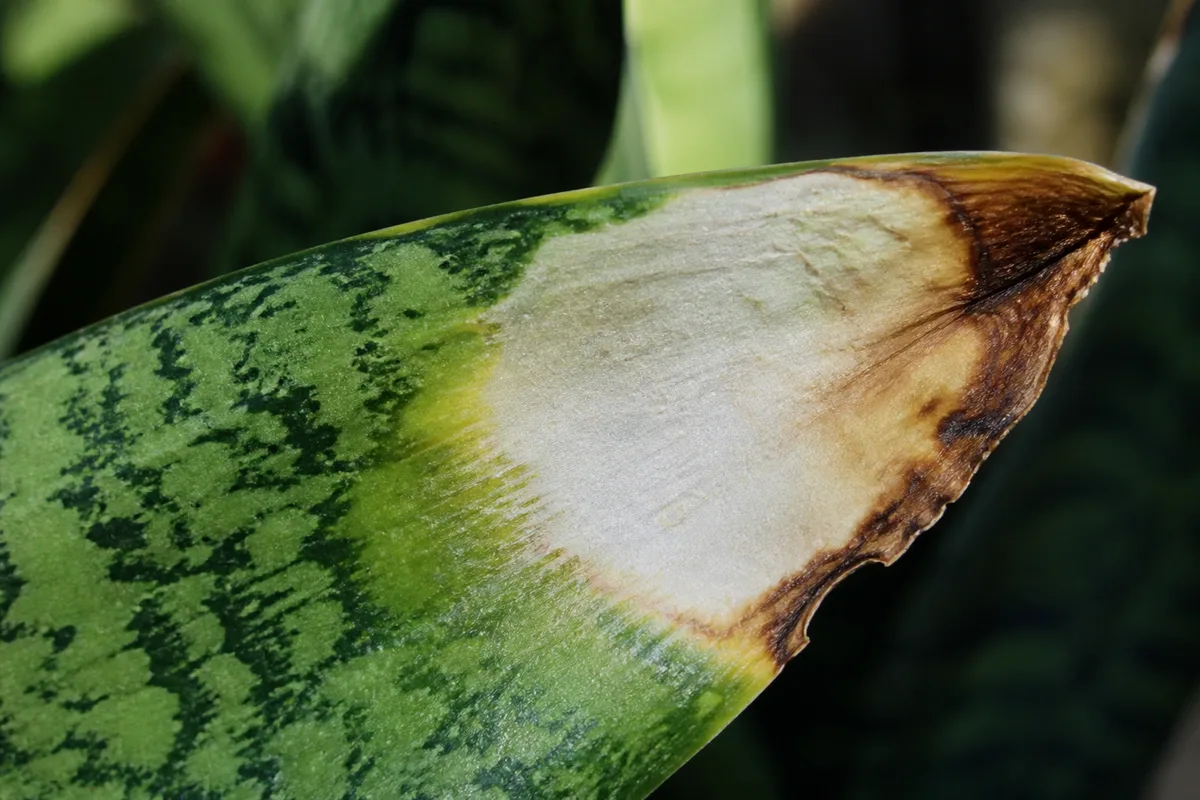
Sunburn / Scorched Leaves symptoms on Snake Plant - compare with healthy tissue on the same plant.
- Pale yellow, white, or bleached patches on the leaf surface facing the light source
- Dry, brown, crispy margins or patches that feel papery-not mushy
- Damage concentrated on outer leaves or one side of the rosette nearest the window
- Firm leaf bases at soil level despite ugly upper tissue
- New leaves emerging green while older exposed leaves show scorch
On upright ‘Laurentii’, yellow margins may bleach to near-white before browning. Compact ‘Hahnii’ rosettes show damage across the top surface when the whole pot sits in direct beam. Unlike root rot, soil typically smells neutral and leaf bases stay solid even when tips look destroyed.
RHS guidance on houseplant leaf damage aligns with this pattern: keep sansevierias out of midday sun, as this can scorch the leaves. Scorched tissue is permanent-the affected area will not revert to its original color.
How to confirm the cause
Work through this order before Snake Plant repotting guide, fertilizing, or spraying:
- Recent light history - Was the plant moved to a brighter window, outdoors, or closer to a grow light in the last one to two weeks?
- Damage pattern - Is injury on the sun-facing side only? Sunburn is usually asymmetric; rot starts at soil-level leaf bases around the whole plant.
- Leaf texture - Dry, papery, bleached tissue supports sunburn. Soft, translucent, water-soaked patches after cold exposure point to chill injury instead.
- Rhizome firmness - Press the base: firm and tan is reassuring; black mush with sour smell points to rot.
- Spread rate - Sun-scorched tissue browns and stops. Active rot keeps spreading upward from the crown in stable room conditions.
Lookalike symptoms to rule out
overwatering on Snake Plant and root rot cause yellow mushy bases and sour soil without any recent light change. Underwatering produces wrinkled, puckered leaves with light, dusty dry soil-not bleached patches on one face. Cold damage follows a temperature drop and shows water-soaked translucent spots. Brown tips from fluoride or low humidity usually affect margins evenly rather than large bleached zones on one side. Mealybugs leave white cottony clusters, not uniform bleaching.
First fix for Snake Plant
Move the plant immediately to bright indirect light-near an east-facing window, or several feet back from south- or west-facing glass behind a sheer curtain. Do not jump to a dark hallway; snake plants still need usable light for recovery, just not direct beams.
Trim only leaves that are mostly brown or collapsed, cutting at soil level with clean scissors once the plant has been in safer light for 48 hours and damage has stopped spreading. Penn State Extension recommends removing damaged leaves by cutting them off at the soil level. Leave partially green leaves in place-they can still photosynthesize while new growth forms.
Make one environmental correction first-light placement-before repotting, fertilizing, or increasing watering. Sun-stressed Snake Plants do not need extra water; follow your normal dry-down rhythm once the plant is stable.
Step-by-step recovery
After relocating to safer light:
- Rotate the pot a quarter turn weekly so future growth balances evenly.
- Wipe dust from remaining leaves so the plant uses available indirect light efficiently.
- Wait until soil is bone dry throughout before watering-stress plus wet soil invites rot.
- Water thoroughly once, empty the saucer, and return to a dry-down rhythm matched to season.
- Watch for new firm leaves or pups over the next four to twelve weeks.
If you want more light long term-for faster growth or to preserve variegation-increase exposure gradually over one to two weeks. Move the pot a few inches closer every few days, or add filtered morning sun before any afternoon exposure. MS State Extension suggests outdoor placement in bright shade or filtered sunlight, not open afternoon sun.
Recovery timeline
Minor edge bleaching from a short sun exposure often stabilizes within one to two weeks once light is corrected. Large bleached patches turn brown and dry; they will not green up again. Moderate damage across several leaves may take one to three months before new growth appears. Severe scorch with a firm rhizome can still produce pups, but expect six months or longer before the plant looks full again.
Judge recovery by firm rhizomes, no spreading softness, and new upright leaves-not by old scarred foliage returning to perfect form.
What not to do
- Do not leave the plant on the same windowsill hoping it “adjusts”-sunburn worsens with continued exposure.
- Do not water heavily because leaves look stressed; wet soil on a scorched plant increases rot risk.
- Do not fertilize until new growth resumes in spring.
- Do not repot into a larger container while the plant is stressed unless rot is confirmed.
- Do not place scorched plants in full direct sun outdoors to “heal” them-add shade, not more intensity.
- Do not confuse cosmetic scorch with rot; confirm light history before unpotting.
How to prevent sunburn scorched leaves next time
Keep Snake Plant in bright indirect light indoors. For south- or west-facing rooms, place the pot three to six feet from the window or use sheer curtains to diffuse rays. East-facing windows typically provide gentle morning light without afternoon scorch risk.
When summering plants outdoors, move them only after nights stay above 55°F and place them in protected bright shade-not open patio sun. Acclimate over one to two weeks rather than one sudden move. Bring plants back inside before light intensity through glass spikes in late spring if they were sitting too close.
Variegated cultivars need slightly brighter indirect light than all-green forms to maintain color, but they burn faster in direct sun-balance brightness with filtration. Rotate pots regularly so one side does not face intense glass all season.
When to worry
Escalate immediately if:
- Leaf bases turn soft and black at soil level after sun exposure
- A sour smell develops from the pot in a warm room
- The rhizome feels hollow or mushy on inspection
- Multiple leaves collapse within seven to ten days despite corrected light
- Black tissue climbs from the crown upward
Cosmetic sun scorch on firm plants is manageable. Crown mush with odor is rot-switch to root-rescue steps rather than waiting for burned leaves to recover on their own.
Conclusion
Sunburn scorched leaves on Snake Plant follow too much direct sun-especially hot afternoon glass or sudden outdoor placement-not random leaf failure. Confirm with recent light increase, asymmetric bleaching on the sun-facing side, and a firm rhizome. First fix: bright indirect light, patience, and trimming only fully dead leaves at soil level. Prevent by filtering south- and west-window rays, acclimating gradually, and keeping outdoor summer plants in bright shade. Success means firm roots and clean new growth, not perfect old leaves.
When to use this page vs other Snake Plant guides
- Snake Plant watering guide - Use for routine moisture checks before assuming sunburn / scorched leaves is the main issue.
- Snake Plant problems hub - Browse all 36 common issues on this species.
- Brown Tips on Snake Plant - Different entry point when symptoms overlap with sunburn / scorched leaves.