Draft Stress on Snake Plant: Causes, Checks & Fixes
Quick answer
Draft stress on Snake Plant happens when cold air from winter windows, AC vents, or frequently opened doors chills leaves and roots, slowing water uptake and browning margins-especially if soil stays wet. First step: move the pot 30–90 cm away from draft sources into stable 65–80°F with gentle airflow, not cold blasts; let soil dry fully before the next drink.
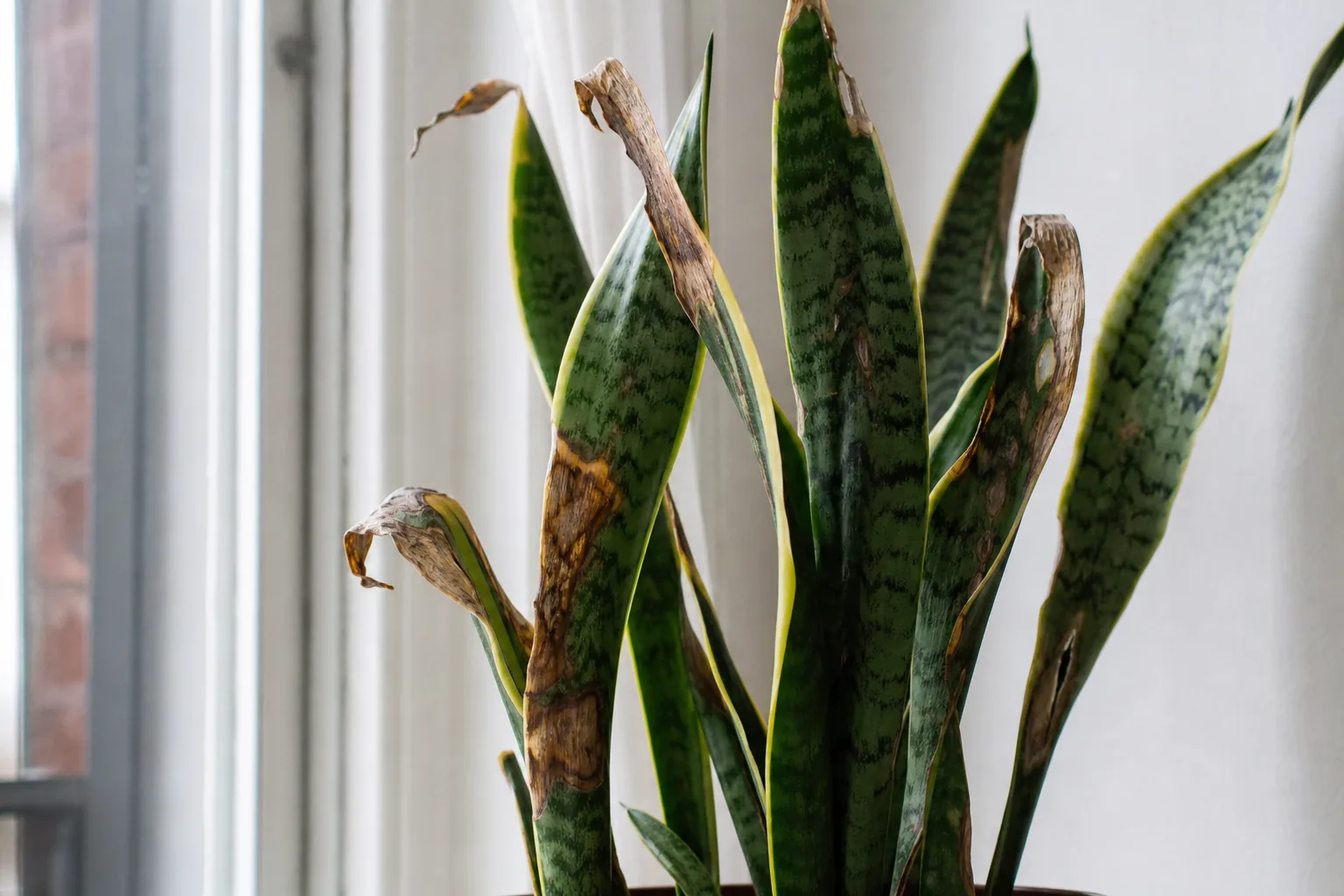
Draft Stress on Snake Plant: Causes, Checks & Fixes
This guide covers draft stress on Snake Plant. See also the general Draft Stress guide, watering, and light pages for this plant.
Draft Stress on Snake Plant: Causes, Checks & Fixes
Quick answer
Draft stress on Snake Plant happens when cold air from winter windows, AC vents, or frequently opened doors chills leaves and roots, slowing water uptake and browning margins-especially if soil stays wet. First step: move the pot 30–90 cm away from draft sources into stable 65–80°F with gentle airflow, not cold blasts; let soil dry fully before the next drink.
Snake Plant tolerates neglect better than most houseplants, but it is not immune to microclimates. A thermostat reading of 70°F means little if a pot sits in a cold air stream every night. Draft stress is often the hidden partner to overwatering on Snake Plant in winter rot cases.
Why Snake Plant gets draft stress
Snake Plant prefers stable room temperatures. RHS guidance recommends 15–24°C (60–75°F) and explicitly says to keep them out of cold draughts and away from radiators. Cold drafts chill leaf tissue and the pot itself, slowing metabolic activity when the plant already grows slowly in winter.
Winter windows are the classic source. Single-pane glass drops surface temperature at night, cooling soil from the outside in. Mississippi State Extension advises keeping snake plants away from cold drafts or chilly windows during winter months. A Snake Plant on a windowsill may experience root-zone temperatures far below the room average.
Air conditioning vents and frequently opened doors create summer drafts too. Rapid temperature swings stress succulent leaves adapted to stable dry warmth in central African habitats. NC Cooperative Extension notes that sudden temperature changes can cause stress leading to leaf drop or wilting on houseplants generally.
Draft stress becomes dangerous when combined with wet soil. Chilled roots absorb water slowly while cold mix stays damp for weeks-exactly the setup for rot. Penn State Extension warns that overwatering kills snake plants; draft-chilled pots make overwatering easier to commit without realizing it.
What draft stress looks like on Snake Plant
Draft injury often appears unevenly:
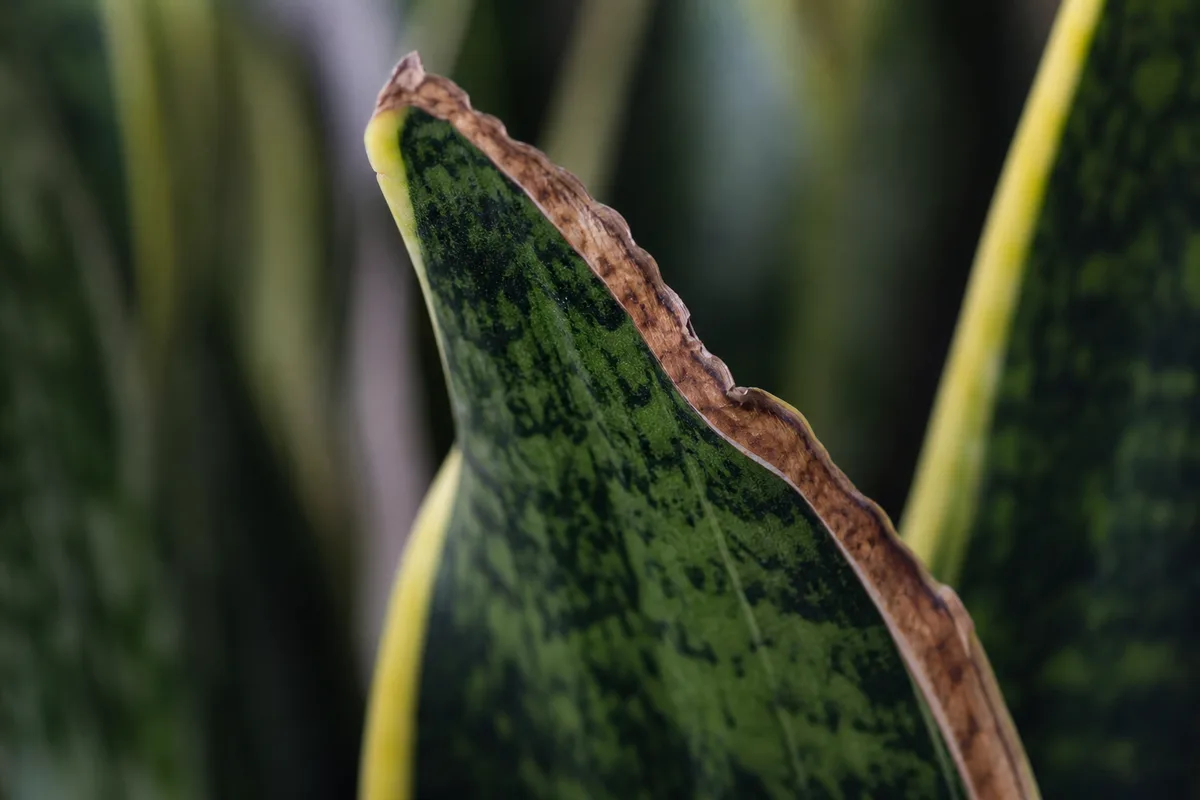
Draft Stress symptoms on Snake Plant - compare with healthy tissue on the same plant.
- Brown or tan margins on the leaf side nearest the window, vent, or door
- Soft or translucent patches after repeated cold nights-not always full-leaf collapse
- Slowed growth or pale new leaves in a drafty corner despite adequate room light
- Soil that stays wet longer than expected in a cool microclimate
- Outer leaves affected first while inner rosette leaves look normal
- No sticky residue, webbing, or spots-ruling out pests and fungal leaf spot
On upright varieties, one leaf row may scorch while opposite leaves stay firm. Compact ‘Hahnii’ plants show central softening when the whole pot sits in a cold stream.
How to confirm the cause
Diagnose drafts before Snake Plant repotting guide:
- Airflow mapping - Hold your hand at pot level at night near suspected windows, vents, and doors.
- Asymmetric damage - Compare leaf sides. Draft scorch favors the exposed face; uniform tip browning may be salt or low humidity instead.
- Soil dry-down speed - Note whether this pot dries slower than another Snake Plant in a warmer spot with similar watering.
- Rhizome check - If bases are soft or soil smells sour, unpot to rule out rot triggered by cold wet conditions.
- Seasonal timing - Symptoms appearing after first frost, AC season, or moving to a new room strongly support draft stress.
Lookalike symptoms to rule out
Low humidity browns tips evenly on many leaves, not one side only. Fluoride and salt burn affect margins across the plant using tap water. root rot on Snake Plant causes sour smell and mushy bases regardless of drafts. Heat stress from radiators produces crispy edges on the side facing heat, often with accelerated surface drying-not cold wet soil.
First fix for Snake Plant
Relocate the pot 30–90 cm (1–3 feet) inward from cold glass, AC vents, and exterior doors into a spot with stable temperature and Snake Plant light guide. Avoid placing it directly above a heat register either-RHS warns against radiators as well as draughts.
Do not water until soil is bone dry throughout. Draft-chilled plants in damp mix need dry-back, not rescue watering. If leaf bases are still firm and smell is neutral, warmth and corrected placement alone may stop further damage within days.
Step-by-step recovery
After moving the plant:
- Wipe dust from leaves to maximize photosynthesis in the new location.
- Rotate the pot a quarter turn weekly for even light exposure per RHS watering habit guidance.
- Wait for full soil dry-down before the next drink-winter may mean every one to two months on NC State schedules.
- Trim fully brown or mushy leaf sections at soil level once damage stops spreading.
- Monitor for four to eight weeks for new firm upright growth.
If soft bases or sour odor appear after draft exposure, unpot and inspect rhizomes-treat any mushy tissue as root damage, not draft scorch alone.
Recovery timeline
Cosmetic marginal browning from brief draft exposure often stabilizes within one to two weeks after relocation. Soft translucent patches may take several weeks to brown and dry in place. New clean leaves may take one to three months to appear. If rot developed during cold wet conditions, recovery follows root-repair timelines-six to ten weeks or longer.
What not to do
- Do not mist heavily to “protect” from drafts-RHS says sansevierias like low humidity and should not be misted.
- Do not water on schedule while soil stays cold and wet.
- Do not leave the plant on the same windowsill with only a sheer curtain if night glass still chills the pot.
- Do not fertilize until spring growth resumes.
- Do not bounce the plant between rooms nightly-stability matters more than perfect aesthetics.
How to prevent draft stress next time
Place Snake Plant in stable 65–80°F with bright indirect light, away from windows that frost, AC louvers, and entry doors. Use a thermometer at pot level if unsure-ambient room stats mislead near glass.
Pair placement with conservative winter watering. NC Cooperative Extension recommends allowing plants to dry out between waterings in winter when growth slows. Ensure drainage holes stay open and saucers empty after every drink so cold pots never sit in standing water.
When summering plants outdoors, bring them inside before cold nights and avoid setting them where open windows will blast them nightly.
When to worry
Draft stress alone is low to medium severity. Escalate if:
- Leaf bases turn mushy at soil level after prolonged cold wet conditions
- Soil develops a sour or putrid smell in a warm room
- Multiple leaves collapse within seven to ten days after relocation
- Black tissue spreads from the crown upward
Those patterns indicate rot, not cosmetic draft scorch-switch to root-rescue inspection immediately.
Conclusion
Draft stress on Snake Plant is localized chilling from windows, vents, and doors that browns margins and slows drying-especially dangerous with wet soil. Confirm with asymmetric damage and airflow mapping; first fix by moving to stable warmth and letting soil go bone dry. Prevent by honoring RHS draught guidance and winter dry-back watering. Success means no new scorch and firm rhizomes, not perfect old leaf edges.
When to use this page vs other Snake Plant guides
- Snake Plant watering guide - Use for routine moisture checks before assuming draft stress is the main issue.
- Snake Plant problems hub - Browse all 36 common issues on this species.