Leaf Drop on Pothos: Causes, Checks & Fixes
Quick answer
Leaf drop on pothos is often normal aging on long vines, but repeated shedding of green leaves usually signals watering stress, a recent move, or root damage. First step: note what changed in the last two weeks, then check whether the top 2 inches of soil are wet or dry.
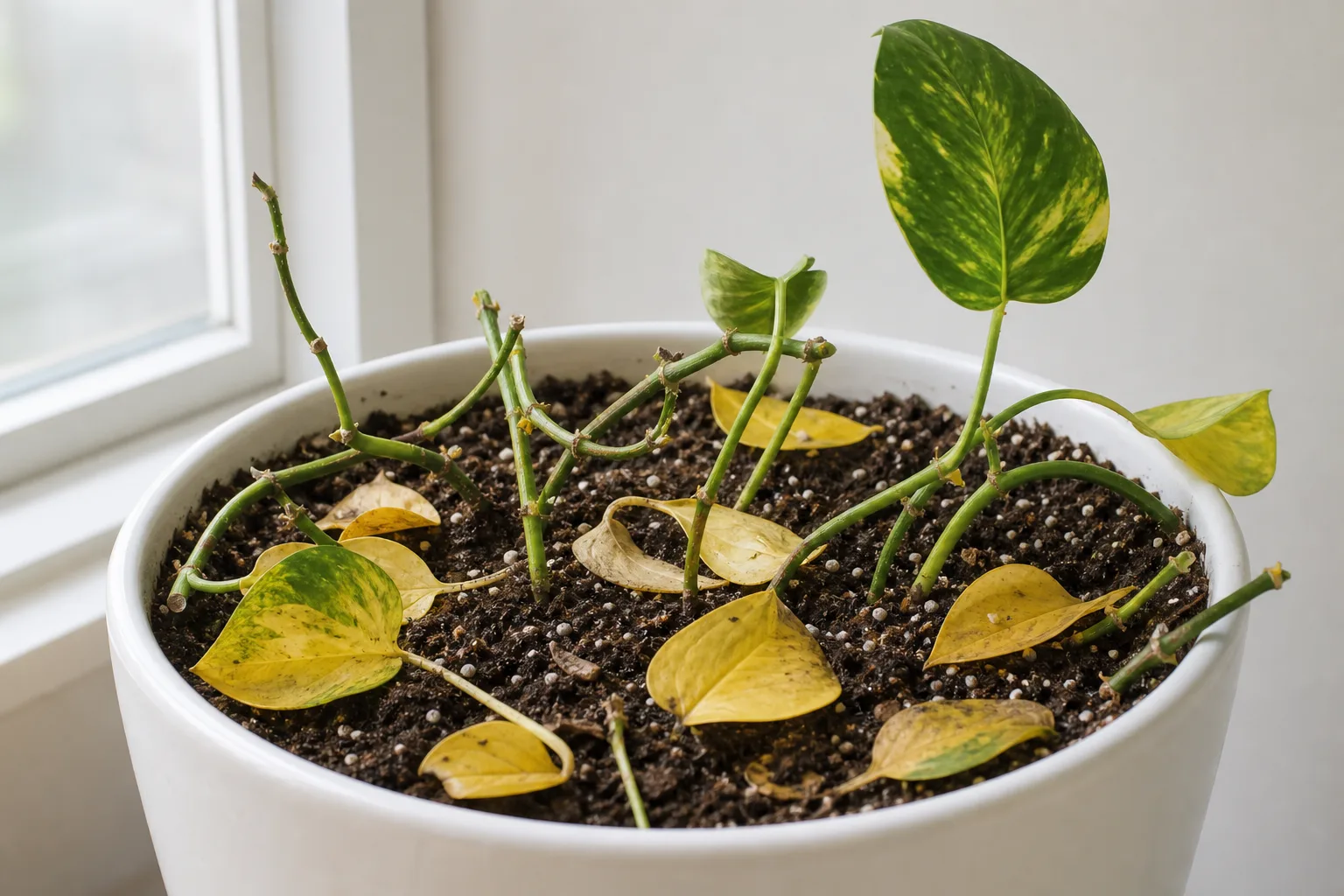
Leaf Drop on Pothos: Causes, Checks & Fixes
This guide covers leaf drop on Pothos. See also the general Leaf Drop guide, watering, and light pages for this plant.
Leaf Drop on Pothos: Causes, Checks & Fixes
Quick answer
Some lower leaves falling from long trailing vines is normal on pothos. Problematic leaf drop is continuous shedding-especially of still-green heart-shaped leaves across multiple vines. On Epipremnum aureum, the most common triggers are overwatering that damages roots, environmental shock after a move or repot, insufficient light that forces the plant to shed foliage it cannot support, and natural aging that concentrates leaves at vine tips.
First step: note what changed in the last two weeks, then check whether the top 2 inches of soil are wet or dry. Do not increase watering just because leaves are falling-that deepens root stress on wet mix when roots are already struggling.
If green leaves detach rapidly on soggy soil with soft stems at the base, treat as urgent and cross-check the root rot rescue workflow. For species baseline, see the pothos overview.
What leaf drop looks like on Pothos
Pothos leaves are smooth, slightly heart-shaped cordate blades on grooved petioles. Leaf drop changes the silhouette of a trailing vine in ways that separate normal turnover from stress.
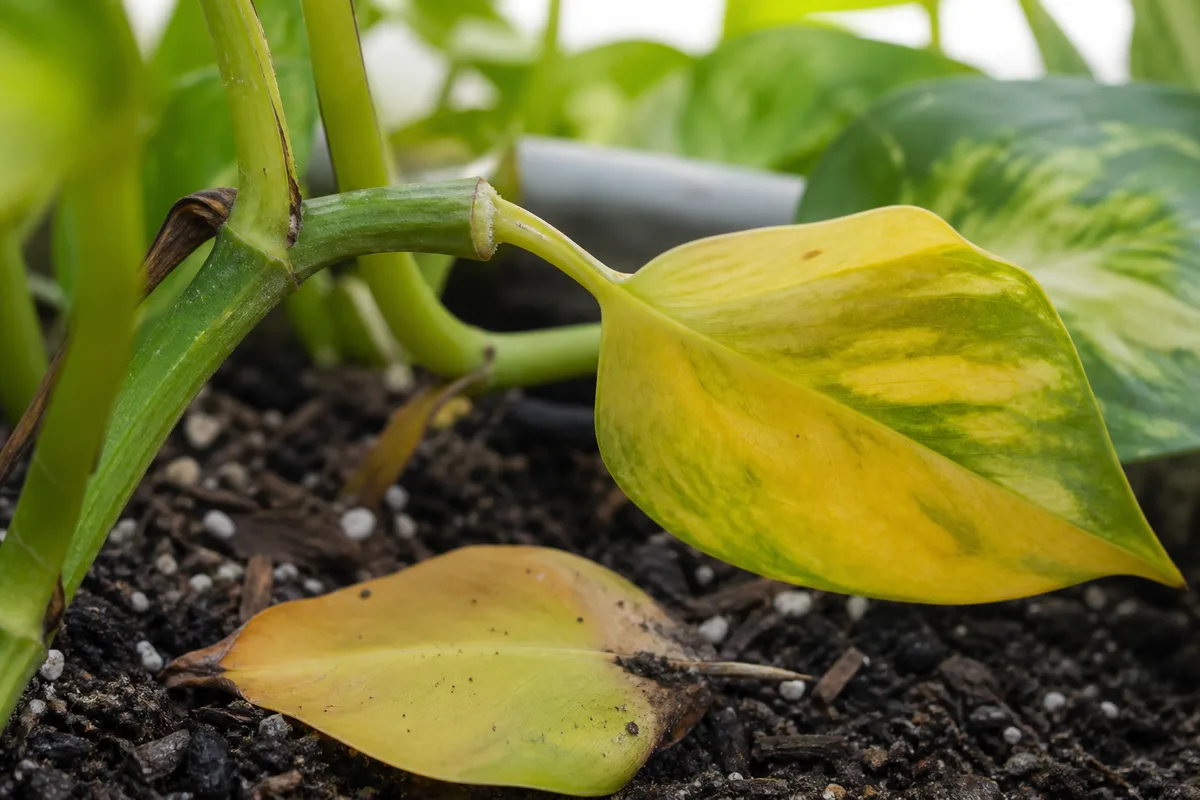
Leaf Drop symptoms on Pothos - compare with healthy tissue on the same plant.
Normal aging on long vines
Wisconsin Extension notes that older pothos leaves turn yellow and drop naturally, eventually leaving most foliage at the end of the vine. On a mature hanging basket this looks like:
- One or two yellow leaves detaching from the oldest sections near the soil line
- Vine tips stay full with firm green growth
- Soil dries on a normal rhythm and the pot weight feels appropriate for recent watering
- No sour smell and stems at the base stay firm
This pattern needs no rescue-remove the spent leaf and optionally trim the bare base if it bothers you visually.
Stress-related shedding
Problematic drop looks different:
- Green or yellow hearts pop off with little tug, sometimes several at once along the same vine
- Multiple vines lose leaves within days, not one old leaf per month
- Variegated cultivars fade first-Marble Queen and Pearls and Jade often lose white or cream sectors and drop leaves before solid-green golden pothos shows the same stress, because thinner variegated tissue has less chlorophyll reserve
- Newest tips stall or pale while shedding continues-that signals root or light failure, not simple aging
Overwatering vs. underwatering drop patterns
Overwatering-related leaves often turn soft yellow before they fall. The pot stays heavy, mix at 2 inches (5 cm) depth clings wet for days, and a sour smell may appear if rot is advancing. Overlap with yellow leaves on pothos is common-texture matters: rot-related yellow is soft, not the crisp papery yellow of severe underwatering.
Underwatering-related leaves look thin and curled first, then brown at edges before detaching. The pot feels light and soil pulls away from the pot wall. Pothos tolerates brief dry spells better than chronic wet feet, so repeated green-leaf drop on bone-dry mix is less common than drop on wet mix-but extended drought on a large hanging vine can still shed inner leaves the plant cannot hydrate.
Shock and seasonal light drop
Shock-related drop follows a recent move, repot, store purchase, or draft exposure within days. Hot and cold air from vents and windows can damage pothos cells and trigger leaf loss even when watering looks correct.
Winter light drop is a non-obvious pothos pattern in temperate homes. Short days from November through February reduce photosynthesis; the plant sheds inner leaves it cannot support while outer vines stretch toward windows. That pairs with leggy internodes and pale variegation-see not enough light on pothos if wide leaf gaps dominate the display. Mix also dries slower in dim rooms, which can push the same plant toward overwatering if you keep summer watering frequency through winter.
Why Pothos drops leaves
Pothos is a tropical vine that sheds lower leaves as vines lengthen-a habit extension sources describe as normal aging on mature growth. Beyond aging, leaf drop is the plant reducing canopy demand when roots, light, or environment fail.
Root failure from wet soil is the most dangerous cause. When roots sit in saturated mix, they lose function and the canopy cannot be supported-leaves yellow and detach even though soil feels damp. Pothos stems store water, so shedding can lag behind root damage. Chronic wet feet escalates to root rot when tissue turns mushy at the soil line.
Extended underwatering during active growth stresses the plant differently-often after leaves curl or wilt. Long trailing sections on hanging baskets dry out first; inner leaves drop while tips still look okay until the whole vine collapses.
Low light causes internodes to stretch and inner leaves to thin out as the vine reaches for brightness. Moving pothos between rooms with very different light levels triggers acclimation shock on top of the light deficit.
Pothos repotting guide and relocation shock disturb fine roots. Excess water upon repotting adds additional stress to pothos-shedding after repot often traces to root disturbance plus overwatering in fresh mix, not a mystery disease. See repotting stress if drop started within two weeks of a pot change.
Pests weaken growth enough that leaves drop from sap loss. Mealybugs, scale, and spider mites are the usual suspects-check leaf undersides and stem joints before assuming a watering mistake.
Cachepot and saucer traps keep the bottom of the root ball anaerobic. A decorative outer pot with no drainage, or a saucer that never gets emptied, mimics overwatering even when you pour conservatively.
Leaf drop vs. lookalikes
Use this table before changing care when more than one pattern seems possible:
| Pattern | Key signs | Soil / pot | Urgency | First action |
|---|---|---|---|---|
| Normal aging | One to two yellow leaves on oldest vine sections; tips full | Normal dry cycles; firm stems | Low | Remove spent leaf; optional trim |
| Overwatering / early root stress | Soft yellow or green leaves on multiple vines; heavy wet pot | Damp 2 inches (5 cm) down for days | Medium–High | Stop watering until top 2 inches dry → overwatering |
| Confirmed root rot | Sour smell, mushy roots, soft stems at soil line | Chronic wet mix | High | Unpot and trim → root rot |
| Underwatering | Thin curled leaves, crisp edges, limp vines | Light pot; bone dry throughout | Medium | One thorough soak → underwatering |
| Low light / winter shed | Leggy gaps, pale variegation, inner leaf loss | Mix dries slowly; plant near dim window | Medium | Brighter indirect light → not enough light |
| Acclimation shock | Drop within days of move, repot, or draft | Moisture may look normal | Low–Medium | Hold steady care 2–4 weeks |
| Pest sap loss | Sticky residue, webbing, cottony clusters | Variable | Medium | Isolate and treat pests |
| Drooping without detach | Limp leaves still attached | Wet or dry per cause | Varies | Moisture check → drooping leaves |
Leaf drop and drooping leaves overlap-many stressors cause both. Detached leaves on the soil or floor point here; limp leaves still hanging on the vine often fit the drooping guide first.
How to confirm the cause
Work through these checks in order-each step narrows the diagnosis before you treat:
- Two-week change recall - New window, repot, store purchase, heat vent, or seasonal shift when indoor light drops? Shock and winter light patterns start here.
- Where leaves detach - Scattered green leaves across the plant on soggy mix differs from one yellow leaf low on an old strand.
- Pot weight - Lift the container. Heavy and wet means pause watering; light and dusty dry means the plant may need a drink.
- Soil moisture at 2 inches (5 cm) - Insert a finger or skewer. Clinging wetness for days supports overwatering; bone dry with thin leaves supports drought.
- Newest growth condition - Firm tips with healthy color mean roots are likely functioning; pale stalled tips on wet soil suggest root stress.
- Stem firmness at soil line - Soft tissue means escalate toward root rot inspection; firm stems with wet mix may still need a root spot-check.
- Pest scan - Cottony mealybugs, bark-colored scale, or fine webbing on leaf undersides explain drop without any watering change.
Confirmed overwatering stress: repeated leaf loss on wet, heavy mix with soft yellowing-roots may still be firm if caught early.
Confirmed shock: drop within days of move or repot with otherwise appropriate moisture and firm stems.
Not confirmed yet: one yellow lower leaf on a long vine with firm growth at tips-likely normal aging.
First fix for Pothos
Stop making multiple changes at once. Note what changed recently, check soil moisture at 2 inches depth, then take one action matched to your finding:
- Moved or repotted within two weeks: Hold light and watering steady in a stable bright indirect spot for two to four weeks without further changes.
- Mix is wet and pot is heavy: Stop watering until the top 2 inches dry and ensure drainage holes are open. Empty saucers after every watering.
- Mix is fully dry and stems are firm but leaves look thin: Water deeply once until excess runs from the drainage hole, then resume the pothos watering rhythm.
- Leggy vine with wide leaf gaps in a dim corner: Move to brighter indirect light and hold watering steady for two weeks-do not compensate with extra water.
Do not repot, fertilize, or prune heavily until shedding slows.
Step-by-step recovery
After the first fix, follow the path that matches your diagnosis:
For overwatering-related leaf drop (firm roots, no sour smell):
- Stop watering until the top 2 inches (5 cm) of mix are dry throughout the pot-not just the surface.
- Move the plant to Pothos light guide so the mix dries predictably; avoid a dark recovery corner.
- Confirm drainage holes flow freely and the pot is not sitting in a full saucer.
- Wait one to two weeks. Shedding should slow before new tips push growth.
- If leaves keep falling on wet mix after ten days, unpot and inspect roots-see root rot if tissue is mushy.
For underwatering-related drop:
- Water thoroughly until drainage runs from the bottom; empty the saucer.
- If dry mix repelled water and ran down the sides, bottom-soak the pot in a basin for 20–30 minutes, then drain fully.
- Wait 24–48 hours before reassessing. Thin leaves should regain turgor; detached leaves will not reattach.
- Resume watering when the top 2 inches dry-not on a fixed calendar.
For acclimation shock after move or repot:
- Place the pothos in bright indirect light away from AC vents and cold window glass.
- Keep watering moderate-neither bone dry nor soggy. Allow soil to dry between waterings without letting the whole root ball desiccate.
- Avoid fertilizing for four to six weeks.
- Expect shedding to slow within two to four weeks if conditions stay stable.
For low-light / winter shed:
- Move to brighter indirect light-pothos grows best in bright indirect light or part sun, not a dim interior hallway.
- Reduce watering frequency in step with slower winter dry-down-many homes need half the summer rate from November through February.
- Trim leggy bare sections back to healthy nodes and root cuttings in water or moist mix to fill bare bases-see pothos propagation.
For pest-related drop:
- Isolate the plant from neighbors.
- Wipe visible mealybugs or scale with alcohol on a cotton swab; rinse spider mite webbing under lukewarm water.
- Re-check weekly for two to three weeks before declaring the infestation cleared.
Recovery timeline
Leaf drop should slow within one to three weeks once conditions stabilize-a practical heuristic, not a guarantee for every environment.
Shock and mild overwatering correction often show the first slowed shedding within 7–14 days when care stays consistent.
Root damage cases need longer-two to four weeks before new firm tips confirm success, and several months before canopy density returns on a large basket.
Judge recovery by firm stems, no new yellowing spreading up the vines, and fresh growth at tips-not by whether old bare sections refill instantly. Very long bare strands may never fully leaf out again; cut those sections back to a healthy node and root the cuttings back into the pot.
Worsening signs: green leaves detach rapidly across multiple vines while soil stays wet, stems soften at the soil line, or variegation fades to solid green on wet mix while shedding accelerates-escalate to root rot inspection within days.
What not to do
Do not increase watering because leaves are falling-pothos roots rot quickly in chronically soggy mix.
Do not assume every dropped leaf means disaster; a few lower leaves on mature strands is normal.
Do not fertilize a shedding plant to force new growth-that adds salt stress while roots are already struggling.
Do not repot during active drop unless roots are clearly rotting or the mix has failed-same-day repot plus pest treatment stacks stress.
Wear gloves when handling cut stems-pothos contains calcium oxalate crystals that irritate skin and are toxic to cats and dogs if chewed. Bag trimmed leaves away from pets.
How to prevent leaf drop next time
Water when the top 2 inches of soil dry, not on a fixed calendar. Keep pothos in bright indirect light so it uses moisture predictably and retains variegation.
Adjust for season: shorten watering intervals in bright summer windows; extend them in dim winter rooms when mix dries half as fast.
Avoid sudden moves between rooms with very different light levels-acclimate gradually if relocation is necessary.
Use airy well-draining potting mix and pots with open drainage. Keep plants away from AC vents, heating registers, and cold winter window glass.
Prune leggy vines before bare bases dominate the display, rooting cuttings back into the same pot.
Inspect leaf undersides monthly for mealybugs and scale before pests weaken new growth.
Catch early wet-soil problems on the overwatering guide before they become confirmed rot.
When to worry
Escalate beyond basic care correction if:
- Green leaves detach rapidly from multiple vines while soil stays wet for ten or more days
- Stems soften or darken at the soil line
- Soil smells sour when you lift the pot
- Variegated leaves revert to solid green while shedding accelerates on wet mix-a stress signal on Marble Queen and similar cultivars
- Every vine yellows within a week without a recent move
In those cases, unpot and inspect roots immediately using the root rot rescue workflow. If most tissue is mushy, propagate firm vine tips above the damage before rot reaches the last nodes.
Slow loss of one or two lower yellow leaves on a long vine with firm tips and normal dry cycles can wait- that is aging, not an emergency.
Related Pothos problems
Use this page for detached leaves and shedding patterns; follow the link that matches what you found:
- Pothos overview - species care baseline
- Overwatering on pothos - early wet-soil triage before roots fail
- Root rot on pothos - mushy roots and sour smell rescue
- Drooping leaves on pothos - limp leaves still attached; moisture-first triage
- Wilting on pothos - whole-vine collapse before leaves detach; urgent moisture triage
- Not enough light on pothos - leggy gaps and winter light drop
- Yellow leaves on pothos - color change before detach
- Underwatering on pothos - dry pot lookalike
- Pothos watering - prevention rhythm and season shifts
- Repotting stress on pothos - drop after pot change
Conclusion
Leaf drop on pothos is either normal vine aging or a signal that roots, light, or environment need correction-not random bad luck. Confirm the pattern with the two-week change recall, pot weight, and soil moisture at 2 inches, then apply one matched fix before stacking treatments. Shedding should slow within one to three weeks when the cause is corrected; bare long strands may need node cuttings to refill the display. Pothos forgives brief dry spells-it rarely forgives roots that never get oxygen.
How we wrote and verified this guide: Recommendations were checked against Clemson Cooperative Extension, Wisconsin Horticulture Extension, Penn State Extension, University of Maryland Extension, Missouri Botanical Garden, and ASPCA references cited inline. Author: sai-ananth. Reviewer: LeafyPixels Review Board. Methodology: plant problem guidance is reviewed against botanical references, extension resources, and LeafyPixels plant-care data before publication. Claims validation: claims-validator-v1 pass with inline external links documented below. Last reviewed: 2026-06-17.
When to use this page vs other Pothos guides
- Pothos watering guide - Use for routine moisture checks before assuming leaf drop is the main issue.
- Pothos problems hub - Browse all 39 common issues on this species.
- Yellow Leaves on Pothos - Different entry point when symptoms overlap with leaf drop.
- Root Rot on Pothos - Different entry point when symptoms overlap with leaf drop.