High Humidity on Philodendron Gloriosum: Causes, Checks &
Quick answer
High humidity on Philodendron Gloriosum becomes a problem when relative humidity stays above 75% with poor airflow-velvet leaves stay wet, fungal spots appear, and the surface rhizome rots in stagnant moisture. First step: add gentle air circulation and stop misting or sealing the plant in a closed humidity tent.
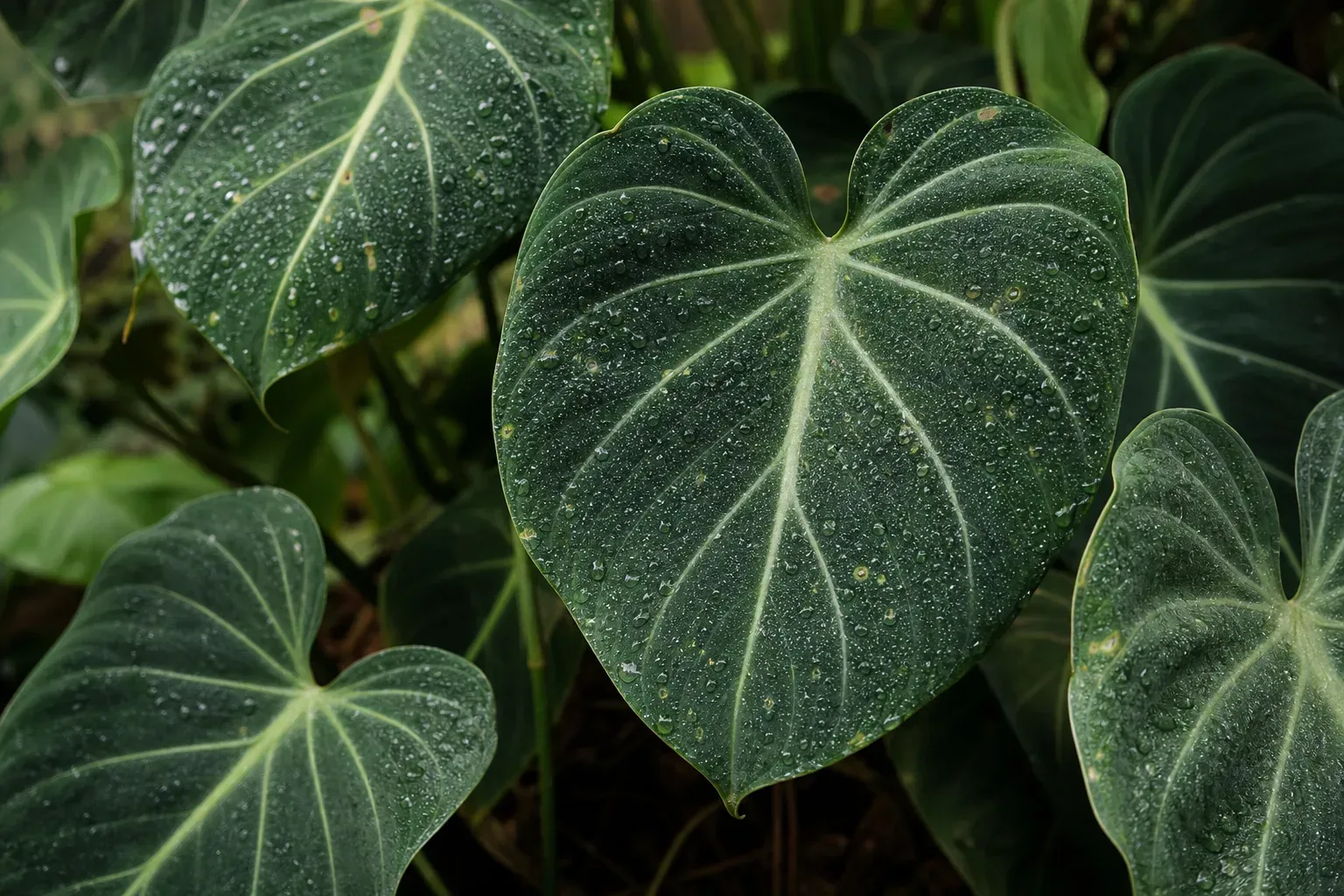
High Humidity on Philodendron Gloriosum: Causes, Checks & Fixes
This guide covers high humidity on Philodendron Gloriosum. See also the general High Humidity guide, watering, and light pages for this plant.
High Humidity on Philodendron Gloriosum: Causes, Checks & Fixes
Quick answer
High humidity on Philodendron Gloriosum becomes a problem when relative humidity stays above 75% with poor airflow-velvet leaves stay wet, fungal spots appear, and the surface rhizome rots in stagnant moisture. First step: add gentle air circulation and stop misting or sealing the plant in a closed humidity tent.
Gloriosum is a terrestrial crawler from tropical Central and South America that genuinely needs 60–70% humidity for velvet leaf quality. The trouble starts when collectors push humidity higher in sealed setups without moving air. Iowa State Extension links fungal leaf spots to wet leaves, poor air circulation, and high humidity-conditions that velvet aroids in closed cabinets hit faster than glossy philodendrons.
Why Philodendron Gloriosum struggles in excessive humidity
This species evolved on the humid forest floor of Colombia, but natural understory air still moves. Indoors, a humidifier in a closed room, propagation tent, or glass cabinet can push relative humidity past 80% with no circulation. NC State notes that plants enjoying high humidity still need air movement because stagnant moist air encourages fungal disease.
Heavy misting compounds the problem on velvet leaves. Water beads sit on the textured surface longer than on smooth foliage, keeping tissue wet for hours. University of Maryland Extension recommends that any method lowering leaf wetness or increasing air circulation reduces fungal infection risk on houseplants.
Overwatering paired with high humidity is especially dangerous for Gloriosum. The creeping rhizome sits on or just above the mix surface in a wide shallow pot-exactly where moisture lingers when humidity is high and the top layer never dries. Chronic wet surface mix invites mold, fungus gnats, and rhizome rot at the same time.
Closed humidity tents left on established plants-common after propagation-trap transpired moisture against velvet blades. What helped a cutting root can suffocate a mature plant once leaves fill the enclosure.
Grouping many aroids in a small humid corner without spacing blocks airflow between pots. Penn State Extension on Botrytis management emphasizes that overcrowding and poor air circulation create conditions where gray mold and leaf spots thrive when free moisture sits on foliage.
What high humidity damage looks like on Philodendron Gloriosum
Excess stagnant humidity rarely looks like the crisp brown tips of dry air. Watch for these patterns on this crawler:
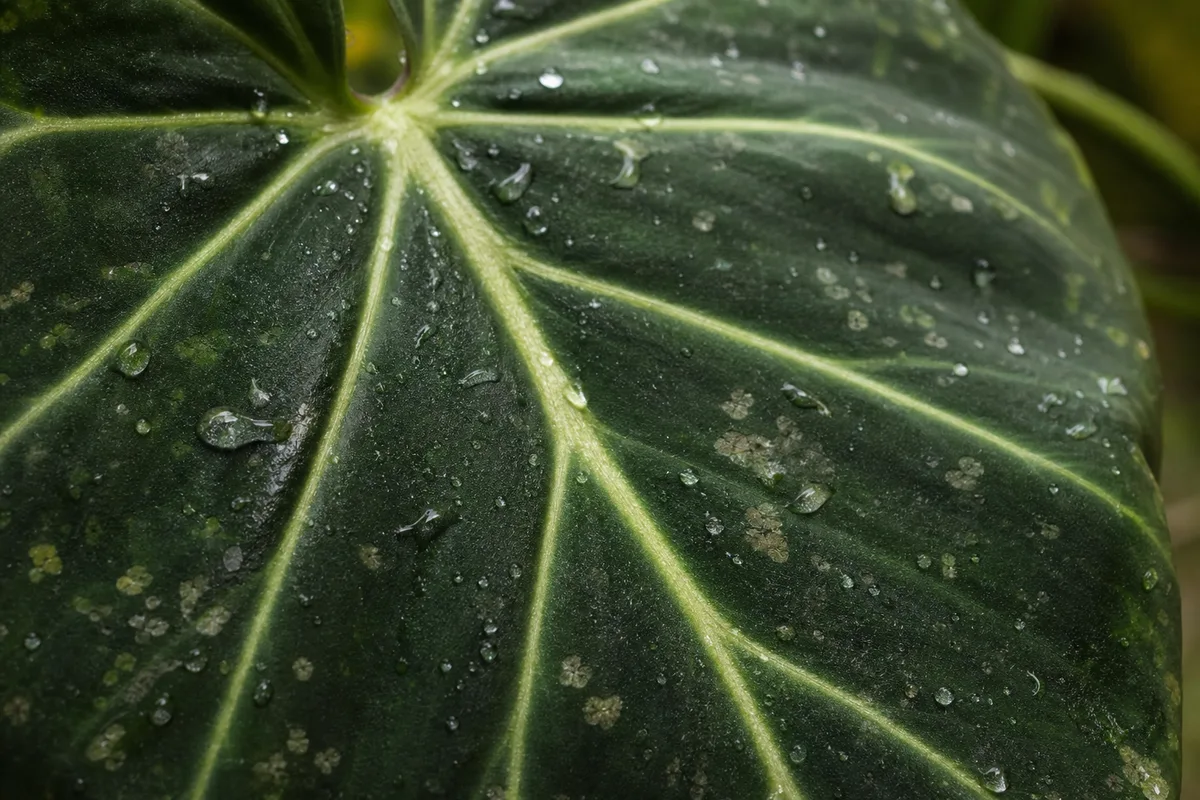
High Humidity symptoms on Philodendron Gloriosum - compare with healthy tissue on the same plant.
- Brown to black spots with yellow halos on velvet leaves-often starting on lower or inner foliage
- Soft, mushy leaf patches or limp petioles despite moist soil
- White or gray fuzzy growth on leaf surfaces, dying leaf edges, or soil
- New leaves unfurling with dark lesions or failing to harden off
- Persistent damp mix surface days after watering
- Fungus gnats hovering near the wide pot rim
- Rhizome tissue softening where wet top-dressing or moss contacts the stem
Healthy 60–70% humidity with airflow produces firm velvet, clean unfurling, and a mix surface that dries in the top 3–5 cm between drinks. Spots that spread outward in concentric rings strongly suggest fungal leaf spot rather than sun scorch or low humidity tip crispness.
How to confirm the cause
Work through this order before reaching for fungicide:
- Hygrometer reading - Above 75% at leaf height in an enclosed or poorly ventilated space supports excessive humidity as a factor.
- Airflow check - No leaf movement, closed cabinet doors, or sealed propagation bag points to stagnant air.
- Leaf wetness - Recent heavy misting or condensation droplets on velvet surfaces.
- Soil surface moisture - Top layer wet for more than three days after a single watering.
- Rhizome firmness - Gently probe along the crawler stem; soft tissue under mold means rot risk, not cosmetic mold alone.
- Spot pattern - Spreading circular lesions with yellow halos fit fungal disease from wet foliage; isolated tip browning suggests dry air instead.
If humidity reads 60–70% with good airflow and spots still spread with constantly wet soil, shift diagnosis toward overwatering or contaminated mix-not humidity alone.
First fix for Philodendron Gloriosum
Add gentle air circulation immediately. Place a small fan on low several feet from the plant so leaves move slightly-enough to dry surface moisture without blasting velvet. Open any sealed humidity tent or cabinet vent, and stop misting until spots stop spreading.
Do not respond to fungal spots by sealing the plant tighter for “more tropical conditions.” Stagnant humid air worsens the infection Iowa State Extension associates with wet leaves and poor circulation.
Step-by-step recovery
- Move the plant to a spot with Philodendron Gloriosum light guide and open air-not a closed display case.
- Run a fan on low nearby; aim for slight leaf movement, not constant direct breeze on one side.
- Remove heavily spotted or mushy leaves with clean, sterilized scissors; dispose in trash, not compost indoors.
- Let the top 3–5 cm of mix dry fully before the next watering-high humidity slows evaporation, so extend your dry window.
- Scrape any moldy surface mix or wet moss top-dressing away from the rhizome zone.
- Wipe condensation from cabinet glass or tent walls if you must keep partial enclosure for a cutting.
- Set humidifier to maintain 60–70%, not maximum output, once airflow is established.
- Monitor the next new leaf from the rhizome tip over four to eight weeks for clean unfurling.
If spots spread after airflow and dry-surface watering for two weeks, isolate the plant from other aroids and consider a labeled houseplant fungicide per product directions-fungicides slow spread but do not reverse existing dead tissue.
Recovery timeline
Airflow and reduced leaf wetness often stop new spot formation within one to two weeks. Existing damaged velvet tissue will not revert to green; judge recovery by whether the next one to two leaves unfurl clean and firm. Rhizome rot from prolonged wet surface conditions may take a month to declare itself-watch the growth tip closely.
Winter recovery can be slower if a humidifier runs constantly in a closed room while windows stay shut. Pair any winter humidification with periodic ventilation or fan use.
Lookalike symptoms
Low humidity causes crispy brown tips and stuck unfurling in dry air below 50%-opposite of mushy spotted leaves in stagnant wet conditions.
Overwatering alone yellows whole leaves and sours the mix even at moderate humidity; high humidity overwatering adds fungal spots on wet foliage faster.
Sun scorch shows bleached or brown patches on the sun-facing side of blades, not scattered circular spots with yellow halos across inner leaves.
Bacterial leaf spot can mimic fungal lesions; water-soaked margins spreading without concentric rings and foul stem odor point toward bacteria. Isolate and avoid overhead watering either way.
What not to do
- Do not seal a spotted plant in a plastic bag or closed cabinet-that traps the moisture pathogens need.
- Do not mist velvet leaves to “wash off” spots; wetting foliage spreads spores and keeps tissue damp.
- Do not overwater because humidity feels high; the rhizome still needs dry cycles in the top mix layer.
- Do not pack wet sphagnum around the crawler stem for humidity-that is a common rhizome rot trigger.
- Do not trim every spotted leaf at once if more than half the foliage is affected; stagger removal so the plant retains photosynthetic capacity.
- Do not assume a humidifier alone fixes everything above 70% without airflow.
How to prevent high humidity damage next time
Target 60–70% relative humidity with a humidifier in dry homes, then add gentle fan circulation so leaves dry within a few hours of watering or occasional ambient moisture. Water when the top 3–5 cm dries-high humidity lengthens drying time, so adjust schedule rather than calendar.
Use open propagation tents or bags only for short rooting phases; remove or ventilate once new growth hardens. Space grouped aroids so air passes between pots. Keep the rhizome on the mix surface in chunky aroid mix with no wet decorative top layer.
Inspect velvet leaves weekly in humid seasons; early single spots are easier to manage with airflow and one removed leaf than a full outbreak in a sealed cabinet.
When to worry
Escalate when gray fuzzy mold covers multiple leaves, black spots reach the newest unfurling leaf, or the rhizome feels soft with a sour smell-those patterns suggest active rot at the growth front. When only one or two lower leaves show minor spotting and the rhizome is firm, airflow and dry-surface discipline usually suffice.
Conclusion
Philodendron Gloriosum needs humidity-but not stagnant air. Above 75% in enclosed spaces, wet velvet leaves and damp rhizome surfaces invite fungal spots, mold, and rot that the species’ 60–70% sweet spot avoids when paired with gentle circulation. Add a fan, stop misting, dry the mix surface between waterings, and judge success by clean new leaves from the crawler tip-not repaired old spots.
When to use this page vs other Philodendron Gloriosum guides
- Philodendron Gloriosum watering guide - Use for routine moisture checks before assuming high humidity is the main issue.
- Philodendron Gloriosum problems hub - Browse all 22 common issues on this species.