Thin Stems on Philodendron Brasil: Causes, Checks & Fixes
Quick answer
Thin stems on Philodendron Brasil usually mean the vine is stretching in too little light-not that heartleaf philodendron should have thick trunks. Spindly strands with small pale leaves and wide gaps between nodes need brighter indirect light first. Move within a few feet of an east or west window before you fertilize or repot.
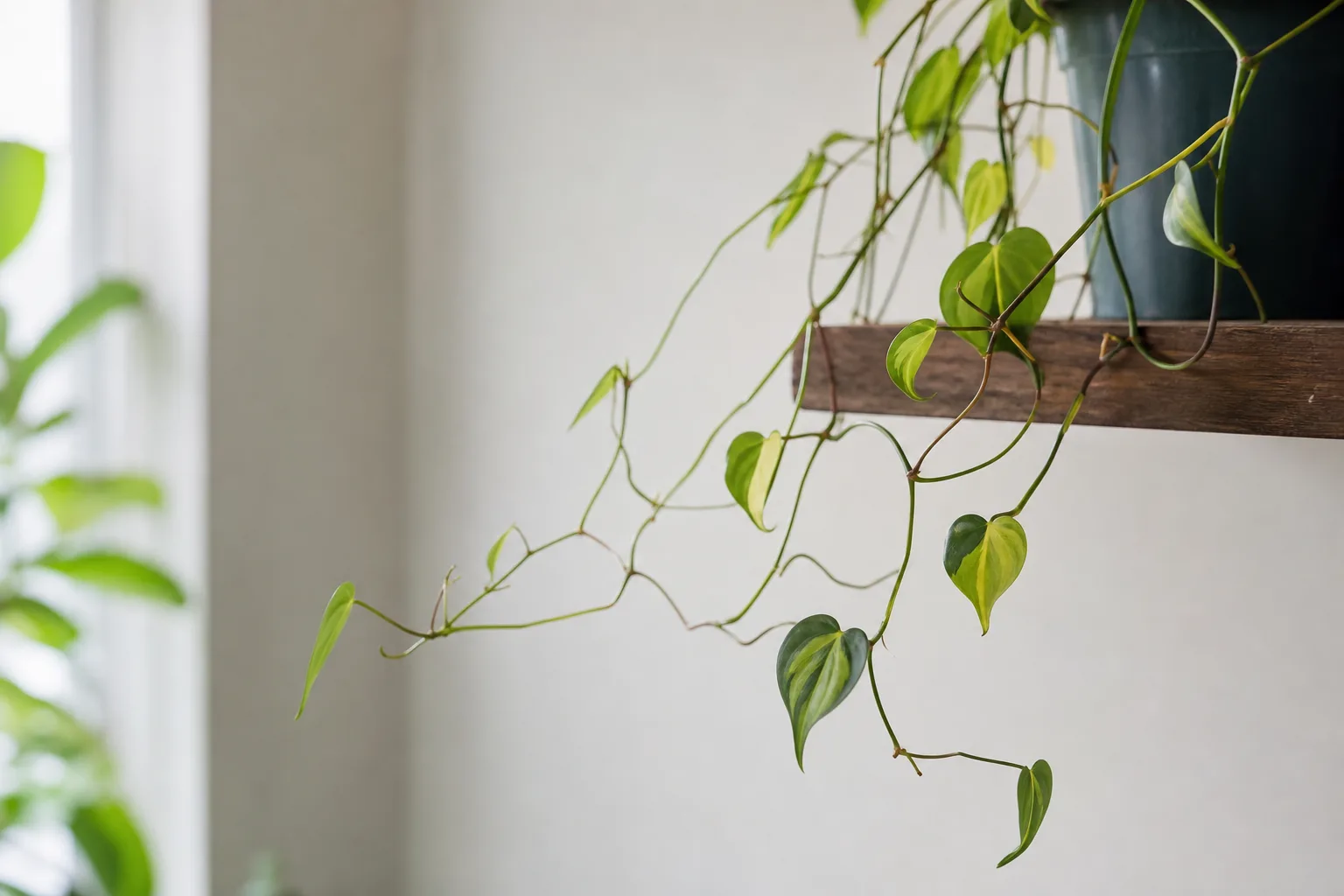
Thin Stems on Philodendron Brasil: Causes, Checks & Fixes
This guide covers thin stems on Philodendron Brasil. See also the general Thin Stems guide, watering, and light pages for this plant.
Thin Stems on Philodendron Brasil: Causes, Checks & Fixes
Quick answer
Philodendron Brasil (Philodendron hederaceum ‘Brasil’) is a fast vining heartleaf philodendron, so trailing stems are naturally slender. Thin stems become a problem when new growth looks spindly, fragile, and sparse-long bare gaps between small pale heart leaves, vines that lean hard toward windows, and sections reverting to solid green.
The most common indoor trigger is insufficient light. In dim corners, Brasil stretches toward the nearest light source and prioritizes length over sturdy tissue. Variegated lime patches carry less chlorophyll than solid green blades, so this cultivar needs more usable light than an all-green heartleaf to build firm stems and full leaves.
First fix: move the pot to brighter indirect light within 3–5 feet of an east or west window. Acclimate over one to two weeks if it has lived in a dark spot for months. Do not fertilize, repot, or soak wet soil on day one-give the plant usable light first, then reshape once new growth shows tighter nodes and restored lime streaks.
What thin stems look like on Philodendron Brasil
Healthy Brasil holds moderate spacing between nodes on actively growing vines, with lime variegation visible on most new leaves even when the pattern varies leaf to leaf. Mature heart blades on supported climbing sections can reach several inches across when light is adequate.
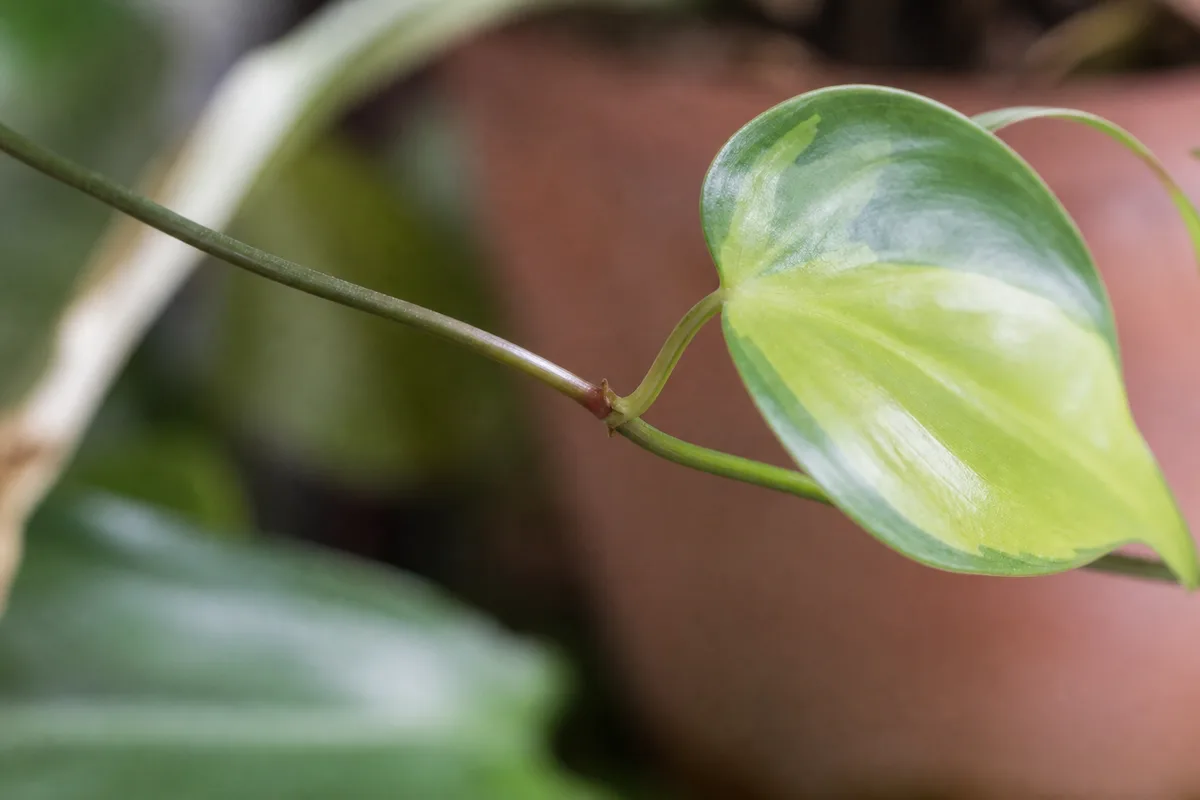
Thin Stems symptoms on Philodendron Brasil - compare with healthy tissue on the same plant.
Problem thin stems show a different pattern:
- Spindly wiry vines that feel fragile between your fingers and bend easily under leaf weight
- Long bare gaps between heart-shaped leaves on the newest growth
- Smaller, paler new leaves than older foliage higher on the same vine
- Solid-green reversion on the thinnest sections while one variegated strand still looks stronger
- Dramatic lean toward the brightest window or light fixture
- Soil that stays damp for a week or more despite a normal Philodendron Brasil watering guide
- Slow or stalled growth through spring and summer despite regular care
Do not confuse thin stems with leggy spacing alone. A trailing Brasil can hold leaves along a naturally slender vine and still be healthy. Worry when stem strength, leaf size, and variegation decline together on active growth-not when you simply notice that heartleaf philodendron is not a thick-stemmed plant.
Why Philodendron Brasil gets thin stems
Low light and etiolation. When usable light falls below what the plant needs, stems elongate and thin-a form of etiolation. Solid-green heartleaf philodendron can survive in extremely low light; the ‘Brasil’ cultivar with its variegated lime stripe needs brighter indirect light to photosynthesize at the same pace. Less chlorophyll in lime patches means dim rooms produce spindly reachers instead of lush vines.
Light plus wet soil. A dim Brasil uses water slowly, so mix stays wet longer. Wet soil in weak light invites [root stress](https://www.missouribotanicalgarden.org/gardens-gardening/your-garden/help-for-the-home-gardener/advice-tips-resources/insects-pests-and-problems/environmental/[overwatering on Philodendron Brasil](/plants/philodendron-brasil/overwatering/))-the same pattern that softens stems at the base and pairs with yellow lower leaves. Thin spindly vines in a soggy pot need light and dry-down corrected together, not more water.
Root-bound container. When roots circle the pot edge and little fresh soil remains, the plant cannot support vigorous new tissue even if light is fair. Growth stalls, new leaves stay small, and remaining stems look progressively thinner.
Seasonal light drop. Shorter winter days reduce usable light at the same window. Growth that was sturdy in summer may come out finer and more fragile from late fall through early spring unless you move the plant closer or add supplemental lighting.
Chronic underwatering on Philodendron Brasil. Less common in dim rooms where soil actually stays wet, but a Brasil in bright dry air with irregular watering can produce limp thin vines with slightly curled leaves and a lightweight pot. The taco test-firm glossy leaves resist folding-helps separate thirst from stretch.
Overfertilizing in dim rooms. Extra nitrogen without matching light pushes soft elongated shoots that still look thin because tissue cannot densify without adequate photosynthesis.
How to confirm the cause
Work through these checks in order:
- Light at leaf level - At midday, hold your hand where the foliage sits. A soft, defined shadow means moderate indirect light. Barely visible shadow means the spot is too dim for a variegated heartleaf.
- Newest leaf test - Compare the last three leaves on the longest vine. If each new leaf is smaller and less variegated than the one before, light is the limiting factor.
- Internode spacing - Measure the gap between two recent leaves. Gaps over 2–3 inches on a summer vine point to ongoing stretch from insufficient light.
- Soil moisture pattern - Push your finger 3–5 cm into the mix. If it feels wet days after watering while growth is slow, low light may be slowing uptake-not necessarily that you watered too much on one day.
- Root check - Slide the plant partway out of the pot. Dense circling roots with little visible mix suggest root-bound stress contributing to thin new growth.
- Base firmness - Pinch the lowest inch of the thinnest vine. Firm green tissue with dry soil on schedule points to light stress. Soft mushy tissue with sour-smelling wet mix suggests stem or root rot on Philodendron Brasil-urgent, not a light fix alone.
- Pest scan - Flip a few leaves and check undersides. Spider mites can pale foliage in dry dim conditions, but they leave stippling and fine webbing. Uniform stretch without pests confirms light stress.
If stretch, green reversion, and wet-soil slowness cluster together, you have a confirmed light problem. If the whole vine deflates with dry lightweight soil and firm roots, underwatering is more likely. Mushy bases in wet soil require rot treatment first.
First fix for Philodendron Brasil
Move the pot to brighter indirect light within 3–5 feet of an east or west window.
East windows deliver gentle morning sun that suits variegated philodendrons. West windows work if harsh afternoon rays are filtered by sheer curtain or the plant sits far enough back to avoid hot direct glass contact. Avoid plunging a dim-adapted Brasil into unfiltered south-window sun-that risks scorch, not recovery.
Acclimate gradually:
- Days 1–3: Place where leaves receive bright ambient light but no direct hot sun on the blades.
- Days 4–7: Move one step closer to the window if no bleaching appears.
- Week 2: Leave the plant in its new home and watch the next emerging leaf.
Do not repot, fertilize, or soak the soil on day one. If the mix is wet, skip watering until the top 3–5 cm dries-brighter light will help the root zone recover faster once moisture is in balance.
Step-by-step recovery
After the plant has brighter indirect light:
- Wait for one new leaf - The first emerging leaf after the move tells you whether light is adequate. Tighter node spacing and visible lime streaks mean you are on track.
- Prune reverted vines - Cut plain-green sections back to the last node that still shows lime variegation. Brasil propagates easily from stem cuttings, so trimmings can root in water while the parent fills in.
- Rotate the pot weekly - Prevents one-sided lean and keeps variegation even across the canopy.
- Adjust watering - Brighter light means faster dry-down. Recheck the top 3–5 cm before every drink instead of following an old calendar rhythm.
- Repot if root-bound - Move into a container one size larger with standard potting mix plus 20–25% perlite only after light is corrected and roots clearly circle the pot. Do not jump two pot sizes hoping for faster growth.
- Add a grow light if windows are insufficient - A full-spectrum LED 6–12 inches above the canopy for 12–14 hours daily can support Brasil in interior rooms. Indoor plants stretch when light is inadequate; artificial light replaces what the window cannot supply.
- Optional support - A small moss pole or trellis gives climbing stems larger leaves. Trailing vines in dim light stay small; brighter light plus support produces the fuller heart leaves Brasil is known for.
Recovery timeline
Expect visible improvement on new growth within two to four weeks after light is corrected-not on old leaves. Stretched internodes and thin stems already formed will not thicken or re-variegate. Judge success by the next two or three leaves: firmer texture, better lime pattern, and shorter gaps between nodes.
If four to six weeks pass with no improvement on new foliage, the spot is still too dim-move closer to the window or add a grow light rather than reaching for fertilizer.
Repot recovery adds another two to three weeks before you should expect noticeably stronger new shoots, because the plant needs time to root into fresh mix.
Lookalike symptoms
Leggy growth shares the same etiolation mechanism-long internodes from low light. On Brasil, leggy and thin-stem labels overlap; both respond to brighter indirect light and pruning.
Not enough light is the root cause of most thin stems. Treat variegation loss and spindly vines together with a light increase.
Overwatering yellows lower leaves while soil stays wet. Low light and overwatering often appear together because the plant cannot use water quickly. Fix light and dry-down together.
Underwatering gives a light pot and slightly curled leaves on long vines-uncommon on Brasil in dim rooms where soil actually stays wet.
Slow growth in winter can look like thin weak new tips when daylight is short. Resume worrying if spring arrives and new growth stays spindly with adequate light.
Nutrient deficiency is rare when the real issue is weak light plus soggy mix. Do not fertilize a stressed, dim-grown plant hoping for sturdier stems.
Mistakes to avoid
- Leaving Brasil in a north-facing room indefinitely without a grow light-stems stay spindly even if the plant technically survives.
- Jumping to direct south-window sun to fix thin vines-acclimate slowly or leaves bleach and crisp.
- Fertilizing dim, wet plants - Feed only after light and watering rhythm are stable and new growth is firm.
- Ignoring plain-green reversion - Solid-green stems grow faster and can overtake variegated sections. Prune reverted tips once light improves.
- Philodendron Brasil repotting guide into an oversized pot hoping for thicker stems-extra wet soil in weak light makes thin stems worse.
- Watering on the old schedule after a move to brighter light - Check soil moisture weekly until you learn the new dry-down speed.
How to prevent thin stems next time
Place Brasil where it receives bright indirect light or filtered sun for most of the day-not just where the hanger looks best. East and filtered west exposures are the easiest wins in most homes.
- Keep trailing stems within a few feet of the window glass.
- Supplement with grow lights from late fall through early spring when daylight is shortest.
- Rotate the pot weekly for even growth.
- Pair brighter light with a well-drained potting mix and water when the top 3–5 cm dries-not on a fixed calendar.
- Repot before roots circle tightly so new growth has soil and nutrients to build firm tissue.
- Keep elevated shelves and hanging baskets out of pet reach when you chase brighter window placement-heartleaf philodendron is toxic to cats and dogs.
When to worry
Thin stems alone rarely kill Brasil quickly-it is a slow decline of form and color. Worry when:
- New leaves stay tiny and solid green for more than a month after a light increase-your fix did not go far enough.
- Soil stays wet and vines soften at the base while the plant sits in a dim corner-root or stem stress is building.
- Variegation is gone on every active vine-prune and relight before the pot becomes a plain-green heartleaf.
- Stems snap at the soil line with black mushy tissue and sour smell-treat as stem rot: trim affected sections, repot into fresh airy mix, and keep in bright indirect light while the plant stabilizes.
If roots are mushy and stems collapse despite better light, treat as root stress first: unpot, trim damaged roots, repot into fresh airy mix, and keep the plant in bright indirect light while it stabilizes.
When to use this page vs other Philodendron Brasil guides
- Philodendron Brasil watering guide - Use for routine moisture checks before assuming thin stems is the main issue.
- Philodendron Brasil problems hub - Browse all 46 common issues on this species.