Caterpillars on Philodendron Brasil: Causes, Checks & Fixes
Quick answer
Caterpillars on Philodendron Brasil chew irregular holes in heart-shaped leaves and leave dark frass pellets on stems or the pot rim-often after outdoor summer placement or a moth laying eggs indoors. First step: isolate the plant and handpick every caterpillar you find, dropping them into soapy water.
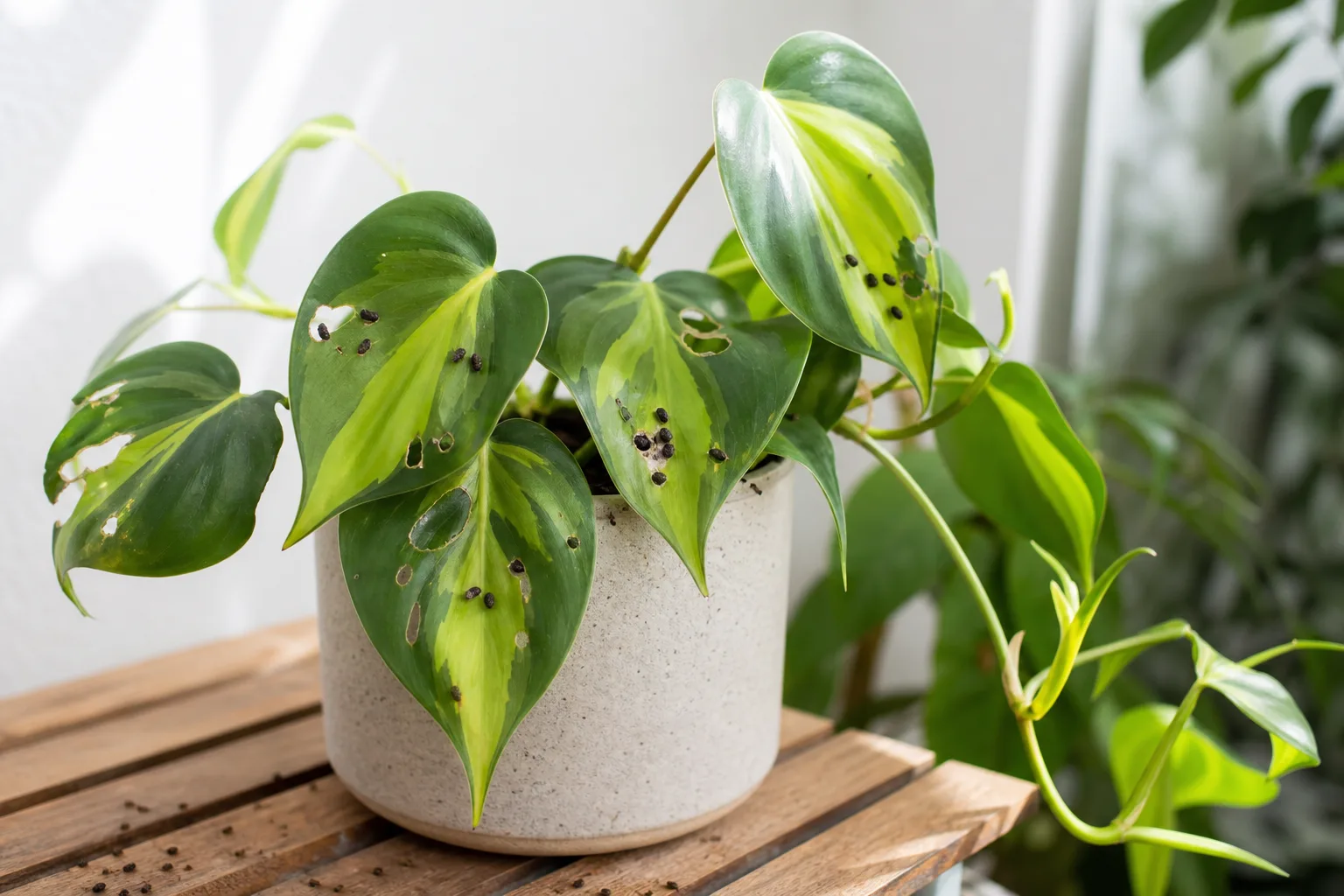
Caterpillars on Philodendron Brasil: Causes, Checks & Fixes
This guide covers caterpillars on Philodendron Brasil. See also the general Caterpillars guide, watering, and light pages for this plant.
Caterpillars on Philodendron Brasil: Causes, Checks & Fixes
Quick answer
Caterpillars on Philodendron Brasil chew irregular holes in glossy heart-shaped leaves and leave dark frass pellets on stems, hangers, or the pot rim. They are uncommon on strictly indoor Brasil, but show up after outdoor summer placement, on nursery plants that sat outside, or when a moth lays eggs on trailing foliage near an open window.
First step: isolate the plant and handpick every caterpillar you find, dropping them into soapy water. Caterpillars are large enough to remove by hand and do not spread through soil the way fungus gnats do. Confirm live larvae or frass before spraying anything-Brasil’s thin unfurling leaves are easily burned by the wrong product applied on day one.
What caterpillars look like on Philodendron Brasil
Damage starts on the softest tissue. Brasil’s lime-and-green heart leaves look healthy from across the room while caterpillars chew from below or inside overlapping vine sections. Early signs are easy to miss on variegated foliage because the lime stripe and dark green margins are normal patterning-not pest damage.
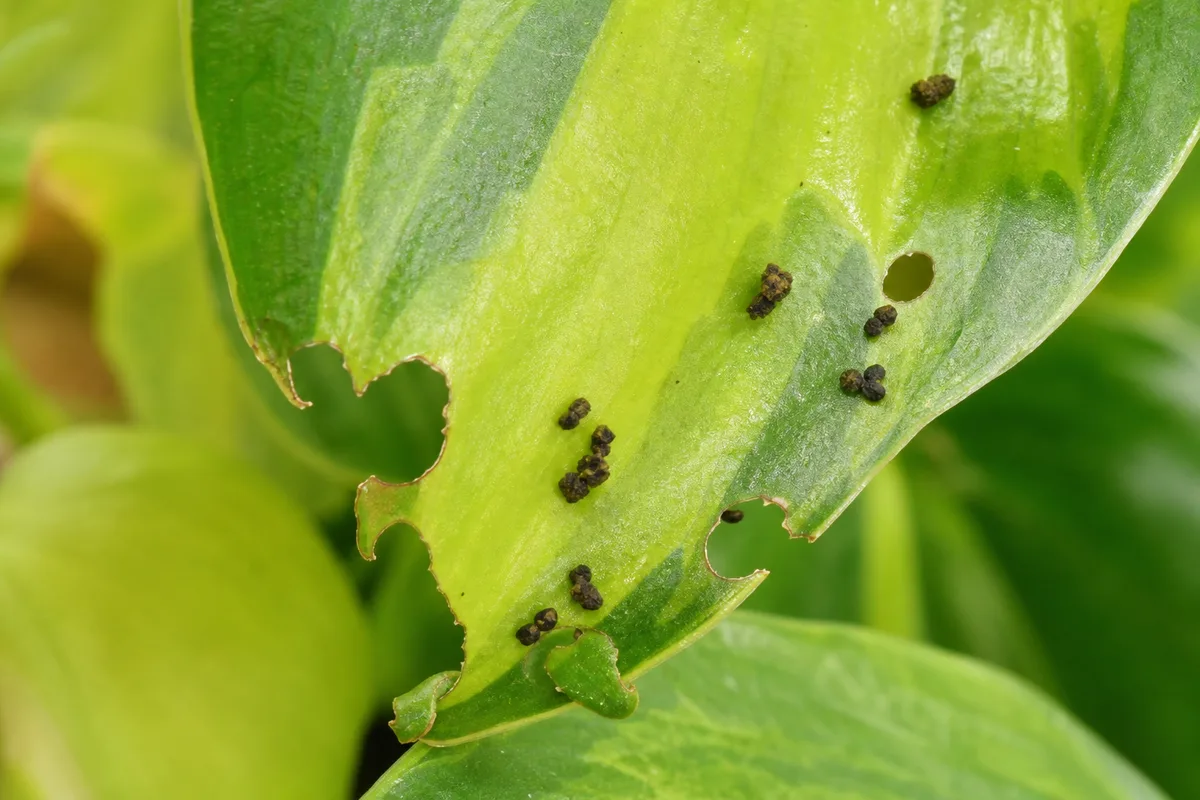
Caterpillars symptoms on Philodendron Brasil - compare with healthy tissue on the same plant.
Key signs on this trailing cultivar:
- Irregular holes or ragged edges on heart-shaped leaves, often starting on outer trailing sections or newest growth
- Dark frass pellets (caterpillar droppings) on leaf surfaces, petioles, pot rims, or shelves below the hanger
- Visible larvae on leaf undersides, along green stems, or tucked in unfurling leaves-color varies from green to brown depending on species
- Silk threads or rolled leaf edges on some species; leafrollers feed inside rolled leaves secured with silk
- Accelerating damage over several days as one larva can consume a surprising amount of soft leaf tissue
- No webbing stippling, honeydew, or cottony masses-those point to spider mites, aphids, or mealybugs instead
Unlike normal Brasil variegation, which follows a broad lime stripe with dark green margins that shifts from leaf to leaf, caterpillar holes are random tears through both green and chartreuse tissue. A single chewed heart leaf with frass nearby is more suspicious than one hole on an older lower leaf that could be mechanical bump damage.
Why Philodendron Brasil gets caterpillars
Caterpillars are the larvae of butterflies and moths. They chew with mouthparts designed to eat leaf tissue-not sap like aphids or mites. On indoor Brasil, they almost always arrive from outside rather than building up silently year-round in dry heated rooms.
Outdoor summer placement is the main route. Many owners move Brasil to a shaded patio for summer. Butterflies and moths lay eggs on leaf undersides of plants that have been outdoors, and tiny hatchlings ride back inside on trailing vines you never inspected at the door.
Open windows and stray moths. A moth that enters through a screen gap can deposit eggs on the nearest soft foliage. Brasil near an open window in spring or summer-especially with a trailing vine touching the sill-is vulnerable.
Nursery and garden-center hitchhikers. Eggs or small larvae can come home on new plants. Brasil’s dense overlapping heart leaves hide caterpillars in leaf axils and rolled new growth until chewing damage appears.
Soft new growth is preferred feeding. Philodendron hederaceum grows rapidly on trailing stems in spring and summer. Unfurling heart leaves at vine tips are thinner and more tender than hardened older foliage-exactly where caterpillars cause the most visible damage first.
Indoor conditions lack natural control. Outdoors, birds, parasitic wasps, and spiders reduce caterpillar numbers. Inside, handpicking and natural enemies often provide enough control-but only if you actually remove the larvae. Without predators, one egg cluster on a hanger can strip several new leaves within a week on a vigorously growing vine.
Trailing architecture hides larvae. Brasil cascades from hangers and shelves. Long stems create layers of overlapping foliage where caterpillars rest by day and feed at night, especially on the warmest side of the plant near a window.
How to confirm the cause
Work through these checks before treating:
- Frass search - Dark fecal pellets on leaves or under the plant strongly indicate caterpillars, not fungal spots or mite stippling.
- Live larva check - Lift trailing stems and inspect leaf undersides, petiole bases, and unfurling leaves. Caterpillars move when disturbed; dried leaf bits alone are not enough.
- Night inspection - Some larvae feed mainly after dark. Check at dusk with a flashlight along vine tips and overlapping leaves if you see fresh holes but no daytime caterpillars.
- Rolled-leaf check - Peel back silk-bound leaf edges carefully. Leafrollers hide inside rolled leaves and may drop on a silken thread when disturbed.
- Entry route review - Did Brasil recently come inside from outdoors, arrive from a nursery, or sit near open windows? That history supports caterpillars over chronic indoor pests.
- Slug rule-out - Slugs and snails leave shiny slime trails and chew from leaf edges at soil level. No slime and pellets on upper vines point to caterpillars.
- Mite and thrips rule-out - Spider mites cause fine stippling and webbing in dry air. Thrips leave silvery scars and black specks without large edge holes or frass pellets.
If you find holes without larvae or frass, keep checking for several nights. Small newly hatched caterpillars can be hard to spot until damage accelerates.
Lookalike symptoms to rule out
Mechanical tears from moving a hanger or pet contact usually lack frass and do not spread to new leaves over days. Slugs leave slime and feed near the pot rim on lower leaves. Leaf miners create winding tunnels inside the leaf, not ragged edge chewing. Aphids and mealybugs leave honeydew or cottony clusters on soft tips without chewing large sections of mature heart leaves.
First fix for Philodendron Brasil
Isolate the plant away from other houseplants until you find no new caterpillars or fresh chewing for at least two weeks.
Handpick every caterpillar and egg cluster you can reach. Wear gloves-some species have irritating hairs, and Philodendron Brasil contains calcium oxalate crystals that irritate skin if sap gets on your hands while handling chewed vines. Drop larvae into a bucket of soapy water or crush them. Check leaf undersides, stem joints, unfurling tips, and rolled leaves thoroughly.
Prune off heavily webbed or rolled leaves only if you cannot open them to remove hidden larvae. Cut back to the next healthy node once the plant is stable-not before you have removed visible caterpillars.
If larvae remain after two or three careful handpicking passes, and the plant is going back outdoors or to a well-ventilated porch, Bacillus thuringiensis subspecies kurstaki (Btk) is the best targeted option for caterpillars. It kills only caterpillars that eat treated leaves and is safe near bees and beneficial insects. Apply to foliage according to label directions, ideally in late afternoon because Btk breaks down in sunlight. For strictly indoor treatment, move the plant to a sink or shower, spray, and keep it out of direct sun until dry.
Do not repot, fertilize, or soak the mix on the same day you start treatment. Brasil roots rot quickly in wet soil-treat the pest first, then return to your normal Philodendron Brasil watering guide that lets the top 3–5 cm dry between drinks.
Step-by-step recovery
Once caterpillars are confirmed, work in this order:
- Isolate - Move Brasil away from other plants and close nearby windows if moths may still be entering.
- Handpick - Remove all visible caterpillars and scrape off egg clusters from leaf undersides with a damp cloth or cotton swab.
- Prune hopeless tissue - Cut away rolled or heavily shredded leaves that still hide larvae. Brasil roots easily from cuttings, but do not propagate from pest-coated tissue until the parent plant is clean.
- Rinse foliage - Spray small plants in a sink to wash off frass and dislodge tiny hatchlings. Wrap the soil surface so mix stays contained and drains freely afterward.
- Btk if needed - Use only when handpicking fails and label directions allow indoor or porch use. Reapply as directed because Btk breaks down quickly.
- Monitor nightly for one week - Re-check vine tips and unfurling leaves at dusk. One missed larva can restart damage on soft new growth.
- Hold fertilizer - Skip feed until new growth looks clean for two weeks. Soft nitrogen-rich shoots are easier for any remaining larvae to chew.
Recovery timeline
Handpicked caterpillars should stop new damage within a few days. Chewed holes on existing heart leaves will not close, but clean new lime-streaked foliage along trailing vines can appear within two to three weeks on a healthy Brasil in Philodendron Brasil light guide.
Judge success by absence of fresh frass, no new holes on emerging leaves, and firm green stems. If damage keeps spreading after three thorough inspections, look again at night or reassess for slugs at soil level.
What not to do
- Do not spray broad-spectrum indoor insecticides before confirming caterpillars-many products target sap feeders, not chewers, and imidacloprid will not control caterpillars.
- Do not use homemade soap sprays on unfurling Brasil leaves without a label-approved product; commercial insecticidal soaps are formulated for plant contact.
- Do not increase watering because leaves look ragged-check soil moisture at the top 3–5 cm first.
- Do not return an isolated plant to the collection after one handpicking pass without rechecking for a week.
- Do not ignore a single larva on a long trailing vine-it can strip several new heart leaves before you notice from across the room.
- Do not handle chewed vines bare-handed if pets might chew dropped leaf pieces; Brasil is toxic to cats and dogs.
How to prevent caterpillars next time
Inspect all new plants before placing them near your collection, and quarantine Philodendron Brasil for two weeks. Before bringing Brasil inside after summer outdoors, check every trailing stem, leaf underside, and unfurling tip for eggs and larvae.
Keep screens intact on windows near hanging plants. Remove fallen leaves and debris from pot rims so frass and hiding spots are easier to spot during weekly care checks. When moving Brasil between indoor and outdoor locations, treat the transition as a pest-risk moment-not just a light adjustment.
When to worry
Escalate if multiple vines lose most of their new growth within one week, if rolled leaves hide larvae you cannot reach after several pruning attempts, or if handpicking and Btk fail after label-directed repeat applications. Chronic defoliation during a spring growth spurt can weaken trailing stems even when roots are healthy.
Caterpillars alone rarely kill a mature Philodendron Brasil with firm roots, but they can ruin a season of variegated new growth. If you find slime trails instead of frass pellets, switch to slug and snail management. If damage spreads without any larvae, frass, or pellets, reconsider mechanical damage or pet access before spraying pesticides.
Conclusion
Caterpillars on Philodendron Brasil are chewing pests that leave ragged holes and frass on trailing heart leaves-usually after outdoor exposure or egg-laying moths indoors. Confirm live larvae or pellets, isolate, and handpick into soapy water first. Use Btk only if removal fails and label directions fit your setup. Recovery shows in clean new lime-streaked growth along the vines, not in leaves that already have holes.
When to use this page vs other Philodendron Brasil guides
- Philodendron Brasil watering guide - Use for routine moisture checks before assuming caterpillars is the main issue.
- Philodendron Brasil problems hub - Browse all 46 common issues on this species.