High Humidity on Philodendron Birkin: Causes, Checks & Fixes
Quick answer
Philodendron Birkin likes 50–60% humidity, but stagnant air above that range with wet leaves promotes mildew, leaf spots, and soil mold on pinstriped foliage. First step: read humidity at the pot and add gentle airflow before you mist more or seal the plant in a humid corner.
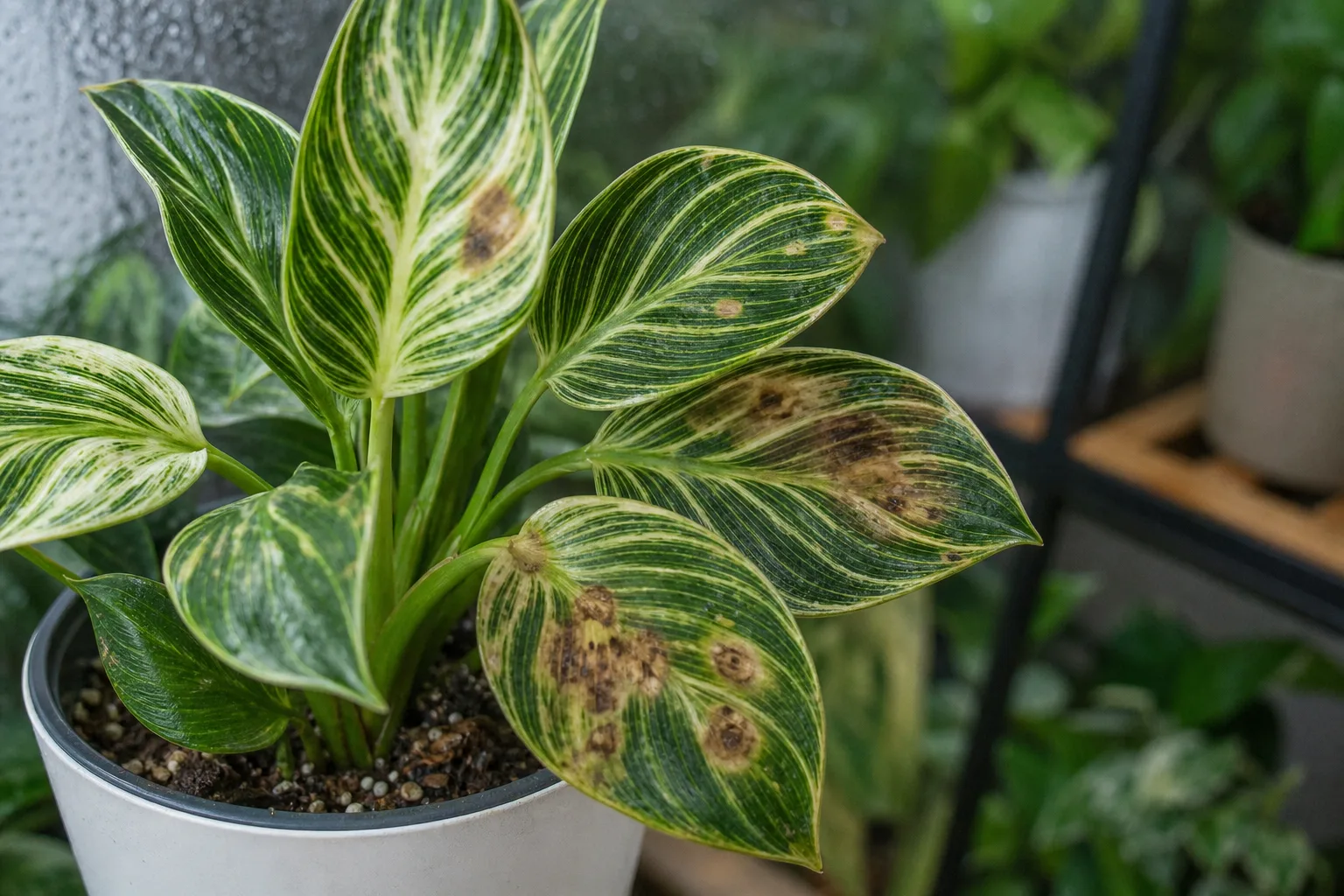
High Humidity on Philodendron Birkin: Causes, Checks & Fixes
This guide covers high humidity on Philodendron Birkin. See also the general High Humidity guide, watering, and light pages for this plant.
High Humidity on Philodendron Birkin: Causes, Checks & Fixes
Quick answer
Philodendron Birkin is a compact, self-heading philodendron that thrives in warm, humid conditions at 50 to 60% relative humidity with bright filtered light. The problem is not moderate humidity itself-it is stagnant, saturated air with no movement, wet leaves that never dry, and readings pushed far above that range in sealed corners.
First step: read a humidity gauge at the pot and add gentle airflow before you mist again or close a dome. If the reading stays above 75% in a closed bathroom, terrarium, or propagation box while white powder or leaf spots appear on pinstriped foliage, you have excess stagnant moisture-not a Birkin that needs more steam.
What high humidity problems look like on Birkin
High humidity damage on Birkin shows up as fungal and moisture-related symptoms-not the crisp brown tips of dry air. The plant may still look upright while leaf surfaces or soil tell a different story.
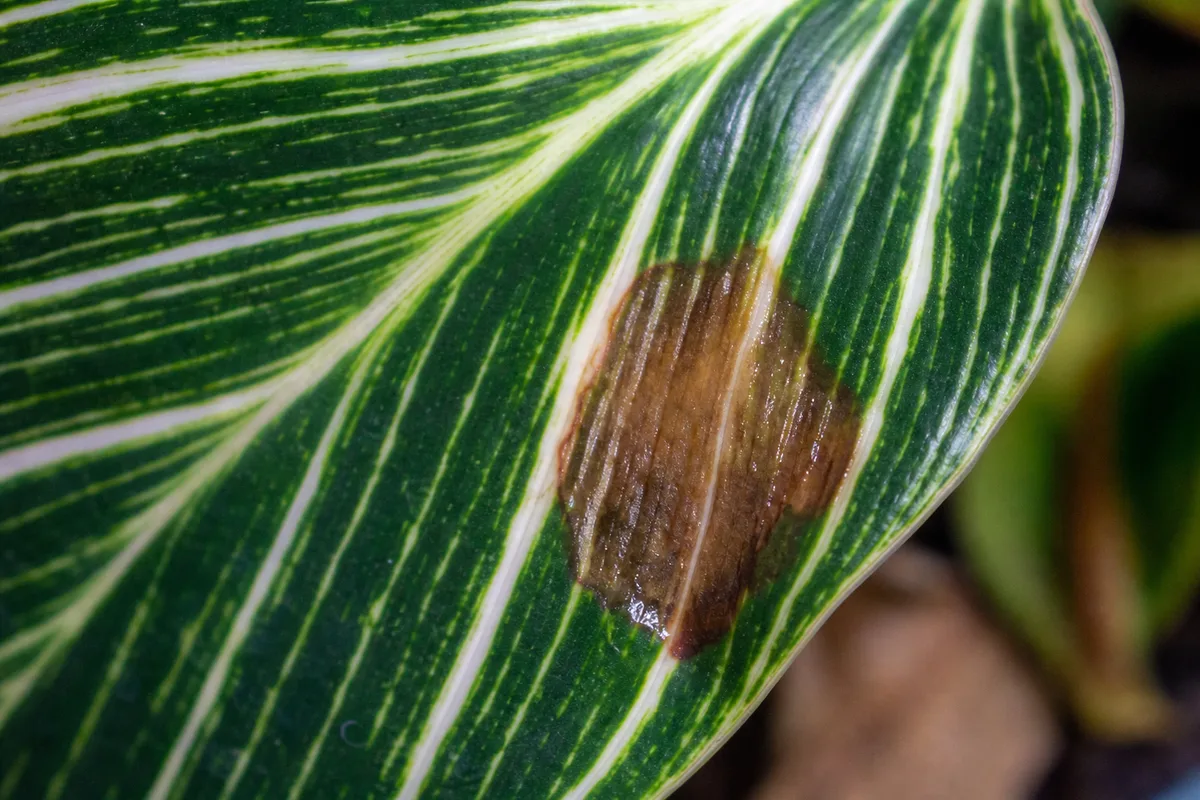
High Humidity symptoms on Philodendron Birkin - compare with healthy tissue on the same plant.
Powdery mildew on pinstriped leaves:
- White, flour-like coating on upper leaf surfaces, sometimes starting on cream pinstripe bands
- Small round spots that expand into patches across the blade
- Unlike dust, the coating returns after wiping within days if fungus is active
Leaf spot disease:
- Brown or black spots with yellow halos on green portions of pinstriped leaves
- Leaf spots can occur if the leaves get wet during watering-especially when foliage stays damp in still, humid air
- Spots merge on heavily infected blades in stagnant humid corners
Gray mold and soft tissue:
- Tan, papery patches with gray fuzzy masses on leaves-Botrytis gray mold is common when overcrowding, low light, poor air circulation, and high humidity combine
- Soft, mushy patches where tissue collapses-not crisp dryness from low humidity
Soil surface mold:
- Fluffy white or gray mold on the top of peaty mix when the surface stays wet in humid rooms
- Often appears alongside fungus gnats when roots sit in wet, organic-rich soil
What distinguishes Birkin from healthy high humidity:
A Birkin in proper 50–60% humidity with airflow shows firm stems, glossy pinstriped leaves without fungal coating, and steady slow new growth. Problems show as fungal films, spots, or mush-not simply “the plant looks tropical.”
Why Birkin gets high humidity stress
Several indoor setups push Birkin past the humidity–airflow balance this cultivar tolerates.
Stagnant humid enclosures
Propagation domes left on mature plants, closed terrariums, or shower rooms with the door shut all day push relative humidity above what pinstriped leaves tolerate when surfaces stay damp continuously. Powdery mildew on indoor plants advances when poor air circulation and high humidity combine.
Birkin’s rosette traps moisture
Unlike a trailing philodendron with spaced leaves, Birkin’s tight upright rosette holds water between pinstriped blades after misting or overhead watering. NC State notes leaf spots when leaves get wet during watering-and a compact crown in still air keeps those leaves wet far longer than an open vine.
Over-misting on top of humidifiers
Many owners run a humidifier to prevent brown tips, then mist twice daily in the same closed room. That stacks surface moisture on already humid air. Iowa State Extension links leaf spots to wet leaves from misting or watering combined with poor air circulation.
Crowded plant shelves and bathrooms
Grouping many tropicals on one tray raises local moisture, but packed leaves block airflow between pots-the same conditions extension guidance links to powdery mildew. A Birkin in a dim bathroom with daily showers but no fan often sits above 75% humidity with barely moving air.
overwatering on Philodendron Birkin plus high humidity
Birkin needs moist, well-drained soil, not a soggy surface that never dries. Wet peaty mix in a steamy closed room keeps roots oxygen-starved while fungi grow on leaves and soil. Humidity does not replace drainage-and overwatering can cause root rot and yellowing leaves when stacked with stagnant moisture.
Humidifiers on maximum in small closed rooms
Continuous readings above 80% help briefly during a dry spell, but sustained saturation without a fan or open door crosses from supportive into stagnant excess for a plant whose ideal range is 50 to 60%.
How to confirm the cause
Work through these checks before changing multiple care variables at once:
- Humidity reading - Place a gauge near the foliage at leaf height, not across the room. Sustained readings above 75% in a closed space confirm excess stagnant moisture. Target 50–60% with movement, matching NC State’s recommended range for Birkin.
- Airflow test - Hold a tissue near the pot. Barely moving air in a humid bathroom or terrarium confirms stagnation. A gentle fan on low or an open door should create visible drift.
- Leaf wetness - After misting or shower steam, do leaves dry within two to three hours in daylight? Wet blades past evening strongly favor mildew and leaf spot.
- Soil surface moisture - Push your finger 3–5 cm into the mix. Wet top layer that never dries while humidity runs high points to overwatering stacked on excess moisture-not humidity alone.
- Pattern on foliage - Uniform white powder suggests mildew. Discrete spots with halos suggest leaf spot. Cottony insects under patches mean mealybugs, not humidity fungus.
- Stem firmness - Firm upright stems with only fungal leaf coating is manageable. Soft mush at the soil line on wet mix means escalate beyond airflow-inspect roots.
- Light level - Dim humid corners slow drying. Birkin in low light plus stagnant humidity is a common fungal setup; insufficient light can also cause loss of variegation and leggy growth independently of humidity.
If humidity sits in the 50–60% range with good airflow and dry foliage between waterings, high humidity is probably not your problem-look at low humidity, overwatering, or pests instead.
First fix for Birkin
Add gentle airflow and open the environment-run a small fan on low or leave the bathroom door open-while holding humidity around 50–60%, not higher.
This single step lowers stagnant moisture on leaf surfaces and in Birkin’s tight rosette without abandoning the moderate tropical humidity this cultivar needs. Point airflow so it circulates around the plant, not blasts cold AC directly on leaves.
While improving air movement:
- Stop misting until foliage stays dry between waterings.
- Pull back propagation domes or vent terrarium lids if the plant is established-not a fresh cutting.
- Space pots so air passes between leaves on neighboring plants.
- Water soil directly at the base; let excess drain and empty the saucer within 30 minutes.
Do not respond to mildew by moving Birkin to a dry furnace room-that swings to low humidity brown tips. Do not seal it tighter hoping steam will “heal” spotted leaves. Do not apply fungicide on day one if you have not improved airflow-adjusting environmental conditions is often more effective than fungicides alone.
Step-by-step recovery
After the initial airflow fix:
- Hold 50–60% humidity with open air - Use a humidifier or pebble tray in a room with circulation, not a closed box. The bathroom can work for Birkin only when the door stays open or a fan runs so steam does not stagnate.
- Remove heavily coated or spotted leaves - Snip infected pinstriped blades with clean scissors; bag and discard tissue rather than composting indoors. When trimming, remember philodendron contains calcium oxalate crystals toxic to pets.
- Adjust watering - Water when the top 3–5 cm dries, then drain fully. Wet soil in steamy still air worsens both root and leaf fungi.
- Increase bright filtered light modestly if the plant sat in a dim humid corner-leaves dry faster without scorching pale pinstripes. Pull back from harsh afternoon sun if white bands bleached after a recent move.
- Apply neem oil or potassium bicarbonate only if mildew spreads after one week of airflow and leaf removal-follow label intervals for indoor ornamentals.
- Inspect roots if stems soften - Unpot, trim mushy roots, repot into fresh draining aroid mix if rot is confirmed. Humidity correction alone cannot save advanced crown decay.
Keep the plant in one stabilized spot while recovering. Bouncing between steamy bathroom and dry living room resets stress on slow-growing Birkin.
Recovery timeline
Mildew spread usually halts within three to seven days once airflow improves and foliage stays dry. Light powdery spots may flake away; heavy coatings on old pinstriped leaves stay marked until new growth replaces them-expect three to six weeks for clean unfurling leaves in active growth season.
Leaf spot on new leaves should stop appearing within two to four weeks after wetting foliage ends and air circulates. Soil surface mold clears when the top 3–5 cm dries between waterings-often within one to two weeks.
Root-related yellowing from soggy humid conditions takes longer-four to eight weeks if enough firm roots remain. Soft crown tissue may not fully recover; judge success by firm base and spot-free new pinstriped leaves, not old damaged blades.
Lookalike symptoms
| What you see | Likely cause | What to do |
|---|---|---|
| White powder on leaves in steamy closed room | Stagnant high humidity | Airflow; stop misting; hold 50–60% |
| Brown spots with halos after overhead watering | Leaf spot fungus | Dry foliage; improve circulation |
| Crispy tan edges, no powder or spots | Low humidity | Humidifier to 50–60%; see low-humidity guide |
| Yellow leaves, wet soil, sour smell | Overwatering | Stop watering; inspect roots |
| Fine stippling and webbing on undersides | Spider mites | Rinse and treat pests-not humidity fix |
| White cottony clumps with insects | Mealybugs | Scrape and treat-not powdery mildew |
Low humidity crisps leaf edges and browns pinstripe tips without white powder or spot halos. Dry air problems need more moisture, not less-opposite of this page.
Overwatering without high humidity yellows lower leaves on wet soil in an ordinary room. High humidity problems add fungal coating or spots on foliage in steamy still air.
Mistakes to avoid
Do not seal a mature Birkin in a propagation dome long term to “boost humidity”-cuttings need domes briefly; established plants need open tropical air.
Do not mist heavily in stagnant bathrooms twice daily. That wets pinstriped leaves without fixing airflow.
Do not run a humidifier at maximum in a closed bedroom 24/7 without monitoring. Readings above 75% sustained are excessive when Birkin’s target is 50 to 60%.
Do not overhead water Birkin foliage to “cool” a humid plant-wet leaves during watering invite leaf spots in still air.
Do not confuse powdery mildew with normal white pinstripe variegation on healthy Birkin leaves. Variegation is structural striping from emergence; mildew sits as a surface film that spreads.
Do not crank heat to dry the plant out-that causes low-humidity tip burn on a cultivar that still needs moderate humidity.
Birkin care cross-check
High humidity problems often mean the humidity–airflow balance slipped:
- Humidity: 50–60% at the pot, not 80%+ in sealed corners
- Airflow: Gentle circulation; doors open or fan on low
- Water: Top 3–5 cm dries between thorough waterings; no standing saucer water
- Light: Bright filtered-dim humid corners slow drying and weaken variegation
- Temperature: 65–85°F per NC State guidance; cold drafts plus wet foliage worsen spot diseases
How to prevent high humidity problems next time
Monitor with a gauge at plant level. Adjust humidifier output to hold 50–60%, not maximum saturation.
Run a fan on low in humidified rooms or keep doors open so shower steam dissipates within an hour.
Water soil only at the base. If you mist, do it in morning so leaves dry in daylight-and skip misting when a humidifier already holds target range.
Space plants so air can circulate between them even when trays raise local humidity.
Vent propagation domes daily for any Birkin cutting, and remove domes once new roots form.
Match watering to evaporation. Humid still rooms dry soil slowly-check the top 3–5 cm before adding water rather than watering on calendar autopilot.
Use well-draining aroid mix with perlite and bark so roots breathe even when air is moist.
When to worry
Treat as urgent when mildew coats most of the canopy within days, spotted pinstriped leaves yellow and drop in clusters, or stems soften at the soil line on soggy mix. Crown and root failure accelerates when stagnant humidity, overwatering, and poor drainage stack.
Also act quickly if fungal patches appear on new growth after you already improved airflow-persistent spread may need labeled fungicide and isolation from other philodendrons.
Moderate powdery spots on a few leaves in a steamy bathroom with firm stems is manageable. Mass coating, mushy tissue, and sour wet soil is not-inspect roots and correct water immediately.
Conclusion
High humidity on Philodendron Birkin is a paradox: the cultivar wants warm, moist air at 50–60%, but stagnant saturation above 75% without airflow invites mildew, leaf spot, and soil mold on pinstriped foliage. Read humidity at the pot, add gentle circulation, hold the recommended range in open rooms, and keep leaves dry between waterings. Old coated leaves may stay marked, but a firm upright Birkin pushes clean new pinstripes within weeks once humidity supports the plant without trapping fungi in still, wet air.
When to use this page vs other Philodendron Birkin guides
- Philodendron Birkin watering guide - Use for routine moisture checks before assuming high humidity is the main issue.
- Philodendron Birkin problems hub - Browse all 42 common issues on this species.