Holes in Leaves on Peace Lily: Causes, Checks & Fixes
Quick answer
Holes in peace lily leaves are almost always chewing damage—caterpillars, slugs, pets, or accidental tears—not disease. First step: inspect leaf undersides, the soil surface, and new unfurling leaves at night with a flashlight before you change watering or fertilizer.
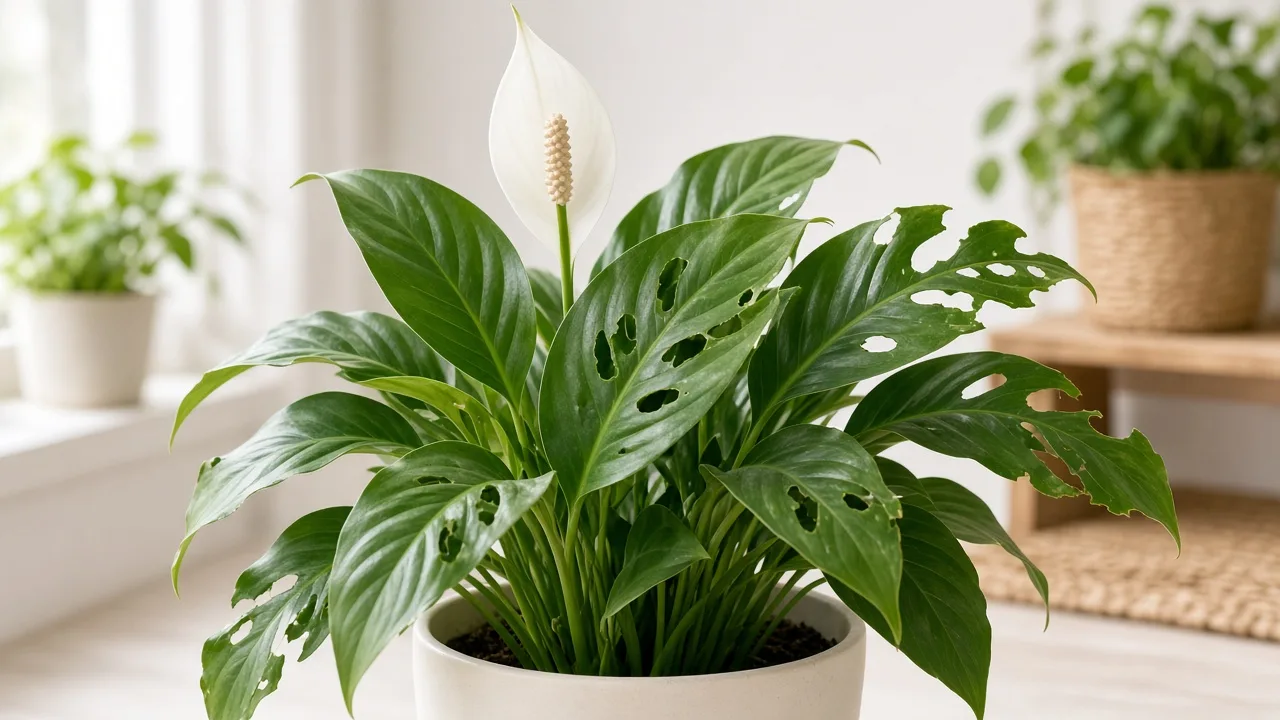
Holes in Leaves on Peace Lily: Causes, Checks & Fixes
This guide covers holes in leaves on Peace Lily. See also the general Holes in Leaves guide, watering, and light pages for this plant.
Holes in Leaves on Peace Lily: Causes, Checks & Fixes
Quick answer
Holes in peace lily leaves mean something removed tissue—chewing insects, slugs, pets, or physical tears during unfurling. Peace lily is not a plant that develops “shot hole” fungal patterns like some fruit trees; open holes with intact surrounding green blade are a pest or damage signal.
First step: Turn leaves over and check the midrib and soil line at night. Caterpillars and slugs feed when lights are low. Look for frass pellets, slime trails, and partially eaten margins.
For general hole mechanics on houseplants, see our holes in leaves guide. On peace lily, soft, broad blades are easy targets for caterpillars that hitchhike indoors from outdoor summer placement—and the clumping crown hides larvae between tightly packed petioles.
Route to leaf miners for tunnels inside the blade, not open holes. For spotty dark lesions without chewing, see black spots.
When to use this page vs other peace lily guides
| Pattern | Start here | Or route to… |
|---|---|---|
| Open chewed holes, missing sections | This page | Caterpillars |
| Serpentine tunnels inside leaf | Leaf miners | This page if holes are full-thickness |
| Dark spots, not holes | Black spots | — |
| Ragged edges without holes | Brown tips | Pest check if sudden |
| Distorted unfurling | Distorted leaves | Caterpillar on new growth |
What holes look like on Peace Lily
Peace lily leaves are broad, somewhat soft, and emerge rolled from the center crown.
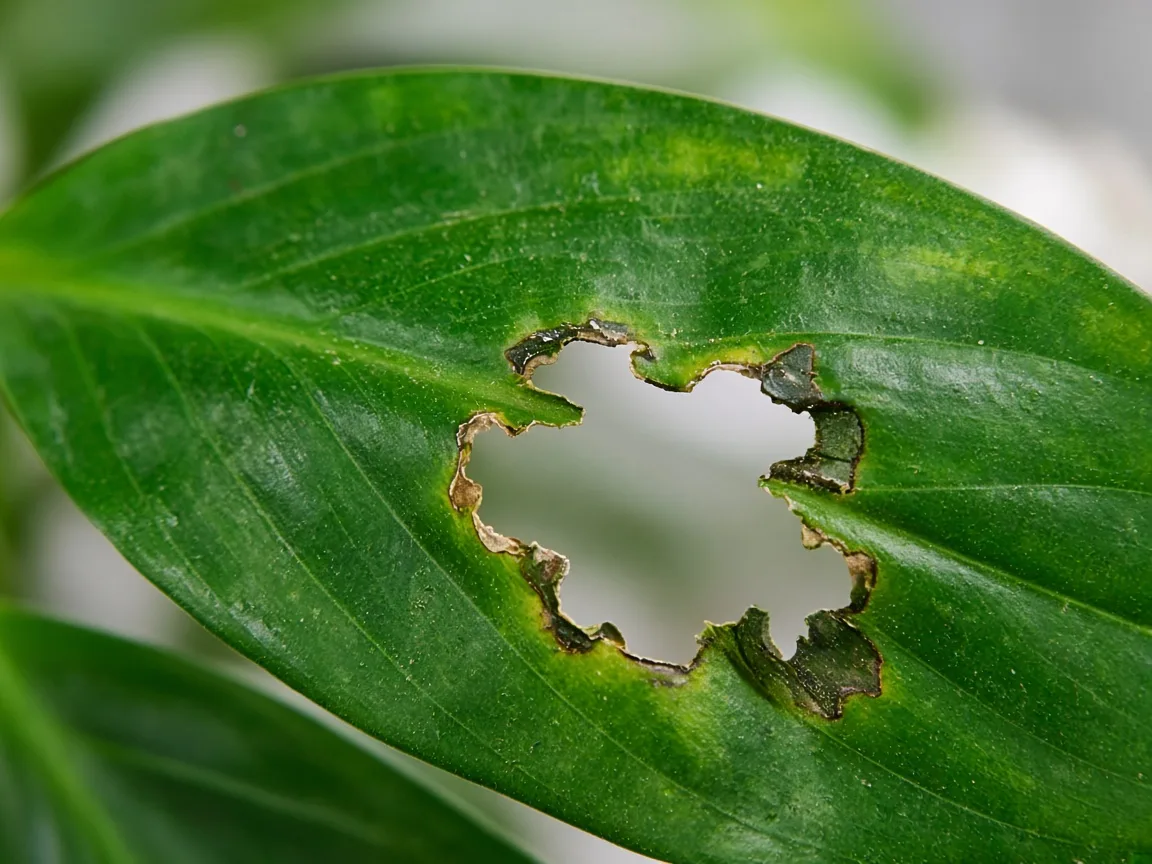
Irregular chewed hole through a peace lily blade—full-thickness tissue removal points to a chewer, not fungal leaf spot.
Caterpillar feeding — Irregular holes and notched margins; you may find green or brown larvae along the underside midrib or tucked at the petiole base. Frass pellets on leaves or soil surface. Often appears after the plant was outdoors or near open windows. Clemson recommends examining peace lily leaves often for insect evidence. See caterpillars.
Slug or snail damage — Ragged holes and slime trails on pot rim or soil—more common on floor-level pots near patios. Check at night.
Pet chewing — Torn sections with crush marks; may affect multiple plants at pet height. Peace lily is toxic to cats and dogs—ASPCA classifies Spathiphyllum as toxic. Isolate plant and seek veterinary advice if ingestion occurred; this guide does not replace medical care.
Mechanical tears — Clean splits on newly unfurling leaves snagged on another petiole or support stake—edges may brown later but no pest signs.
Aphid or thrips ragged feeding — Less common than full holes; usually with aphids or thrips on tender new growth—see distorted leaves.
Crown-cluster hiding spots (peace lily only)
Peace lily grows as a dense clump of petioles from one crown. Caterpillars often shelter between emerging spears at the center where owners do not look during routine watering. When inspecting, gently spread outer leaves and examine the tightest new unfurling blades—that is where repeat hole damage shows up first on this species.
Diagnosis traps on peace lily
Leaf miner tunnels vs open holes — Miners leave brown serpentine trails inside the blade without punching through. Peace lily rarely gets miners indoors; if you see intact green tissue around a brown tunnel, see leaf miners instead of watering changes.
Mechanical splits that brown later — A clean tear on a new spear may look like a hole once edges necrose. No frass, no night activity, and damage on only one leaf after repotting or crowding points to snag—not pest.
Pet chewing with no tooth marks visible — Cats sometimes strip soft peace lily tissue without obvious crush marks. If holes appear at pet height on multiple plants, relocate before treating for caterpillars. Remember peace lily is toxic to cats and dogs.
Why Peace Lily gets holes
Chewing pests are the primary cause indoors. Clemson lists several insect pests on peace lily—caterpillars are episodic but destructive when present.
Outdoor hitchhikers — Summer patio peace lilies bring eggs indoors on foliage.
Pet access — Low shelves and floor pots put soft leaves in reach.
Unfurl damage — Rapid spring growth in bright light can tear tender new blades against older stiff petioles.
Peace lily does not commonly get bacterial “shot hole” disease indoors; suspect chewers first. NC State notes mealybugs as the most common indoor insect on peace lily—chewing pests are episodic but more visually dramatic when present.
Confirm the cause in four checks
- Night inspection: Flashlight on undersides and soil line after dark.
- Frass or slime: Pellets → caterpillar; slime → slug.
- New vs old leaves: Caterpillars often hit tender unfurling spears first.
- Pet access: Tooth marks, disturbed soil, height at pet level?
- Recent outdoor time: Patio season → caterpillar probability rises.
First fix by confirmed cause
| Confirmed cause | First fix | Follow-up |
|---|---|---|
| Caterpillar found | Hand-pick; isolate plant | Caterpillars if more appear |
| Slug/snail | Remove; copper tape on pot rim | Night checks for one week |
| Pet chewing | Move plant out of reach | Veterinary call if ingested |
| Mechanical tear | Leave green tissue; support new spears | No pesticide needed |
| Aphids/thrips on new growth | Rinse tender shoots | Aphids or thrips |
One action first: find and remove the chewer before spraying.
Recovery timeline
| Phase | Timing | Improvement | Worsening |
|---|---|---|---|
| After removal | Days 1–3 | No new holes overnight | Fresh holes on new spears |
| New growth | Weeks 2–4 | Clean unfurling blades | Frass returns → re-inspect crown |
| Cosmetic | Ongoing | Holey old leaves remain | Crown damage rare unless severe |
Holes do not close. Clean new leaves are the marker.
What not to do
- Do not fungicide hole damage—it is not leaf spot.
- Do not ignore pet exposure—peace lily is toxic; relocate the plant.
- Do not compost infested leaves indoors—seal and discard.
- Do not overwater because leaves look damaged—check pests first.
How to prevent holes on Peace Lily
- Quarantine new plants and patio returns for two weeks.
- Inspect crown cluster weekly during active growth.
- Keep off pet-accessible shelves—toxicity risk plus chewing damage.
- Night slug patrol for floor pots near doors.
- Maintain baseline watering and bright filtered light—peace lily grows best out of direct sun so stressed outdoor-hitchhiker plants recover faster indoors.
See peace lily overview and problems hub.
Related Peace Lily guides
- Caterpillars — primary chewer on peace lily
- Leaf miners — tunnels vs open holes
- Aphids and thrips — ragged new growth
- Distorted leaves — unfurl damage without holes
- Black spots — spots, not chewing
- Peace lily pruning — removing destroyed leaves
Conclusion
Holes in peace lily leaves are a find-the-chewer problem, not a watering chart issue. Inspect undersides and the crown cluster at night, remove larvae or slugs by hand, and watch new spears unfurl clean for two weeks. Pet chewing adds toxicity risk—relocate immediately. Route to miner or pest guides if tunnels or sucking damage fits better than open holes.
Related tool
Use the Plant Problem Diagnosis Tool to narrow causes for holes in leaves on this plant before changing multiple variables at once.