Distorted Leaves on Monstera Adansonii: Causes, Checks &
Quick answer
Distorted leaves on Monstera Adansonii usually mean something interfered while thin new foliage was unfurling-most often thrips, aphids, or dry air during a growth spurt. First step: inspect the newest leaves and undersides with a hand lens before changing water, fertilizer, or repotting.
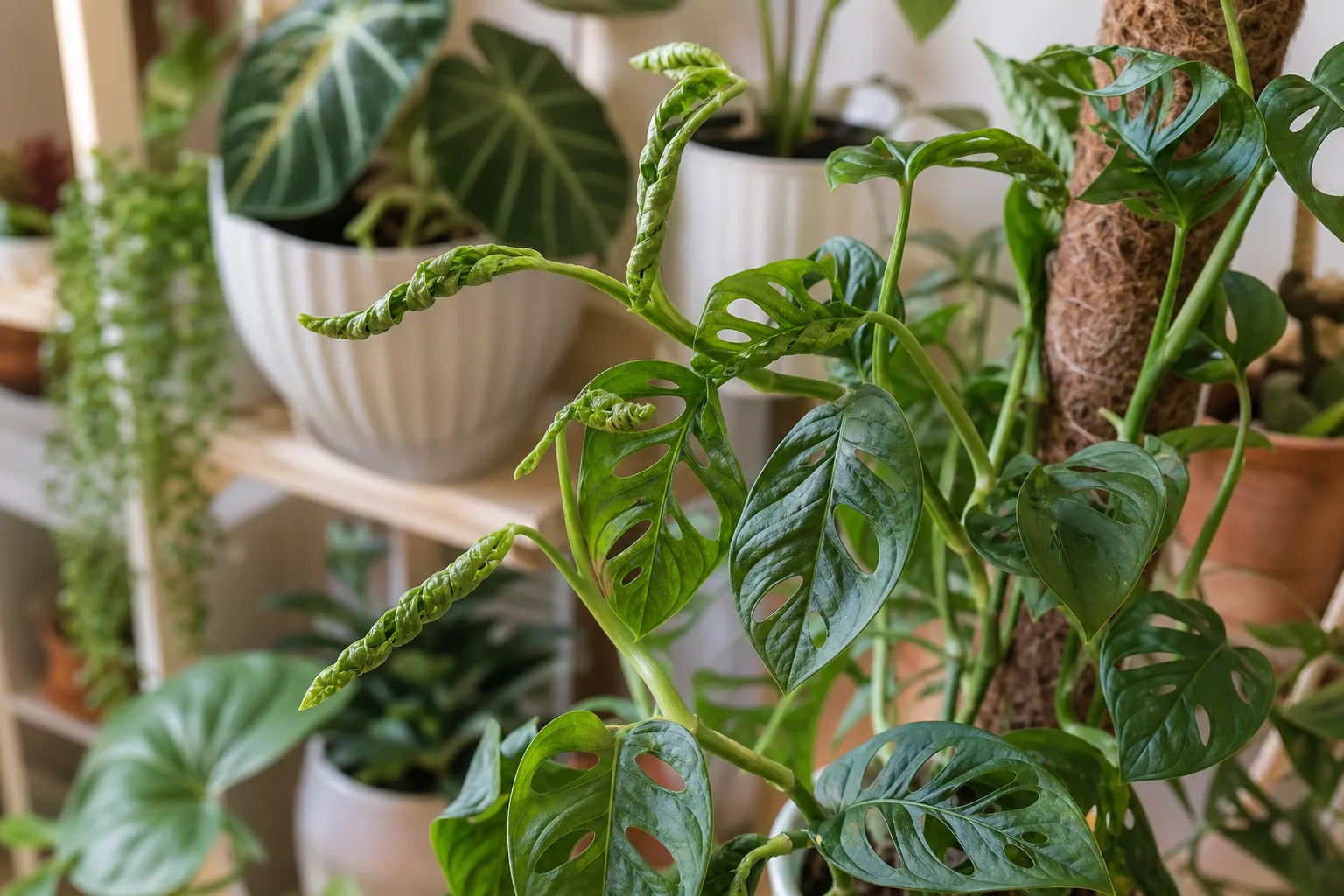
Distorted Leaves on Monstera Adansonii: Causes, Checks & Fixes
This guide covers distorted leaves on Monstera Adansonii. See also the general Distorted Leaves guide, watering, and light pages for this plant.
Distorted Leaves on Monstera Adansonii: Causes, Checks & Fixes
Quick answer
Distorted leaves on Monstera adansonii-the Swiss cheese vine-mean new foliage is opening twisted, puckered, wrinkled, cupped, or smaller than normal, not just developing its signature oval holes. On Monstera Adansonii overview, thin leaves mark easily and the pattern almost always starts on the newest shoots because sap-sucking pests and dry air attack tissue while leaves are still soft. Environmental stress from Monstera Adansonii repotting guide, drafts, or uneven watering can wrinkle margins, but true distortion with silver scarring, stickiness, or stunted unfurling points to insects or care swings that hit during active growth.
First step: inspect the newest unfolding leaves and their undersides with a hand lens before you change watering, repot, or fertilize. If you see live insects, honeydew, silver streaks, or black thrips specks, isolate the plant immediately. Only after you confirm no pest pattern should you shift humidity, light, or water rhythm.
What distorted leaves look like on Monstera Adansonii
Swiss cheese vine pushes leaves from vining stems that climb a moss pole or trail from a hanging pot. Damage on still-unfurling leaves is the hallmark of distortion-not the normal oval fenestrations that develop as leaves mature.
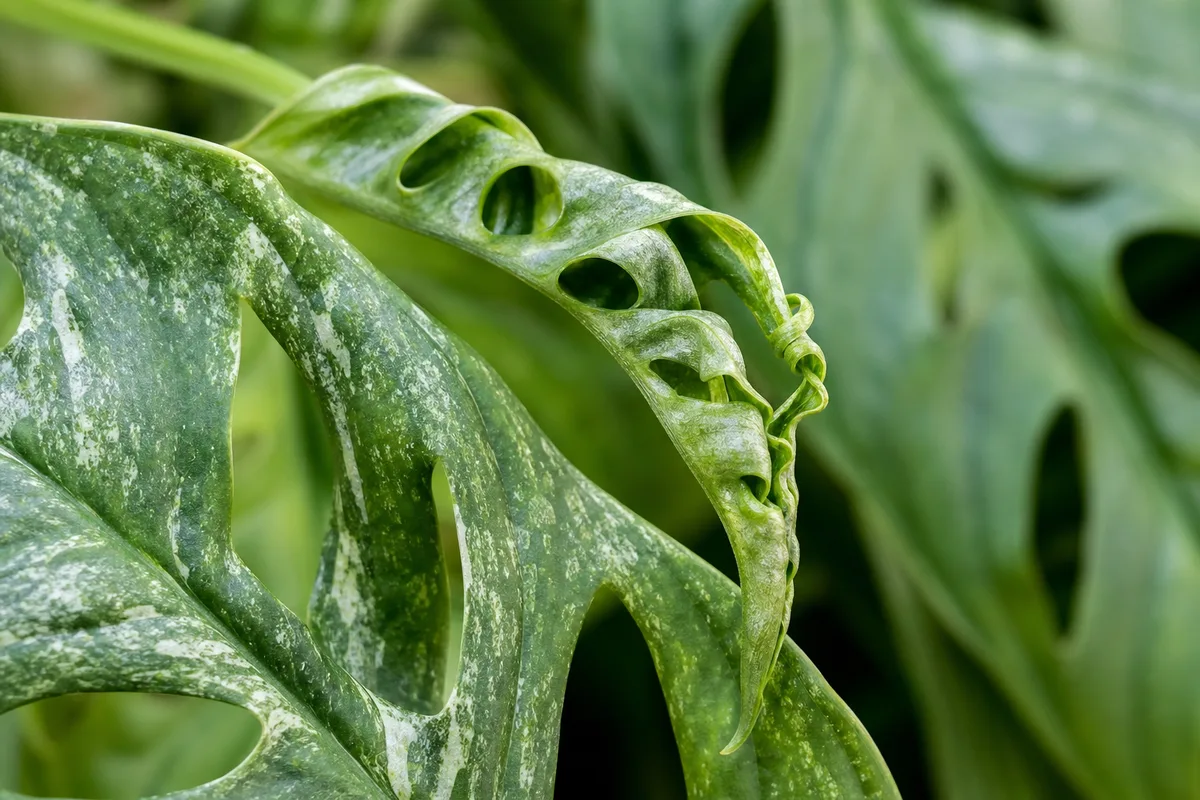
Distorted Leaves symptoms on Monstera Adansonii - compare with healthy tissue on the same plant.
Watch for:
- Twisted or corkscrew tips on shoots that have not fully opened
- Puckered, wrinkled, or cupped blades that stay misshapen after the leaf hardens
- Smaller-than-normal new leaves with compressed or uneven fenestrations
- Silver-gray scars or stippling where tissue was rasped, often with tiny black specks
- Sticky honeydew on upper leaf surfaces, stems, or the pot rim
- Pear-shaped aphid clusters on tender new growth and leaf axils
- Leaves that stall mid-unfurl and never flatten, staying crumpled like paper
Healthy Adansonii leaves develop fenestrations gradually; the holes should look roughly symmetrical once the blade opens. If older hardened leaves look fine but every new leaf arrives twisted, suspect pests or environmental stress on tender growth-not your watering calendar alone.
Why Monstera Adansonii gets distorted leaves
Swiss cheese vine produces soft new tissue regularly when light and moisture are right. That growth habit-and thinner leaf tissue than Monstera deliciosa-attracts problems that show up as distortion.
Thrips rasping tender tissue. Thrips feed by puncturing leaf surfaces and sucking cell contents, leaving silver-gray streaking and stippling on young tissue. New growth often shows the worst symptoms: curling, stunting, and misshapen leaves that fail to open cleanly. Black fecal specks near feeding areas confirm thrips rather than simple dry air.
Aphids on unfolding leaves. Small, soft-bodied insects pierce soft new growth as leaves open, causing curl, stunting, and honeydew. They cluster on the newest shoots and undersides where rinses miss them. Stressed Adansonii in low light or after a repot is more susceptible.
Low humidity during unfurling. Dry winter air or placement near heating vents can wrinkle margins or slow clean opening on thin Adansonii leaves. This usually adds brown crisp edges rather than insect-like puckering, but overlapping stress makes diagnosis harder.
Repot shock or care swings. Recent repotting, a move to a new window, or changing water rhythm mid-growth spurt can temporarily twist new leaves while roots re-establish. Distortion here lacks honeydew, silver scarring, or insect clusters.
Overwatering or underwatering during growth. Roots that sit wet too long cannot supply even moisture to expanding leaves; drought stress mid-unfurl produces thin, crinkled new blades. Check whether distortion coincides with soggy soil or a pot that dried completely between waterings.
Heavy fertilizer on stressed plants. Excess nitrogen pushes soft shoots that both aphids prefer and open unevenly when roots are already struggling.
How to confirm the cause
Work through these checks in order:
- Age of affected leaves - Distortion on newest growth only strongly suggests pests or humidity stress during unfurling. Uniform damage on old and new leaves points to chronic watering or light problems.
- Underside inspection - Use a hand lens on the top two or three newest leaves. Aphids look pear-shaped in clusters. Thrips are slender; look for silver streaks and black fecal dots.
- Sticky test - Honeydew feels tacky and may grow sooty mold. Normal Adansonii leaves are not sticky.
- Silver scarring - Rasping damage with gray scars confirms thrips-type feeding, not simple underwatering.
- Fenestration check - Normal holes develop symmetrically as the leaf matures. Compressed, asymmetric lobes on new tissue suggest feeding damage.
- Neighbor scan - Inspect Philodendron, other Monsteras, and shelf mates. Pests spread to soft growth on related aroids.
- Soil and roots - Sour smell, mushy roots, or water standing in the saucer suggest rot overlapping distortion-not the primary cause of twisted new tips, but worth ruling out if stems feel soft.
- Recent changes - Note repotting, fertilizer, window moves, or AC/heater drafts in the last two weeks.
If you find no insects, no stickiness, no silver scars, and no recent care upheaval, reassess humidity, drafts, and whether the plant was recently repotted before treating for pests.
First fix for Monstera Adansonii
Inspect the newest leaves and undersides with a hand lens, and isolate the plant if you find aphids, thrips, honeydew, or silver scarring.
Move the Adansonii away from other houseplants. In good light, flip the top two or three newest leaves and confirm whether live insects or rasping damage is present. If aphids or thrips are confirmed, rinse leaf undersides and new shoots with lukewarm water in a sink-support trailing stems so you do not snap thin vines.
Do not repot, fertilize, or spray insecticide on day one if inspection shows only dry-air wrinkling without pests. Do not trim every distorted leaf before you identify the cause-you may remove the best clues on the newest tissue.
Step-by-step recovery
After the initial inspection and isolation:
- If aphids or thrips are present - Rinse undersides every two to three days until two weekly checks find no live insects. Apply insecticidal soap labeled for houseplants only if rinsing fails; coat tops and undersides and repeat weekly because contact sprays have no residual activity.
- If dry air caused wrinkling - Run a humidifier targeting 50–60% RH near the pot and move away from heating vents before increasing watering.
- If repot shock - Hold care steady: Monstera Adansonii light guide, allow top 3–5 cm to dry before watering, no fertilizer for four to six weeks while new leaves test clean opening.
- If watering mismatch - Correct the rhythm: water when the top 3–5 cm is dry, not on a fixed calendar. Empty the saucer after each watering.
- Trim damaged leaves - Remove only fully collapsed or pest-harboring leaves after the cause is controlled. Partial puckering on old leaves is cosmetic once new growth is clean.
- Inspect neighbors - Quarantine shelf mates two weeks before mixing the collection again.
Monstera Adansonii contains calcium oxalate crystals and is toxic to pets. Wear gloves when handling sap during rinsing or pruning, and keep the plant out of reach while treatments dry.
Recovery timeline
Light pest distortion often stabilizes within one to two weeks once rinsing removes colonies and new leaves open cleanly. Soap cycles may take two to three weeks with weekly repeats to catch nymphs hidden in curled tissue.
Environmental wrinkling from dry air improves within 7–14 days after humidity rises and new leaves show smooth margins with normal fenestrations.
Worsening signs: distortion spreading to every new shoot despite rinses, silver scarring on successive unfurling leaves, stem softening at the base with sour soil, or stunted vine growth with persistent honeydew and ants.
Lookalike symptoms to rule out
Normal fenestration development - Oval holes appearing as the leaf matures, with symmetrical shape once fully open. Not puckering, stickiness, or silver scars.
Curling from underwatering - Inward curl with light pot weight and dry soil at 3–5 cm depth; leaves often feel thin, not rasped or sticky.
Low humidity crisping - Brown dry edges and papery tips without silver scars or honeydew.
Spider mites - Fine stippling and webbing in dry heated rooms; distortion is less common than uniform bronzing on thin Adansonii leaves.
Leggy growth from low light - Small pale leaves with long internodes; distortion from stretching differs from pest puckering on otherwise green new tissue.
Sunburn - Bleached or scorched patches on leaves facing direct sun; not twisted unfurling on shaded new growth.
Mistakes to avoid
Do not increase watering because leaves look twisted-soggy roots add rot without fixing pest distortion.
Do not fertilize a stressed or pest-hit plant hoping new leaves will fill out faster; soft nitrogen-rich shoots invite aphids.
Do not spray oil or soap before a hand-lens inspection-you may burn delicate thin foliage without hitting the real cause.
Do not return an isolated plant after one clean day; hold it two weeks with weekly checks.
Do not confuse normal holes with damage-fenestrations should develop cleanly; corkscrew unfurling is not normal Adansonii growth.
Do not stack repotting, fertilizer, and pruning on day one when the cause is still unknown.
Monstera Adansonii care cross-check
While correcting distortion, keep baseline care steady so you do not stack stressors.
- Light: Bright indirect light; too much direct sun scorches thin leaves and adds damage that mimics distortion.
- Water: Allow top 3–5 cm to dry before watering thoroughly; reduce frequency in winter when growth slows.
- Humidity: Target 50–60% for clean leaf opening; steady humidity supports recovery without the dry air that favors spider mites, aphids, and other pests.
- Support: Provide a moss pole or trellis if you want larger leaves; trailing pots dry faster and mark more easily.
- Soil: Well-draining aroid mix with perlite and orchid bark; avoid pots that stay wet for days after watering.
Fix the distortion cause first-pests, humidity, or watering-before tweaking every care variable at once.
How to prevent distorted leaves next time
Scout newest leaf undersides weekly, especially when spring growth accelerates. Quarantine new Adansonii and cuttings two weeks before placing them near other aroids.
After summer outdoors, rinse and inspect before the plant re-enters your home.
Use balanced fertilizer at half strength monthly in active growth-not heavy nitrogen that pushes soft aphid-friendly shoots.
Keep humidity steady near 50–60% so thin leaves unfurl without wrinkling.
Wash hands and tools after handling infested plants to avoid carrying aphids or thrips to clean shelves.
When to worry
Escalate when thrips or aphids cover every unfurling shoot despite a week of rinsing, when silver scarring appears on successive new leaves, or when stems soften at the base while soil smells sour.
A few aphids on one new leaf is manageable with isolation and rinsing; distortion spreading across the whole vine with sticky residue and ants is not.
Conclusion
Distorted leaves on Monstera adansonii signal that something interfered while thin new foliage was still soft-most often thrips, aphids, or dry air during unfurling, not the plant’s normal fenestrations. Inspect the newest leaves first, isolate when insects or silver scarring appear, rinse before you spray, and judge recovery by clean new growth with symmetrical holes. Steady humidity, consistent watering, and weekly scouting keep small colonies from twisting every new Swiss cheese vine leaf on your shelf.
When to use this page vs other Monstera Adansonii guides
- Monstera Adansonii watering guide - Use for routine moisture checks before assuming distorted leaves is the main issue.
- Monstera Adansonii problems hub - Browse all 22 common issues on this species.