White Spots on Maranta Leuconeura: Causes, Checks & Fixes
Quick answer
White spots on Maranta Leuconeura usually mean mealybugs in leaf axils, hard-water mineral crust, powdery mildew, or spider mite stippling-not one disease. First step: wipe one spotted leaf and inspect axils with bright light before you spray anything.
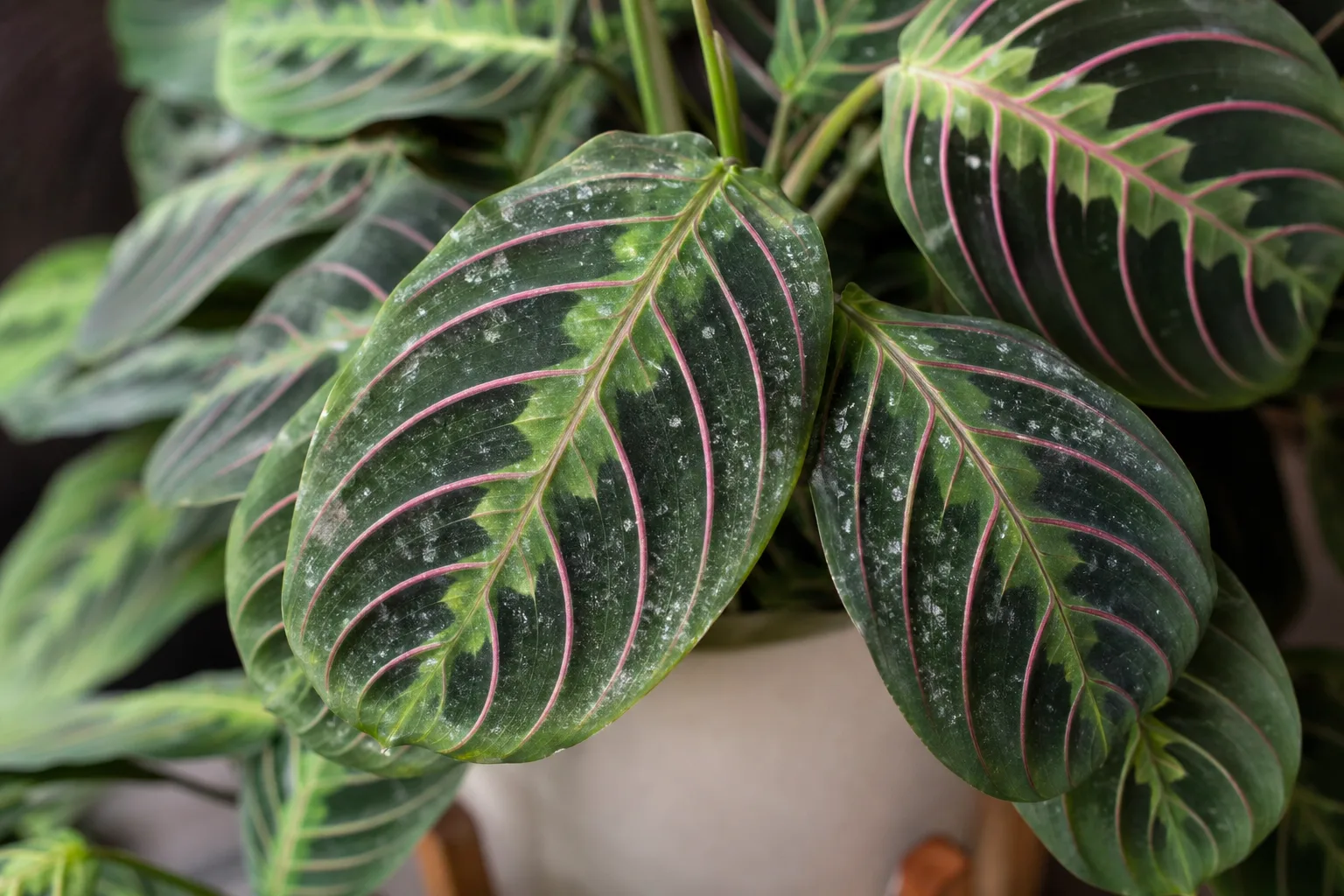
White Spots on Maranta Leuconeura: Causes, Checks & Fixes
This guide covers white spots on Maranta Leuconeura. See also the general White Spots guide, watering, and light pages for this plant.
White Spots on Maranta Leuconeura: Causes, Checks & Fixes
Quick answer
White spots on Maranta Leuconeura (prayer plant) fall into four common buckets: cottony mealybug colonies in leaf axils, chalky mineral crust from hard water or fertilizer splash, powdery mildew as a white film on leaf surfaces, and fine pale stippling from spider mites in dry indoor air. They look similar from across the room but need different fixes.
First step: wipe one spotted leaf with a damp cloth and inspect every leaf axil with bright light before you spray. If white tufts sit in crevices and smear pink when touched, you have mealybugs. If spots wipe off cleanly and stay gone, think mineral residue. If a powdery film spreads and reappears after wiping, suspect mildew. If you see fine dots plus webbing, check for spider mites.
Why Maranta Leuconeura gets white spots
Prayer plant foliage is patterned, thin, and held on short petioles that fold upward at night through a pulvinus joint at each base. That growth habit creates sheltered axils where mealybugs hide in cottony wax-often mistaken for white mold until you look closely. Warm indoor rooms without cold winters let mealybug populations persist year-round on houseplants.
Maranta Leuconeura is also sensitive to water quality. Penn State Extension lists tip burn on Maranta from fluoride toxicity among common problems. When you mist leaves, splash during watering, or use untreated tap water high in minerals, dried droplets leave chalky white specks on the patterned surface-especially on older lower leaves that catch runoff.
High humidity keeps prayer plants happy, but crowded pots on shelves with poor airflow can favor powdery mildew-a white powdery coating on leaves and stems. Maranta needs moist mix and 60%+ humidity; when foliage stays wet too long without drying, fungal films can start as small white spots before merging.
Spider mites exploit the flip side: winter heating drops humidity while the plant still wants moisture. Mites pierce leaf cells and leave pale stippling that reads as white or silvery dots on green-and-red panels, often with fine webbing on undersides. Thrips can add silvery scars on thin Marantaceae leaves, but mealybugs and mineral deposits remain the most common white-spot reports on prayer plant.
What white spots look like on Maranta Leuconeura
Use these patterns together-not one spot in isolation:
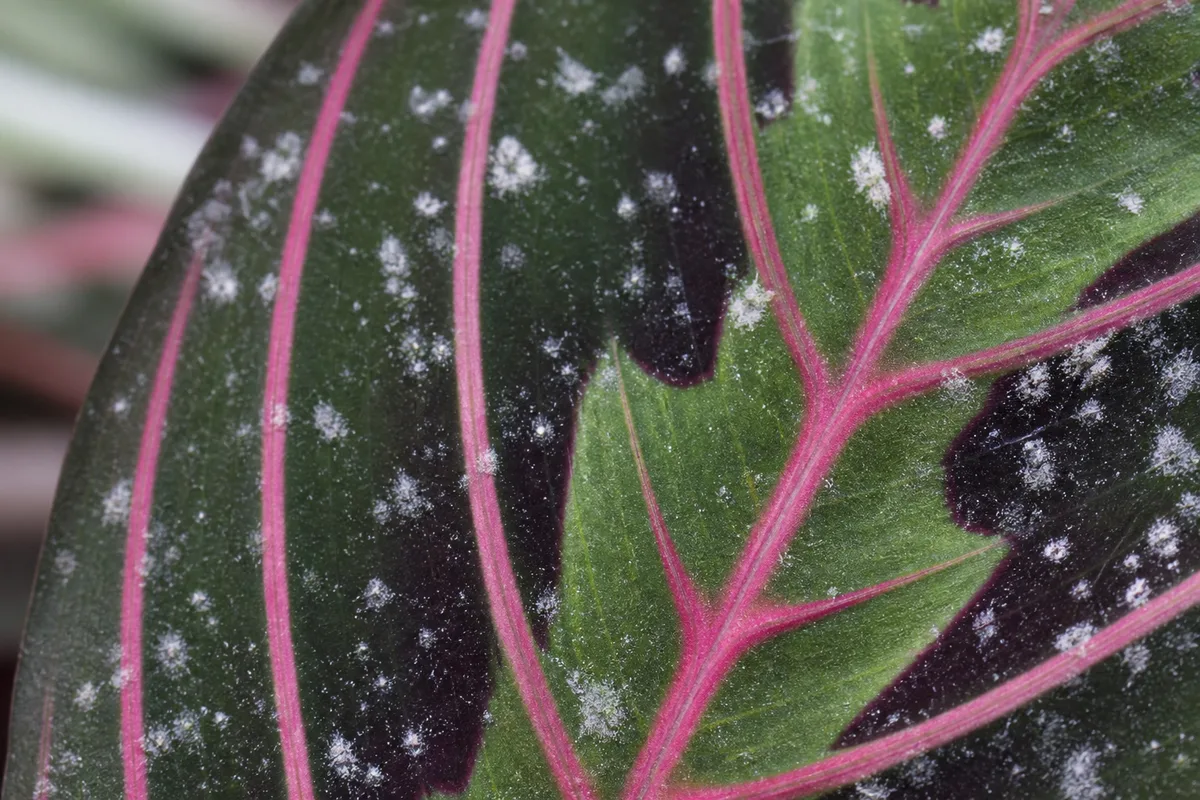
White Spots symptoms on Maranta Leuconeura - compare with healthy tissue on the same plant.
Mealybug white spots:
- Fluffy cottony tufts in leaf axils and at the base of nightly folded leaves
- Clusters along the rhizome crown near soil, inside cache pots or grouped displays
- Sticky honeydew on lower leaves; possible black sooty mold on patterned panels
- Yellowing or stalled new rolled leaves on infested sections
Mineral or hard-water white spots:
- Flat chalky dots on upper leaf surfaces, often where droplets dried
- Strongest on older leaves that caught splash during watering
- Wipe off cleanly with a damp cloth; no pink smear when touched dry
- No stickiness, webbing, or spreading powder over days
Powdery mildew:
- Soft white powdery film on leaf faces or petioles that may merge into patches
- Spots return after wiping within days as spores regrow
- Often follows crowded placement, stagnant air, or wet foliage overnight
- UMD Extension recommends removing infected leaves and improving air circulation
Spider mite stippling:
- Fine pale dots across leaf panels, not cottony clumps in axils
- Fine webbing on undersides when populations build
- Worsens in hot dry air near heaters or AC vents
- Leaves may curl or crisp at margins while spots stay pin-sized
Do not confuse normal guttation-clear water beads at leaf margins after heavy watering-with white pest wax or mineral crust. Guttation dries clear or slightly chalky at the edge only, without axil clusters or spreading film.
How to confirm the cause
Work through this order before buying sprays:
- Wipe test - Dampen a soft cloth and gently wipe one spotted area. Mineral residue comes off and stays off. Mealybugs smear pinkish when crushed with a dry swab. Mildew powder may wipe away but returns on the same spot within days.
- Axil and crown inspection - Lift outer leaves and check every petiole base and the rhizome near soil with bright light. Mealybugs concentrate in protected branch crotches and crowns.
- Underside check - Flip patterned leaves and look for webbing, crawlers, or flat powder on lower surfaces.
- Pattern and spread - Localized chalky dots on lower leaves suggest splash. Cotton in multiple axils suggests mealybugs. Expanding powdery film suggests mildew. Pinpoint stippling plus webbing suggests mites.
- Water and care context - Recent misting with tap water, overhead watering, or fertilizer foliar spray points to residue. Winter heat, dry air, and neglected neighbors point to mites. Crowded humidity trays with wet leaves overnight point to mildew.
- Neighbor plants - Inspect other Marantaceae on the same shelf for axil wax, stippling, or powder-pests and mildew travel between pots.
If roots are firm, soil smells neutral, and the only finding is wipe-off chalk on two old leaves, mineral deposits fit. If cottony wax appears in three or more axils with stickiness, mealybugs fit regardless of a few mineral dots elsewhere.
Lookalike symptoms to rule out
Helminthosporium leaf spot on Maranta starts as small water-soaked spots that turn yellow and tan with halos-not fluffy white axil wax. Penn State Extension lists this fungal leaf spot on Maranta and recommends avoiding overhead watering.
Normal leaf aging sheds an occasional lower leaf with a dry edge while the clump keeps folding at night. That is not white spotting across active growth.
Perlite or dust on leaf surfaces brushes off dry without pink smear, stickiness, or return after cleaning.
Fertilizer burn on Maranta tips shows brown margins from fluoride or excess salts-not isolated white cotton in axils.
First fix for Maranta Leuconeura
Wipe one affected leaf with a damp cloth, then inspect every leaf axil and the rhizome crown with bright light before applying any treatment.
That single diagnostic pass separates mineral crust you can ignore from live mealybugs, mildew, or mites that need targeted action. Do not spray fungicide or insecticide on day one without knowing which category you have-treating mealybugs like fungus wastes time while colonies spread.
Once you identify the cause:
- Mineral residue only - Wipe affected leaves with plain water; switch to filtered or overnight tap water and water at the soil line so crowns stay dry. Illinois Extension warns that water standing on Maranta crowns promotes stem rot-avoid overhead wetting that repeats spotting.
- Mealybugs confirmed on Maranta Leuconeura - Isolate the plant and dab visible cottony clusters with 70% isopropyl alcohol on a swab before starting repeat insecticidal soap applications.
- Powdery mildew confirmed - Remove the worst affected leaves, improve spacing and airflow, and keep foliage dry between waterings.
- Spider mites confirmed - Rinse undersides thoroughly and raise humidity around the plant without leaving crowns soggy.
Step-by-step recovery
After your first-fix diagnosis:
- Isolate if mealybugs, mites, or spreading mildew are confirmed-isolate infested houseplants away from calathea, stromanthe, and other Marantaceae on the same shelf.
- Clean foliage - Wipe mineral spots with a soft damp cloth. For mealybugs, follow alcohol dabs with thorough coverage of axils using insecticidal soap on label intervals.
- Remove heavily infected leaves - Cut only leaves with thick mildew film or severe mite stippling using clean scissors. Do not strip the plant bare; prayer plant needs remaining foliage for recovery.
- Adjust watering method - Water at soil level; keep mix evenly moist at the top 2 cm without saturating crowns. Let the top layer approach dryness briefly in winter when growth slows.
- Improve airflow - Space pots so leaves dry within hours after watering. A small fan on low in humid rooms reduces mildew risk without blasting direct drafts on foliage.
- Repeat monitoring weekly - Recheck axils, new rolled leaves, and wipe-test any returning white patches for three to four weeks. Mealybug treatments usually require multiple applications because eggs hatch on staggered intervals.
- Escalate only if needed - If cottony wax, spreading powder, or stippling plus webbing persists after four weeks of consistent care corrections, consider discarding a heavily infested plant rather than repeated broad sprays in a mixed collection.
Recovery timeline
Mineral spots clear immediately after wiping and stay gone once you change water or watering method. Mealybug alcohol dabs show fewer live clusters within days; full control often takes two to four weeks with repeat soap applications. Powdery mildew stops spreading within one to two weeks after leaf removal and airflow improvements; new growth should emerge clean. Spider mite rinses show reduced stippling on fresh leaves within one to two weeks once humidity rises and populations drop.
Old spotted or yellowed leaf tissue rarely regains perfect prayer plant patterning. Judge success by clean new leaves folding at night, firm petioles, and no fresh white patches-not by cosmetic recovery of every older blade.
Mistakes to avoid
Do not assume every white patch is mealybugs-mineral crust is common on fluoride-sensitive Maranta and needs no pesticide.
Do not mist leaves with hard tap water to “raise humidity” while fighting white spots; that repeats mineral deposits and wets crowns.
Do not spray fungicide on cottony axil clusters that are clearly insects.
Do not ignore ants on pot rims-they often signal honeydew-producing pests below.
Do not repot, fertilize, and prune heavily on the same week while diagnosing; change one variable at a time so you can read the plant’s response.
Do not compost removed mealybug- or mildew-infected leaves near other houseplants.
How to prevent white spots next time
Use filtered or overnight tap water and water at the soil line to limit mineral crust and crown wetness. Scout leaf axils and new rolled leaves during weekly watering checks-mealybugs are easiest to stop when wax is limited to one or two crevices.
Quarantine new prayer plants for two to three weeks before placing them in Marantaceae groupings. Inspect undersides and axils before mixing humidity trays.
Maintain 60%+ humidity with pebble trays or humidifiers rather than frequent overhead misting that leaves mineral spots on patterned foliage.
Space pots for airflow so leaves dry after watering; this lowers powdery mildew pressure without sacrificing the humidity Maranta prefers.
Keep spider mites in check by avoiding prolonged dry air near heaters. A hygrometer near the plant helps you spot winter humidity drops before stippling spreads.
During active growth, fertilize lightly at half strength in spring and summer only-avoid foliar fertilizer that dries into white spotting on leaves.
When to worry
Treat as urgent when powdery white film spreads across most of the canopy within days, cottony mealybug masses line most petioles with sticky honeydew and stalled new growth, or spider mite webbing covers multiple leaves with widespread stippling. Heavily infested houseplants are often best discarded when multiple treatment rounds fail and neighboring plants remain at risk.
A few wipe-off chalky dots on older leaves after one misting session is not urgent-adjust water and method, then watch new growth.
Conclusion
White spots on Maranta Leuconeura reward a careful look before any spray. Wipe, inspect axils, and match the pattern to mealybugs, mineral residue, mildew, or mite stippling-then apply one targeted fix. Prayer plant recovers well from early pest and mildew catches when crowns stay dry, humidity stays steady, and you judge progress by clean new folded leaves rather than perfect old patterning.
When to use this page vs other Maranta Leuconeura guides
- Maranta Leuconeura watering guide - Use for routine moisture checks before assuming white spots is the main issue.
- Maranta Leuconeura problems hub - Browse all 40 common issues on this species.
- Mealybugs on Maranta Leuconeura - Different entry point when symptoms overlap with white spots.