Thin Stems on Manjula Pothos: Causes, Checks & Fixes
Quick answer
Thin, floppy Manjula Pothos stems usually mean insufficient light-the variegated leaves cannot photosynthesize enough to build firm vine tissue. First step: move to brighter indirect light and confirm the top 3–5 cm of soil dries between waterings before fertilizing or repotting.
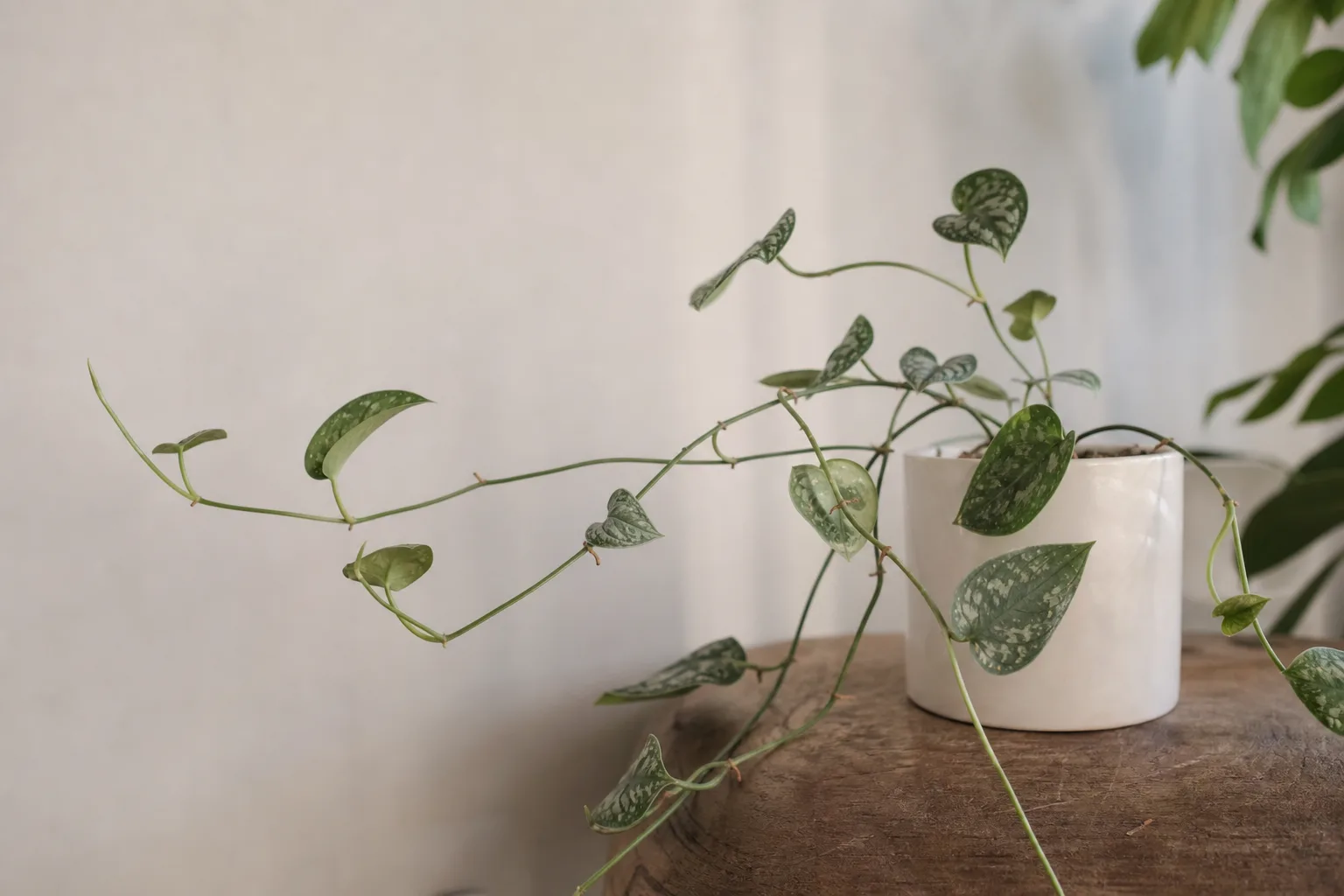
Thin Stems on Manjula Pothos: Causes, Checks & Fixes
This guide covers thin stems on Manjula Pothos. See also the general Thin Stems guide, watering, and light pages for this plant.
Thin Stems on Manjula Pothos: Causes, Checks & Fixes
Quick answer
Thin stems on Manjula Pothos (Epipremnum aureum ‘Manjula’) mean the vine is stretching for energy it is not getting-not a random weakness. Heavy cream-and-white variegation leaves less green tissue for photosynthesis, so Manjula builds slender, floppy stems with wide gaps between small leaves when light is too low.
First step: move the plant to brighter indirect light and confirm your watering matches how fast the pot dries. Manjula needs stronger light than golden pothos to hold variegation and firm stems. Only after light improves should you prune bare runners above a node or adjust feeding during active growth.
Scope: This page is the thin-stem morphology guide-hollow, weak vine diameter and stems that bend flat under leaf weight. Long bare internodes on otherwise firm stems are covered on leggy growth. Chronic dim-room placement and the hand-shadow test live on not enough light. Proactive window placement year-round is in the Manjula light guide.
What thin stems look like on Manjula Pothos
Healthy Manjula vines feel firm and produce relatively short internodes with broad, wavy marbled leaves. Thin-stem problems show a different pattern:
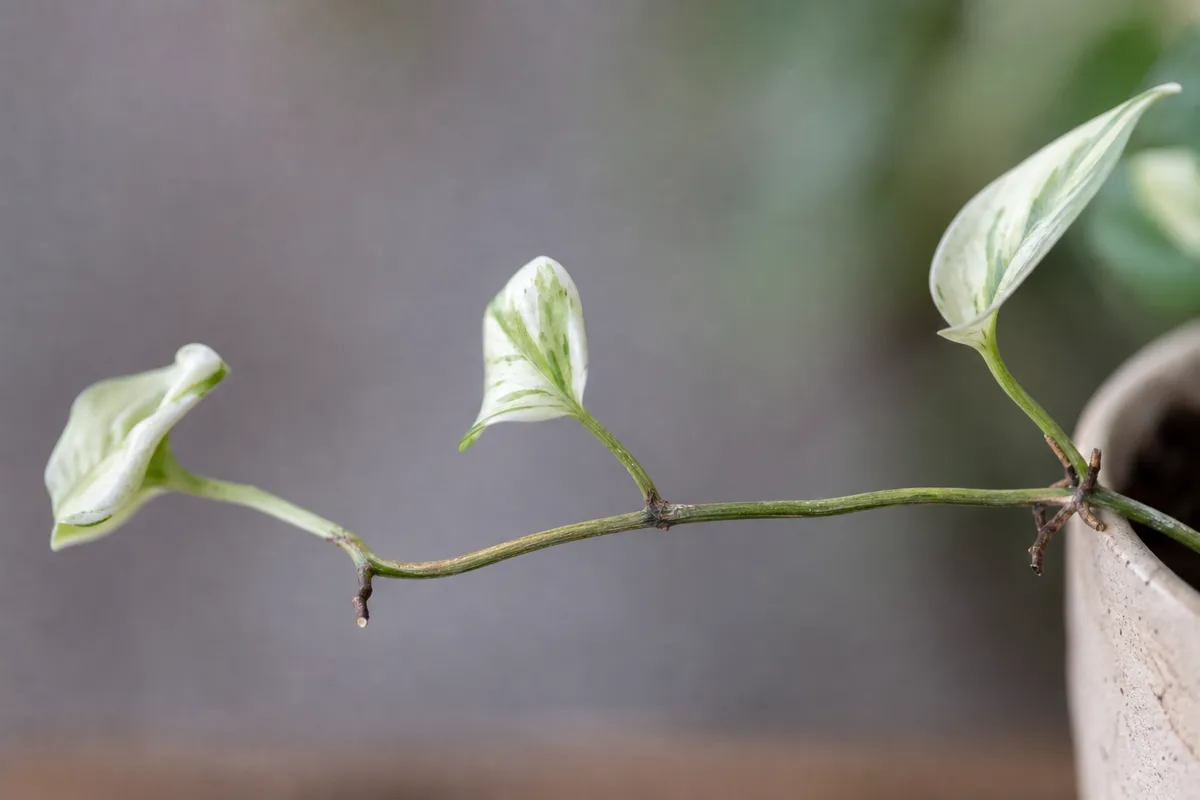
Thin Stems symptoms on Manjula Pothos - compare with healthy tissue on the same plant.
- Spindly vine diameter - stems feel hollow and bend flat under leaf weight instead of holding shape
- Long bare gaps between leaves while new foliage stays small
- Pale or mostly green new leaves with faded white variegation
- Vines reaching sharply toward one window or grow lamp
- Slow unfurling - marbled leaves take longer than one to two weeks to open
- Droopy tips even when soil is neither bone dry nor soggy
This is not the same as normal Manjula trailing. A long vine with closely spaced, firm stems and full variegation is fine. Thin stems mean the plant is etiolating-growing toward light without the resources to thicken wood.
Symptom comparison table
Use this grid when you are unsure whether you are seeing thin-stem etiolation or a lookalike:
| Pattern | Stem feel | Variegation on new leaves | Soil cue | Best page |
|---|---|---|---|---|
| Thin-stem etiolation | Hollow, bends flat | Faded white; small leaves | Often wet in dim light | This page |
| Leggy but firm stems | Rigid; long bare gaps | May fade but stem holds shape | Normal dry cycles | Leggy growth |
| Not enough light (early) | May be thin or firm | Mostly green reversion | Stays damp 10–14 days | Not enough light |
| Root rot | Soft at nodes | Yellowing spreads | Wet, sour smell | Root rot |
| Underwatering wilt | Can thin over time | Dull; may crisp | Very dry throughout | Watering guide |
Symptom field marks (what to look for)
Thin floppy stems in low light: Picture a north-facing bookshelf about 3 m from glass. The vine reaches toward the room’s one window; each new section feels like soft wire between small, mostly green leaves. White marbling on the newest leaf is thin or absent. Gentle pressure at mid-stem makes the cane fold-not snap, but sag.
Firm recovery after light fix: After moving to an east sill within 60–90 cm of glass (March 2026 grower log), new tips on the same plant showed shorter internodes and stems that resisted gentle bending within three weeks. Old thin sections above the first healthy node stayed floppy until pruned-matching the rule that existing stretched cane does not thicken along its length.
Why Manjula Pothos gets thin stems
Insufficient light (most common cause)
Pothos prefers bright, indirect light and becomes a vigorous grower under those conditions. Manjula is a slower-growing, heavily variegated cultivar that needs even more usable light because lower light may cause variegated varieties to lose coloring as the plant produces greener leaves to capture energy.
In dim shelves or north-facing rooms far from glass, Manjula elongates stems toward the brightest source. Etiolation produces elongated, spindly stems and pale leaves-the classic thin-stem look. More water or fertilizer cannot replace missing photons.
Overwatering in low light
When Manjula photosynthesizes little, it uses water slowly. Mix that stays wet for a week starves roots of oxygen. Epipremnum aureum should have medium that dries between waterings. Weak roots move less water, so top growth stalls and existing stems feel softer even though you keep watering on schedule. See overwatering on Manjula Pothos when wet soil and soft nodes overlap.
Chronic underwatering or drought stress
Repeated dry cycles force the plant to shed leaves and redirect energy to survival. New stems emerge thin because the root system cannot support bulk tissue. Check whether the top 3–5 cm dries within your normal seven-to-fourteen-day rhythm-not whether the calendar says water today.
Root-bound or exhausted mix
Pothos tolerates a snug pot, but severely circling roots or two-year-old peat that compacts limit uptake. When the plant dries out within a day of every watering yet stems stay thin, root space may be the limit-not light alone. Repot guidance is in the soil guide.
Seasonal winter stretch
Pothos naturally slows in winter and growth may pause in short-day months. Slight etiolation on plants kept far from windows differs from year-round spindly growth in a permanently dim spot.
How to confirm the cause
Work through these checks before stacking fixes:
- Hand-shadow test at leaf level - Hold your hand between the window and the foliage at midday. A sharp, defined shadow on the leaves suggests usable light for variegated Manjula; a faint blur or no shadow means the spot is too dim. Full placement diagnostics are on not enough light and the light guide.
- Light direction - If vines lean or add length weekly toward one window, light is the primary suspect. Compare newest internode length to growth from six months ago in a brighter season.
- Variegation on newest leaves - Fading white patches on new foliage while stems stretch confirms light stress on this variegated cultivar.
- Soil moisture rhythm - Stick a finger 3–5 cm deep. Wet soil for seven or more days in moderate indoor light points to overwatering compounding weak growth.
- Stem firmness at nodes - Soft, dark nodes with damp soil suggest root trouble; firm but thin stems in dry-to-normal soil point to light.
- Pot and roots - Lift the plant gently. Roots circling the drainage holes or a pot that dries in one day after every watering signal root-bound stress.
- Season - Active-season stretch during spring or summer is cultural. Firm stems with little new growth in cool short-day months may be normal rest.
First fix for Manjula Pothos
Move the plant to the brightest indirect spot available-an east window or a few feet from a south window with sheer curtain.
Manjula cannot thicken stems in a dim corner. After one week in better light, check soil moisture before the next watering: allow the top 3–5 cm to dry. If bare stems exceed 15 cm without leaves, cut just above a node with clean shears once light is corrected-pothos branches from nodes when conditions support new side shoots. Follow pruning for node placement and propagation if you want to root healthy tip cuttings.
Manjula sap contains calcium oxalate crystals toxic to cats and dogs-wash hands after pruning and discard trimmings safely.
Do not repot, heavily fertilize, or move suddenly into harsh direct sun on day one. Light plus correct watering rhythm is the lever that lets Manjula build firmer tissue.
Grow lights when windows are not enough
If no suitable east or filtered south window exists, add a full-spectrum LED grow light 30–45 cm above the foliage for 12–14 hours daily on a timer. UF/IFAS supplemental lighting guidance applies to foliage houseplants: aim for roughly 150 foot-candles or more at the leaf surface to maintain variegation and leaf size, and raise the lamp if white patches show heat stress. Hang light over trailing sections, not only the pot crown-lower nodes on a long hanger often sit in shade while tips look acceptable.
Step-by-step recovery
After the light move:
- Acclimate gradually if jumping from deep shade to a much brighter window-introduce stronger exposure over five to seven days to avoid scorching variegated leaves.
- Adjust watering to match faster drying in brighter light. Water when the top 3–5 cm is dry, not on a fixed calendar-see watering guide.
- Prune long thin runners 1–2 cm above a node; leave at least two leaves on the parent stem when possible.
- Rotate the pot monthly so all sides receive similar exposure.
- Hold fertilizer until new growth looks firmer with shorter internodes. Then feed balanced liquid at half strength monthly in spring and summer only per the fertilizer guide.
- Repot only if root-bound-one pot size up with fresh airy mix (potting soil plus 20–30% perlite), not an oversized container hoping for faster bulk.
Propagate healthy tip cuttings from pruned sections; discard only stems that are mushy or smell sour at nodes.
Recovery timeline
Improved light often shows in shorter internodes on new tips within two to four weeks during the growing season. Manjula is a slower-growing cultivar than golden pothos, so be patient compared with all-green vines.
Existing thin stem sections do not thicken along their length-they stay slender until pruned. Expect firmer new shoots in three to six weeks once light and watering align.
Judge success by new growth quality: broader leaves, stronger variegation, and stems that resist gentle bending-not by old leggy runners recovering diameter. Normal Manjula pace without etiolation is on slow growth.
Lookalike symptoms
Leggy but firm stems - Long internodes in adequate light after years without pruning can look sparse but stems stay rigid. Thin-stem etiolation feels floppy and pale. See leggy growth.
Normal slow Manjula pace - One new leaf every few weeks is typical for this cultivar. The red flag is continuous stretch with shrinking variegated leaves, not modest trailing speed.
Root rot - Soft stems at the base, yellowing, sour smell, and wet compact soil. Thin etiolated stems with firm roots and normal dry cycles point to light first.
Underwatering wilt - Crisp, curling leaves and very dry soil pulling away from the pot edge. Rehydrate gradually; chronic drought can follow with thin new growth once stress ends.
Mistakes to avoid
Do not bulk up thin stems with fertilizer in low light-nitrogen adds soft length without structural strength when photosynthesis is limited.
Do not keep Manjula in dim rooms because pothos can survive in low light but lose vigor there. Survival is not the same as firm variegated growth.
Do not overwater hoping to plump stems-saturated mix in weak light worsens root function.
Do not repot into an oversized pot on day one. Extra wet soil around a small root ball stresses the plant without fixing etiolation.
Do not expect old thin sections to fill in without pruning. New side shoots emerge from nodes after cutback in adequate light.
How to prevent thin stems next time
Keep Manjula where bright indirect light is realistic all day, not only where the pot looks decorative on a shelf. Light levels of 150 foot-candles or more maintain variegation and leaf size if you use a light meter.
Water when the top 3–5 cm dries, and reduce frequency in winter when growth pauses.
Prune proactively each spring before bare thin runners dominate the silhouette.
Rotate the pot monthly and run a grow light when winter daylight drops below what the window delivers.
Avoid changing light, pot size, and watering rhythm all in the same week-Manjula settles better when you fix one limit at a time.
When to worry
Treat as urgent when stems soften at nodes while soil stays damp, several leaves yellow and drop within a week, or roots smell sour on inspection-repot and trim rot before chasing light alone. Follow root rot if roots are mushy.
Correct active-season stretch before vines become too fragile to support their own leaf weight without collapsing.
Worry less about slow winter growth with firm existing stems and appropriate dry cycles between waterings-that is seasonal rest, not an emergency.
Conclusion
Thin Manjula Pothos stems are usually a light problem amplified by variegation, sometimes worsened by watering that does not match how much the plant photosynthesizes. Move to bright indirect light first, match watering to pot drying speed, then prune bare runners above nodes. New firm growth with restored variegation tells you recovery is working-old thin sections will not thicken without your shears. If you are diagnosing placement before stems turn floppy, start with not enough light; for long bare firm vines, see leggy growth.
Related Manjula Pothos guides
- Manjula Pothos overview - cultivar context and full care map
- Light guide - window placement, foot-candle targets, grow-light specs
- Watering - dry-check rhythm after light correction
- Pruning - node cuts for branching after stretch
- Propagation - rooting tip cuttings from pruned sections
- Leggy growth - long bare internodes on firm stems; this page owns hollow floppy diameter
- Not enough light - chronic dim placement and hand-shadow test
- Overwatering - wet soil trap in dim corners
- Root rot - soft nodes and sour mix escalation
- Slow growth - normal Manjula pace vs. etiolation