Flowers Turning Brown on Manjula Pothos: Causes, Checks &
Quick answer
Manjula Pothos rarely flowers indoors, so brown 'flowers' are usually new leaf sheaths, aerial root tips, or brown patches on variegated leaves. First, confirm you actually have a bloom - then trim spent tissue or fix the real cause.
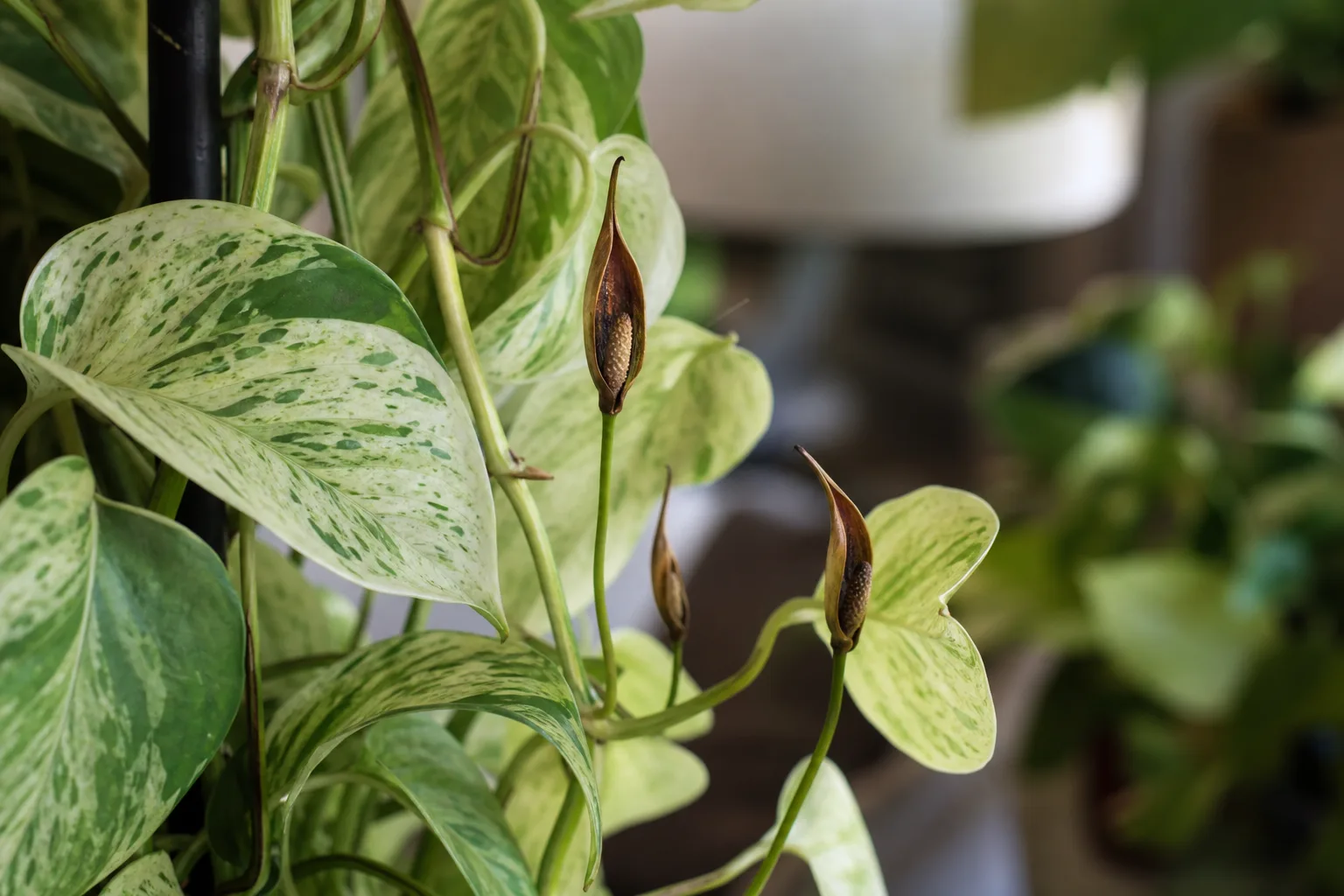
Flowers Turning Brown on Manjula Pothos: Causes, Checks & Fixes
This guide covers flowers turning brown on Manjula Pothos. See also the general Flowers Turning Brown guide, watering, and light pages for this plant.
Flowers Turning Brown on Manjula Pothos: Causes, Checks & Fixes
Quick answer
On Manjula Pothos (Epipremnum aureum ‘Manjula’), the brown pointed structure at a vine tip is almost never a fading flower. Heavy cream-and-white variegation makes sun-scorched or dry leaf tips look like a brown “bloom cap” at the growing point - a confusion unique to this slow, painterly cultivar. Furled new leaf sheaths and brown aerial root tips add to the mix.
Brown flowers only apply if the plant actually produced an inflorescence - and pothos rarely flowers indoors. When true blooms brown, they are usually spent spathe and spadix tissue aging naturally. First step: identify what you are looking at before trimming or changing care.
This page is the misidentification-and-triage hub for brown structures at vine tips. For why Manjula essentially never blooms indoors, see no flowers on Manjula Pothos. For deep variegation tip burn, fluoride, and humidity fixes on open leaves, see brown tips.
What brown flowers look like on Manjula Pothos
Authentic spathe and spadix (rare indoors)
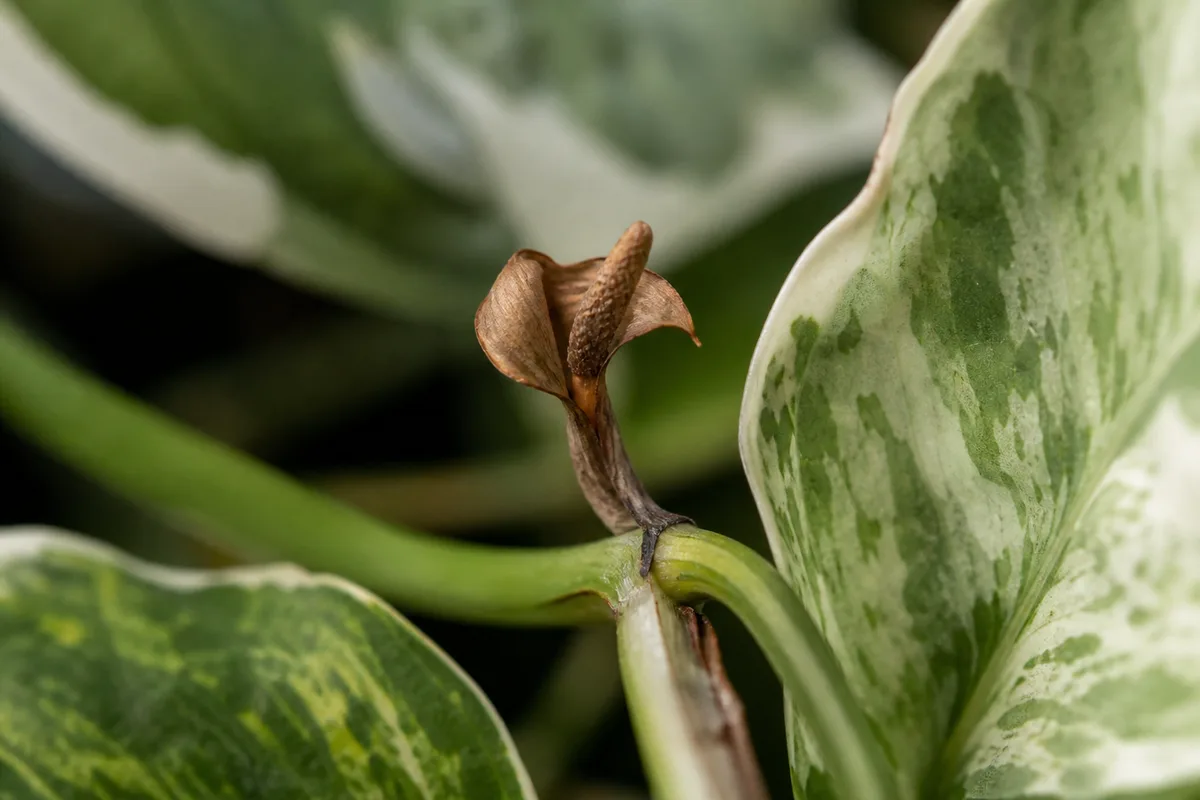
Flowers Turning Brown symptoms on Manjula Pothos - compare with healthy tissue on the same plant.
Authentic pothos flowers are not showy petals. They appear as a spadix inside a boat-shaped spathe - green, yellow-green, or purple-tinged - on mature climbing vines in tropical outdoor conditions. Indoors, Manjula stays in juvenile form with smaller heart-shaped leaves and does not typically reach reproductive size.
When a rare spathe browns, the tissue dries from the tip inward over several days. The spadix may shrivel while the rest of the vine stays firm.
Common lookalikes: sheath, aerial root, variegation burn, old sheaths
Most searches for this problem describe brown structures that were never flowers:
- Furled new leaves - Pointed, papery cones at nodes that open into wavy variegated leaves. Manjula unfurls more slowly than Golden Pothos: expect 10–14 days in warm bright rooms, stretching toward two to three weeks in cooler winter placement below about 18°C (65°F).
- Aerial root tips - Thin brown caps on roots climbing a moss pole or trailing along soil. They feel wiry, not layered, and never open into a leaf blade.
- Brown variegated leaf patches - Tan or brown zones on white and cream sections from sun stress, low humidity, or fluoride - not a flower cluster. Cream patches carry less chlorophyll, so they scorch and dry before green tissue and can mimic a browned bloom at the vine tip.
- Old leaf sheaths - Dry brown rings where a leaf detached from the stem
Manjula’s broad, wavy, heavily variegated leaves burn more visibly than all-green pothos, which pushes owners to search “flowers” when the damage is foliar. Full margin-burn diagnostics live on the brown-tips page.
Editorial case note reviewed by LeafyPixels Review Board - composite of common keeper reports. A keeper trimmed a brown cone at a Manjula node thinking it was a spent bloom; the cut tore the emerging marbled leaf inside. Leaving the sheath intact, the same structure opened into a full cream-and-green blade 12 days later in a warm east window - confirming a new leaf, not floral tissue.
Why Manjula Pothos gets brown “flowers”
When a genuine spathe browns outdoors or in a greenhouse, normal senescence is the usual cause - the inflorescence completes its brief display and dries. Premature browning can follow heat, dry air, or mechanical damage.
For typical indoor Manjula plants, the real question is misidentification. Juvenile container pothos retains juvenile leaves and rarely flowers without mature climbing habit and tropical cues - the full bloom-expectation context is on no flowers.
Common causes behind what looks like a brown “flower”:
- Direct sun on variegation - Scorches white and cream patches at the newest leaf or furled sheath tip, creating a brown cap where owners expect a bloom
- Low light plus wet soil - Encourages yellow lower leaves and brown leaf margins while the plant never blooms; dim placement details are on not enough light
- Low humidity or fluoride - Browns leaf edges on slow-unfurling Manjula leaves still wrapped in their sheath; see low humidity and brown tips for depth
- Shy-flowering genetics - Epipremnum aureum is a shy-flowering species; gibberellin deficiency limits bloom even when plants grow large. Manjula was bred for foliage, not indoor flowering.
Why Manjula variegation mimics a bloom cap
Unlike solid-green Golden Pothos, Manjula’s cream sectors at the vine tip have less photosynthetic buffer. A furled sheath with pale outer tissue plus a browned edge from sun or dry air reads like a dying flower from across the room. Golden pothos may unfurl a comparable leaf in roughly one week in the same window; Manjula’s patented slower growth keeps that brown-tipped cone visible longer - increasing the odds you label it floral tissue. Placement guidance for holding variegation without scorch is in the light guide.
How to confirm the cause
Work through these checks in order:
- Bloom history - Did a spathe and spadix appear, or only brown tips at nodes? If never, default to foliage or root diagnoses per no flowers.
- Location on vine - New leaves emerge from nodes; flowers arise on mature aerial stems with adult foliage
- Movement test - Gently touch the structure. Furled leaves feel layered and may green up at the tip; spent spathe feels papery and hollow; aerial roots feel thin and wiry with no layered blade inside
- Sheath vs. root at the same node - A new leaf cone sits tight to the stem and widens as it opens; an aerial root projects outward or downward as a slender brown-tipped strand
- Leaf pattern elsewhere - Matching brown margins on variegation confirm leaf burn, not flowers
- Soil and stem firmness - Wet heavy soil with soft nodes suggests rot, not spent blooms
- Timeline - New Manjula leaves take 10–14 days to unfurl in warm rooms (longer when cool); brown “cones” that open into leaves were never flowers
If the plant lives on a shelf in a standard pot, default to foliage or root diagnoses rather than blossom failure.
First fix for Manjula Pothos
Identify the structure before acting.
If it is a spent spathe on a firm outdoor or greenhouse vine, snip the dry brown tissue with clean scissors. Do not cut into green stem.
If it is a furled new leaf with minor brown tip, leave it to unfurl and move the plant to bright, indirect light away from direct sun. Increase humidity if edges crisp while leaves open - target 40–60% at leaf height per our low-humidity guide.
If it is brown variegation on open leaves, adjust care - not bloom fertilizer. Let the top 3–5 cm of soil dry before watering, pull back from hot windows, and use filtered water if tips brown repeatedly. Margin-burn depth is on brown tips.
If it is a brown aerial root tip, leave it unless it is mushy or you need clearance for training. Trim only dry, papery caps with clean scissors; firm white root behind the brown tip is healthy.
Do not apply phosphorus-heavy bloom food to a plant that never flowered.
Step-by-step recovery
- Confirm spathe versus leaf sheath, aerial root, or leaf burn using the movement test.
- Remove only dry, spent inflorescence tissue - never gouge firm green stems or cut into a furled leaf sheath mid-unfurl.
- Move to bright indirect light so new Manjula leaves keep cream and white patches without scorching.
- Water when the top 3–5 cm is dry; empty the saucer after each soak.
- Hold fertilizer until new growth looks stable - stressed pothos does not need bloom boosters.
- Trim fully brown leaf sections once the plant stops producing new damage - not living tissue still opening from a sheath.
- Monitor for spider mites and mealybugs - sticky residue and stippling can sit near vine tips and mimic odd “flower” shapes.
Recovery timeline
A genuine spent spathe browns within days - that is expected and does not harm the vine.
Misidentified leaf sheaths resolve as leaves unfurl over 10–14 days in warm bright rooms, or two to three weeks when winter temperatures slow growth. Golden Pothos in the same spot may open a week sooner. Brown variegation on mature leaves does not re-green; judge recovery by clean new leaves at the vine tip.
Indoor rebloom on Manjula Pothos is exceptionally uncommon - see no flowers for bloom expectations. Success means firm stems, stable variegation on new leaves, and predictable drying of the pot - not recurring spathes.
Lookalike symptoms
| What you see | Likely cause | Not a flower because… |
|---|---|---|
| Pointed brown cone at node | New leaf unfurling | Opens into a marbled leaf within 10–14 days (warm) |
| Brown bump on hanging root | Aerial root tip | Thin, wiry, no spathe; does not unfurl |
| Brown patches on white leaf areas | Sun or humidity stress | Part of an open leaf blade - see brown tips |
| Lower yellow leaves, wet soil | Overwatering | No inflorescence involved |
| Brown crispy tips only | Fluoride or dry air | Affects leaf margins, not a cluster |
What not to do
Do not soak brown “flowers” hoping they reopen - pothos inflorescences are brief and not petal-based. Do not trim a furled leaf sheath to remove a brown tip - the emerging blade is folded inside; cutting mid-unfurl tears the new leaf and leaves a permanent notch.
Do not repot and fertilize simultaneously because you assume bloom failure. Do not confuse soft, smelly stems with spent spathe tissue; that needs drainage correction. Do not apply bloom fertilizer chasing flowers that juvenile indoor pothos will not produce - pothos does not flower in cultivation when kept in the juvenile houseplant phase. Keep trimmed tissue away from pets - pothos is toxic to cats and dogs.
How to prevent brown “flowers” next time
If you grow Manjula outdoors in frost-free climates and a spathe appears, avoid mechanical damage and extreme heat while it is open.
For typical indoor plants, prevention is foliage-focused: bright indirect light for variegation, allow soil to dry between waterings, 40–60% humidity at leaf height, and patience while new leaves unfurl without labeling sheaths as blooms. Learn the node lookalikes once - sheath, root, burn - so you do not search “brown flowers” every unfurl cycle.
Manjula Pothos care cross-check
Manjula grows slower than golden pothos and needs more light to hold variegation. Brown-on-white damage shows up fast in weak light or after overwatering. Align placement and watering before assuming a flowering problem exists. Start with the overview for full species context.
When to worry
Escalate when stems soften at multiple nodes, soil smells sour, or yellow leaves climb the vine within a week. A dry brown spathe on a firm outdoor stem is cosmetic. Spreading stem rot is not. If rot signs appear after you ruled out misidentified sheaths, inspect roots and follow overwatering or root rot guidance.
Conclusion
Brown flowers on Manjula Pothos are rare indoors because this cultivar - like all pothos - almost never blooms in juvenile container culture. Confirm whether you have a true spathe or a misidentified leaf sheath, aerial root, or variegated leaf burn. Trim spent inflorescences only when they actually appeared; otherwise fix light, water, and humidity for the foliage Manjula was bred to display. For bloom biology and indoor expectations, read no flowers; for open-leaf margin burn, read brown tips.
Related Manjula Pothos guides
- Manjula Pothos overview - species context, variegation, and full care map
- No flowers - why indoor Manjula essentially never blooms; bloom-expectation authority
- Brown tips - variegation margin burn, fluoride, salt, and humidity depth
- Not enough light - dim placement when brown margins follow weak growth
- Light - bright indirect placement to hold cream patches without scorch
- Low humidity - dry air browning on cream variegation during unfurl
- Overwatering - yellow leaves and wet soil mistaken for bloom failure
- Pothos flowers turning brown (genus guide) - Epipremnum-wide misidentification context
Related tool
Use the Plant Problem Diagnosis Tool to narrow causes for flowers turning brown on this plant before changing multiple variables at once.