Yellow Seedlings on Maidenhair Fern: Causes, Checks & Fixes
Quick answer
Yellow maidenhair fern seedlings usually mean the mix is too wet, light is too weak, or humidity dropped too fast after acclimation. First step: move to bright indirect light and let the surface dry slightly before watering again.
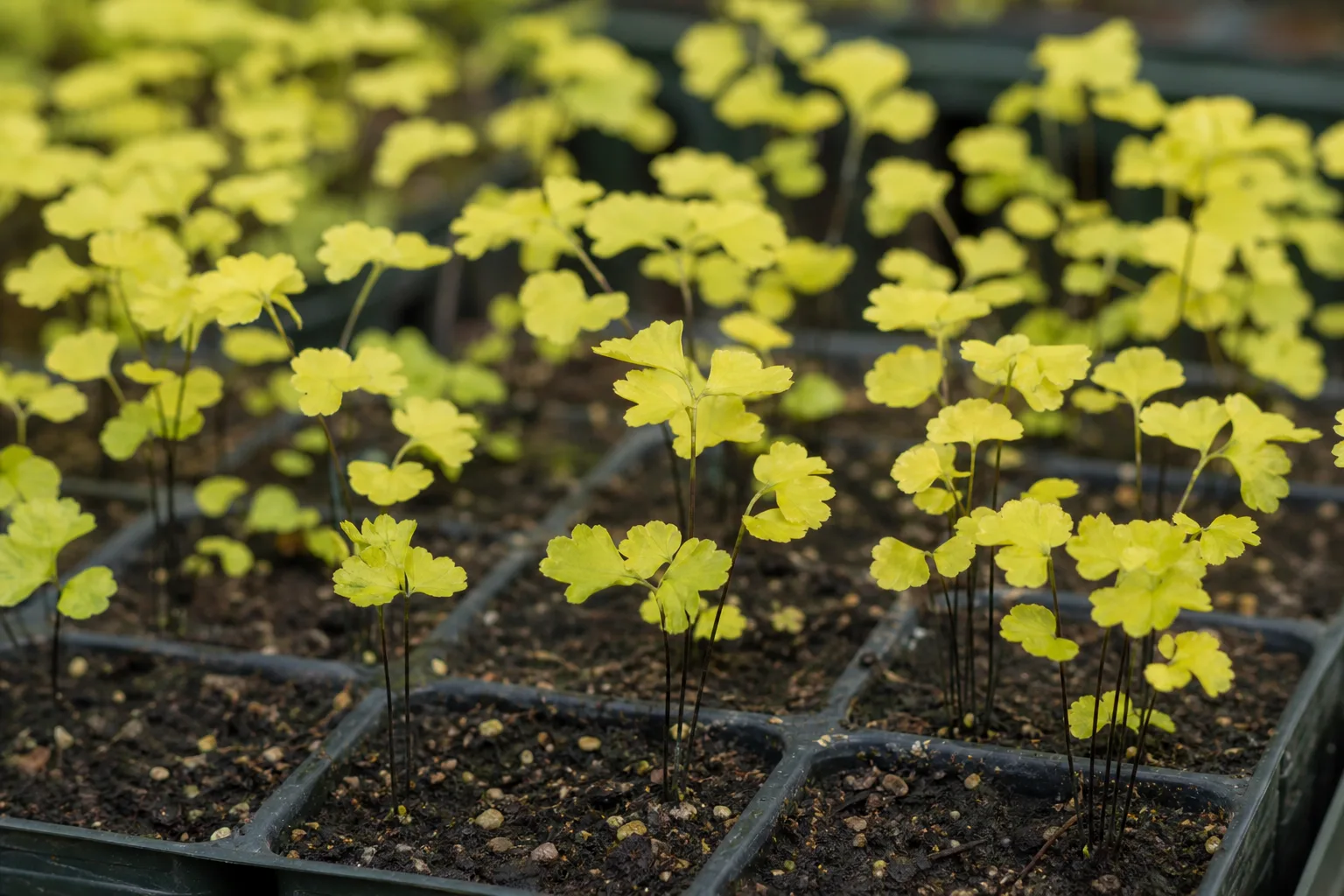
Yellow Seedlings on Maidenhair Fern: Causes, Checks & Fixes
This guide covers yellow seedlings on Maidenhair Fern. See also the general Yellow Seedlings guide, watering, and light pages for this plant.
Yellow Seedlings on Maidenhair Fern: Causes, Checks & Fixes
Quick answer
Yellow seedlings on Maidenhair Fern almost always trace to too much moisture, too little light, or humidity that swings too fast - not a mature-plant nitrogen problem. First step: move seedlings to Maidenhair Fern light guide and let the surface dry slightly before the next drink.
Maidenhair Fern (Adiantum raddianum) is a difficult plant to grow indoors because young tissue dries out or drowns faster than tough foliage plants. Whether you are raising spore-grown prothalli, tiny sporophytes, or fresh division starts, the same rule applies: steady moisture with oxygen, diffused brightness, and warm humid air.
What yellow seedlings look like on Maidenhair Fern
On Maidenhair Fern, “seedlings” usually means one of three stages - and yellowing looks different on each.
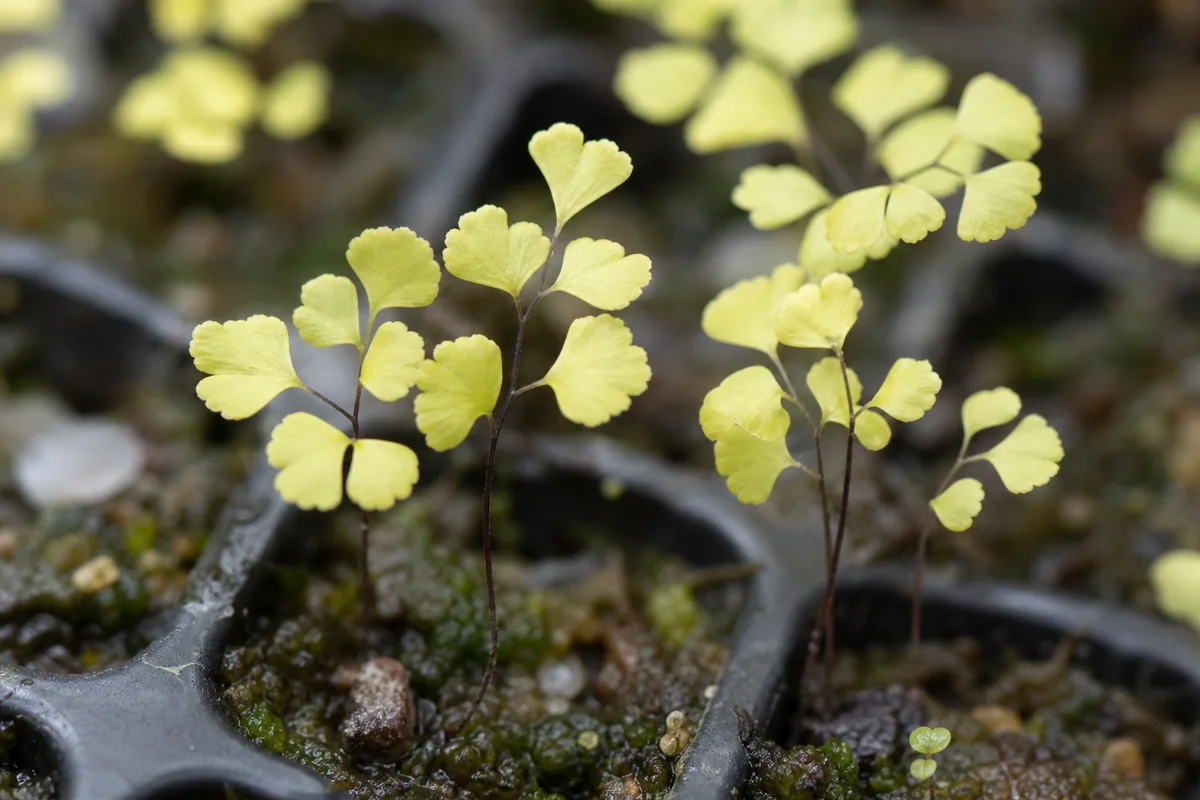
Yellow Seedlings symptoms on Maidenhair Fern - compare with healthy tissue on the same plant.
Spore-grown prothalli are heart-shaped green films on the soil surface. When stressed, they turn pale yellow-green, brown at the margins, or collapse into a slimy mat. Healthy prothalli stay emerald and flat.
Young sporophytes are the first tiny true ferns - miniature fronds on hair-thin stems. Yellowing shows as chartreuse or straw-colored pinnae while stems may still look dark. Leggy, stretched sporophytes leaning toward glass indicate weak light.
Division starts or nursery plugs are small potted sections with a few fronds. Yellowing often hits the outermost fronds first while the crown still pushes pale new croziers. Limp yellow fronds with wet, heavy mix point to root stress; crisp yellow tips with dry surface point to drought or low humidity.
Common patterns:
- Entire spore flat pales while plastic dome traps condensation - oversaturated mix
- Only seedlings on the tray edge yellow - cold draft or drying faster than center cells
- Uniform pale yellow across all tiny fronds - insufficient light intensity
- Seedlings topple at soil line with white fuzzy mold - damping off
Why Maidenhair Fern gets yellow seedlings
Soggy seed-starting mix is the top indoor cause. Damping-off pathogens thrive when soil stays saturated and seedlings grow slowly in cold, wet conditions. Maidenhair spore trays need a thin moisture film, not puddles. Division starts need consistently moist airy mix - but roots must never be allowed to dry out while also avoiding stagnant swamp conditions.
Insufficient light bleaches delicate fern tissue. Maidenhair Fern prefers bright indirect light including diffused sun but dislikes direct sun. Spore flats under weak windowsill light or sporophytes more than a few inches from a grow lamp stretch, pale, and yellow. Direct sun on uncovered seedlings scorches them yellow-brown within hours.
Humidity drops too fast after acclimation shocks tiny fronds. Spore protocols recommend sealed trays until sporophytes appear, then gradual opening. Removing plastic overnight or moving fresh starts from a terrarium to a dry living room causes rapid yellowing and frond collapse.
Low nutrients in sterile peat can pale sporophytes after several weeks. Seed-starting peat holds little fertilizer. Once true sporophytes have several fronds, very dilute balanced feeding may be needed - but never on brand-new prothalli.
Fungal contamination in spore trays turns prothalli yellow-brown. Sterile conditions are critical during germination and establishment; tap water and non-sterile mix invite mold that outcompetes young gametophytes.
Cold root zones slow metabolism. Maidenhair Fern grows best around 16–24°C (60–75°F). Trays on cold windowsills or unheated porches yellow while center cells stay green.
How to confirm the cause
Work through these checks in order:
- Moisture - Is the surface constantly wet? Does water pool under the flat? Does mix smell sour?
- Light - Are seedlings stretching toward the window? Is any direct sun hitting uncovered trays?
- Humidity history - Was a dome removed suddenly? Did a terrarium vent open wide after weeks sealed?
- Stage - Prothalli yellowing differs from sporophyte or division yellowing; note which you have.
- Temperature - Is the tray edge colder than the room? Is a heat mat running without adequate light?
- Crowding - Are dozens of sporophytes competing in one cell with no airflow?
If only cotyledon-like first structures pale while newer fronds stay green on non-fern starts, that can be normal senescence - but maidenhair ferns do not have cotyledons; pale prothalli always need action.
First fix for Maidenhair Fern seedlings
Move seedlings to bright indirect light and let the surface dry slightly before watering again.
Relocate trays or small pots where fronds receive bright, filtered light all day - behind sheer curtains or under a grow lamp set for 12–14 hours daily. If mix is wet and seedlings look limp, hold water until the top few millimeters feel barely dry, then bottom-water and pour off excess. For spore flats still in the prothallus stage, maintain a thin film of distilled water rather than letting the surface crust dry completely.
Do not fertilize yellow stressed seedlings as a first response.
Step-by-step recovery
- Adjust light - Eliminate direct sun; add a grow lamp 15–30 cm above sporophytes if windows are dim.
- Correct moisture - Bottom-water; discard standing tray water. Never mist constantly onto prothalli.
- Manage humidity - Keep domes vented with small openings; widen gradually over a week rather than removing at once.
- Thin crowded flats - Transplant sporophytes to individual cells when they reach 3–4 cm tall per propagation guidance.
- Inspect for mold - Remove contaminated peat sections from spore trays; isolate healthy flats.
- Warm the root zone - Move off cold glass; aim for 20–24°C during establishment.
- Feed sparingly - Only after sporophytes have several fronds, use quarter-strength balanced liquid fertilizer every two weeks.
For division starts, treat them like a fragile mature maidenhair: high humidity near 60–80%, moist but draining mix, and no Maidenhair Fern repotting guide until stable new fronds appear.
Recovery timeline
Prothalli recover slowly - expect 2–4 weeks to see healthy green gametophyte tissue after moisture and light correction. Sporophytes pushed under good light may show new green pinnae within 10–14 days. Division starts often need 3–6 weeks before replacement fronds outnumber yellowed ones.
Yellow frond tissue does not re-green. Judge success by new croziers and firm roots, not old color returning.
Lookalike symptoms
Mature yellow leaves on an established Maidenhair Fern usually mean direct sun or chronic overwatering on Maidenhair Fern on adult roots - different scale and fix timing than seedling trays.
Brown tips on tiny fronds often signal low humidity or harsh tap water rather than pure overwatering - check air moisture before draining trays.
White dust on soil in sealed spore flats may be harmless perlite or harmful mold; mold spreads in fuzzy patches and smells earthy-sour.
Normal prothallus aging after fertilization can look patchy before sporophytes emerge - but widespread yellow collapse is never normal.
Mistakes to avoid
- Leaving humidity domes fully sealed after sporophytes appear
- Watering spore flats with tap water when sterile distilled is required early on
- Placing fresh divisions in direct south-window sun
- Fertilizing prothalli or day-old sporophytes
- Keeping entire soggy flats hoping one cell recovers - isolate healthy trays
- Acclimating from terrarium to open air in a single day
Maidenhair Fern care cross-check
Seedling success mirrors mature care priorities: bright indirect light, never bone-dry roots, airy moisture-retaining mix, and stable humidity. Small starts fail when growers treat them like succulents (too dry) or bog plants (too wet). Match watering to how fast the tiny pot dries in your light level, not a calendar.
How to prevent yellow seedlings next time
For spore sowing, use sterile finely milled peat, surface sow, seal flats, and maintain 20–23°C under 12-hour light until sporophytes form. Inspect weekly for fungal contamination.
For divisions, take only sections with rhizome, roots, and at least one frond during active spring growth. Place in a clear humidity tent or terrarium for the first month, then vent gradually.
For nursery plugs, quarantine, bottom-water, and avoid repotting until new fronds emerge. Keep away from heat registers and cold drafts - Maidenhair Fern is sensitive to both.
When to worry
Worry when seedlings collapse at the soil line, mold covers more than a quarter of a spore flat, or every frond yellows within days despite correction. Mild pale color on one outer frond while new green croziers emerge is manageable.
Spore projects with repeated fungal takeover may need fresh sterile setup rather than repeated fungicide on weakened prothalli.
Conclusion
Yellow seedlings on Maidenhair Fern signal that young fern tissue is drowning, starving for light, or shocked by humidity swings - common in spore trays, fresh divisions, and small nursery pots. Move to bright indirect light, dry the surface slightly, stabilize humidity, and judge recovery by new green fronds. Old yellow tissue will not revert; focus on conditions that let the next generation of pinnae open clean and bright.
When to use this page vs other Maidenhair Fern guides
- Maidenhair Fern watering guide - Use for routine moisture checks before assuming yellow seedlings is the main issue.
- Maidenhair Fern problems hub - Browse all 55 common issues on this species.