Seedlings Falling Over on Maidenhair Fern: Causes, Checks &
Quick answer
Maidenhair Fern does not grow from seed-'seedlings' are usually small divisions or spore-grown baby ferns. First step: check whether roots are dry or soggy, then tent the pot in a clear bag at 60%+ humidity while keeping mix evenly moist, not wet.
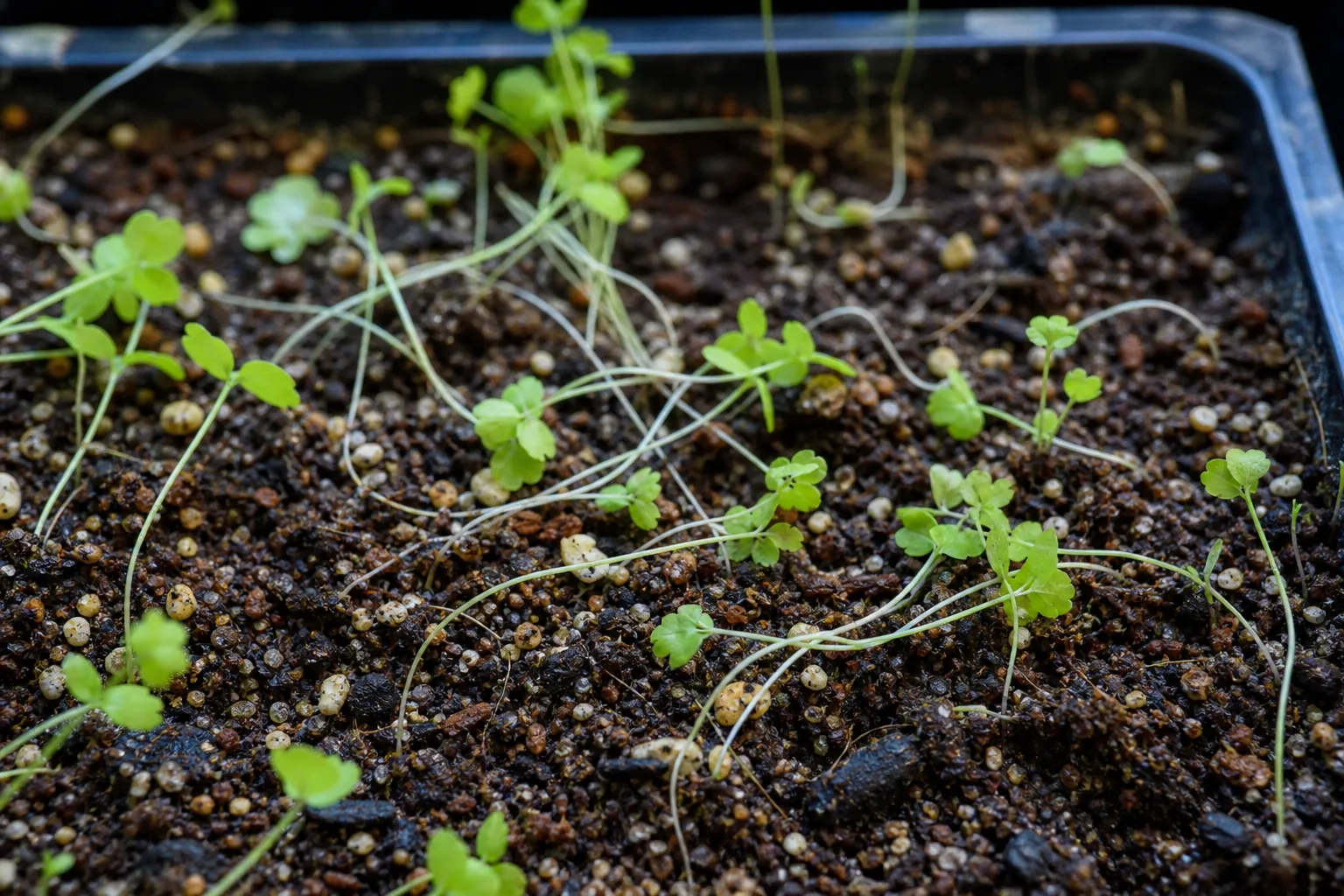
Seedlings Falling Over on Maidenhair Fern: Causes, Checks & Fixes
This guide covers seedlings falling over on Maidenhair Fern. See also the general Seedlings Falling Over guide, watering, and light pages for this plant.
Seedlings Falling Over on Maidenhair Fern: Causes, Checks & Fixes
Quick answer
When Maidenhair Fern (Adiantum raddianum) “seedlings” fall over, you are usually looking at young divisions, spore-grown sporophytes, or newly emerged crown fronds-not traditional seed-starting collapse. Ferns reproduce from spores rather than seeds, and most home growers propagate maidenhair by rhizome division at repotting instead of sowing spores. For division and spore baseline steps, see the Maidenhair Fern propagation guide.
Those delicate young plants topple because Maidenhair Fern has no water storage in its wiry black stems and roots must never be allowed to dry out. A small division with limited root mass loses turgor fast. The same species also fails when wet, airless mix rots fine roots after propagation.
First step: lift the pot, feel weight, and touch the top centimeter of mix. If it is light and dry, soak gently and tent the plant in a clear bag for humidity. If it is heavy, wet, and sour-smelling, stop watering and inspect the rhizome before tenting-rot and dryness need opposite responses. Never seal a rotting plant in a bag.
What falling seedlings look like on Maidenhair Fern
Healthy young maidenhair pieces show upright fan-shaped pinnae on thin black stipes. Problem collapse looks different depending on whether you divided a mature plant or are raising spore-grown babies.
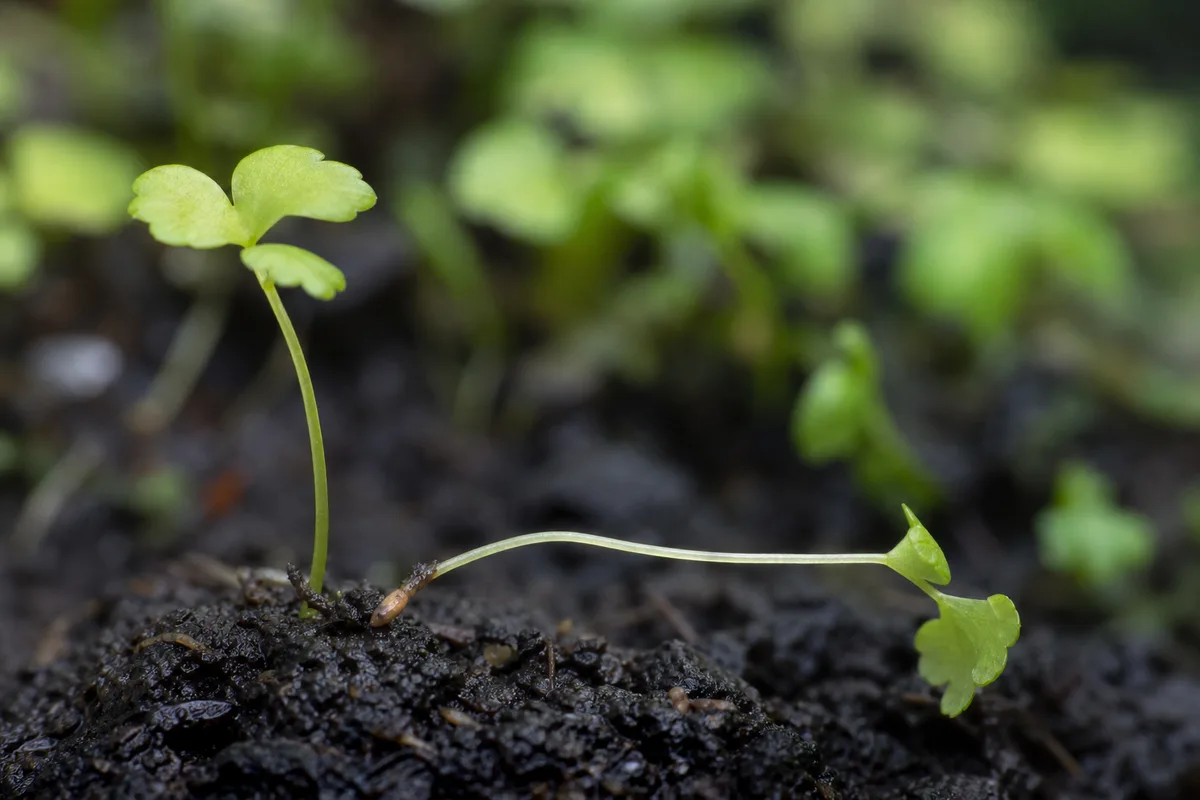
Seedlings Falling Over symptoms on Maidenhair Fern - compare with healthy tissue on the same plant.
Fresh divisions that fall over:
- Two or three fronds flop flat against the pot rim or soil within hours to two days after repotting
- Leaflets lose shine and turn dull gray-green before browning at tips
- The whole clump leans from the base rather than arching gracefully
- Fronds may blacken from the crown downward if roots were disturbed and then dried out
- Mix feels either bone-dry and lightweight or soggy with no drainage pull-through
Spore-tray or prothallus-stage sporophytes:
- Tiny ferns 1–3 cm tall lean or fall at the soil line in covered propagation trays
- Green heart-shaped prothalli nearby may shrivel if the surface stayed too wet and stagnant
- Pinch at soil level with brown thread-like tissue suggests damping-off in enclosed spore culture
- Pale tall stretch toward a distant window means weak light, not necessarily rot
New crown fronds (not true seedlings):
- Fiddleheads emerge from rhizome then collapse before unfurling
- Often follows one missed watering on the parent pot or a cold draft
- Rhizome at soil line stays firm even when the young frond wilts
Do not confuse these with normal soft arch on mature fronds, which keep turgid leaflets while curving - see drooping leaves on Maidenhair Fern when the whole parent plant sags rather than only new divisions.
Why Maidenhair Fern young plants fall over
Insufficient roots on small divisions
Division is the practical propagation method for home growers. Each piece needs enough roots and fronds to restart without drying out. Tiny sections with one frond and minimal rhizome have no reserve-transpiration from delicate membranous leaflets outpaces what few roots can supply. Re-pot each piece immediately so roots do not dry out; even a few minutes of exposed fine roots on this species can trigger collapse.
Dry root ball or low humidity after repotting
Maidenhair Fern needs a very humid atmosphere and moist to wet soil with roots that should not dry out. New divisions lose humidity through cut surfaces and disturbed roots. Dry air above 70°F pulls water from fronds faster than recovering roots replace it-especially away from bathrooms or terrariums where this fern does well when humidity is higher.
Terrarium and bathroom division trap
Bathrooms and closed terrariums help humidity, but a freshly divided piece in stagnant wet mix is a common failure mode. High ambient humidity slows evaporation from the pot while you keep watering on habit-the mix stays anaerobic at the root zone even though fronds look humid. Divisions in closed glass often flop from wet rot, not dryness. Open the case briefly every few days, use the airy 50/30/20 mix from the soil guide, and confirm the inner pot drains. If collapse follows repot in a bathroom cachepot, read repotting stress for the overlap between transplant shock and moisture failure.
Overwatering and root rot on weak young roots
Paradoxically, collapsed young ferns sometimes sit in wet mix. Fine maidenhair roots rot in stagnant anaerobic soil. Excess water during rest or stress periods can lead to root rot and plant decline. Small divisions with damaged roots are especially vulnerable if repotted into heavy soggy mix or kept under a sealed bag without airflow. Escalate to root rot on Maidenhair Fern when rhizome tissue turns mushy.
Spore-culture damping-off or weak stretch
Spore propagation is slow-small fern plants can take months to appear after fertilization-and enclosed trays invite fungal collapse at the stem base when the surface stays wet without airflow. Weak stretch happens when sporophytes grow under dim light far from the cover glass. Batch loss is normal in spore culture; expect only a fraction of sporophytes to size up.
Transplant shock and care stacking
Repotting, dividing, moving rooms, and changing water source in the same week compound stress. Maidenhair Fern responds poorly to sharp changes in moisture, humidity, or light. Young pieces have no buffer for stacked changes - see repotting stress when collapse timing matches a recent repot.
How to confirm the cause
Work through these checks in order:
- Pot weight and top-centimeter moisture - Light and dry confirms thirst; heavy and wet suggests rot risk.
- Rhizome firmness at soil line - Press gently with a clean finger. Mushy black tissue means rot. Firm dark rhizome with limp fronds points to dryness or humidity loss.
- Smell - Sour mix indicates anaerobic conditions; neutral earthy smell with dry surface indicates underwatering.
- Frond pattern - All fronds on a division flopping together after repotting fits transplant or moisture stress. Single new fiddlehead collapse on an established pot may be a one-time dry spell.
- Propagation context - Division within the last two weeks? Spore tray under sealed plastic? Each context shifts the likely cause.
- Light exposure - Direct sun on a tented division cooks fronds; deep shade produces weak flop without rot.
| Check result | Likely path | First move |
|---|---|---|
| Light pot, firm rhizome, dry top centimeter | Dry stress / humidity loss | Soak, drain, humidity tent |
| Heavy pot, sour smell, mushy rhizome | Wet rot | Unpot, trim, repot airy mix - no tent until rot cleared |
| Spore tray pinch at soil line | Damping-off | Discard fallen plants, vent tray, bottom-water only |
| Yellow limp fronds, wet pot (parent plant) | Root rot overlap | Root rot guide |
| Yellow young fronds still upright | Chlorosis, not structural flop | Yellow seedlings guide |
First fix for Maidenhair Fern
Stabilize moisture and humidity together-do not water blindly.
For dry, lightweight pots with firm rhizomes: Water thoroughly with tepid filtered or rainwater until a little drains from the bottom, discard saucer water, then loosely tent the pot in a clear plastic bag for two to three weeks. Keep the plant in bright indirect light-not direct sun through the bag. Open the bag briefly every few days to exchange air when room humidity stays below 60%.
For wet, heavy pots with sour smell: Do not soak or tent. Unpot, trim mushy roots with clean scissors, repot into fresh airy mix matching the 50/30/20 soil recipe (roughly 50% compost, 30% coco coir, 20% fine bark), then tent only if room humidity is below 60%.
For spore-tray sporophytes with stem pinch: Remove collapsed plants immediately, stop misting the surface, crack the cover for airflow, and bottom-water only when the surface lightens.
One action first-correct the moisture direction-then maintain the tent until new growth firms up.
Step-by-step recovery
- Assess pot weight, rhizome firmness, and whether the plant was recently divided or spore-grown.
- Dry path - Soak, drain, tent, place in bright indirect light. Target 60–80% humidity inside the tent; see low humidity if ambient air is very dry.
- Wet path - Unpot, trim rot, repot shallowly with crown at soil line in 50/30/20 mix, hold water until mix surface barely dries.
- Spore-tray path - Discard fallen sporophytes, reduce surface moisture, add gentle airflow, keep bright indirect light.
- Wait 48–72 hours - Fronds should stop worsening; slight perk on firm-tissue plants is a good sign.
- Remove tent gradually over one week once new fiddleheads or firm existing fronds hold upright.
- Trim only fully black or crisp fronds at soil line; leave any green tissue that might still photosynthesize briefly.
Do not fertilize, do not divide again, and do not move to a new room until stability returns.
Recovery timeline
Dry divisions with firm rhizomes: Fronds often firm within 24–48 hours after soaking and tenting. New fiddleheads may appear in two to four weeks.
Rot-affected divisions: Recovery depends on how much firm root remains. Expect three to six weeks for new fronds if the rhizome stayed solid after trim and repot.
Spore-grown sporophytes: Each surviving plant may need four to eight weeks to size up after environment correction; some loss is normal in spore culture.
Collapsed fronds do not re-erect once tissue has crisped-judge success by firm rhizome and new emergence, not old flopped leaves.
Lookalike symptoms
| What you see | Likely cause | Where to go |
|---|---|---|
| Whole young division flat after repot | Dry roots or low humidity | This page - dry path + tent |
| Yellow limp fronds, wet heavy pot | Root rot | Root rot |
| Yellow young fronds, firm upright stems | Chlorosis / nutrient issue | Yellow seedlings |
| Tall pale lean in spore tray | Weak light | Brighten tray; firm stem base |
| Pinch at soil line in sealed tray | Damping-off | Vent tray; discard collapsed sporophytes |
| Mature fronds droop on parent plant | General underwatering or humidity | Drooping leaves |
| Collapse within days of repot, firm rhizome | Transplant shock | Repotting stress |
Mistakes to avoid
- Misting fronds instead of fixing root moisture - Surface mist evaporates quickly; maidenhair survival depends on root-zone water and ambient humidity.
- Sealing a rotting plant in a bag - Trapping moisture around failing roots accelerates collapse; link to root rot instead.
- Dividing into pieces with one frond and few roots - Success rate drops sharply; wait for a fuller clump per NC State propagation guidance.
- Leaving divisions in open dry air while repotting - Roots must not dry during division work.
- Bright direct sun on bagged plants - Cooked fronds look like drought but will not recover.
- Fertilizing collapsed young plants - Salt stress on stressed fine roots worsens flop.
- Propping flopped fronds with stakes - Does not restore water transport if roots or rhizome are failing.
How to prevent seedlings falling over on Maidenhair Fern
- Divide in spring during active growth with each section carrying multiple fronds and healthy roots - follow the repotting guide for timing.
- Pre-moisten mix and pots before separating; work quickly and repot immediately.
- Use a humidity tent for two to three weeks after division, opening periodically for air exchange.
- Keep bright indirect light-avoid full shade that weakens new growth and direct sun that scorches tented plants.
- Water when the top centimeter is barely dry; never let the root ball go fully dry on young pieces.
- For spore propagation, use sterile mix, bottom-water, provide bright indirect light, and vent covers once sporophytes appear - full steps in the propagation guide.
- Prefer division over spores for reliable results unless you can maintain sterile, humid conditions for months.
When to worry
Act the same day if:
- Every frond on a new division blackens within 24 hours
- Rhizome turns soft at the crown after repotting
- Mix smells sour and stays waterlogged despite drainage holes
- Multiple spore-tray sporophytes pinch and die in clusters over 48 hours
- No new fiddleheads appear after four weeks on a division with trimmed rot
Lower urgency if one new frond wilts on an otherwise stable parent with firm rhizome and correctable dry air-you still humidify promptly, but the plant is not lost.
Switch to root rot on Maidenhair Fern when rhizome tissue is mushy, mix stays sour despite drainage fixes, or blackening spreads from the crown while soil is wet.
Related Maidenhair Fern guides
- Maidenhair Fern propagation guide - division and spore baseline
- Maidenhair Fern repotting guide - division timing and technique
- Repotting stress on Maidenhair Fern - post-division collapse overlap
- Yellow seedlings on Maidenhair Fern - color vs. structural collapse
- Root rot on Maidenhair Fern - wet-path escalation
- Low humidity on Maidenhair Fern - humidity tent context
- Drooping leaves on Maidenhair Fern - mature plant lookalike
- Best soil for Maidenhair Fern - 50/30/20 repot mix
- Maidenhair Fern overview - full care hub