Red Leaves on Maidenhair Fern: Causes, Checks & Fixes
Quick answer
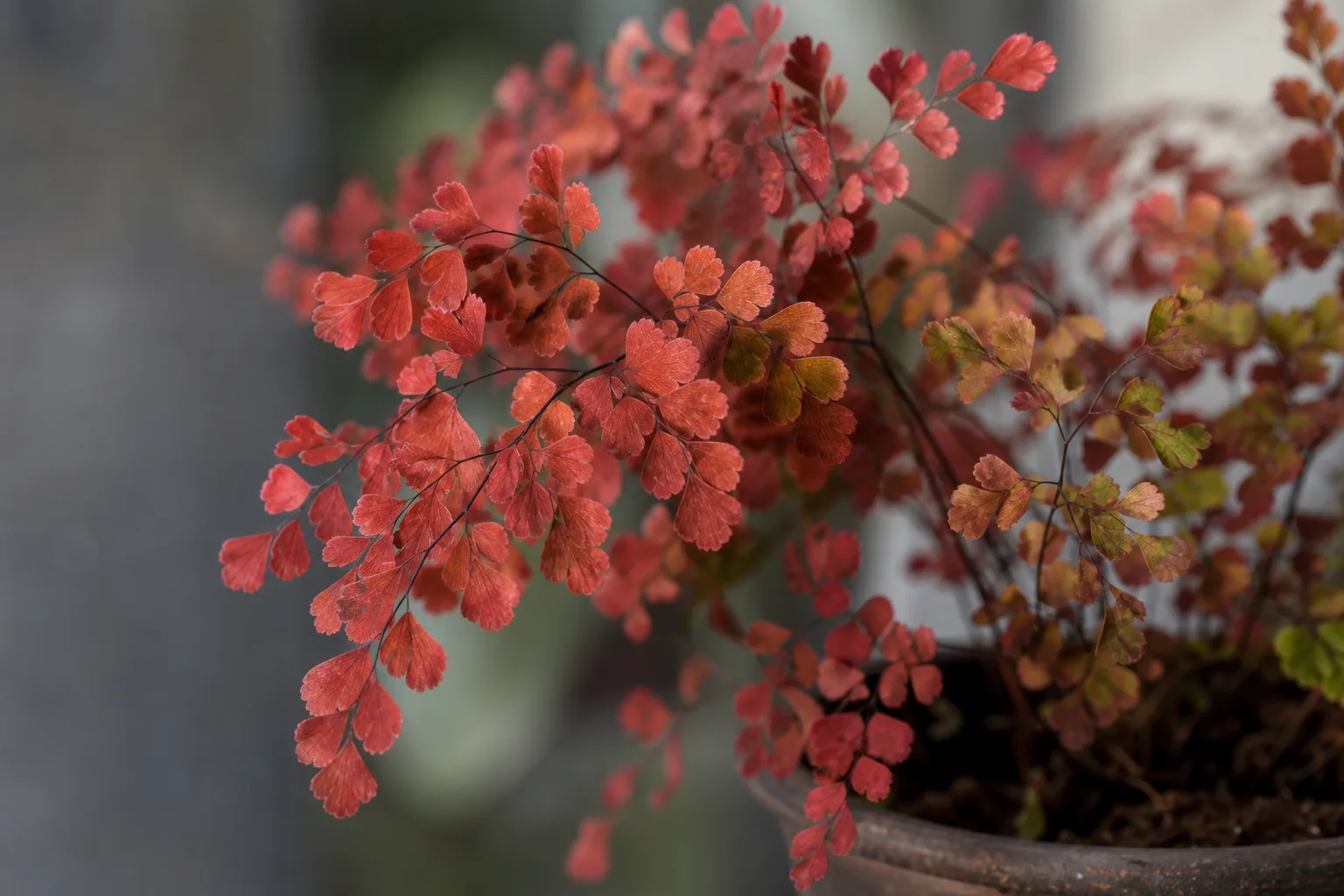
Pink or red on young unfurling fronds that mature green is normal on many Adiantum raddianum cultivars. Rust-red or scorched whole fronds on standard green stock mean stress-usually direct sun, cold drafts, or drying soil. First step: confirm whether only new tips are red and firm.
Red Leaves on Maidenhair Fern: Causes, Checks & Fixes
This guide covers red leaves on Maidenhair Fern. See also the general Red Leaves guide, watering, and light pages for this plant.
Red Leaves on Maidenhair Fern: Causes, Checks & Fixes
Quick answer
Red on Maidenhair Fern (Adiantum raddianum) splits into two very different stories. Cultivar color shows pink, red, or violet on young fronds that mature to green-a deliberate trait on varieties such as Red Venus and Brilliantelse. Stress color appears as rust-red scorch, bronzing, or rapid reddening of whole mature fronds, often followed by crisping and collapse.
First step: confirm whether only new unfurling tips are red and firm. If yes, and the rest of the plant is green with black wiry stems, you likely have normal cultivar pigmentation or species-typical new growth-not a crisis. If whole fronds redden after a sunny window move, heating vent exposure, or a dry spell, treat environmental stress before you prune, repot, or fertilize.
What red leaves look like on Maidenhair Fern
Maidenhair fronds are delicate, fan-shaped, and carried on glossy black stipes. Red can show up in distinct patterns:
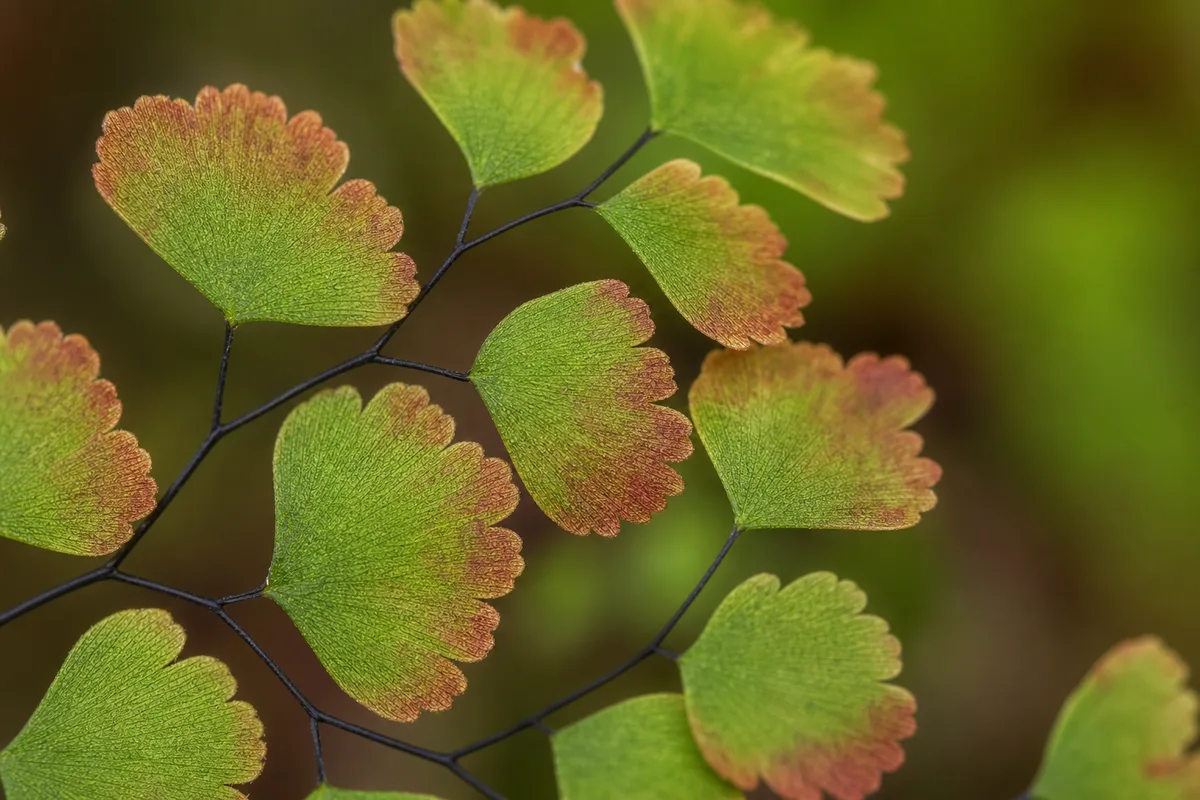
Red Leaves symptoms on Maidenhair Fern - compare with healthy tissue on the same plant.
Normal cultivar or new-growth blush:
- Pink, rose, or light red on unfurling pinnae only
- Color fades through yellow-green to deep green as fronds harden
- Black stems stay firm; no widespread wilting
- Common on Red Venus, Brilliantelse, Snowflake, and Microphyllum selections
Sun scorch stress:
- Rust-red to bronze patches on mature frond surfaces facing the window
- Tissue turns dry and papery, not soft
- Often follows an afternoon sunbeam or summer glass intensification
- Lower, shaded fronds may stay green while upper ones redden
Cold and draft stress:
- Fronds bronze or redden after nights near a cold pane or AC blast
- Black stems may stay firm initially, but pinnae crisp from margins inward
- Can follow brief exposure below comfortable room temperatures
Drought stress (before brown collapse):
- Fronds dull, then redden or bronze at edges before going brown and limp
- Pot feels light; top mix pulls away from the rim
- Happens fast-maidenhairs collapse within hours of a dry root ball
Not typical red-leaf causes on this fern:
- Nutrient deficiency rarely presents as red upper foliage; pale washed-out green is more common under weak light
- Pest stippling looks speckled with webbing or sticky residue, not uniform blush on new tips
Why Maidenhair Fern gets red leaves
Cultivar genetics. Adiantum raddianum has many named forms with colored juvenile fronds. NC State Extension notes cultivars including Red Venus with delicate red foliage maturing to light green, and Brilliantelse with pinkish to violet new growth that greens up. Snowflake and Microphyllum also emerge with pink or red tones under sufficient filtered light. This is expected-not a care failure.
Sunburn. Maidenhair ferns need partial shade to bright indirect light and lose vitality in full sun. Missouri Botanical Garden and NC State both list leaf scorch in direct sun as a primary problem. Membranous pinnae have no waxy protection; even an hour of harsh afternoon sun can redden tissue before it crisps.
Cold and fluctuating temperature. This species is native to tropical Americas and West Indies-steady warmth matters. The plant detail for Maidenhair Fern flags sensitivity to drafts and brief cold air that can trigger mass frond drop. Red-bronze fronds after a winter window chill or porch draft are cold injury, not cultivar charm.
underwatering on Maidenhair Fern. Roots must never be allowed to dry out. Missouri Botanical Garden states fronds die back quickly when soil dries. Maidenhair lacks succulent reserves; drought stress shows as rapid wilting, edge reddening, then brown collapse-not a slow yellow fade like overwatered foliage plants.
Low humidity paired with heat. Dry air alone usually browns tips first, but heat from radiators or south windows accelerates marginal reddening on stressed fronds. Bathrooms and terrariums work well because atmospheric humidity stays higher.
How to confirm the cause
Work through these checks in order:
- Cultivar ID - Check your pot label, seller listing, or purchase photos. No label? Compare whether red appears only on newest tips that are greening up (likely normal) versus whole mature blades (stress).
- Leaf age and texture - Firm red on unfurling fans that lighten with age = cultivar or species new growth. Papery rust on fully expanded fronds = scorch or drought damage.
- Light audit - Trace sun patches across the pot between 10 a.m. and 4 p.m. Direct beams on lace-like pinnae confirm sunburn.
- Draft and temperature - Note AC vents, open winter windows, and outer doors. Cold bronzing often hits outer fronds first.
- Soil moisture - Press the top centimeter daily. Crumbly dry mix plus light pot weight confirms drought. Sour smell or endlessly wet mix suggests rot-different problem, but also causes frond decline.
- Stem and crown check - Black wiry stipes should be firm. Soft black tissue at the soil line points to crown or root failure, not pigment.
- Pest scan - Inspect pinnae undersides for mealybugs, scale, or webbing. Pests cause spotty damage, not uniform new-tip blush.
If only young tips show pink-red on an otherwise healthy clump in stable care, you can stop diagnosing and simply enjoy the color.
First fix for Maidenhair Fern
If cultivar blush on firm new fronds only: No treatment needed. Keep bright indirect light and steady moisture so new flushes open cleanly. Avoid blasting direct sun trying to intensify red-that invites scorch.
If stress red on mature fronds:
Move the pot out of direct sun and away from cold drafts, then water thoroughly if the root ball has dried.
This single step addresses the two fastest killers on maidenhairs: scorch and drought. Set the plant in bright filtered light-east window, shaded south bay, or pulled back several feet from glass. Water from the base until excess drains, using filtered or rainwater if your tap is heavy. Let foliage dry in indirect light the same day; do not mist heavily onto damaged pinnae, which traps moisture on already stressed tissue.
Do not repot, divide, or fertilize on day one. Maidenhair Fern punishes stacked changes. Do not prune every red frond immediately if stems are still firm-wait until you know whether the plant is stabilizing after the move and drink.
Step-by-step recovery
After the initial relocation and watering correction:
- Hold stable humidity - Target 60–80% with a pebble tray, humidifier, or bathroom placement. Avoid misting late evening when damaged fronds stay damp overnight.
- Establish a daily touch check - Water when the top centimeter is barely dry, never letting the root ball go bone dry. In hot weather, check twice.
- Trim only fully dead tissue - Once new green pinnae appear, cut collapsed brown or papery fronds at the soil line with clean scissors. Do not shear living bronzed tissue that might still photosynthesize lightly.
- Improve airflow without drafts - Maidenhair needs fresh air, but not heater blasts. A small fan across the room is fine; do not point it at the crown.
- Watch for pests on weakened plants - Mealybugs and scale can colonize stressed ferns. Treat only after you confirm insects-do not spray fungicide on sunburn.
- Repot only if roots are rotting - Sour mix, black mushy roots, or soil that never dries warrant repot into airy moist mix. Cosmetic red scorch alone does not.
Recovery timeline
Cultivars continue showing pink-red on every new flush-that is permanent and healthy. Stress recovery depends on severity. Minor sun scorch may stop spreading within days after shade; new green pinnae can appear in two to four weeks. Severe drought collapse can take a full crown cutback and four to six weeks before the clump looks full again.
Judge success by firm black stems and clean new fans, not by old bronzed blades greening up. Remove browned foliage promptly once new growth is established; mature fronds rarely recover their original color.
Lookalike symptoms to rule out
Yellow fronds from overwatering on Maidenhair Fern - Soft yellowing with soggy mix, not dry rust scorch. Fix drainage and drying rhythm, not shade alone.
Brown tips from low humidity - Usually dry margins on otherwise green fronds without whole-blade red wash. Raise humidity; check that drought is not also present.
root rot on Maidenhair Fern collapse - Wilting with wet heavy soil and sour odor. Stems soften at base. Repot and trim rot; shade alone will not save the plant.
Natural deciduous dieback - Some outdoor-grown maidenhairs shed fronds seasonally. Indoors, old fronds age out slowly to yellow-brown, not sudden red scorch across the crown after a care shock.
Mistakes to avoid
Do not assume every red maidenhair is dying-many are bred for red new growth.
Do not increase direct sun to deepen red color on cultivars; membranous fronds scorch quickly.
Do not let the pot dry “to be safe” after overwatering fear-drought kills faster than slight excess moisture on Maidenhair Fern overview.
Do not mist heavily onto damaged pinnae at night; focus on ambient humidity instead.
Do not fertilize a stressed fern hoping to push green faster-wait until stable new growth appears.
Do not move the plant repeatedly hunting the perfect spot; each relocation resets adjustment.
Maidenhair Fern care cross-check
Red stress often traces to a broken basic: light, moisture, humidity, or temperature stability. Confirm bright indirect light without direct beams, consistently moist but drained mix, 60–80% humidity, and protection from drafts below 10°C. Filtered water reduces tip burn that can look like spreading red-brown damage on sensitive pinnae.
If red appears only on cultivar new tips while these basics are met, your care is likely fine.
How to prevent red stress next time
Identify your cultivar at purchase so normal blush does not trigger panic. Site the pot once in bright filtered light, away from south glass and heating vents. Run a daily soil touch check and keep humidity up with a tray or humidifier rather than episodic misting. Acclimate slowly when upgrading light-move in six-inch steps over two weeks. In winter, pull pots back from cold windowpanes at night.
When to worry
Treat as urgent when more than half the fronds redden and collapse within a week, black stems soften at the crown, or soil stays waterlogged and sour. That pattern suggests advanced root failure or catastrophic drought, not decorative cultivar color.
Normal pink-red on young firm fronds while older leaves stay green is not urgent. Document with photos over a week-if new growth greens up and the clump fills out, no escalation is needed.
Conclusion
Red Maidenhair Fern leaves are often a feature, not a flaw-especially on named cultivars with pigmented new growth. When whole mature fronds rust after sun, cold, or dry soil, the fix is environmental: shade, stable moisture, and humidity before pruning or Maidenhair Fern repotting guide. Confirm the pattern, act on one clear first step, and judge recovery by fresh green fans emerging from firm black stems.
When to use this page vs other Maidenhair Fern guides
- Maidenhair Fern watering guide - Use for routine moisture checks before assuming red leaves is the main issue.
- Maidenhair Fern problems hub - Browse all 55 common issues on this species.