Java Fern Repotting: Reattach, Transfer, and Avoid Rot
Java Fern Repotting: Reattach, Transfer, and Avoid Rot
Java Fern Repotting: Reattach, Transfer, and Avoid Rot
What Repotting Means for an Aquatic Java Fern
Java fern repotting in a freshwater aquarium is not the same job as repotting a pothos, peace lily, or African violet. Microsorum pteropus is an epiphyte-a fern that anchors to rocks, submerged wood, and stream margins with its rhizome exposed to flowing water, not a plant that lives with its stem buried in potting soil. When aquarists say they need to repot Java fern, they usually mean one of four things: removing the plant from its nursery pot and rockwool, reattaching it to driftwood or rock in a permanent position, transferring it to a different aquarium, or repositioning an established specimen during an aquascape change. None of those steps involve choosing a larger terracotta pot, refreshing indoor potting mix, or going one container size up.
That distinction matters because most generic “repotting” advice online was written for terrestrial houseplants. Guidance about watering lightly for a week after transplant, skipping fertilizer for a month, and checking for circling roots at the bottom of a pot does not map onto Java fern. Bury the rhizome in gravel following houseplant logic and the plant rots. Leave rockwool wrapped around the roots because “transplant shock” sounds scary and anaerobic pockets or pests may follow. Treat every yellow or transparent leaf after a move as failure when the plant may simply be shedding emersed-grown foliage while adapting to underwater life in a new tank.
For Java fern, successful repotting means protecting the rhizome-the thick horizontal stem where leaves and roots emerge-keeping it fully exposed to the water column, and giving anchor roots time to grip hardscape. The goal is stability without burial. Get that right and Java fern becomes one of the most forgiving aquarium plants in the hobby, tolerating low light, varied water hardness, and tanks without CO₂ injection. Get it wrong and rhizome rot, the leading cause of Java fern death in home aquariums according to Fluvico, Fishy Friends, and multiple planted-tank educators, can spread faster than this slow grower can replace lost tissue.
If symptoms persist, see the Black Spots on Java Fern guide.
Understanding the Rhizome Before You Move a Java Fern
Every reattachment and tank transfer decision flows from rhizome anatomy. If you know what you are looking at, you can unpot cleanly, choose attachment points wisely, and spot rot before it consumes the whole plant. The rhizome is a modified stem, not a root. It stores energy, produces new leaves along its upper surface, and sends thin brown or black anchor roots called rhizoids downward and sideways. Those roots grip wood and rock; they are not the primary nutrient uptake system in the way terrestrial plant roots are. Java fern feeds heavily from the water column through its leaves once established, which is why it thrives as an epiphyte on shaded stream edges in Southeast Asia.
A healthy rhizome feels firm when you press it gently between finger and thumb. Color is usually dark green to brown-green, sometimes nearly black on older tissue depending on the cultivar. Soft, squishy, jelly-like, or foul-smelling areas signal rot and must be removed before any reattachment or tank transfer. Leaves connect to the rhizome through short petioles; when you move the plant, never yank leaves because tearing the base invites infection at the rhizome surface. Trim with sharp aquarium scissors at the petiole base if a leaf is already dying or melting.
Leaves, Roots, and Why Burying Fails
The single rule that separates thriving Java fern from rotting Java fern is this: the rhizome must never be buried in substrate. You may let thin rhizoids extend into gravel or sand for light anchoring, but the thick horizontal rhizome itself must sit above the substrate line with water flowing around it. Tropica warns that covering the rhizome causes rot - the number one cause of Java fern failure in home aquariums. Burying cuts off oxygen, traps detritus against stem tissue, and creates anaerobic conditions where bacteria and fungi attack the plant’s core.
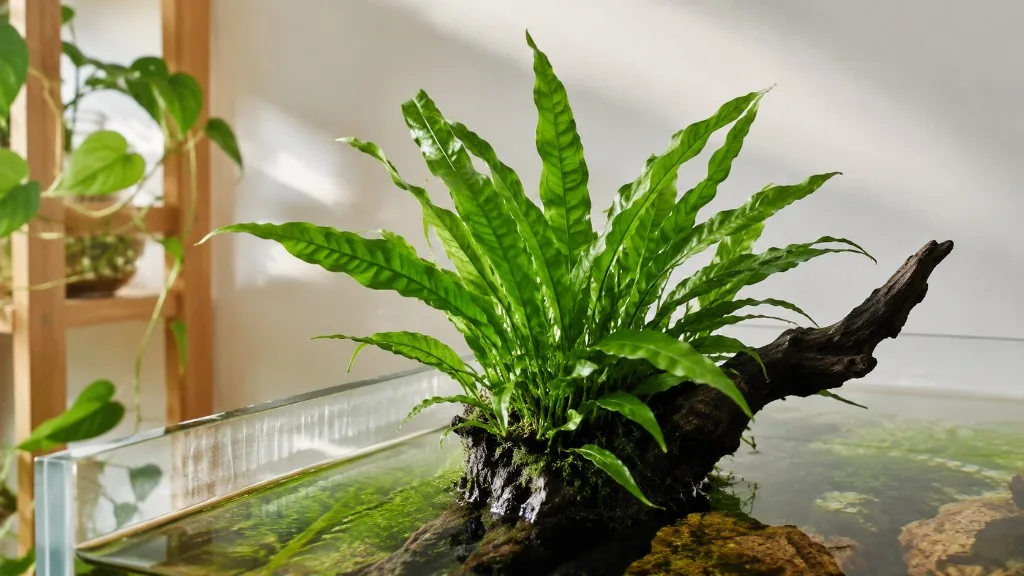
Think of the rhizome as the trunk of a tree that needs to breathe in open water, not as a root that wants darkness below the gravel. Hardscape attachment-glue, thread, or wedge-mimics how Microsorum pteropus (family Polypodiaceae/27914)) grows on stones and submerged wood in Malaysian and Indonesian streams.
When Java Fern Needs Reattachment or Tank Transfer
Java fern does not need repotting on a calendar schedule the way many houseplants benefit from annual soil refresh. It needs intervention when its current setup threatens the rhizome or prevents stable growth. The most common trigger is a new purchase still in a plastic pot with rockwool, a fiber mat, or sometimes a lead weight on the rhizome. That packaging is shipping convenience, not long-term culture. Leaving a store-bought Java fern in its pot at the bottom of the tank buries the rhizome by default and sets up rot within weeks.
Other clear triggers include detachment from driftwood or rock after fish bump the plant, cotton thread rotted away before roots gripped, or glue failed on a smooth surface. Overgrown rhizomes that extend far beyond their original anchor point may need repositioning or division so the weight of leaves does not torque the plant loose. Aquascape rescapes-rearranging wood, changing substrate, or rebuilding a layout-often require unpotting and reattaching every Java fern on the affected hardscape. Tank transfers-moving the plant from a quarantine tank to a display tank, upgrading aquarium size, or relocating to a turtle or goldfish setup-require the same rhizome-first handling as a simple reattachment. Rhizome rot discovered during inspection demands immediate removal, surgical trimming, and reattachment of only healthy tissue before any transfer to a new tank.
You do not need to repot simply because growth is slow. Java fern is deliberately slow; Tropica lists a slow growth rate, and hobbyists commonly see one new leaf every two to four weeks in low-tech tanks. Stalled growth can indicate buried rhizome, poor flow, excessive light causing algae, or nutrient limitation-but it is not by itself a repotting signal if the rhizome is firm, exposed, and producing occasional new leaves or plantlets.
New Purchases and Nursery Packaging
Freshly bought Java fern almost always arrives in one of three formats: a small plastic pot stuffed with rockwool, a pre-attached mat on a plastic grid, or a specimen already glued to lava rock or driftwood. Potted and matted plants need full unpotting at setup. Pre-attached specimens may only need placement, but inspect the glue point to confirm the rhizome is not partially buried under gravel or pressed against the tank bottom in a way that restricts flow.
Some bundles include a lead weight banded around the rhizome to keep the pot sunk. Repotting should begin the day you introduce the plant to your aquarium, not months later when leaves yellow and the rhizome feels soft at the substrate interface. Multiple aquascaping guides recommend removing all rockwool at setup so the exposed rhizome can attach to hardscape. Rockwool can harbor snails or pests, hold decomposing organic matter against the rhizome, and create pockets where flow does not reach. It also gives beginners a false sense that the plant is “planted” when it is actually suffocating. Unpot, rinse roots under dechlorinated water or tank water, inspect the rhizome for damage from shipping, and attach to hardscape before the plant spends a single night with its stem buried under gravel that slid over the pot rim.
Detachment, Overgrowth, and Rescape Triggers
Beyond new purchases, established Java fern tells you when it has outgrown its current placement. Floating or wobbling on hardscape after roots seemed secure often means the rhizome grew longer and heavier on one side, levering the anchor point loose. Visible rhizome extension more than an inch or two beyond the glue spot or tie suggests it is time to add a second anchor, reposition the plant, or divide the rhizome rather than letting the unsupported section sag into substrate.
Tank transfer triggers include finishing quarantine, upgrading from a nano to a larger display, or relocating before a major water parameter change. If the rhizome is firm with active root tips and recent new growth, the plant can survive a move. Mushy rhizome tissue, leaves detaching with goo at the petiole end, or a sour smell means emergency rot surgery comes first-not a layout change.
Tools and Materials for Safe Reattachment
You need a small, focused toolkit. Gather aquarium scissors or a sharp razor blade for trimming dead leaves and rot; isopropyl alcohol or flame for sterilizing metal blades before rhizome cuts; cyanoacrylate gel glue (thick super glue gel, not liquid); cotton thread or dark fishing line for tie-down attachment; paper towels if using glue on wet wood; a shallow dish of tank water to hold the plant briefly while you work; and optional tweezers for picking rockwool fibers from roots. For tank transfers, add a clean bucket or specimen container, airline tubing for drip acclimation if parameters differ, and a fish net large enough to move attached hardscape pieces without crushing leaves.
Hardscape should be chosen before you unpot: driftwood with a flat face, lava rock, dragon stone, or slate with texture for roots to grip. Do not reach for terrestrial potting soil or fertilizer-rich garden mix-those products are irrelevant to epiphyte repotting and dangerous if they bury the rhizome. For glue, confirm the product is cyanoacrylate gel; liquid super glue runs on wet surfaces and makes a mess.
Step-by-Step: Removing Java Fern Without Damage
Java fern repotting starts with careful removal, not force. If the plant is still in a nursery pot, lift it out and work over a bowl of tank water so roots stay hydrated. If it is attached to hardscape, decide whether you can reattach in place or need to remove it entirely. Glue bonds are permanent once cured; cutting the plant free with scissors under the rhizome is normal. Thread ties can be snipped and discarded. Never rip the rhizome off wood by pulling leaves-that tears tissue and opens rot pathways that can spread across the entire rhizome before you notice.
Once free, rinse the root mass gently under slow dechlorinated water or in a container of tank water. Pick apart rockwool fiber by fiber rather than tugging one clump, which breaks rhizoids. Inspect the full rhizome length in good light. Mark soft spots, old emersed leaves that are melting, and sections with healthy dark root tips. Trim dead leaves at the base with scissors. If rot is present, skip ahead mentally to surgical trimming-you cannot attach a rotting rhizome and expect recovery in a new tank.
Plan your attachment before the plant dries on the counter. Wet driftwood accepts glue and ties well. Position leaves facing the viewing angle you want because repositioning after cure means cutting and re-gluing.
Removing Rockwool, Mats, and Old Ties Safely
Remove all rockwool. Partial removal is not enough. Fibers left around the rhizome wick moisture against stem tissue and decompose in warm tank water. Use tweezers or fingers to tease wool away from rhizoids while rinsing. If roots are tangled, sacrifice a few broken anchor roots rather than leaving a wool core pressed against the rhizome. The plant will regrow rhizoids from healthy rhizome within two to four weeks under normal conditions.
Lead weights should come off immediately-they exist to sink shipping bundles, not to stay on the plant long term. After cleaning, the plant should be a naked rhizome with rhizoids and leaves, no pot, no wool, no metal.
Choosing Hardscape and Tank Position
Placement is half of repotting success. Java fern prefers low to moderate light; repositioning a plant directly under a high-power LED often triggers algae on leaves without speeding growth. Choose spots in the midground or background on wood faces that receive indirect light, or foreground placements for smaller cultivars like Narrow Leaf in nano tanks. Avoid jamming the rhizome into a cave where flow stagnates-Fluvico and Aquifarm both note that poor circulation around the rhizome encourages bacterial buildup and rot.
Water flow should be gentle but present. A rhizome in dead water behind a stack of rocks is more vulnerable after repotting or tank transfer than one in a light current that delivers oxygen and diluted nutrients. You do not need hurricane-level powerhead blast; you need enough movement that debris does not settle permanently on the stem. For shrimp tanks and betta setups where flow is low, elevate the rhizome on wood above the substrate rather than tucking it in a corner at the gravel line.
Large cichlids, goldfish, and turtles dislodge lightly tied Java fern-in those tanks, gel glue on heavy rock outperforms thread alone. Pre-soak or boil fresh driftwood so it sinks after you glue the plant.
Reattachment Method 1: Cyanoacrylate Gel Glue
Cyanoacrylate gel glue is the fastest, most secure way to reattach Java fern after repotting or tank transfer. Aquascapers use it because it cures in seconds on damp surfaces, holds the rhizome still while rhizoids develop, and becomes inert once polymerized. Fluvico and Aquifarm both recommend gel glue for mounting epiphytes to hardscape. Liquid super glue is a poor substitute-it runs, creates blobs, and makes precise rhizome placement harder underwater or on wet wood.
Pat the rhizome lightly with a paper towel if it drips; damp is fine, pooling water is not. Apply a small dab of gel to the wood or a thin smear on the underside of the rhizome-never a large mound that smothers tissue. Press the rhizome firmly against the hardscape for 15 to 30 seconds until the bond holds. Leaves should face outward; rhizoids should hang freely toward open water or lightly into crevices. One anchor point near the rhizome’s center of mass is usually enough for small specimens; longer rhizomes may need two glue spots to prevent rocking.
Glue is permanent for practical purposes. Do not coat the entire rhizome in glue-that seals tissue away from flow. A pea-sized amount or less is the standard dose.
Reattachment Method 2: Cotton Thread and Fishing Line
Cotton thread and fishing line are the traditional attachment methods and remain excellent choices when you want a reversible bond or when glue feels too permanent for a first attempt. Dark green or brown cotton thread has an additional advantage: it softens and decomposes over several months, disappearing after rhizoids grip the hardscape. Fishing line is stronger and less visible but must be cut and removed manually once the plant is secure-forget it and the line can cut into an expanding rhizome over time.
Wrap the thread or line around the rhizome and hardscape in a figure-eight pattern, snug enough to hold but not tight enough to indent or crush stem tissue. Two to three loops are usually sufficient on driftwood flats; porous lava rock may need only one loop through a crevice. Position the knot on the underside or back face where it will not dominate the aquascape view. Avoid crossing thread directly over growing leaf buds along the rhizome top.
Once rhizoids grip the surface-typically within two to four weeks-snip fishing line at the knot. Cotton thread can be left to rot away on its own. This method suits delicate Windelov or Trident varieties and temporary quarantine placement.
Reattachment Method 3: Weights and Exposed-Rhizome Anchors
Not every reattachment requires glue or thread on wood. Plant weights-flexible lead or coated metal strips-can hold a small rhizome section on top of the substrate while keeping the stem exposed. Place the weight across a lower rhizome segment, not over the growing tip. This method suits quarantine tanks, bare-bottom hospital setups, and quick repositioning before a permanent hardscape mount. The rhizome must remain fully visible above gravel; only rhizoids may extend downward.
Another approach is anchoring to a small flat stone, then setting that stone on the substrate surface with the rhizome exposed on top. Never push the rhizome under gravel “just until it holds”-that is burial by another name and causes rot within days.
Tank Transfer Between Aquariums
Moving Java fern between aquariums-whether from quarantine to display, from a friend’s tank to yours, or from an old setup to a new aquascape-is a distinct job from simple reattachment in place. The rhizome rules do not change, but water parameter matching and acclimation become critical because Java fern shows stress through leaf melt more visibly than many other epiphytes.
Before transfer, compare temperature, pH, and general hardness between source and destination tanks. Java fern tolerates a wide range-Dennerle cites 22–28°C/27914), pH 5–8, and very soft to hard water-but sudden shifts still trigger melt. If parameters differ significantly, use drip acclimation: place the plant in a container of source water, siphon destination tank water in slowly over 30 to 60 minutes, then move the plant. For plants still attached to hardscape, move the entire wood or rock piece rather than stripping the plant for acclimation unless the hardscape is too large.
Water Matching, Drip Acclimation, and Melt Management
Keep the rhizome submerged at all times during transfer. Emersed melt-older leaves turning transparent or brown over one to three weeks-is normal when water chemistry changes sharply. Distinguish melt from rot: melting leaves detach cleanly; rotting rhizome tissue turns mushy and smells bad. Hold off on heavy fertilizer for the first week after transfer.
Aftercare in the First Two to Six Weeks
The weeks after reattachment or tank transfer determine whether Java fern thrives or slowly fails. Your job is stability: consistent light, gentle flow, clean water, and patience. Do not replant or re-glue because a single leaf melted-that is normal adjustment, not a signal to start over. New growth is the only reliable recovery indicator; damaged leaves will not green up again.
Maintain weekly water changes of 20 to 30 percent in the receiving tank. If you use liquid fertilizer, resume at half dose after the first week if new leaf tips appear. Expect rhizoid attachment within two to four weeks under good flow. Once new leaves unfurl with normal color for your cultivar, the repotting or transfer succeeded.
Rescapes, Division, and Overgrown Rhizomes
Aquascape rescapes are the most common reason experienced hobbyists repot Java fern after the initial setup. When you remove driftwood from a tank to rebuild the layout, every attached fern comes with it. Evaluate each specimen before re-glueing: trim dead leaves, inspect for hidden rot at old attachment points, and decide whether the rhizome has grown long enough to divide.
Cut the rhizome with a sterilized blade between leaf clusters, leaving at least two to three healthy leaves on each piece. Do not divide soft or recovering rhizomes. Plantlets with visible rhizoids and two or three leaves can be harvested during rescapes and attached to new hardscape.
Rhizome Rot Recovery and Emergency Reattachment
Rhizome rot is the emergency that overrides every other repotting plan. Symptoms include soft or jelly-like rhizome tissue, black spreading patches along the stem, foul smell when you lift the plant, and leaves detaching with slimy bases. Rot often starts where the rhizome was buried, where rockwool was left pressed against the stem, or where a tie was too tight.
Remove the plant immediately and trim all soft tissue with sterilized scissors until only firm rhizome remains. Reattach only the firm section using glue on fresh hardscape. Do not fertilize until new growth appears-a single new leaf is a meaningful success signal after rot surgery.
Common Mistakes and How to Avoid Them
The most damaging mistake is treating Java fern like a houseplant that needs soil repotting. Going one pot size up, using indoor potting mix, and checking for circling roots at drainage holes is irrelevant and actively harmful if it leads to burying the rhizome in substrate. Partial rockwool removal is the second most common error-fibers left against the rhizome rot quietly while outer leaves still look green for a week or two.
Over-tight ties, liquid super glue, transferring without acclimation, and repositioning too often all weaken the plant before rhizoids re-establish. Keep ferns on rock above the dig zone in turtle tanks.
Conclusion
Java fern repotting in the aquarium world means unpotting nursery packaging, reattaching the exposed rhizome to hardscape, and transferring between tanks with acclimation-not upgrading to a larger pot with fresh soil. Protect the rhizome, remove all rockwool, choose glue or thread based on your tank’s fish and your tolerance for permanent placement, and give the plant two to six weeks of stable conditions before judging success. New leaves and gripping rhizoids are the only metrics that matter; transparent older foliage after a move is often normal melt, not failure. Whether you are setting up a first low-tech tank, rescaping a mature aquascape, or moving Java fern into a turtle display, the same rule holds: keep the rhizome in open water, let roots anchor to rock or wood, and intervene early when tissue turns soft rather than waiting for the whole plant to dissolve.
When to use this page vs other Java Fern guides
- Java Fern overview - Start here for whole-plant context before deep-diving this topic.
- Java Fern problems hub - Jump to symptom-specific fix guides when this care topic does not resolve the issue.
Related Java Fern guides
- Java Fern overview
- Java Fern watering
- Java Fern light
- Java Fern soil
- Java Fern propagation
- Java Fern fertilizer
- Java Fern problems
Related tool
Try the Pot Size Calculator with java-fern pre-selected to estimate needs for your setup.