White Spots on Jade Plant: Causes, Checks & Fixes
Quick answer
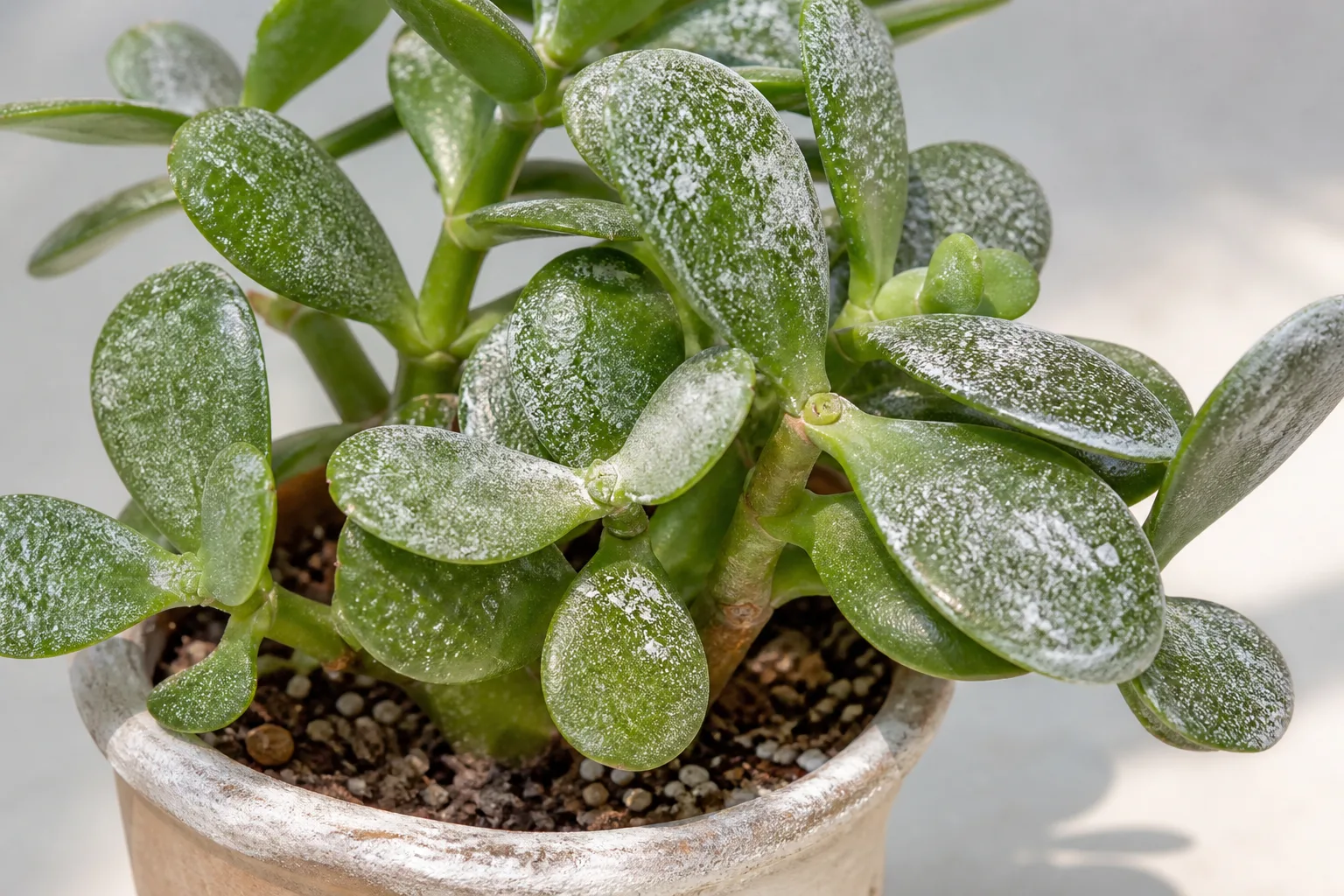
White spots on Jade Plant are usually mineral salt crust from hard water, fixed hydathode dots on healthy leaves, or cottony mealybugs in leaf axils. First step: wipe one spot with a damp cloth-if crust dissolves, flush salts; if cottony mass stays, treat pests.
White Spots on Jade Plant: Causes, Checks & Fixes
This guide covers white spots on Jade Plant. See also the general White Spots guide, watering, and light pages for this plant.
White Spots on Jade Plant: Causes, Checks & Fixes
Quick answer
White spots on Jade Plant (Crassula ovata) fall into three common buckets: crusty mineral deposits from hard water or fertilizer salts, fixed tiny dots on healthy leaves that are normal hydathodes, and cottony mealybug clusters hiding in leaf axils. Powdery mildew and scale bumps are less common but worth ruling out.
First step: run the wipe test. Dampen a soft cloth and gently rub one white patch. If chalky crust lifts off and the leaf underneath looks normal, you have mineral buildup-see low humidity and salt crust guidance for flushing salts. If a fluffy white mass stays put and feels cottony, inspect branch forks for mealybugs before spraying anything.
What white spots look like on Jade Plant
On thick, glossy jade foliage, white markings usually fit one of these patterns:
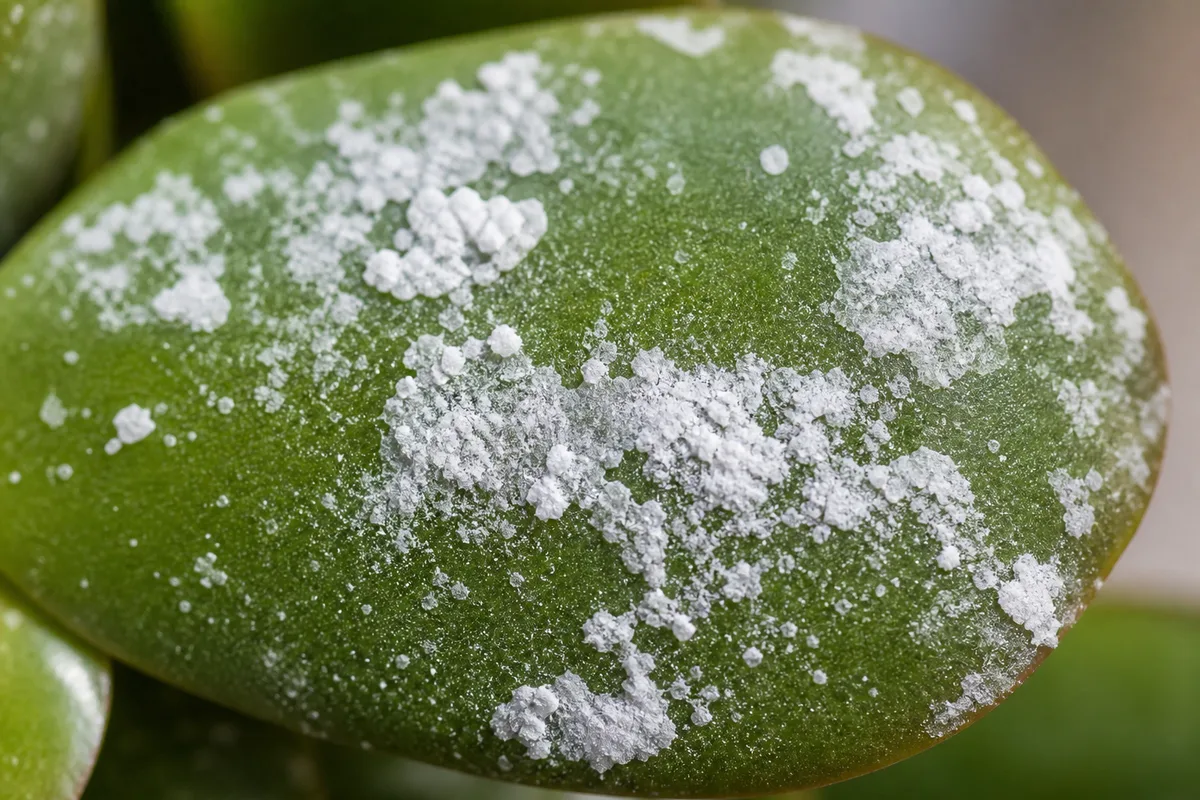
White Spots symptoms on Jade Plant - compare with healthy tissue on the same plant.
- Mineral salt crust - Chalky white film on leaf tops, pot rims, or soil surface after overhead watering or heavy fertilizing. Feels gritty, wipes off cleanly, and the leaf underneath stays green and firm.
- Normal hydathodes - Tiny fixed white or black dots scattered on otherwise healthy leaves. Same size and location over weeks; leaf stays plump and glossy. Penn State Extension notes these are healthy water-transferring pores called hydathodes, not disease.
- Mealybugs - Fluffy cottony white clumps where leaves meet stems and at branch splits. Often accompanied by sticky honeydew, ants on the pot, or black sooty mold. Unlike crust, they do not wipe away as powder-they stay as distinct masses.
- Powdery mildew - Fine white powder that spreads across leaf surfaces over days, sometimes on new soft growth in stagnant, humid corners. Rubs off as a dusting but returns quickly without treatment.
- Scale insects - Small raised bumps on stems or leaf undersides; soft scale can look whitish before hardening brown. Stationary, not powdery-see scale insects on jade for scraping and alcohol treatment.
Healthy jade leaves feel firm, oval, and often show red margins in strong light. Lower leaves naturally yellow and drop with age-that is not a white-spot problem.
Why Jade Plant gets white spots
Crassula ovata evolved on dry, rocky hillsides in South Africa with infrequent rain and sharp drainage. Indoors, two benign causes dominate search results:
Hard water and fertilizer salts. When you water with tap water high in calcium or fertilize heavily, dissolved minerals move through the plant and crystallize on leaf surfaces as water evaporates-especially after misting, overhead watering, or slow dry-down in a warm window. White crust on the pot rim mirrors what you see on leaves.
Natural leaf pores. Jade leaves have scattered sunken stomata and hydathodes that can appear as tiny white or black dots on the cuticle. On a firm, well-watered plant with no sticky residue, these are normal anatomy-not pests and not a reason to scrape the leaf.
Pest-related white spots happen when mealybugs colonize the humid pockets where jade’s dense branching creates protected crevices. Mealybugs are the most common insect pest on jade, along with scale, aphids, and spider mites listed on the NC State Crassula ovata profile. Overwatered, soft growth and newly purchased plants are common entry points. Powdery mildew appears when airflow is poor and leaves stay damp-unusual on jade compared to crust and mealybugs, but possible on crowded shelves.
White spots vs. lookalikes
| What you see | Likely cause | Key check |
|---|---|---|
| Chalky film wipes off; white rim on pot | Mineral salt crust | Damp cloth; flush salts in spring |
| Fixed tiny dots; firm healthy leaf | Normal hydathodes | Same dots for weeks; no honeydew |
| Cottony clumps in axils; sticky leaves | Mealybugs | Alcohol dab turns bodies orange-gray |
| White powder spreading on leaf tops | Powdery mildew | Rubs off but returns within days |
| Raised bumps on stems | Scale | Does not wipe off; scrape test |
| White fuzz on soil surface only | Mold on soil | Leaf surface clean-see mold on soil |
| Pale stippling with fine webbing | Spider mites | Underside inspection in hot dry air |
Mineral deposits can resemble pest damage on first glance-the wipe test and axil inspection separate them faster than guessing from photos alone.
How to confirm the cause
Work through these checks in order:
- Wipe test. Damp cloth on one spot. Crust that dissolves = mineral buildup. Cottony mass that stays = likely mealybug.
- Pot rim and soil surface. White crust here confirms salt accumulation even if leaves look mostly clean.
- Leaf axils and branch forks. Pull leaves back at the crown. Fluffy white with sticky residue confirms mealybugs-not dust or salts.
- Spread pattern. Fixed dots unchanged for weeks = hydathodes or old crust. New cottony patches on new branches = active pest. Widening powdery film = mildew.
- Plant health. Firm leaves and woody stems with only rim crust = benign. Soft new growth with clumps in multiple forks = treat pests before they spread across slow-growing jade.
- Water source. Recent switch to tap water, heavy fertilizer, or top-watering often precedes crust without any pest signs.
If soil dries normally, new growth stays plump, and the wipe test removes all white residue, no further treatment is needed beyond flushing salts at the next watering cycle.
First fix for Jade Plant
Match the fix to what the wipe test showed-one action first.
| Confirmed cause | First fix |
|---|---|
| Mineral salt crust | Wipe leaves with a damp cloth. Water deeply with plain water until it runs from the drainage hole; empty the saucer. Repeat flush in spring if you fertilize-details in low humidity / salt buildup. |
| Normal hydathodes | No treatment. Do not scrape fixed dots on healthy leaves-you risk damaging the cuticle. |
| Mealybugs | Isolate the plant. Dab each cottony patch with 70% isopropyl alcohol on a cotton swab at leaf axils and forks. Follow with insecticidal soap on labeled intervals weekly for at least three weeks. Full protocol: mealybugs on jade. |
| Powdery mildew | Improve airflow; avoid overhead watering. Remove affected leaves if the patch is small. Fungicide labeled for ornamentals only if spread continues-jade’s succulent leaves can be sensitive to sprays. |
| Scale | Scrape soft bumps with a fingernail or alcohol swab; repeat weekly. See scale insects. |
Do not stack Jade Plant repotting guide, pruning, fertilizer, and pesticide on the same day. On jade, one targeted correction plus a week of observation beats a same-day treatment bundle.
Recovery timeline
Mineral crust clears cosmetically after one wipe; preventing return takes one to two flush cycles over a few weeks if salts built up in the mix.
Hydathode dots never disappear-they are permanent leaf features on healthy plants. No recovery needed.
Mealybugs require three or more weekly alcohol-and-soap rounds because eggs hide in protected axils on slow-growing jade. Light scarring on old leaves remains; judge recovery by firm new tips and no cottony masses for two consecutive inspections.
Powdery mildew on a small patch may stop after airflow improves within one to two weeks. Spreading film across multiple branches needs persistent treatment.
Old blemished leaves rarely re-green. Recovery markers are plump new leaves, stable stem bases, and white spots that no longer spread.
What not to do
Do not scrape fixed hydathode dots thinking they are scale or mildew-you will scar healthy cuticle. Do not spray neem or insecticidal soap on mineral crust alone; you add stress without solving salts. Do not ignore cottony axil clusters as “dust”-mealybugs spread branch to branch on dense jade forms.
Do not fertilize a stressed jade to “help it recover” from white spots. Fix salts or pests first. Do not keep overhead-watering with hard tap water while crust keeps returning.
Wear gloves when dabbing pests or pruning damaged tissue-jade is toxic to cats and dogs if chewed.
How to prevent white spots next time
Use terracotta and fast-draining succulent mix so salts flush instead of concentrating. Water when the soil is completely dry and empty the saucer-jade stores water in thick leaves, so slow dry-down concentrates minerals in the mix.
Bottom-water or pour at the soil line instead of wetting foliage if your tap water is hard. Fertilize lightly two to three times in spring and summer only; flush the pot with plain water in spring if white rim crust returns.
Give four or more hours of direct sun daily so the plant uses water actively. Quarantine new plants two weeks and inspect branch forks monthly-early mealybug treatment prevents white-spot panic later.
Practical checks
Urgency check
Treat as urgent when cottony mealybugs cover multiple branches, powdery film spreads weekly, or stem bases soften while soil stays wet. Fixed hydathode dots and wipe-off crust on an otherwise firm plant are not emergencies.
Best inspection order
Wipe test on one spot → pot rim and soil surface → leaf axils and branch forks → spread pattern over one week → newest growth firmness.
Jade care cross-check
Also sold as money tree or lucky plant, jade should be judged by firm new growth-not by whether every leaf is spotless. If the pot stays heavy for weeks while white crust builds on the rim, improve drainage and light before the next drink. Baseline care: jade plant overview.
When to worry
Dry mineral crust alone rarely threatens a healthy jade. Worry when:
- Mealybugs spread to multiple branch forks despite weekly alcohol dabs
- Powdery white film covers new growth and does not stop after airflow improves
- Stem bases soften with sour-smelling soil-root rot overlap, not a surface spot issue
- Ants farm the plant-honeydew from an active pest colony above
A few fixed dots on plump leaves with no stickiness is normal jade anatomy. Chalky crust that wipes off and stays gone after a flush is a solved cosmetic issue.
Related Jade Plant problems
- Jade plant overview - baseline care and troubleshooting hub
- Mealybugs - cottony white clusters in axils
- Low humidity / salt buildup - mineral crust and flush protocol
- Scale insects - raised stem bumps
- Aphids - sticky honeydew and mineral deposit confusion
- Mold on soil - white fuzz on mix surface only
When to use this page vs other Jade Plant guides
- Jade Plant watering guide - Use for routine moisture checks before assuming white spots is the main issue.
- Jade Plant problems hub - Browse all 49 common issues on this species.
- Mealybugs on Jade Plant - Different entry point when symptoms overlap with white spots.