Transparent Leaves on Jade Plant: Causes, Checks & Fixes
Quick answer
Transparent leaves on Jade Plant usually mean excess water in the leaf tissue-early edema blisters on lower leaves in cool dim weather, glassy mush on wet soil, or small white mineral spots from over-uptake. First step: lift the pot and check soil moisture deep in the mix before you change anything else.
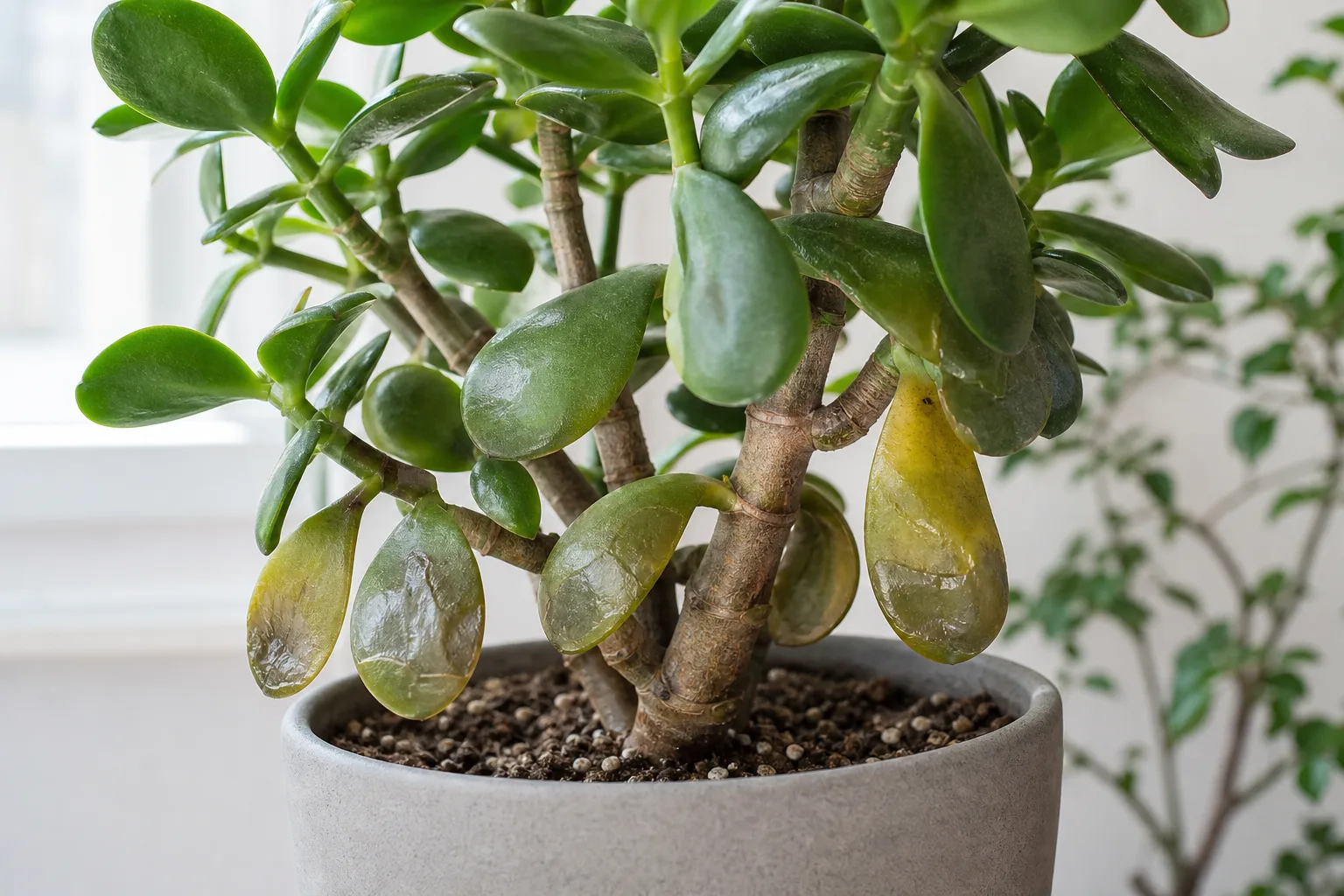
Transparent Leaves on Jade Plant: Causes, Checks & Fixes
This guide covers transparent leaves on Jade Plant. See also the general Transparent Leaves guide, watering, and light pages for this plant.
Transparent Leaves on Jade Plant: Causes, Checks & Fixes
Quick answer
When jade plant leaves look glass-like, water-soaked, or see-through, the tissue is holding more water than the plant can release-not healthy succulent translucency at the margins. On Crassula ovata, transparency almost always traces to water uptake outpacing transpiration: early edema blisters on lower leaves in cool, cloudy late-winter weather; whole-leaf glassy mush on a heavy wet pot signaling overwatering and possible root stress; or small white rub-off spots when excess water carries minerals out through the leaf surface.
First step: lift the pot and check soil moisture deep in the mix-finger or skewer to the bottom, plus pot weight-before repotting, pruning, or fertilizing. Our jade watering guide covers dry-down rhythm; this page tells you which transparency pattern you are seeing and what to do next.
What transparent leaves look like on Jade Plant
Transparency on jade is not one uniform symptom. Thick, waxy Crassula ovata leaves store water deliberately, so the pattern-location, texture, and pot moisture-matters more than a single discolored patch.
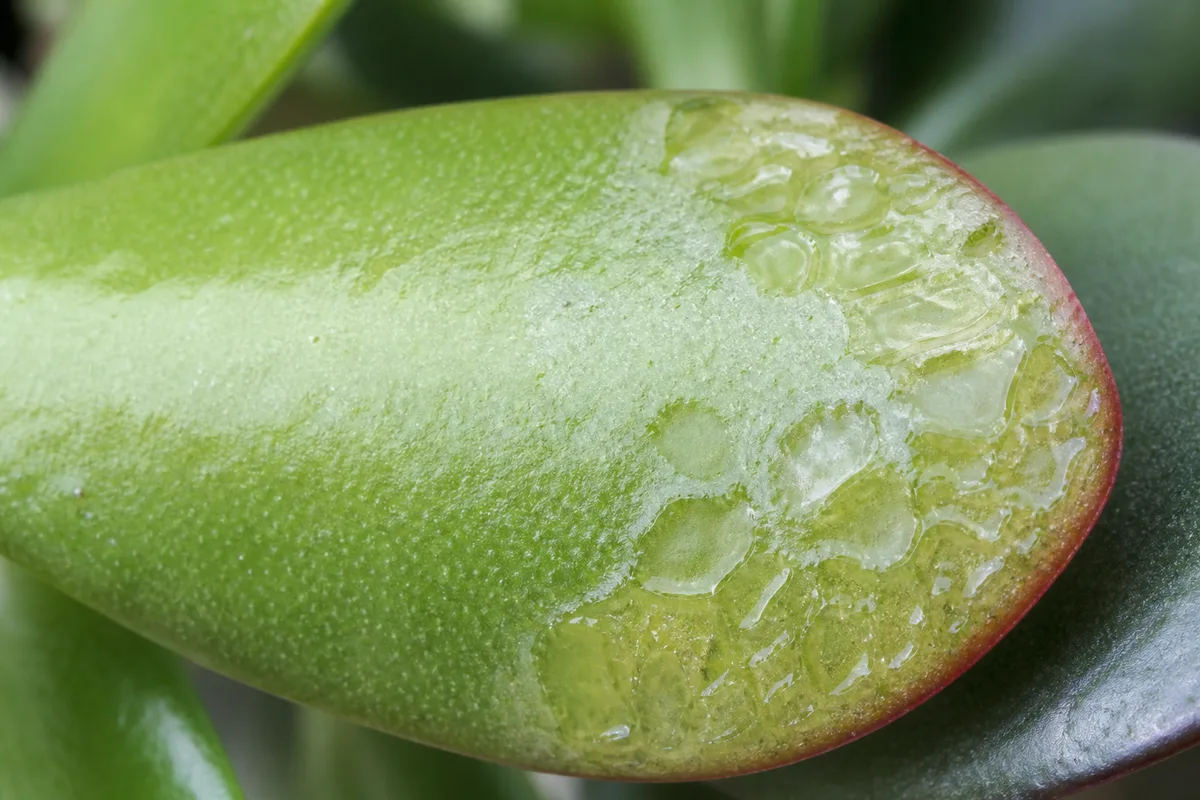
Transparent Leaves symptoms on Jade Plant - compare with healthy tissue on the same plant.
Firm water-soaked translucent blisters on lower leaves (early edema)
The earliest edema stage shows as small, firm, water-soaked blisters on older lower leaves, often near margins or on the underside. The spots look translucent or glassy before they harden. Leaves are still plump overall; the plant may sit in a dim east or north window through late winter cloudy stretches when soil stays moderately moist. UConn Extension notes these blisters form when roots take up more water than the plant can transpire, and that edema and mineral spotting most often appear in cool, cloudy late-winter weather.
Whole-leaf glassy mushiness on wet soil (overwatering / root stress)
Severe overwatering produces soft, translucent, waterlogged leaves that may yellow and drop with little pressure. The pot feels heavy days after watering; soil at depth stays damp. Unlike firm early blisters, the tissue feels mushy, not turgid. Pacific Northwest handbooks link overwatering on jade to yellowing, defoliation, and tiny water-soaked blisters on lower leaves before rot advances. Glassy leaves on saturated mix are a stop-watering signal, not a cue to mist or add more moisture.
Small white rub-off spots (mineral exudate)
Sometimes small white spots that rub off easily appear on jade leaves when the plant releases excess water along with dissolved minerals. UConn describes this as occurring when plants have more water than they need-the same imbalance that drives early edema. These spots are usually flat and powdery, not raised blisters, and may sit on otherwise firm green leaves.
Normal vs. abnormal translucency
A thin, even translucency at leaf margins on firm, plump leaves with dry-light soil can be normal for actively growing jade in strong light-not a crisis. Worry when patches are localized, raised, or water-soaked, when whole leaves turn glassy, or when newest growth also looks abnormal. Missouri Botanical Garden lists jade among succulents particularly sensitive to oedema conditions-warm wet roots plus cool, slow-transpiration air indoors.
Transparent leaves vs. edema scars vs. pale leaves - when to use this page
| Symptom stage | What you see | Best page |
|---|---|---|
| Early transparency | Firm water-soaked blisters; see-through patches on lower leaves | This page - act before scarring |
| Corky brown bumps | Raised wart-like scars; blisters have hardened | Edema on jade - progression and scar care |
| Glassy mush, wet pot | Soft translucent leaves; sour smell; stem base softening | Overwatering and root rot |
| Overall pale fade | Leaves lose green without glassy water-soaked patches | Pale leaves - often low light |
Transparent leaves are the early warning. Edema blisters eventually erupt into tan or brown corky growths that do not revert to smooth green. Catching glassy lower leaves in winter often prevents the permanent scars covered on the edema page.
Why Jade Plant leaves turn transparent
Jade evolved on dry, rocky South African slopes with strong sun and seasonal dry-down. Indoors, the mismatch is predictable: roots keep drinking while leaves cannot transpire fast enough.
Late-winter cool, cloudy, low-light conditions
Oedema on indoor plants is most prevalent in late winter during extended cloudy weather-when soil stays warm and moist but air is cool and transpiration slows. Jade in a dim window still receiving “normal” winter water is a classic setup for translucent lower-leaf blisters.
Overwatering when growth has slowed
From fall through late winter, jade slows growth sharply and needs less frequent watering per Wisconsin Horticulture. Watering on a summer calendar while evaporation drops leaves roots absorbing water faster than leaves release it-producing glassiness before corky edema or rot.
Fast uptake after drought swings
Purdue Extension notes oedema can follow overly dry conditions then abundant moisture, when cells take on water too rapidly. A jade left dry on vacation, then soaked repeatedly, may show translucent blistering on thick leaves within days.
Heavy peaty mix, plastic pots, or poor drainage
Peat-heavy mix in non-breathing pots holds moisture at the root zone while leaves in cool air cannot keep pace. Clemson HGIC warns root rot results from mix that does not drain quickly or overly frequent watering-transparency often appears before obvious stem rot.
Lookalike symptoms to rule out
- Underwatering - Wrinkled, thin leaves on dry light soil; not water-soaked glassiness. Rehydration firms tissue within days.
- Edema scars - Raised corky brown bumps after the translucent stage passed; different fix urgency if rot is absent.
- Pale leaves - Overall loss of green from low light without localized water-soaked patches.
- Drooping leaves - Soft downward leaves from dry or rotting roots; may overlap with overwatered transparency but droop is the dominant signal.
- Sunburn - Bleached or crispy brown patches on sun-facing leaves after a sudden window move-not internal glassiness from water imbalance.
How to confirm the cause
Work through this order before changing multiple variables:
- Check pot weight and soil at depth. Heavy pot plus damp skewer at the bottom with glassy leaves = overwatering / root stress. Light pot with firm leaves and only marginal translucency = likely normal growth, not pathology.
- Inspect lower older leaves first. Clustered firm water-soaked blisters on lower foliage in a cool dim room = early edema. Whole-plant glassiness on wet mix = overwatering primary.
- Feel leaf texture. Firm turgid blisters differ from mushy collapsing tissue. Mushy leaves on wet soil escalate to root rot triage.
- Note white rub-off spots. Flat powdery white that wipes away on otherwise firm leaves = mineral exudate from excess uptake-reduce water before blisters form.
- Review recent watering and weather. Late-winter cloudy weeks plus unchanged watering frequency strongly supports edema transparency per UConn jade guidance.
- Check newest growth and stem bases. Clean firm tips suggest a contained lower-leaf problem. Soft stem bases or sour smell = urgent rot, not cosmetic transparency.
First fix for Jade Plant
Hold the next watering and verify how dry the mix is at the bottom of the pot-do not repot, prune, or fertilize on the same day.
Branch by confirmed pattern:
If early edema blisters in cool dim conditions
Move the plant gradually to brighter light (east or south window, or closer to glass) so transpiration can balance uptake. Skip one full dry-down cycle-let the top inch go dry, then confirm depth dryness before the next soak. Increase airflow if the pot sits in a humid corner. Track lower leaves weekly; new blisters should stop within one to two dry-down cycles.
If glassy mush on saturated soil
Stop all watering immediately. Move to bright light with airflow per our overwatering guide. If stem bases soften or soil smells sour, unpot and inspect roots-trim mush, callus, repot into dry gritty mix only when rot is confirmed. Wait two weeks after rescue before the first cautious drink.
If mineral exudate spots only
Reduce watering frequency and flush salts at the next scheduled watering by running water through the pot until it drains freely; empty the saucer. Spots often stop forming once uptake normalizes-no need to scrape leaves.
Step-by-step recovery by cause
Early edema (firm blisters, wet-ish but not rotting soil):
- Hold water until the top one to two inches of mix are dry; confirm with a skewer at depth.
- Brighten light over seven to ten days to avoid sunburn on leaves formed in shade.
- Resume soak-and-dry watering per the watering guide-winter rhythm is slower than summer.
- Wipe dust from leaves so stomata can function; avoid misting.
- Accept that old blisters may scar-follow edema if corky bumps appear.
Overwatering transparency (heavy pot, mushy leaves):
- Stop watering; lift pot onto a dry surface.
- Check stem firmness at the base. Soft = unpot and inspect per root rot.
- If roots are mostly firm, wait for full dry-down before a light watering.
- Repot into smaller terracotta with gritty mix only if soil structure is degraded or roots were trimmed.
- Judge success by firm new leaves, not re-greening of glassy old ones.
Recovery timeline
- Early edema caught in the translucent stage: New blister formation often stops within one to two weeks after corrected watering and brighter light. Existing patches may brown and cork over permanently.
- Mild overwatering without rot: Leaves firm up over two to four weeks once the mix stays dry long enough; yellowed leaves may drop.
- Root rot involved: Recovery takes several weeks to months; mushy main stems may mean salvage cuttings only.
Signs the fix is working: No new transparent patches; firm plump new growth at branch tips; pot weight drops predictably between waterings; lower-leaf damage stops spreading.
Signs the problem is worsening: More glassy leaves while soil stays wet; stem base softening; sour smell; blisters merging into large necrotic areas.
What not to do
Do not keep watering because transparent leaves look “thirsty”-water-soaked tissue means excess uptake, not drought. Do not mist, use humidity trays, or move to a darker corner to “rest” a wet jade. Do not fertilize stressed plants hoping leaves re-green. Do not stack repot + heavy prune + pesticide the same day you change watering-you will not know which action helped. Wear gloves when removing mushy leaves-jade is toxic to cats and dogs.
How to prevent transparent leaves on Jade Plant
Match watering to dry-down, not a calendar-especially October through March when jade needs restricted winter watering. Use terracotta and fast-draining succulent mix from our soil guide. Give four or more hours of strong light daily so the plant transpires between drinks. Empty saucers after every watering. During long cloudy spells, skip a watering cycle rather than assuming the plant needs its summer schedule.
Cross-check routine care on the jade overview and light guide. Weekly pot lifts train your hand to catch heavy wet pots before leaves turn glassy.
When to worry
Transparency alone is not an emergency if stems are firm and soil can dry. Treat as urgent when stem bases soften, soil smells sour, multiple branches collapse, or glassiness spreads to new growth while the pot stays heavy-that pattern precedes fatal root and stem rot. Early edema blisters without rot are correctable; permanent corky scars are cosmetic once conditions stabilize.
Practical checks
Urgency check
Urgent if stem bases soften, soil smells sour, or glassy leaves multiply on a pot that stays heavy for two weeks after you stopped watering.
Best inspection order
Pot weight → soil moisture at depth → lower older leaves for blisters → leaf texture (firm vs. mush) → newest growth → stem bases.
Jade care cross-check
If transparency appeared in February in a dim room, suspect edema timing before pests or fertilizer deficiency. If the plant is also pale and leggy, add light per the light guide while you dry the mix-low light and wet soil together are the worst combination for glassy leaves.
Related Jade Plant problems
- Edema - corky blister progression after the early transparent stage
- Overwatering - glassy mushy leaves on saturated soil
- Root rot - escalation when transparency pairs with soft stems
- Pale leaves - fade without water-soaked glassiness
- Jade overview - hub for watering, light, and soil rhythm