Low Humidity on Ficus Elastica Ruby: Causes, Checks & Fixes
Quick answer
Ficus Elastica Ruby grows best at 40–60% relative humidity, but forced-air heating in winter can drop indoor air to 20–30% and crisp the pink-cream margins before solid green tissue looks stressed. First step: place a hygrometer near the canopy and move the pot away from radiators, vents, and fireplace drafts before adding a humidifier or pebble tray.
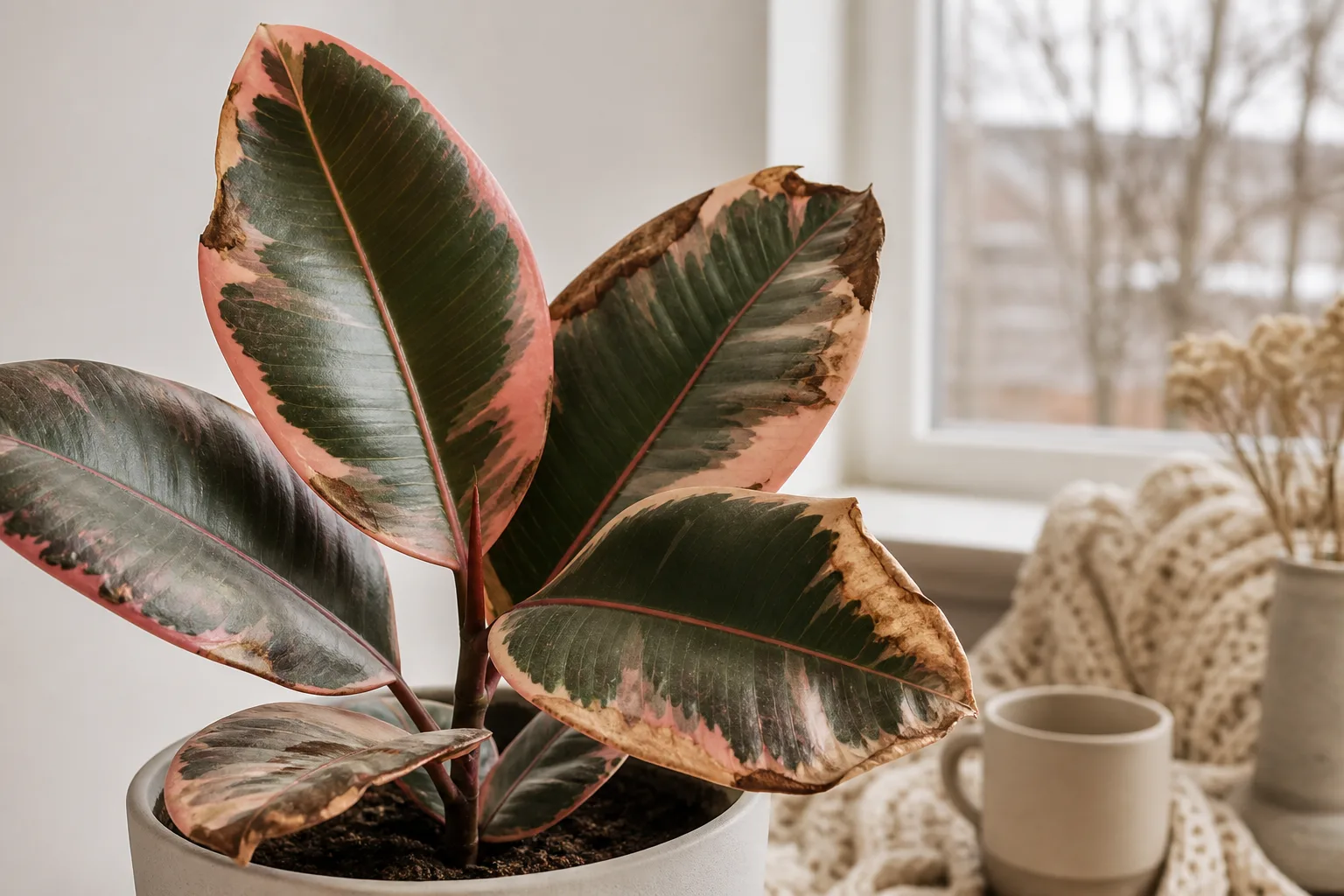
Low Humidity on Ficus Elastica Ruby: Causes, Checks & Fixes
This guide covers low humidity on Ficus Elastica Ruby. See also the general Low Humidity guide, watering, and light pages for this plant.
Low Humidity on Ficus Elastica Ruby: Causes, Checks & Fixes
Quick answer
Ficus elastica ‘Ruby’ is a tricolor rubber plant whose pink and cream leaf margins lose moisture faster than solid green tissue when indoor air stays dry. The species prefers humid conditions but tolerates the dry air common in homes; variegated Ruby sits on the less-forgiving end of that range because pale sections carry less chlorophyll and desiccate first at the leaf tip.
Aim for 40–60% relative humidity during active growth. Summer rooms often land there naturally. Forced-air heating from late fall through early spring can drop relative humidity to 20–30%, which produces brown, crispy tips on pink-cream margins, slight leaf curling, and increased spider mite pressure in dry indoor air. NC State lists medium relative humidity with temperature above 55°F as ideal for Ficus elastica indoors.
First step: place a hygrometer near the canopy and move the pot away from radiators, vents, and fireplace drafts. You need a real RH reading at plant level-not a guess from how the room feels-before buying a humidifier or misting leaves. If the meter reads below 40% and tips are crisping on variegated margins while soil moisture is normal, humidity is the problem. If the pot is light and soil is dusty dry, fix watering first-see underwatering on Ficus Elastica Ruby. Full humidity context: Ficus Elastica Ruby overview.
What humidity Ficus Elastica Ruby needs
Ruby is a tropical Ficus elastica cultivar adapted to warm, moderately humid forest understory. Indoors, it performs best when your room approximates that rhythm: stable temperatures between 65 and 82°F (18 and 28°C) and relative humidity around 40–60%.
That band is not arbitrary. Low humidity is the most common cause of brown leaf tips and edges on houseplants, and large-leaf species with wide transpiring surfaces show damage sooner than small-leaved succulents. Missouri Botanical Garden notes Ficus elastica grows in bright indirect light or part shade with moderate humidity-conditions most homes meet in summer but not always in heated winter.
Ruby is more humidity-sensitive than solid-green Burgundy or Robusta rubber plants because tricolor variegation raises the stress floor. Cream and pink tissue photosynthesizes less efficiently per square inch, so the plant already runs closer to its environmental limits. Dry air that a Burgundy might shrug off for months can crisp Ruby’s pale margins within a few weeks of furnace season.
Average room humidity is often adequate from spring through early fall. The critical window is heated winter, when the same plant that looked glossy in September develops tip burn by January unless you add moisture or move it out of the driest microclimates.
Why variegated Ruby is more sensitive than solid-green rubber plants
Variegation is a physiological trade-off, not decoration. Green leaf tissue contains chlorophyll and drives photosynthesis. Pink, cream, and white sections contain less chlorophyll, so Ruby depends on bright light hitting the remaining green areas while pale margins operate with thinner vascular supply toward the leaf edge.
When relative humidity drops, water moves from leaf tissue into dry air faster than roots can replace it-especially at the tip and margin where xylem tapers. On Ruby, chlorophyll-poor pink and cream zones desiccate before the solid green midrib looks stressed. That is why two rubber plants in the same dry room can look different: Burgundy may stay glossy while Ruby shows a tan band on every pale edge.
Large, waxy, semi-succulent leaves store some moisture, which gives Ruby modest drought tolerance at the root level-but leaf storage does not protect margins when air pulls water from the surface faster than the vascular system delivers it. Dry air also compounds transpiration near hot south or west window glass and directly above radiators, where localized RH can sit far below the room average even when a hallway hygrometer reads 35%.
Symptoms of low humidity on Ficus Elastica Ruby
Low humidity damage on Ruby has a recognizable pattern once you know what to compare against pests and watering errors.
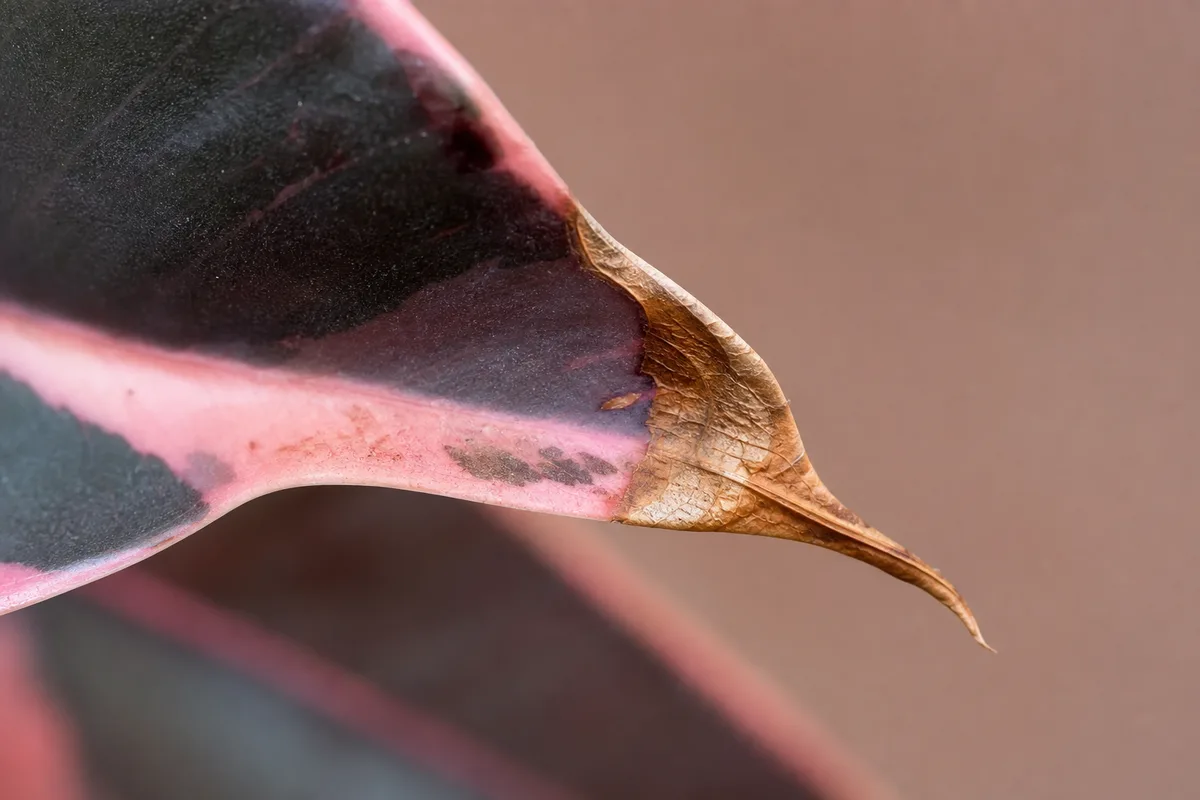
Low Humidity symptoms on Ficus Elastica Ruby - compare with healthy tissue on the same plant.
Brown, crispy tips on pink and cream variegation (most common):
- Narrow tan-to-brown band at the very leaf point, often starting on the pale margin rather than the green center
- Papery, dry texture; green midrib may stay firm and glossy while only variegated edges fail
- Clustered on leaves nearest radiators, forced-air vents, fireplace heat, or single-pane winter windows
- Worsens gradually over several weeks of heating season rather than appearing overnight
Slight leaf curling and dull variegation:
- Margins curl downward slightly as tissue loses turgor
- Pink tones may look washed or dull-not the same as green reversion from low light
- New leaves may emerge smaller or with less vivid pink-red sheathing when chronic dry air persists
Dry air and spider mite risk:
- Mites are common on houseplants stressed by low humidity and heat
- Ruby near sunny glass or heater drafts loses leaf moisture faster, which favors mite colonies on undersides
- Humidity stress alone shows crispy tips without stippling or webbing; mites add fine yellow speckles and delicate silk-see spider mites on Ficus Elastica Ruby
Unlike underwatering, low-humidity tip burn often appears when soil moisture is normal and stems stay firm. Unlike sun scorch, humidity damage is usually symmetrical at the leaf tip rather than bleached patches on one sun-facing side of pale tissue.
What people mistake for low humidity
Several Ruby problems overlap with dry air. Confirm humidity only after you rule these out.
Underwatering in dry heated rooms - Winter heating dries air and accelerates soil surface evaporation, so growers often underwater while correctly guessing that “the air is dry.” A light pot with dusty dry soil 2 inches down means water first. Crispy tips with normal-weight soil and damp mix below the surface point to air humidity, not roots. Full dry-soil rhythm: underwatering guide.
Overwatering after misreading limp leaves - Some growers increase watering when margins brown, assuming thirst. Heavy wet soil, soft lower leaves, and sour-smelling mix mean stop watering, not humidifier shopping. Semi-succulent Ficus elastica roots rot in stagnant wet mix even when leaf tips look desiccated. See overwatering if the pot stays wet for days.
Low light variegation fade - Dim conditions push Ruby toward green new growth and smaller leaves, but that is a pigment and photosynthesis problem, not margin desiccation. New leaves emerging mostly green signal light correction on the light guide or overview, not humidity alone.
Brown tips from salts, fluoride, or sun scorch - Mineral buildup, hard tap water, and direct afternoon sun on pale sections also brown margins. Salt crust on soil, sun-side-only bleaching after a window move, or tip burn that worsened after heavy feeding suggest those causes. The dedicated brown tips guide walks through disambiguation when multiple triggers overlap.
Lookalike comparison
| Pattern | Likely cause | First direction |
|---|---|---|
| Crispy tips on pink-cream edges; firm stems; normal soil moisture | Low humidity | Hygrometer + humidifier or pebble tray |
| Crispy tips; light pot; dry soil 2 inches down | Underwatering | Thorough watering; then reassess RH |
| Soft yellow leaves; heavy wet pot | Overwatering | Stop watering; check drainage |
| Fine stippling + webbing on undersides | Spider mites | Rinse + treat; raise humidity as prevention |
| Sun-side bleaching after window move | Sun scorch | Filter light; move back from hot glass |
| Tips worsen after feeding; white soil crust | Salt / mineral burn | Flush pot; see brown tips |
How to confirm low humidity is the cause
Work through these checks in order. One clear reading beats guessing from symptom photos alone.
- Hygrometer at canopy height - Place a digital hygrometer within 12 inches (30 cm) of the top leaves, not on the opposite wall. Readings below 40% in winter with crisp variegated margins strongly support low humidity when watering is stable.
- Draft and heat-source map - Note distance to radiators, forced-air vents, fireplaces, and frequently opened exterior doors. A plant in a 45% room can sit in a 25% microclimate above a heat register.
- Soil moisture cross-check - Push your finger 2 inches into the mix. Evenly moist soil with firm stems and only margin tip burn confirms air humidity as the primary stressor. Dry, light soil means address water before humidity hardware.
- Which tissue failed - Damage limited to pale pink or cream tips with healthy green centers fits humidity or salt stress. Uniform stippling on undersides means inspect for spider mites even if air is dry.
- Seasonal timing - Symptom onset weeks after heating season starts, with no recent repot or move, increases humidity probability. Sudden bleaching after a window shuffle points to light.
- New growth response - If the newest tricolor leaves already show crisp margins while older leaves look fine, current placement is too dry. If only lower, older leaves have tips and new growth is clean, past winter stress may be cosmetic.
You have confirmed low humidity when RH near the canopy stays below 40%, soil moisture is appropriate, stems are firm, and browning concentrates on variegated margins without pest signs.
First fixes for Ficus Elastica Ruby
After you have a hygrometer reading and removed obvious heat drafts, apply one humidity upgrade at a time so you can judge whether new leaves emerge with clean edges over the next two to three weeks.
Move away from heaters, fireplaces, and AC vents
This costs nothing and often fixes localized dry zones. Pull the pot at least 3 feet (1 m) back from radiators and forced-air registers, off cold winter window sills that radiate heat upward, and away from fireplace blowers. Clemson advises avoiding cold drafts and sudden temperature drops; the same draft logic applies to hot dry blasts that strip moisture from large leaves.
Run a humidifier near the canopy
A small cool-mist or evaporative humidifier 3 to 6 feet (1 to 2 m) from the plant is the most reliable way to hold 40–60% RH through winter. Set it to maintain that band rather than flooding the room above 70%, which invites fungal spotting where airflow is poor on waxy leaves. Empty and clean the reservoir weekly to avoid mineral dust on pale variegation.
Pebble tray and plant grouping
Cluster houseplants together or set on a pebble-filled saucer with water in the bottom so evaporation raises humidity around the foliage. The pot base must sit above the water line, not in standing water, or roots suffocate. Grouping Ruby with other humidity-loving plants creates a modest microclimate; it helps more in small rooms than in open floor plans with constant air exchange.
What not to rely on: heavy misting
Misting raises humidity for minutes, not hours, and does not change the RH a hygrometer reads at canopy level. On Ruby, wet droplets on pale variegated sections in direct sun can magnify light and cause spot burns. If you mist occasionally for dust removal, do it in the morning and keep pale tissue out of hot window beams afterward.
Do not increase watering to compensate for dry air unless soil is genuinely dry. Do not fertilize a stressed Ruby hoping to “green up” crisp margins. Do not stack Ficus Elastica Ruby repotting guide, heavy pruning, and pesticide on the same day.
Recovery timeline
Damaged tip tissue does not turn pink or green again. Judge recovery by new leaves with clean margins and browning that stops spreading on older foliage.
After moving the plant off heat sources and raising RH toward 40–60%, expect visible improvement on the next one to two leaves that unfurl-often two to four weeks in winter when growth is slow. Older leaves with narrow brown bands may stay cosmetically marked until you trim the dead edge or the leaf is eventually shed.
If tips keep crisping on new growth after three weeks at stable humidity, re-check for underwatering, salt buildup, or spider mites before adding another intervention. Severe winter damage across many leaves can take a full growing season to outgrow as Ruby replaces foliage on its upright stems.
What not to do
Do not mist heavily onto folded leaf sheaths or pale sections in direct sun - water droplets act like lenses on variegated tissue.
Do not raise humidity without fixing heater or vent placement first - a humidifier fighting a radiator microclimate wastes effort and can leave roots in uneven stress.
Do not water on a calendar because tips look dry - confirm the top 2 inches of soil are dry before soaking; wet feet plus humid air invites root problems.
Do not assume every brown tip is humidity - salts, fluoride, sun scorch, and drought mimic margin burn on Ruby. Use the brown tips guide when multiple causes overlap.
Do not ignore stippling with crispy edges - dry air plus spider mites often arrive together in winter; humidity alone will not clear an active mite colony.
Do not push humidity above 70% in stagnant corners - very high RH without airflow can encourage fungal spotting on waxy Ficus leaves.
How to prevent low humidity next winter
Prevention is easier than reversing widespread margin burn on tricolor foliage.
- Buy a hygrometer before heating season and place it near Ruby’s canopy from October through March in temperate climates.
- Position the pot during setup - bright indirect light away from hot glass and heat registers beats relocating mid-winter when the plant is already stressed.
- Run a humidifier on a timer when RH drops below 40% rather than reacting after half the leaves crisp.
- Group plants or use pebble trays in the room where Ruby lives; evaporation from clustered foliage and water trays raises local humidity more than occasional misting.
- Keep the Ficus Elastica Ruby watering guide stable - water when the top 2 inches of soil are dry, not because air feels dry. Dry air accelerates soil surface evaporation and tempts over- or underwatering.
- Inspect leaf undersides weekly in winter - catching spider mites early prevents dry-air pest cycles from compounding humidity stress.
- Wipe leaves monthly - dust blocks light on already less-efficient variegated tissue and slows recovery after you fix RH.
When summer returns and indoor RH naturally rises, you can reduce humidifier runtime. Ruby often needs less supplemental moisture June through September unless air conditioning dries the room aggressively.
When to worry
Lower urgency: A few older leaves show narrow crispy points on pink-cream margins in a dry winter room while new tricolor growth stays firm and unstippled. Correct placement and humidity; monitor for two weeks.
Act within days: Browning spreads to newly unfurling leaves, multiple leaves fail at once despite stable watering, or fine webbing and stippling appear on undersides-treat as humidity plus possible mites.
Escalate immediately: Soft stems, sour soil smell, or widespread yellowing with wet mix mean root stress, not humidity alone-see overwatering and root rot before adding more moisture to the air.
Conclusion
Low humidity on Ficus Elastica Ruby is a winter indoor problem that shows first on pink and cream leaf margins, not as a mysterious ficus mood. Read RH at the canopy, move the pot off heat drafts, then add a humidifier or pebble tray-not daily misting-to hold 40–60% relative humidity. Pair that with normal dry-down watering and weekly pest checks so dry air does not invite spider mites on the same stressed leaves. Existing brown tips will not revert; clean new growth is the sign your fix worked.
When to use this page vs other Ficus Elastica Ruby guides
- Ficus Elastica Ruby watering guide - Use for routine moisture checks before assuming low humidity is the main issue.
- Ficus Elastica Ruby problems hub - Browse all 16 common issues on this species.
- Brown Tips on Ficus Elastica Ruby - Different entry point when symptoms overlap with low humidity.