Yellow Leaves on English Ivy: Causes, Checks & Fixes
Quick answer
Yellow leaves on English Ivy usually trace to wet soil, low light, dry winter air, spider mites, or natural aging on long trailers-not a fertilizer shortage. First step: check moisture one inch deep and inspect leaf undersides before changing anything else.
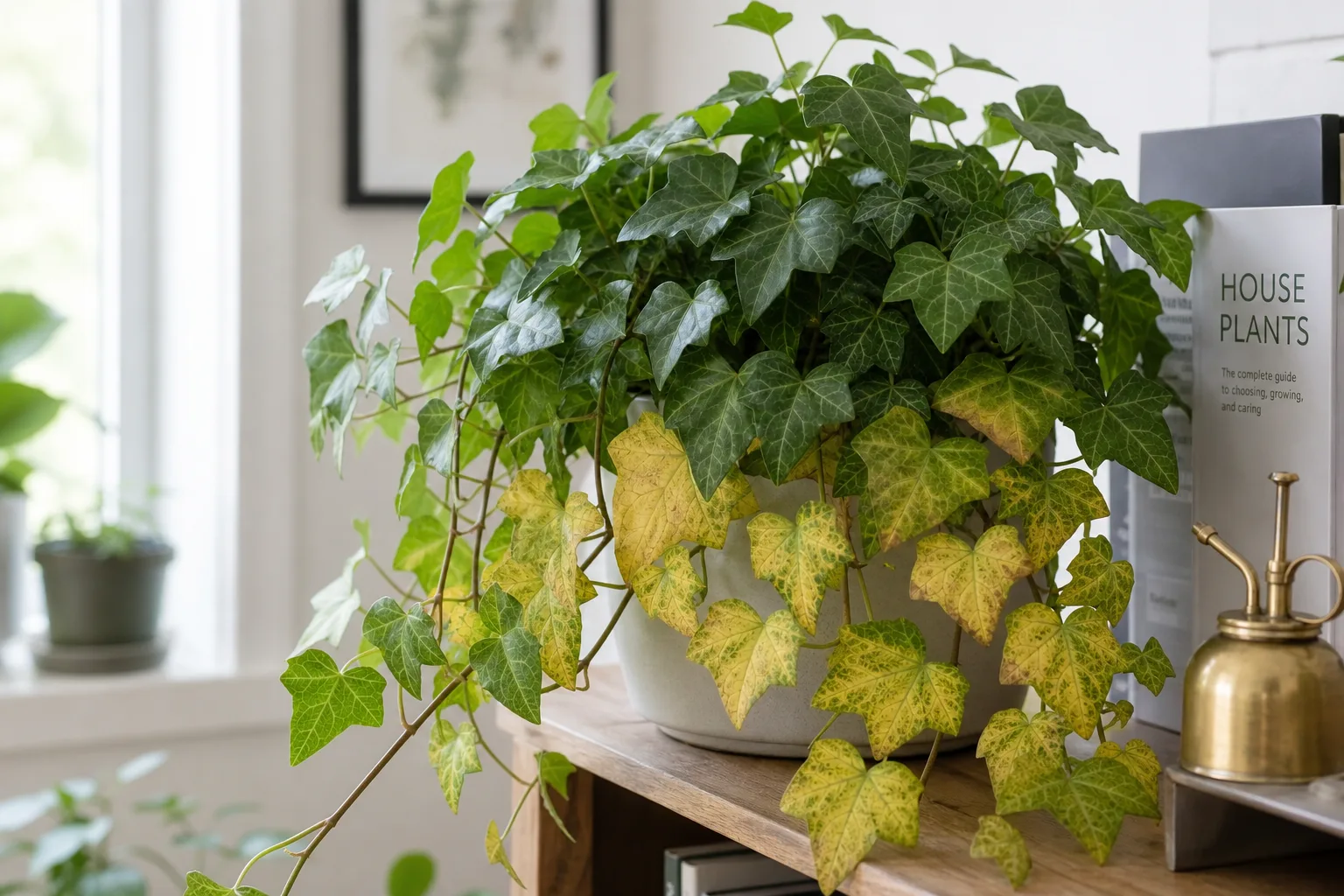
Yellow Leaves on English Ivy: Causes, Checks & Fixes
This guide covers yellow leaves on English Ivy. See also the general Yellow Leaves guide, watering, and light pages for this plant.
Yellow Leaves on English Ivy: Causes, Checks & Fixes
Quick answer
Yellow leaves on English Ivy (Hedera helix) are a symptom on a cool-climate trailing vine-not a single disease. This woody evergreen drops its oldest lobed leaves along long bare stems while new growth continues at vine tips and lateral buds. Widespread yellowing usually means the root zone, light level, humidity, or pests have drifted out of range.
First step: push your finger one inch into the mix and inspect leaf undersides for stippling or webbing. Wet heavy soil with limp stems points to overwatering. Dry light soil with crisp edges points to drought. Fine dots plus silk threads mean spider mites-not a nutrient problem.
Yellow leaves vs. other English Ivy problems
| Pattern | Soil at 1 inch | Leaf appearance | Stem / tip growth | Likely cause |
|---|---|---|---|---|
| Overwatering | Wet, cool | Uniform yellow lower leaves, limp | Tips stall or wilt on wet mix | Root stress on saturated soil |
| underwatering on English Ivy | Dry, crumbly | Yellow then brown edges, thin | Limp until soaked | Drought stress |
| Low light | On schedule | Pale, small leaves; variegation fades | Long bare stems, leaves only at tips | Weak photosynthesis |
| Spider mites | Normal | Yellow stippling, bronzing; webbing | Firm stems; damage spreads | Dry air + pest feeding |
| Natural aging | On schedule | One or two old leaves fade on bare stem | Green firm tips | Normal senescence on trailers |
| Salt buildup | On schedule | Yellow halos, brown margins | Otherwise firm | Excess fertilizer or hard water |
For wet-soil collapse, see overwatering and root rot. For margin burn without whole-leaf yellow, see brown tips. Full species context: English ivy overview.
Why English ivy leaves turn yellow
Overwatering and poor drainage
English ivy wants thorough drinks followed by a real dry-down-not constantly damp mix. Root rot usually results from soil that does not drain quickly or overly frequent watering. In hanging baskets or cachepots, trailing growth hides a pot that stays heavy for days. Lower leaves yellow first as roots lose oxygen; stems go limp even though soil feels wet-the same wilt trap described on the overwatering page.
Underwatering and extreme dry-down
Chronic drought yellows leaf margins and oldest lobes before tips fail. Ivy in small pots above radiators dries fast. A light pot and crumbly mix one inch down confirm underwatering rather than root rot.
Low light and variegation loss
Most ivy cultivars grow best in bright light without direct sun. They tolerate lower light, but growth slows and variegated forms may turn all green as the plant compensates. Glacier, Gold Child, and Needlepoint lose cream or silver margins before whole leaves yellow. Long bare stems with small pale leaves at the tips signal the vine wants more brightness-see not enough light.
Spider mites on stressed ivy
Mites are among the most common insect pests of ivies grown as houseplants. Dry winter air above heating vents favors twospotted spider mites on indoor ivy. Stippled yellow dots on leaf faces and fine webbing at stem joints distinguish mites from uniform overwatering yellow. Outbreaks often follow three to four weeks of low humidity-not the day air dries.
Cool drafts and winter dry air
English ivy prefers cool to moderate room temperatures of 50 to 70 °F-warmer than many tropical houseplants tolerate. Blasts from heat vents, fireplace mantels, or cold window glass behind curtains stress foliage. Very dry heated indoor air yellows and crisps leaf edges even when watering is correct. For dedicated humidity guidance, see low humidity.
Natural aging on long trailers
On a mature trailing vine, the oldest leaves along bare lower stems senesce while the plant extends new lobed leaves at tips and nodes. One or two yellow leaves every few weeks on an otherwise green growing point is normal-not a sign to repot or fertilize. Recovery on ivy is judged by new leaves along stems and at tips, not by a central crown like a rosette succulent.
Salt buildup from overfeeding
Monthly feeding during active growth suits ivy, but excess fertilizer or hard water salts yellow foliage with brown margins. White crust on the soil surface is a clue. Flush with plain water until runoff runs clear before resuming half-strength feeds per the fertilizer guide.
What yellow leaves look like on English ivy
Overwatering: Multiple lower lobes turn uniform yellow while soil stays wet and the pot feels heavy. Stems limp despite moisture. Fungus gnats may hover near the surface.
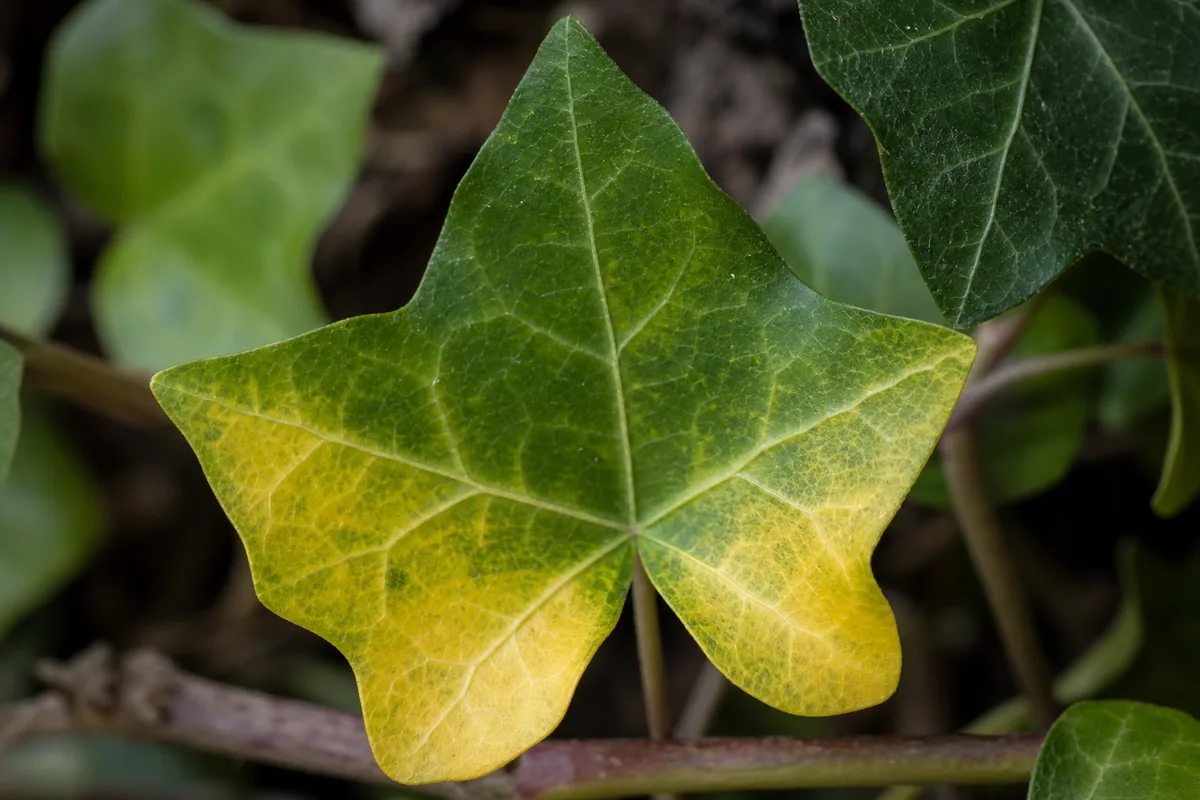
Yellow Leaves symptoms on English Ivy - compare with healthy tissue on the same plant.
Underwatering: Oldest leaves yellow at edges first; pot is light; leaves perk after a thorough soak.
Low light: Internodes stretch. Leaves shrink. Variegated cultivars revert toward solid green before yellowing spreads. Bare stem sections develop with foliage clustered at the end.
Spider mites: Tiny yellow or white speckles on upper leaf faces; bronzing follows. Fine silk at leaf bases and stem joints. Tap test over white paper shows moving specks.
Natural aging: A single old lobe fades on an otherwise firm stem section. Green new leaves continue at the vine tip.
How to confirm the cause (checklist)
- Moisture at one inch - Wet clinging soil vs dry crumbly mix. Never judge from surface crust alone.
- Pot weight - Heavy days after watering suggests poor drainage or oversized pot.
- Leaf undersides - Stippling, webbing, or moving specks on white paper?
- Light level - Does the plant cast a medium shadow in its spot? Are variegated margins fading?
- Room temperature and airflow - Is the pot above a radiator, heat vent, or cold window ledge?
- Yellowing pattern - One old leaf on a long trailer vs many leaves at once on wet soil?
- Salt check - White crust on soil or brown tips with otherwise firm leaves?
Overwatering is the number one reason indoor plants fail and will cause leaf yellowing-check roots only if wet soil and decline continue after one full dry-down cycle.
First fixes by cause
If soil is wet and stems are limp: Stop watering until the top inch dries. Move to brighter indirect light so mix evaporates faster. Resume modest drinks only when the top inch is dry. Inspect roots if yellowing spreads after 7–10 days dry.
If soil is dry and pot is light: Water thoroughly until runoff exits drainage holes; empty the saucer within 30 minutes. Match future rhythm to the watering guide.
If light is dim or variegation is fading: Move gradually to brighter indirect light-east or west window with filtered sun, per RHS ivy houseplant guidance. Do not jump into harsh midday sun.
If mites are confirmed: Rinse leaf undersides, raise humidity, and treat per the spider mites page. Fix dry air first-pesticide alone in a hot dry room often fails.
If only one or two old trailer leaves fade: Snip spent yellow lobes with clean shears. No watering or feeding change needed if tips stay green and firm.
If salt crust is visible: Flush the pot with plain water until runoff is clear. Pause fertilizer two weeks, then resume at half label strength on moist soil only.
Recovery timeline for English ivy
Fully yellow lobes usually drop and do not re-green. Judge success by stable new growth at vine tips and along stems within two to three weeks after the stressor is corrected-new lobed leaves should emerge firm and evenly colored.
Root damage from prolonged overwatering may take longer. Bare lower stems after leaf drop are normal on trailers; new side shoots can fill gaps after light improves or watering stabilizes. For severely leggy vines, light pruning after recovery encourages bushier growth per the pruning guide.
What not to do
Do not fertilize yellow leaves on wet soil-salt buildup can worsen yellowing. Do not increase watering when stems are limp on damp mix. Do not assume every yellow leaf needs English Ivy repotting guide; confirm the cause first.
Pet safety: English ivy is toxic to cats and dogs. Foliage is more toxic than berries. Bag removed yellow leaves out of reach of pets that chew plants. Wear gloves if you have sensitive skin-contact with sap can irritate skin. This is general safety information, not veterinary advice.
Do not compost removed ivy foliage outdoors in regions where the species is invasive; dispose in household trash instead.
How to prevent yellow leaves on English ivy
Water thoroughly, then let soil dry to the touch to a depth of half an inch before watering again. Keep bright indirect light so variegation holds and mix dries predictably. Maintain 50 to 70 °F daytime temps away from heat vents. Raise humidity with a pebble tray or small humidifier during dry winter months rather than misting alone.
Inspect leaf undersides weekly when heating runs. Flush salts periodically if you feed monthly. Rotate the pot for even growth. For full care rhythm, see English ivy overview, watering, and light.
When to use this page vs other English Ivy guides
- English Ivy watering guide - Use for routine moisture checks before assuming yellow leaves is the main issue.
- English Ivy problems hub - Browse all 16 common issues on this species.
- Overwatering on English Ivy - Different entry point when symptoms overlap with yellow leaves.
- Underwatering on English Ivy - Different entry point when symptoms overlap with yellow leaves.
- Not Enough Light on English Ivy - Different entry point when symptoms overlap with yellow leaves.