Not Enough Light on English Ivy: Causes, Checks & Fixes
Quick answer
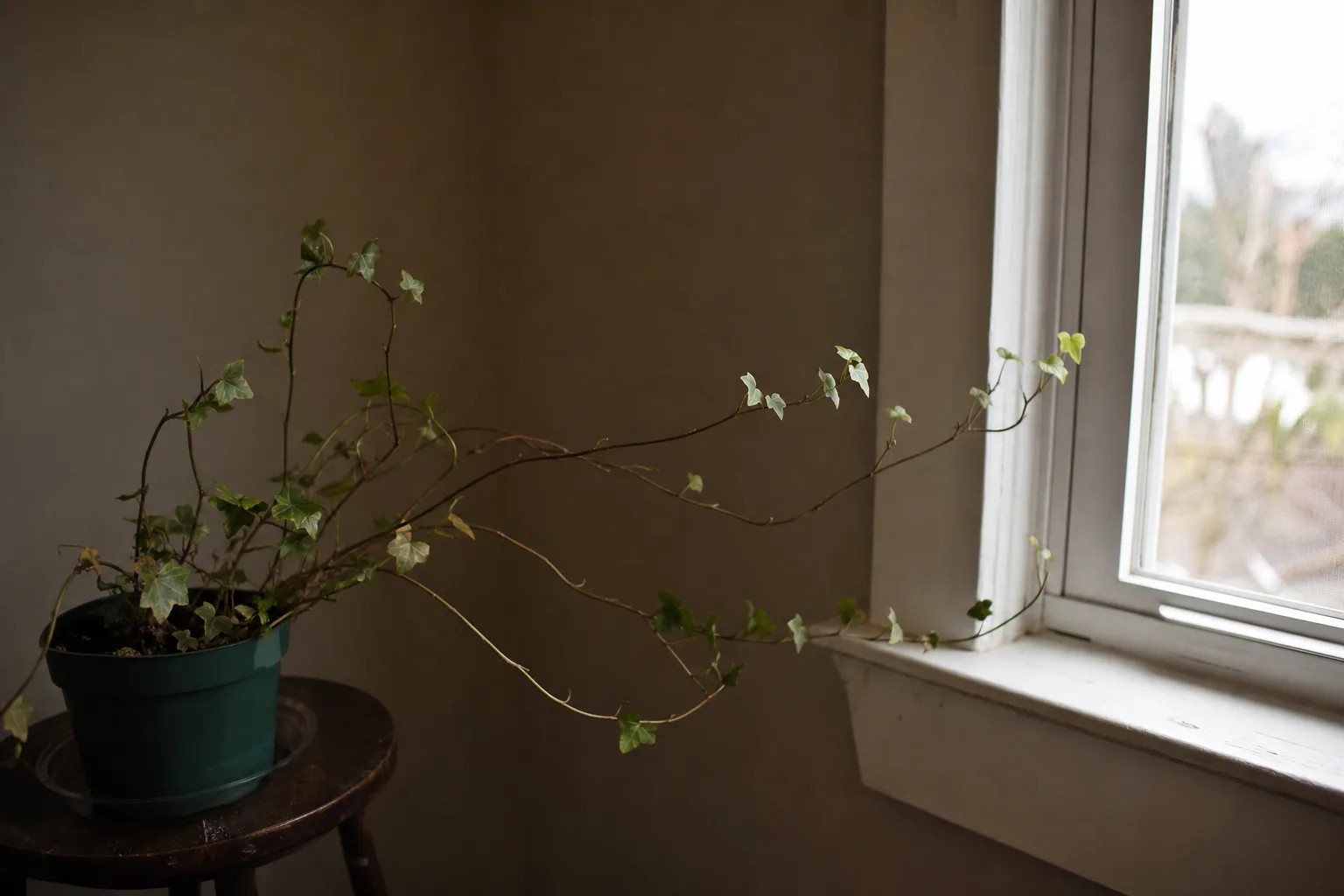
Not enough light keeps English Ivy alive but sparse-long bare stems, small dull leaves, variegation fade, and slow dry-down that invites overwatering. First step: move the pot to bright indirect light and rotate it weekly. Old stretched leaves do not shorten; judge recovery on new growth.
Not Enough Light on English Ivy: Causes, Checks & Fixes
This guide covers not enough light on English Ivy. See also the general Not Enough Light guide, watering, and light pages for this plant.
Not Enough Light on English Ivy: Causes, Checks & Fixes
Quick answer
English Ivy (Hedera helix) has a reputation for surviving dim corners-and it does, longer than many houseplants. Survival is not the same as thriving. When light is too weak, the vine keeps elongating while leaves shrink, variegation fades, lower foliage drops, and the pot dries so slowly that overwatering on English Ivy becomes easy to misread as care.
First step: move the pot to English Ivy light guide-near an east window, a bright north window in summer, or set back from south or west glass where harsh midday sun will not hit the lobes. Rotate the pot a quarter-turn each week. Do not repot, fertilize, or soak the plant on day one; better light is the single change that unlocks everything else.
What not enough light looks like on English Ivy
Insufficient light on English Ivy shows up as a pattern across new vines, leaf color, and soil behavior-not one isolated yellow leaf.
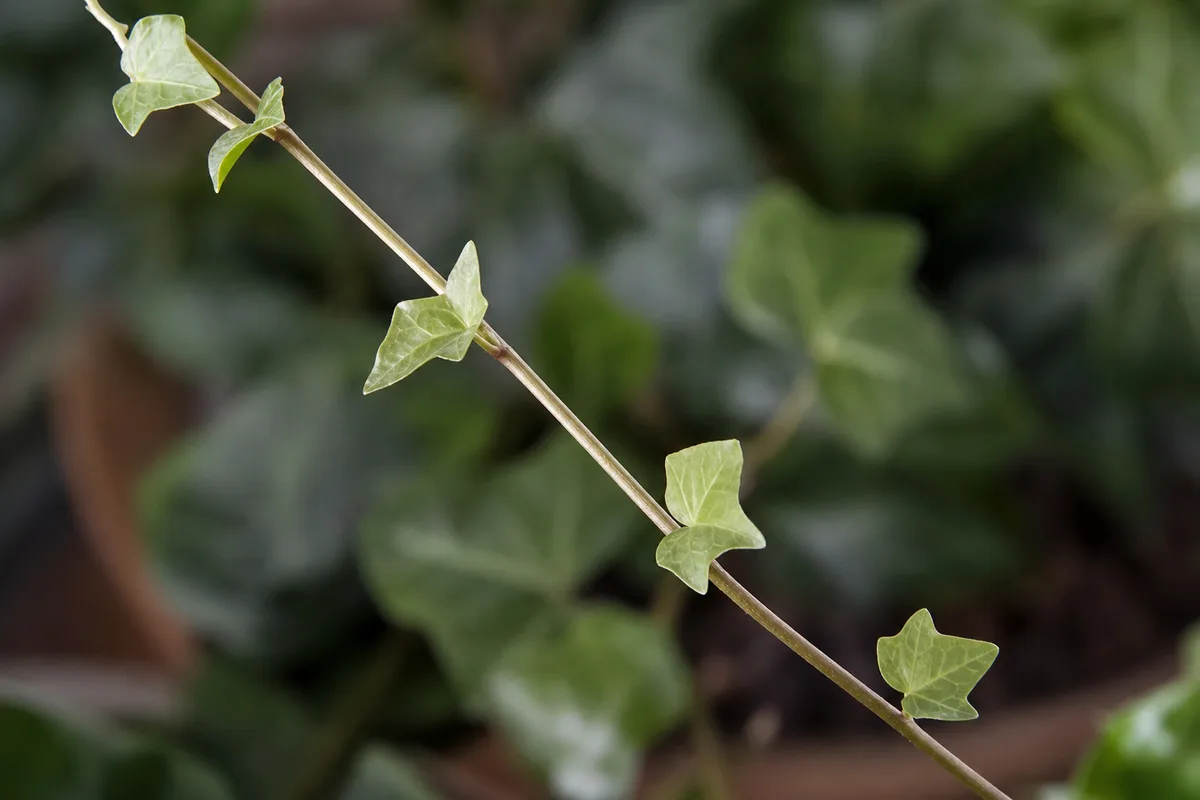
Long gaps between small thin pale leaves on a stretching vine - compare spacing with compact growth from a brighter window placement.
Typical signs on Hedera helix:
- Leggy stems with long gaps between leaves as the vine stretches toward the brightest direction
- Smaller, thinner new leaves compared to when you bought the plant or compared to upper vines near the window
- Pale, dull, or muddy green color, especially on variegated cultivars where white, cream, or gold sections fade toward solid green
- One-sided lean when light enters from a single direction and the basket is never rotated
- Sparse trailing display-a few leafy tips on long bare runners, common on high shelves or hanging planters whose lower cascade sits in shadow
- Slow or stalled new growth for weeks, even in cool rooms where ivy would otherwise grow steadily in adequate light
- Lower leaf yellowing and drop, leaving naked stems while tips still reach for light
- Soil that stays damp at the surface for two weeks or more because the plant is using little water in shade
English Ivy in adequate light produces moderate to fast trailing growth with closely spaced lobed leaves and firm stems. A pot that looks thin, pale, and static while the mix remains wet is telling you about light and water use together-not about needing more fertilizer.
If your main concern is long stretched stems with wide internode gaps, see the dedicated guide to leggy growth on English Ivy-the fix overlaps, but the symptom emphasis differs.
Why English Ivy gets not enough light
English Ivy earns its shade tolerance from wild ecology-and from being listed among houseplants that tolerate lower indoor light. In nature, Hedera helix climbs and trails through forest edges and built structures across Europe, western Asia, and North Africa, often receiving dappled light at the base while searching for brighter zones higher up. That history means juvenile indoor vines can photosynthesize at lower intensities than sun-hungry tropical foliage plants-but tolerance is not preference.
Distance from the window matters more than room brightness
Indoor light intensity drops sharply with distance from the glass. A spot that feels bright to human eyes may still be low light at the leaf surface-especially when curtains, tinted glass, furniture, or a trailing habit blocks rays from reaching the lower cascade.
English Ivy’s trailing form creates a lighting problem upright plants hide. The top of the pot near the window rim may receive strong brightness while the lower hanging vines sit in shadow. Over time, lower leaves yellow and drop-partly natural aging, partly light starvation on shaded sections.
Variegated cultivars need more photons than green forms
Variegated English Ivy-cultivars like ‘Glacier’, ‘Gold Child’, or ‘Gold Heart’-carries sectors of white, cream, or gold tissue with less chlorophyll than all-green leaves. Clemson Extension notes that variegated ivies may turn all green in low to medium light while growth is reduced. Each pale leaf captures less energy per square inch, so the plant needs more total light to produce the same growth green ivy achieves in a medium-bright spot. In insufficient light, cream and gold sections lose pigment and the plant reverts toward green because green tissue photosynthesizes more efficiently when energy is scarce.
Solid green forms like ‘Baltica’ tolerate medium light more gracefully, though they still prefer bright indirect for the lushest trails.
Seasonal daylight decline
Leggy or pale new growth that appears after October often traces to shorter days and lower window intensity, not a sudden watering mistake. The plant stayed in the same corner all year, but the photon budget changed. Winter is when many ivies look thinnest unless you move them closer to glass or add supplemental lighting-especially variegated types on north windows.
Low light paired with slow water use
English Ivy prefers slightly moist soil but still needs the top inch to dry between waterings. In shade, photosynthesis and transpiration slow, so the same English Ivy watering guide that worked when the plant sat in a bright window leaves mix wet for days in a dark corner. In environments with less light, plants grow more slowly and use less water. That pairing is one reason not-enough-light matters for English Ivy overview: the cultural mistake that follows is overwatering around cool roots, not just cosmetic paleness. Yellow leaves in a dim wet pot often trace to root-zone stress triggered by weak light-not a separate mystery disease.
Cool dim rooms and spider mite pressure
English Ivy prefers cool to moderate temperatures-roughly 50 to 70 °F (10 to 21 °C)-and does not love hot dry air. A bright cool bedroom suits ivy well. A dim hallway with forced-air heat is a different story: stressed vines in weak light with dry air become more vulnerable to spider mites on leaf undersides. Mites are a consequence of stress, not proof that light is fine.
How to confirm the cause
Work through these checks before English Ivy repotting guide, pruning heavily, or treating for disease:
- Shadow test at the leaf surface - On a sunny day, hold your hand between the window and the foliage. Bright indirect light is bright enough to cast a distinctive shadow but does not have sun rays hitting the foliage directly. A faint, blurry shadow means low light-ivy may live, but expect leggy growth and variegation fade. A sharp, defined shadow without hot sunbeams on the leaves usually indicates bright indirect. If leaves feel warm against glass within an hour, you are drifting toward direct-sun territory.
- New growth vs. old growth - Compare the newest leaves on vine tips to foliage lower on the stem. Paler, thinner, or more widely spaced new tissue with firm older leaves below often means recent light decline. Uniform paleness throughout suggests chronic under-lighting.
- Variegation fade - On variegated cultivars, loss of crisp white or gold margins on the newest leaves strongly supports a light diagnosis rather than a nutrient mystery.
- Trailing display pattern - Leafy tips on long bare runners, especially when the pot sits high on a shelf or hanger, point to uneven or insufficient light reaching the growing crown-not random “old age.”
- Soil dry-down speed - Check the top inch of mix. If it stays damp for two weeks while foliage looks pale and growth is stalled, low light is slowing water use. Adjust watering after you improve light; do not treat pale leaves with more water.
- Pest and root scan - Insufficient light alone rarely involves heavy webbing or sour-smelling roots-but do not let a spider mite hunt distract from an obvious placement problem. Confirm light first, then treat pests if present.
If light is clearly inadequate and no urgent root-rot signs appear, you have enough to move the plant. You do not need to repot to confirm low light.
First fix for English Ivy
Move the pot to the brightest location that still avoids harsh direct sun on the leaves. Most ivy cultivars grow best in bright light but not direct sun, and ivies can be grown with artificial light or near a north, east, or west window.
Practical placements include:
- An east-facing windowsill or the floor directly beside it-morning sun through east glass is often excellent bright indirect for green and variegated types alike
- A bright north window close to the glass in summer at mid-to-high latitudes-for green ivy; variegated forms may still need more from autumn through spring
- A spot 2 to 4 feet back from an unobstructed south or west window, ideally filtered by a sheer curtain if afternoon sun is strong
- Under a full-spectrum grow lamp in offices or interior rooms-position the fixture 12 to 18 inches above the top of the foliage and run it 10 to 12 hours daily on a timer
After moving, rotate the pot weekly so growth does not lean one-sided toward the glass. If the plant lived in very deep shade, move it in one step to bright indirect light-not from shade to hot direct south glass at noon, which scorches lobes quickly especially on variegated tissue.
Do not increase watering to “help” a pale, stalled ivy. Lower light use means slower dry-down. Water when the top inch of soil is dry, matching the rhythm from your main English Ivy care routine for that new location.
Step-by-step recovery
After the initial move:
- Wait 10 to 14 days before changing watering, fertilizer, or pot size. Light stress and water stress symptoms overlap; stacking changes makes diagnosis guesswork.
- Rotate the pot weekly so all sides of the crown receive usable brightness.
- Pinch or trim bare leggy stems once new growth at the crown looks firm and correctly spaced. Cutting just above a leaf node encourages branching where light is strongest.
- Add a grow light if the brightest safe spot in your home still fails the shadow test-especially for variegated cultivars through winter.
- Reduce watering frequency to match slower dry-down in the new spot if the plant moved from bright to dim-or increase caution if you moved from dim to bright and the pot now dries faster.
- Inspect leaf undersides weekly while the plant recovers in cooler rooms. If fine webbing or stippling appears, treat spider mites promptly; do not assume pale leaves mean only light.
Remove severely scorched leaves only if you accidentally moved too fast into direct sun-they will not repair. Shift back to bright indirect and wait for new growth before trying stronger light again.
Recovery timeline
Expect firmer, more closely spaced new leaves within two to four weeks after a successful move to bright indirect light. Variegation on new foliage may take two to three flushes of growth to crisp up on cultivars like ‘Glacier’ or ‘Gold Child’-judge by the newest leaves, not old reverted tissue.
Stretched internodes and small old leaves do not shorten once light improves. Trim them for appearance after new growth looks healthy. A severely bare ivy may need one full season of correct light plus periodic pinching to look full again.
If stems still stretch and variegation fades after four weeks in your brightest safe spot, add supplemental LED rather than assuming the plant is permanently weak.
Lookalike symptoms to rule out
Overwatering in low light - Yellow leaves, soft stems, and sour-smelling soil in a dim corner often combine light deficiency with wet roots. Fix light and let the top inch dry before watering again; do not treat yellowing with more water.
underwatering on English Ivy - Crispy leaf edges and a lightweight pot mean drought, not shade. Dry mix and wilt on a bright windowsill point away from insufficient light.
Spider mites - Fine stippling, webbing on undersides, and dusty-looking leaves in warm dry air. Mites often hit stressed ivy but are a separate problem to treat after you confirm placement.
Low humidity brown tips - Dry margins on otherwise firm green leaves in a bright hot room trace to humidity and heat, not primarily light. Brown tips with long bare stems in a dim hall point to light first.
Nutrient deficiency - Uniform yellowing on old leaves in bright light with steady growth is more likely feeding-related. Pale stretched new growth in shade is almost always light.
Mistakes to avoid
Do not jump a dim ivy straight onto unfiltered south glass in summer-scorch and leaf drop feel like the plant hates sun when it actually hates sudden change.
Do not fertilize a pale, stretched ivy hoping to push fullness. Extra nitrogen in low light produces soft, pale growth that looks temporarily fuller but remains weak and mite-prone.
Do not assume “English ivy tolerates low light” means your current placement is adequate for the display you want.
Do not ignore the lower cascade on hanging planters. The pot may sit in light while trailing vines starve below.
Do not repot on day one. Low light is a placement problem, not a root-volume problem.
English Ivy care cross-check
Light and watering interact on this species more than many growers realize. In adequate bright indirect light, English Ivy typically needs water when the top inch of soil dries-often every 5 to 7 days in summer and every 10 to 14 days in winter in a cool room. In chronic shade, the same calendar schedule keeps roots wet too long.
After you improve light, recheck how fast the pot dries for two weeks before locking in a rhythm. A brighter ivy uses water faster; a dim ivy uses it slower. Match moisture to the new growth rate, not to memory.
Humidity around 40 to 60% supports healthy foliage in cool bright rooms. Low humidity alone does not cause leggy stretch-that pattern is light-but dry air plus weak light plus mite pressure is a common winter failure mode on indoor ivy.
How to prevent not enough light next time
Place green ivy where it casts a clear shadow without hot midday sun on the leaves. Place variegated ivy one step brighter still, especially from October through March when windows weaken.
Rotate trailing pots weekly. Drape vines along a bright shelf ledge rather than letting them fall straight into a dark zone below a high hanger.
Supplement north rooms and interior tables with a full-spectrum LED on a timer-10 to 12 hours daily is a practical starting point for foliage maintenance.
Clean windows seasonally and avoid blocking glass with heavy sheers or furniture that steals rays from the leaf surface.
When you buy variegated ivy for color, budget for brighter placement from day one-not the dim corner where green pothos might survive.
When to worry
Low light alone rarely kills English Ivy quickly, but treat the situation as urgent when soil stays wet for weeks, mix smells sour, stems soften at the base, or yellow leaves spread while the pot sits in deep shade. That pattern suggests root stress triggered by weak light and overwatering together-not a problem fertilizer will fix.
Also act promptly when spider mites coat new growth on a stressed dim plant-mite pressure plus weak light can collapse a thin ivy within a season if ignored.
Natural slow growth on green ivy in a north room you accept as sparse is not urgent. Confirm the look you want before treating a tolerable plant as an emergency.
Conclusion
English Ivy survives dim corners longer than many houseplants, but insufficient light shows up as leggy bare stems, faded variegation, and slow dry-down that invites watering mistakes. Move the pot to bright indirect light, rotate weekly, and read the newest leaves-not old stretched tissue-to judge success. Fix light before you repot, fertilize, or flood the roots. That sequence is how English Ivy stays dense and worth the shelf space instead of becoming the stringy survivor everyone tolerates but nobody admires.
When to use this page vs other English Ivy guides
- English Ivy watering guide - Use for routine moisture checks before assuming not enough light is the main issue.
- English Ivy problems hub - Browse all 16 common issues on this species.
- Leggy Growth on English Ivy - Different entry point when symptoms overlap with not enough light.
- Slow Growth on English Ivy - Different entry point when symptoms overlap with not enough light.
- Yellow Leaves on English Ivy - Different entry point when symptoms overlap with not enough light.