Overwatering on English Ivy: Causes, Checks & Fixes
Quick answer
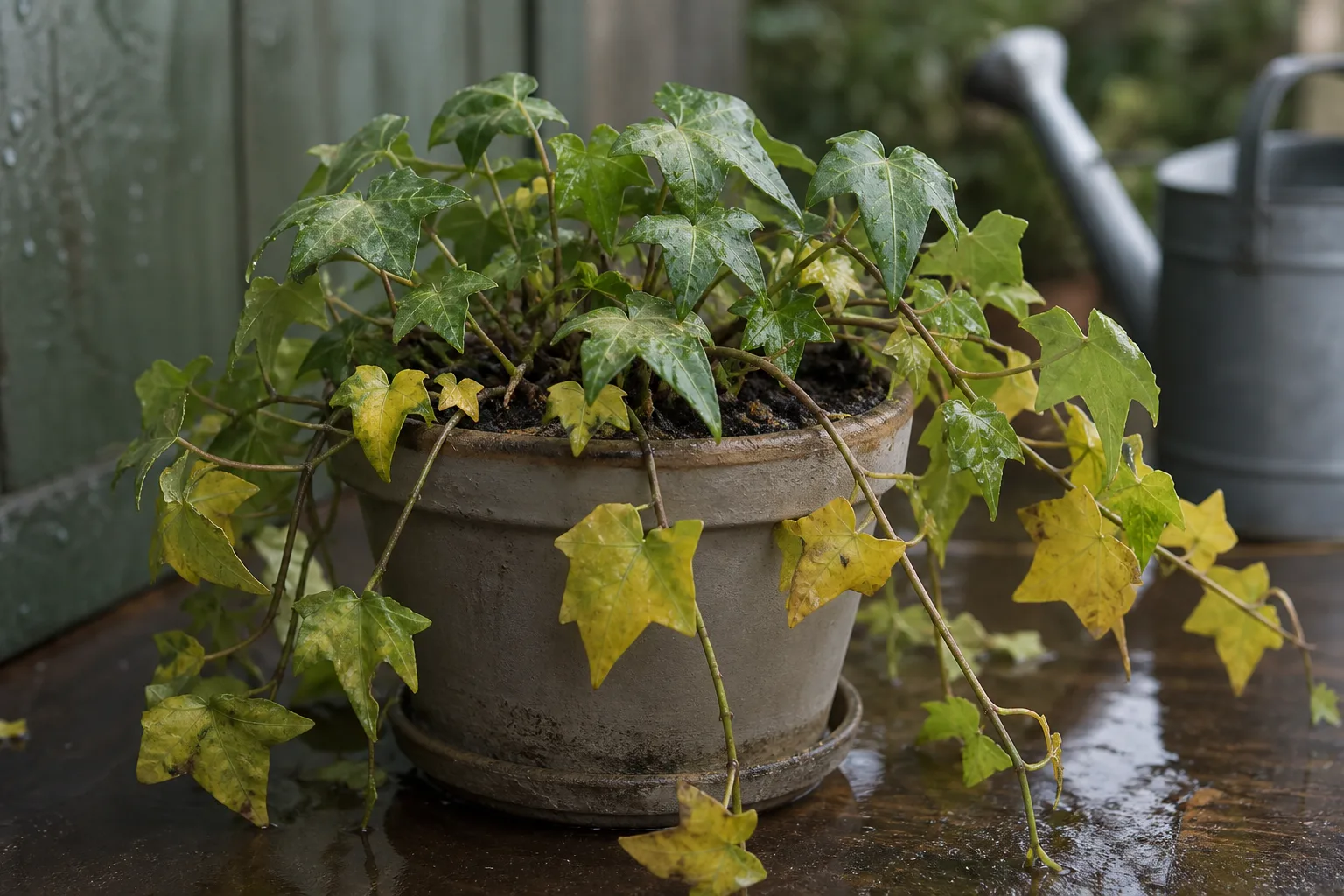
Overwatering on English Ivy shows up as wet heavy soil, limp trailing stems, and yellow lower leaves-not thirst. First step: stop watering until the top inch dries and lift the pot to confirm it feels lighter before the next drink.
Overwatering on English Ivy: Causes, Checks & Fixes
This guide covers overwatering on English Ivy. See also the general Overwatering guide, watering, and light pages for this plant.
Overwatering on English Ivy: Causes, Checks & Fixes
Quick answer
Overwatering on English Ivy (Hedera helix) means the root zone stays wet too long-not that you are being generous with water. This trailing evergreen vine in a hanging basket or pot on a shelf often shows limp stems on damp soil while growers assume the plant is thirsty and water again.
Symptom check: Compare a heavy pot with limp trailing stems on wet mix against a light dry pot with crisp underwatering wilt-the wet-soil limp pattern is the classic ivy trap.
First step: stop watering until the top inch of mix dries. Lift the pot-if it still feels heavy days after the last drink, you are overwatering. Remove any decorative cachepot, verify drainage holes are open, and empty saucers before the next modest soak.
Overwatering vs. other English Ivy problems
| Pattern | Pot weight | Soil at 1 inch | Stem at base | Urgency | What it usually means |
|---|---|---|---|---|---|
| Overwatering | Heavy | Wet, cool | Soft or blackening | Medium–high if spreading | Root failure on wet mix - see this page |
| Underwatering | Light | Dry, crumbly | Firm but limp | Low | Drought wilt - underwatering |
| Low light + slow dry | Medium-heavy | Damp for weeks | Firm | Medium | Overwatering risk - not enough light |
| Yellow lower leaves on wet mix | Heavy | Wet | Firm to soft | Medium | Often overwatering precursor - yellow leaves |
| Drooping without sour soil | Normal | On schedule | Firm | Low–medium | May be shock or pests - drooping leaves |
| Wilting fast collapse | Heavy or normal | Wet or dry | Soft at base | High | May overlap rot - wilting |
| Spider mites | Normal | On schedule | Firm | Medium | Stippling, webbing - spider mites |
| Mold or gnats on surface | Heavy | Surface damp | Firm | Low–medium | Wet-soil clue - mold on soil, fungus gnats |
Fungus gnats often appear when soil stays wet too long-they are a clue, not the primary problem. For advanced root failure, see root rot and inspect roots when decline continues despite dry-down.
What overwatering looks like on English Ivy
Early signs
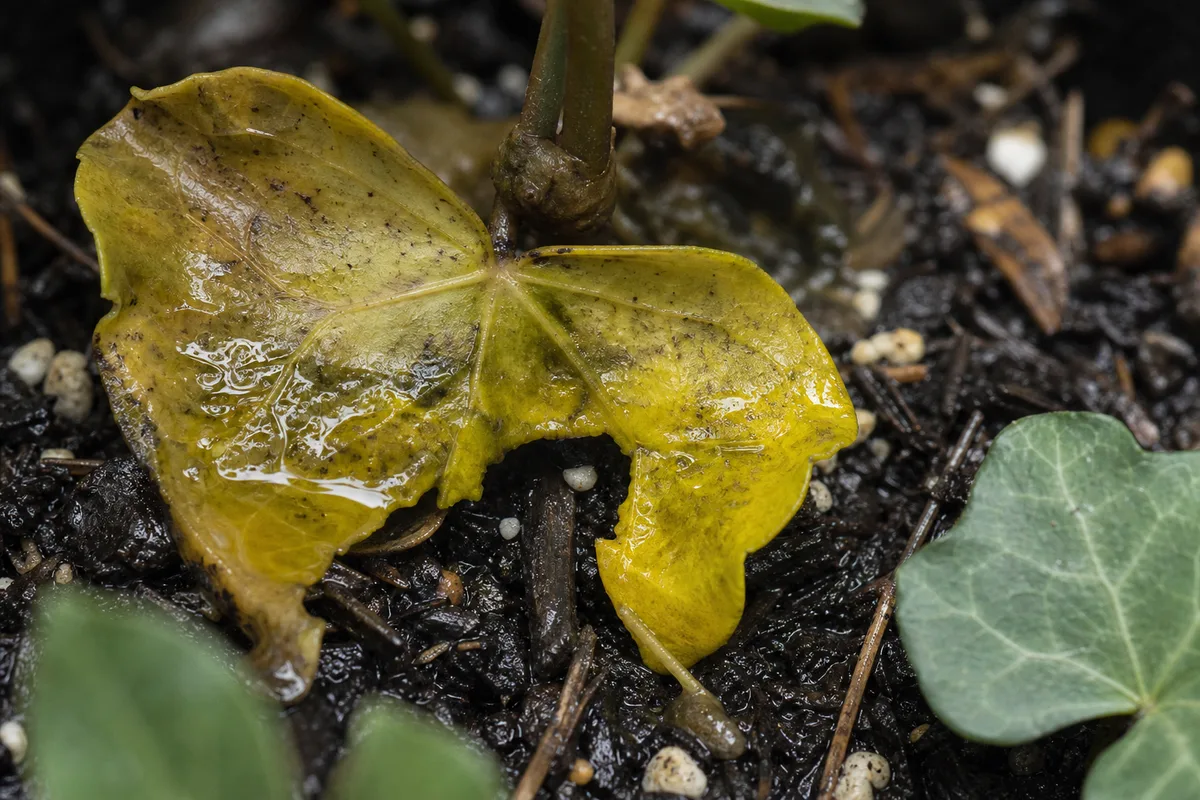
Overwatering symptoms on English Ivy - compare with healthy tissue on the same plant.
- Limp trailing stems while soil is wet-not the crisp wilt of a dry pot
- Yellow lower leaves spreading beyond one aging leaf - see yellow leaves for full patterns
- Heavy pot that does not lighten for many days
- Musty or sour smell from the mix
- Fungus gnats hovering near the soil surface
- Slowed new growth at vine tips
- White or green surface fuzz on damp mix - often harmless saprophytic mold but signals chronic wetness
Symptom check: On a hanging basket, lift the pot from below the trailing curtain of leaves. A waterlogged ivy basket feels surprisingly heavy even when foliage looks merely “sad.”
Advanced signs
- Soft or black stems at the soil line
- Leaf drop on multiple vines despite moisture
- Edema (water-soaked blisters) on leaves in extreme cases
- Mushy roots on inspection-root rot usually results from soil that does not drain quickly or overly frequent watering; healthy ivy roots are firm and white or tan
- Standing water visible when you lift the plant from a cachepot or full saucer
Compare with underwatering: light dry pot, thin limp leaves that perk after a thorough soak per the underwatering guide. Compare with low light: sparse growth and pale leaves without sour soil.
Why English Ivy gets overwatered
English ivy prefers evenly moist well-drained soil in bright indirect light-but indoors, several factors keep mix saturated:
Calendar watering. Watering every few days without checking dryness-especially in winter or dim rooms where the vine uses less water. Clemson HGIC recommends letting soil dry to the touch to a depth of half an inch before watering again.
Hanging baskets and cachepots. Trailing growth hides the pot; decorative outer pots trap runoff without drainage. Removing the inner pot from a sleeve often reveals standing water-a single fix that prevents repeat saturation.
Heavy peat mix. Dense soil without perlite holds water at the root zone while the surface looks acceptable. See soil guide for airy mixes suited to trailing vines.
Cool rooms and low light. Ivies do well at cool to moderate room temperatures of 50 to 70 °F and use less water when growth slows. Reduced transpiration in dim corners means the same volume of water stays wet longer-pair with the light guide if dry-down takes more than a week.
Misreading wilt. Wilted appearance with moist soil can indicate damaged roots-adding water deepens the cycle.
Variegated cultivar caveat. Glacier, Gold Child, and other variegated H. helix forms need bright indirect light to hold color. In dim winter rooms they grow slowly and the same watering rhythm that suits solid-green ivy in summer can leave variegated pots heavy for days-check dryness at one inch depth, not the calendar.
Oversized pots after purchase. Using too large a pot can cause soil to stay wet too long and lead to root rot-common when repotting a rescue plant “to help it dry.”
How to confirm the cause
- Pot weight - Lift before and after watering. Still heavy 5+ days later?
- Finger test at 1 inch - Wet clinging soil with limp vines confirms overwatering.
- Smell - Sour odor from drainage holes or surface?
- Yellowing pattern - Multiple lower leaves on wet soil vs one aging leaf on schedule?
- Root spot-check - Slide plant partially from pot if decline continues-firm white roots vs brown mush.
- Cachepot check - Remove decorative sleeve; any standing water in the bottom?
- Sibling symptom scan - Stippling on undersides rules out mites; uniform yellow on wet mix points here, not fertilizer shortage.
Check soil moisture before watering again-never pour on a schedule alone. This page covers wet-soil triage; routine frequency and seasonal shifts live in the English ivy watering guide.
First fix for English Ivy
Dry-down protocol
Stop watering until the top inch of mix dries completely. Move the pot to brighter indirect light if it sits in deep shade-slow evaporation worsens wet soil.
Remove the plant from any cachepot. Empty saucers. If stems firm up and yellowing stops after dry-down, resume with modest drinks only when the top inch is dry.
Editorial note: A 25 cm hanging Glacier ivy in a cool north-facing room firmed trailing stems within five days once the cachepot was removed and watering paused-the pot weight drop was the clearest recovery signal, not leaf re-greening.
Repot and root rescue when dry-down fails
If stems stay limp or roots feel soft after 7–10 days dry:
- Unpot and rinse roots under lukewarm water.
- Trim brown mushy tissue to firm white roots with sterilized shears.
- Repot into fresh airy well-drained mix in the same size or smaller pot per repotting guidance.
- Hold water one week, then test with a small drink.
Do not fertilize a waterlogged plant. Do not repot into a larger pot “to help drying.”
Stem-cutting salvage
When stem bases blacken but healthy green sections remain above the damage, dry-down alone will not save the root ball. Take 4–6 inch tip cuttings from firm nodes, strip lower leaves, and root in water or moist perlite per the propagation guide. Discard mushy parent vines once cuttings root-this is recovery by new plant, not rescue of saturated roots.
Recovery timeline
Leaves often perk within days to one week once soil oxygen returns and the wet cycle breaks. Recovery is measured by stable new growth at vine tips-not by saving every yellow leaf.
Root damage from prolonged saturation may take three to six weeks to outgrow. Severe stem rot at the base may require stem cuttings from healthy sections above the damage.
Yellowed lower lobes rarely re-green; they drop as new tips extend. Bare lower stems on long trailers are normal once roots stabilize.
When to worry
| Situation | Action |
|---|---|
| Mild limpness, firm roots, heavy pot only | Dry-down only - wait for top inch to dry |
| Yellow spread on wet mix, sour smell, gnats | Dry-down + remove cachepot; inspect roots in 7–10 days if no improvement |
| Soft stems at soil line, multiple vines collapsing | Same-day unpot - trim mush, repot smaller; see root rot |
| Blackened base with green tips above | Stem cuttings immediately; discard rotted base |
| Decline continues after repot on wet mix | Check drainage holes, pot size, and light - contact your local cooperative extension office for regional guidance |
Do not keep watering because vines look limp on wet soil. Do not fertilize to “strengthen” a drowning plant. Do not assume misting compensates for root-zone saturation-fix drainage and dry-down first.
Mistakes to avoid
Do not water on a weekday habit while the top inch stays damp-ivy in cool winter rooms may need ten days or longer between drinks. Do not leave hanging baskets in full saucers “for humidity.” Do not treat surface mold alone while the core stays wet-see mold on soil. Do not confuse fast wilting from rot with drought-confirm moisture before pouring. Do not propagate from stems that feel hollow or black at the cut.
How to prevent overwatering next time
Allow the top few centimetres of compost to dry before watering for ivy-typically when the top inch feels dry. Use well-drained mix, pots with drainage, and empty saucers within 30 minutes. Do not allow ivies to stand in water.
Match frequency to season and light per the watering guide-this problem page covers rescue; that guide covers routine rhythm. Slow watering sharply in fall and winter when growth slows in cool rooms.
Related English Ivy guides
- English ivy overview - Hedera helix growth habit, light, and toxicity
- Watering - top-inch dry rule and seasonal frequency
- Root rot - mushy root escalation and numbered recovery
- Wilting - fast collapse vs. wet-soil root failure
- Yellow leaves - lower leaf yellow on wet roots
- Drooping leaves - limp foliage without sour soil
- Underwatering - light pot and crisp drought wilt
- Mold on soil - surface fuzz on damp mix
- Fungus gnats - wet-soil companion pest
- Not enough light - slow dry-down in dim corners
- Soil - drainage for trailing vines
- Repotting - right-sized pots after rescue
- Propagation - stem-cutting salvage workflow
FAQs
Why does my English Ivy wilt when the soil is wet?
Wilt on wet soil means roots are failing, not that the vine needs more water. Hedera helix in saturated mix cannot absorb moisture-limp stems on damp soil are the overwatering trap. Check root firmness if yellow leaves spread on a heavy pot. For fast collapse, also read wilting.
How can I confirm overwatering on English Ivy?
Confirm when the pot stays heavy days after watering, soil smells sour, lower leaves yellow despite moisture, and roots feel soft when you unpot. Dry soil with crisp wilt usually means underwatering instead. Spider mites cause stippling and webbing on firm stems-not the wet-soil limp pattern.
Will overwatered English Ivy leaves recover?
Yellowed or limp leaves may not fully re-firm until roots recover. Success means the problem stops spreading and new growth at vine tips stays green and firm. Lower yellow lobes often drop rather than re-green.
When is overwatering urgent on English Ivy?
Act within days when stems blacken at the base, multiple vines collapse on soggy mix, or roots are mostly mush on inspection. Mild limpness with firm roots can wait for dry-down. Same-day unpot when stem bases soften-see root rot.
How do I prevent overwatering on English Ivy next time?
Water when the top inch of mix feels dry, use well-drained soil in a pot with drainage, empty saucers within 30 minutes, and give bright indirect light so the mix dries predictably between drinks. Full seasonal rhythm: watering guide.