Drooping Leaves on English Ivy: Causes, Checks & Fixes
Quick answer
Drooping leaves on English ivy usually signal a slow care mismatch-chronic thirst, wet roots, low light stretch, or dry-air mite stress-not an overnight collapse. First step: lift the pot and check the top inch of mix; a heavy wet pot needs drying, a light dry pot needs a measured soak.
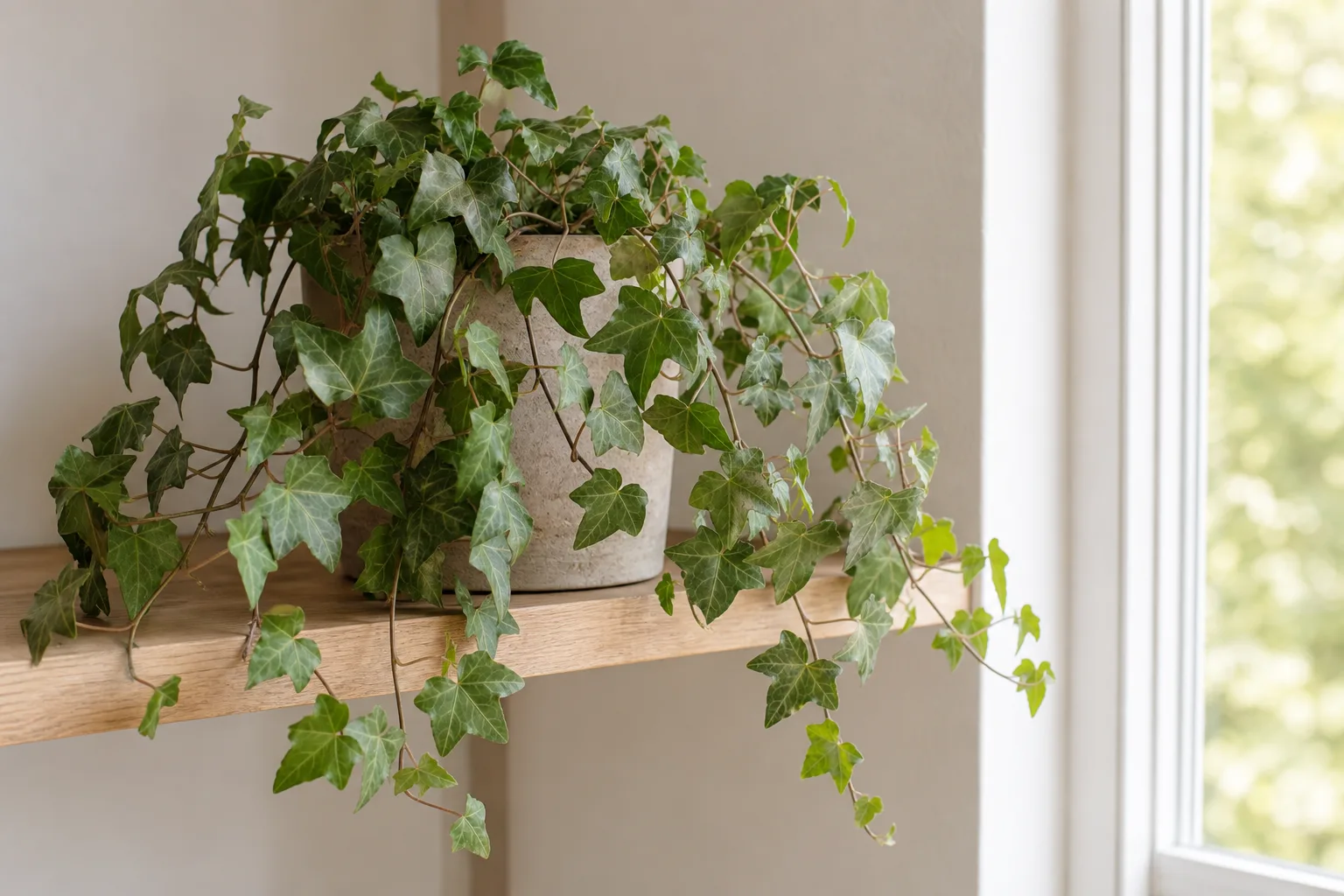
Drooping Leaves on English Ivy: Causes, Checks & Fixes
This guide covers drooping leaves on English Ivy. See also the general Drooping Leaves guide, watering, and light pages for this plant.
Drooping Leaves on English Ivy: Causes, Checks & Fixes
Quick answer
Drooping leaves on English ivy (Hedera helix) describe a gradual downward hang along trailing stems-lobed leaves lose their crisp angle and vines look tired over days or weeks. That is different from wilting, where turgor collapses quickly across a stem segment. Chronic droop usually traces to a slow mismatch between your routine and ivy biology: mix staying too wet or too dry, dim light stretching weak stems, dry winter air stressing thin leaves, or spider mites draining sap on undersides.
First step: lift the pot and push your finger into the top inch of mix. A light, dry pot with dull gray-green lobes → measured thirst is likely; soak until drainage runs free, then empty the saucer. A heavy, cool, damp pot with limp lower leaves → stop watering and let the surface dry-saturated roots cannot support firm foliage even when the vine looks thirsty.
English ivy evolved in cool, humid woodlands. Indoors its thin lobed leaves show stress early, yet cool rooms at 50 to 70 °F slow soil drying-so the same summer watering rhythm can leave mix wet for weeks in a winter bedroom while vines slowly sag.
What drooping looks like on English Ivy
Healthy English ivy holds lobed leaves at a lively angle off each stem. Trailing sections feel springy when you lift them. Drooping removes that crisp posture without always collapsing the whole vine overnight.
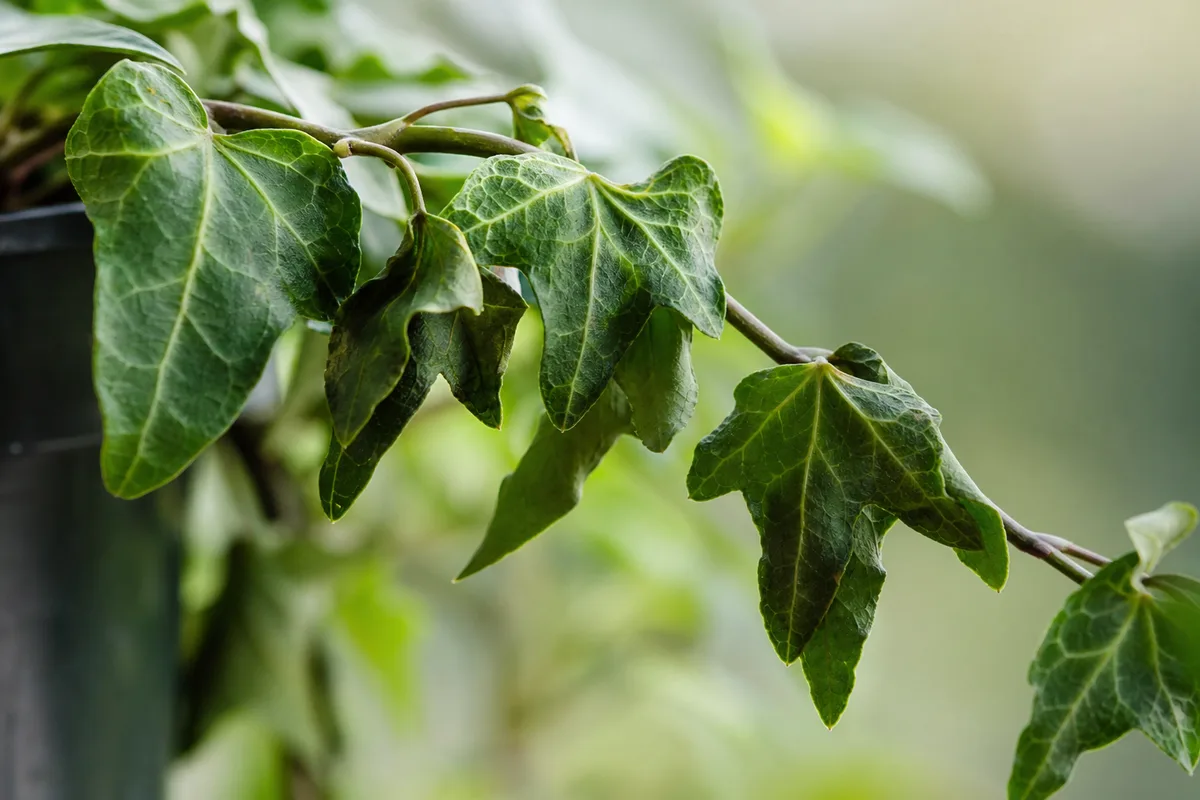
Lobed leaves hanging at a downward angle along a trailing stem - gradual sag over days or weeks, not a sudden overnight collapse.
Gradual sag along trailing stems (most common)
- Lobed leaves angle downward along one or more vine sections while stems still feel somewhat firm
- Change develops over several days to weeks, not within a single afternoon
- Lower leaves may yellow or drop while tips still try to grow
- Internodes may look slightly longer if light has been weak for a while
- The plant reads as “tired” rather than fully deflated
Limp lobes on heavy wet mix (slow overwatering)
- Leaves hang soft and may yellow from the bottom up
- Top inch stays cool and damp many days after watering
- Pot feels heavy; saucer may have held standing water
- Growth slows; new tips look small or pale
- Fungus gnats sometimes hover when the surface never dries
- Stems at the soil line may feel less firm than healthy ivy over time
This pattern overlaps with overwatering and root rot if crown tissue softens-escalate when yellowing climbs fast or stems darken at the base.
Dull droop on light dry mix (chronic underwatering)
- Lobes look thin, dull, or slightly papery-not mushy
- Top inch crumbles dry; soil may pull from the pot wall
- Pot feels noticeably light
- Brown crispy edges may appear on older leaves after repeated dry cycles
- Trailing tips often sag first because they are farthest from the root ball
Hanging baskets suspended above a heat register or radiator dry fastest at the trailing tips while the root ball still holds moisture-check weight at the pot, not just the lowest lobes. Full thirst recovery steps live on the underwatering guide.
Stretched droop in dim corners (low light)
- Long bare stems with small pale lobes reaching toward a window
- Leaves stay somewhat firm but hang at a shallow angle
- Variegated cultivars lose contrast as green pigment spreads
- Soil may dry slowly because photosynthesis and water use are low
- Problem worsens over weeks in north-facing shelves or crowded bookcases
See not enough light when stretch and small leaves dominate the pattern.
Stippled sag with dry winter air (mites and humidity)
- Fine yellow or white speckles on leaf undersides; bronzing follows on stressed lobes
- Vines droop segment by segment while upper surface still looks glossy at first
- Heat vents, sunny glass, and furnaces running from November through March raise risk
- NC State Extension lists mites among common English ivy houseplant pests
- Watering does not fix sap loss-check undersides before you pour
See low humidity and spider mites when stippling or webbing appears.
Drooping vs. wilting on English Ivy
Use this page when vines sag gradually-leaves lose their crisp angle over days or weeks while stems stay mostly firm. Wilting means a faster turgor loss: a trailing section that was upright yesterday hangs limp today, often across several lobes at once. If the whole basket feels deflated within a day, start with the wilting guide and run the wet-vs-dry branch first. Return here when the problem feels chronic-leggy stretch, persistent mild thirst, slow wet-root decline, or winter dry-air stress.
Natural lower-leaf senescence also droops: only the oldest lobes near the pot angle down while new tips stay firm and green. That is not a crisis if moisture and light checks are normal.
Why English Ivy leaves droop
English ivy is an Araliaceae vine from cool European woodlands-not a tropical succulent. Its thin lobed leaves transpire steadily, so small care drift shows as sag before full collapse. Shallow, fine roots dry out fast in bright baskets yet suffocate when heavy peat stays wet in cool dim rooms.
Chronic overwatering keeps roots in low-oxygen mix. Root rot on ivies usually results from soil that does not drain quickly or overly frequent watering. Leaves droop while mix stays damp because uptake fails-not because the plant needs another drink.
Persistent underwatering deflates leaf cells slowly. Hanging baskets above heat sources or small pots in bright windows can cycle dry-wet-dry until tips sag permanently.
Insufficient English Ivy light guide weakens stem strength over weeks. Ivies tolerate low to medium light but growth is reduced; variegated forms may turn all green as they stretch toward photons. Stems elongate; lobes hang at shallow angles even when soil moisture is adequate.
Low humidity and spider mites compound winter droop. Heated air below roughly 40% relative humidity browns margins and invites mites that stipple undersides. Sap loss mimics thirst from across the room.
Oversized pots and collapsed old mix hold moisture at the root ball center after the top inch looks dry-a classic slow droop trigger in cool rooms where evaporation lags.
Repot shock or recent moves can leave vines sagging for one to three weeks while roots re-establish, especially if the plant went from a bright cool spot to a hot dry shelf. See English ivy repotting when droop follows a fresh transplant.
How to confirm the cause
Work through these checks in order. One clear branch beats stacking fixes.
- Top-inch moisture - Dry and crumbly → chronic thirst. Cool and damp for many days → wet-root stress, not thirst.
- Pot weight - Light with sagging tips fits underwatering. Heavy with soft-hanging lower lobes fits saturation.
- Stem firmness - Trailing stems entering the mix should feel wiry, not mushy. Soft dark bases on wet soil point toward rot.
- Leaf pattern - Yellowing from the bottom up on damp mix supports overwatering. Even dull droop on dry mix supports drought. Stippling on undersides supports mites.
- Light and stretch - Long internodes, small pale lobes, and bare lower stems in a dim corner point to light before water.
- Room conditions - Furnace heat, radiators, and sunny winter glass dry air and soil unevenly. Note whether droop worsened after heating season started.
- Underside inspection - Hold white paper under a lobed leaf and tap. Moving specks or fine dots mean mites-not another watering.
- Time course - Weeks of slow sag fits this page. Same-day collapse fits wilting.
Confirmed dry droop: light pot, dry top inch, firm roots at the edge when you peek, no stippling. Confirmed wet droop: heavy pot, persistent damp surface, yellow lower leaves, possible sour smell. Confirmed light droop: stretch and small leaves in dim placement with otherwise normal moisture. Suspected mites: stippling, bronzing, dry heated air, droop not matching soil dryness.
Wet vs. dry vs. mites decision table
| Pattern | Pot weight | Top inch | Leaf feel / look | Urgency | First fix |
|---|---|---|---|---|---|
| Chronic thirst | Light | Dry, crumbly | Thin dull lobes; no stippling | Routine | One thorough soak; drain saucer |
| Slow wet-root droop | Heavy | Cool, damp days after watering | Soft lower lobes; yellow from bottom up | Stop watering now | Dry surface; brighter indirect light; empty saucer |
| Advancing root rot | Heavy | Wet; sour smell possible | Stems soft or dark at soil line | Same-day unpot | Rinse roots; trim mush; see root rot |
| Low-light stretch | Normal | May dry slowly | Long bare stems; small pale lobes | Routine | Move to brighter indirect light gradually |
| Mite stippling | Normal | Often normal | Fine dots on undersides; bronzing | Treat within days | Rinse undersides; raise humidity; see spider mites |
| Natural lower-leaf aging | Normal | Normal | Only oldest lobes near pot sag | None | No change if tips stay firm |
First fix for English Ivy
Lift the pot and check the top inch of mix-then do exactly one branch.
- If dry and light: Water thoroughly until water runs from drainage holes, or bottom-soak until the top inch moistens, then drain completely. One deep drink-not repeated shallow sprinkles.
- If wet and heavy: Do not water. Move to brighter indirect light to speed safe surface drying, empty any saucer water, and confirm drainage holes are open.
That single decision prevents the most common English ivy mistake: watering a slowly failing root zone because hanging lobes look thirsty.
Do not fertilize, repot, or spray pesticides on day one unless you have confirmed mushy roots or obvious mite stippling. Stacking interventions on a stressed vine obscures which fix worked.
Step-by-step recovery by cause
If chronic underwatering is confirmed
- Soak once until the root ball is evenly moist, then drain fully. For hydrophobic dry mix that repels water on the surface, bottom-water in a tray until the top inch dampens.
- Trim only lobes that stay crispy brown after 48 hours; dull green tissue often re-angles after rehydration.
- Resume the watering rhythm-top inch dry, not a calendar date.
- If the basket hangs in harsh sun or directly above a vent, move it to bright indirect light while it recovers.
If slow overwatering is confirmed
- Stop watering until the top inch dries. Confirm saucers stay empty and holes are not clogged.
- If sag persists after the surface dries, unpot, rinse roots, and trim brown mush back to firm tissue.
- Repot into airy well-draining mix in a pot with holes-only one size larger if upsizing.
- Remove yellow lobes that continue to soften; they rarely re-firm.
- If crown tissue softens, use the root rot guide.
If low light stretch is confirmed
- Move gradually to brighter indirect light-east or west window with filtered sun, or supplemental grow light 12–18 inches above the canopy.
- Pinch or trim leggy bare stems to force side shoots once light improves.
- Adjust watering to match faster drying in brighter placement-do not keep the old dim-room interval.
- Variegated cultivars such as ‘Glacier’ or ‘Gold Child’ need more light than solid green forms to hold color; acclimate slowly over one to two weeks so lobes do not scorch when you brighten placement.
If mites or dry air are confirmed
- Rinse leaf undersides thoroughly with lukewarm water-University of Maryland Extension recommends periodic wash-downs with good lower-leaf coverage when mites appear on houseplants.
- Raise humidity with a pebble tray or small humidifier; RHS ivy houseplant guidance notes misting or pebble trays help in dry rooms.
- Follow the full spider mites treatment path if stippling spreads after rinsing.
Recovery timeline
Mild thirst droop: Noticeable firming within 2–12 hours after a thorough drink on healthy roots; long trailing stems may need a full day.
Slow overwatering: Days to weeks once mix oxygen returns. Judge by firm new tips, not old yellow lobes.
Low light sag: Two to four weeks after brighter placement for compact new growth; old stretched sections may stay angled until pruned.
Mite and humidity stress: One to two weeks of consistent rinsing and humidity support; clean new lobes confirm success.
Repot droop: One to three weeks for vines to feel lively again.
Angled older lobes rarely return to their original posture-they drop or stay hanging while firm new growth at vine tips tells you recovery is real.
Editorial note (winter 2026): A trailing ivy in a cool bedroom stopped receiving calendar watering once the top inch stayed damp for ten days; after the surface dried and saucer water was emptied, new tips at the crown firmed within two weeks while older angled lobes were trimmed.
Lookalike symptoms to rule out
| Lookalike | What you see | How it differs from chronic droop |
|---|---|---|
| Acute wilt | Same-day collapse across a stem segment | Fast turgor loss-see wilting |
| Natural lower-leaf drop | Only oldest lobes near soil sag | Tips stay perky; pot weight and moisture normal |
| Brown tips without droop | Crisp margins on upright lobes | Stems firm; see low humidity |
| Bacterial leaf spots | Dark greasy patches on individual lobes | Localized spots, not uniform vine sag |
| Repot shock | Whole vine sags after recent transplant | Follows repot or move; roots re-establish in 1–3 weeks |
What not to do
Do not water on a calendar because trailing ivy “looks sad”-confirm dryness first.
Do not leave saucers full. Standing water keeps roots anaerobic and deepens slow wet-soil droop in cool rooms.
Do not move a sagging plant into direct midday sun to “perk it up.” Scorched lobes add stress; bright indirect light is the target.
Do not fertilize drooping vines. Salt on stressed roots slows recovery.
Do not repot healthy dry droop on day one-a deep watering usually fixes simple chronic thirst.
Do not skip leaf undersides. Mite sag and thirst sag look similar from across the room.
How to prevent drooping leaves next time
Water when the top inch of mix is dry-finger, pot weight, or a moisture probe at root depth-not the day of the week.
Keep ivy in bright indirect light with good air circulation; crowded shelves trap stale humid air around trailing stems.
Use pots with drainage holes and empty saucers within 30 minutes of every watering.
Raise humidity in heated winter rooms before mites appear-weekly underside checks catch stippling early.
Repot when roots circle the pot or water runs through without wetting the center, using a container only one inch larger in diameter.
Match winter watering to slower drying in cool dim rooms; the same summer interval overwaters ivy from November through February.
When to worry
Escalate beyond slow droop tweaks when:
- Stems soften or darken at the soil line on wet mix-unpot the same day, rinse roots, and trim mush before resuming any watering
- Yellowing climbs quickly up multiple vine sections
- Fine webbing and heavy stippling coat new growth
- The whole plant collapses within a day-switch to wilting urgency checks
- Roots smell sour or crumble mushy on inspection
English ivy is toxic to cats and dogs if chewed. Keep stressed vines away from pets that nibble leaves while you troubleshoot.
For persistent crown softening or canopy-wide collapse after unpotting, contact your local cooperative extension office for pest and disease identification help.
Related English ivy problems
- English ivy overview - baseline culture and troubleshooting hub
- Wilting - fast turgor collapse and wet-vs-dry urgency
- Overwatering - limp lobes on saturated mix
- Underwatering - papery lobes on dry mix
- Not enough light - leggy stretch and pale small leaves
- Low humidity - winter dry air and tip browning
- Spider mites - stippling and bronzing on undersides
- Root rot - soft stems and sour mix on wet soil
- English ivy repotting - transplant timing when droop follows repot shock
FAQs
Are drooping leaves on English ivy always a watering problem?
No. Gradual droop on trailing ivy can come from underwatering, slow overwatering root stress, insufficient bright indirect light, low winter humidity with mites, or natural lower-leaf aging. Pot weight and top-inch moisture tell you which branch to follow-do not assume thirst without checking.
How do I tell spider mites from underwatering on English ivy?
Underwatering droop pairs with a light pot, dry crumbly top inch, and thin papery lobes without stippling. Mite stress shows fine yellow or white dots on leaf undersides, bronzing over time, and often worsens in heated dry air even when soil moisture looks normal. Tap a leaf over white paper to check for moving specks before you water.
Will drooping English ivy leaves stand back up after I fix the problem?
Mild thirst droop often firms within hours to a day after one thorough soak on healthy roots. Chronic low-light sag improves only after you brighten placement and new compact growth appears. Old stretched or yellowed lobes may stay angled downward or drop while you judge success by firm new tips.
When is drooping on English ivy urgent?
Treat as urgent if stems soften at the soil line on wet mix, yellowing spreads quickly up the vine, or fine webbing coats leaf undersides with collapsing new growth. Those patterns suggest advancing root rot or heavy mite infestation-not a slow care tweak. See the root rot or spider mites guides if those signs appear.
How do I prevent drooping leaves on English ivy?
Water when the top inch of mix dries, keep ivy in bright indirect light at roughly 50–70 °F, raise humidity in heated winter rooms, and inspect leaf undersides weekly. Avoid calendar watering in cool dim rooms where evaporation slows and wet mix keeps roots stressed for weeks.
Is English ivy droop the same as wilting?
No. Drooping is gradual sag over days or weeks while stems stay mostly firm. Wilting is faster collapse across a stem segment, often within a day. Use this page for chronic sag; use the wilting guide when a section that was upright yesterday hangs limp today.
Should I water when lobes hang but soil feels damp?
No-wet mix with limp lower leaves usually means saturated roots. Stop watering until the top inch dries, empty the saucer, and confirm drainage. Watering again because hanging lobes look sad deepens slow root stress on cool-room ivy in winter.
When to use this page vs other English Ivy guides
- English Ivy watering guide - Use for routine moisture checks before assuming drooping leaves is the main issue.
- English Ivy problems hub - Browse all 16 common issues on this species.
- Underwatering on English Ivy - Different entry point when symptoms overlap with drooping leaves.
- Overwatering on English Ivy - Different entry point when symptoms overlap with drooping leaves.
- Root Rot on English Ivy - Different entry point when symptoms overlap with drooping leaves.