Underwatering on English Ivy: Causes, Checks & Fixes
Quick answer
Underwatering on English Ivy shows as limp trailing stems, dull or crispy leaf edges, and a pot that feels light with dry soil at the top inch. First step: bottom-water in a tray until the surface moistens, then drain completely.
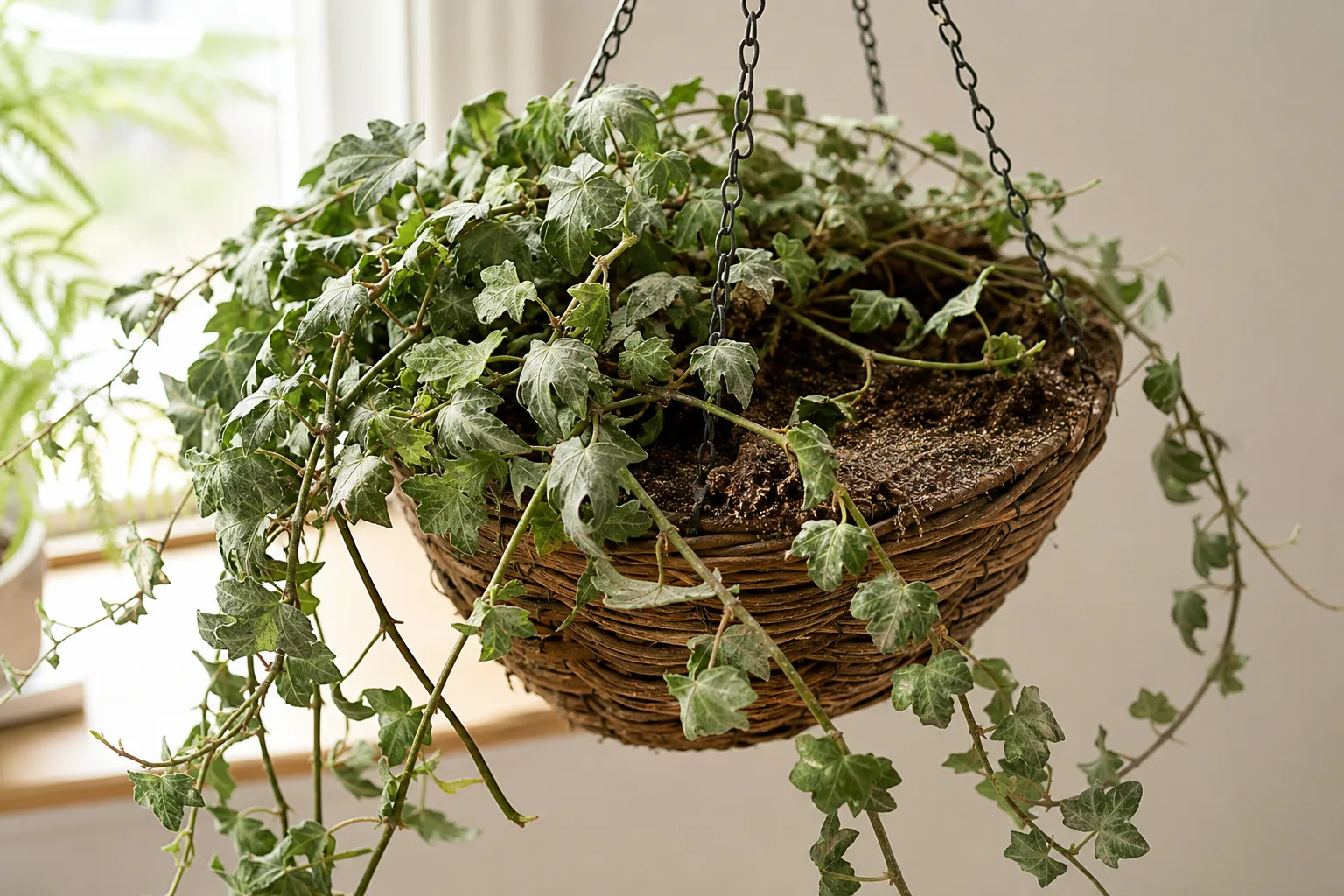
Underwatering on English Ivy: Causes, Checks & Fixes
This guide covers underwatering on English Ivy. See also the general Underwatering guide, watering, and light pages for this plant.
Underwatering on English Ivy: Causes, Checks & Fixes
Quick answer
Underwatered English ivy (Hedera helix) wilts from the growing tips outward-trailing stems go limp, lobed leaves fold or dull to gray-green, and older foliage may crisp along the margins before it drops. The pot feels light, and soil at the top inch is dry and may pull slightly from the container wall.
First step: set the pot in a tray of room-temperature water until the top inch of mix feels moist, then lift it out and drain completely. One thorough bottom soak re-wets a dry root ball better than repeated small top splashes that run down the inside wall. Do not assume every wilt means thirst-check soil first, because wilted leaves can also mean soil that is too wet when roots have failed.
What underwatering looks like on English Ivy
English ivy is a temperate woodland climber adapted to soil that stays lightly moist between rain events-not bone dry for weeks. Indoors, its thin lobed leaves transpire steadily, especially in bright light. When roots run dry, the whole trailing mass shows stress quickly.
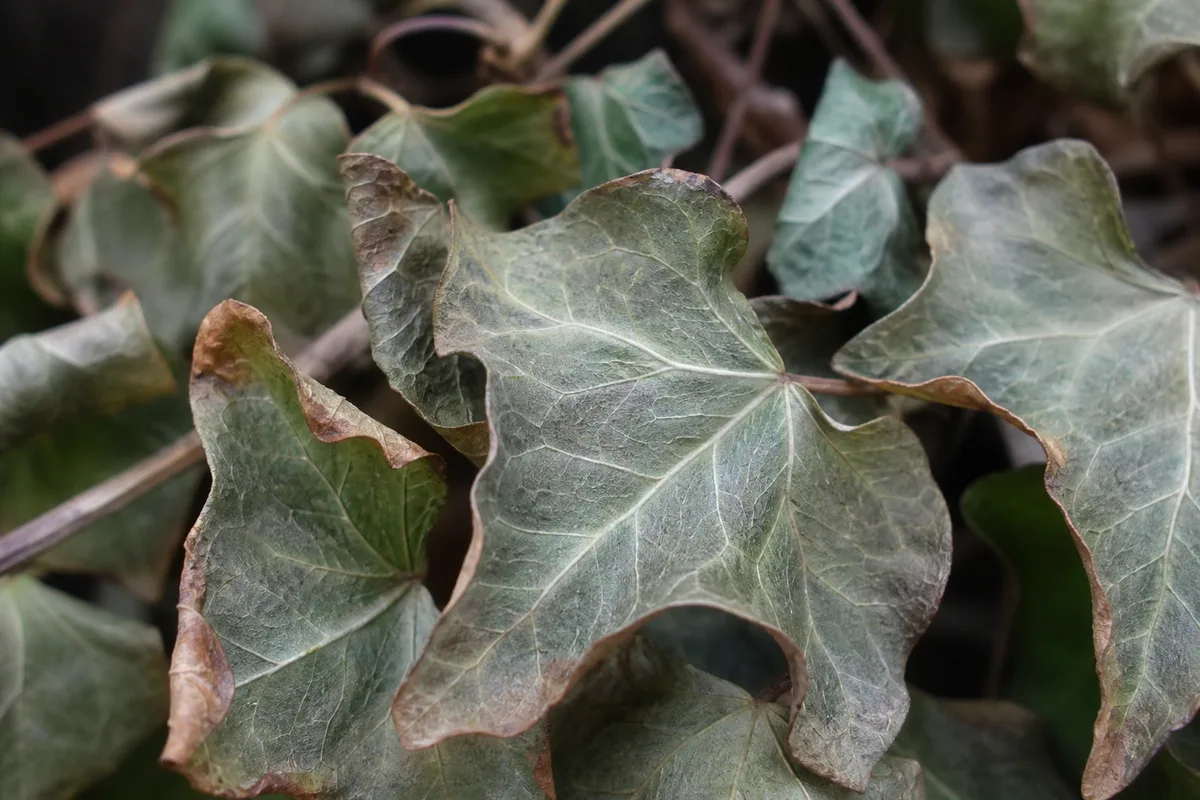
Thin folded lobed leaves with dull gray-green color and slightly crispy brown edges - pair with a light pot and dry top inch of mix before you soak.
Typical underwatering signs:
- Limp or drooping trailing stems, often worst at the vine tips farthest from the pot
- Lobed leaves that fold, feel thin, or turn dull gray-green instead of rich green
- Dry, dusty soil pulling away from the pot edge
- A pot that feels noticeably lighter than right after watering
- Crispy brown edges on older leaves after repeated dry cycles
- Slow or stalled new growth at vine tips during what should be active spring or summer
- Water that runs straight through the pot without moistening the center-often hydrophobic mix after long dryness
What sets ivy apart from succulents: English ivy does not store large water reserves in thick tissues. It tolerates brief dry spells better than a fern, but repeated drought stalls the moderate-to-fast growth that makes trailing ivy look full. RHS guidance warns against letting compost dry out completely between waterings. Unlike root rot on English Ivy, underwatered soil smells neutral or dusty, not sour. Roots, if you slip the plant out, should be firm and pale-not brown, mushy, or black.
Why English Ivy gets underwatered
Several traits that make ivy easy to grow also make it easy to underwater by mistake.
Trailing baskets and heat vents dry pots fast
Ivy is often sold in small hanging baskets or macramé holders where long stems cascade away from the root zone. Warm air from radiators, forced-air vents, or a bright south-facing window accelerates evaporation from the top of the mix while the bottom may still hold some moisture-or the entire small pot may go dry in one hot afternoon. A calendar rhythm tuned to a tabletop pot fails the week you move ivy to a high shelf above a heating register.
Fear of overwatering on English Ivy after past root rot scares
Ivy is vulnerable to root rot when soil stays wet too long in poor drainage. Growers who previously lost plants to soggy mix sometimes swing too far dry. The fix for rot is drainage and checking dryness before the next drink-not permanent drought. Underwatering and overwatering both produce limp leaves; only one leaves the mix light and dusty.
Root-bound containers exhaust moisture quickly
Clemson Extension notes that ivies should be repotted when they become top-heavy, root bound, or dry out too rapidly. A crowded root ball in an unchanged small pot can need water every few days in summer heat. If you respond by watering lightly instead of deeply-or skip days because the surface still looks damp while the center is parched-the outer vines wilt while roots starve.
Calendar watering and travel gaps
Watering every Sunday regardless of season ignores how cool winter rooms slow evaporation and how bright summer windows speed it. English ivy prefers cool to moderate room temperatures of 50 to 70 °F during the day; in cooler rooms the mix stays wet longer, but in heated dry winter air the same pot can go from moist to dust-dry within days.
Hydrophobic peat-heavy mix after long drought
When dry potting mix repels water, a quick top pour races down the inside wall and out the drainage hole while the root ball center stays dry. The surface may look briefly damp; the plant still wilts. This pattern is common after vacations or weeks of neglect, not after one missed watering.
Low humidity compounds drought stress
Ivy tolerates normal home humidity but performs best with moderate levels around 40 to 60%. Dry heated air increases transpiration through thin leaves. Chronic underwatering in dry rooms also invites spider mites, especially problematic on English ivy indoors-mites reproduce quickly in warm, dry conditions on stressed plants.
How to confirm the cause
Work through these checks before you pour:
- Finger test at the top inch - Push your finger to the first knuckle. Dry, crumbly soil confirms thirst. Cool damp soil means wait-even if leaf tips look soft in afternoon heat.
- Pot-weight test - Lift the container right after your next proper watering to learn the heavy baseline. If the pot is light, it needs water-a dry ivy pot is dramatically lighter. For small pots, a quick lift is one of the fastest moisture guides.
- Skewer or chopstick test - Insert a wooden skewer to mid-pot depth. A clean, dry stick means the root zone needs water; clinging damp soil means the lower mix still holds moisture.
- Wilting pattern - Underwatering wilts trailing stems fairly evenly during dry soil. One section collapsing while the rest stays firm suggests mechanical damage, stem rot, or localized root failure-not simple thirst.
- Smell and root peek - Sour or swampy odor with wet mix suggests overwatering or rot. Neutral dry soil with firm roots confirms underwatering. Slide the plant out only if symptoms persist after a correct soak.
- Leaf underside check - Fine stippling, webbing, or dusty discoloration on leaf undersides points to spider mites, which often follow drought stress on ivy. Treat pests separately after you confirm soil moisture.
If soil is dry at the top inch and the pot is light, you have confirmed underwatering. If soil is wet and cold while vines wilt, rotting roots cannot take up water-stop watering and address drainage instead.
First fix for English Ivy
Bottom-water the pot in a tray of room-temperature water until the top inch of mix feels moist, then lift it out and let all excess drain for at least thirty minutes.
Set the container in a basin or sink with enough water to reach halfway up the pot sides. Leave it until the surface darkens and feels moist to your finger-often fifteen to thirty minutes for a typical six-inch basket, longer if the root ball was completely dry. Remove the pot, let it drain fully, and empty any saucer or outer decorative pot. That single bottom soak is the entire first fix.
Do not follow with fertilizer, English Ivy repotting guide, or heavy pruning on the same day. Wait until the top inch dries again before the next watering-often every five to seven days in active summer growth and every ten to fourteen days in cool winter slow growth, depending on your home.
If water still runs through without wetting the center after bottom-watering once, repeat the tray soak for another fifteen minutes or top-water very slowly in two short sessions an hour apart so moisture sinks in rather than channeling down the pot wall.
Step-by-step recovery after chronic dryness
Once the first bottom soak is done, recovery depends on how long the ivy went dry.
Mild same-day wilt on dry soil: One thorough rehydration often restores turgor within hours. Move the basket out of harsh direct sun until stems firm if heat compounded the stress.
Several days dry with crispy leaf margins: Maintain steady moisture when the top inch dries. Trim only fully brown, dead leaves if they look unsightly-partially green tissue may still photosynthesize. Do not strip half the trailing mass at once.
Hydrophobic mix that repels water: Repeat bottom-wicking until a skewer pulled from mid-pot shows even moisture. Consider repotting in spring into fresh well-draining houseplant mix if the root ball stays dry inside despite repeated soaks.
Repeated drought cycles with stalled tips: After rehydration, watch for new leaves at vine ends for two weeks. If growth resumes, roots survived. If vines stay limp on now-moist soil, unpot and inspect for brittle dead roots; trim to firm tissue and repot into a slightly larger container with drainage-hold fertilizer until new shoots appear.
Topiary or wire-frame ivy: Shaped forms dry out faster at the upper stems farthest from the soil line. After rehydrating the pot, misting is not a substitute for soil moisture, but keeping the root zone consistently moist prevents the upper crown from wilting first on the next dry spell.
Recovery timeline
Simple thirst on an otherwise healthy ivy often shows improvement within six to twenty-four hours after one proper bottom soak. Stems feel firmer by the next morning; new lobed leaves may unfurl at tips within a few days.
Severe dryness that needed repeated bottom-wicking may take one to three days before foliage looks fully turgid again. Judge success by new growth at vine tips, not by old crispy edges-they will not green up.
Chronic underwatering that damaged fine roots recovers over two to four weeks if enough healthy root tissue remains. Continued wilting on moist soil after forty-eight hours suggests root loss or rot from prior care swings-not ongoing thirst.
Lookalike symptoms to rule out
Wilting with wet, heavy soil - Root rot or overwatering. Leaves droop because damaged roots cannot transport water. Yellow lower leaves on soggy mix are a classic overwatering pattern on ivy. Adding more water worsens decay.
Crispy brown tips with otherwise moist soil - Low humidity and dry heated air, not necessarily underwatering. Check the top inch before soaking; if soil is already damp, raise humidity with a pebble tray instead of watering again.
Yellow leaves from the bottom up on wet soil - Overwatering or poor drainage, not drought. Dry-soil underwatering more often shows limp folded leaves and dry pot weight before widespread yellowing.
Spider mite stippling with webbing - Fine speckling and dusty webs on leaf undersides indicate pests. Mites surge on heat-stressed dry ivy, so check both soil and foliage when vines look tired.
Leggy pale growth without wilt - Insufficient light. Stems stretch toward windows while soil stays appropriately moist. Move to brighter indirect light rather than watering more.
Mistakes to avoid
Do not water on a fixed calendar without checking the top inch. Summer bright baskets and cool winter rooms dry pots at very different speeds.
Do not mist trailing leaves instead of soaking the root zone. Foliar mist raises humidity briefly but does not rehydrate roots; ivy needs moisture in the mix.
Do not compensate for one dry spell with daily shallow top splashes. Sips keep the surface damp while the root ball stays dry-then the next heat wave wilts the vines again.
Do not fertilize a drought-stressed ivy. Salts on damaged roots burn tissue. Rehydrate first; resume monthly feeding only after new growth appears during active season.
Do not assume ivy is drought-proof because it survives outdoors. Indoor pots lack the deep soil reservoir of garden beds. Container ivy needs regular checks.
Do not repot on day one unless mix is hydrophobic or roots are clearly damaged. Fresh disturbance on a wilted vine adds unnecessary shock.
Do not leave the pot standing in the bottom-water tray for days. Drain fully after the soak-standing water leads to root rot.
English Ivy care cross-check
Underwatering rarely happens in isolation. After you rehydrate, confirm the rest of the setup supports even moisture use:
- Light - English Ivy light guide increases water use; dim corners slow dry-down. Variegated cultivars need enough light to hold color without baking in direct sun.
- Pot and mix - Well-draining commercial houseplant mix in a container with drainage holes dries predictably. Oversized pots stay wet too long; undersized root-bound pots dry in hours.
- Temperature - Ivy prefers cool to moderate rooms. Hot dry rooms accelerate both evaporation and spider mite pressure.
- Humidity - Moderate humidity reduces edge crisping and mite risk but does not replace soil moisture.
How to prevent underwatering next time
Build a habit around soil checks, not dates. Water when the top inch feels dry-Clemson Extension recommends letting soil dry to the touch to about half an inch before watering again-then soak until drainage runs clear and discard saucer water.
In active growth on a bright windowsill, that may mean every five to seven days. In cool winter slow growth, ten to fourteen days between checks is common. Lift the pot weekly until you learn its weight rhythm.
Repot when roots fill the container and soil dries so fast you cannot keep up-move up only one inch in pot diameter to avoid a mix that stays wet too long.
After repotting, travel, or moving a basket to a sunnier shelf, re-learn dry-down speed for two weeks before trusting an old schedule.
Inspect leaf undersides whenever you check soil moisture so dry-stressed ivy does not become a mite nursery.
When to worry
Treat as urgent when trailing stems collapse with bone-dry soil in hot dry air, or when soil has pulled far from the pot edge and leaves are crisp-not merely soft. Bottom-water immediately and keep the plant out of direct sun until turgor returns.
Also act quickly if vines stay limp more than forty-eight hours after a confirmed correct soak on dry soil. That pattern suggests root death from repeated drought, not a simple missed watering.
Lower urgency fits temporary afternoon wilt on a light dry pot that firms overnight after one deep drink, or slightly folded leaves that recover within a day when you catch dryness early.
If wilting persists on moist soil despite your corrections, inspect roots for rot from earlier overwatering swings-the classic ivy trap is drought followed by panic drowning.
Conclusion
Underwatering on English ivy is a rhythm problem on a moisture-loving temperate vine, not a mystery disease. Ivy wilts quickly when its root ball goes dry, but crispy old edges stay while new lobed leaves at the tips tell you recovery is working. Check dryness at the top inch, confirm a light pot, then deliver one thorough bottom soak and drain completely. Match your schedule to light, season, pot size, and hanging placement-and keep an eye on leaf undersides so dry stress does not hand your plant to spider mites.
When to use this page vs other English Ivy guides
- English Ivy watering guide - Use for routine moisture checks before assuming underwatering is the main issue.
- English Ivy problems hub - Browse all 16 common issues on this species.
- Wilting on English Ivy - Different entry point when symptoms overlap with underwatering.
- Brown Tips on English Ivy - Different entry point when symptoms overlap with underwatering.
- Yellow Leaves on English Ivy - Different entry point when symptoms overlap with underwatering.