Aphids on Dwarf Umbrella Tree: Causes, Checks & Fixes
Quick answer
Aphids on Dwarf Umbrella Tree cluster on soft new compound leaves at the crown and tender stem tips, sucking sap and dripping sticky honeydew onto glossy leaflets below. First step: isolate the plant and rinse new growth and leaflet undersides with a firm water spray before applying any insecticide.
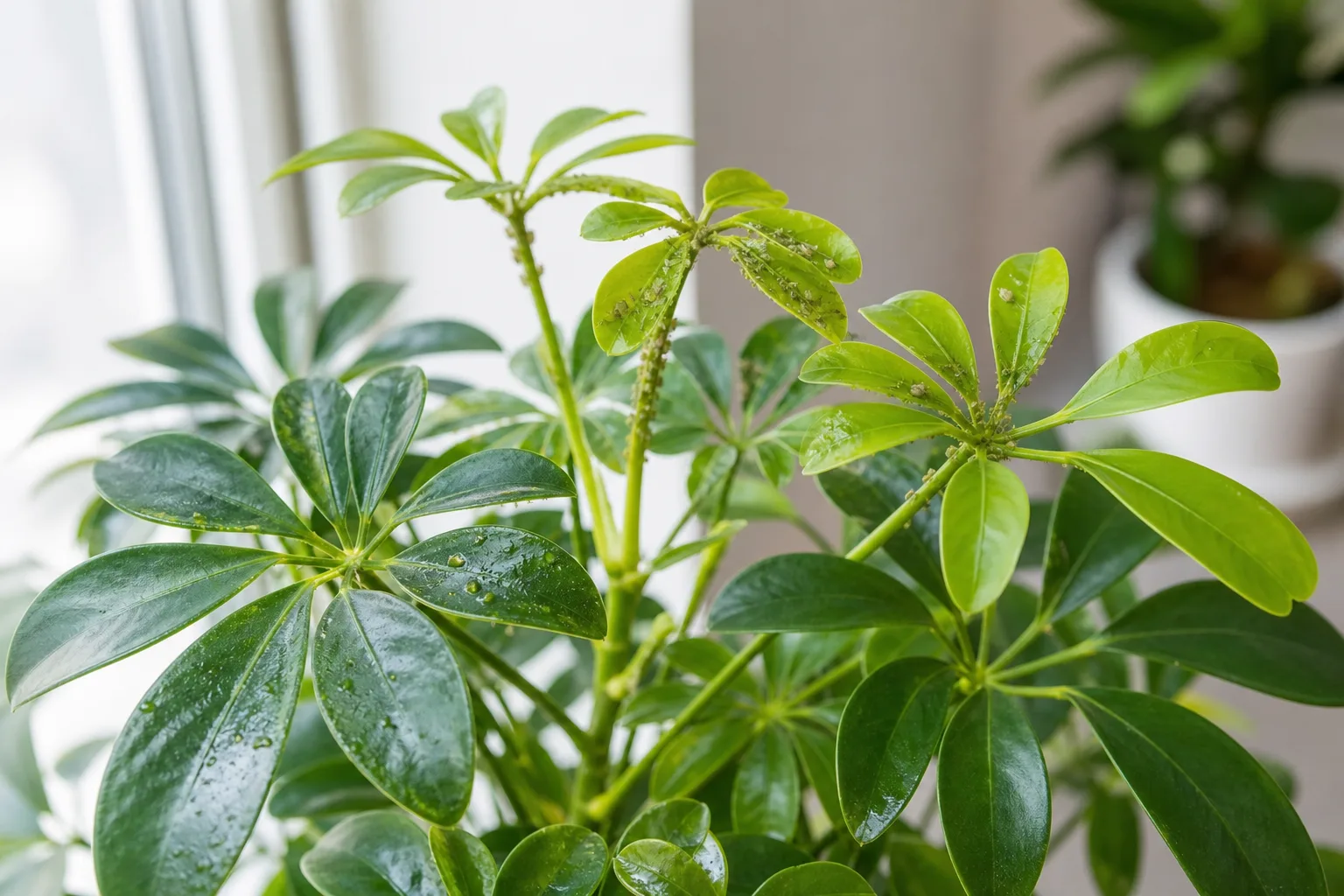
Aphids on Dwarf Umbrella Tree: Causes, Checks & Fixes
This guide covers aphids on Dwarf Umbrella Tree. See also the general Aphids guide, watering, and light pages for this plant.
Aphids on Dwarf Umbrella Tree: Causes, Checks & Fixes
Quick answer
Aphids on Dwarf Umbrella Tree (Schefflera arboricola) are small sap-sucking insects that colonize the soft tissue this compound-leaf schefflera pushes out fastest-new crown growth, tender stem tips, and the bases of unfolding leaflets where seven to eleven glossy leaflets fan from a shared petiole. They pierce phloem sap, distort young leaflets, and excrete sticky honeydew that can attract ants and sooty mold on the glossy compound leaves below.
First step: isolate the plant and rinse new crown growth, leaflet undersides, and stem tips with a firm stream of water. Dwarf umbrella tree’s upright compound-leaf architecture hides pests between overlapping leaflets, so confirm live aphids before reaching for sprays. Sticky residue without insects may point to mealybugs on Dwarf Umbrella Tree or scale instead-rule those out with the comparison table below.
Scope note: This page is the aphid hub for the dwarf-umbrella-tree cluster (S. arboricola). The genus-name URL aphids on Schefflera covers the same species under a shorter slug. Full-size umbrella tree (Schefflera actinophylla) shares similar pest habits but grows much larger leaf whorls-inspection logic still applies, though mature stems are woodier and harder to reach.
Why Dwarf Umbrella Tree gets aphids
Aphids are not a schefflera disease-they are introduced pests that exploit tender growth. Houseplant insects most often enter on newly purchased plants or specimens brought in from outdoors. Skipping quarantine is the most common way they reach an indoor collection.
Dwarf Umbrella Tree is not the most pest-prone schefflera indoors-spider mites usually win that title in dry, heated air-but Missouri Botanical Garden lists aphids among pests that may appear on this species, alongside mealybugs, thrips, and spider mites. Outbreaks almost always trace to introduction, not a mysterious indoor invasion.
The most common entry routes fit how people actually grow this plant:
- New nursery stock. Aphids hide on soft new compound leaves at the crown where a quick top-down glance misses pear-shaped clusters tucked between overlapping leaflets.
- Summer outdoors, fall indoors. Schefflera moved to a porch for summer and brought back without quarantine frequently carries low-level colonies that explode once indoor heat keeps populations breeding year-round.
- Neighboring infested plants. Aphids spread short distances on their own and hitchhike on shared plant stands before you notice stickiness on the floor.
- Soft new growth from heavy feeding. Aphids prefer soft, new plant growth, and excess nitrogen produces even more tender shoots they colonize-when vulnerable new compound leaves open at the crown, timing matters.
What makes Schefflera arboricola especially vulnerable during active growth is its upright compound-leaf crown. Each new leaf carries multiple soft leaflets in one tight cluster at the stem tip-ideal cover for aphids. Honeydew often lands on the glossy leaflets one whorl below while insects remain on the newest growth above, a misleading signal that lower leaves are the problem when colonies sit at the crown.
What aphids look like on Dwarf Umbrella Tree
Early infestations hide at the crown and petiole bases, so check these patterns together-not just the top of the glossy canopy:
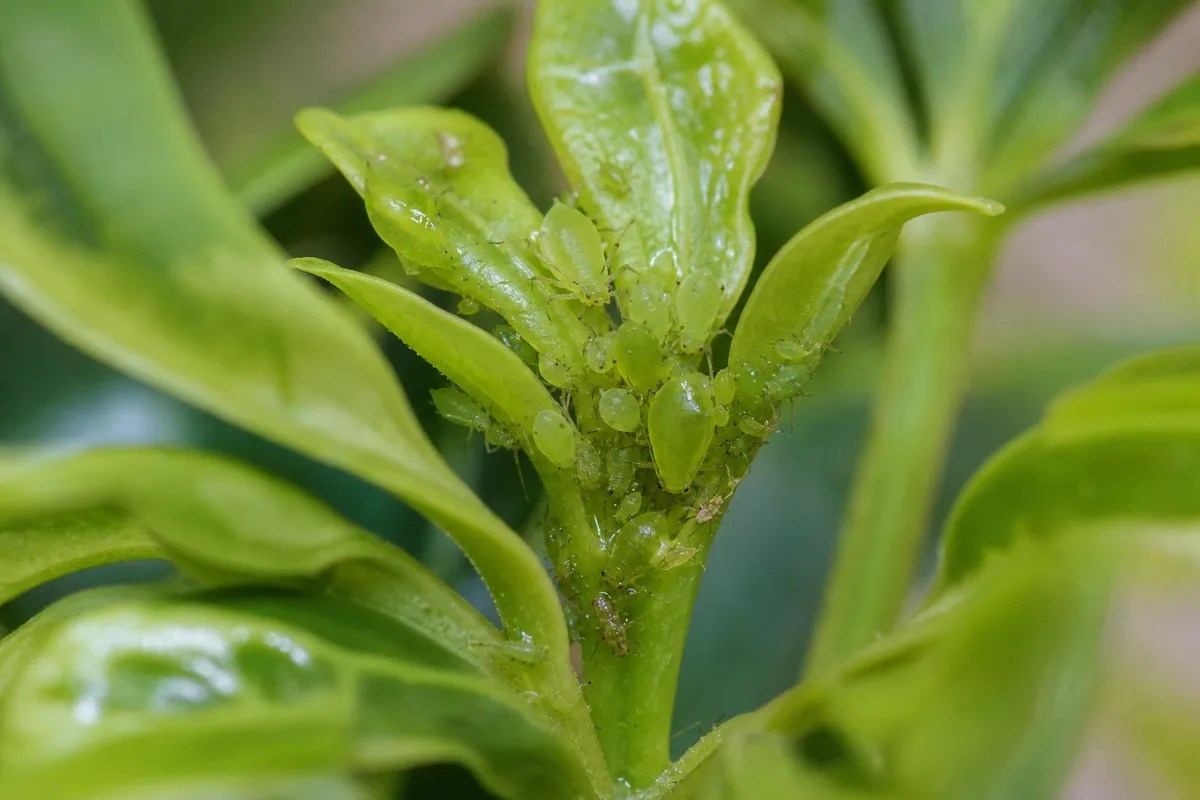
Aphids symptoms on Dwarf Umbrella Tree - compare with healthy tissue on the same plant.
- Clusters of tiny pear-shaped insects on new crown growth, compound-leaf petiole bases, and tender stem tips-often green, but aphids can also be black, brown, yellow, or pink
- Sticky, shiny honeydew on upper leaflets where feeding sites sit on compound leaves above; on whorled foliage the tackiness may look patchy rather than uniform
- Curled or puckered young leaflets on the newest compound leaf while older whorls still look normal
- Ant trails on the pot rim, saucer, or nearby surfaces-ants harvest honeydew and protect aphid colonies
- Black sooty mold on honeydew-coated tissue once mold spores colonize the sugar residue
- Stunted or twisted new compound leaves when feeding is heavy on a single growing tip
- Winged aphids on overcrowded colonies-a sign populations are spreading to neighboring plants
Visual identification without photos: Picture sesame-seed-sized pear-shaped insects packed along the central petiole of the newest compound leaf at the crown, sometimes with two tiny tail pipes (cornicles) visible under a hand lens. Unlike the white cottony tufts of mealybugs wedged into petiole joints, aphids cluster as dense groups on soft green tissue and move slowly when you brush them. Honeydew reads as random tacky patches on otherwise glossy upper leaflets.
Do not mistake normal aging for pest damage. Dwarf Umbrella Tree naturally sheds older lower leaflets on mature stems. Aphid stress shows pear-shaped clusters on new crown growth, stickiness, and stalled clean new compound leaves-not isolated yellowing on one lower whorl without insects.
Lookalike symptoms on Dwarf Umbrella Tree
| What you see | Likely cause | Key difference |
|---|---|---|
| Pear-shaped clusters on new crown tips | Aphids | Cornicles on hind end; slow movement; honeydew |
| White cottony tufts in petiole joints | Mealybugs | Waxy filaments; pink smear when crushed; no tight pear groups |
| Flat brown bumps glued to woody stems | Brown soft scale | Immobile; scrape off; no cottony filaments |
| Fine stippling and webbing on leaflet undersides | Spider mites | No heavy honeydew; thrives below 40% humidity |
| Tiny white moths that fly when disturbed | Whiteflies | Tap test cloud; adults visible; not pear-shaped |
| Yellow lower whorls, no insects on new tips | Cultural stress | Wet soil, cold drafts, recent move-see yellow leaves |
Getting the pest right matters because mealybugs need alcohol dabs on wax in petiole joints, while aphids often drop dramatically after one thorough rinse. On schefflera, mealybugs and aphids can coexist-sticky leaves with cottony wax in petiole joints plus pear-shaped clusters on new tips require dual contact strategies, not a single spray pass aimed only at leaflet tops.
How to confirm the cause
Work through these checks in order before you treat:
- Isolate first - Move the schefflera away from other houseplants before handling so crawlers do not walk to neighboring pots on the same shelf.
- Crown inspection - Look down into the upright whorl of newest compound leaves; aphids concentrate on soft tissue at the topmost stem tips before spreading to petiole bases below.
- Petiole joints - Fan open each compound leaf and inspect where leaflets clasp the central stalk with bright light and a hand lens.
- Hand lens check - Aphids are soft-bodied with cornicles on the hind end. They move slowly when disturbed compared with flying whiteflies.
- Tap test - Shake a stem over white paper. Whiteflies fly in a cloud; aphids stay put as small clusters.
- Honeydew check - Rub a sticky upper leaflet. Honeydew feels tacky and may wipe off; natural glossy leaflet texture does not leave a sugary film on your finger.
- Ant activity - Ants on the pot strongly suggest honeydew producers are present on the plant above. Ants protect aphids from predators, making ant management part of the fix.
- Neighbor check - Inspect other houseplants on the same stand-many aphid species colonize a wide range of houseplants.
Aphids vs. mealybugs vs. mites decision table
| Sign | Aphids | Mealybugs | Spider mites |
|---|---|---|---|
| Shape | Pear-shaped clusters | Cottony wax with filaments | Fine stippling, optional webbing |
| Location | New crown, petiole bases | Petiole joints, woody nodes | Leaflet undersides |
| Movement | Slow when disturbed | Crawlers under wax | Moving specks on tap test |
| Humidity link | Year-round indoors | Year-round indoors | Dry heated air below 40% |
| First fix | Firm water rinse | Alcohol dab on wax | Rinse undersides, raise humidity |
If you find stippling and fine webbing on leaflet undersides with no pear-shaped clusters, switch your diagnosis to spider mites-the more common serious pest on this species in dry indoor air.
First fix for Dwarf Umbrella Tree
Move the infested plant away from other houseplants and rinse new crown growth, leaflet undersides, and stem tips with a firm shower or hose spray.
Tabletop pots: Take the plant to a sink or shower, tilt it, and cover the soil with plastic so repeated rinses do not waterlog the mix.
Floor specimens: Work stem by stem with a handheld sprayer or garden hose on gentle pressure rather than tipping a heavy pot. Fan compound leaflets apart so water reaches the tight spaces where leaflets overlap at the petiole.
A strong stream of water knocks aphids off sturdy plants and washes fresh honeydew before ants or sooty mold take hold. Let foliage dry the same day-repeated shower rinses on soggy soil stress schefflera roots and can trigger the leaf drop this species is already prone to. Follow the watering guide dry-down rhythm between rinse days.
Do not apply insecticidal soap, neem, or systemic products until you have confirmed live aphids and finished at least one thorough rinse. Do not fertilize a pest-hit tree hoping to push replacement growth-that produces more soft tissue aphids prefer. Do not repot on day one unless you also have root rot or fungus gnat larvae in soggy soil.
Test one leaflet first if you grow variegated cultivars like Trinette or Gold Capella before whole-plant soap or oil sprays. Solid green arboricola tolerates targeted rinses well; variegated tissue spots more easily after chemical residue sits on pale margins in direct sun.
Because Dwarf Umbrella Tree is toxic to cats and dogs, wear gloves when handling heavily infested stems, and keep treated plants where pets cannot chew dropped leaflets during recovery.
Step-by-step recovery
After the initial isolation and rinse, escalate only as needed:
Light infestation (scattered aphids on one or two new compound leaves)
- Repeat firm water rinses every two to three days until live aphids are gone on inspection.
- Wipe honeydew from upper leaflets with a damp cloth once insects are controlled.
- Hold fertilizer until new compound leaves open clean at the crown.
Moderate infestation (colonies across multiple crown tips, limited stem coverage)
- Continue rinse cycles every two to three days for one week.
- Add insecticidal soap labeled for houseplants if colonies persist-spray until soap runs off petiole bases and leaflet undersides. Repeat every five to seven days for two complete cycles at label intervals.
- Wipe sooty mold from leaflets once honeydew stops. Mold does not infect schefflera tissue; it needs the sugar source to spread.
- Manage ants on the pot exterior if present-sticky barriers on table legs or ant bait placed away from pets can help predators reach aphids.
Heavy infestation (aphids on most new growth, multiple plants, or persistent ants)
- Continue weekly rinse and soap cycles while keeping the plant isolated.
- Switch to neem or horticultural oil labeled for houseplants if live aphids remain after two full soap cycles with thorough crown coverage. Apply in the evening, keep the plant out of window sun for 48 hours, and never combine oil with fresh soap on the same day.
- Prune only heavily infested new tips you cannot clean-make cuts above a node and sterilize blades between cuts. Do not strip the whole crown-schefflera needs photosynthesizing leaflets to recover.
- If colonies persist after three to four weekly cycles, weigh discarding the plant against risking your entire collection.
Treatment schedule at a glance
| Phase | Action | Frequency |
|---|---|---|
| Days 1–7 | Firm water rinse on crown and undersides | Every 2–3 days |
| Week 2+ | Insecticidal soap if rinses alone fail | At label intervals; 2 full cycles |
| After soap | Neem or horticultural oil if aphids persist | Every 4–7 days; patch-test first |
| Throughout | Scout crown tips; manage ants; hold fertilizer | Weekly inspection |
| Clear period | No live insects before returning to shelf | 2 weeks minimum |
Keep the plant isolated until you see no new aphids for at least two weeks after the last treatment.
Recovery timeline
Water knockdown shows results within two to three days when colonies are moderate and confined to one or two new compound leaves. A full soap course often takes one to two weeks with label-interval repeats because aphid nymphs hide in curled leaflets and eggs hatch on staggered schedules.
Honeydew dries up within days once feeding stops; sooty mold stops spreading and can be wiped away over one to three weeks. Mildly distorted new leaflets often flatten as the next compound leaf emerges cleanly. Judge success by firm upright new growth at the crown and falling pest counts-not by restoring every older glossy leaflet to perfection.
Expect some leaflet drop if the plant was already stressed. NC State notes that wet or dry soil extremes trigger leaf drop on dwarf umbrella tree, which can mask whether treatment is working-fresh compound leaves at the crown are the recovery signal worth watching.
If sticky leaflets return within a week after three rinse-and-soap cycles, look for colonies tucked in petiole joints you missed, crawlers reinfesting from another plant, ants still protecting survivors, or a misidentified mealybug colony that needs alcohol dabs instead.
Mistakes to avoid
- Treating without isolating - Crawlers walk to ficus, philodendron, and other aphid hosts on the same shelf before your rinse dries.
- Spraying only leaflet tops - Aphids cluster on new crown growth and petiole bases; top-only sprays miss most of the colony on compound leaves.
- Waterlogging soil with daily full-pot showers - Cover the mix and let the top half dry between rinse days per the watering guide.
- Using dish soap - Household detergents burn leaflets. Use products labeled for plants.
- Confusing mealybugs for aphids - White cottony wax in petiole joints needs alcohol dabs, not rinse alone.
- Feeding heavily during an outbreak - Nitrogen pushes soft shoots that aphids repopulate faster than you rinse.
- Returning the plant to the collection too soon - Two weeks pest-free across two weekly checks is a safer minimum than a single clean inspection.
- Oil plus soap same day - Chemical burn risk on glossy compound leaflets, especially variegated cultivars.
How to prevent aphids next time
- Quarantine new or outdoor-returned plants for two to four weeks in a separate room before placing them near your schefflera.
- Scout new crown growth every week through spring and summer when the plant pushes active compound leaves, not just when leaves look sticky.
- Inspect petiole joints and stem tips after fertilizing-use balanced fertilizer at half label strength during active growth rather than pushing excess nitrogen.
- Keep ants off plant tables and wipe dusty leaflets every few weeks so early colonies are visible on dark glossy foliage.
- Preserve beneficial predators when possible-lady beetles, lacewings, and parasitic wasps reduce aphid numbers if broad-spectrum sprays have not eliminated them.
Prevention on this species is mostly about catching the first few pear-shaped clusters on a new compound leaf at the crown before honeydew spreads down the leaflet array and sooty mold follows.
When to worry
Most established Dwarf Umbrella Trees survive aphids when treated early. Escalate or consider discarding the plant if aphid colonies cover most new growth and persist after three to four weekly rinse-and-soap cycles, the plant was already severely weakened by root rot, chronic overwatering, or massive leaflet drop, ants swarm daily despite bait management, crawlers have spread to many plants in one room, or new compound leaves stop opening entirely while colonies remain visible.
Treatment decision table
| Situation | Best action | Urgency | Notes |
|---|---|---|---|
| Few aphids on one or two new compound leaves | Firm water rinses | Low | Isolate; repeat every 2–3 days |
| Colonies across multiple crown tips | Rinse + insecticidal soap cycles | Medium | Cover petiole bases, not just tops |
| Mealybug wax and aphid clusters on same plant | Alcohol on wax, rinse aphids, then soap | Medium | Dual contact required |
| Ants farming honeydew daily | Rinse + ant management + soap | Medium | Ants block natural predators |
| Colonies persist after 3–4 weekly cycles | Discard or oil on valuable plant | High | Protect rest of collection |
| Collection-wide reinfestation | Quarantine all hosts; extension consult | Urgent | May need professional IPM help |
UC IPM notes that severely infested houseplants may be better discarded than repeatedly treated with insecticides-especially when multiple pots share a windowsill or plant shelf. Contact your local cooperative extension office if infestations persist across multiple rooms despite quarantine and repeated treatment.
Related Dwarf Umbrella Tree problems
- Dwarf umbrella tree care overview - species biology and troubleshooting hub
- Mealybugs on dwarf umbrella tree - white cottony wax in petiole joints, not pear-shaped clusters
- Spider mites on dwarf umbrella tree - stippling and webbing in dry heated air, not heavy honeydew
- Root rot on dwarf umbrella tree - mushy roots if the plant was already weakened
- Fungus gnats on dwarf umbrella tree - soil flies, not foliar pests
- Watering dwarf umbrella tree - stable rhythm after outbreak recovery
- Light for dwarf umbrella tree - bright indirect light supports clean new growth
- Aphids on Schefflera - genus-name companion for the same S. arboricola species
This URL is the primary aphid hub for the dwarf-umbrella-tree cluster. Use the Schefflera slug when linking by genus name; both pages target Schefflera arboricola, not full-size S. actinophylla.
FAQs
How can I confirm aphids on Dwarf Umbrella Tree compound leaves?
Look for dense clusters of small pear-shaped insects on the newest compound leaves at the crown, tender stem tips, and where leaflets clasp the central petiole-not on older mature whorls alone. Sticky honeydew on upper leaflets, ants on the pot rim, or curled young leaflets with visible insects confirm aphids. If you see white cottony tufts in petiole joints instead, check mealybugs before treating.
How do I tell aphids from mealybugs on schefflera petiole joints?
Aphids form tight green, black, or pink pear-shaped groups on new growth tips and move slowly when disturbed. Mealybugs look like white cottony patches tucked into compound-leaf petiole joints and woody stem nodes without the dense pear-shaped clusters on unfolding tips. Both drip honeydew, so confirm insect shape with a hand lens before choosing rinse-and-soap versus alcohol dabs.
Will rinsing damage glossy Schefflera arboricola leaflets?
Firm lukewarm water rinses are safe on glossy S. arboricola leaflets when you let foliage dry the same day in bright indirect light. Cover the soil with plastic during repeated shower rinses so the mix does not stay soggy-root stress triggers the leaf drop this species is already prone to. Variegated Trinette and Gold Capella tolerate rinses well; test soap or oil on one pale-margin leaflet before whole-plant sprays.
Will damaged Dwarf Umbrella Tree leaflets recover after aphids?
Mildly distorted new leaflets often flatten as the next compound leaf opens cleanly. Heavily curled or yellowed leaflets from sustained feeding usually stay marked until the plant sheds them naturally. Judge recovery by firm upright new compound leaves at the crown without fresh stickiness or visible insects-not by expecting every older glossy leaflet to look perfect again.
When should I discard a heavily infested Dwarf Umbrella Tree?
Consider replacing the plant if aphid colonies cover most new growth after three to four weekly rinse-and-soap cycles, ants persist despite bait management, or the infestation has spread to many plants on one shelf. A single established schefflera is often worth saving; protecting an entire collection may mean sacrificing one chronically infested pot that keeps reinfecting neighbors.
Conclusion
Aphids on Dwarf Umbrella Tree exploit the soft new compound leaves and sheltered petiole bases that make this schefflera push growth fast indoors-and hard to inspect from above. Confirm with a hand lens and tap test, isolate first, rinse crown growth and undersides firmly, and repeat until new compound leaves open clean. That focused path controls most home infestations without unnecessary whole-plant sprays, and it protects the rest of your collection from a pest that spreads quietly on tender crown tissue.
When to use this page vs other Dwarf Umbrella Tree guides
- Dwarf Umbrella Tree watering guide - Use for routine moisture checks before assuming aphids is the main issue.
- Dwarf Umbrella Tree problems hub - Browse all common issues on this species.
- Mealybugs on Dwarf Umbrella Tree - Different entry point when symptoms overlap with aphids.
- Spider Mites on Dwarf Umbrella Tree - Different entry point when symptoms overlap with aphids.
- Yellow Leaves on Dwarf Umbrella Tree - Different entry point when symptoms overlap with aphids.