How to Prune Calathea Orbifolia: When, Where & What to Cut
How to Prune Calathea Orbifolia: When, Where & What to Cut
How to Prune Calathea Orbifolia: When, Where & What to Cut
Quick Answer - Your First Cut
First, remove only fully dead, collapsed, or clearly diseased leaves by cutting each petiole flush at the soil line or rhizome crown with clean, sharp snips. Do not trim brown tips, shape the plant, or remove multiple green leaves until you have inspected the crown and confirmed the failing tissue cannot recover.
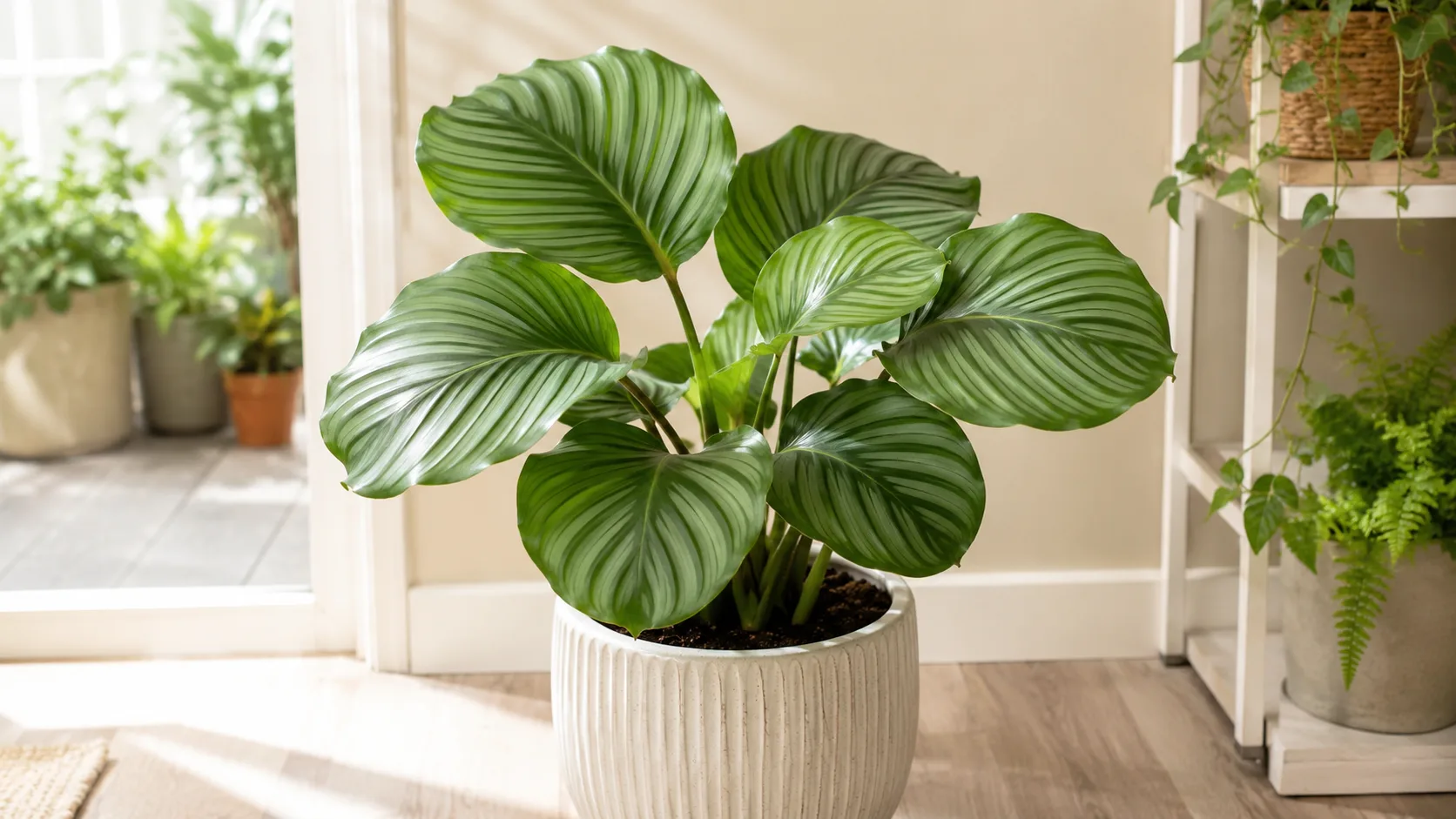
Calathea Orbifolia is grown for oversized round leaves with silver-green banding. Goeppertia orbifolia (still widely sold as Calathea orbifolia) produces each blade once from a tight rolled spear at the rhizome crown. There is no branching stem to pinch and no regrowth from a mid-leaf cut. Pruning here is grooming and sanitation, not structural shaping-and because one large leaf dominates the visual balance of the pot, every cut should earn its place.
What Pruning Means for Orbifolia
Orbifolia pruning falls into two practical jobs. Sanitation removes leaves that are fully yellow, brown, soft, or pest-damaged at the petiole base. Cosmetic trimming shaves dry margins off blades that are mostly green and firm.
There is no useful rejuvenation shear that forces bushiness. New foliage emerges only from the rhizome when warmth, humidity, and moisture support growth. NC State Extension describes Orbifolia as a clumping, columnar prayer-plant relative whose round leaves can reach 12 inches wide-so removing one blade is visually equivalent to stripping many small leaves on another houseplant.
Pruning cannot fix tap-water mineral burn, chronic underwatering on Calathea Orbifolia, or cold drafts. It removes tissue that no longer photosynthesizes effectively and improves inspection access once care stabilizes.
How Orbifolia Grows - and Why Cut Placement Matters
Orbifolia spreads through rhizomes-thick horizontal stems at or just below the soil surface. Each leaf attaches via a petiole that emerges directly from a rhizome node. Unlike an aroid vine, there are no nodes along a stem where pinching activates side shoots.
When a leaf is past recovery, follow the petiole to the crown and cut flush at the base without leaving a wet stub in a humid rosette. RHS calathea guidance advises snipping faded brown leaves and removing dead stems just above the compost-applicable to Orbifolia’s single-leaf stems.
Never cut through the middle of the round blade expecting the remaining half to produce a new tip. The severed edge browns and the leaf dies back. Minor edge trimming is the exception: use sharp scissors to follow the natural circular margin, removing only dead tissue. Orbifolia leaves mark permanently-any scar stays visible on the glossy surface.
Do not pull yellow leaves that resist. Wait until they release easily, or cut the petiole cleanly when fully yellow. Tugging can tear rhizome tissue in a wet crown.
What to Check Before You Cut
Walk the plant in good light before reaching for scissors. Orbifolia reacts dramatically to stress; pruning during a care crisis removes symptoms without fixing cause.
Yellow or Collapsed Outer Leaves
Fully yellow or limp leaves at the outer edge often reflect natural ageing or past stress. If the petiole base is firm and the leaf releases with a gentle tug, removal is straightforward. Soft, water-soaked petiole bases suggest rot or overwatering on Calathea Orbifolia-remove the leaf, inspect adjacent tissue, and correct moisture before batch grooming.
Check the newest rolled spear at the center. If it is firm and opening, the rhizome is still producing growth. If multiple spears abort or stick closed, delay heavy removal and address humidity and watering first.
Brown Tips and Crisp Margins
Orbifolia is extremely sensitive to dry air and tap water. NC State Extension notes that fluoride in tap water can cause leaf tips to brown and that at least 60% humidity is needed for Calathea Orbifolia overview to thrive. Brown edges are care signals, not invitations to keep cutting.
Switch to filtered or rainwater, run a humidifier, and keep soil evenly moist without waterlogging before assuming more pruning will help. Trim minor edge damage cosmetically only when the leaf is mostly healthy. Remove the entire leaf at the base when more than half the blade is damaged or edges keep spreading on new unfurling leaves.
Pests, Rot, and Mechanical Damage
Inspect leaf undersides for spider mite stippling, mealybug cotton, and scale. Remove heavily infested blades beyond spot treatment. Clear leaves with advancing fungal spots-cut at the base and discard in trash, not compost, when disease is suspected.
Mechanical damage from rubbing against walls or neighboring pots is permanent on Orbifolia’s showpiece blades. Prevent it by giving the plant physical space rather than repeatedly trimming affected tissue.
When to Prune Calathea Orbifolia
Anytime: Fully brown, collapsed, or rotting leaves; leaves with spreading soft spots; pest-infested blades that simplify treatment when removed.
Spring through early summer: Planned removal of several aging outer leaves, post-stabilization cleanup, or division at Calathea Orbifolia repotting guide when new rolled spears appear reliably.
Avoid heavy live-leaf removal in late fall and winter when indoor humidity drops and remaining leaves crisp faster after any insult. Also avoid batch grooming immediately after repotting, during widespread wilt, or when new spears are aborting-signs that roots or humidity need attention first.
RHS recommends dividing calatheas in spring; the same season suits planned foliage cleanup when warmth and humidity are stable.
Tools and Sanitation
Use sharp bypass snips or fine scissors for petioles and edge work. Sterilize blades with 70% isopropyl alcohol before starting and between cuts on diseased tissue. Iowa State Extension advises clean tools to limit disease spread between plants and cuts.
Handle leaves by the petiole, not the blade surface-Orbifolia foliage bruises easily from pressure and fingerprints. Support the leaf with your free hand when cutting at the base to avoid tugging the rhizome.
Step-by-Step Orbifolia Grooming
Removing Dead Leaves at the Petiole Base
Inspect from above into the crown center. Identify fully dead leaves first-they are always the priority.
Sterilize tools. Follow each failing petiole to the rhizome and cut flush at the soil line. Collect removed tissue and dispose of diseased material in household trash.
Step back after dead-leaf removal. Orbifolia should look cleaner without appearing sparse. If several stressed but partly green leaves remain, decide whether to address them in a second session during active growth.
Cosmetic Edge Trimming on Green Blades
For blades that are mostly firm and green with limited dry margins, trim only the dead tissue following the natural curve. Do not cut deep into healthy silver-green banding-the outline will not regenerate perfectly.
If cosmetic trimming would remove more than a thin rim, or the leaf has been trimmed before and edges returned, remove the whole leaf at the base instead of chasing recurring crisping.
Hold fertilizer for about two weeks after removing multiple leaves. Resume only when a new spear opens cleanly and the plant is actively growing.
How Much Foliage You Can Safely Remove
Remove all clearly dead or diseased leaves promptly-they do not count toward a foliage cap.
Limit removal of healthy or partly green leaves to about one-third of total foliage per session during active growth. Orbifolia replaces large leaves slowly indoors; stripping green blades weakens the rhizome and exposes remaining tissue to dry air.
If several old leaves need removal, spread work across two sessions three to four weeks apart in spring or early summer rather than defoliating in one sitting.
What Not to Cut
Do not cut still-rolled central spears unless they are clearly rotted-damaged spears sometimes recover if humidity rises.
Do not remove leaves simply because they lack perfect symmetry or show stable variegation patterns. Do not shear multiple green blades for neatness when the real issue is tap water, low humidity, or uneven drying.
Do not attempt leaf-cuttings from pruning trimmings. Orbifolia propagates by rhizome division, not detached blades.
Division vs Leaf Pruning
When the clump is dense and outer leaves chronically fail despite good care, division in spring replaces repeated defoliation. Unpot, tease rhizomes apart with a clean knife, and pot sections with several healthy leaves each. NC State Extension lists division during spring as the recommended propagation method.
Keep divisions warm and humid while they settle. Division is propagation pruning-distinct from snipping brown tips on individual leaves. Pruning trimmings from routine grooming are disposal material, not propagation stock.
Aftercare and Recovery
New rolled leaves may emerge within four to ten weeks during warm, humid, bright-indirect conditions. Recovery is slower in winter or dry homes. Maintain filtered water, steady humidity at 60% or higher, medium indirect light without harsh sun, and even moisture without soggy roots.
Single dead-leaf removal needs no special wait. Multiple leaf removals show replacement spears faster when humidity is adequate and care is stable rather than stacked with repotting or fertilizer.
The ASPCA lists calathea as non-toxic to cats and dogs, so grooming is safe in pet-accessible rooms-though Orbifolia remains mechanically fragile and deserves protected placement away from chewing and bumping.
Mistakes to Avoid
Cutting blades in half. No regrowth from partial leaves; scars stay visible on round blades.
Removing leaves for every brown edge without fixing water and humidity. Tips return until care improves.
Heavy pruning during stress, winter, or right after repotting. Slow recovery and possible crown stall.
Pulling resistant leaves. Tears rhizomes-cut petioles instead.
Crowding the plant. Mechanical damage is permanent on showpiece leaves.
Composting diseased leaves. May spread pathogens to garden beds.
Expecting bushiness from pruning. Orbifolia fills out from new crown leaves and division, not stem pinching.
Bottom Line
Calathea Orbifolia pruning removes dead leaves at the petiole base, trims dry edges conservatively on otherwise green blades, and uses spring division for real rejuvenation-not vine-style shaping. Fix filtered water and humidity first; scissors second. One wrong cut on a 12-inch round leaf is a long-lasting cosmetic mistake, so groom slowly and preserve healthy foliage whenever you can.
When to use this page vs other Calathea Orbifolia guides
- Calathea Orbifolia overview - Start here for whole-plant context before deep-diving this topic.
- Calathea Orbifolia problems hub - Jump to symptom-specific fix guides when this care topic does not resolve the issue.
- Leggy Growth on Calathea Orbifolia - Escalate here when pruning adjustments are not enough.
- Slow Growth on Calathea Orbifolia - Escalate here when pruning adjustments are not enough.
- Brown Tips on Calathea Orbifolia - Escalate here when pruning adjustments are not enough.