Low Humidity on Aglaonema Red Valentine: Causes, Checks &
Quick answer
Aglaonema Red Valentine tolerates average indoor humidity but crisp pink margins and papery brown tips often mean dry winter air or a heating vent nearby-not thirst. First step: move the pot off forced-air paths and scan for localized dry-air damage on oldest leaves.
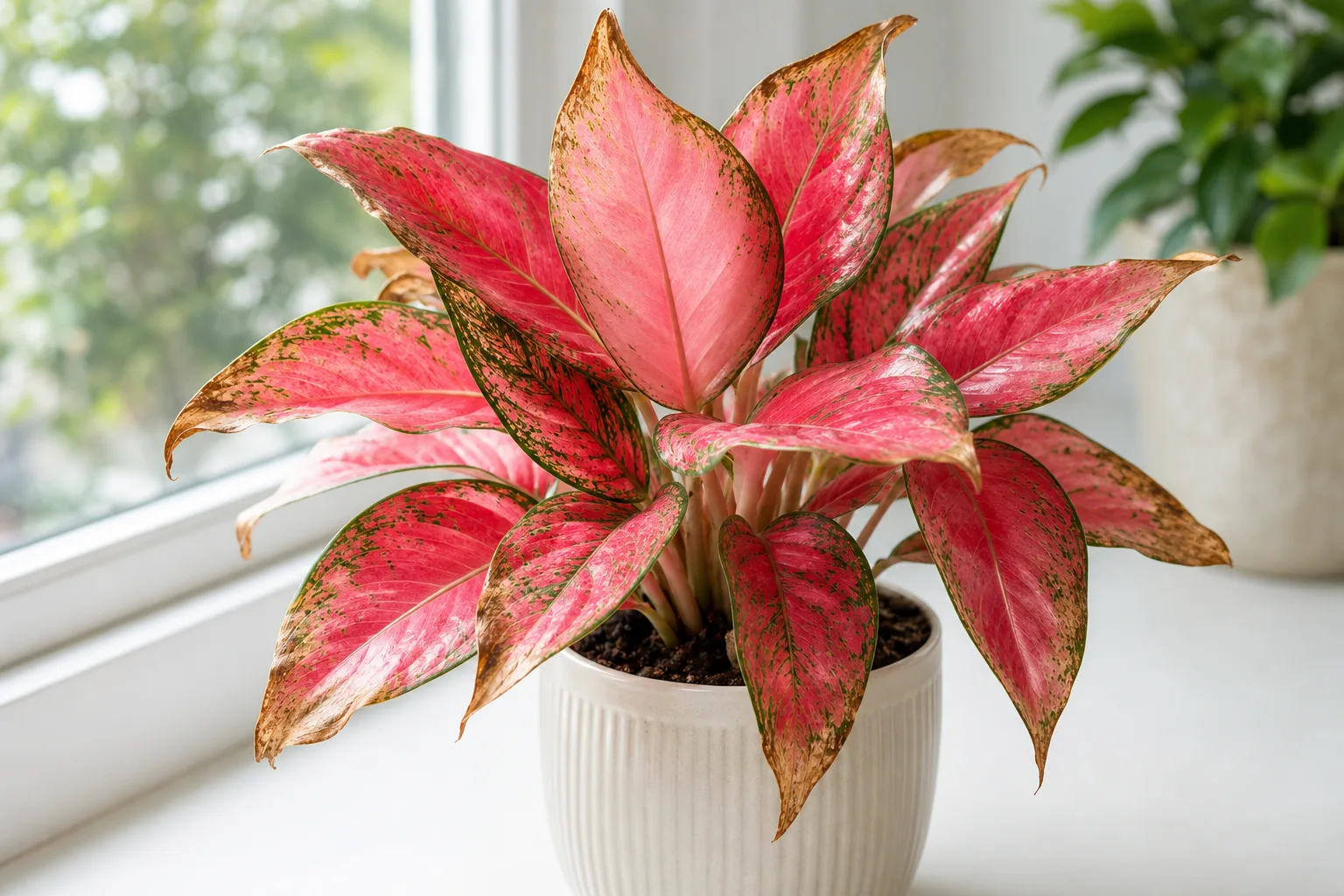
Low Humidity on Aglaonema Red Valentine: Causes, Checks & Fixes
This guide covers low humidity on Aglaonema Red Valentine. See also the general Low Humidity guide, watering, and light pages for this plant.
Low Humidity on Aglaonema Red Valentine: Causes, Checks & Fixes
Quick answer
Aglaonema Red Valentine (Aglaonema commutatum ‘Red Valentine’) is more forgiving of dry indoor air than calatheas or ferns, but it is not immune to winter stress. Clemson Extension notes that Chinese evergreens tolerate low humidity and grow well in an average house with low to moderate humidity, while the LeafyPixels Red Valentine overview targets 50–70% relative humidity (RH) as ideal and 30–50% as tolerable in most homes.
When RH drops-especially beside a heating vent, radiator, or cold AC draft-papery brown leaf tips and crisp pink margins are the usual warning signs. Fluoride in tap water can mimic the same pattern on new leaves, so dry air is not the only explanation.
First step: move the pot off forced-air paths today. Stand where the foliage sits and feel for warm or cold drafts from registers, floor vents, and window leaks. Give the plant two weeks in stable air before adding a humidifier, changing water, or watering more often.
Does Aglaonema Red Valentine need high humidity?
Red Valentine sits in the middle of the houseplant humidity spectrum. It evolved under tropical forest canopy conditions with steady moisture in the air, but as a Chinese evergreen cultivar it is bred for indoor durability-UF/IFAS lists ‘Red Valentine’ specifically for its predominantly pink leaves with light green margins.
Practical RH bands for this plant:
| Range | What it means for Red Valentine |
|---|---|
| 50–70% RH | Ideal for keeping pink tissue supple and reducing spider mite pressure in heated rooms |
| 30–50% RH | Normal winter household range; usually fine if the pot is not beside a vent |
| Below ~30% RH | Common near active heating; tip burn and mite risk rise, especially on variegated margins |
Unlike moisture-demanding tropicals, Red Valentine does not need a greenhouse. It does need stable air-sudden hot dry blasts from HVAC are more damaging than moderately low ambient humidity across the room.
What low humidity looks like on Red Valentine
Dry-air stress on this cultivar shows up in leaf edges and color zones, not as random spots in the leaf center (that pattern more often means sunburn, fluoride, or disease).
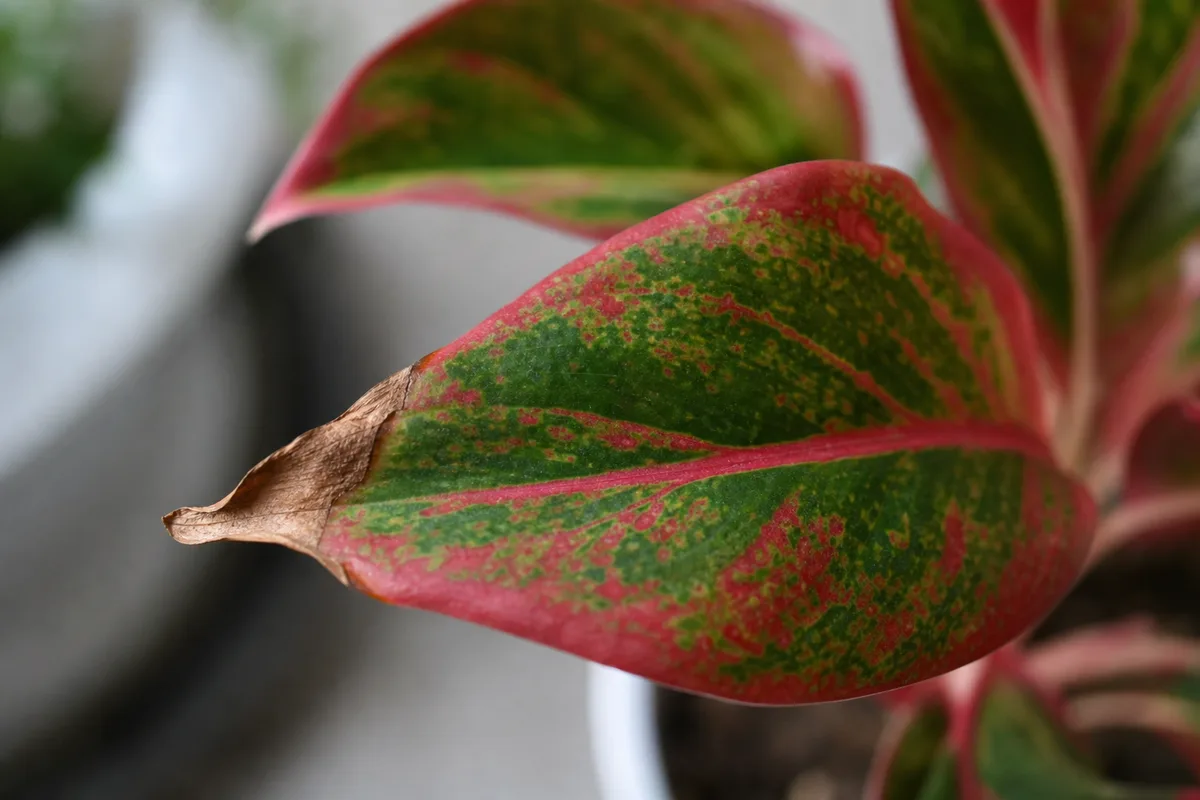
Low Humidity symptoms on Aglaonema Red Valentine - compare with healthy tissue on the same plant.
Watch for these patterns together:
- Papery brown tips on oldest leaves first, sometimes only on the side facing a heat source
- Crisp pink or red margins that feel dry before the green center fades-variegated tissue often shows stress before solid green areas
- Slow leaf curl or slight droop without wet soil-Missouri Botanical Garden notes that too-dry conditions cause wilting and off-color foliage
- Winter timing-symptoms appear or worsen after heating season starts, often within weeks of the first cold snap
- Localized damage-one plant on a radiator shelf looks worse than the same cultivar across the room
Healthy Red Valentine leaves feel firm and waxy. Pure low humidity rarely yellows entire leaves quickly; widespread yellow lower leaves with sour-smelling wet soil point to overwatering in a dim spot, not dry air alone.
How to confirm dry air vs. other causes
Work through this numbered checklist before buying gear or watering heavily:
- Vent and draft scan - With heat or AC running, hold your hand at leaf height around the pot. Warm blasts from floor registers, radiator tops, and fireplace mantels are the most common Red Valentine tip-burn triggers.
- Season and room RH - University of Maryland Extension notes that most indoor environments lack sufficient humidity in winter, when forced-air heating can pull RH into the 20–30% range. A simple hygrometer near the plant confirms whether the room-not just the leaf-is dry.
- Which leaves are affected - Oldest leaves, vent-facing sides first → dry air is likely. Newest leaves with brown margins on every side → check fluoride-heavy tap water before blaming humidity.
- Soil moisture - Stick a finger into the top half of the mix. Dry, light pot plus crispy tips can mean underwatering on Aglaonema Red Valentine. Wet soil plus brown tips means do not add water-inspect roots and placement instead.
- Pest check - Fine webbing, stippling, or dusty leaf undersides in a hot dry room suggest spider mites exploiting low humidity, not humidity stress alone.
- Light cross-check - Bleached patches on pink zones after a sudden window move are sunburn, not dry air. Long stretched stems with faded pink mean insufficient light, which also slows water use and can mimic humidity stress indirectly.
Confirmation test: Move the pot at least 3 feet (about 1 m) from any heat or AC outlet and wait two weeks. If new growth emerges with clean margins while old tip burn stays put, dry localized air was the main driver.
Vent, radiator, and AC draft check
Red Valentine is sensitive to microclimates, not just room averages. Inspect these hot spots:
- Radiator covers and window sills - Warm rising air desiccates leaf tips on the closest foliage within days
- Floor and baseboard vents - Upward drafts hit low tables and floor pots directly
- Kitchen heat spikes - Oven and stovetop use can crisp leaves on nearby counters for hours
- Cold window glass in winter - Leaves touching glass chill and brown on the contact side; this is cold injury, not humidity, but it looks similar
- Return-air paths - AC or heat returns create constant air movement that strips moisture from leaf edges
Maryland Extension recommends keeping indoor plants away from heat or air conditioning sources because brief temperature and humidity swings stress foliage. For Red Valentine, fixing placement costs nothing and works faster than misting.
Symptom lookalike table
| What you see | Often confused with | How to tell apart on Red Valentine |
|---|---|---|
| Papery brown tips, oldest leaves first, vent-side pattern | Fluoride or salt burn | Fluoride hits new leaves on all sides; tips persist after moving off vents; tap-water history fits |
| Crisp pink margins, localized to one side of the pot | Sun scorch | Brown patches on sun-exposed upper surface after a window move; not tied to heating season |
| Brown tips plus wet soil, yellow lower leaves | Overwatering | Pot heavy and cool; sour smell; roots soft-do not raise humidity or water more |
| Wilting, light pot, dry mix | Underwatering | Whole plant limp; soil pulls from pot edge; tips brown from drought, not just air |
| Stippling, webbing, dusty undersides | Low humidity alone | Mites thrive in dry heat-wipe and inspect undersides; humidity fix alone will not clear an infestation |
| Slow fade to green, long petioles | Dry air | Stretching and color loss without crisp margins → insufficient light |
First fix for Aglaonema Red Valentine
Move the pot off forced-air paths before anything else.
Practical relocation targets:
- At least 3 feet (1 m) from floor vents, radiators, and return-air grilles
- Off fireplace mantels and top-of-radiator shelves-popular display spots that crisp pink margins fast
- Away from exterior doors that open repeatedly in winter, dumping dry cold air across foliage
- Not touching cold window glass-use a stand or tray so leaves clear the pane
After the move, wait 10–14 days and watch the next unfolding leaf. Do not repot, fertilize, or drench the soil as part of this first step. Brighter rooms may dry the pot slightly faster-recheck the top half of the mix before the next drink, using the same rhythm as the Red Valentine watering guide.
Raise local humidity (humidifier, grouping, pebble tray)
If tips keep progressing after placement is fixed, add humidity in this order:
- Small room humidifier - Maryland Extension recommends automatic humidifiers to raise RH for people and plants; aim for the 40–50% band near the pot in winter, or toward 50–70% if pink margins still crisp
- Plant grouping - Cluster Red Valentine with other tropicals so transpiration raises local moisture slightly
- Pebble tray - Set the pot on stones above water level so evaporation humidifies the immediate zone without soaking roots
Misting is questionable for meaningful humidity gains-surface moisture evaporates in minutes. On fluoride-sensitive Red Valentine, misting with tap water can add spotting on new leaves that looks like dry-air burn. If you mist, use filtered water in the morning so leaves dry by evening.
What not to do
- Do not overwater because brown tips look like “thirst”-wet soil plus dry-air symptoms together often mean placement and drainage, not more water
- Do not mist daily with hard tap water when new leaves show margin burn-switch water quality first (see watering guide)
- Do not stack fixes on day one-move the plant, wait for one new leaf, then add a humidifier if needed; change one variable at a time so you can read the response
- Do not fertilize stressed foliage-salts can burn margins that already look crispy
- Do not assume every brown tip is humidity-if damage tracks new leaves after months of tap watering, flush the pot or switch to filtered water before buying a humidifier
Recovery timeline
Expect stabilization within 10–14 days after moving off vents-the plant stops producing new crispy tissue on the same schedule. Old brown tips do not re-green; judge progress on new growth instead.
| Phase | What to expect |
|---|---|
| Days 1–7 | No spread of tip burn to the newest leaf; air feels neutral around the pot |
| Days 10–21 | Next leaf unfolds with cleaner margins if dry air was the main cause |
| 4–8 weeks | Several new leaves with stable color if a humidifier holds RH in the target band |
| Older foliage | Permanent tip scorch remains until you trim for appearance-optional cosmetic prune only |
Signs you are on track:
- New pink margins stay supple, not papery
- No new stippling or webbing on undersides
- Soil dries on a predictable rhythm again
Signs the problem is worsening or misdiagnosed:
- Tip burn reaches every new leaf despite good placement → test water quality and salt buildup
- Yellowing spread with wet soil → root check, not humidity gear
- Webbing on undersides → treat spider mites while raising humidity
How to prevent dry-air stress next winter
Prevention starts before heating season, not after tips turn brown.
- Scout placement in October - Move Red Valentine off radiator ledges and window sills before daily heat cycles begin
- Run a humidifier in the room you heat most - Kitchens and living rooms often drop below 30% RH for months
- Group tropicals - Shared transpiration buffers dry air better than a single pot alone
- Use filtered or rainwater if your municipal supply is fluoride-heavy-prevents brown tips that mimic dry air
- Recheck watering when humidity rises - A humidifier slows leaf water loss; the pot may stay wet longer if you keep the old watering calendar
For baseline care context-ideal RH band, temperature limits, and spider mite links-see the Red Valentine overview humidity section. Red Valentine is easier than calatheas in average apartments, but the pink variegation makes edge damage visible early. Catching dry air at the first crisp margin is simpler than rehabbing a whole clump after a winter beside a vent.
When to use this page vs other Aglaonema Red Valentine guides
- Aglaonema Red Valentine watering guide - Use for routine moisture checks before assuming low humidity is the main issue.
- Aglaonema Red Valentine problems hub - Browse all 16 common issues on this species.
- Brown Tips on Aglaonema Red Valentine - Different entry point when symptoms overlap with low humidity.