Drooping Leaves on Aglaonema Maria: Causes, Checks & Fixes
Quick answer
Drooping leaves on Aglaonema Maria are gradual lower-leaf sag from roots failing to move water-most often overwatering in low light, but also dry soil, cold drafts, or repot shock. Lift the pot and check the upper mix before you water again. This page covers slow droop; see wilting if the whole plant collapses within days.
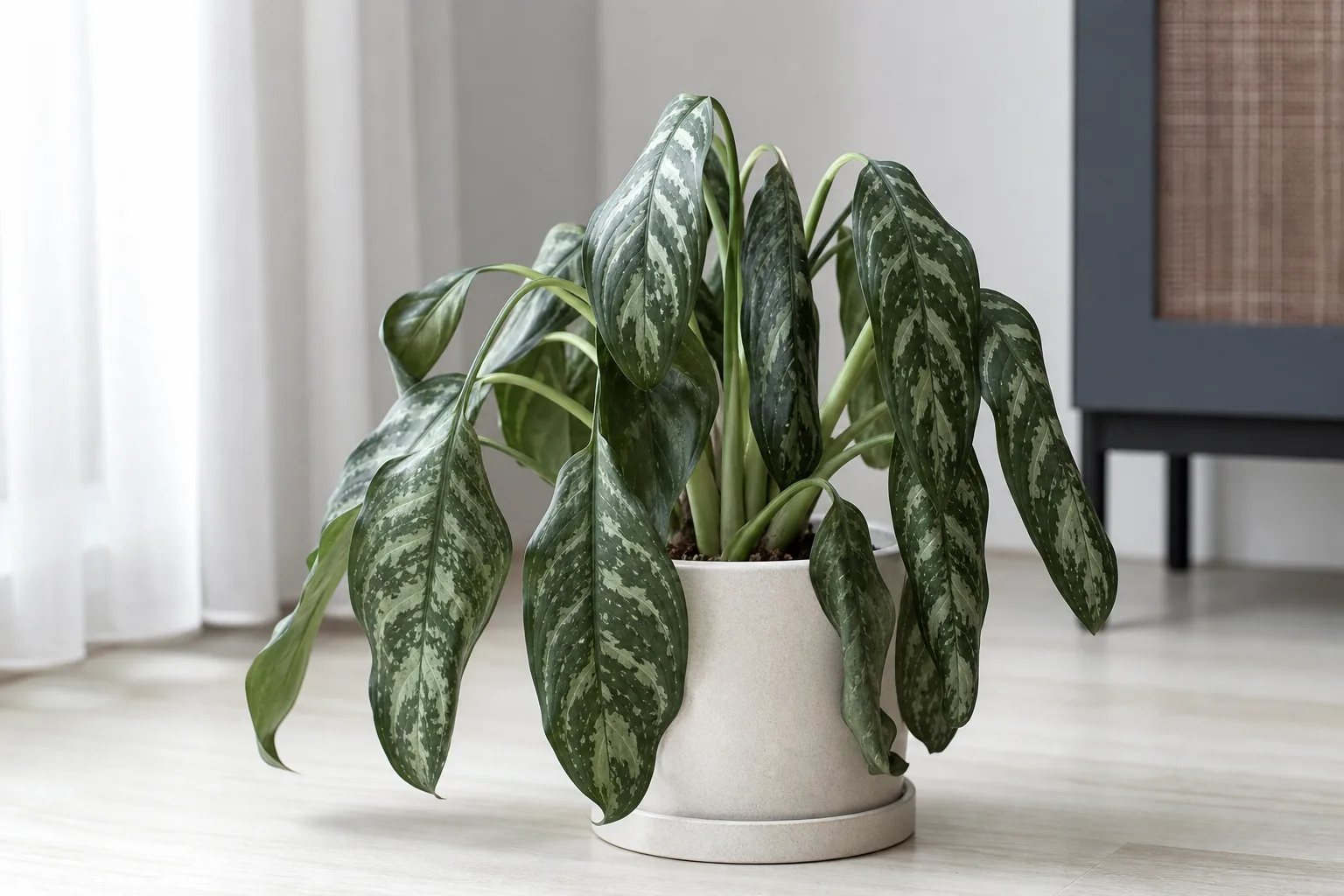
Drooping Leaves on Aglaonema Maria: Causes, Checks & Fixes
This guide covers drooping leaves on Aglaonema Maria. See also the general Drooping Leaves guide, watering, and light pages for this plant.
Drooping Leaves on Aglaonema Maria: Causes, Checks & Fixes
Quick answer
Drooping leaves on Aglaonema commutatum ‘Maria’ are a gradual root-zone signal-not sudden whole-plant collapse. Compact Chinese evergreens hang when petioles lose turgor because roots cannot supply water efficiently, whether the mix is too wet, too dry, chilled, or recently disturbed by Aglaonema Maria repotting guide.
Before you change anything, lift the pot and feel the upper mix. A heavy wet pot with limp lower leaves needs drying, not another drink. A light dry pot with slightly curled but firm foliage needs one thorough soak. A soft crown with sour-smelling mix means root rot-unpot today and follow the root rot guide, not a watering tweak.
If the entire plant went limp within one to two days, start with the wilting page instead-urgency and first actions differ.
Drooping vs. wilting vs. leggy stretch on Aglaonema Maria
These three patterns get confused because all involve hanging foliage. The pace and crown feel tell you which guide to follow.
| Pattern | What you see on Maria | Typical pace | Urgency | First action |
|---|---|---|---|---|
| Drooping (this page) | Lower leaves sag first; silver variegation may dull; crown usually firm | Days to weeks | Routine unless crown softens | Lift pot; match water to soil moisture |
| Wilting | Whole plant limp quickly; may yellow from bottom up on wet mix | Hours to 2 days | High on wet soil + soft crown | Stop water; check crown same day |
| Leggy stretch | Elongated petioles lean toward window; leaves stay firm, not mushy | Weeks to months | Low | Move to brighter indirect light |
Maria’s compact habit makes wet-soil droop easy to misread as thirst. Owners see limp silver-striped leaves and pour more water into an already heavy pot-the opposite fix. Drooping is also slower than wilting, which gives you time to confirm moisture before stacking repot, prune, or feed.
What drooping leaves look like on Aglaonema Maria
Maria carries upright lance-shaped leaves with dark green and silver variegation on short petioles. Healthy plants look stiff and layered. When they droop, petioles angle downward and the silhouette flattens. The pattern tells you which branch to follow.
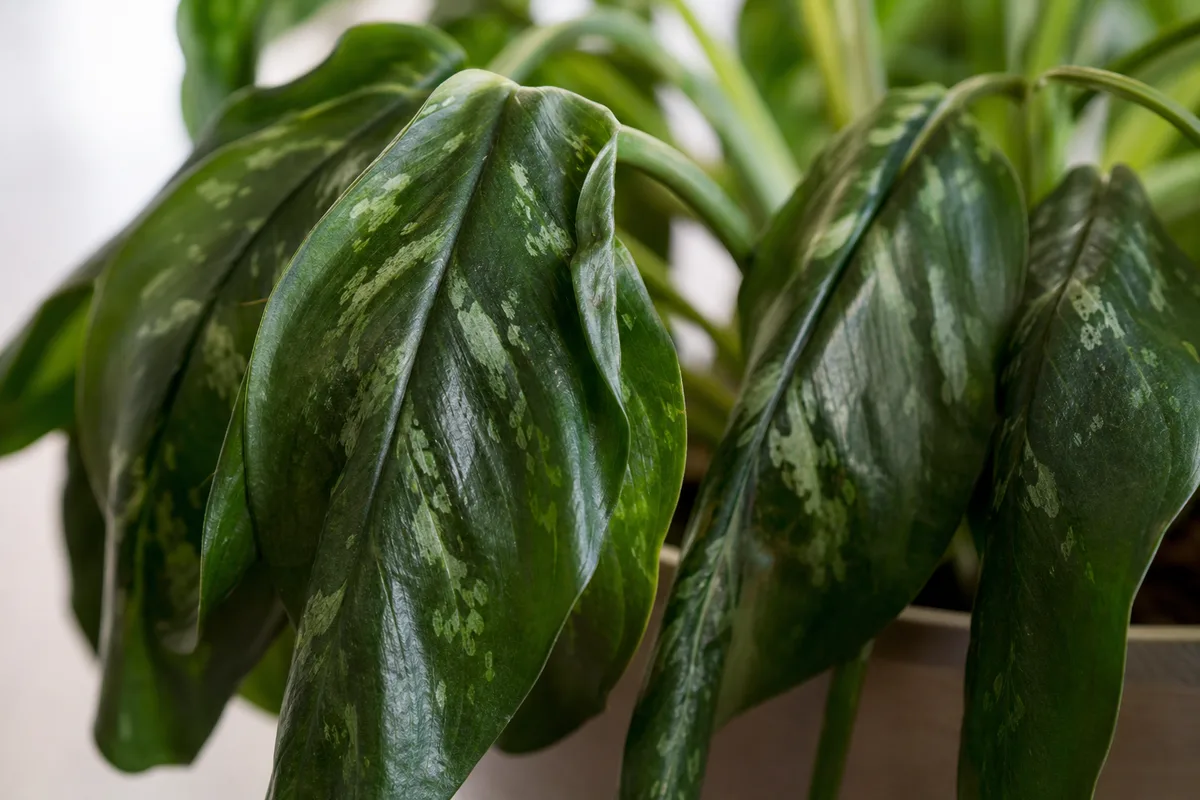
Drooping Leaves symptoms on Aglaonema Maria - compare with healthy tissue on the same plant.
Limp lower leaves on wet soil
The classic Maria pattern starts at the oldest leaves. Lower foliage yellows or fades while blades feel soft and limp-even though the surface mix is damp. The pot stays heavy and cool for days. Fungus gnats may hover near constantly wet soil. This is overwatering or early root stress, not thirst.
Curled but firm leaves on dry mix
When the upper half of the mix is dry and the pot feels light, leaves may curl slightly inward but the crown stays firm. Petioles sag before the whole plant collapses. Maria tolerates brief drought better than chronic sogginess, so this pattern often follows a missed watering in a warm bright room-not rot.
Whole-plant flop after cold draft or repot shock
A sudden flop after a night near a drafty window, AC vent, or fresh repotting looks dramatic but leaves often stay green. Maria is intolerant of cold and prefers daytime temperatures in the 70 to 80°F range. Chilled roots in wet mix fail fast. Repot shock shows similar limpness for several days while fine roots re-establish-without the sour smell of rot.
Pest-related droop (rare on Maria)
Spider mites, mealybugs, and scale can weaken Maria over time, but droop is usually secondary to stippling, webbing, or sticky residue. Check leaf undersides and stem joints before assuming a watering problem.
Why Aglaonema Maria gets drooping leaves
Maria is marketed as low-light and drought-tolerant-which is true for brief dry spells-but slow evaporation in dim rooms lets nursery peat stay saturated for weeks while roots lose function. Calendar watering in an office cubicle is the leading trigger: growth slows, uptake drops, and the same weekly drink that worked in summer leaves roots submerged through a cool shaded week.
Compact Maria vs. larger Chinese evergreens: Ribbon Aglaonema cultivars like Maria grow roughly two to three feet tall with short petioles and a tight crown. A floor-sized A. nitidum or pewter plant has more leaf mass and a larger root ball-wet-soil droop on those specimens can look like general limpness across many leaves at once. On desk-sized Maria, the same water mistake often shows as one or two yellow lower blades on an otherwise upright plant, which owners dismiss as normal aging until the crown softens. Smaller pots also dry faster in bright light but stay wet longer in shade, so Maria on a cubicle shelf misleads more often than a large specimen in a bright living room.
Maria-specific setup mistakes that cause droop:
- Dense retail peat in nursery pots that dries far slower at home than in a greenhouse
- Decorative cachepots hiding standing water after bottom-watering
- Self-watering pots keeping the reservoir topped in dim light while Maria’s slow growth cannot use the moisture
- Oversized pots where a small root ball sits in a large wet zone
- Dim light plus wet soil-the mix never dries between drinks
- Cold drafts below about 55°F combined with wet soil-chilled roots cannot move water efficiently
- Repotting into heavy wet mix or disturbing roots during active stress
Because Maria is compact and slow-growing, owners often misread limp wet-soil droop as thirst and water again-exactly when the plant needs the opposite.
Lookalike symptoms to rule out
- Normal old-leaf senescence - One lower yellow leaf on a firm plant with appropriate dry-down; remove the leaf, no emergency.
- Leggy stretch, not true droop - Pale elongated petioles reaching toward a window while lower leaves stay stiff; improve indirect light, not watering.
- Wilting (faster collapse) - Whole plant goes limp within days while soil stays wet; treat as higher urgency than gradual droop on this page.
- Overwatering / root rot - Wet heavy mix plus soft stem base plus mushy roots; unpot and trim decay if crown dents-dry-down alone is not enough once tissue is mushy.
- Underwatering - Light pot, dry mix throughout, firm crown; one soak after confirming dryness.
- Brown tips from dry air - Crispy margins with firm roots and appropriate moisture; humidity issue, not root failure.
- Cold damage - Darkened or limp leaves after exposure near drafty glass; warm up and keep drier until stable.
- Not enough light - Gradual soft petioles over weeks in a very dim cubicle with adequate moisture; brighten placement before increasing water.
How to confirm the cause
Work through these checks in order-each narrows the diagnosis before you stack fixes.
Seven-step confirmation checklist
- Pot weight - Heavy and cool days after watering supports overwatering. Light with limp foliage may mean drought.
- Moisture at depth - Insert a finger or wooden skewer into the upper several centimeters. Cold clinging mix means wait. Dry upper layer with a firm crown may mean underwatering.
- Leaf pattern - Yellowing starting on lower leaves with wet mix fits overwatering. Even yellowing with dry mix may mean underwatering or age.
- Crown firmness - Press gently at the soil line. Firm tissue with wet mix is overwatering you can fix with dry-down. Soft tissue means unpot immediately-you are past simple droop into rot.
- Smell - Sour odor at the drainage hole confirms rotting organic matter-not simple thirst.
- Recent events - Repotted this week? Moved to a cold window? Switched to a self-watering pot? Context often explains droop faster than guessing.
- Light and season - Dim office light and winter cool slow drying. Have you watered on schedule anyway?
Wet-soil vs. dry-soil decision table
| Signal | Wet-soil droop | Dry-soil droop |
|---|---|---|
| Pot weight | Heavy, cool | Light |
| Upper mix | Damp for days | Dry to knuckle depth |
| Leaf texture | Soft, limp | Slightly curled, firm crown |
| Lower leaves | Often yellowing | May look dull, not mushy |
| First action | Stop watering | Soak once, drain fully |
| Urgency | Routine dry-down; same-day unpot if crown softens or mix smells sour | Soak today; recheck crown firmness in 24 hours |
If wet soil and droop persist after one full dry cycle, gently slide the plant from its pot. Firm pale roots with wet mix confirm early overwatering. Brown mushy roots mean rot treatment-trim decay back to firm tissue, repot into airy mix, and hold fertilizer until new center growth appears.
First fix for Aglaonema Maria
Assess moisture before you water. This single step prevents the biggest mistake-adding water to an already wet, oxygen-starved root zone because droopy leaves look dehydrated.
- Wet pot, limp lower leaves: stop all watering until the upper half of the mix dries and the container feels noticeably lighter.
- Light dry pot, firm crown: water thoroughly once until excess runs from drainage holes, then drain saucers completely.
- Droop after cold exposure: move to stable warmth away from drafts; do not soak chilled roots in a saturated pot-let the upper mix dry first.
- Droop after repotting: hold fertilizer, keep Aglaonema Maria light guide, and wait-avoid repotting again for several weeks.
Do not fertilize, mist heavily, or repot on day one unless inspection shows mushy roots or blocked drainage.
Step-by-step recovery by cause
For overwatering and wet-soil droop
- Remove the nursery pot from any cachepot and empty saucers.
- Stop watering until the upper half dries-lift the pot daily to track weight.
- Move to the brightest indirect spot Maria tolerates; never direct hot sun on stressed foliage.
- When dry, water thoroughly once, then resume waiting for the upper half to dry again.
- Remove yellow lower leaves once the crown stabilizes-they will not re-green.
- If decline continues after one full dry cycle, unpot and inspect roots. Trim decay only if you find rot.
Full wet-soil protocol with fungus gnat notes is on the overwatering page.
For underwatering and dry-soil droop
- Confirm the upper half is genuinely dry and the pot is light.
- Water thoroughly with room-temperature water until excess drains; empty saucers within thirty minutes.
- Check again in several hours-petioles often begin stiffening the same day.
- Resume your dry-down rhythm; in dim offices that may mean two to three weeks between drinks in winter.
See the underwatering page if dry cycles repeat despite soaking.
For cold draft or repot shock
- Move away from AC vents, drafty windows, and doors below about 55°F.
- Keep the mix slightly drier than usual until leaves firm-chilled wet roots fail fast.
- For repot shock, avoid disturbing roots again; one stable spot and consistent moisture without saturation is enough for most Maria specimens.
For advancing root rot
If the stem base dents under light pressure or roots are brown and slimy, stop water, trim decay back to firm tissue, and repot into airy well-draining mix-see root rot on Aglaonema Maria. Dry-down alone is no longer enough.
Recovery timeline
Stabilization often takes one to two weeks once moisture matches the actual cause-the crown should remain firm and new yellowing should slow.
New leaves unfurling from the center are the best sign of success; expect them in three to eight weeks during warm active growth, sometimes longer after winter recovery. Old drooped leaves rarely stand fully upright again; remove spent lower blades once the plant is stable.
Worsening signs: crown softens after corrective watering, stems blacken upward from the base, sour smell intensifies, or fungus gnats persist with constantly damp surface mix-escalate to root inspection immediately.
What not to do
Do not water more because leaves look wilted while soil is already wet-that converts recoverable droop into rot within days. Avoid stacking repotting, pruning, fertilizer, and pesticide on the same stressed plant. Do not feed hoping to perk up limp foliage.
Skip repotting into a much larger pot to “help drying”-extra wet soil volume slows evaporation in low light. Do not leave the plant in a full saucer after watering. Do not mist heavily as a substitute for fixing soil moisture.
When handling wet mix or trimming damaged leaves, wear gloves and wash hands after-Aglaonema Maria is toxic to cats and dogs and sap can irritate skin. Contact your veterinarian or ASPCA Poison Control if a pet chews leaves or shows mouth irritation.
How to prevent drooping leaves on Aglaonema Maria
Match watering to how fast your pot dries in your light-not a fixed calendar. Allow the top 1 to 2 inches of mix to dry before the next drink in a typical home pot; Maria in a dim office may need two to three weeks between waterings in winter.
Pot material matters: Water evaporates faster from porous clay pots than from glazed or plastic containers-Maria in a plastic nursery pot above a furnace vent may need water sooner in winter, while the same plant in dense peat inside a cachepot in a shaded cubicle may stay wet for weeks. Lift the pot weekly rather than trusting a calendar.
Use well-draining soilless mix amended with perlite or orchid bark, pots with open drainage, and empty saucers within thirty minutes of watering. Avoid upsizing pots “for growth” in low light-a slightly root-bound Maria in a right-sized pot dries more predictably.
Move plants away from cold drafts below about 55°F and reduce water in cool months when growth slows. Lift the pot weekly during your first month with a new Maria-early heaviness is easier to fix than a collapsed crown.
When to worry
Escalate immediately if the stem base feels soft, the mix smells strongly sour, or a quick root check shows brown mushy tissue. Those signs mean droop has progressed toward rot-not a fixable dry spell.
If the crown stays firm, roots are pale when you inspect, and yellowing slows after one proper moisture correction, you are on track. Slow cosmetic droop on one old leaf with a firm crown can wait for a watering tweak.
When to dry-down, soak, or unpot
Use this escalation path once you have lifted the pot and checked crown firmness:
| Your reading | Do this first | Escalate if |
|---|---|---|
| Heavy wet pot, firm crown, limp lower leaves | Dry-down - stop water until upper half of mix dries | Crown softens, sour smell, or no improvement after one full dry cycle → unpot today |
| Light dry pot, firm crown, curled leaves | Soak once - thorough drink, drain saucer | Still limp after 24–48 hours with firm crown → check roots for hidden rot |
| Soft crown on wet mix | Unpot same day - inspect, trim mushy roots, repot airy | See root rot if more than half of roots are decayed |
| Whole plant collapsed in 1–2 days on wet soil | Stop water; check crown today | Follow wilting protocol-not gradual droop dry-down alone |
| Elongated stems, firm leaves, lean toward window | Brighten indirect light | Do not increase water; see leggy growth |
Related Maria problems
- Overwatering - primary overlap when soil is wet and leaves are limp
- Underwatering - dry mix, light pot, curled firm leaves
- Root rot - soft crown, sour smell, mushy roots
- Wilting - faster whole-plant collapse
- Maria overview - full care hub
FAQs
Is my Aglaonema Maria drooping from too much or too little water?
Lift the pot. A heavy cool pot with damp upper mix and limp lower leaves points to overwatering-do not add water. A light pot with dry mix and slightly curled but firm leaves points to underwatering-water thoroughly once, then wait for the upper half to dry again. The crown should stay firm in both recoverable cases.
What should I check first when Aglaonema Maria leaves droop?
Check pot weight, moisture in the upper several centimeters of mix, and crown firmness before changing light or repotting. Maria droops from both wet and dry soil, and watering an already wet pot is the most common mistake in dim offices.
Will drooping Aglaonema Maria leaves stand back up?
Leaves that drooped from underwatering often firm within a day or two after one thorough soak and proper drainage. Leaves damaged by chronic wet soil or advancing root rot rarely re-stiffen-judge recovery by new speckled leaves unfurling from the center, not by old yellow blades greening up.
Is Maria droop the same as wilting?
No. Drooping is gradual lower-leaf sag over days or weeks while the crown usually stays firm-this page covers that pattern. Wilting is faster whole-plant collapse, often within one to two days on wet soil, and needs same-day crown checks. Leggy stretch is slow stem elongation with firm leaves reaching toward light-not a watering crisis.
Should I repot a drooping Aglaonema Maria?
Do not repot on day one unless you find mushy roots, blocked drainage holes, or standing water in a cachepot. Most Maria droop from Aglaonema Maria watering guide in low light and improves after one dry-down cycle or one thorough soak-repotting a stressed plant into fresh wet mix often slows recovery.
When to use this page vs other Aglaonema Maria guides
- Aglaonema Maria watering guide - Use for routine moisture checks before assuming drooping leaves is the main issue.
- Aglaonema Maria problems hub - Browse all 16 common issues on this species.
- Underwatering on Aglaonema Maria - Different entry point when symptoms overlap with drooping leaves.
- Overwatering on Aglaonema Maria - Different entry point when symptoms overlap with drooping leaves.
- Root Rot on Aglaonema Maria - Different entry point when symptoms overlap with drooping leaves.