How to Grow and Care for Common Myrtle in Any Setting
Grow common myrtle with the right sun, well-drained soil, careful watering, and timely pruning. Learn when to use a pot and how to protect it from cold.
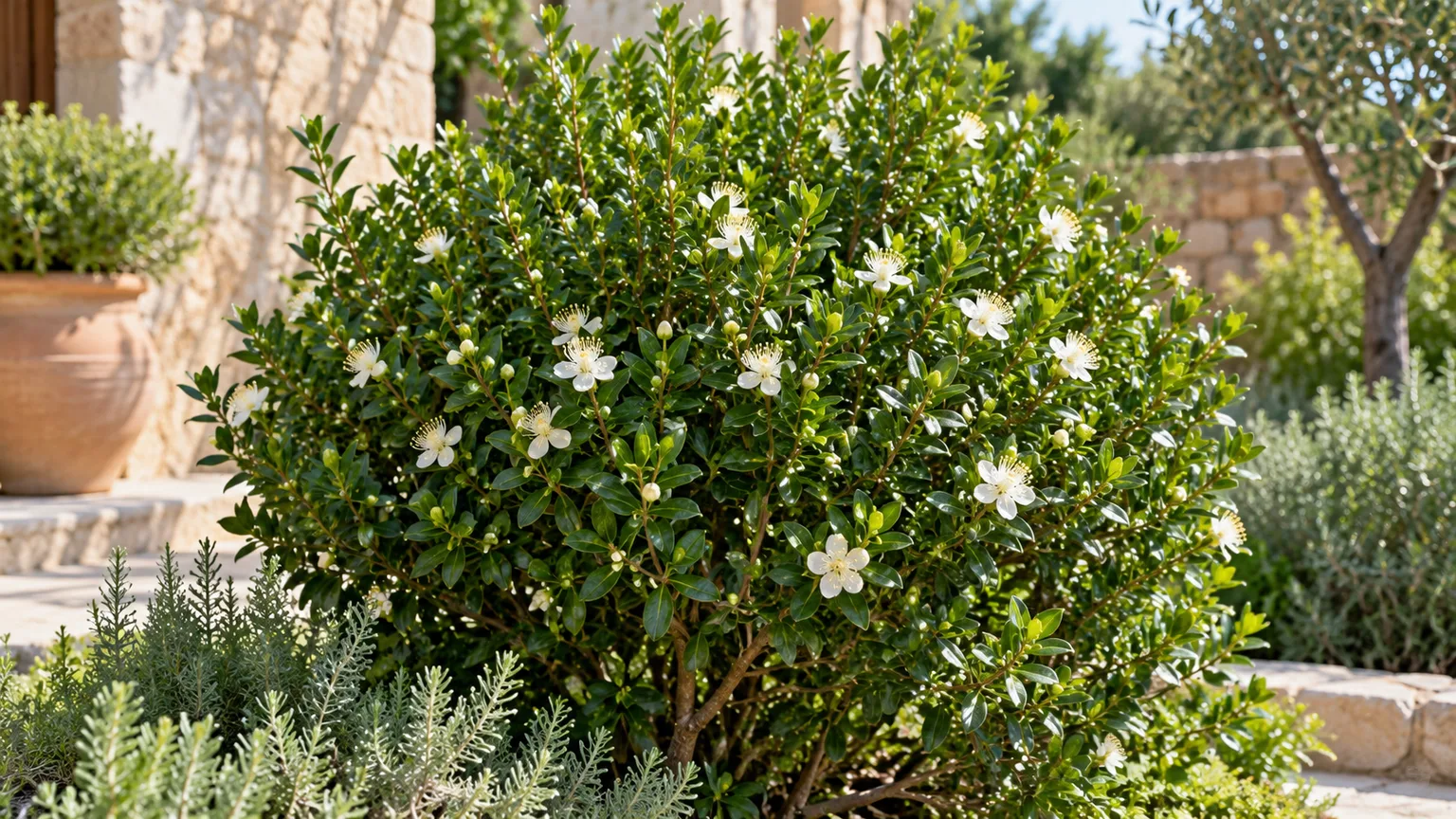
Common myrtle is an evergreen Mediterranean shrub with small, glossy leaves, fragrant white flowers, and berries that follow the blooms. Its botanical name, Myrtus communis, matters: “myrtle” is also used for unrelated plants, including crape myrtle, so check the nursery label before buying or following plant-safety advice. Common myrtle can be grown as a clipped hedge, a patio shrub, a small tree, or a bonsai, but it is not a carefree indoor houseplant in a dim room.
The reliable formula is bright sun, shelter from cold drying wind, and soil that drains freely. Water more often while a new plant is establishing and when a container dries quickly; once the shrub has a settled root system, it tolerates short dry spells. The details that decide whether it flowers and stays healthy are often less obvious: whether a cold climate calls for a movable pot, whether to prune before or after flowering, and whether drooping leaves mean dry soil or waterlogged roots.
Common Myrtle Care at a Glance
| Need | Practical rule | Why it matters |
|---|---|---|
| Light | Full sun is the best starting point; give light afternoon shade in very hot sites | Strong light supports dense growth and flowering, while shelter reduces stress |
| Soil | Use fertile or ordinary garden soil only if it drains well | Persistently wet roots are more dangerous than a less-than-perfect soil texture |
| Water | Keep new roots evenly moist; let established plants dry slightly between deep waterings | Drought tolerance develops with age and is weaker in pots |
| Winter | Plant outdoors only where local winters suit the cultivar and site; shelter containers before hard freezes | Wind, cold snaps, and frozen potting mix can injure evergreen foliage and roots |
| Pruning | Shape lightly after flowering if you want flowers or berries | Trimming before bloom removes developing flower-bearing tips |
| Feeding | Avoid heavy or automatic feeding; correct light, water, and root problems first | Extra fertilizer cannot fix poor drainage or insufficient light |
This is a Mediterranean shrub, not a plant that wants constant wet soil or a heated, low-light windowsill. The NC State Extension profile describes it as an evergreen shrub or small tree, usually around 5–6 feet but capable of growing larger over time; the Missouri Botanical Garden Plant Finder notes that established plants tolerate some drought and stresses sharp drainage. Treat those traits as a guide to the plant’s habits, not a reason to leave a new planting dry.
Confirm the Plant Before You Buy
Look for the botanical name Myrtus communis. The plant has opposite, small, leathery leaves that smell aromatic when crushed; its white flowers have a conspicuous cluster of stamens, and mature flowers can be followed by bluish-black berries. A typical garden plant grows as a dense, rounded shrub, though pruning can train it into a hedge, small tree, or formal shape. The Royal Horticultural Society’s myrtle profile describes the glossy evergreen foliage and white summer flowers, while NC State notes the species’ native range across southern Europe, northern Africa, and southwestern Asia.
Do not use “myrtle” alone to identify care, edibility, or pet-safety information. Crape myrtle is Lagerstroemia, a different deciduous flowering tree; creeping myrtle is commonly used for Vinca species. A page or plant tag that gives only a common name can refer to a different plant entirely, so check the Latin name before buying and before using a toxicity database or culinary advice.
Myrtle is a slow-to-moderate grower, and mature-size descriptions vary with cultivar, climate, and pruning. NC State gives a common range of about 5–6 feet tall and wide but also notes that plants can eventually exceed that; the RHS lists the species as reaching roughly 3 meters, with maturity taking 10–20 years. Decide whether you want a compact, clipped plant or a long-lived structural shrub, then choose the cultivar and planting position accordingly.
Choose a Bright, Sheltered Growing Site
A warm, sunny position with shelter is the best starting point. Common myrtle suits a courtyard, sunny border, wall-side bed, or container on a protected patio. A cold, exposed site can make an otherwise suitable zone feel harsher because winter wind dries evergreen leaves while the roots are cold or frozen. The RHS species profile recommends full sun and shelter from cold, drying winds; Gardenia’s common myrtle profile likewise recommends a sheltered location and notes that a long, hot summer helps flowering and fruiting.
Sunlight and Flowering
Give common myrtle as much direct sun as your climate allows. Full sun helps it make compact leafy growth and flower reliably, while a little afternoon shade can protect a container from intense reflected heat in a very hot, dry courtyard. A plant that survives in shade may still grow loosely and produce fewer flowers, so do not choose a dark corner just because the shrub is evergreen.
Watch the plant’s actual response before changing its position. Long gaps between leaves and a bare center suggest that the plant is stretching for light; sparse flowering can also come from a shaded site, hard pruning before bloom, or a short cool growing season. Move a potted plant gradually into stronger sun so leaves can acclimate, and avoid shifting it directly from a dim interior to harsh midday exposure.
Cold Tolerance and Winter Protection
Hardiness references do not give one universal cutoff. NC State lists common myrtle for USDA Zones 8a–9b, while the Missouri Botanical Garden gives Zones 8–10 and the RHS uses the UK hardiness rating H4. Those labels reflect different regional systems and may not describe every cultivar or exposed garden; a sheltered wall, drainage, plant age, and the severity of a particular winter all affect survival.
If your winters routinely bring hard freezes beyond the plant’s local hardiness, grow myrtle in a container that can be moved to a bright, cool, frost-free place. In a mild climate, leave it outdoors in a sheltered position and protect young growth from a late frost. Avoid a warm, dark room: an evergreen shrub still needs light, and warmth combined with low light can lead to weak growth and indoor pests. Water less often while growth slows, but do not let a pot dry into a hard root ball.
Plant Myrtle in Soil That Drains Well
Myrtle is not fussy about whether the soil is sandy, loamy, or somewhat clay-based if excess water can escape. A dense, wet planting hole is a greater risk than a soil that is not especially rich. The Missouri Botanical Garden recommends moderately fertile, medium-moisture soil with sharp drainage, and the RHS describes myrtle as growing in moist but well-drained soil. If your site stays waterlogged after rain, choose a raised bed, a slight mound, or a container rather than trying to fix a persistently wet pocket with a small amount of grit.
Planting in the Ground
Plant when the soil is workable and the shrub has time to settle before extreme heat or severe cold. Dig a hole about as deep as the root ball and wider than it, loosen circling roots gently, and set the top of the root ball level with the surrounding soil. Backfill with the native soil unless it is unusually compacted or waterlogged; planting into a small pocket of amended compost can create a moisture boundary that keeps roots from spreading into the surrounding ground.
Water thoroughly after planting to settle soil around the roots. During the first growing season, check the root zone during dry weather and water deeply when it begins to dry rather than relying on rainfall at the surface. A thin mulch layer helps limit evaporation, but keep it away from the woody stems so the crown does not stay damp. Once established, the shrub can manage brief dry periods better than a new planting, but a long hot spell can still stress it.
Growing Myrtle in a Container
A pot is useful when you need to move the shrub for winter protection or want to keep a larger species in a courtyard. Choose a sturdy container with open drainage holes and enough room for several years of root growth; a pot that is too small heats and dries quickly, while an oversized pot can hold wet compost around a young root system for too long. Use a free-draining container mix with added grit or perlite rather than heavy garden soil.
Set the root ball at the same depth it was growing before, water until excess drains through, and empty any saucer after the pot has finished draining. Keep the container in a bright, sheltered spot, then check moisture more often during hot or windy weather because roots in pots dry faster than roots in a border. Repot when roots have filled the container or water runs straight through without wetting the mix; move up only one pot size so the new compost does not remain wet for weeks.
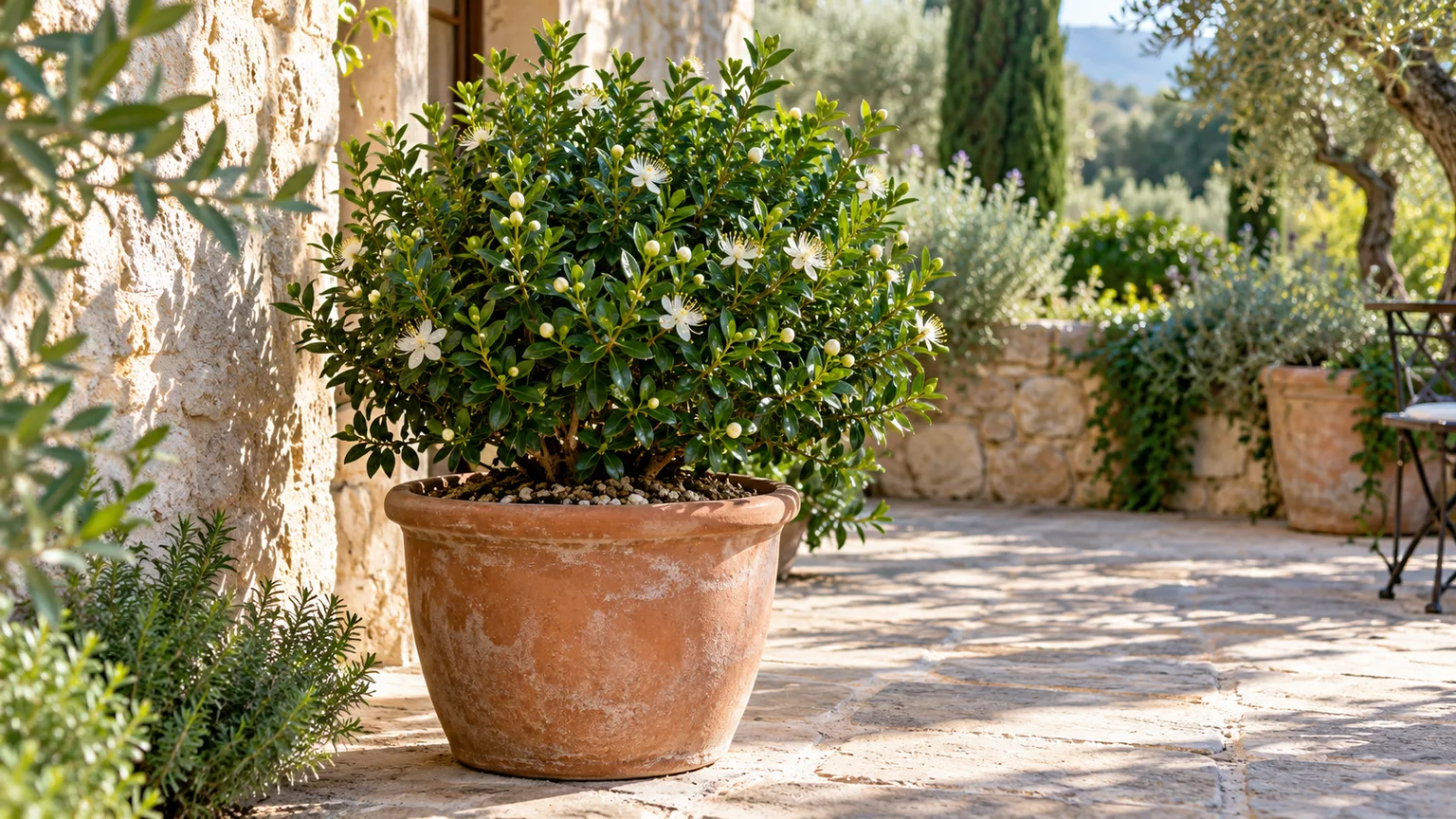
A container solves a climate problem only if it can actually be moved before cold weather and has a suitable winter location. If the shrub is too large to move, use a smaller cultivar or plant it in a protected in-ground site that matches your winter climate.
Water According to Establishment and Weather
Use the soil as your watering gauge. During the first season after planting, check below the surface near the root ball and water deeply when that area begins to dry; frequent shallow sprinkles wet the surface without encouraging roots to explore outward. In a border, established myrtle is reasonably drought tolerant, but that means it can endure short dry periods, not that it never needs water.
Containers need a separate routine. Test the mix with a finger or wooden stick, and water when the upper portion is drying while the lower root zone is not still saturated. In summer, check more often after wind, heat, or several sunny days; in winter, check less often because the plant is using less water and a cold, wet pot is especially slow to dry. Do not leave the root ball standing in water.
Drooping is not a diagnosis by itself. If the soil is dry and the pot feels light, water slowly until the root ball is moistened and excess drains away. If the soil is wet, sour-smelling, or persistently heavy, stop watering and check drainage and roots instead; adding more water to a plant with damaged roots can make the decline worse. This distinction is more useful than a fixed schedule such as “once a week,” which ignores pot size, weather, and soil texture.
Feed Lightly and Only When Growth Calls for It
Start with healthy roots and good light, not a fertilizer calendar. Myrtle is a low-maintenance shrub, and the plant references emphasize siting and drainage more than repeated feeding. A newly planted shrub in decent soil usually does not need an immediate dose of fertilizer; too much nitrogen can produce soft leafy shoots that are more vulnerable to cold and can reduce the compact habit gardeners want.
For a potted plant, replace some of the depleted mix when you repot and follow the label for a balanced container fertilizer during active growth only if the plant needs it. If leaves are pale or growth has stalled, first check whether the plant is shaded, waterlogged, dry, or rootbound. Feed only after those causes are ruled out, and stop feeding as the plant enters its slower winter period.
Prune After Flowering to Balance Shape and Fruit
If flowers and berries matter to you, wait until the main flowering flush has finished before shaping. Common myrtle flowers on current-season growth, so pruning before the bloom period can remove the shoots that would have carried flowers. Flowering time varies by climate: some references describe spring to early summer, while the RHS profile places flowers in mid- to late summer or autumn. Follow your own plant’s bloom rather than a calendar date, then prune lightly once the flowers fade.
Start by removing dead, damaged, crossing, or misplaced branches. Make cuts back to a side shoot or branch junction instead of leaving a row of blunt stubs, and step back between cuts so the shrub keeps a natural rounded outline. A hard haircut can make a clipped plant look tidy quickly, but it removes flowers and fruit and may leave a dense outer shell with a shaded center.
Shaping a Hedge, Topiary, or Small Tree
For a hedge, trim lightly and often enough to keep the outline, but schedule the main trim after flowering if you want blooms. For a specimen shrub or small tree, use selective cuts to reveal the branching structure and preserve the flowering tips. If you are training a young plant as a topiary or bonsai, begin with a clear shape and remove only a few competing shoots at a time; repeated severe cutting makes recovery slower and reduces bloom.
Do not shear a neglected shrub hard into bare, leafless wood unless you know it will break bud from old stems. Myrtle is evergreen, and a gradual renovation over more than one season is a safer way to reduce an overgrown plant while keeping enough leafy growth to support recovery. Clean pruning tools between plants when you remove diseased material.
Enjoy the Flowers, Fragrance, and Berries Carefully
Common myrtle earns its place even when it is not in bloom: its dense evergreen foliage gives a border or courtyard year-round structure, and the leaves release fragrance when bruised. The white flowers are small but showy at close range, with many fine stamens; after pollination, they may develop into dark purplish berries. Flower and berry timing depends on climate and cultivar, so a plant that is still building size may not fruit heavily in its first years.
The fruits are described as edible by NC State and the Missouri Botanical Garden, though the Missouri Botanical Garden says they are only moderately tasty. Leaves, flowers, and dried fruit have culinary uses as flavorings, but do not treat a common name as proof of identity or assume that a concentrated essential oil is safe to ingest. If you plan to cook with a plant, confirm that it is Myrtus communis and that it has not been treated with a product unsuitable for food plants.
Grow Myrtle Indoors or as Bonsai With a Seasonal Plan
Common myrtle can be shaped as bonsai, but it needs much brighter conditions than a typical low-light houseplant. Use the sunniest suitable window or a strong grow light, provide airflow, and avoid keeping it in a hot room far from natural light. A cool, bright winter rest is easier on the plant than forcing steady growth through short, dim days.
If your climate allows, a container plant can spend the warm months outside in a bright sheltered location and return indoors before hard frost. Acclimate it gradually when moving between indoors and outdoors, and inspect leaf undersides and stems before bringing it inside. Scale, mealybugs, and whiteflies are more likely to become a nuisance when the plant is warm, crowded, or light-starved; isolation and early inspection are simpler than trying to manage a large infestation later.
Bonsai care also means accepting a small root volume. Keep the mix free-draining, check it more often than garden soil, and repot when roots crowd the container rather than on a rigid annual calendar. Root pruning and wiring require bonsai-specific technique, so make conservative changes if you are learning; the plant’s small leaves make it suitable for shaping, but do not remove so much foliage that the remaining roots cannot support recovery.
Propagate Common Myrtle From Semi-Ripe Cuttings
Late summer is a practical time to take semi-ripe cuttings: the base of this season’s growth has begun to firm while the tip is still flexible. The RHS semi-ripe cutting guide recommends late summer to early autumn and explains the technique for evergreen shrubs; its Myrtus communis profile specifically lists seed or semi-ripe cuttings as propagation methods. Rooting is not guaranteed, so take several healthy cuttings rather than relying on one.
- Choose a healthy, non-flowering shoot with a firm base and soft tip. Take it in the morning with clean, sharp pruners.
- Prepare a 4–6-inch cutting by cutting just below a leaf node. Remove the leaves from the lower part of the stem and keep a few leaves near the tip.
- Insert the base into a small pot of free-draining propagation mix. The RHS gives a general starting mix of half peat-free potting compost and half sharp sand for semi-ripe cuttings.
- Water the mix, let it drain, and cover the pot with a clear ventilated cover or place it in a propagator. Keep it bright but out of direct sun, and keep the mix damp rather than saturated.
- Check regularly for mold or rotting leaves, remove anything diseased, and ventilate the cover so stagnant moisture does not build up. Once roots have formed and new growth is steady, pot the cutting on and harden it off gradually before moving it outdoors.
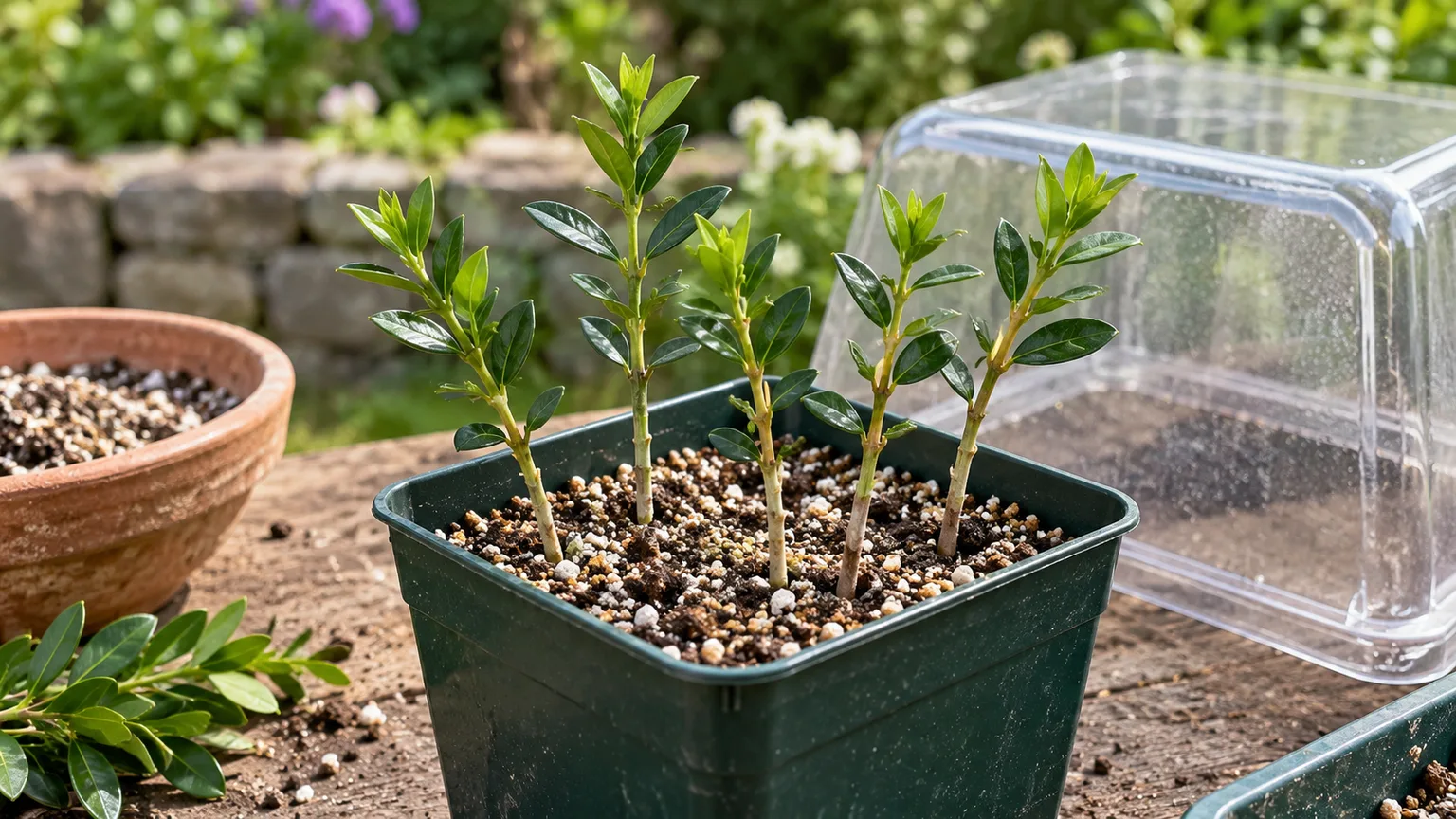
Do not pull on the cutting every few days to check for roots; that can break new root hairs. Look for fresh growth and gentle resistance, then confirm roots when you pot it on. Seed is another option, but it takes longer and seedlings may not match a named cultivar exactly.
Troubleshoot Root, Leaf, and Pest Problems
Yellowing or wilting with wet soil points first to a drainage or root problem, not thirst. Check whether water drains from the pot, whether the planting site stays wet after rain, and whether roots are firm or dark and soft. Improve drainage or move the plant to a better site before adding feed; fertilizer cannot reverse root damage caused by saturated soil.
Dry, curled, or dropping leaves can follow a dry spell, hot reflected heat, a recent move, or cold wind. Check the root ball rather than the soil surface, then restore steady conditions instead of swinging between drought and soaking. Late frost can damage new spring growth even where an established shrub survives the winter, so protect a young plant during a sudden cold snap.
Sticky leaves, fine webbing, or pale stippling can indicate sap-feeding pests. NC State lists scale, spider mites, and thrips among outdoor pests, and notes that scale, mealybugs, or whiteflies can appear indoors when conditions are warm and low in light or moisture. Inspect stems, leaf joints, and leaf undersides; isolate a container plant with pests, rinse or wipe off small populations, and use only a treatment whose label names the plant and pest.
Sooty mold can grow on sticky honeydew left by sap-feeding insects, so cleaning the black surface alone will not solve the cause. Find the insect first, improve airflow and light where possible, and recheck new growth after treatment. If the plant keeps declining despite a moisture correction, inspect the roots and look for pests before changing fertilizer or pruning more aggressively.
Choose a Cultivar That Fits Your Space
Choose a named selection for the feature you need, not just the word “dwarf.” NC State lists ‘Tarentina’ as compact and bushy, ‘Tarentina Variegata’ for pale yellow and green foliage, ‘Compacta’ as a dwarf form, ‘Nana’ for small leaves, and ‘Leucocarpa’ for white berries. Selection names and sizes can vary by nursery stock, so check the mature dimensions on the supplier’s label before planting near a path or wall.
For a small patio, a compact cultivar in a movable pot keeps size and winter protection manageable. For a low hedge or clipped form, prioritize dense branching and a plant that is already well-rooted rather than expecting a tiny specimen to fill a long border quickly. If your main goal is berries, leave some flowering tips untrimmed after bloom; a tightly sheared plant may look formal but will usually produce less fruit.
Conclusion
Common myrtle grows best when you treat it as a sun-loving Mediterranean shrub with evergreen roots that dislike standing water and cold exposure. Start with a correctly labeled Myrtus communis, choose a bright sheltered site, and use a container if you need to move the plant through winter. Water to the soil’s condition, not a fixed weekly schedule, and prune after flowering when you want both flowers and berries.
The same habits make myrtle useful as a border shrub, hedge, patio plant, or bonsai, but each form comes with a trade-off: a pot dries faster, close shearing reduces bloom, and indoor culture needs strong light and ventilation. Get those basics right first; then use a compact cultivar, selective pruning, or semi-ripe cuttings to shape the plant to your space.