How to Grow Heirloom Tomatoes for Bigger Fruit
Learn how to grow heirloom tomatoes with cultivar choices, seed-starting timing, support, watering, container advice, and fixes for common fruit problems.
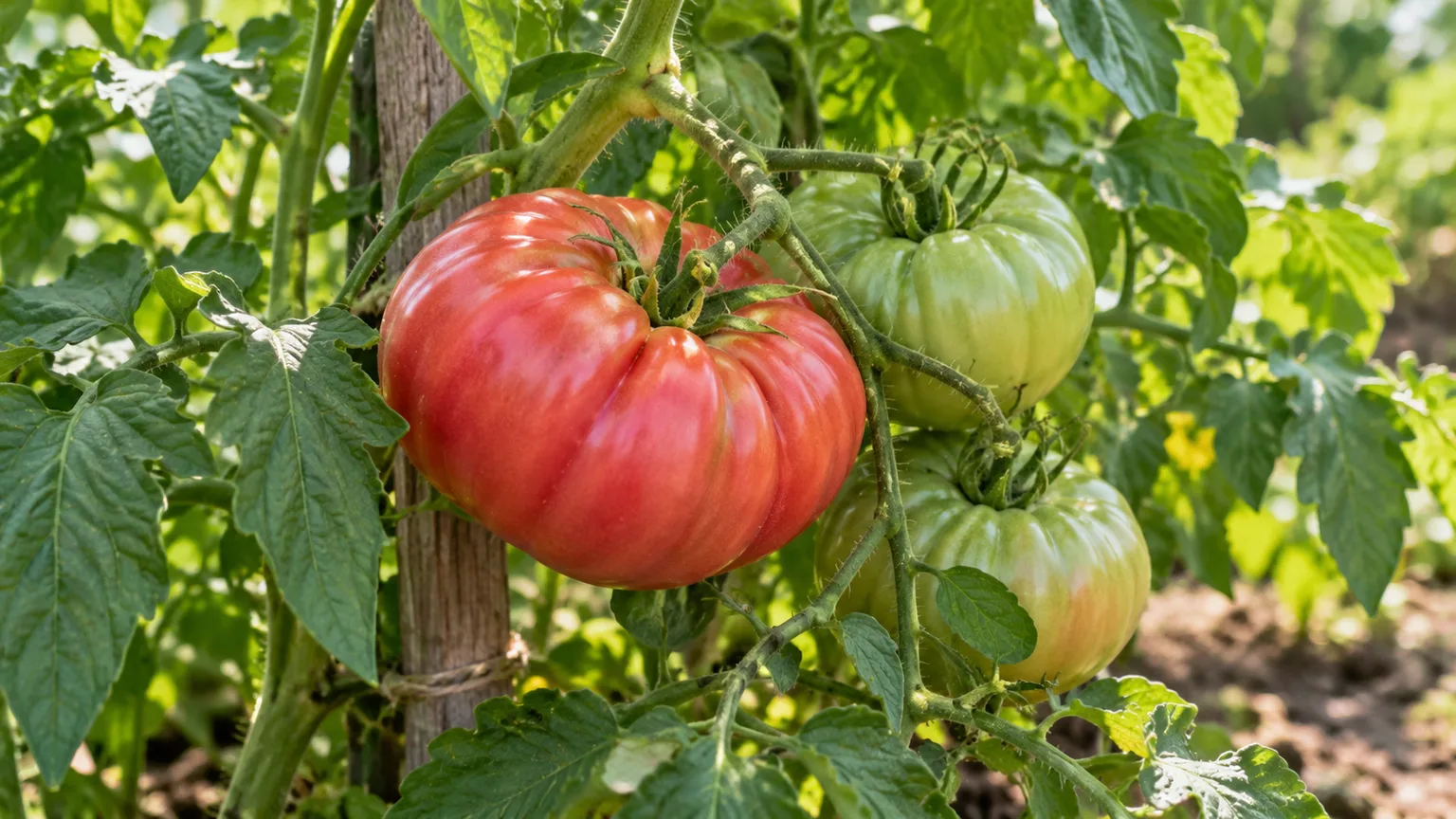
If you want a tomato that fills a sandwich, start by choosing a large-fruited variety. Care can help that plant reach its potential, but no watering trick or fertilizer turns a cherry tomato into a beefsteak. For fuller, well-developed heirloom fruit, match the variety to your climate, give the roots a warm and spacious home, keep moisture steady, and support the vine before heavy clusters bend it.
“Heirloom” describes a history and a way seeds are maintained more than a predictable size or shape. Some heirlooms are small, some are enormous, and even fruit on one plant can vary. Your best first-season goal is not to chase a record-size tomato; it is to harvest healthy fruit that resembles the variety you chose and tastes good in your climate.
Define “plumper” and choose a variety with the right genetics
Tomato size is strongly influenced by cultivar. Look for seed packets or plant labels that describe the variety as a large slicer or beefsteak, then check its listed days to maturity and growth habit. A big-fruited cultivar may need a longer warm season than a compact early variety. If your frost-free season is short, a late, vigorous heirloom can make lush vines but still leave many green fruits when autumn arrives.
“Beefsteak” usually describes a large, fleshy type, not one single cultivar. Pink Brandywine, Cherokee Purple, Black Krim, Aunt Ruby’s German Green, and Mortgage Lifter are examples gardeners may encounter as large-fruited heirlooms. Their color, flavor, maturity, and reliability differ, and seed companies may sell multiple strains under similar names. Treat catalog descriptions as a guide, not a guarantee: growing conditions and the seed source can change results. The Royal Horticultural Society’s tomato guide also separates plants by growth habit and fruit type, while gardening writer Jessica Walliser describes choosing heirlooms by texture, flavor, and intended use in Savvy Gardening’s variety notes.
Match fruit size and maturity to your season
A short-season gardener can still grow a large tomato, but should choose an earlier large-fruited cultivar and transplant a healthy start as soon as outdoor conditions are safe. In a long, warm season, you have more room to experiment with later varieties. If this is your first year, plant one reliable early tomato alongside one heirloom you are excited to taste; the comparison teaches you more than betting the whole bed on a single slow variety.
Read “days to maturity” as an estimate, not a harvest appointment. Catalogs may count from transplanting or sowing, and temperatures can speed or slow development. Note the seed company, variety name, transplant date, first ripe fruit, and any problems. That small record helps you decide next year whether the limiting factor was the cultivar, your planting window, or care.
Start seeds at the right time
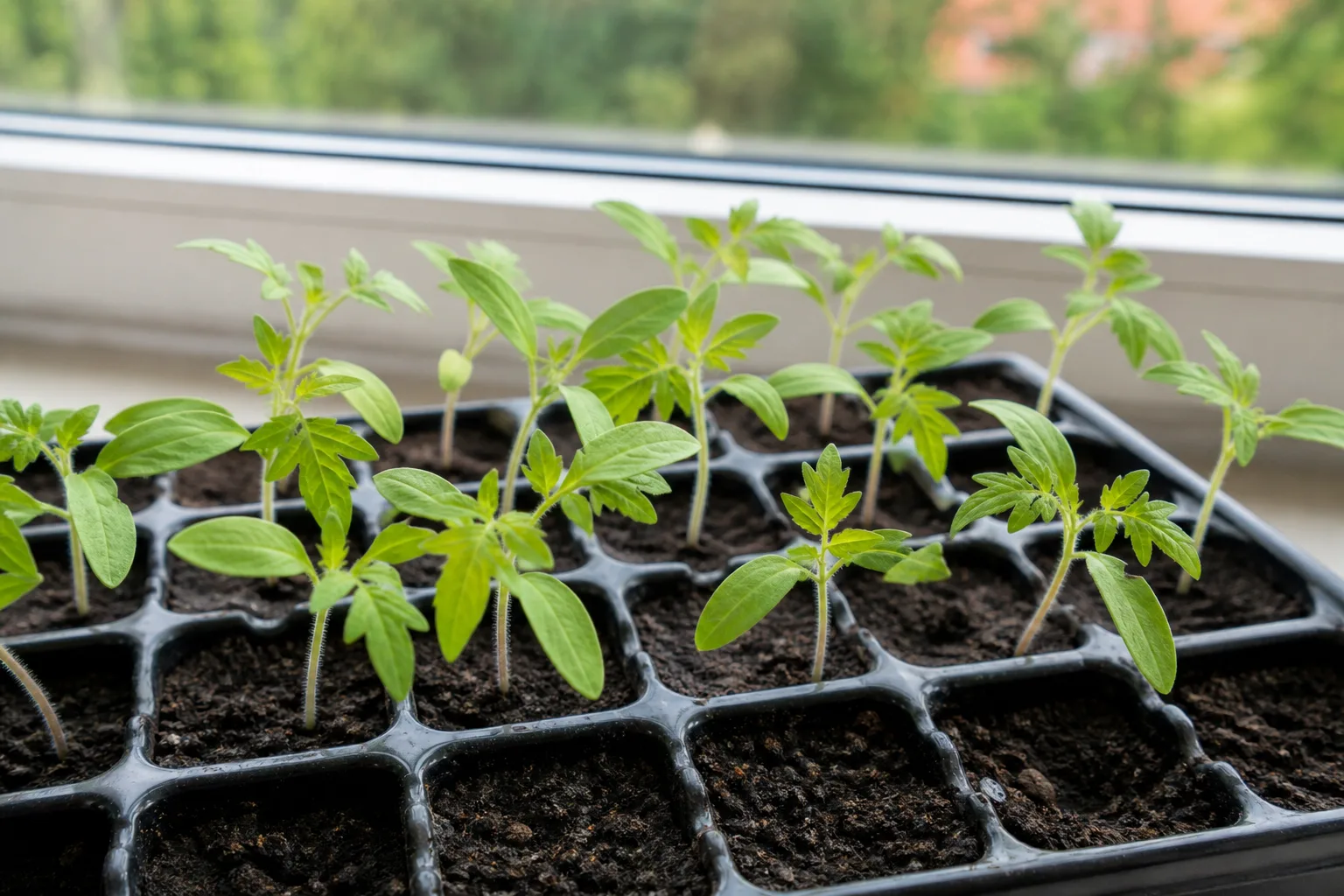
Starting your own seeds gives you a wider choice of heirlooms than most garden centers carry. Sow indoors in sterile seed-starting mix about six to eight weeks before your expected outdoor planting window, adjusting the timing to your region and light setup. Penn State Extension advises choosing short, stocky transplants and hardening them gradually; the Penn State tomato growing guide also notes that tomatoes need at least six hours of direct sun and warm conditions for steady growth.
Use a clean tray with drainage and moisten the mix before sowing. Plant seeds at the depth on the packet, keep the medium warm and evenly damp, and move seedlings into bright light as soon as they emerge. A sunny windowsill can work, but seedlings often stretch toward weak winter light; a grow light close above the leaves gives more reliable, compact growth. Keep the mix moist, not waterlogged, and provide gentle air movement so the stems strengthen.
Do not start too early simply because you want fruit sooner. A root-bound, leggy seedling is not automatically ahead of a smaller plant that is ready to grow. If the roots fill their cells before the weather is suitable, pot the seedling up once into a slightly larger container and keep it in strong light.
Harden off and transplant without chilling roots
Indoor-grown leaves are not prepared for full sun, wind, and cool nights. Over seven to ten days, take seedlings outdoors for a few hours in a sheltered, bright-shade spot, then increase sun and exposure gradually. Bring them back inside if frost threatens or temperatures drop sharply. If leaves bleach or scorch, step back to gentler light for a day or two and continue more slowly.
Set plants out after frost danger has passed and the soil is warming. Penn State Extension describes tomatoes as frost-sensitive, notes a preference for daytime temperatures around 70–80°F and nighttime temperatures above 60°F, and warns that blossom drop may occur when nights fall below 55°F or rise above 75°F. Those are useful signals, not a universal planting formula: local varieties and weather differ, and a cold snap may still stall a newly planted tomato. Wait for a mild stretch rather than relying on the calendar alone.
Plant deeply if the seedling is sturdy and the soil drains well. Remove leaves that would be buried, then set the stem so the lowest remaining leaves sit above the soil; buried stem sections can form additional roots. In heavy, poorly drained soil, plant slightly raised instead of putting the root ball into a cold, waterlogged hole. Water thoroughly at the base to settle the soil around the roots.
Give plants sun, fertile soil, and enough space
Choose the sunniest practical bed, ideally with at least six to eight hours of direct light. Morning sun helps dry dew, while shade from buildings or trees can cut the light far below what a large-fruited tomato needs. In regions with extreme afternoon heat, light shade during the most intense hours can reduce heat stress, but persistent shade usually means fewer flowers and less fruit.
Tomatoes do best in fertile, well-drained soil that holds moisture without staying soggy. A soil test is more useful than guessing at pH or adding a large dose of amendments. Work in mature compost if the soil needs organic matter, but avoid filling a planting hole with a concentrated fertilizer or fresh manure. High nitrogen can make a plant look impressively leafy while delaying flowers and fruit.
Space plants for mature growth and airflow, not for the size of the nursery pot. The RHS suggests roughly 18–24 inches for many tomatoes, with exact spacing dependent on eventual size and training; vigorous indeterminate heirlooms may need more room, especially if you let several stems grow. Crowded foliage stays wet longer, blocks access for watering and picking, and makes it harder to notice early disease. Leave enough space to reach the plant from both sides without stepping on wet soil.
Avoid putting tomatoes in the same bed year after year when you have room to rotate. Peppers, eggplants, potatoes, and tomatoes share a plant family and can share some soil-borne problems. A rotation cannot prevent every disease, but moving the crop and clearing diseased debris reduce repeated exposure in a small garden.
Install sturdy support before vines carry fruit
Large-fruited heirlooms can become heavy, sprawling plants. Put a tall, strong cage, stake, or trellis in place at transplanting, before roots spread. A flimsy cage may hold a seedling but buckle under wet foliage and clusters of fruit. If you use a stake, tie the main stem loosely with soft ties at regular intervals, checking that the ties are not cutting into the thickening stem.
Choose support to fit the growth habit. A bush or determinate variety tends to stay more compact and set much of its crop in a shorter period; a cage often works well. Indeterminate varieties keep growing and fruiting through the season, so they need a taller structure and repeated tying or training. The RHS distinguishes these habits and recommends leaving side shoots on bush tomatoes while managing vigorous cordon types differently.
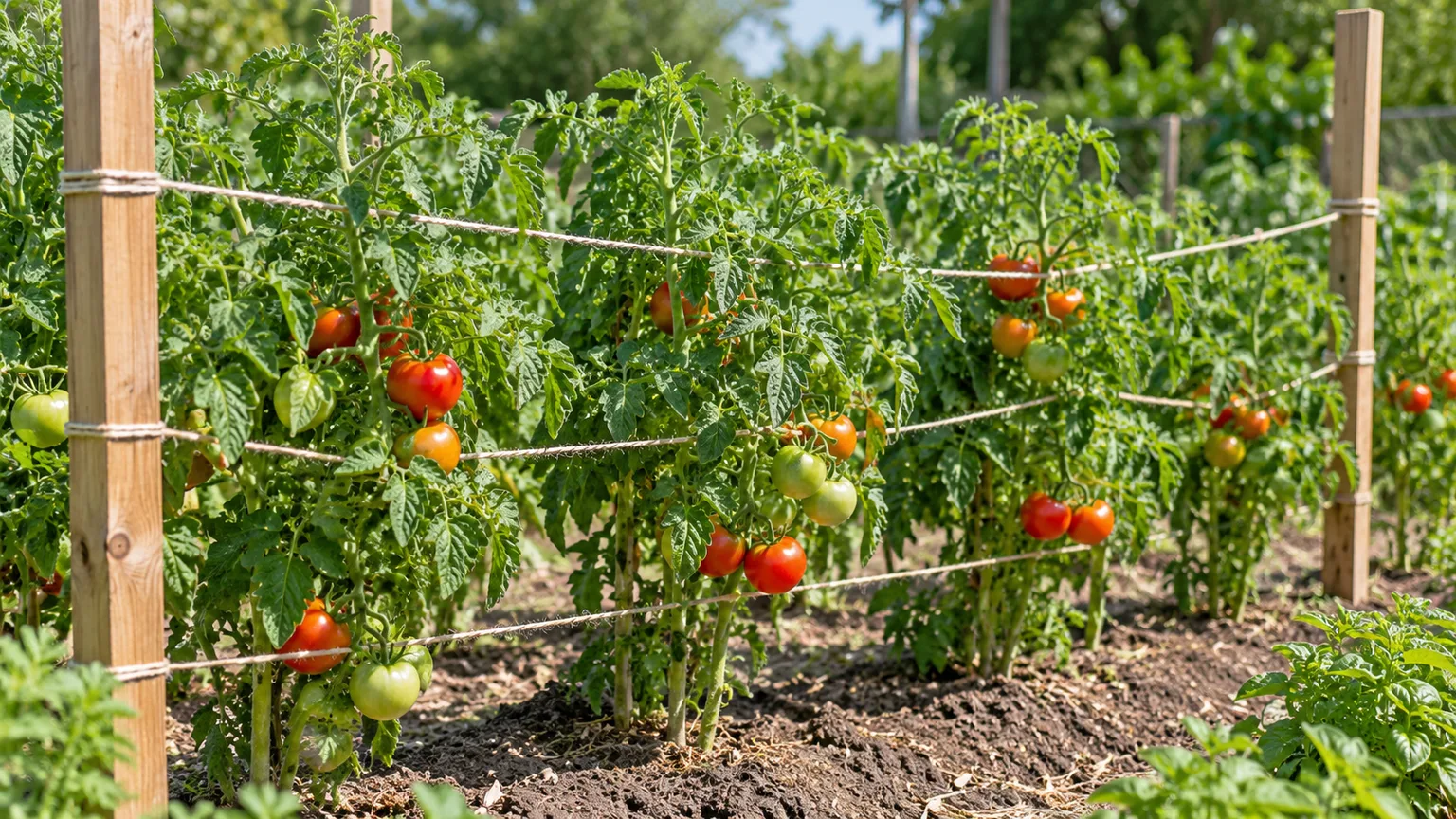
Support is not just about a neat garden. Keeping fruit off wet soil makes harvesting easier and can reduce splash from soil onto lower leaves. It also lets you see the plant’s structure, so you can spot a cracked fruit, a hornworm, or a diseased leaf before the problem spreads.
Water evenly through flowering and fruit growth
Tomatoes need water at the roots, but there is no single weekly schedule that works in every bed. Soil texture, rain, temperature, wind, mulch, and container size all change how quickly the root zone dries. Check the soil a few inches down; if it is drying out around the roots, water slowly and deeply at the base. If it is still wet, wait rather than adding water because the surface looks dry.
Aim for steady moisture, especially while flowers set fruit and tomatoes expand. A layer of clean mulch helps slow evaporation and limits soil splash, but leave a small gap around the stem. Drip irrigation or a soaker hose delivers water near the roots and keeps foliage drier than repeated overhead watering. For pots, check more often during hot weather because a large tomato can draw down a container quickly.
Penn State Extension describes fluctuations in soil moisture as a cause of both fruit splitting and blossom-end rot. That does not mean you can prevent every damaged fruit: heavy rain after a dry spell, heat, and cultivar traits can still contribute. The practical goal is to avoid extremes. If a storm is expected after a dry period, pick fruit that has begun to color; tomatoes can finish ripening indoors at room temperature.
Separate cracking from blossom-end rot
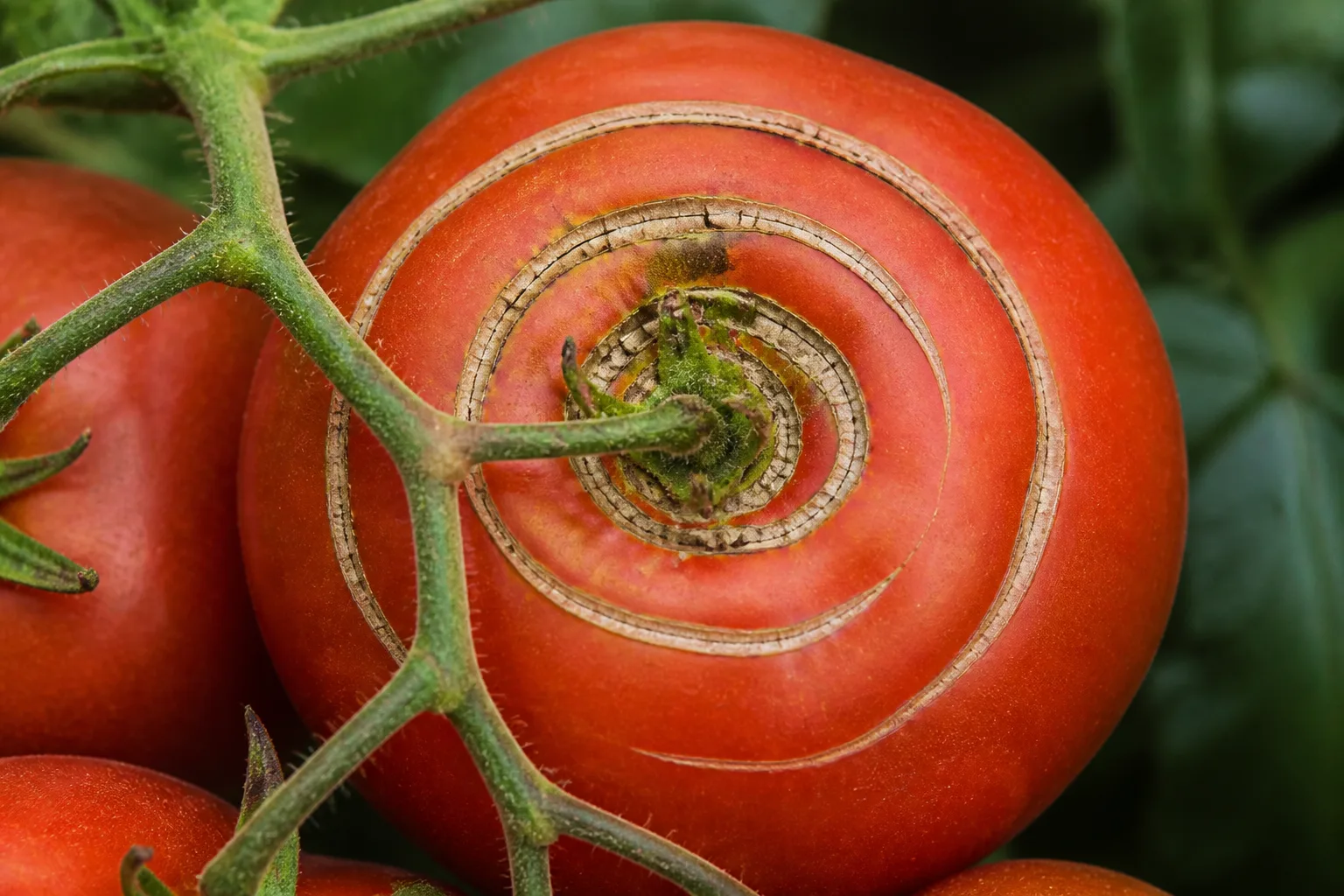
Cracking appears as radial splits from the stem or concentric rings around the shoulders. Fruit expands quickly after it absorbs water, and the skin may not stretch as fast, particularly when a ripe tomato remains on the vine through a wet spell. Keep watering consistent, harvest promptly as fruit colors, and remove badly split fruit so it does not rot on the plant.
Blossom-end rot is a sunken, dark, leathery patch at the blossom end, opposite the stem. It is a physiological problem associated with inadequate calcium reaching developing fruit, often because root uptake is disrupted by uneven water, damaged roots, or other growing stress. Do not assume the soil needs calcium and add lime or supplements blindly; first check watering and, if needed, use a soil test. Adding calcium cannot repair a fruit that already has the lesion.
Feed for balanced growth, not a wall of leaves
A soil test can show whether you need to adjust pH or add a specific nutrient. Without that information, avoid repeatedly feeding a tomato because it is not growing as fast as you hoped. Too much nitrogen drives leaf and stem growth at the expense of flowering, and excess fertilizer can injure roots or wash into waterways.
Use a vegetable fertilizer according to its label and your soil-test recommendation. Incorporate mature compost before planting if the bed needs improved structure; then watch the plant. A vigorous plant with dark green leaves and few flowers may be overfed, shaded, or facing heat stress rather than hungry. Container plants lose nutrients as water drains through the pot, so follow a labeled feeding schedule for container vegetables and do not use the garden-bed dose in a pot.
Keep fertilizer away from the stem and water it in as directed. If you used a slow-release product in potting mix, check the label before adding another feed. More fertilizer does not guarantee more or larger tomatoes; the plant still needs a suitable variety, light, pollination, and a stable root zone.
Prune according to plant habit
Pruning can make a plant easier to manage; it is not a reliable way to make every fruit larger. On an indeterminate tomato trained to one or two stems, removing some suckers can keep the vine within its support, open access, and improve airflow. Pinch small suckers while they are easy to remove, and avoid stripping off large amounts of foliage at once.
Do not prune a determinate or bush tomato as if it were an indeterminate vine. Those side shoots carry a substantial share of the plant’s flowers and fruit; removing them can reduce the crop. Even with an indeterminate plant, leaves shade fruit and supply energy for growth. Removing too many leaves exposes fruit to sunscald and can slow the plant. Start with broken, diseased, or soil-touching leaves, then prune only when the structure is genuinely too dense or difficult to support.
If the plant is healthy but the tomatoes are smaller than expected, check cultivar identity, sunlight, water consistency, and fruit load before cutting. A plant carrying many fruits may distribute growth across them; selectively thinning a cluster is an advanced experiment, not a guaranteed beginner fix. The main win is keeping the plant healthy enough to finish its crop.
Grow a large heirloom tomato in a container
A container works when you have a sunny patio, poor garden soil, or limited bed space, but large-fruited indeterminate plants are demanding container crops. Choose a stable pot with drainage holes and generous root volume; a five-gallon bucket is often marginal for a vigorous, full-season plant. A larger container, roughly 10 gallons or more when space allows, gives roots more room and provides a bigger water reservoir between checks.
Use fresh potting mix rather than dense garden soil, which can compact in a pot and drain poorly. Set the cage or stake before the plant grows tall, and secure the pot where wind will not topple it. A heavy crop can make a small container unstable. If the cultivar label recommends a compact plant for containers, heed that guidance; an indeterminate beefsteak can outgrow both its support and the gardener’s watering routine.
Check container moisture frequently in summer, sometimes daily during hot, windy spells. Water thoroughly until excess drains, then empty any saucer that keeps the pot standing in water. When the top dries, do not assume the root ball has dried all the way through; lift the pot or probe the mix if needed. Feed only as often and at the concentration specified on the product label.
Protect flowers and fruit from temperature stress
Tomatoes set fruit best in a moderate temperature range. Very hot days and warm nights can interfere with pollen and flower set; cold nights can also make blossoms drop. Penn State Extension notes blossom drop below about 55°F at night or above about 75°F, while other cultivars and regions can show different responses. Treat these thresholds as a warning to observe, not as a promise that every flower will fail at a particular reading.
In a heat wave, water the root zone consistently and use temporary shade cloth if harsh afternoon sun is scorching foliage or fruit. Do not keep the plant in deep shade for days; it still needs strong light to grow. If a cold night is forecast, protect a container plant by moving it to shelter or use a breathable cover outdoors, removing the cover after temperatures rise. Avoid touching fruit with hot or cold plastic.
When flowers drop, wait until the weather improves before adding fertilizer or pruning heavily. Flowers that fall during a short hot spell do not mean the whole plant is failing. Keep the vine healthy and watch the next round of blossoms; tomatoes often resume setting fruit when temperatures moderate.
Prevent pests and disease with routine scouting
Check plants once or twice a week, including the undersides of leaves and the inner canopy. Look for chewing, clusters of small insects, spotted lower leaves, wilting that does not recover overnight, and stems lying on the soil. Remove a hornworm by hand if you find one, and identify a disease before using a spray. Many leaf spots look alike at first, so a clear photo and local extension diagnostic service can help prevent the wrong treatment.
Keep foliage as dry as practical, water at the base, space plants for airflow, and clean tools after working with diseased plants. Remove fallen fruit and badly infected leaves rather than leaving them under the vine. Rotate tomatoes away from other nightshades where space allows. If a disease is common in your area, choose a cultivar with resistance listed on its seed packet; heirloom status alone tells you little about disease resistance.
Avoid routine pesticide use on flowers. If you decide a pesticide is necessary, use a product labeled for tomatoes and the specific pest, follow all label directions, and protect pollinators. Most beginner problems are better addressed first by plant identification, sanitation, spacing, and correcting the root-zone conditions.
Keep pets away from tomato foliage
Tomato plants are in the nightshade family. The ASPCA lists tomato foliage as toxic to dogs, cats, and horses, while noting that ripe fruit is non-toxic. Keep pets from chewing leaves or stems, and contact a veterinarian or animal poison-control service promptly if a pet eats plant material and develops symptoms; see the ASPCA tomato plant listing for its current guidance.
Harvest by color, feel, and fruit maturity
A ripe red tomato should show its mature color evenly and yield slightly to gentle pressure. Use the variety’s expected color as your reference: a ripe green cultivar such as Aunt Ruby’s German Green will not turn red. Its green fruit usually shifts from a flat, opaque appearance to a lighter, more luminous green, sometimes with a blush, and it softens slightly. A simple test is to compare one fruit you know is mature with another on the same plant rather than relying on color alone.
Cut or twist fruit carefully so you do not break a heavy branch. Harvest regularly instead of leaving every tomato on the vine until it is fully soft; ripe fruit is more vulnerable to cracking, insects, and wildlife. If frost is approaching, pick mature green fruit and allow it to ripen indoors at room temperature. The RHS recommends checking plants every few days and picking individual fruits when fully colored.
Do not refrigerate tomatoes that still need to ripen. Keep them out of direct sun on a counter, inspect daily, and use split or bruised fruit quickly after cutting away damaged areas if the remaining flesh is sound. Discard fruit that smells fermented, leaks, or has extensive mold.
Save seed without losing the variety
Seeds saved from an open-pollinated variety can generally grow true to type, but “heirloom” alone is not the seed-packet instruction to check. Avoid saving seeds from a hybrid marked F1 if you expect the next generation to match the parent. Seed Savers Exchange explains that tomatoes can self-pollinate, but insects can sometimes transfer pollen between varieties of the same species. If you grow multiple tomato varieties close together, saved seed may not be genetically pure even when the parent fruit looked exactly right.
For a small home garden, label the plant and variety before harvest and save seed from a healthy fruit that is typical for that plant. Scoop the seeds and surrounding gel into a small container, let the mixture ferment briefly until the gel loosens, then rinse away pulp and spread seeds in a single layer to dry completely. Store dry seed in a labeled paper envelope inside a cool, dry place. For exact isolation distances and more detailed wet-seed processing, consult the Seed Savers Exchange tomato seed-saving guide.
If purity matters, grow one variety, protect a selected flower cluster, or follow a seed-saving isolation method suited to tomatoes. Cross-pollination usually affects the plants grown from the saved seeds, not the fruit that is already developing on this year’s plant. That distinction helps explain why a tomato can look true to type yet produce unexpected offspring next season.
Troubleshoot small or misshapen fruit
When heirloom tomatoes stay small, check the cause in this order: confirm the cultivar, count the hours of direct sun, review recent heat or cold, check soil moisture at root depth, and inspect the plant’s fruit load. A cherry or salad type is behaving as bred; a beefsteak in a shady spot or short season may never reach the size shown in a catalog. If the variety is right but the plant is stressed, fix that constraint before adding fertilizer.
Misshapen or catfaced fruit can develop when flowers experience stress, especially during cool conditions early in the season. Such fruit is often still edible after trimming damaged tissue, but it may be lumpy or split. A black, sunken blossom end points to blossom-end rot; radial lines around the stem suggest cracking; pale, papery patches on the side exposed to sun may be sunscald. Identify the pattern before reacting so you do not prune, spray, or amend the soil for the wrong problem.
If the first fruits are smaller than you hoped, keep watering consistently, maintain healthy leaves, and wait for later clusters. Early fruit can be less uniform than fruit set during steadier weather. Record what worked and change one variable next season; changing the cultivar, fertilizer, pruning, and watering all at once makes it impossible to learn which adjustment helped.
Conclusion
To grow plumper heirloom tomatoes, choose a large-fruited cultivar that can finish in your season, then give it warmth, strong sun, fertile but not overfed soil, steady root-zone moisture, and support matched to its growth habit. Those conditions improve the odds that the plant reaches its potential; they cannot erase genetic differences or guarantee a particular fruit weight.
Start with one variety you know you can manage and one you want to explore. Watch the plant, correct the factor you can actually observe, and harvest fruit as it matures. A record of variety, weather, watering, and harvest timing will make your next heirloom season more productive than any universal pruning or fertilizer rule.



