How to Grow and Care for Autograph Tree
Learn autograph tree care for *Clusia rosea*: light, watering, soil, pruning, propagation, cold protection, pest checks, and pet-safety considerations.

Autograph tree (Clusia rosea) is a tropical evergreen with firm, glossy leaves that can hold a scratch mark for years. Indoors, it makes a bold, upright foliage plant; in a warm landscape, it becomes a broad, substantial tree. The care is not complicated, but the plant needs bright light, a pot that drains well, and protection from cold. Outdoors, its mature size and ability to spread also make location and local ecology part of the decision.
Identify the autograph tree before you buy
The plant discussed here is Clusia rosea, also called pitch apple, balsam apple, or Florida clusia. Its thick, simple leaves grow in opposite pairs along stout stems, and mature outdoor trees can produce short-lived pink-and-white flowers followed by fleshy seed capsules. The “autograph” name comes from the lasting scars left when someone writes on a leaf; avoid doing this to your plant because the mark is permanent damage, not a harmless decoration. (UF/IFAS Extension)
A nursery label that says only “clusia” may refer to another species. In South Florida, small-leaf Clusia guttifera is commonly used as a hedge and may be confused or mislabeled as C. rosea. The leaves, growth habit, flowering, mature size, and cold response differ, so check the botanical name and ask the nursery for a species-specific description before buying. A recent UF/IFAS Extension discussion explains this local naming problem and why identifying the plant matters for landscape choices. (UF/IFAS Extension Sarasota County)
Decide whether it fits your space
An autograph tree is a good choice if you want a substantial, tree-like plant with durable foliage and can give it a bright position. It is less suitable for a dim room, a narrow shelf, or a home where children or pets chew plants. Indoors it can be maintained in a container, but it is not a naturally miniature species: its eventual height depends on light, pot size, pruning, and time, and regular trimming cannot turn it into a genuinely compact plant forever.
Outdoors, plan for a real tree rather than a small decorative shrub. UF/IFAS lists a typical mature height of 25 to 30 feet and a spread of 15 to 25 feet, with a dense, rounded crown. That scale can be useful for a screen or specimen planting in a tropical climate, but it can overwhelm a small courtyard or conflict with roofs, walks, and neighboring plants. Check the local hardiness range and planting guidance before putting it in the ground. (UF/IFAS Extension)
Give it the right light indoors or out
In a frost-free landscape, C. rosea grows in full sun to partial shade. A young tree may establish more comfortably with some protection from the harshest afternoon exposure, while a mature tree can thrive in stronger light. UF/IFAS describes it as tolerant of several landscape conditions, though growth is faster where soil moisture is available. (UF/IFAS Extension)
Indoors, give it the brightest practical position you have: close to a bright east-, south-, or west-facing window, with filtered light or a little distance from intense midday sun. A room that looks bright to you may still be low light for a tropical tree, especially several feet from the window. Slow growth, long gaps between leaves, and stems leaning toward the glass usually mean the plant needs more light. Garden Design’s indoor guidance also recommends strong light for container-grown clusia. (Garden Design)
If moving a houseplant outdoors for summer, do not place it straight into baking sun. Start it in bright shade for several days, then increase morning sun gradually over a week or two while watching the leaves. Pale, bleached, or crispy patches on the window-facing side after a move suggest sun scorch; return the plant to filtered light and make future transitions more gradual. Rotate the pot occasionally indoors if the crown is growing toward one side.
Water by soil condition, not a calendar
For a potted autograph tree, water when the upper inch or two of mix has begun to dry, then water slowly until excess runs from the drainage holes. Empty the saucer or cachepot after the pot has finished draining. This gives the roots a full drink while keeping them from sitting in stagnant water, a common cause of yellowing and root decline.
The interval changes with pot size, light, temperature, season, and the ingredients in the mix. A small plant by a sunny window may dry in a few days during warm weather, while a large pot in winter can stay wet much longer. Use your finger or a wooden skewer to check below the surface; if the mix still feels cool and damp at root depth, wait and check again rather than watering because a particular number of days has passed.
Established landscape trees are relatively drought tolerant, but that does not mean a newly planted tree should be left to fend for itself. During establishment, check the root ball and surrounding soil and water deeply when the root zone starts to dry. After it is established, rainfall may meet much of its needs, but prolonged hot or dry periods can still slow growth or stress the canopy. The species grows more rapidly in moist, well-drained soil than in a parched site. (UF/IFAS Extension)
Choose a draining mix and a stable pot
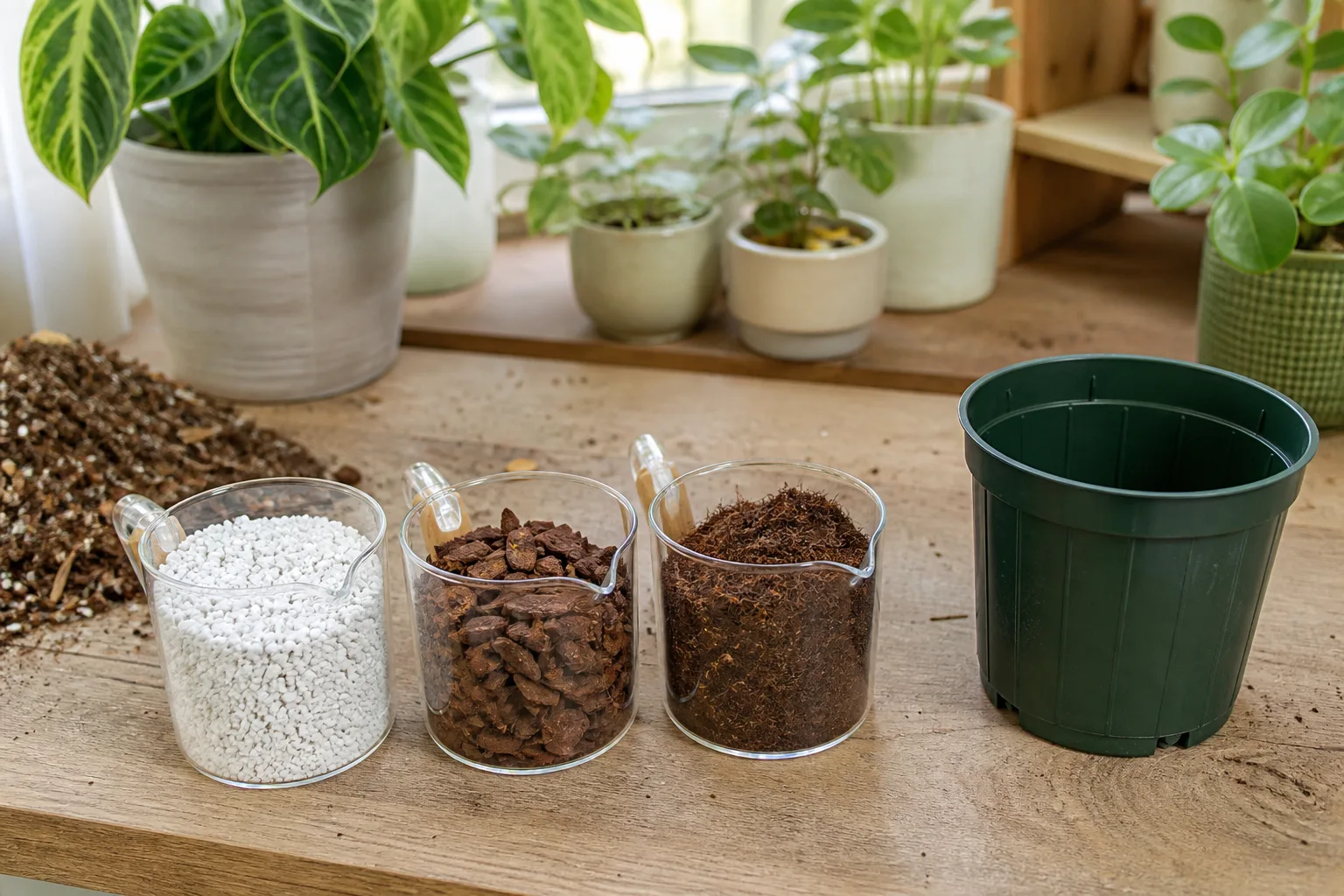
Use a loose, airy indoor potting mix that holds some moisture but does not stay saturated. A quality houseplant mix amended with perlite or pumice and a modest amount of fine orchid bark is a practical starting point; the goal is a mix that wets evenly and drains freely, not a specific branded recipe. Avoid dense garden soil in a container because it can compact and remain wet around the roots.
Choose a pot with unobstructed drainage holes. A decorative cachepot is fine as an outer cover, provided you lift the nursery pot out to drain it after watering. A thick-leaved canopy can become top-heavy, so select a sturdy container with a stable base, but resist moving to an oversized pot just for stability. Excess soil around a small root system stays wet longer and raises the risk of root rot.
Keep it warm and manage indoor humidity
Autograph tree is tropical and should be protected from frost. UF/IFAS places outdoor landscape use in USDA zones 10B through 11, which is a regional guide rather than a guarantee that every site in those zones will suit it. In cooler areas, grow it in a movable container and bring it inside before cold nights arrive; avoid abrupt moves from a hot patio into a cold, dark room. (UF/IFAS Extension)
Indoors, steady room temperatures and distance from cold drafts, air-conditioning blasts, and heating vents are more useful than trying to create a tropical greenhouse. Average household humidity is often workable. If the air is exceptionally dry and the plant develops crispy margins despite correct watering, group it with other plants or use a room humidifier; misting leaves briefly does little to change the room’s humidity and can leave spots.
When bringing an outdoor plant inside, inspect leaf undersides, stem joints, and the pot rim for pests first. Rinse the foliage, remove dead material, and keep it away from other houseplants for a short observation period. The light drop indoors may slow growth and increase the time the mix stays wet, so adjust watering to the soil rather than continuing the outdoor schedule.
Fertilize modestly during active growth
A healthy potted plant in fresh mix usually needs less fertilizer than people expect. During spring and summer, you can use a balanced houseplant fertilizer at the label rate, or at a reduced strength if the plant is growing slowly or the mix already contains fertilizer. Pause or reduce feeding in winter when growth and water use slow. Do not fertilize a plant with soggy soil, damaged roots, or a recent cold or pest problem; fertilizer will not correct those stresses.
If new growth is small or pale, check light, drainage, and root health before adding more food. Salt buildup from repeated feeding can cause brown tips or a crust on the mix. Periodically water the pot thoroughly so excess fertilizer salts can drain away, and never let the pot stand in the runoff. For a landscape tree, follow a soil test and local extension advice rather than applying high-nitrogen fertilizer by habit.
Prune for shape without damaging the leaves
Prune in warm weather when the plant is actively growing, using clean, sharp pruners. To shorten a branch, cut just above a leaf node or a suitable side branch; to remove a crossing or damaged stem, cut it back to its point of origin without leaving a long stub. Light, selective cuts encourage a balanced silhouette and are easier for a container plant to recover from than a severe haircut.
Avoid shearing across the outer surface of the foliage. The broad leaves do not heal into a smooth clipped edge, so hedge-trimmer cuts can leave an unattractive line of torn or cut leaves. UF/IFAS Extension specifically cautions against hedge-trimming clusias for this reason. If you want a compact indoor shape, shorten a few long shoots at a time and allow new growth to fill in before making more cuts. (UF/IFAS Extension Sarasota County)
Wear gloves when pruning and keep sap away from eyes, skin, and mouths. The invasive-species group in Hawaii warns that cut plants exude poisonous sap; clean tools promptly and keep prunings away from pets and children. Do not compost fruit or cuttings in places where they could spread or be carried away. (Big Island Invasive Species Committee)
Propagate it from a healthy stem cutting
Stem cuttings are the most practical way to make another autograph tree. Choose a healthy, nonflowering shoot in the warm growing season and use a clean blade. Rooting is not instant, so keep the cutting warm and lightly moist rather than digging it up every few days to look for roots.
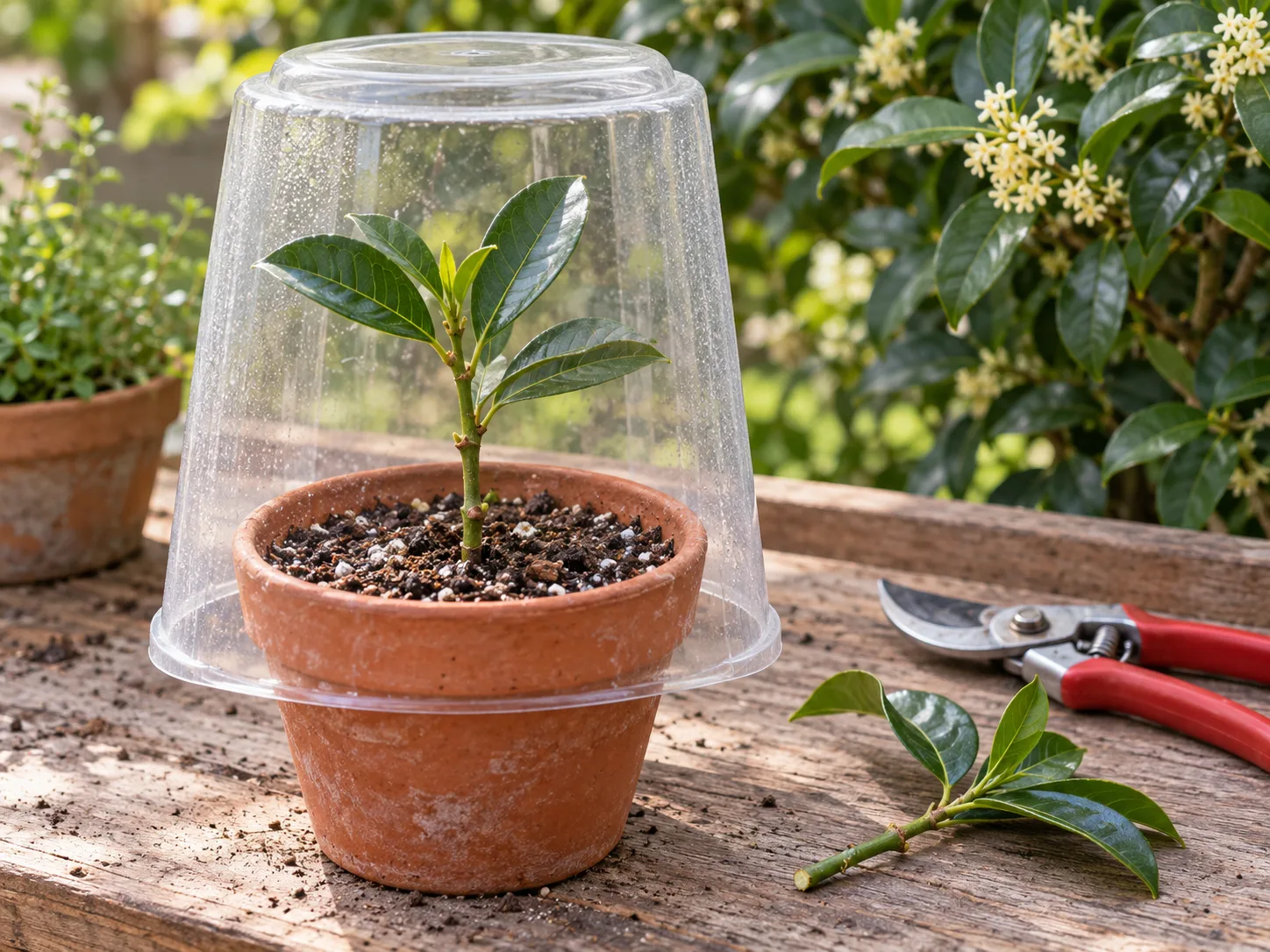
- Take a 4- to 6-inch cutting with several leaves, cutting just below a node. Wear gloves because the sap may be irritating or toxic.
- Remove the leaves from the lower portion that will sit in the mix, leaving a few at the tip. If the remaining leaves are large, trim only their outer halves to reduce water loss.
- Insert the bare node into a small pot of moist, free-draining propagation mix and firm the mix gently around the stem. A clear cover can help retain humidity, but leave some airflow and keep plastic from pressing on the leaves.
- Set the pot in bright indirect light in a warm place. Keep the mix slightly moist, not waterlogged; check it regularly and vent any cover if condensation is constant.
- Test for rooting only after the cutting has had time to establish, by giving it a very gentle tug or looking for new growth. Once roots hold the mix and growth resumes, uncover it gradually and care for it like a young plant.
The RHS recommends softwood cuttings with bottom heat in summer, which supports choosing warm conditions and active growth rather than trying to root cuttings in a cold winter room. Rooting speed varies with stem maturity and conditions. Do not promise that every cutting will take; make more than one if the parent plant is healthy enough to spare them. (Royal Horticultural Society)
Repot only when the roots need room
Repot when roots densely circle the root ball, emerge from drainage holes, or the mix has broken down and no longer drains well. A plant that dries unusually fast despite careful watering can also be root-bound, but check whether a hotter, brighter location explains the change. If the roots are healthy and the mix still drains, there is no benefit in disturbing them on a fixed annual schedule.
Move up only one pot size, ideally choosing a container about 1 to 2 inches wider than the current root ball, with fresh airy mix. Ease the plant out carefully, loosen only roots that are tightly circling the outside, and keep the trunk at the same soil level. Water once to settle the mix, let it drain, then wait for the normal dry-down cue before watering again. The RHS notes that these plants resent frequent root disturbance and may benefit from a restricted root run, so avoid repotting merely to chase faster growth or flowers. (Royal Horticultural Society)
Grow outdoors only where climate and ecology fit
In a suitable tropical or subtropical site, plant C. rosea where it has room to develop a broad canopy, the soil drains, and the mature size will not force repeated cutting. A full-sun to partly shaded position works; moist soil supports quicker growth, while the species can tolerate drought and salt spray after establishment. UF/IFAS identifies the species as native in Florida and lists it for zones 10B to 11. Do not assume that its performance in southern Florida means it is hardy across the entire state or in other temperate regions. (UF/IFAS Extension)
Regional ecology matters as much as climate. In Hawaii, autograph tree has escaped cultivation, and birds spread its seeds after eating the conspicuous red seeds. The Big Island Invasive Species Committee documents seedlings establishing on host trees and other structures, where roots can eventually damage or kill the host. In Hawaii and any other region where local authorities flag it as invasive or discourage planting, do not put it outdoors; consult local invasive-plant guidance before purchase. (Big Island Invasive Species Committee)
If you keep it in a pot in a region where outdoor planting is inappropriate, remove any fruit that forms before it opens and dispose of it securely, not in green waste that may be moved or spread. A container controls where roots grow, but it does not make seeds harmless or remove the need to check local rules. In cooler climates, a pot also lets you protect the plant from cold, though a mature specimen can become heavy and difficult to move.
Understand flowers, fruit, sap, and pet safety
Mature outdoor autograph trees can flower and set fruit, but a small indoor plant may never do so. The flowers are usually white to pink and the fruit capsule opens to reveal bright red seeds. Those reproductive structures are a reason to plan for cleanup and seed containment, not a reason to taste the fruit or offer it to wildlife. UF/IFAS describes the fruit as poisonous and notes that birds are attracted to the seeds. (UF/IFAS Extension)
Treat the plant as unsafe for pets to chew. ASPCA lists its Clusia entry as toxic to dogs, cats, and horses, identifies terpenes, and describes digestive upset and vomiting; the listing uses Clusia major as the scientific name, while the RHS notes that name as a misapplied synonym for C. rosea. Because of that naming discrepancy and because the fruit is particularly concerning, use the conservative rule: keep leaves, fruit, and pruning waste away from animals, and contact a veterinarian promptly if a pet may have eaten any part. (ASPCA; Royal Horticultural Society)
A Hawaii invasive-species source also warns that sap and fruit are poisonous to people. Wear gloves when cutting or handling damaged stems, wash exposed skin, and do not let children scratch, chew, or play with the leaves or fruit. If someone ingests plant material or develops a concerning reaction, contact a poison-control service or medical professional rather than relying on a gardening article to assess exposure. (Big Island Invasive Species Committee)
Diagnose common care problems
Yellow leaves with wet mix point first to roots staying oxygen-starved, especially if the pot is heavy and the lower mix remains damp. Stop watering until the root zone begins to dry, empty standing water, and check that the drainage holes are open. If the mix smells sour or roots are dark and soft, remove the damaged roots and repot into fresh, airy medium; do not repeatedly water a declining plant to “flush” it.
A few older leaves dropping can be normal, especially after a move or seasonal light change. Widespread leaf drop, soft stems, or a mix that stays wet for a long time calls for a root and watering check. Brown or bleached patches on the window-facing side suggest sudden intense sun; move it to bright filtered light and acclimate more gradually. Brown edges across many leaves can also follow repeated drying, salt accumulation, or very dry air, so check the pattern and recent care before changing several things at once.
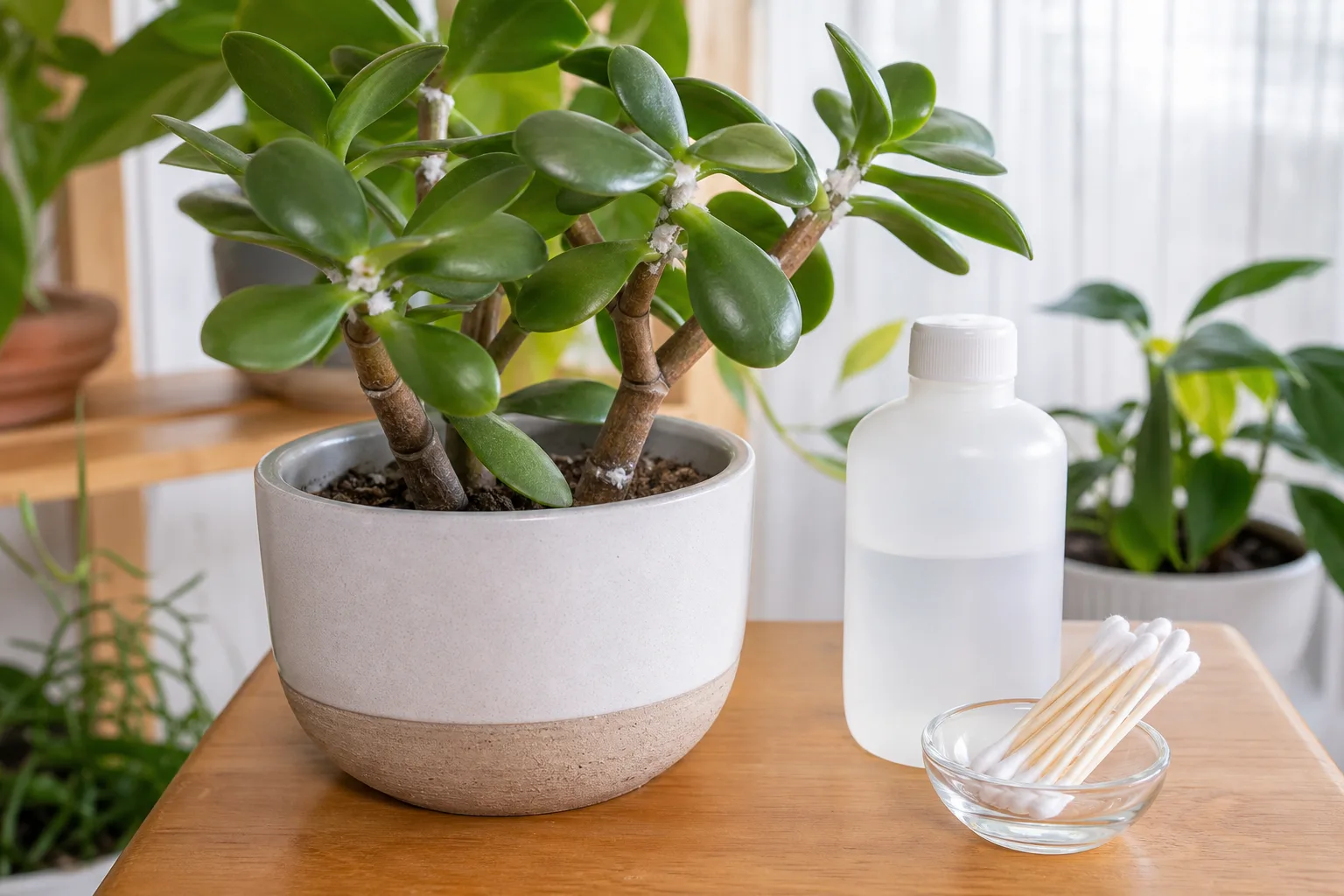
Scale insects, mealybugs, and spider mites can appear on indoor plants. Inspect the leaf undersides, midribs, and stem joints; scale looks like fixed bumps, mealybugs like white cottony clusters, and spider mites may leave fine webbing and stippled leaves. Isolate an affected plant, wipe or rinse pests away, and repeat inspections because eggs and hidden insects can survive the first cleaning. For a larger infestation, use only a product labeled for indoor ornamental plants and follow its directions; test a small area first and keep all treatments away from pets and children.
Follow a seasonal care routine
In spring and summer, check the mix more often as light and warmth increase, feed lightly only when growth is active, and prune selectively if the plant is becoming lopsided. This is also the easiest time to propagate or repot when the roots need it. For an outdoor tree, support young plants through dry weather and watch that nearby plants are not being crowded by its expanding crown.
In autumn, inspect any container plant before moving it indoors. Clean the leaves, check for pests, and bring it inside before cold weather; then reduce watering as growth slows and the pot dries more slowly. Keep it near the brightest available window and away from cold drafts. Do not compensate for winter’s lower light by maintaining summer watering or fertilizer levels.
During winter, let the upper mix dry a little further between waterings, but do not allow the root ball to become bone dry for long periods. Hold fertilizer unless the plant is still actively growing under strong light. If the tree looks thin, address the light and check for pests before hard pruning; wait for the warmer growing season to reshape it. The key is observing the plant and its root zone as conditions change, rather than following a rigid monthly schedule.
Conclusion
Autograph tree care is mostly a matter of matching water and light to the conditions you can provide. Give Clusia rosea bright filtered light indoors, a free-draining pot, thorough but soil-led watering, and warmth; prune it selectively and repot only when roots or mix make that necessary. Outdoors, allow for a 25- to 30-foot tree, protect it from frost, and check local invasive-plant guidance before planting. Keep fruit, sap, and cuttings away from pets and children, and confirm the plant’s botanical name so the advice fits the species you actually have.