Coconut Palm Care Indoors: Light, Water, and Humidity
Can a coconut palm thrive indoors? Get practical advice on light, heat, humidity, watering, potting, outdoor care, and realistic long-term expectations.
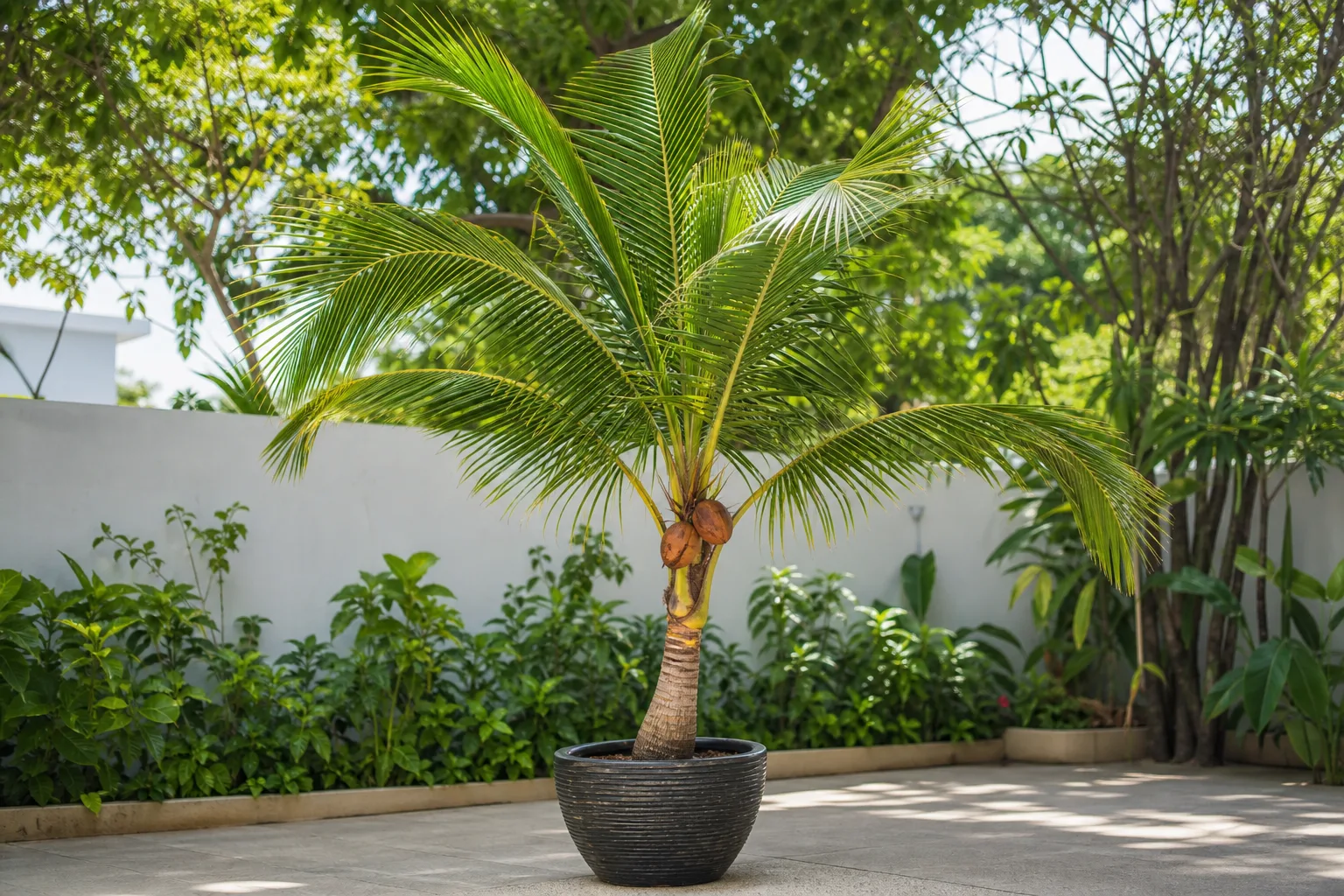
A true coconut palm can grow indoors for a time, but it is one of the least forgiving palms to keep in an ordinary home. Cocos nucifera needs strong light, tropical warmth, regular moisture with excellent drainage, and more space than its small seedling suggests. Before buying one, decide whether you want a temporary tropical accent or a long-term houseplant; those are very different expectations.
The most useful care rule is to work with the conditions you can actually provide. A sunny window, stable temperatures, and careful watering may keep a young palm attractive, but an indoor pot will not reproduce a tropical coastline or make this naturally large tree stay compact forever.
Is a Coconut Palm a Realistic Houseplant?
Yes, a young coconut palm can be grown indoors, especially in a warm, bright home or greenhouse. That answer needs a qualification: indoor survival does not mean the plant is easy, compact, or likely to make coconuts. UF/IFAS describes coconut palms as full-sun tropical plants for warm climates and notes that mature trees can exceed 80 to 100 feet, with leaves up to 18 feet long. (UF/IFAS Gardening Solutions) A pot and a ceiling limit growth, but they do not turn the species into a naturally small palm.
Think of a potted coconut as a high-light tropical specimen with a finite indoor life, not as a low-maintenance floor plant. In a cool room or a home with only dim windows, the palm may decline even when you water and fertilize carefully. If you cannot provide a very bright location and protect it from cold, a kentia or parlor palm is a more realistic indoor choice; see our guides to growing indoor palms, kentia palms, and parlor palms.
The scale mismatch explains why small plants are tempting and disappointing. A seedling may look manageable on a table, yet its species is adapted to open tropical sites and eventually develops long arching fronds. The University of Hawaiʻi at Mānoa’s Pacific crop guide describes coconut as a major tropical crop and links to detailed cultivation resources, while Penn State PlantVillage records leaves that can reach about 23 feet in natural conditions. (University of Hawaiʻi at Mānoa; Penn State PlantVillage) In a living room, limited light and root space usually constrain growth well before fruiting becomes a realistic goal.
Choose a True Coconut Palm or Start with a Viable Seed
The label matters because common plant names can be loose. If you want a coconut palm, look for the botanical name Cocos nucifera on the tag or ask the nursery to confirm it. Some plants sold as indoor palms may be a different species, and another palm will not follow coconut-specific light, watering, or growth expectations. Gardening Know How notes that retail labels can be ambiguous, so verify the name rather than choosing by a coconut-shaped seed alone. (Gardening Know How)
You can either buy a nursery-grown seedling or germinate a coconut. A nursery plant gives you a head start and lets you inspect the growing point and roots; starting from seed is slower and less predictable, but it is a rewarding project if you have a warm place to keep the seed for months.
Check a Nursery Plant’s Label and Condition
Choose a plant with a firm, upright growing point and mostly green fronds. A few dry tips are not a reason to reject it, but avoid specimens with a soft or blackened crown, sour-smelling mix, widespread yellowing, or visible insects under the leaves. Check that the pot has drainage holes and that the coconut seed or trunk is not sitting in a pool of water inside a decorative cover pot.
Look for roots that are firm rather than black and mushy, if the nursery allows you to check the root ball. A dense mat of roots at the bottom is a cue to plan for a slightly larger pot soon, not to buy an oversized planter immediately. If the label gives only a common name, ask for the species before paying; accurate identification is the starting point for accurate care.
How to Sprout a Coconut at Home
Use a mature, fresh coconut with its husk intact if possible. A ripe seed is often identified by the sound of liquid moving inside when you shake it; UF/IFAS and Penn State describe that sloshing as a maturity clue. A trimmed or dried food coconut may not be viable, so do not assume every grocery-store coconut will germinate. (UF/IFAS Gardening Solutions; Penn State PlantVillage)
Set the coconut on its side in a broad pot of warm, airy, evenly moist medium, leaving roughly one-third of the nut exposed. It needs warmth and patience more than daily soaking. Penn State reports that germination often takes about three months and can take up to six; keep the medium moist but never leave the container standing in water. (Penn State PlantVillage)
When a shoot appears, continue giving the young palm warmth and strong light. Do not pry the seed away from the seedling or bury the crown to make the pot look tidy. The attached coconut remains part of the developing plant during early growth. Once roots and leaves are established, move it only if the container is clearly too small, keeping the nut’s upper portion visible and the new growing point at its original level.
Give the Palm the Brightest Light You Can Provide
Place a true coconut palm close to your brightest window, preferably one that receives direct sun for a substantial part of the day. UF/IFAS specifies full sunlight for outdoor coconut palms, and indoor guidance from Gardening Know How similarly recommends a very bright southern or western exposure. (UF/IFAS Gardening Solutions; Gardening Know How) A bright-looking room is not automatically bright at leaf level: distance from glass, window direction, trees outside, and winter day length all change what reaches the fronds.
An unobstructed south- or west-facing window is often the strongest indoor option in the Northern Hemisphere; an east window can be a useful alternative with morning sun. Rotate the pot periodically so one side does not lean persistently toward the glass. If you move the plant from nursery shade or indoor light into direct sun, increase exposure gradually over a week or more. Sudden intense sun can bleach or scorch foliage that formed under softer conditions.
Watch new growth as your feedback. A palm that receives too little light may stop producing healthy new fronds or become increasingly weak, while bleached patches on the window-facing side suggest the change was too abrupt or the glass is intensifying heat. Correct placement first; fertilizer cannot compensate for inadequate light.
When a Grow Light Can Help
A grow light can supplement a bright window during short winter days or help in a home where natural light is limited. It is a supplement, not a full substitute for the large area of strong light a tropical palm receives outdoors. Choose a fixture intended for plant growing, position it according to the manufacturer’s distance guidance, and use a timer to keep the daily routine consistent. The exact distance and hours depend on the lamp’s output and the plant’s response.

If you add a lamp, introduce it gradually and check the fronds for bleaching, curling, or heat stress. A light that is too far away may make little difference; one placed too close can heat or scorch leaves. Our indoor grow-light guide explains how to assess fixture strength and placement.
Keep Temperatures Warm and Humidity Steady
Coconut palms are tropical and do not tolerate freezing conditions. Keep the pot in a consistently warm room and away from cold glass, exterior doors, and direct blasts from air conditioning or heating vents. A practical indoor target is to avoid prolonged temperatures below about 65°F (18°C); maintaining warmth is safer than testing the plant’s cold limit. (Gardening Know How) Tropical outdoor hardiness ranges do not guarantee that a container-grown root ball will tolerate a sudden chill.
Humidity is the other challenge in heated or air-conditioned rooms. A coconut palm is adapted to humid tropical air, while indoor winter air can become much drier. (Epic Gardening) Check room conditions with a hygrometer if the leaf edges keep crisping, and consider a room humidifier positioned so air can circulate around the foliage. Grouping plants can slightly improve their immediate microclimate, but avoid packing fronds tightly together where airflow disappears.
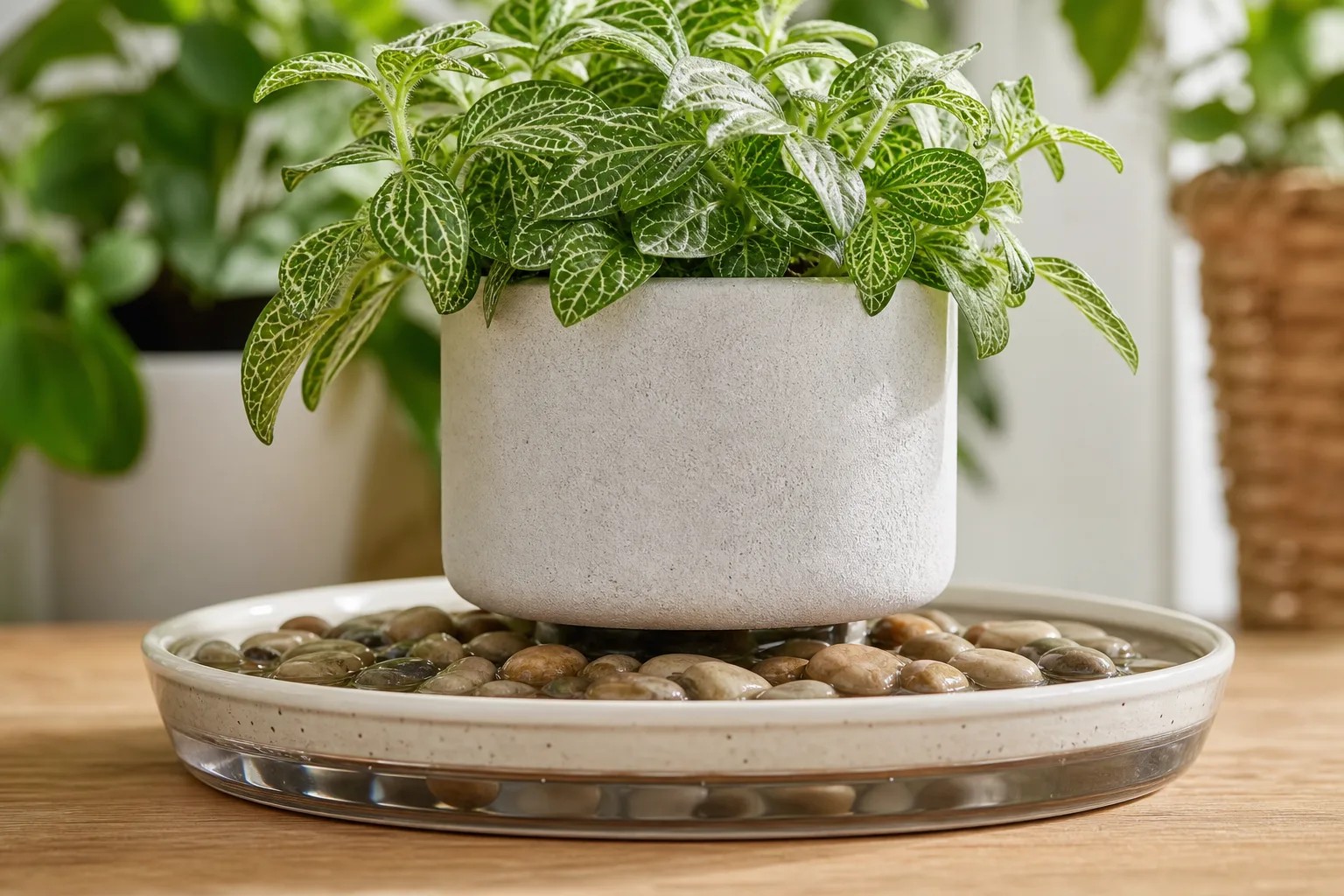
Misting the leaves may wet them briefly, but it does not keep room humidity high for long. A pebble tray can add a small amount of local moisture if the pot sits above the waterline; it should never hold the pot base or roots in water. For a practical comparison of humidity methods, see our guide to houseplant humidity. If you improve humidity but the palm still declines, recheck light, temperature, and root moisture rather than assuming humidity was the only problem.
Water by Checking the Root Zone
Keep the mix from drying completely, but do not treat “tropical” as permission to keep the pot saturated. Coconut palms use plenty of water in hot, sunny conditions; container roots still need oxygen. UF/IFAS recommends well-drained growing conditions, and Epic Gardening likewise cautions against prolonged flooding even though established palms need regular moisture. (UF/IFAS Gardening Solutions; Epic Gardening)
Check the mix with a finger or clean wooden skewer before watering. When the upper inch or two has begun to dry but the root ball is not bone-dry, water slowly over the soil until excess drains from the bottom. Empty the saucer or cachepot after it finishes draining. If the top stays wet for days, wait and inspect drainage rather than adding water on a fixed weekly schedule.
Change the interval with the room. Bright, warm conditions and a small pot can dry quickly; short winter days, cooler temperatures, and a large container slow water use. If you see limp fronds while the soil is wet, adding more water is likely to make the problem worse. Check the roots and drainage instead. Our guide to houseplant watering covers the same soil-check approach for indoor containers.
Use a Draining Mix and a Stable Container
Choose a palm or indoor potting mix that holds some moisture while letting excess water escape. If the mix feels dense or stays wet for a long time, blend in coarse perlite, pumice, or fine bark to open it up. A very gritty mix that dries in a day is not an improvement; the goal is an airy root zone that stays lightly moist between thorough waterings.
Use a pot with drainage holes and a base wide enough to support the fronds. A nursery pot placed inside a decorative cachepot is fine if you remove it to water and empty the outer container afterward. Do not add a layer of gravel to the bottom as a substitute for drainage; water needs an open exit through the pot itself.
For a newly sprouted coconut, leave part of the nut above the mix. For a nursery-grown palm, keep the root crown and original soil line at the same height when repotting. Burying the growing point or packing wet mix around the crown can trap moisture where new growth emerges. Coconut fiber, or coir, is used in growing substrates, but it is only one ingredient; pure coir still needs suitable drainage and fertilizer management. (UF/IFAS Gardening Solutions)
Feed Lightly with Palm Fertilizer
Coconut palms can develop nutrient deficiencies, and UF/IFAS recommends a palm-specific fertilizer for outdoor trees. (UF/IFAS Gardening Solutions) In a container, use a fertilizer labeled for palms or tropical foliage plants and follow the package rate for potted plants. A palm formula is useful because it supplies a broader nutrient profile than an arbitrary dose of lawn fertilizer, but the label—not a landscape application rate—should guide the amount.
Feed only while the plant is actively growing and receiving enough light. If growth stalls in winter, reduce or pause feeding rather than pushing a weak plant with extra fertilizer. Excess fertilizer salts can damage roots and brown leaf tips, so do not combine several products or compensate for yellowing with a heavy dose before checking light, water, and root health.
Repot Only When the Roots Need More Room
Do not repot every year by default. Look for a root ball that is tightly circling, roots emerging freely from the drainage holes, water moving straight through without wetting the mix, or a container that has become unstable under the spreading fronds. One visible root at a drainage hole is not enough to prove the plant needs a much larger pot.
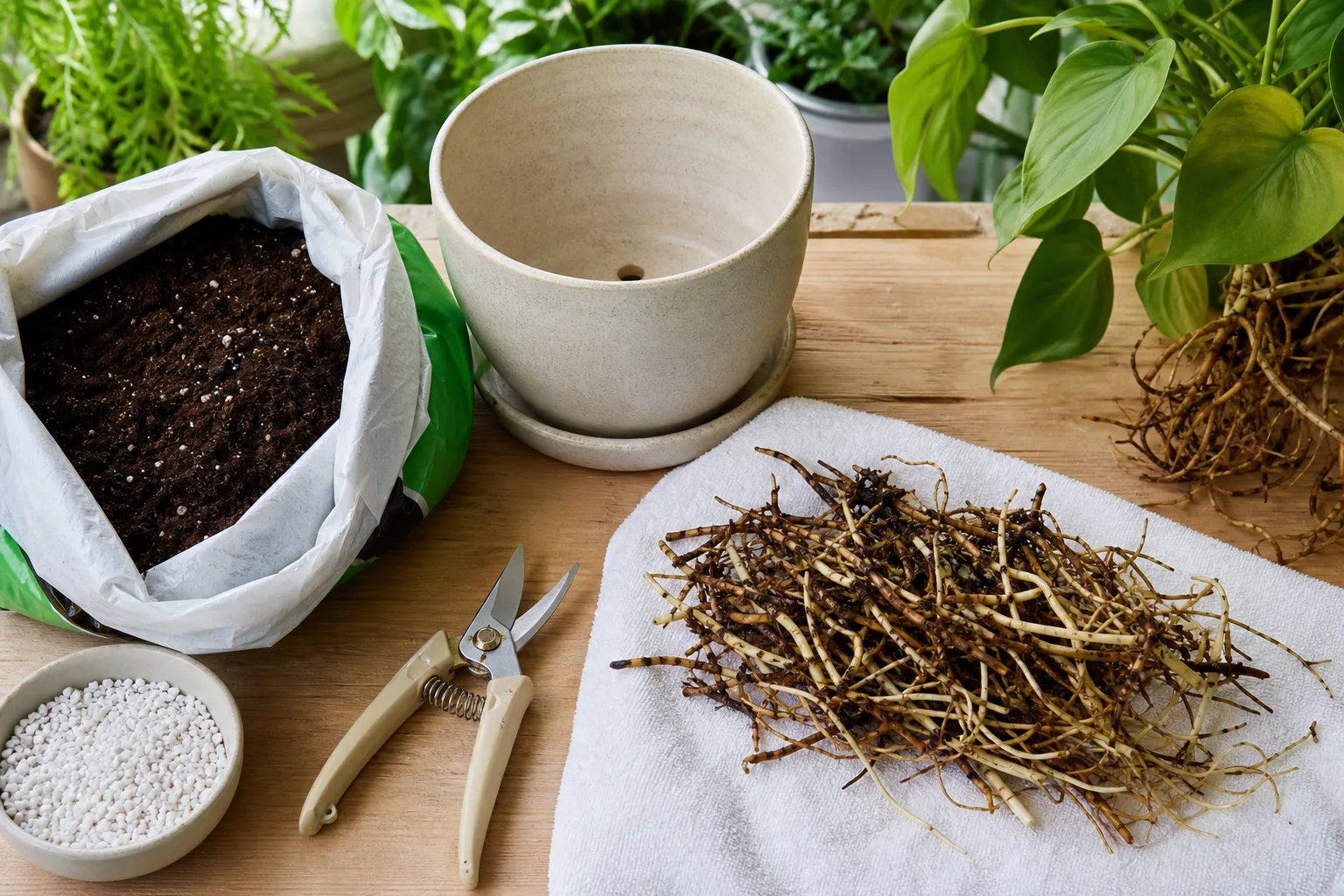
When repotting is warranted, choose a container only modestly wider than the existing root ball, with sturdy sides and drainage. An oversized pot holds a large volume of wet mix that the roots may not use quickly, especially during low-light months. Slide the palm out by supporting the root ball rather than pulling on the trunk or fronds, and disturb healthy roots as little as practical.
Set the palm at its previous depth, fill around the root ball, and water once to settle the mix. Let the container drain completely. Avoid repotting a plant that is already waterlogged or declining unless the current pot is the clear cause; stabilize its conditions first when possible.
Move the Palm Outdoors Only in Warm Weather
A summer outdoors can provide much stronger light and warmer air, but moving directly from a living room to full sun can burn foliage. Wait until nights are reliably warm, then acclimate the palm in bright shade for several days before increasing sun exposure gradually. A sheltered patio or bright open shade is a safer starting point than a hot west-facing wall.
Monitor the pot more closely outside. Sun and wind can dry the mix faster than it does indoors, while a sudden heavy rain can keep a container saturated if it has poor drainage. Keep it out of standing water and bring it back inside before chilly nights return; UF/IFAS limits outdoor planting to warm tropical hardiness zones because the species is not suitable for freezing temperatures. (UF/IFAS Gardening Solutions)
Before moving it back indoors, inspect the undersides of fronds, the leaf bases, and the soil surface for pests. Rinse dust and insects from the foliage, let the pot drain, and isolate the palm briefly if you find a scale or mite infestation. The seasonal move is optional; if carrying a large container is difficult or the indoor-to-outdoor transition is too abrupt, a stable bright indoor location is better.
Diagnose Brown Tips, Yellow Fronds, and Slow Growth
One old lower frond turning yellow as a new one develops can be normal. A pattern across several leaves calls for a check of the environment before you change multiple care steps. Brown tips alone do not identify a single cause; low humidity, a root ball that dries too far, excess fertilizer, or damaged roots can look similar.
| What you see | Check first | What to do |
|---|---|---|
| Crispy tips on otherwise green fronds | Room dryness, fertilizer history, and how dry the root ball gets | Improve stable humidity if needed and water by soil condition; pause fertilizer if salts may be involved |
| Pale or bleached patches facing a window | Recent move into direct sun or hot glass | Move the palm slightly back or filter the strongest afternoon light, then acclimate gradually |
| Several yellow fronds with persistently wet mix | Drainage, standing water, and root firmness | Empty the cachepot, let the root zone breathe, and inspect roots if decline continues |
| Little new growth in a dim room | Window exposure, season, and distance from the glass | Move to brighter light or add a suitable grow light before feeding |
| Brown or soft newest spear | Crown condition and whether water collects at the growing point | Keep the crown dry and seek local palm or extension advice if it worsens |
Make one change at a time and watch the next leaf, not just older damaged tissue. Brown areas will not turn green again, so success means healthy new growth and no expanding damage. If the pot smells sour or roots are black and mushy, read our root-rot guide and correct drainage before returning to a normal watering routine.
Inspect for Spider Mites and Scale
Dry indoor air and stressed foliage can make pest problems more likely. Inspect the undersides of leaflets and the areas where fronds meet the trunk for fine webbing, tiny moving specks, sticky residue, or small fixed bumps. UF/IFAS lists spider mites and scale among pests that can affect coconut palms. (UF/IFAS Gardening Solutions)
Isolate an infested plant, rinse the foliage with lukewarm water, and wipe accessible scale or insects away. Recheck every few days because a single cleaning may miss eggs or newly hatched pests. If you choose a pesticide, use only a product labeled for the specific pest and indoor ornamental plant, and follow its label directions exactly; do not apply an outdoor palm product inside the home.
Prune Only Dead or Damaged Fronds
Remove a frond when it is fully brown, dead, or badly damaged. Use clean, sharp pruners to cut the stalk without cutting into the trunk or crown. A partly green frond is still supporting the plant, so do not remove it just because one tip is brown; trim only the dead tip if appearance matters.
Never cut off the growing point to keep the palm short. Palms grow from a single crown, and topping does not create a neat, shorter plant. If the fronds have outgrown the room, move the container to a suitable space or choose a smaller palm rather than injuring the crown.
Set Realistic Expectations for Indoor Growth
An indoor coconut palm is best treated as an experiment or a striking young specimen, not a reliable fruit tree. In tropical landscapes, UF/IFAS says flowering begins after several years and full production takes much longer; fruits then develop over about a year. (UF/IFAS Gardening Solutions) A living-room plant usually lacks the light, root space, and warm humid conditions needed for that cycle, so do not plan on harvesting coconuts from it.
If the palm makes one or more healthy new fronds each year, retains a firm crown, and does not have worsening pests or root problems, your care may be working even if growth is slow. If it keeps losing leaves despite strong light, warmth, and good drainage, the home may simply not offer conditions the species can tolerate long term. That is a species mismatch, not proof you failed at basic plant care.
Choose a coconut palm because you enjoy the tropical form and understand the limits. If you want a lasting indoor palm with less demanding light and humidity needs, compare it with other indoor palms before buying another plant.
Conclusion
You can grow a coconut palm indoors, but the best chance comes from giving it the brightest window, steady warmth, a lightly moist and well-drained root zone, and a pot that supports its growing size. Start with a correctly labeled Cocos nucifera or a viable mature coconut, keep the seed warm and only partly buried, and troubleshoot leaf damage by checking light, moisture, drainage, and pests in that order.
Expect a young tropical accent, not an easy long-term houseplant or indoor coconut harvest. When the light and room conditions cannot meet its needs, choosing a palm better suited to homes is the more successful growing decision.