How to Grow and Care for Floribunda Roses
Learn when to plant floribunda roses, how to water and feed them, how to prune for repeat flowers, and how to prevent common rose problems.
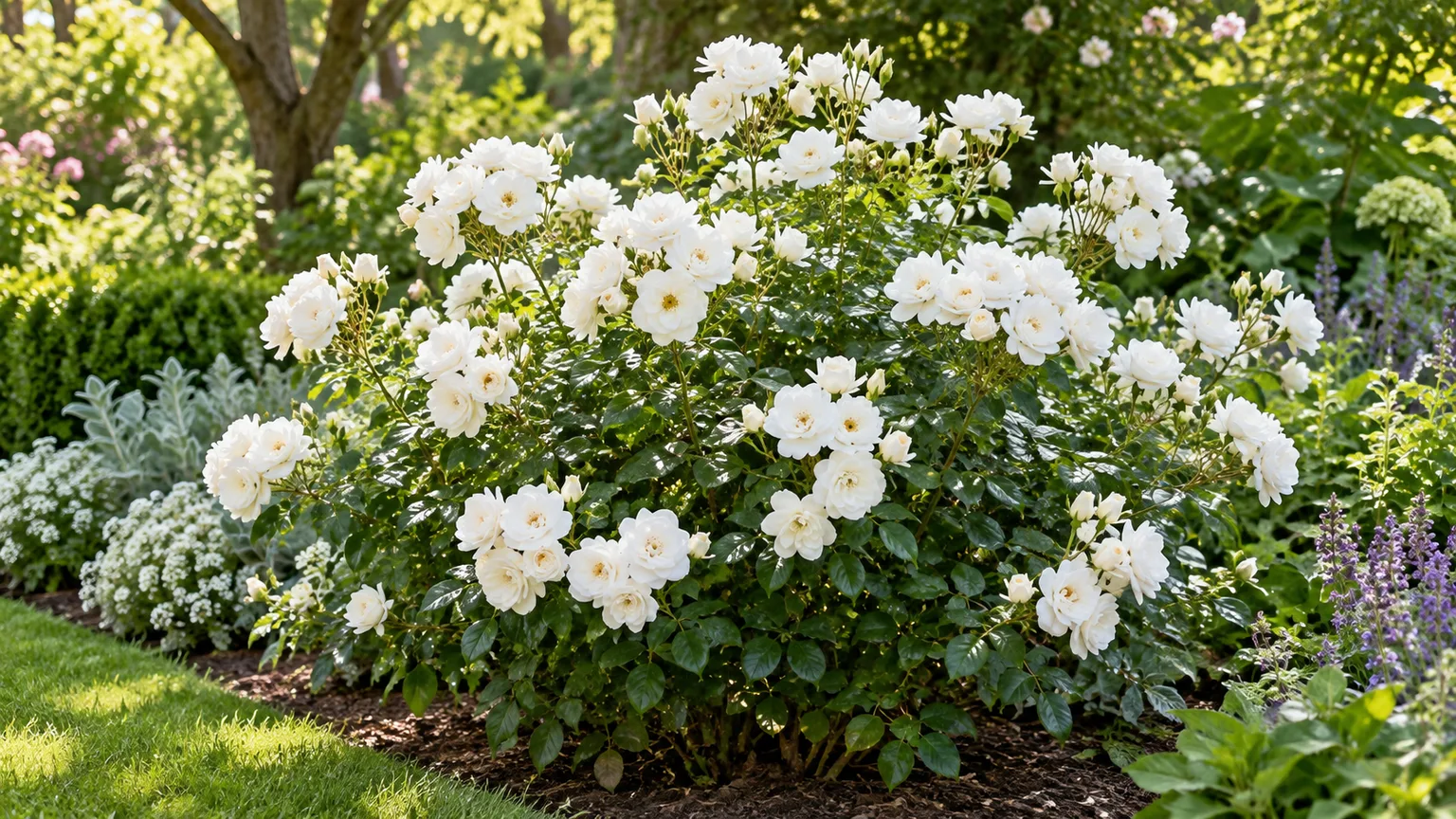
Floribunda roses repeat bloom in clusters, so they make a broad sweep of color rather than one large flower per stem. Give them sun, draining soil, and room for air; water deeply when the root zone is drying, feed by label, and prune moderately so the bush keeps enough flowering framework.
Their clustered habit also changes how you prune and deadhead. Leave more live cane than you would on a hybrid tea, and wait until a spray is finished before removing it.
| Care need | Practical starting point |
|---|---|
| Sun | Aim for at least six hours of direct sun; morning light is especially helpful. |
| Soil | Keep roots in fertile, airy soil that drains freely. |
| Water | Soak the root zone; adjust frequency to rain, heat, soil, and pot size. |
| Feeding | Use a rose or balanced garden fertilizer by label and stop before dormancy. |
| Pruning | Remove dead and crowded wood, then shorten live canes moderately. |
| Blooming | Remove a finished spray after its last flowers fade; leave open buds alone. |
What Floribunda Roses Are
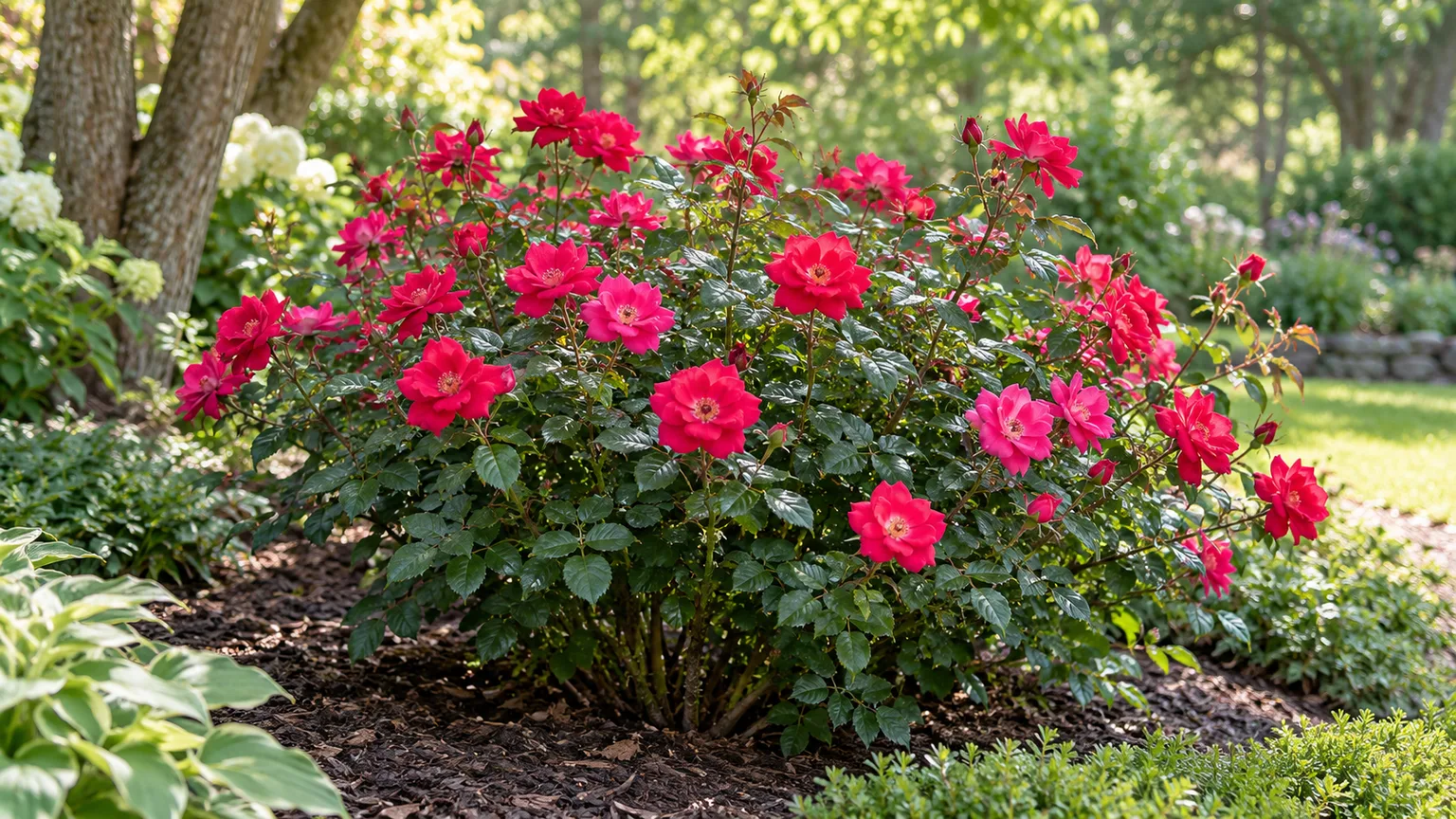
Floribundas are modern bush roses known for repeating their bloom and carrying several flowers on each flowering stem. The flowers are usually smaller than those of hybrid teas, but their clusters make a mature bush look full and colorful over a longer stretch of the season. The Royal Horticultural Society describes floribundas as cluster-flowered roses that can repeat from summer into late autumn, while Clemson HGIC notes that they are generally shorter and bushier than hybrid teas. (RHS rose-pruning guide; Clemson HGIC rose guide)
Look at the flowering pattern, not just one flower. A floribunda carries several buds and blooms together on a bushy shrub; a hybrid tea usually emphasizes a large flower on a longer stem. Confirm the class from the nursery tag because mature size and pruning needs vary by cultivar.
Is a Floribunda Right for Your Garden?
Choose a floribunda when the goal is many flowers across a bush rather than a few exhibition-style blooms. Clusters create a strong mass of color in mixed borders or informal hedges; shorter, branching stems may be less convenient for long-stem arrangements than hybrid teas.
Consider what the plant gives up as well as what it offers. Individual flowers are often smaller, fragrance ranges from little to strong, and a mature bush may take more width than its young nursery pot suggests. Clemson’s general guide puts many floribundas around three to four feet tall, but cultivar size differs; use the named variety’s mature spread on its label when planning a bed. (Clemson HGIC rose guide)
Before buying, make sure you can provide sun, airflow, and enough access to prune thorny canes. A tougher cultivar cannot make up for chronic shade or soil that stays saturated after rain.
Choose a Cultivar for Your Climate and Space
Start with the cultivar name, not the broad floribunda label. Check mature height and width, cold-hardiness information for your region, disease-resistance notes, and whether the flowers are fragrant or suited to cutting. The class includes plants with different habits and bloom colors; there is no single height, fragrance level, or disease-resistance rating that applies to every floribunda.
Use local recommendations to narrow the choice. A cultivar that performs well in a dry inland garden may need more disease management in a warm, humid one, and a plant sold as winter-hardy still needs a suitable root system and site. Clemson HGIC recommends asking local rose growers or American Rose Society chapters which roses perform best in a specific area; a county extension office or a reputable nursery can also help match the cultivar to local conditions. (Clemson HGIC rose guide)
Choose by mature size as well as flower color. A front-of-border cultivar should not hide plants behind it, while a hedge needs consistent size and room for width. Confirm the cultivar’s hardiness and whether it is own-root or grafted; the class alone does not determine winter survival.
Select the Site: Sun, Airflow, and Spacing
Give a floribunda a place that receives at least six hours of direct sun, with more sun generally supporting heavier bloom. Morning light is valuable because it dries dew from the foliage earlier in the day. Clemson HGIC recommends six to eight hours of sun and good air circulation; the RHS notes that roses can be selected for a range of sites, though the particular cultivar must suit the conditions. (Clemson HGIC rose guide; RHS rose-growing guide)
Space plants according to mature spread rather than a one-size measurement. Set the centers far enough apart that each bush can reach its expected width without its leaves constantly pressing against its neighbor. Better airflow speeds drying after rain and makes it easier to reach the base for pruning, cleanup, and watering; crowding creates a damp, thorny thicket that is harder to maintain.
Check light through the day, since a site may be shaded by a house or tree in the morning or heated by a wall late in the afternoon. Keep competing roots and dense groundcover away from the base, and avoid roof runoff or sprinkler overspray that keeps foliage wet.
Prepare Soil and Drainage Before Planting
Floribundas need soil that holds enough moisture for steady growth but lets excess water drain away. A deep, loose loam with organic matter is ideal; heavy, compacted soil can be improved across a broad bed with compost and by correcting drainage rather than filling one small hole with a different mix. In a naturally wet site, a raised bed may be more reliable than repeated amendments. (Clemson HGIC rose guide)
Test the soil before adding lime, sulfur, or a large dose of fertilizer. Roses can grow in a range of garden soils, and a soil test tells you whether pH or nutrients actually need correction. A thick annual surface mulch of compost or well-rotted organic matter improves the root zone gradually, while digging fresh manure or concentrated fertilizer against roots can injure a new plant.
Avoid soil that remains waterlogged after ordinary rain. If a test hole stays full, choose a better-drained position or raise the planting bed before planting; a new watering schedule cannot fix poor drainage.
When to Plant: Bare-Root vs. Container Roses
Bare-root roses are sold dormant, usually during the cool season. Plant them when the ground is workable and not frozen or waterlogged, and do not let the roots dry out while you prepare the site. In regions with cold winters, planting in early spring may be safest; where autumn stays mild and the soil remains workable, fall planting can give roots time to settle before summer heat. Local timing is more useful than a single calendar date.
Container-grown roses have a longer planting window, but avoid planting during a heat wave or when you cannot keep the root ball evenly moist as it establishes. Choose a cool, mild stretch if possible, then water well after planting. The RHS advises planting bare-root roses promptly unless the soil is frozen or waterlogged, while Gardeners’ World notes that autumn is a favorable time for many roses and that container plants have a wider window. (RHS rose-growing guide; Gardeners’ World rose guide)
Before buying, inspect canes and roots for health, and check local guidance for the graft-union height because recommendations vary by climate.
Planting a Floribunda Rose Step by Step
Planting well gives the rose a root system that can support a full season of clustered flowers. Prepare the site before opening the roots, and plant on a mild day when you have time to water thoroughly and settle the soil.
- Rehydrate and inspect the plant. Keep bare roots damp and follow the nursery’s soaking directions; remove only roots that are broken or clearly dead. Water a container-grown rose before lifting it from its pot so the root ball holds together.
- Dig a broad hole. Make it wide enough to spread bare roots naturally or to hold the container root ball without bending it. Loosen the surrounding soil so new roots can grow outward rather than hitting a smooth, compact wall.
- Set the rose at the locally recommended depth. For a bare-root plant, form a low mound in the center and fan the roots around it. For a potted rose, keep the root ball intact and check the graft-union guidance for your climate before backfilling.
- Backfill and water slowly. Return the native soil around the roots, firming gently to remove large air gaps without packing it hard. Water deeply so soil settles around the roots, then add mulch with a clear ring around the canes.
Do not add concentrated fertilizer to the planting hole or let it touch new roots. Clemson HGIC advises waiting until a newly planted bare-root rose has bloomed before applying chemical fertilizer. (Clemson HGIC rose guide)
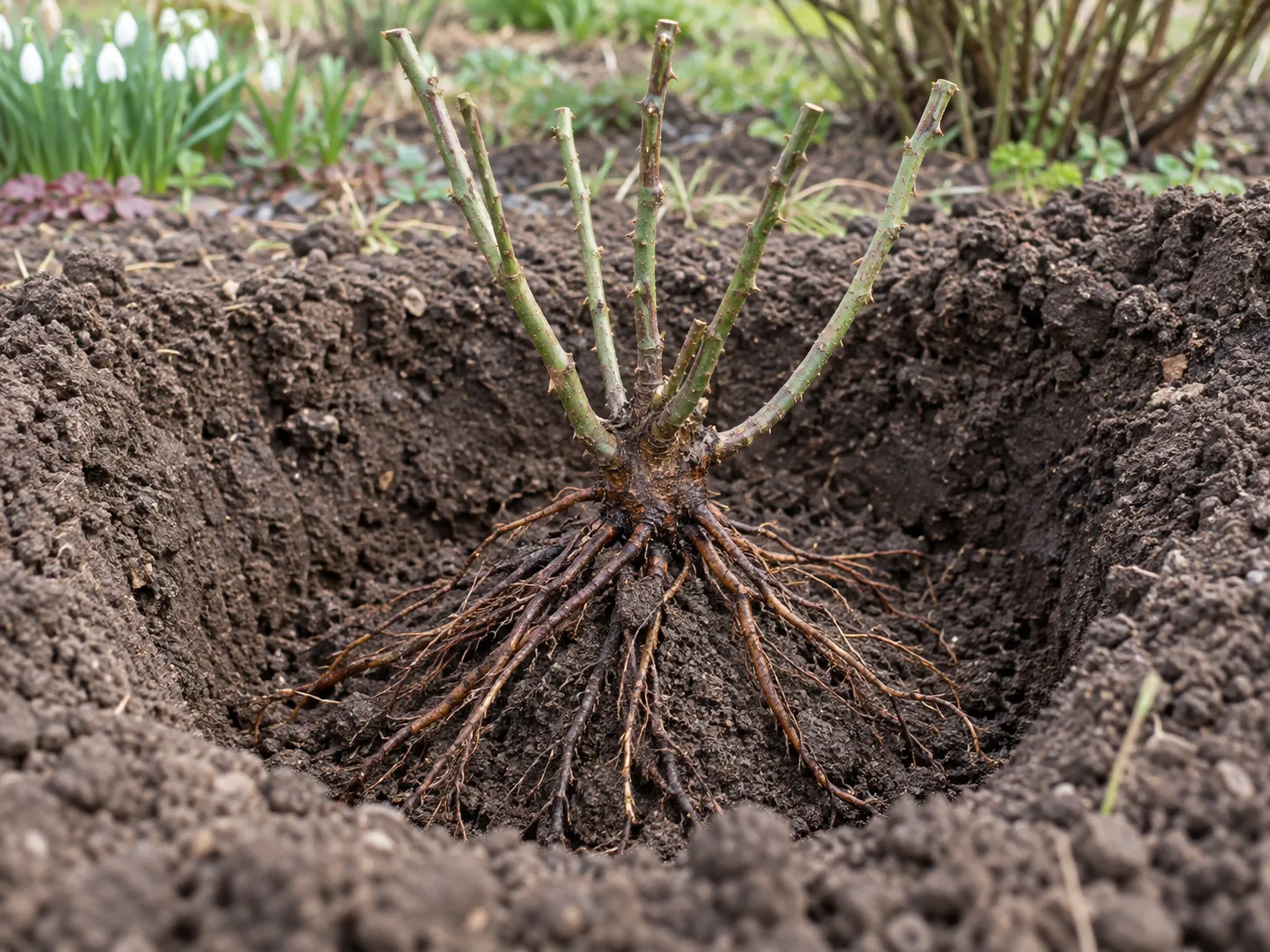
During the first season, keep the root zone evenly moist and avoid hard pruning while the plant establishes. If it wilts despite damp soil, check drainage and roots before adding more water.
Water Deeply, Then Adjust to Weather and Soil
For an in-ground rose, water the root zone slowly enough that moisture reaches below the surface. Established plants usually need extra water mainly through dry spells, while a recently planted rose needs more regular attention until its roots spread into surrounding soil. Rainfall, temperature, wind, soil texture, and the bush’s size all affect how quickly that happens.
A weekly calendar is only a starting point. Check the soil several inches below the mulch: if it is still cool and moist, wait; if it is dry and the plant is beginning to wilt, soak it thoroughly. RHS guidance for established border roses is to water during high-summer dry spells, while its container guidance notes that pots may need water daily in hot weather. That difference is why bed and pot roses should not share one fixed schedule. (RHS rose-growing guide)
Direct water at the base with a soaker hose or a slow stream, not over the leaves late in the day. Wet foliage that remains damp overnight can increase fungal disease pressure, and frequent shallow sprinkles encourage roots to stay near the hot soil surface. A soaker hose around the root zone is especially useful for a border planting.

Feed for Repeat Bloom Without Overfeeding
Floribundas need enough nutrients to grow new flowering stems, but more fertilizer does not guarantee more flowers. Excess nitrogen can push soft leafy growth at the expense of balanced flowering, and strong fertilizer can burn roots when soil is dry. Start with a soil test, then use a fertilizer labeled for roses or flowering shrubs at the rate printed on the package.
Timing depends on climate and product. Gardeners’ World recommends spring feeding; Clemson HGIC describes feeding as new growth begins and through flowering in South Carolina; the RHS suggests a spring feed and another after the first flush for repeat bloomers. Follow local advice and the product label rather than combining schedules. (Gardeners’ World rose guide; Clemson HGIC rose guide; RHS rose-growing guide)
Apply granular feed to moist soil around the drip line, not against stems or the graft union, and water it in. Do not feed a dry, heat-stressed, newly planted, or dormant rose to solve a different problem. A rose with yellowing leaves may have poor drainage or a disease issue rather than a nutrient shortage; identify the cause before adding fertilizer.
Mulch and Protect the Root Zone
A layer of organic mulch helps keep soil moisture more even, suppresses weeds, and cushions roots from temperature swings. Apply a few inches over the root zone after the soil warms in spring, leaving a small bare gap around the stems so the crown does not stay constantly damp. Renew the layer when it thins rather than piling fresh material against the canes.
Keep weeds down by hand or with shallow cultivation near the plant. Rose roots can run close to the surface, so deep hoeing around the bush may cut feeder roots just when the plant is trying to support new growth. Pulling weeds while the soil is slightly moist is easier and less likely to disturb the rose’s root zone.
Mulch is a moisture buffer, not a substitute for drainage. If soil underneath stays saturated, pull the mulch back and correct drainage before replacing it. (RHS rose-growing guide; Clemson HGIC rose guide)
Prune Floribundas for More, Better-Distributed Flowers
Do the main structural prune in late winter or early spring as the plant begins to resume growth, adjusting the date to your local climate. In a mild region that may be earlier; in colder areas, wait until the risk of severe winter weather has passed. Pruning too early can expose fresh growth to cold, while waiting until the bush is fully leafed out makes it harder to see the framework.
Start with clean, sharp bypass pruners and remove dead, damaged, diseased, rubbing, and crossing stems. Then thin a few of the oldest canes at the base if the center is crowded. Finish by shortening the remaining vigorous canes to shape the bush and encourage outward growth, making cuts just above a healthy outward-facing bud.
Keep floribundas taller than hybrid teas after pruning. Their flower display depends on many shoots carrying clusters, so cutting every cane down to a short stump sacrifices flowering points and can leave the plant with fewer sprays. The RHS recommends leaving floribunda stems longer with more buds than hybrid tea stems, and its pruning guide places the main pruning window in late winter to early spring. (RHS rose-pruning guide)

Treat an overgrown bush as a gradual renewal project. Remove dead and crowded wood in the first year, then take out a portion of the oldest canes in later seasons rather than cutting the whole plant back hard at once. A newly planted floribunda also needs lighter shaping while it establishes, not the full renovation cut used on a mature bush.
Deadhead the Spray, Not Every Bud
Floribunda sprays often open over several days, so do not remove a whole cluster just because its first flower has faded. Let the unopened buds finish, then remove the spray when the last flowers are spent. This preserves the display already forming while still taking away flowers that have finished their main show.
Use bypass pruners to cut just above a strong leaf node or outward-facing bud, following the stem down far enough to avoid leaving a long bare stub. The exact cut height matters less than a clean cut and a remaining healthy leaf. If you prefer rose hips or want to leave food and structure for wildlife, stop deadheading late in the season and allow some flowers to form hips.
Remove fallen petals and diseased leaves as you work, especially if the plant has black spot. The RHS recommends regular deadheading for repeat-flowering roses. (RHS rose-growing guide)
Prevent and Diagnose Common Rose Problems
A healthy site and regular inspection prevent many problems from becoming severe. Look over the undersides of leaves, newest shoots, flower buds, and the base of the plant at least once a week during active growth. If something changes suddenly, identify the symptom before reaching for a spray; insect feeding, fungal disease, water stress, and winter injury call for different responses.
Black Spot and Powdery Mildew
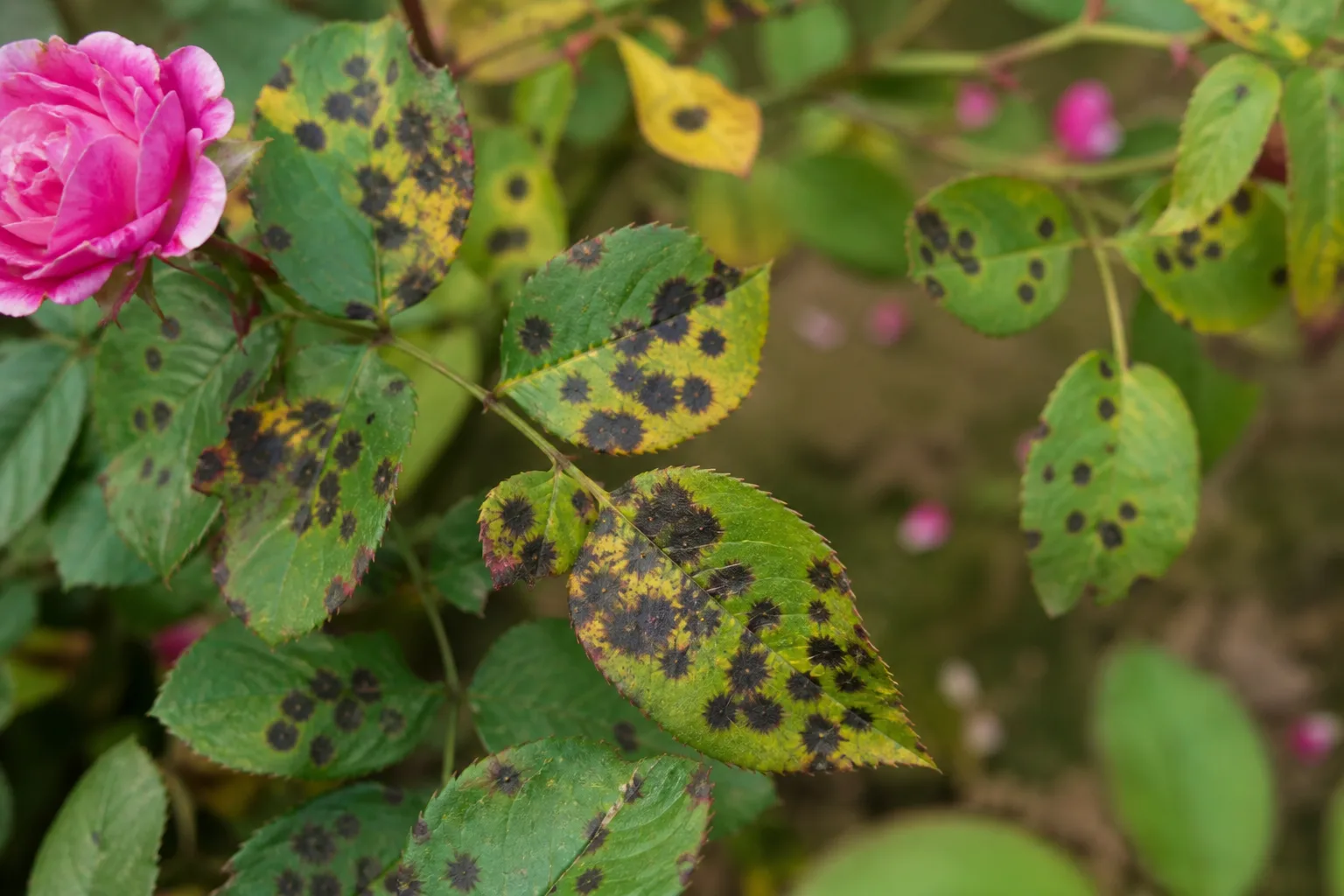
Black spot causes dark round leaf lesions, often with yellowing and early leaf drop. Wet conditions help the fungus build up, and infected leaves and stem lesions can carry the disease between seasons. Improve airflow, water at soil level, collect fallen leaves, and remove badly affected foliage without stripping every green leaf from the bush. The RHS notes that cleanup can delay disease but spores can still blow in on wind-driven rain, so choose a cultivar with local resistance and keep monitoring rather than expecting a one-time fix. (RHS rose black-spot advice)
Powdery mildew leaves a pale coating on leaves and shoots. Thin crowded growth and keep the root zone evenly watered; if the problem persists, ask a local extension service to confirm the cause before choosing a treatment.
Rose Rosette Disease
Rose rosette is a much more serious diagnosis than ordinary red new growth. Affected shoots may remain unusually red and distorted, grow in dense broom-like clusters, carry excessive soft prickles, or develop malformed buds. Many healthy roses naturally flush red, so color by itself is not enough to diagnose the disease; look for several abnormal traits together and ask an extension office if the pattern is uncertain.
There is no cure for confirmed rose rosette disease. Oklahoma State University Extension explains that the virus is transmitted by microscopic eriophyid mites and recommends removing symptomatic roses, including the root ball, because pruning one cane often fails and infected roots may remain. Work on healthy roses before suspect plants, keep tools and gloves clean, and bag removed material rather than blowing it through the garden. (Oklahoma State University Extension rose-rosette guide)

Troubleshoot a Floribunda That Is Not Blooming
Start by checking the growing conditions in order. First confirm the bush receives enough direct sun; then check whether the root zone is dry, waterlogged, or competing with large nearby roots. A plant that gets too little light, swings between drought and saturation, or has lost most of its leaves to disease may grow without producing a strong repeat display.
Next, review recent pruning and feeding. A severe cut at the wrong time removes flowering framework, while high nitrogen can push leafy growth; a newly planted rose may also need time to establish before it flowers heavily.
Finally, check for black spot, pests, and other stress. Remove finished clusters, but do not cut healthy new stems just because one flush has faded. If a healthy bush flowers poorly year after year, compare the cultivar’s sun needs with your site and consider moving it during dormancy.
Grow Floribundas in Containers
Floribundas can grow in large containers, but choose a compact cultivar and plan for more frequent watering and feeding. Use a sturdy pot with generous drainage holes and room for the mature root system; a small planter that dries quickly is a poor long-term home for a full-size rose.
Fill the pot with a quality container mix that drains well but holds some moisture. Do not use dense garden soil alone, and do not let the pot stand permanently in a saucer of water. Place it where the leaves receive ample sun and air movement; containers can dry faster than beds because their root zone is exposed on all sides.
Check pot moisture below the surface, water thoroughly when the mix starts drying, and use a fertilizer labeled for container roses. In cold-winter climates, protect the root ball by sheltering, insulating, or sinking the pot into the ground. (RHS rose-growing guide)
Prepare for Winter and Resume Spring Care
Use the cultivar’s hardiness rating and local winter pattern to decide on protection. A mild-climate floribunda may need only a clean root zone and mulch, while a grafted rose exposed to freeze-thaw cycles may need protection around the base; the whole class does not share one hardiness limit.
Stop feeding before dormancy and avoid heavy fall pruning that might stimulate tender shoots. Remove diseased debris, save shaping for the late-winter or early-spring window, and shorten only canes likely to whip or break in a very windy site.
Container roots are more exposed to cold than garden soil, so move a pot to shelter if the cultivar requires it. Water during dry winter spells when the ground is not frozen; Clemson HGIC advises reducing water in cold weather without letting roses dry completely. (Clemson HGIC rose guide)
Conclusion
Floribunda roses reward a gardener who works with their clustered, repeat-flowering habit. Give the cultivar enough sun and mature space, plant it into well-drained soil, keep water at the root zone, and use a moderate seasonal prune that leaves plenty of flowering canes.
During the season, wait for a spray to finish before deadheading it, and use regular inspections to catch black spot, pests, or suspicious distorted growth early. When a plant is struggling, check light, drainage, water, and recent pruning before adding fertilizer or cutting it back harder; the simplest correction is often the one that helps it recover.