Magnolia ‘Ann’ Care: Planting, Blooms, and Pruning
Magnolia ‘Ann’ is a compact Little Girl magnolia with later spring flowers. See its size, hardiness, ideal site, watering needs, pruning, and common problems.
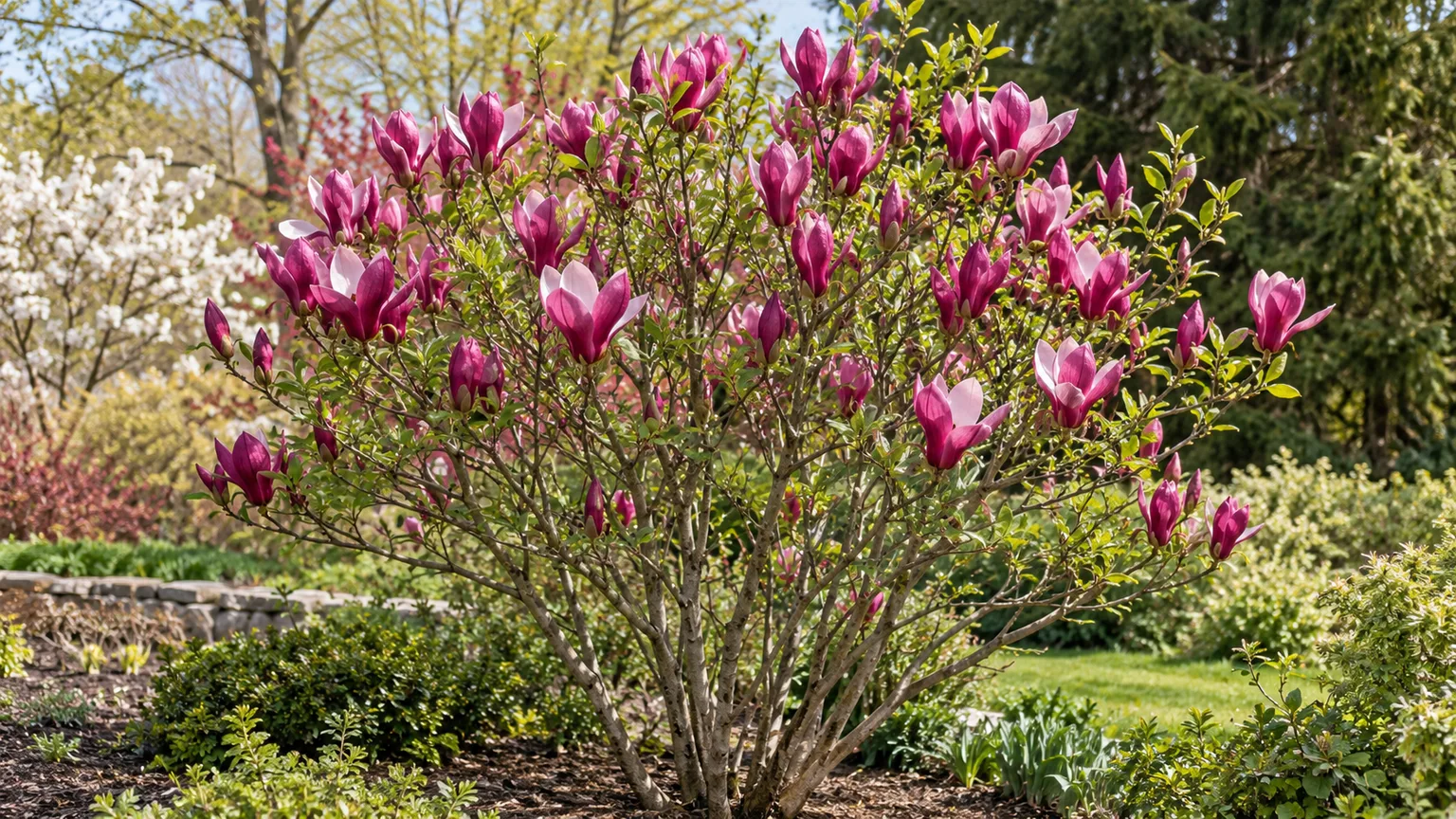
Magnolia ‘Ann’ earns its place in a smaller landscape with a useful combination: a rounded, multi-stem habit, deep reddish-purple spring flowers, and a bloom period that often follows the earliest magnolias. It is compact compared with many flowering trees, but it is not a tiny shrub; plan for a plant that can reach about 10 to 12 feet in both height and width, and give its roots a permanent home.
The most important care decisions happen before and just after planting. Choose a site with enough light, shelter from drying winds, and soil that holds moisture without staying soggy. ‘Ann’ flowers later than many magnolias, which can reduce the chance of frost damage, but a late freeze can still brown buds or open flowers.
Magnolia ‘Ann’ at a glance
| Feature | What to plan for |
|---|---|
| Plant type | Deciduous flowering shrub or small tree; usually multi-stemmed |
| Mature size | Commonly about 10–12 feet tall and wide; allow more room if local nursery data says it grows larger |
| Flowers | Upright, chalice-shaped, dark reddish-purple outside and paler inside; slightly fragrant |
| Bloom | Mid-spring; the calendar date shifts with climate and spring temperatures |
| Light | Full sun to part shade; more direct sun usually supports stronger flowering |
| Soil | Organically rich, moist but well drained; neutral to slightly acidic is a useful target |
| Cold range | Commonly listed for USDA Zones 4–8; late spring flowers remain frost-sensitive |
| Maintenance | Low after establishment; protect roots, water during dry spells, and prune sparingly |
These figures combine cultivar-specific references rather than a guarantee for every garden. The Missouri Botanical Garden lists ‘Ann’ at 10 to 12 feet tall and wide and places it in Zones 4 to 8; the RHS lists an eventual height and spread of roughly 2.5 to 4 meters, or about 8 to 13 feet. Differences like these are a reminder to use the range for planning and check the mature dimensions offered by a local nursery. (Missouri Botanical Garden Plant Finder; RHS plant profile)
Know the plant you are buying
‘Ann’ is one of the eight Little Girl magnolias developed at the United States National Arboretum. The Missouri Botanical Garden and Purdue Arboretum describe ‘Ann’ as a cross between Magnolia liliiflora ‘Nigra’ and M. stellata ‘Rosea’; the series was developed in the 1950s by Francis de Vos and William Kosar. That parentage matters because cultivar names are not interchangeable: Magnolia ‘Ann’ is not the same hybrid as M. × loebneri, a group that includes ‘Leonard Messel’ and comes from a different parent combination. (Missouri Botanical Garden Plant Finder; Purdue Arboretum Explorer; Horticulture: ‘Leonard Messel’ magnolia)
When shopping, look for the cultivar name ‘Ann’ on the nursery tag, not just “purple magnolia,” “lily magnolia,” or “Little Girl.” Other members of the series have different flower color, shape, and parentage. If the tag lists only a broad common name, ask the nursery for the botanical cultivar name and its local mature-size estimate before choosing a spot.
The cultivar is deciduous. Its oval green leaves follow the flowers and turn yellow before dropping in fall; that seasonal leaf loss is normal. It can grow as a broad shrub or be trained into a small tree when young, but its naturally low branching means a shrub form is usually the easier, more graceful fit.
Flowering time, color, and the frost trade-off
The flowers are the main reason to grow ‘Ann’: upright, cup-like blooms with roughly eight tepals, dark reddish-purple or magenta on the outside and paler pink or white within. They are smaller and more upright than the broad, saucer-shaped flowers of some magnolias, and they have a light fragrance rather than an overpowering scent. Depending on the plant and season, a few flowers may appear again in summer, but treat that as a bonus, not a second reliable flush. (RHS plant profile; Missouri Botanical Garden Plant Finder)
The Missouri Botanical Garden describes a mid-April to early-May bloom in its region and says the Little Girl series flowers about two to four weeks later than star and saucer magnolias. A University of Arkansas System Division of Agriculture account gives a shorter comparison—about seven to ten days later than many deciduous magnolias. Those estimates use different regional conditions and comparison plants, so neither is a universal calendar promise. The practical point is that ‘Ann’ usually flowers later than the earliest spring magnolias, but local warmth, exposure, and the year’s weather still set the date. (University of Arkansas System Division of Agriculture; Missouri Botanical Garden Plant Finder)
A later bloom is a risk reducer, not frost insurance. A warm spell can advance bud development, and a subsequent freeze can damage flowers even when the woody shrub survives unharmed. If your neighborhood regularly loses magnolia flowers to late freezes, compare bloom timing among cultivars at local gardens and nurseries rather than assuming every Little Girl cultivar opens on the same week.
Is ‘Ann’ the right magnolia for your space?
Use ‘Ann’ when you want spring flowers and can give a shrub roughly a 10- to 12-foot footprint. It works as a specimen in a lawn, at the edge of a mixed border, or as an informal screen where several plants have room to broaden. A line of plants can soften a boundary, but close spacing creates shade and competition as they mature; use the expected spread on the label to set centers rather than planting by the width of the pot.
Mature size and spacing
A young nursery plant may be only a few feet wide, but the mature canopy can be close to as wide as it is tall. Leave open space around the branches for airflow, flowers, and future growth, and keep the plant clear of roof edges, overhead wires, narrow paths, and utility access. If the site only works when you shear the plant every year or remove major branches, choose a smaller shrub instead of trying to hold ‘Ann’ below its natural size.
The Little Girl series is often described as suitable for compact gardens, but “compact” is relative to a large magnolia tree. The University of Arkansas System notes that these hybrids can reach about 15 feet and are best treated as large bushes. That broader ceiling makes ‘Ann’ a sensible choice for a small-to-medium yard, not a tight foundation strip with no room for a mature crown. (University of Arkansas System Division of Agriculture)
A large container is possible for a young magnolia, but it is rarely the low-maintenance way to keep a naturally broad shrub small. Containers dry and freeze faster than garden soil, and the roots eventually need more volume. If you are committed to container growing, choose a very large, stable pot with drainage and plan for regular moisture checks, root management, and winter protection; do not buy ‘Ann’ for a patio unless you can provide that long-term care.
Cold hardiness is not the same as frost-proof flowers
Cultivar references commonly place ‘Ann’ in USDA Zones 4 through 8, though some nursery listings and databases may differ. A zone range describes the winter minimum the plant is expected to tolerate when established; it does not tell you whether a flower bud will survive a sudden spring freeze. This shrub’s later flowering helps, yet the exposed buds and petals can still be injured by cold after a mild spell.
For a colder site, focus on a protected but not unusually warm location and avoid frost pockets where cold air settles. Do not interpret “hardy to Zone 4” as a promise of annual blooms in every Zone 4 garden. The tree may live and leaf out reliably while its flowers vary from year to year. (Missouri Botanical Garden Plant Finder; University of Arkansas System Division of Agriculture)
Choose a site that supports roots and buds
Magnolias reward a little planning because their fleshy roots can be damaged by disturbance, and an established specimen is difficult to move. Before planting, watch the proposed location after a heavy rain and through a sunny afternoon. Reject places that stay waterlogged or bake against pavement, and avoid putting the shrub where winter wind funnels between buildings.
Light, shelter, and exposure
Full sun generally produces the strongest flowering and a dense crown. Part shade is workable, especially light afternoon shade in a hot climate, but deep shade can leave the plant sparse and reduce the number of blooms. The University of Arkansas System recommends full sun for the best flower display and says light afternoon shade is tolerated. (University of Arkansas System Division of Agriculture)
Choose shelter from strong wind without forcing early bud opening. A sunny south- or west-facing wall can create a warmer pocket that encourages buds to swell before the rest of the garden; a late freeze may then catch them at a tender stage. The Missouri Botanical Garden specifically cautions against warm southern exposures for this reason. A site with morning sun, open air, and some wind protection is often a safer balance than a hot corner beside a wall. (Missouri Botanical Garden Plant Finder)
Soil and drainage
Aim for soil that is moist but well drained, enriched with organic matter, and acidic to neutral. ‘Ann’ can tolerate some clay, but tolerance does not mean it will thrive in a compacted basin that stays saturated. Roots need oxygen; if water pools after rain or the soil remains sticky and airless, fix the drainage before planting or choose a raised site.
Do not add peat, sulfur, or an acidifying fertilizer just because magnolias are often called acid-loving. Soil pH varies, and the RHS lists ‘Ann’ for acid or neutral conditions while Missouri Botanical Garden describes neutral to slightly acidic soil. Test first if leaves show persistent chlorosis or if your soil is strongly alkaline, then make amendments based on a local lab’s results rather than guessing. (RHS plant profile; Missouri Botanical Garden Plant Finder)
Plant Magnolia ‘Ann’ with minimal root disturbance
Plant in fall or early spring while temperatures are moderate and the soil is workable. In a region with wet winters, wait until the site drains; in a hot climate, avoid planting just before the most stressful heat. A healthy, container-grown plant can be planted outside these windows if you can keep the root ball evenly moist while it establishes. Magnolia planting guidance from BBC Gardeners’ World also emphasizes a broad, shallow hole, careful root handling, and watering during establishment. (BBC Gardeners’ World Magazine)
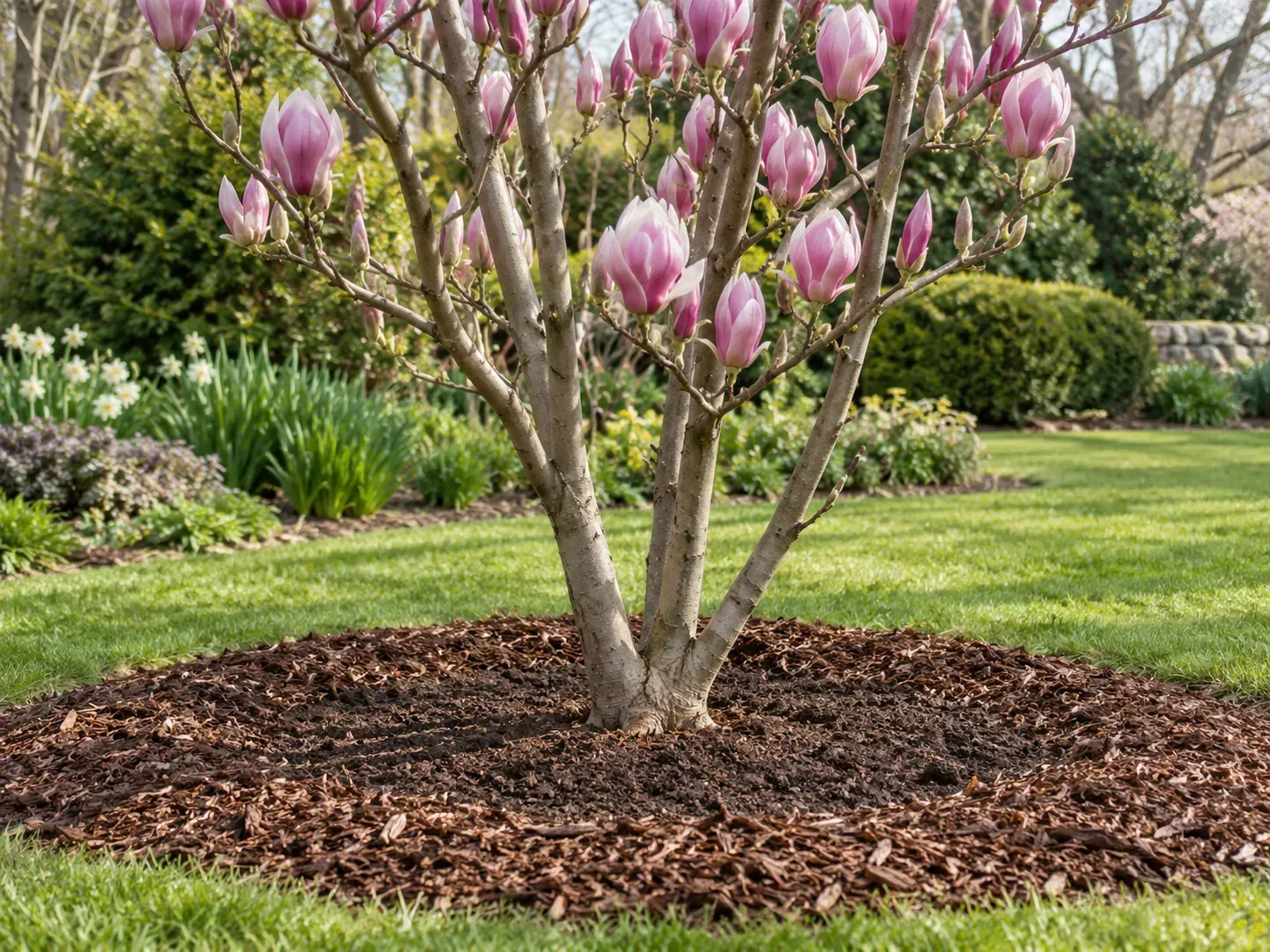
The planting example shows another ornamental magnolia; the same depth and root-care principles apply to ‘Ann’.
Dig a hole two or three times as wide as the root ball but no deeper than its current soil level. Set the plant so the top of the root ball sits level with the surrounding grade; burying the trunk base can keep bark wet and reduce oxygen around the roots. Backfill with the soil you removed unless a soil test or drainage correction calls for a specific change. Do not put a concentrated layer of fertilizer in the planting hole.
Handle the root ball gently and do not pull the plant around by its trunk. If roots circle tightly around the outside of a container, loosen only the outer mat enough to direct them outward; avoid tearing deeply into a magnolia’s fleshy roots. Water the root ball and surrounding soil slowly after planting, then keep the area free of turf and foot traffic while roots spread.
Water through establishment and mulch the root zone
For the first growing season, check soil moisture every few days during warm or dry weather. Water when the upper few inches begin to dry, soaking the whole root ball and the soil just beyond it rather than giving the trunk a quick splash. The exact interval depends on rain, temperature, wind, and soil texture; “twice a week” can drown a plant in clay or leave it thirsty in fast-draining sand.
Once ‘Ann’ is established, it can handle brief dry periods better than a new transplant, but prolonged drought can stress the plant and reduce growth. Water deeply during extended dry weather, then allow excess water to drain before watering again. If leaves droop while soil is still wet, stop adding water and check drainage or root health first.
Apply about 2 to 3 inches of organic mulch over the root zone to moderate temperature and slow evaporation. Spread it broadly under the canopy as the shrub grows, but leave a clear gap around the stems so mulch does not pile against bark. A wide mulch ring also reduces competition from grass and protects the shallow root area from mowers.
Fertilize only when a real need is identified
A healthy, established ‘Ann’ in reasonably fertile soil does not need a fixed monthly feeding schedule. Excess nitrogen can encourage leafy growth without fixing poor drainage, root disturbance, too much shade, or late-frost damage. Before applying fertilizer, look for a pattern: Is growth weak across the whole shrub? Are leaves unusually pale? Has the plant been moved, drought-stressed, or planted in compacted ground?
If symptoms persist, get a soil test through an extension service or reputable laboratory and follow the recommendation for that soil. Do not apply blood meal or a high-nitrogen product simply to “make it bloom.” Flowering depends on plant maturity, light, bud survival, water stress, and pruning as well as nutrition. The RHS suggests feeding newly planted magnolias modestly in their first years, then feeding only where poor soil or weak performance makes it useful; avoid turning that advice into a routine dose for every garden. (RHS magnolia growing guide)
Prune lightly and protect next year’s flowers
‘Ann’ usually needs only removal of dead, broken, crossing, or diseased branches. Make small cuts just outside the branch collar, and avoid topping or shearing the shrub into a narrow shape. Hard cuts can leave large wounds and remove the branches that would carry future blooms; if the space requires severe annual pruning, the site is too small for this cultivar.
Timing advice varies slightly across horticultural references. Missouri Botanical Garden recommends pruning as needed immediately after flowering, while RHS guidance places deciduous magnolia pruning from midsummer to early autumn. For a few small corrective cuts, wait until the current flowers have finished and use a dry period; for significant work, confirm the local timing with an extension service because climate and the amount removed matter. The safer default is to prune less, not to chase a precise date. (Missouri Botanical Garden Plant Finder; RHS plant profile; BBC Gardeners’ World Magazine)
If you want a small tree rather than a shrub, begin shaping a young plant gradually by selecting a few strong stems and removing only a small amount of lower growth over time. Do not attempt to convert a mature multi-stem shrub in one season. Keep the natural form if you are unsure; its broad, rounded shape is one of the reasons ‘Ann’ works well as a specimen plant.
Propagate with realistic expectations
Seedlings will not reliably reproduce the named ‘Ann’ cultivar. A seed-grown magnolia inherits a mix of traits and may differ in flower color, bloom timing, and growth habit, so it is not a dependable way to make a matching plant. If you want a true-to-name shrub, buy a correctly labeled ‘Ann’ or propagate vegetatively.
The RHS lists softwood cuttings from late spring to early summer and semi-ripe cuttings from late summer to autumn as possible magnolia methods. Cuttings can be slow or inconsistent, so treat them as an experiment rather than a guaranteed shortcut: use clean material, a free-draining medium, bright indirect light, and steady moisture without waterlogging. Keep any rooted cutting protected while it develops a substantial root system, and harden it gradually before moving it outside. (RHS plant profile; BBC Gardeners’ World Magazine)
Diagnose pests, diseases, and care problems
Magnolias can have scale insects, thrips, weevils, snails, leaf spots, canker, or dieback, but an isolated blemish is not proof that the whole shrub needs treatment. Inspect leaves and stems, note whether damage is spreading, and check the plant’s watering and drainage before reaching for a spray. Missouri Botanical Garden lists these pests and diseases for ‘Ann’; RHS also lists scale, capsid bugs, fungal leaf spot, and root-rot organisms among potential problems. Use local extension guidance and product labels if a confirmed pest requires control. (Missouri Botanical Garden Plant Finder; RHS plant profile)
Few or no flowers
Start with the plant’s age and its recent history. Newly planted magnolias may spend time establishing roots before they flower well; a plant that is growing leaves but not blooming is not necessarily underfed. Then check whether it receives several hours of sun, whether it dried repeatedly during the previous summer, and whether heavy pruning removed flowering wood.
Next, consider the weather. A warm winter or early spring can move buds forward, and a freeze can destroy that season’s display without killing the shrub. If the plant has flowered before but now has few buds, avoid fertilizing or pruning until you have ruled out shade, drought, frost, and transplant stress. Correct the site or watering problem and reassess after another growing cycle.
Flowers browned after a late freeze
Brown, limp petals after a freezing night usually indicate flower injury, not a disease that needs fungicide. The shrub may remain healthy and leaf out normally even after the entire display is lost. Wait for new growth before removing branches, and do not cut back healthy wood merely because this year’s flowers turned brown.
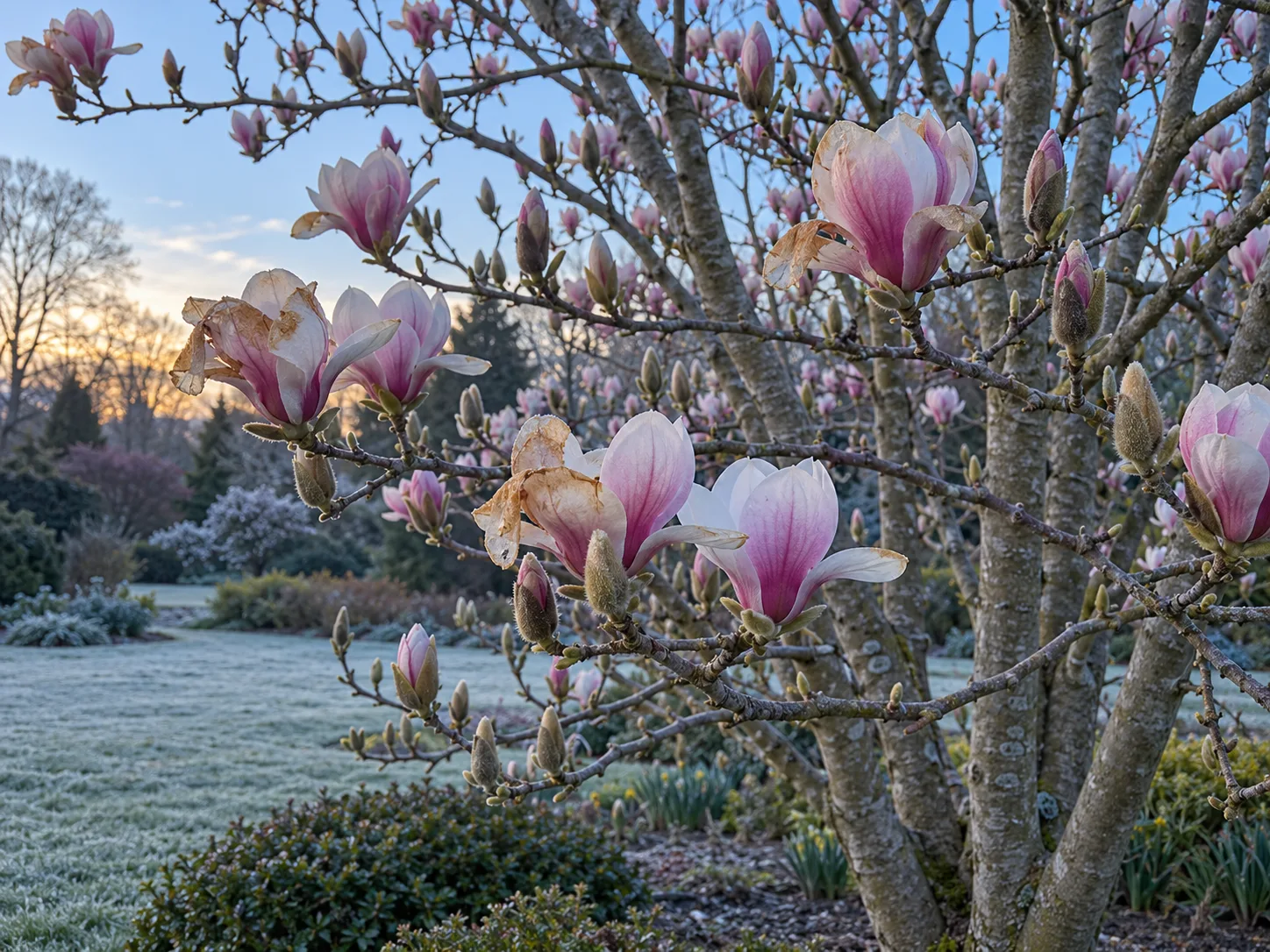
This image shows late-frost injury on a related magnolia; ‘Ann’ can also lose flowers during an unusually late freeze.
The practical prevention is choosing a later-flowering cultivar and a site that avoids both frost pockets and heat-triggered early bud opening. The University of Arkansas System describes the Little Girl hybrids as later than many deciduous magnolias, while the Missouri Botanical Garden warns that a warm southern exposure may advance buds. No placement can guarantee flowers after every spring freeze, but avoiding those extremes improves the odds. (University of Arkansas System Division of Agriculture; Missouri Botanical Garden Plant Finder)
Yellow leaves or branch dieback
Yellow leaves in autumn are part of this deciduous shrub’s normal cycle. Growing-season yellowing needs a closer look: check whether the soil is bone-dry or staying saturated, whether yellowing starts on new or older leaves, and whether the pattern affects one branch or the whole plant. Do not assume a pH or nutrient problem from leaf color alone; a soil test is more useful than adding fertilizer or acidifier at random.
A few leaf spots can appear without threatening the whole plant. Remove fallen diseased foliage, keep irrigation at soil level, and prune only clearly dead or broken wood with clean tools. If entire branches are declining, bark is splitting, or dieback continues despite corrected moisture, photograph the symptoms and contact a local extension service or certified arborist for a diagnosis; root damage, canker, and root rot need different responses.
Conclusion
Magnolia ‘Ann’ is a good fit when you want a deciduous spring-flowering shrub with a manageable—but still substantial—10- to 12-foot footprint. Give it a permanent, sheltered site with sun, moisture-retentive but well-drained soil, and enough open space to keep its natural form. Water through establishment, mulch broadly, and skip routine fertilizer and heavy pruning unless a clear need appears.
Its later bloom gives ‘Ann’ an advantage over many early magnolias, not immunity from spring freezes. Choose the cultivar by its correct name, think of winter hardiness and flower-bud survival as separate questions, and let the local climate guide expectations. That simple planning prevents the most common disappointments: an oversized plant in a cramped bed, stressed roots after transplanting, and a lost display blamed on the wrong cause.