How to Grow and Care for Loblolly Pine
Loblolly pine grows quickly and very large. Get practical advice on climate, spacing, planting, pruning, watering, and common pine problems.
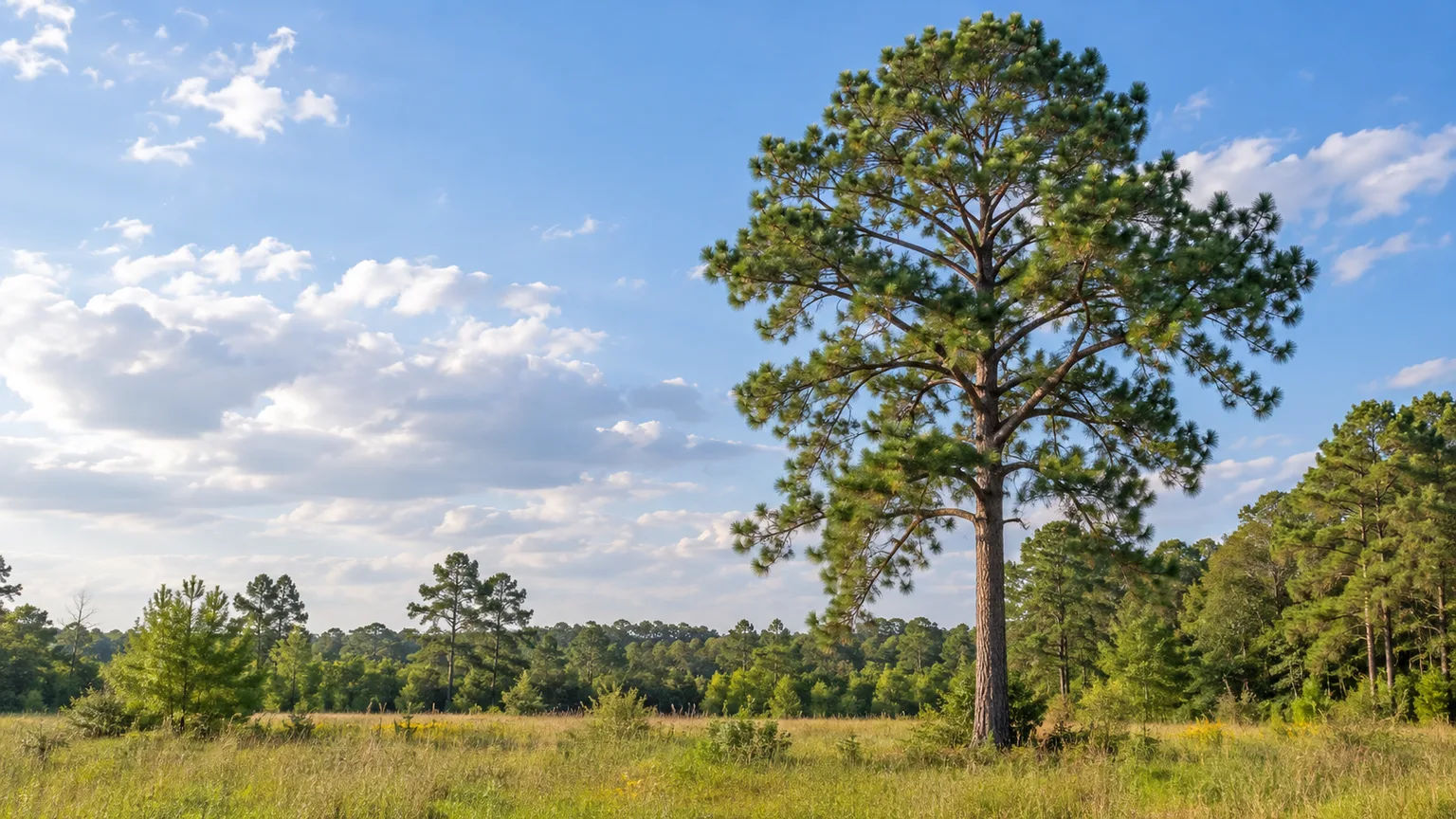
Loblolly pine (Pinus taeda) is a fast-growing evergreen native to the southeastern United States. It can become a handsome, straight-trunked shade tree, but its mature scale matters: expect roughly 60 to 100 feet tall and a crown that may spread 20 to 40 feet, with larger trees possible on favorable sites. That is a forest tree’s footprint, not a compact privacy shrub’s.
The most important care decision happens before planting. Choose a large, open site away from buildings, overhead wires, and the defensible space around a home; NC State Extension rates the species as highly flammable. Once the site fits, loblolly pine is adaptable. Give a young tree sun, room for its roots and crown, and steady moisture while it establishes. Mature trees usually need little routine feeding or pruning.
Is Loblolly Pine Right for Your Property?
Plant a loblolly pine when you have room for a tall canopy and want a native evergreen for a meadow edge, woodland, broad rural screen, or restoration planting. It grows naturally across a wide range of southeastern sites, from poorly drained floodplains to well-drained uplands, and it provides seeds and cover for wildlife. Those strengths are most useful on spacious properties where the tree can mature without being repeatedly cut back.
A small suburban lot, a narrow strip beside a house, or a location under wires is a poor fit. The North Carolina Extension Gardener Plant Toolbox also flags loblolly as highly flammable and advises against planting it within a home’s defensible space. Follow local wildfire guidance for the required clearance; a generic distance cannot replace rules shaped by slope, fuels, and local fire conditions. If your site is close to the house, choose a smaller, lower-flammability native tree instead.
How to Identify a Loblolly Pine
Look for a tall pine with a straight central trunk, an open lower section as the tree matures, and medium-long needles gathered in bundles of three. A bundle of pine needles is called a fascicle. Loblolly needles are often about 6 to 10 inches long; they are longer than many familiar pines but shorter than the especially long needles of longleaf pine. Check several branches, because damaged or fallen needles can make identification harder.
The cones are woody, generally about 3 to 6 inches long, and have prickly scales with a sharp point. They may remain on the tree for a time rather than dropping immediately. Young bark is reddish to gray-brown and scaly; older trunks develop broad, irregular plates. These features help distinguish a loblolly from other pines, but identification from a cone or needle alone can be uncertain. If you are selecting seedlings for a large planting, buy stock labeled Pinus taeda from a reputable nursery or forestry program.
Climate, Light, and Soil That Suit Loblolly Pine
Match the tree to your region and seed source
Loblolly pine is a southeastern species, and hardiness zones 6 through 9 are a useful broad guide rather than a promise. The northern and inland edge of its range can expose trees to harder winters than the Coastal Plain. A zone label describes a minimum-temperature range; it does not tell you whether a particular seedling’s family is adapted to your site or how it will handle late spring freezes, ice, or wind.
That distinction matters in colder or inland parts of the range. In a 2025 guide, NC State Extension explains that seedling families with warmer, more coastal ancestry can break bud earlier and set buds later, leaving tender growth exposed to cold. Ask a local Extension forestry office, conservation district, or reputable regional nursery about locally appropriate stock rather than choosing the fastest-growing seedling by catalog description alone. This is especially important for reforestation or a group planting, where one poorly matched source can create widespread damage.
Choose sun and soil with the right moisture balance
Choose a site with full sun—about six or more hours of direct light. Loblolly can tolerate some shade, but open light supports a stronger, faster-growing crown. It prefers moist soil and is adaptable to sand, loam, and clay; acidic soil suits it, though it can tolerate some alkaline conditions. The Mississippi Forestry Commission describes its habitat from deep, poorly drained floodplains to well-drained slopes, which explains why the species is more flexible than a pine that requires uniformly dry, sandy ground.
Adaptable does not mean every wet site is safe. A tree that tolerates periodic wetness is not a reason to plant into a spot where water stands around the root collar for long periods, nor does a drought-tolerant mature pine need to be kept saturated. Check the site after heavy rain and during dry weather. If water pools for days, the lawn stays soggy, or the planting area is compacted, resolve drainage and soil compaction before you plant or choose another tree better suited to that condition.
Give a Mature Loblolly Pine Enough Space
Plan around the tree it will become, not the small nursery specimen. Published landscape dimensions commonly fall near 60 to 100 feet tall and 20 to 40 feet wide; mature wild or forest-grown trees may exceed those figures. Leave generous room between the trunk and the house, garage, fences, paved areas, septic components, and neighboring trees. The crown widens and lower branches are naturally shed with age, so a young tree that looks slender can eventually shade a broad area and drop cones and needles over it.
Check the location of overhead and underground utilities before digging, and never rely on topping to keep the mature tree away from a wire. Wind damage is a known concern, so consider exposure and the consequences of a large branch or tree falling. The Mississippi Forestry Commission describes loblolly as one of the fastest-growing southern pines and a major timber tree. That speed is useful for acreage and naturalized screens; on a tight lot, it shortens the time before a spacing mistake becomes expensive. If you cannot picture the full canopy over your property, mark the expected crown diameter on the ground before buying.
When to Plant Loblolly Pine
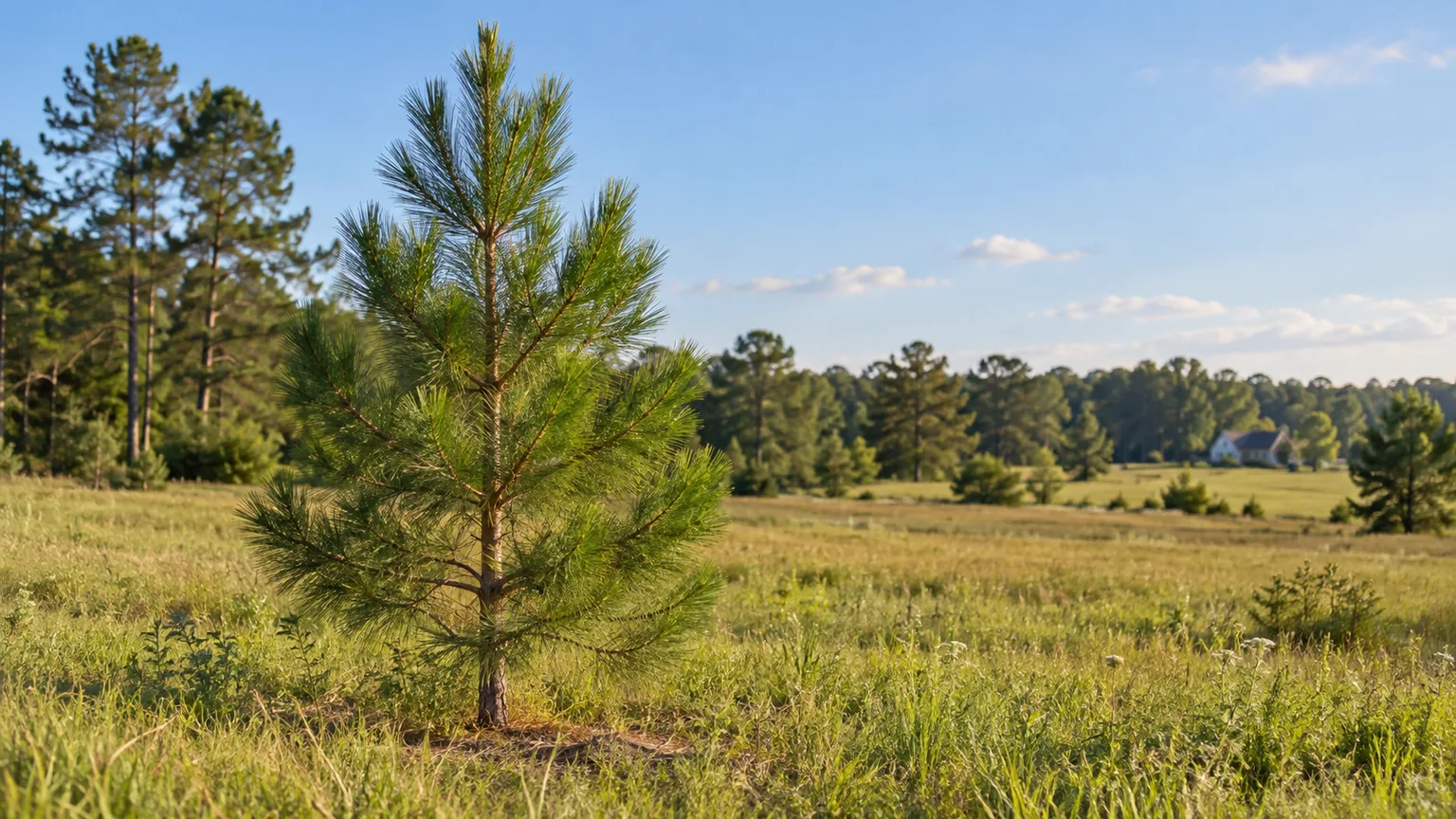
In the Southeast, plant during the cool dormant season, commonly late fall through winter while the soil is workable. Cooler weather reduces heat stress while roots begin settling into the surrounding soil. Bare-root seedlings are usually sold for a limited winter planting window; follow the nursery’s regional schedule and keep roots protected from drying between pickup and planting. Container-grown stock gives you more flexibility, but planting during mild weather still makes establishment easier than setting a new tree into peak summer heat.
Avoid planting into frozen soil, saturated mud, or a forecast stretch of hot, dry weather if you can wait. If spring planting is unavoidable, water carefully and check soil moisture more often through the first hot season. Trees planted in mild, rainy weather can still dry out if their root balls are small or exposed, so do not treat the calendar as a substitute for checking the soil.
How to Plant a Loblolly Pine Step by Step
Start with a healthy, correctly labeled seedling. Reject stock with a damaged central leader, dried-out roots, a cracked root ball, or obvious cankers and swellings. For a container tree, slide it out and inspect the roots: tease apart a few circling roots around the outside, and do not plant a tight root-bound mass as-is. Keep the root ball moist while you prepare the site, but do not leave it sitting in standing water.
Dig a hole wider than the root ball and no deeper than the distance from its base to the root flare. The flare is where the trunk begins to widen into the main roots. Set that point level with, or slightly above, the finished soil grade; planting too deep can bury the trunk and keep the collar wet. Backfill with the soil you removed, gently firm it to remove large air pockets, then water slowly so soil settles around the roots. Skip fertilizer and rich amendments in the hole unless a soil test or qualified local recommendation indicates otherwise.
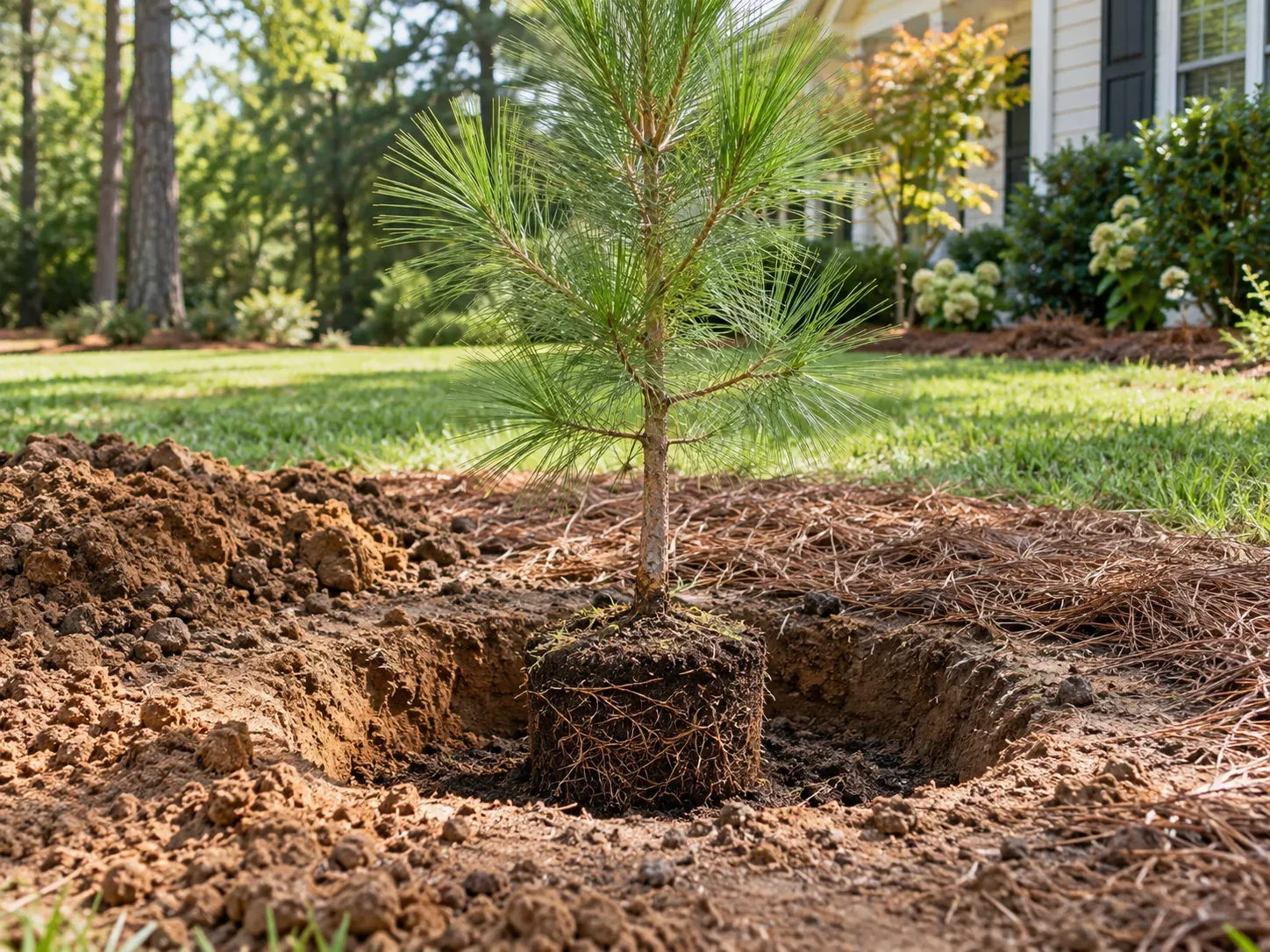
Spread a thin layer of mulch over the root zone, leaving a clear gap around the trunk. The mulch should conserve moisture and limit lawn competition, not form a wet mound against the bark. Stake only if the root ball shifts or the site is unusually exposed, and remove temporary ties after the tree can stand securely. A planting that leans, rocks, or has a buried root flare is easier to correct immediately than after a season of growth.
Watering During Establishment and Afterward
For the first growing season, water when the soil around the root ball begins to dry. Apply water slowly over the root ball and the soil immediately around it so moisture reaches the active roots instead of running off the surface. Check by feeling or digging a small test point several inches down; the surface can look dry while the root ball is still moist, or look dark after rain while the planting hole remains dry. Adjust for rainfall, soil texture, heat, and the size of the seedling rather than following a fixed weekly schedule.
In the second season, keep checking during long dry spells, especially if the tree has not put on new growth or the root zone is sandy. Once established, loblolly pine tolerates occasional dry periods and generally does not need regular irrigation in a suitable climate. Water deeply during prolonged drought if the soil is dry, but do not water automatically after every rain. Persistent saturation can stress roots even in a species that naturally occupies wet habitats.
Mulch and Fertilizer: What Helps and What Does Not
A modest mulch ring is usually more useful than a fertilizer bag. Keep grass and weeds from competing directly with a young pine, spread a loose layer of organic mulch over the root zone, and leave several inches around the trunk bare. Refresh mulch only when it has broken down; repeatedly piling new layers can bury the root flare and hold excess moisture against bark.
Do not fertilize just because a young tree grows more slowly than expected. First check whether the leader is alive, the root flare is at grade, the soil has been too wet or too dry, and turf is competing for water. If poor growth continues, submit a soil sample through your county Extension service and use its interpretation to decide whether fertilizer is needed. Excess nutrients cannot correct a bad site, buried roots, drought, or insect injury, and a high-nitrogen application can encourage growth that is not well matched to the tree’s ability to establish.
Pruning Without Ruining the Tree’s Shape
Loblolly pine needs little routine pruning. Keep its single central leader when possible, and remove only dead, broken, crossing, or clearly diseased branches that can be reached safely. Do not shear it into a hedge or cut the top to control height; removing the leader changes the tree’s natural form, and cutting into old, bare wood may leave an empty gap rather than trigger useful regrowth.
The practical rule from Fine Gardening’s conifer-pruning guidance is to decide why a cut is needed before making it. For a small branch, use clean, sharp tools and cut just outside the branch collar rather than flush to the trunk or leaving a long stub. Do not remove a large share of the live crown to solve a space problem. If the tree is tall, near a structure, or has a damaged trunk or competing leaders, consult an ISA Certified Arborist; climbing or topping a mature pine is not a homeowner pruning project.
Growing Loblolly Pine From Seed
Growing from seed is possible, but it is a long-term way to produce a variable tree, not a shortcut to a named selection. Loblolly pines produce separate pollen and seed cones on the same tree. A mature seed cone takes many months to develop; Gardening Know How estimates about 18 months, so wait for brown, mature cones rather than collecting green cones and expecting viable seed. Regional seed source matters: a seedling from a warm coastal parent may not be the best choice for a colder inland yard.
Collect mature cones where collection is permitted, let them dry in a ventilated place until the scales open, and separate the winged seeds. Sow fresh seed shallowly in a clean, free-draining seed mix and keep it evenly moist, not waterlogged. Give seedlings bright light and good air movement, then acclimate them outdoors rather than keeping a forest pine as a permanent indoor plant. Protect trays from drying and seed-eating wildlife. For a landscape tree, compare the time and genetic uncertainty of home-grown seedlings with buying locally adapted nursery stock. Cuttings are possible in specialized propagation, but seed or a nursery seedling is more realistic for most home gardeners.
Common Pests and Diseases to Watch For
Loblolly pine can be affected by insects and fungal diseases, but a single discolored needle is not a diagnosis. Look for patterns: whether damage is confined to one shoot or spread through the crown, whether the newest growth or older interior needles are affected, whether you can see resin, holes, sawfly larvae, or a swelling on the stem, and whether the symptoms began after drought, transplanting, or a hard freeze. Take clear photos and note dates before treating anything.
Fusiform rust and tip dieback
Fusiform rust can cause conspicuous swollen areas or spindle-shaped galls on stems and branches, sometimes with orange spores in spring. On a young trunk, a gall that encircles the stem can weaken or kill the portion above it. The species is susceptible to fusiform rust and rots, as noted by NC State Extension. Do not assume every dead tip is rust, and do not apply a fungicide without a confirmed diagnosis and a label that fits the situation. Ask your county Extension office or a forestry professional to inspect a young tree with stem swellings or recurring shoot dieback.
Tip dieback can also follow cold injury, drought, root disturbance, or insect feeding. If the top is damaged after an unusually warm spell followed by a freeze, seedling provenance may be part of the explanation; NC State’s discussion of loblolly seedling genetics explains why the timing of bud break varies among families. Note whether damage is limited to new tips or is moving down multiple limbs. That pattern helps an Extension diagnostician distinguish a one-time weather injury from a continuing problem.
Pine beetles, sawflies, and other insects
Southern pine beetles and pine engraver beetles are among the insects associated with loblolly pine. Sudden fading across a large part of the crown, multiple pitch tubes, boring dust, or many small exit holes can signal bark beetle activity, but symptoms vary with the insect and stage. A stressed tree can attract pests, and a large outbreak may involve nearby pines rather than one isolated specimen. Contact Extension or a state forestry office promptly if several trees decline together or you see suspected beetle galleries; do not attempt to diagnose or spray a tall tree from the ground based on needle color alone.
Sawfly larvae may feed in groups on needles, leaving patches of stripped foliage. Inspect the affected branch for caterpillar-like larvae before reaching for a pesticide. If the tree is small and the infestation is limited, local Extension guidance can help identify the insect and choose a proportionate response. The NC State Plant Toolbox links loblolly to several regionally relevant conifer insects, including pine sawflies and beetles, so the exact pest should be identified rather than treated as a generic “pine bug.”
Yellow or brown needles: how to triage them
Pines do not keep every needle forever. Loblolly needles can remain for more than one growing season, so some older needles closer to the trunk may yellow and drop while the newest tips remain green. If the change is gradual and limited to interior needles, inspect the outer growth before treating the tree. A naturally shedding inner layer is different from an entire branch turning brown, a sparse crown, or new growth dying back.
When the newest needles or whole branches discolor, check recent weather and the root zone first: has the tree been dry for weeks, planted too deeply, disturbed by construction, or kept in saturated soil? Look for resin, galls, chewed needles, and dead shoot tips. Salt or herbicide exposure and root injury are also possible depending on the site. Avoid adding fertilizer as a first response. If discoloration progresses, affects the leader, or appears on several nearby pines, send photos and a sample to your county Extension service or ask a certified arborist to assess the crown and roots.
Winter and Storm Care
A well-sited, established loblolly pine usually needs little winter protection within its adapted range. For a newly planted tree, maintain the mulch ring, water during extended dry periods before the ground freezes, and protect the trunk and root zone from mower and string-trimmer injury. Do not wrap the crown or use a warm-season fertilizer late in the year to force tender growth. A mild autumn followed by a sharp freeze can injure seedlings with poorly matched genetics, especially near the colder edge of the species’ range.
No planting choice eliminates storm risk. Loblolly can suffer wind damage, and snow or ice can break branches or deform a leader. Keep the tree’s mature canopy clear of targets, avoid topping, and have a professional inspect a large split or hanging limb. After a storm, stay clear of trees touching utility wires and report them to the utility; do not pull down a suspended branch yourself. If you are establishing a forestry stand rather than one landscape tree, regional seedling choice and stand management should be planned with a forester.
Loblolly Pine vs. Longleaf Pine
Both are southeastern native pines, but they are not interchangeable. Loblolly is usually the quicker-growing, adaptable choice for moist sites and broad naturalized plantings. Longleaf pine has much longer needles and is associated with well-drained sandy habitats and longleaf pine ecosystems. The Mississippi Forestry Commission’s comparison describes those differences in habitat and growth form; NC State Extension also notes that loblolly’s needles occur in bundles of three and are shorter than longleaf’s.
Choose by site and purpose, not by which seedling looks best in a pot. A dry, deep-sand property may be a better match for longleaf; a moist, roomy southeastern site may suit loblolly. Local restoration goals, prescribed-fire planning, and wildlife habitat can change the recommendation, so consult a native-plant or forestry specialist where those priorities matter. Both trees need room to mature, and neither should be placed where its mature crown conflicts with a home’s fire-safety plan.
Conclusion
Loblolly pine is an excellent tree for the right large southeastern site, and an avoidable mistake on a small or fire-prone property. Before planting, confirm that your climate and seed source match, the soil is suitable, and there is room for a 60- to 100-foot tree well outside utilities and defensible space. Then plant during mild dormant-season weather, keep the root flare at grade, water according to soil moisture while roots establish, and mulch without burying the trunk.
After that, let the tree keep its natural leader and shape. Skip routine fertilizer, topping, and calendar-based watering; investigate persistent crown decline, stem galls, or beetle signs with local Extension or a qualified arborist. The right loblolly pine is not the one that grows fastest in the nursery. It is the one planted where it can become a healthy mature tree without putting nearby people, structures, or utilities at risk.



