How to Level an Uneven Lawn Step by Step
Choose between thin topdressing, lifting turf, or regrading a lawn, with practical advice on soil mix, timing, watering, and reseeding.
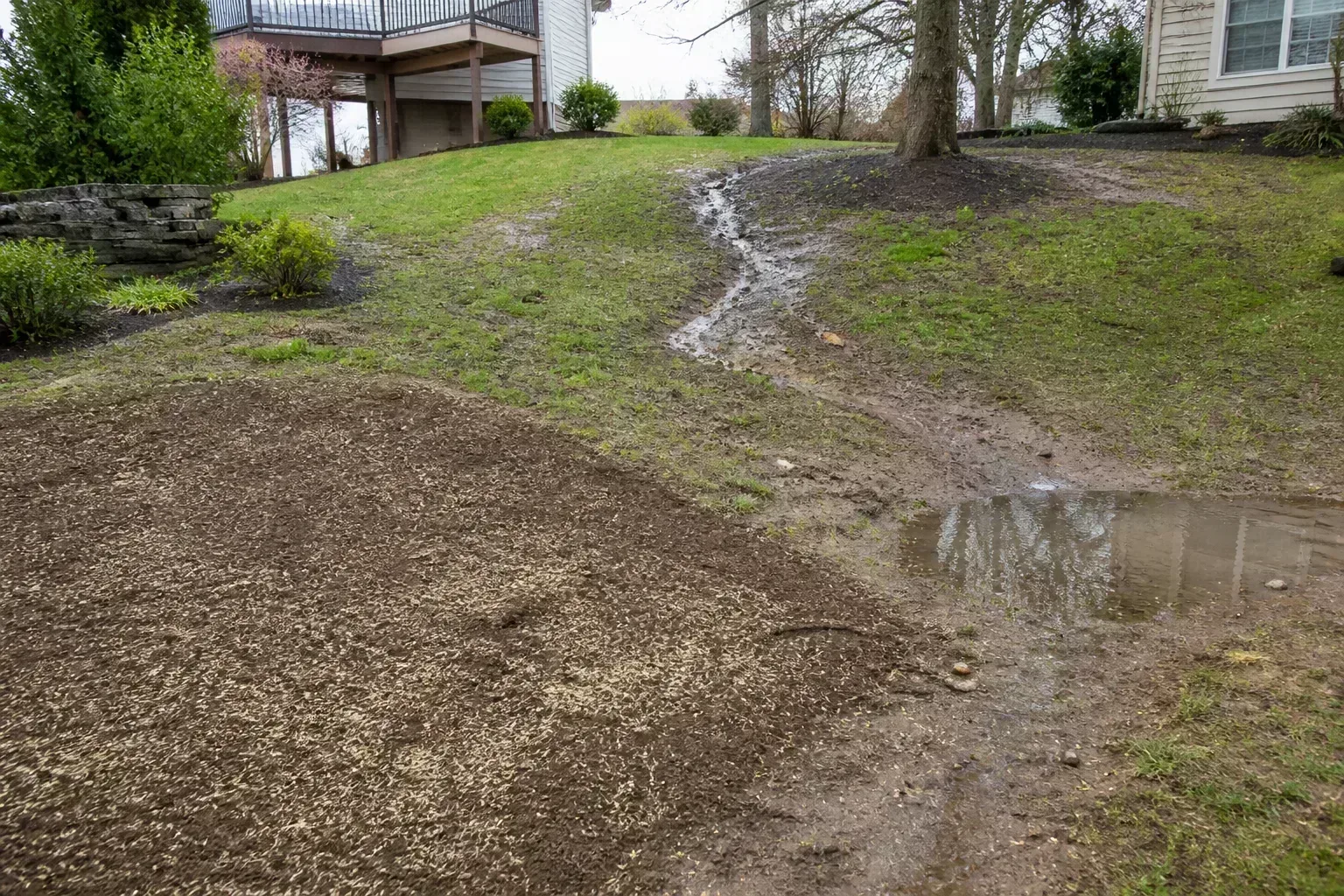
A small dip can usually be corrected without tearing up the whole yard, but the right repair depends on what is uneven and why. A thin layer of compatible topdressing can smooth shallow hollows while grass remains in place; an isolated deeper pocket may need the turf lifted; and widespread settlement or persistent standing water calls for diagnosis and possibly regrading. Choosing the least disruptive method that actually reaches the cause is what keeps a lawn from becoming a thinner, muddier version of the same problem.
Before hauling in sand or topsoil, walk the area after mowing and measure the low spots. Check what happens after a normal rain, note whether the same places sink again, and look for nearby downspouts, irrigation lines, tree roots, or construction fill. A level lawn does not have to be perfectly flat: a gentle, intentional slope that carries water away from buildings is often better than a billiard-table surface that holds water.
Match the Fix to the Size of the Unevenness
Think of lawn leveling as three jobs rather than one. Surface ripples and dips under about an inch deep are usually candidates for light topdressing. A localized depression around one to a few inches deep can sometimes be repaired by lifting healthy turf and adding soil beneath it. Deeper holes, broad waves, bare areas, and changes in the yard’s overall slope are grading or lawn-renovation work, not a place to pile on repeated thin layers indefinitely.
Those depth ranges are practical sorting guides, not engineering cutoffs. A one-inch dip over a large, soggy area can be more consequential than a deeper divot in a dry, stable patch. Use the condition of the grass, the footprint of the defect, the way water moves through it, and how much material would be needed along with depth. If a correction would bury nearby crowns, alter drainage, or require moving a large volume of soil, choose a more complete repair plan.
Measure the Dip Before You Add Soil
Mow to your normal height, then lay a straight board or long level across the lawn so it bridges the high edges of a dip. Measure the gap between the board and the soil at its deepest point; repeat in several directions because a hollow may be longer or wider than it first appears. Mark the edges with flags or chalk so you can see whether the low area is a distinct pocket or a broad change in grade.
A simple map prevents a common mistake: dumping the same amount of mix over a whole patch even though only its center is low. Take a photograph from the same position before and after each pass, and use the board again once the surface has settled. For a bigger renovation, check the whole area with a string line or a laser level and identify where water should flow before shifting soil.
Diagnose Why the Lawn Is Uneven
Settlement is common where soil was disturbed for construction, a trench was backfilled, or a large amount of loose fill was laid beneath the sod. Foot traffic and equipment can compact wet soil into ruts; frost heave can lift patches; and erosion can carry soil downhill. Thatch, animal activity, exposed roots, and a broken irrigation line can also create bumps or depressions that look similar from above but need different treatment.
Look for a pattern before you choose a fix. A straight dip may track a utility trench or pipe; repeated wetness near a downspout suggests concentrated runoff; a hollow that reappears after every heavy rain may indicate poor drainage or unstable soil; and scattered soft bumps could be castings or animal disturbance rather than a grade problem. If a depression is new, expanding, unusually soft, or near a buried service, do not cover it until you know what is below it.
Penn State Extension’s turf guidance distinguishes ordinary surface improvement from topdressing that is intended to change soil texture: the topdressing material should be chemically and physically similar to the existing soil unless texture modification is the goal. That is a useful homeowner rule, too. Adding a noticeably different material may create a distinct layer rather than a durable, uniform root zone, and it does not repair a leaking pipe, blocked drain, or continuing compaction.
Choose a Leveling Material That Fits Your Soil
Use screened, weed-free topsoil or a purpose-made lawn leveling mix with particles fine enough to settle between grass blades. For a living lawn, the mix should be easy to spread in a thin layer and close enough to the existing soil that the surface blends rather than forming a sharply different band. Compost can contribute organic matter, but it is not automatically a leveling soil: very coarse, wet, unfinished, salty, or debris-filled compost can clump, smother leaves, or create inconsistent settling.
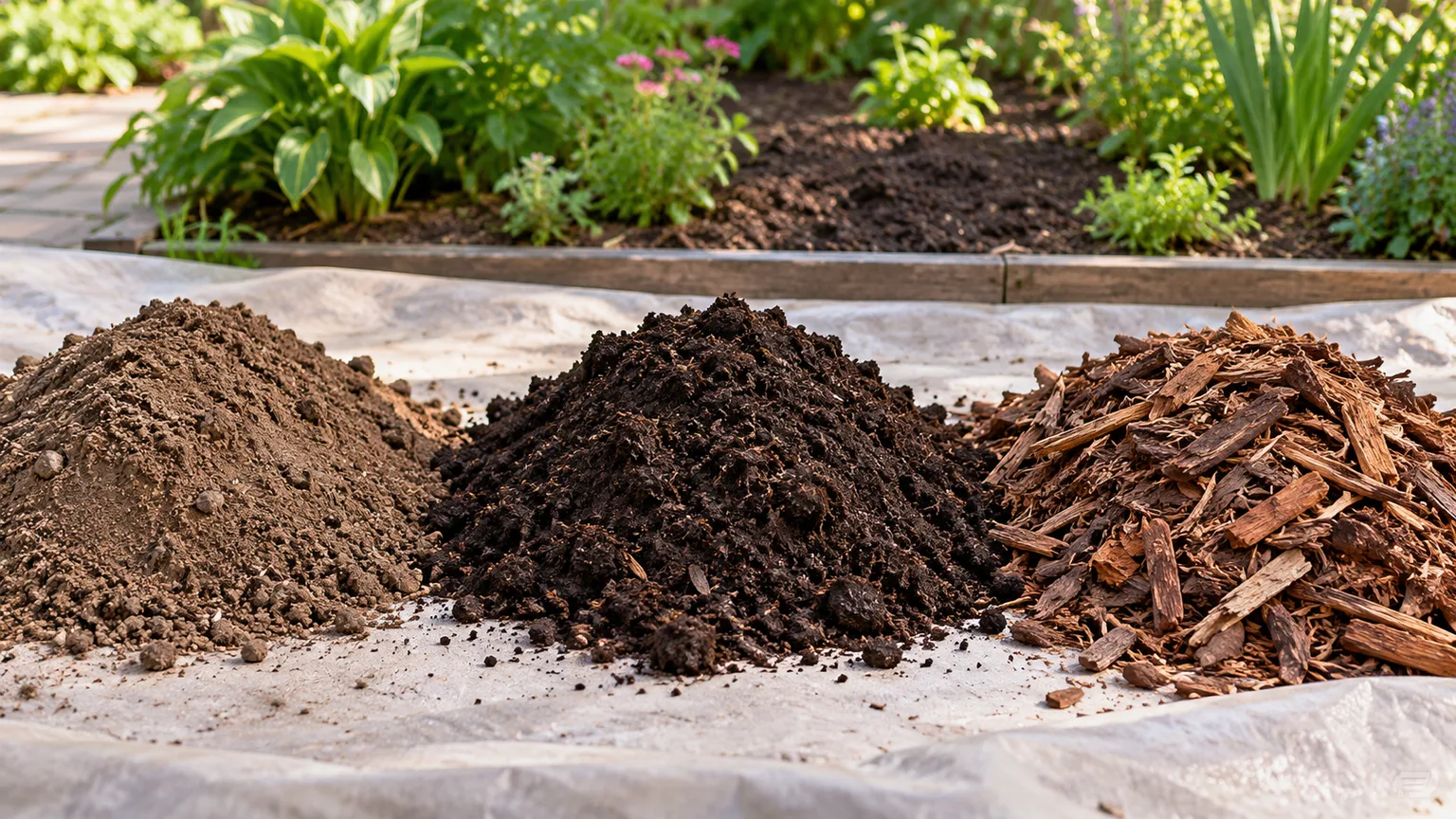
Penn State Extension recommends checking compost quality rather than assuming all bags or bulk piles are alike. Mature material should be fine enough for its use, free of trash and large debris, and have a clean earthy smell rather than an ammonia or sour odor. For lawn surface applications, a screened compost helps produce a more even spread. If you are buying bulk material, ask what it contains, whether it has been screened, and whether it is mature and suitable for turf.
Match the New Material to the Existing Soil
Sand is not a universal shortcut. On a sandy lawn, a compatible sandy topsoil may blend well; on a loam, screened loam is usually a straightforward match; and on a clay-heavy lawn, a thin dressing that resembles the existing surface is safer than sprinkling an unrelated coarse sand across it and expecting the whole profile to drain better. Penn State Extension notes that topdressing material should resemble the existing soil unless you are deliberately modifying texture. A substantial texture change takes planning and mixing, not a token layer on top.
A fixed recipe cannot suit every lawn. The Royal Horticultural Society’s top-dressing guidance describes a sand, soil, and compost dressing for brushing into aeration holes; that context is different from filling a deep hole or covering an entire lawn. Use a manufactured leveling mix if its ingredients fit your soil, or blend screened topsoil with a modest amount of mature compost when the surface needs organic matter. If you are unsure whether a material will blend, try a small test patch and check that it does not crust, wash away, or remain visibly layered after watering.
Choose a Recovery Window, Not Just a Calendar Date
Level when the grass can grow back through or recover from disturbance. For many cool-season lawns, mild spring or early-fall weather provides a useful recovery window; warm-season grasses generally establish and repair best while they are actively growing in warm weather. The Royal Horticultural Society recommends repairing lawns in spring or autumn under its conditions, while Epic Gardening’s lawn-renovation guidance emphasizes matching seeding to grass type and local temperatures. These are seasonal patterns, not universal dates for every climate.
Avoid heavy leveling when turf is dormant, drought-stressed, waterlogged, or facing extreme heat. Wet soil smears and compacts under feet or equipment, while very dry ground is hard to shape and may not settle evenly. If the repair needs seed, schedule it for the locally recommended seeding window for your grass, not merely for the day you happen to spread soil. In a hot-summer region with warm-season turf, that may mean a different calendar from a northern lawn with bluegrass or fescue.
Prepare the Lawn and Mark the Repair Areas
Start with a lawn that is dry enough to walk on without leaving deep impressions and moist enough that the surface is workable. Mow at the normal height or slightly lower if the grass is overgrown, but do not scalp healthy turf to make the dirt easier to see. Remove leaves, loose clippings, sticks, stones, and any loose thatch that hides the soil surface. If a thick thatch layer or compacted soil is part of the problem, address it during active growth rather than burying it under a dressing.
Check the irrigation system, sprinkler heads, shallow cables, and other buried services before you cut or dig. Identify the lawn’s grass type if you plan to seed a bare area; the replacement mix should suit the site’s sun, traffic, and climate. Then mark each low spot and decide whether it will be topdressed, lifted, or opened for reseeding. Keep a wheelbarrow, shovel, stiff rake, lawn leveling rake or long straight board, and push broom nearby so the mix is spread rather than left in piles.
Topdress Shallow Dips in Thin, Even Passes
Topdressing works when the irregularity is shallow and the existing grass is healthy enough to grow through the material. Spread a light, even layer over the low area, then use a stiff rake or leveling rake to pull the mix into the dip and feather its edges into the surrounding lawn. A push broom can brush soil away from the leaf blades and down toward the soil surface. The grass should still be visible; do not leave green blades buried under a dark blanket.
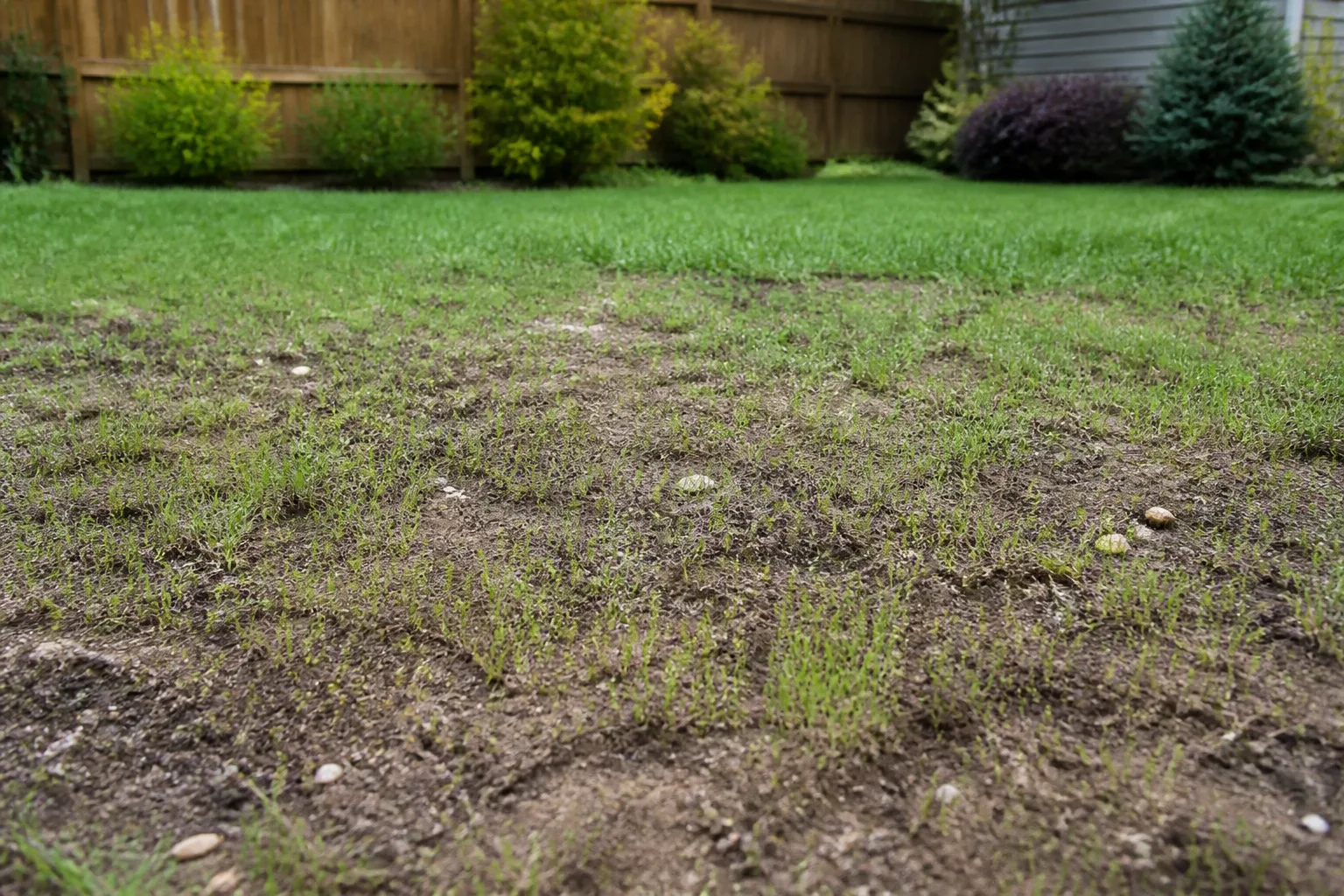
Instead of covering a hollow in one heavy application, make a series of small corrections. Many lawn guides cap one pass at about a half inch, but the practical limit is whether the leaf tissue remains exposed and the grass can keep growing. If the turf disappears under the mix, rake excess away immediately. For an especially shallow uneven area, a thinner layer is easier to distribute evenly and less likely to suffocate the grass.
Repeat Only After Grass Has Recovered
Water lightly after spreading if the surface is dry and dusty, using enough to settle the mix without making it run downhill. Recheck the area after the material settles and the grass has pushed through; do not add another layer just because the first one is no longer visible. Wait until the turf is growing normally again, mow it once or twice, and measure the surface before deciding whether another pass is needed.
The goal is a gradual surface correction, not a buried lawn. If several passes leave the same low area, pause and reassess the grade, soil condition, and drainage. Repeatedly adding soil can raise the whole patch above the lawn, trap water at its edges, or leave a layer of loose material that grass roots do not knit into. Switch to lifting the turf or renovating the patch when the depth is beyond what a light dressing can correct.
Lift Healthy Turf to Fill an Isolated Low Spot
For a small, deeper depression with a healthy grass cover, lifting the turf preserves the green surface while you add soil underneath. Water the lawn a day ahead if the soil is very dry, then cut a square or rectangle around the low area with a flat spade. Make clean cuts and slice horizontally just under the roots so the piece comes up as a flexible flap or intact patch. Avoid cutting near sprinkler lines or tree roots, and keep the lifted turf shaded and moist while you work.
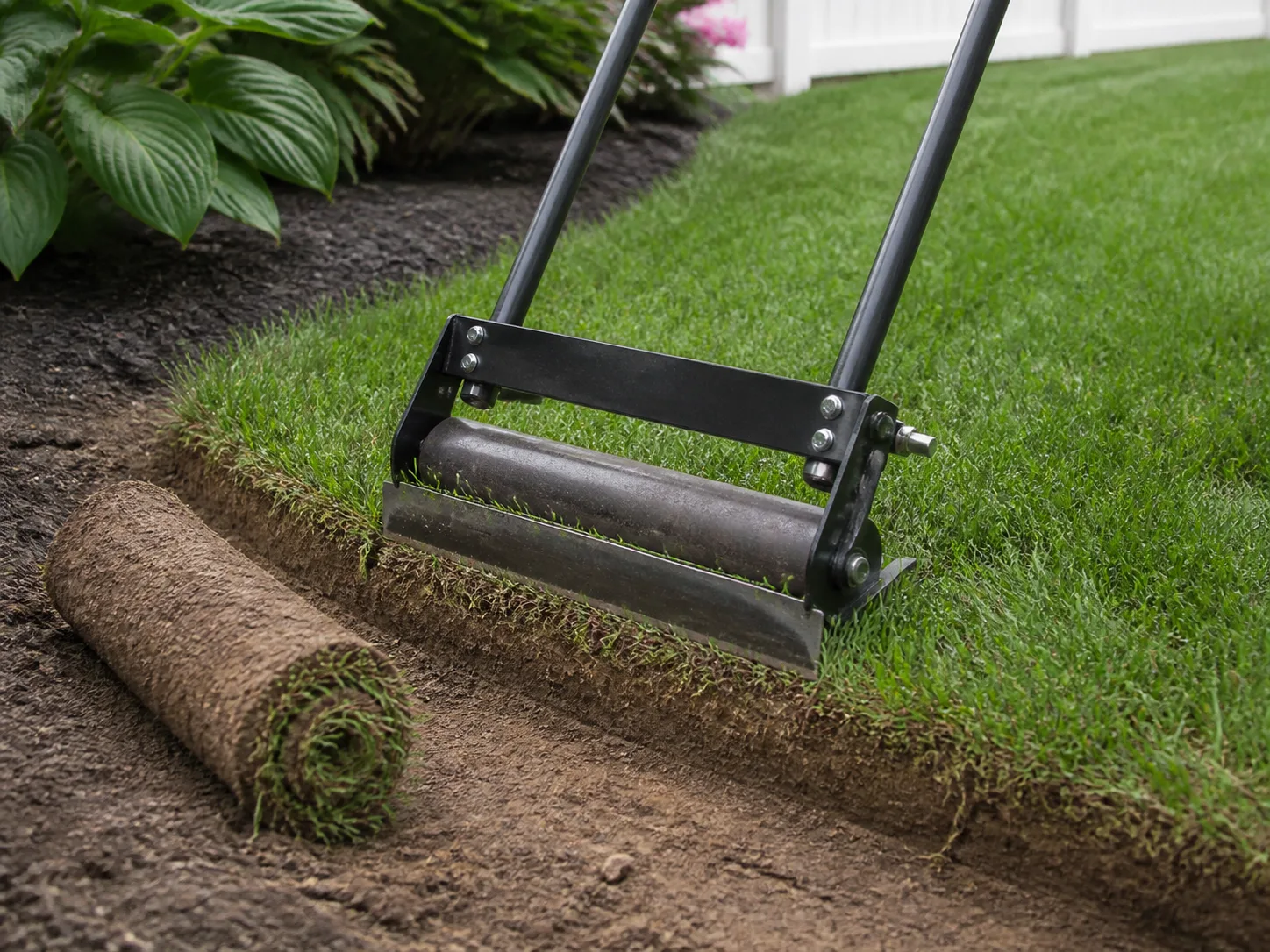
Add compatible topsoil in modest amounts, firming it gently so it supports the turf without creating a soft air pocket. Set the original sod back in place and check it with the board: its surface should sit level with the surrounding grass, not proud of it. Water thoroughly enough to settle the soil and help the roots reconnect. Keep foot traffic and mower wheels off until the patch resists a gentle tug and is growing again; if the sod floats, sinks, or dries at the edges, adjust the soil or watering before the seam fails.
This method is best for isolated pockets, not a whole yard full of small holes. Lifting too large a turf piece makes it difficult to handle and increases the chance that it will tear or dry out. If the depression is broad, the turf is thin, or you find a soft trench, dead grass, or standing water underneath, expose enough of the area to correct the cause rather than simply sliding soil beneath it.
Regrade Deep or Bare Depressions
A deep depression is more reliable to repair by opening the area, correcting the underlying grade, and establishing grass again. Cut away dead or badly damaged turf, remove loose thatch and debris, and fill with compatible soil in shallow lifts. Lightly settle each lift with a rake or gentle hand tamp; avoid compressing the seedbed into a hard pan. Build the finished surface to meet the surrounding lawn, allowing for modest settlement rather than leaving a mound.
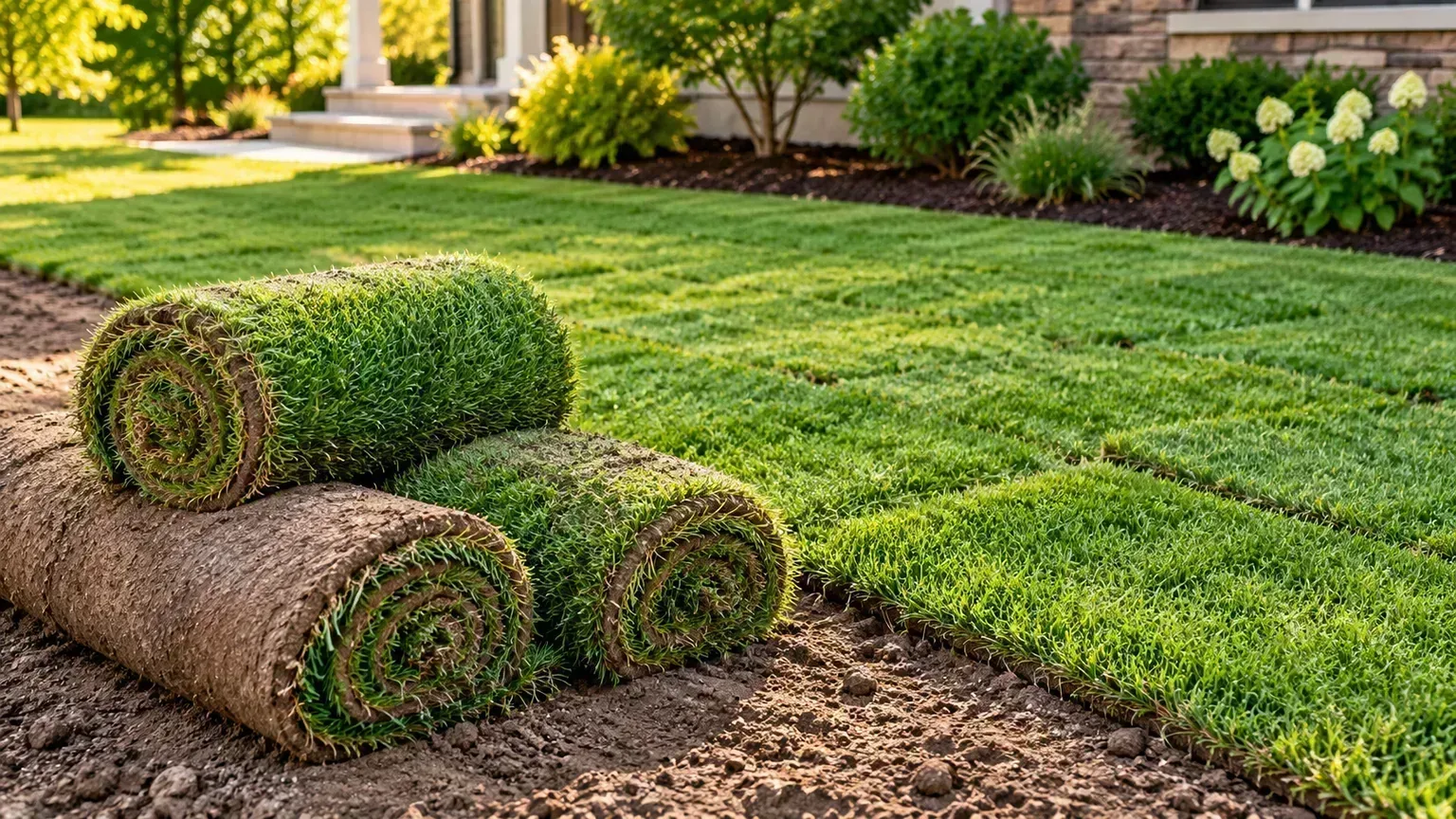
For a large area, the underlying soil may need to be loosened and blended before you replace turf or seed. Penn State Extension’s lawn-establishment guidance advises examining grade and surface smoothness before renovation and correcting factors that would prevent good turf establishment. A soil test can help when the lawn is broadly weak or the soil has been imported or disturbed, but a soil test will not diagnose a broken pipe or determine the correct drainage design.
If you seed, prepare a fine, firm surface and ensure seed touches soil rather than thatch or clods. Choose a grass mix appropriate for the existing lawn and site, spread it at the package rate, and keep the seed zone consistently moist until seedlings establish. New grass needs protection from foot traffic and mowing until rooted. If you need an immediate cover, a matching piece of sod can work, but align it precisely with the surrounding grade and keep its roots moist while it knits in.
Lower High Spots Without Damaging Roots
A mound can be cut down if it is loose soil, but first check whether the high point is a tree root, a utility feature, a buried rock, or a natural grade that carries water away from the house. Do not shave a woody root to make mowing easier; removing major roots can injure or destabilize a tree. If the high spot is just settled fill or a small soil mound, peel back the turf, remove or redistribute excess soil, and reset the sod at the correct height.
Do not roll a bumpy lawn hard in an attempt to flatten it. A roller can compress wet soil, worsen compaction, and push water into neighboring low spots without removing the underlying variation. A light pass may help settle newly placed soil in some renovation situations, but hand raking and gentle tamping give more control in a small home lawn. If the high and low areas span a broad slope, use a planned grading correction rather than chasing each bump separately.
Fix Drainage Before You Keep Filling a Puddle
A low spot that holds water after rain is not automatically solved by adding topsoil. The water may be arriving from a roof downspout, a compacted layer may slow infiltration, the site may have a high water table, or the lawn’s slope may send runoff into the hollow. Filling the visible bowl without changing that flow can move the puddle a few feet away or raise the lawn against a foundation, patio, tree flare, or neighboring property.

Watch the area during rainfall and after the ground has had time to drain. Check whether the puddle is shallow and temporary or remains after surrounding soil dries, whether the water is clear or carrying sediment, and whether the low spot is close to an irrigation line. A one-time depression from foot traffic may need a simple soil correction; recurring water near a pipe, sudden sinking, erosion, or water directed toward the house warrants a drainage or landscape professional. Penn State Extension’s turf guidance calls out the importance of assessing site grade and drainage during renovation planning; homeowners should take that same pause before moving soil.
Do not create a new channel that sends water onto a neighbor’s property or toward a building. Regrading near a foundation, retaining wall, septic field, drainfield, or utility corridor may have structural or local requirements. For those settings, have the grade and drainage plan reviewed by a qualified professional who can see the property, not just the lawn surface.
Help the Grass Recover After Leveling
Water newly laid turf and seeded soil according to the method and weather. A topdressed established lawn usually needs only enough water to settle the mix and keep the grass from drying out; a seeded patch needs more frequent, lighter watering to keep the surface evenly moist during germination. Avoid a hard spray that washes soil downhill or exposes seed. If rain is forecast, wait until the surface is workable again before making another correction.
Keep people, pets, and equipment off a lifted or seeded patch while it is rooting. Resume mowing when the grass is growing and the ground is firm enough that mower wheels will not leave tracks; use a sharp blade and remove only a modest amount of leaf at once. Do not automatically fertilize just because soil was added. Apply nutrients when a soil test or the grass’s established care plan indicates they are needed, and follow the product directions for the grass type and season.
Check the lawn after a few mowings and again after a substantial rain. A good repair should stay in place, let grass grow through, and avoid leaving a hard lip or fresh puddle at the edges. If soil washes out, the turf sinks, or water continues to collect, stop adding mix and revisit the drainage, compaction, or settling diagnosis.
Estimate How Much Leveling Mix to Buy
Measure the length and width of the area you will cover and multiply them to get square feet. Multiply that area by the average depth in feet to estimate cubic feet of material. For example, 100 square feet covered with one-quarter inch of mix needs about 2.1 cubic feet before settling: 100 × 0.0208. A half-inch layer over the same area needs about 4.2 cubic feet. If you are treating only scattered dips, estimate each one separately rather than ordering as if the whole lawn needs the same depth.
For a rectangular depression, a rough volume estimate is length × width × average depth. Irregular bowls require less at the edges than the center, so measure the deepest point and assume the average depth is lower than that maximum. Ask the supplier how their material is sold, since bulk soil is often priced by cubic yard and bags by cubic feet. One cubic yard equals 27 cubic feet; avoid buying a large surplus when you have not tested whether the mix blends with your soil.
The calculation is a purchasing estimate, not an instruction to cover every square foot at that depth. Keep the spread thin over living grass and reserve deeper volume for opened patches where you can reestablish turf. If your estimate implies several inches over a broad lawn, reassess the project: you may need grading, sod removal, or professional help rather than a surface topdressing job.
Avoid the Leveling Mistakes That Create New Problems
The most common error is treating every low spot as a soil shortage. First rule out water leaks, drainage problems, unstable fill, pests, and compaction. Another frequent mistake is applying a thick layer because the dip looks dramatic; grass blades need light and air, and buried turf can thin or die before it grows through. Work with small amounts and let the lawn respond before repeating.
Avoid choosing a mix by color or price alone. Coarse debris, fresh wood, weeds, stones, and unfinished compost make a poor surface dressing, while material with a very different texture may remain as a visible layer. Do not assume sand automatically improves a clay lawn, and do not mix a tiny amount of sand into clay expecting a new drainage profile. If soil texture needs a major change, plan a renovation that blends material through the root zone, or ask a local extension educator or turf professional for a soil-specific recommendation.
Do not aerate simply because the lawn is uneven. Core aeration helps where compaction is the issue, but it does not flatten large mounds or fix a grading fault by itself. Likewise, avoid leveling dormant or heat-stressed grass, driving heavy equipment over saturated soil, piling topsoil against tree trunks, burying sprinkler heads, or raising soil so it covers edging and hardscape. Each can trade a visible bump for a new maintenance or drainage problem.
Conclusion
Start by measuring the unevenness and finding out why it formed. Use a light, soil-compatible topdressing for shallow dips; lift and refill an isolated low spot under healthy turf; and open, regrade, and reseed deeper or bare areas. If the defect keeps returning, holds water, follows a utility line, or affects the grade near a structure, solve that underlying issue before adding more soil.
A level lawn is built in controlled steps. Keep grass blades exposed, let each repair settle and recover, and check the result after mowing and rain. That patient approach is slower than dumping a load of sand, but it gives you a smoother surface without burying the grass or making a drainage problem harder to see.



