13 Big-Leaf Houseplants for Statement Indoor Style
Compare 13 big-leaf houseplants by light, humidity, ceiling height, and pet safety—plus a care table and room-placement tips.
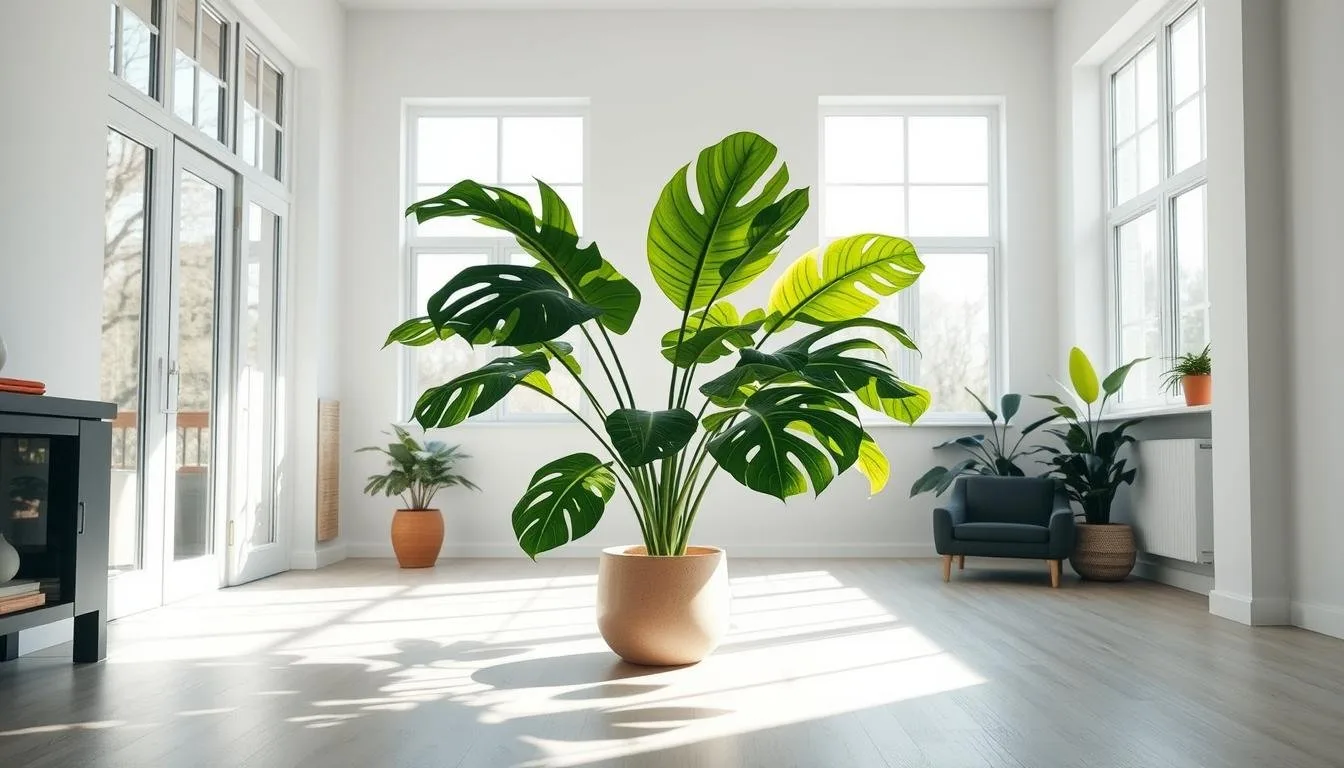
A single oversized leaf can do more for a room than a dozen small pots on a shelf. Big-leaf houseplants create instant scale, soften hard architecture, and read as intentional design rather than afterthought greenery. The catch is that dramatic foliage usually demands dramatic space—tall ceilings, usable window light, and often more humidity than a dry living room provides by default.
The 13 plants below are not ranked from “best” to “worst.” They are grouped by how they grow and what they need so you can match leaf size to your actual room, not to a showroom photo.
Quick Verdict: Match Leaf Size to Your Room First
Before you fall for a six-foot fiddle leaf fig, answer four questions: How high is the ceiling? How wide is the mature leaf spread? How bright is the nearest window for most of the day? Can you keep humidity above roughly 45–50% at leaf height in winter?
If you want the most forgiving big-leaf starter in average apartments, Monstera deliciosa and Dieffenbachia ‘Tropic Snow’ tolerate a wider range of indoor mistakes than fiddle leaf figs, prayer plants, or majesty palms. If you need the largest single leaves and have bright, warm space, elephant ear (Colocasia) and banana (Musa) deliver scale fast—but they are poor fits for dim, cool, or dry rooms.
For pet-conscious homes, cross-check every species against the ASPCA toxic and non-toxic plant database. Most statement aroids on this list contain calcium oxalate crystals that irritate mouths and digestive tracts if chewed. Majesty palm, banana, ruffled fan palm, and Calathea orbifolia are commonly listed as safer options—but “non-toxic” does not mean edible.
What Makes a Big-Leaf Plant Work Indoors
Outdoor tropical plants evolved for open air, rain, and root run. Indoors, the same species meets dry forced-air heat, dust on leaf surfaces, and a root zone restricted to a plastic pot. Big leaves amplify every mistake: a small pothos might hide underwatering for weeks; a wilting Colocasia leaf the size of a serving tray tells the whole story in an afternoon.
Ceiling height, spread, and how fast leaves outgrow a corner
Measure mature indoor height, not nursery tag outdoor potential. NC State Extension notes fiddle leaf figs commonly reach 2–10 feet as houseplants, with individual leaves up to 18 inches long. Monstera can climb past 8–10 feet on a moss pole in bright conditions. Majesty palm fronds alone can span 6–8 feet according to NC State’s Ravenea rivularis profile.
Leave clearance for leaf arc, not just pot footprint. A bird of paradise self-heading rosette needs horizontal space as new layers push outward. Trailing or creeping philodendrons like Philodendron gloriosum need surface area—a wide bench or raised planter—not vertical height alone.
Humidity, dust, and the watering trade-off on broad foliage
Large leaf surface area increases transpiration. Tropical aroids and prayer plants show brown tips and edge crisping when relative humidity at foliage level drops into the 30–40% range common above radiators in winter. A humidity meter at leaf height beats guessing from how the room “feels.”
Broad leaves also collect dust, which blocks light and invites spider mites. Wipe with a damp cloth monthly—support the leaf from underneath rather than pulling down on the petiole. Do not substitute leaf shine sprays for actual cleaning; they can clog stomata on some species.
Watering rhythm splits into two camps on this list: evenly moist lovers (elephant ear, majesty palm, Calathea orbifolia) versus partial dry-down species (Monstera, fiddle leaf fig, most philodendrons). Putting both styles on the same weekly calendar is a common reason big plants fail in year two.
Compare 13 Big-Leaf Houseplants at a Glance
Use this table to shortlist, then read the grouped sections for the species that fit your room.
| Plant | Signature look | Light | Water rhythm | Humidity | Indoor size (typical) | Difficulty | Pet notes |
|---|---|---|---|---|---|---|---|
| Monstera deliciosa | Fenestrated split leaves | Bright indirect | Top 2 in dry | 50%+ ideal | 6–10 ft on support | Moderate | Toxic (oxalates) |
| Elephant ear (Colocasia) | Heart-shaped plates | Bright indirect to part sun | Keep evenly moist | 50–60%+ | 3–6 ft in pot | Moderate | Toxic |
| Fiddle leaf fig | Lyre-shaped glossy leaves | Bright indirect | Top 2–3 in dry | 40–50%+ | 6–10 ft | Hard | Toxic |
| Bird of paradise | Paddle leaves, upright | Bright direct to indirect | Partial dry-down | 40–50%+ | 5–7 ft | Moderate–hard | Toxic |
| Rubber tree | Thick waxy ovals | Bright indirect | Partial dry-down | 40%+ | 6–10 ft | Moderate | Toxic (sap) |
| African mask (Alocasia amazonica) | Arrow leaves, white veins | Bright indirect | Moist, not soggy | 60%+ | 1–2 ft | Hard | Toxic |
| Philodendron Xanadu | Deeply lobed mounds | Bright to medium indirect | Partial dry-down | 50%+ | 3–4 ft | Moderate | Toxic |
| Philodendron gloriosum | Velvety creeping hearts | Bright indirect | Top 2 in dry | 60%+ | 2–3 ft wide | Moderate–hard | Toxic |
| Banana (Musa) | Huge soft paddles | Very bright | Evenly moist | 50–60%+ | 4–8 ft | Moderate | Generally safer |
| Majesty palm | Arching fronds | Bright indirect | Evenly moist | 60%+ | 5–10 ft | Hard | Generally safer |
| Calathea orbifolia | Round silver-striped leaves | Bright indirect | Evenly moist | 60%+ | 2–3 ft | Hard | Generally safer |
| Dumb cane ‘Tropic Snow’ | Variegated slabs | Medium to bright | Partial dry-down | 40%+ | 4–8 ft | Easy–moderate | Toxic |
| Ruffled fan palm | Pleated circular fans | Bright indirect | Light dry-down | 50%+ | 4–6 ft | Moderate | Generally safer |
Pet and Child Safety Before You Buy
Most “jungle statement” plants are not pet-floor friendly. Araceae family members—including Monstera, philodendrons, Alocasia, Dieffenbachia, and elephant ear—contain insoluble calcium oxalates. Chewing can cause oral pain, drooling, and vomiting in pets and children. NC State also lists fiddle leaf fig and rubber tree sap as irritants.
If cats climb furniture, assume they can reach a tabletop Alocasia. Hanging baskets do not solve toxicity when leaves trail within jump range. For pet-heavy homes, prioritize majesty palm, banana, Calathea orbifolia, and ruffled fan palm—then still verify the exact species name in the ASPCA database, because common names collide across retailers.
Tropical Aroids With Dramatic Foliage
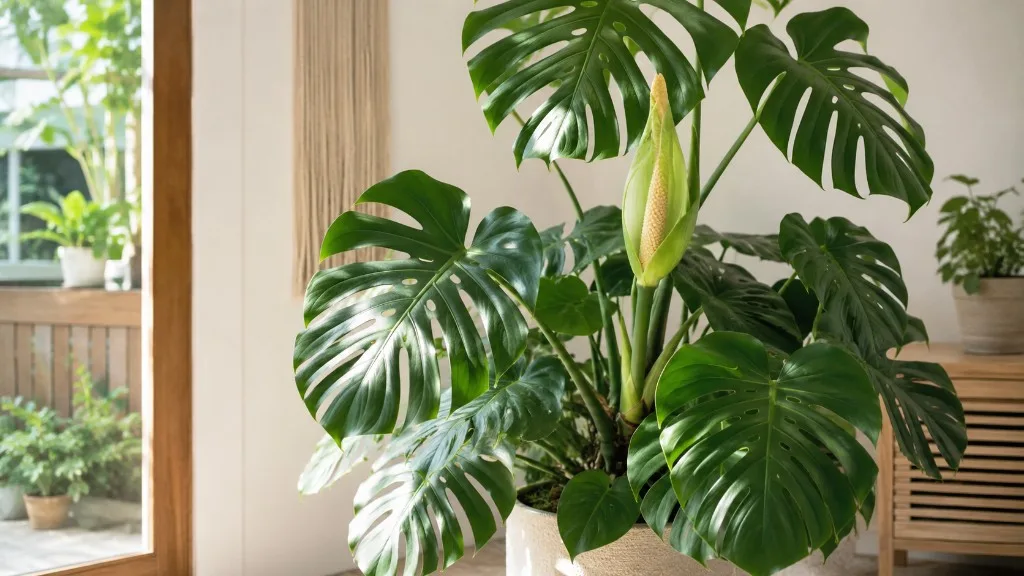
Monstera deliciosa remains the benchmark big-leaf houseplant because it balances visual impact with reasonable adaptability. Juvenile leaves start solid; fenestrations and splits develop as the plant matures in adequate light. Give it a moss pole or trellis so aerial roots attach and leaves size up—see the Monstera deliciosa care hub for light, watering, and support detail. Let the top two inches of mix dry between thorough waterings; constant wet soil invites root rot faster on a large root mass.
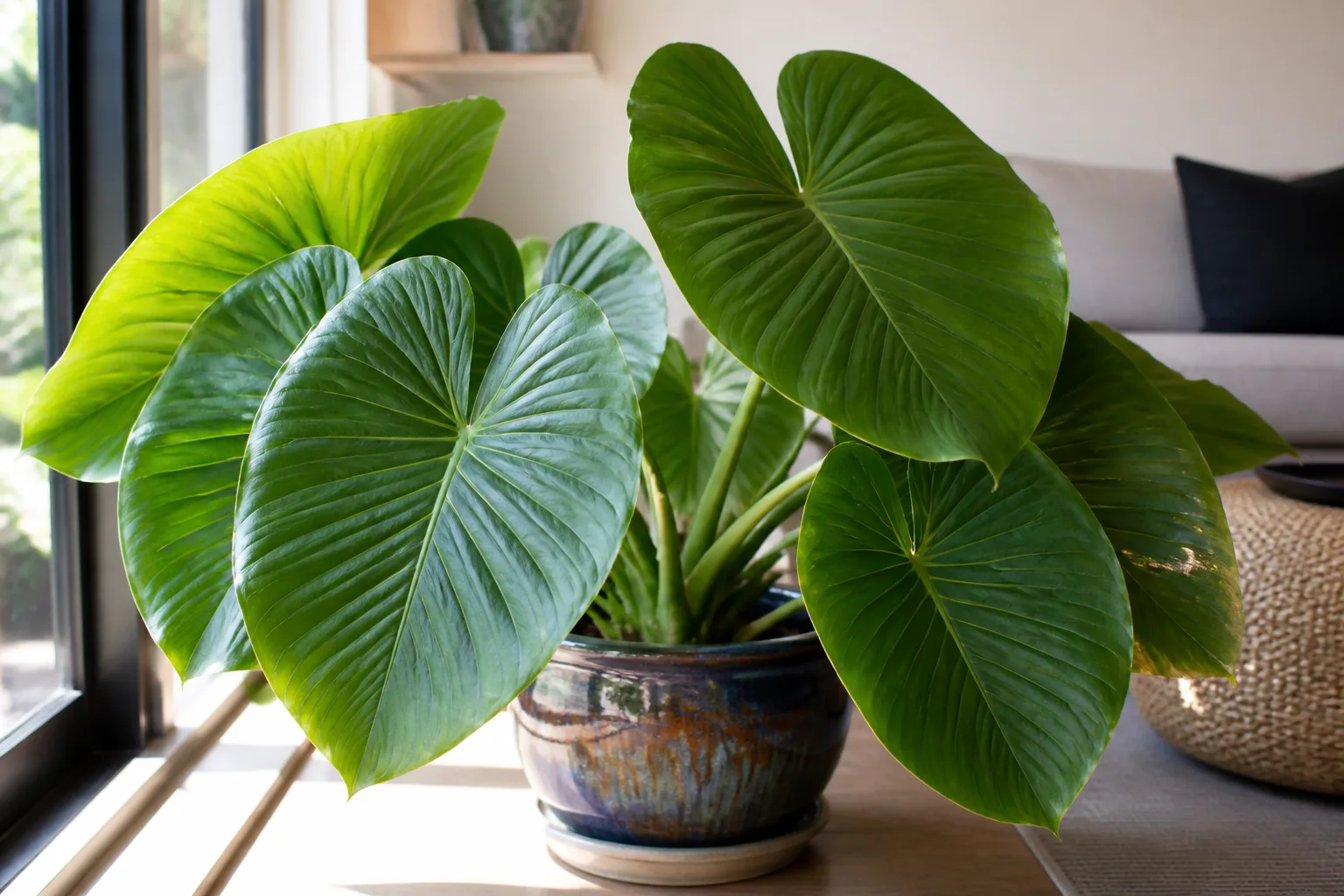
Elephant ear (Colocasia spp.) pushes some of the largest individual leaves on this list. NC State describes heart-shaped foliage that can exceed two feet on vigorous cultivars, with a preference for loamy, fertile, moist conditions. Indoors, treat it as a warm-season showpiece: bright light, consistent moisture, and temperatures above roughly 65°F. In cool, dry winters many pots die back partially—reduce water when growth stalls and do not panic-prune living tissue.
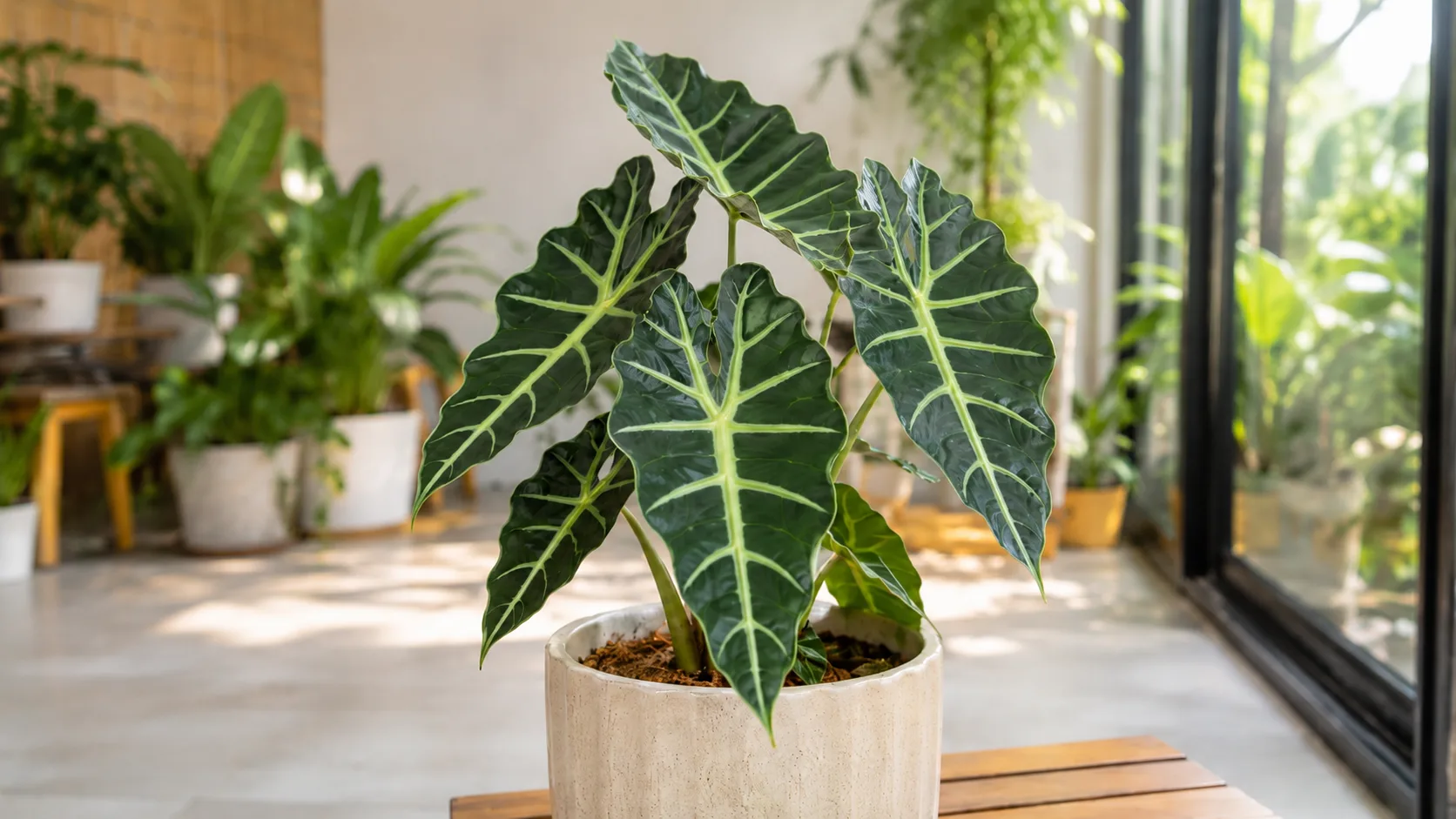
African mask plant (Alocasia amazonica and hybrids) delivers arrowhead leaves with stark pale veining on a compact frame—excellent on a plant stand where the undersides show. It is not a set-and-forget plant. Low humidity triggers rapid leaf loss; overwatering rots corms. The Alocasia amazonica overview covers the wet-dry balance this genus demands.
Philodendron Xanadu (Thaumatophyllum xanadu) forms a self-mounding shrub with deeply lobed leaves up to 16 inches long—dramatic without requiring a tree-height ceiling. It tolerates medium indirect light better than most entries here, though growth slows and lobes simplify in dim corners. Water when the top inch dries; flush salts occasionally if leaf tips brown.
Philodendron gloriosum is the velvet showpiece for collectors. It creeps along the soil surface rather than climbing, so give it a wide, shallow container and humidity near 60%. Availability still skews toward specialty sellers rather than big-box racks. Full culture notes live on the Philodendron gloriosum hub.
Upright Statement Trees for Bright Corners
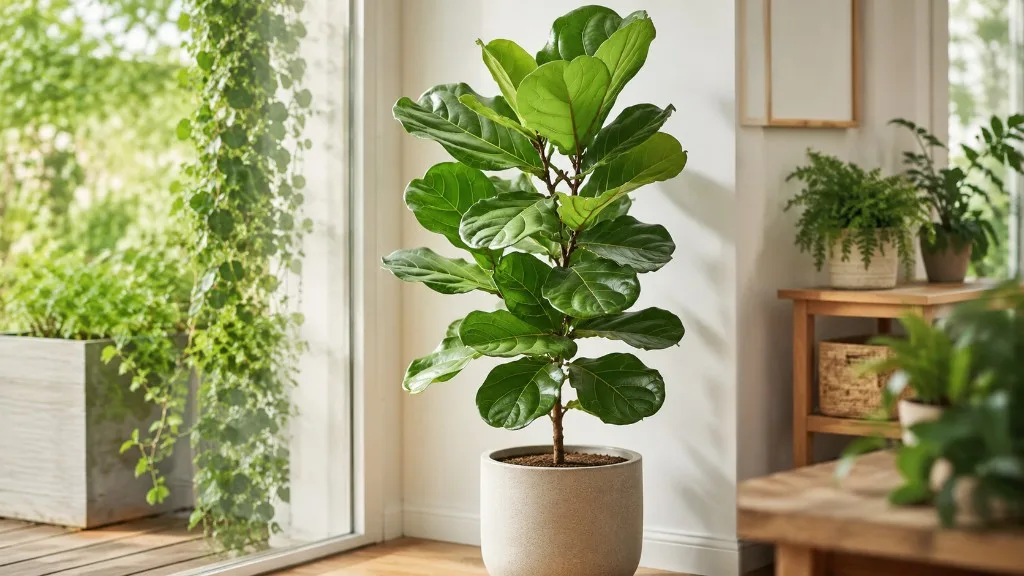
Fiddle leaf fig (Ficus lyrata) is the poster plant for architectural interiors—and for frustrated owners. NC State Extension lists its needs plainly: bright indirect light, moist well-drained soil, medium humidity, and protection from hot afternoon sun and heating vents. Leaf drop after a move is normal for weeks; repeated drop usually means light shock, draft, or watering inconsistency. Read the fiddle leaf fig care cluster before buying a ceiling-height specimen you cannot easily rotate.
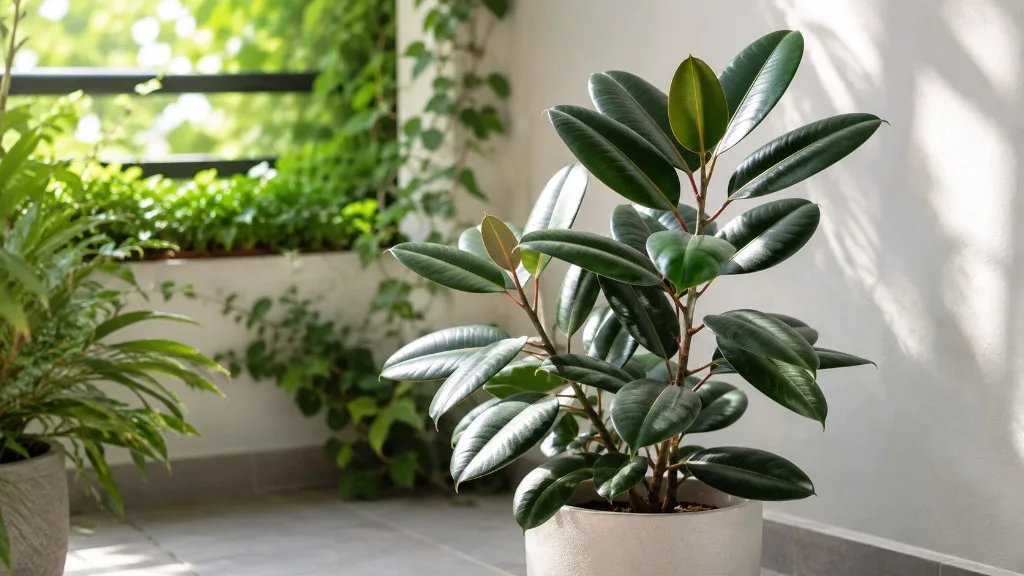
Rubber tree (Ficus elastica) offers thick, glossy leaves in green, burgundy, or variegated forms with less drama than fiddle leaf figs but similar upright structure. Contrary to outdated advice, harsh direct sun through south glass often scorches indoor rubber plants. Bright indirect light with a partial dry-down between waterings suits most homes better. Prune the top to branch sideways if height outpaces the ceiling. Start with the rubber plant overview.
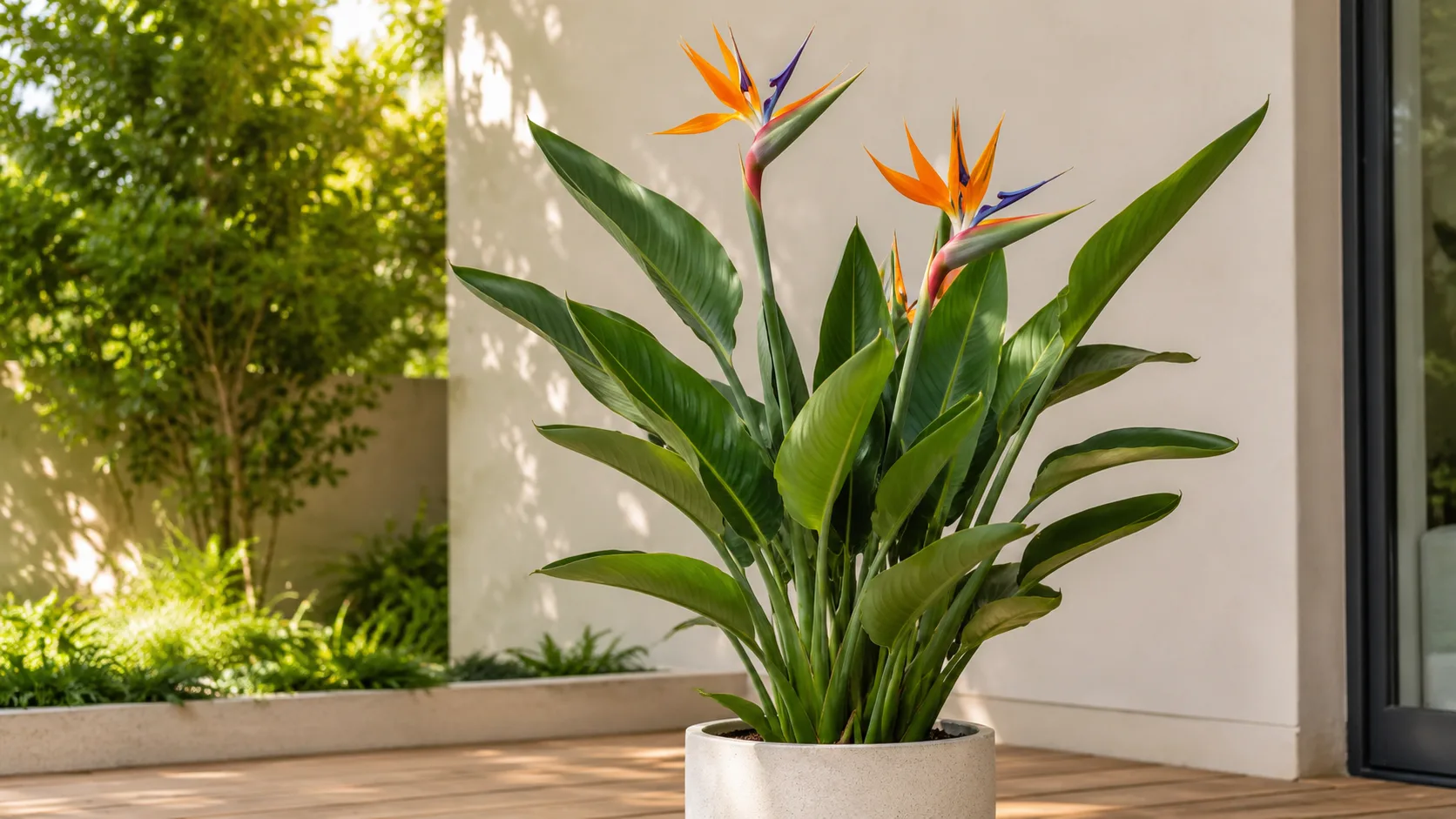
Bird of paradise (Strelitzia spp.) stacks enormous paddle leaves from a central stalk. Indoor bloom is uncommon without conservatory-level light, but the foliage alone justifies floor space in bright rooms. It wants more light than Monstera and a stable root zone—frequent repotting or chronic dryness causes split leaves and lean. The bird of paradise care hub walks through light and watering for self-heading growth.
Palms and Pleated Fan Leaves
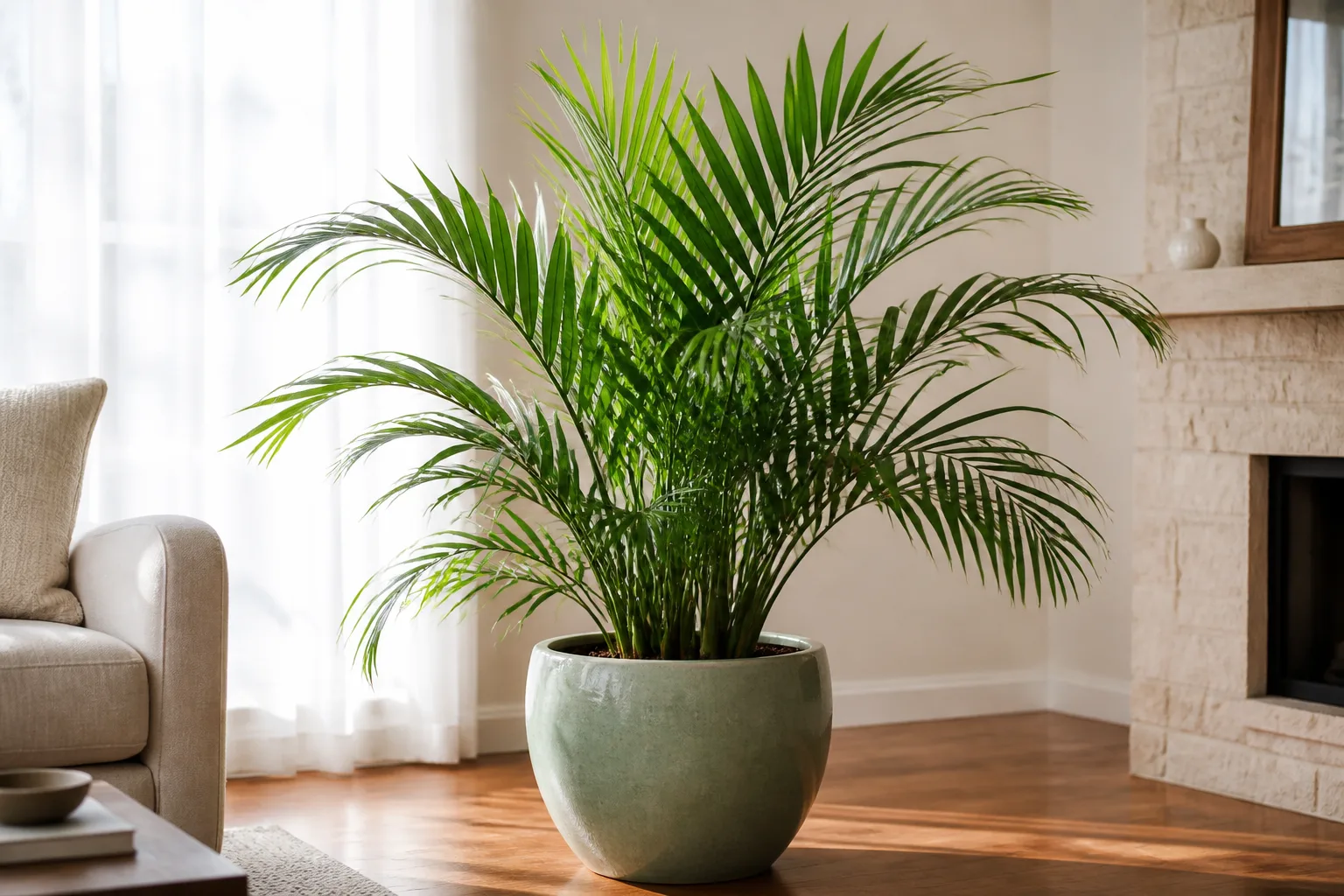
Majesty palm (Ravenea rivularis) sells well because it looks lush at checkout and inexpensive. Keeping it lush for years is harder. NC State warns it needs high humidity, bright indirect light, and consistent moisture, and that it grows much slower indoors than in Madagascar streamside habitat. Retail pots often contain three or more seedlings clustered for fullness—you can divide them into separate containers once established.
If your winter air stays below 45% humidity without a humidifier, consider a kentia or parlor palm for easier palm vibes before committing to majesty palm fronds that brown from the bottom up.
Ruffled fan palm (Licuala grandis) is the sculptural alternative: circular, pleated leaves on a shorter trunk. It is slower and harder to source than majesty palm, but easier to place because individual leaves read as art objects rather than a wall of fronds. Bright indirect light, warm temperatures, and a light dry-down between waterings match most successful indoor specimens.
High-Impact Plants for Humid, Bright Rooms
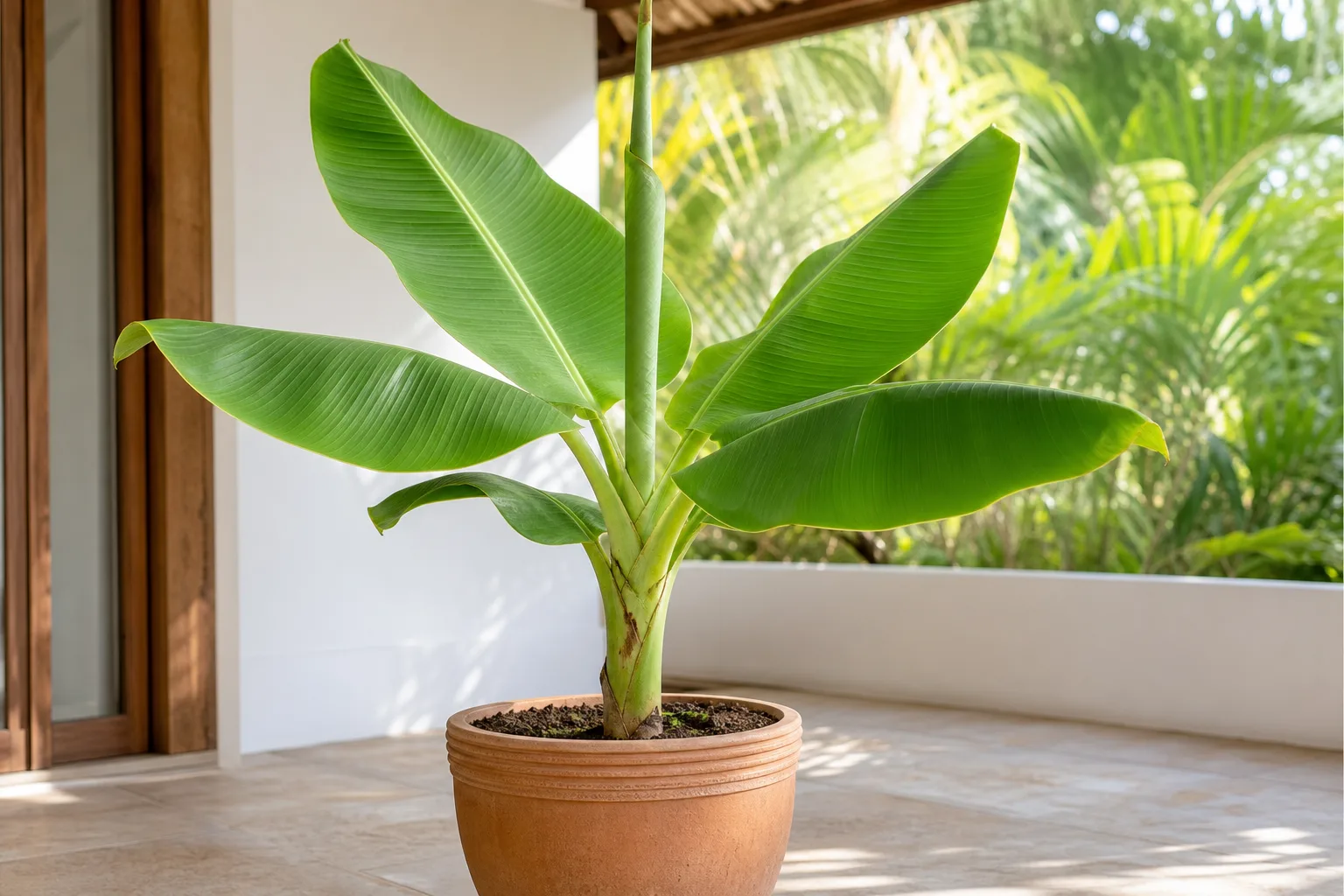
Banana plant (Musa spp.) brings soft, fast-growing paddles that unfurl weekly in peak season. It is not a tree for dim apartments—it wants very bright light and evenly moist, rich soil. Dwarf cultivars fit indoors better than ornamental giants bred for outdoor landscapes. Leaves tear in dry air; misting alone rarely fixes chronic humidity deficit.
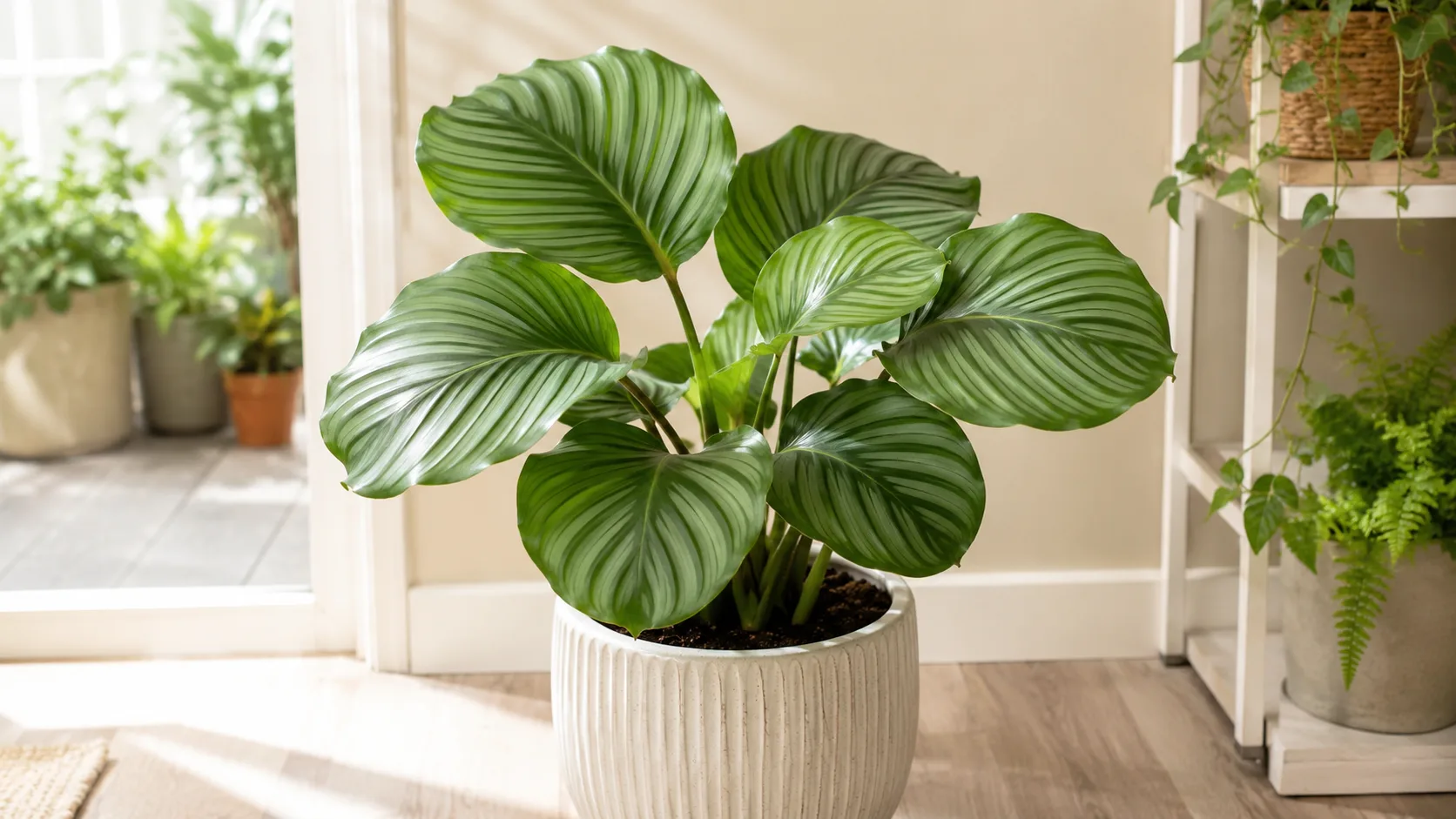
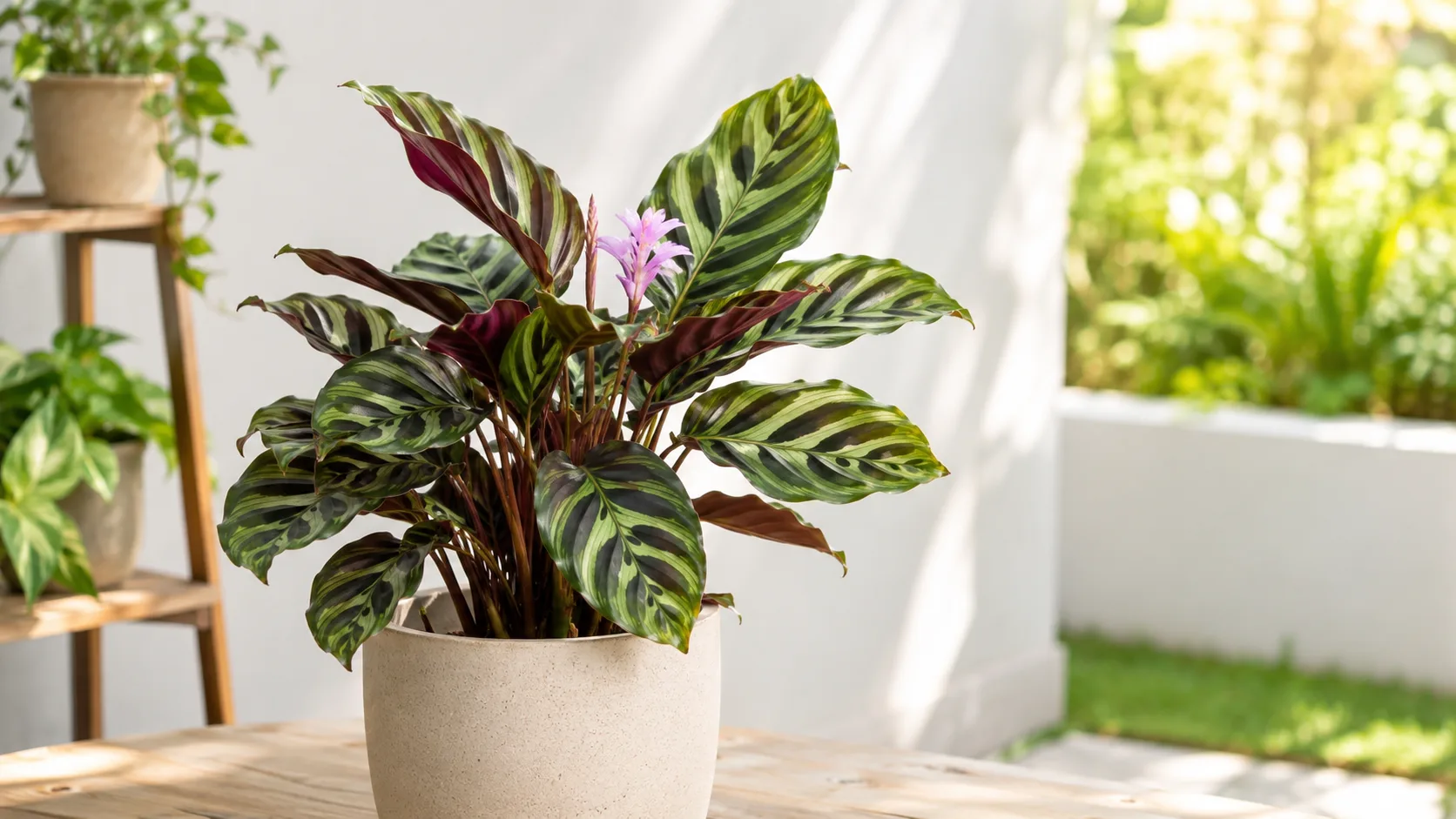
Calathea orbifolia rounds out the list with silver-striped orb leaves that move on a day-night rhythm like other prayer plants. It is stunning and unforgiving. Stable 60%+ humidity, filtered water or low-mineral sources, and evenly moist—but never waterlogged—soil separate success from constant brown edges. The Calathea orbifolia hub is worth reading before you place this plant across the room from a heating vent.
Tropic Snow dumb cane (Dieffenbachia seguine ‘Tropic Snow’) is the practical outlier: huge variegated leaves on a plant that tolerates medium light and occasional neglect better than most big-leaf tropicals. It still contains oxalates—keep it away from chewers—but it recovers from underwatering more gracefully than Alocasia or Calathea. See Dieffenbachia care for watering and light boundaries.
Placement and Styling Big Foliage Indoors
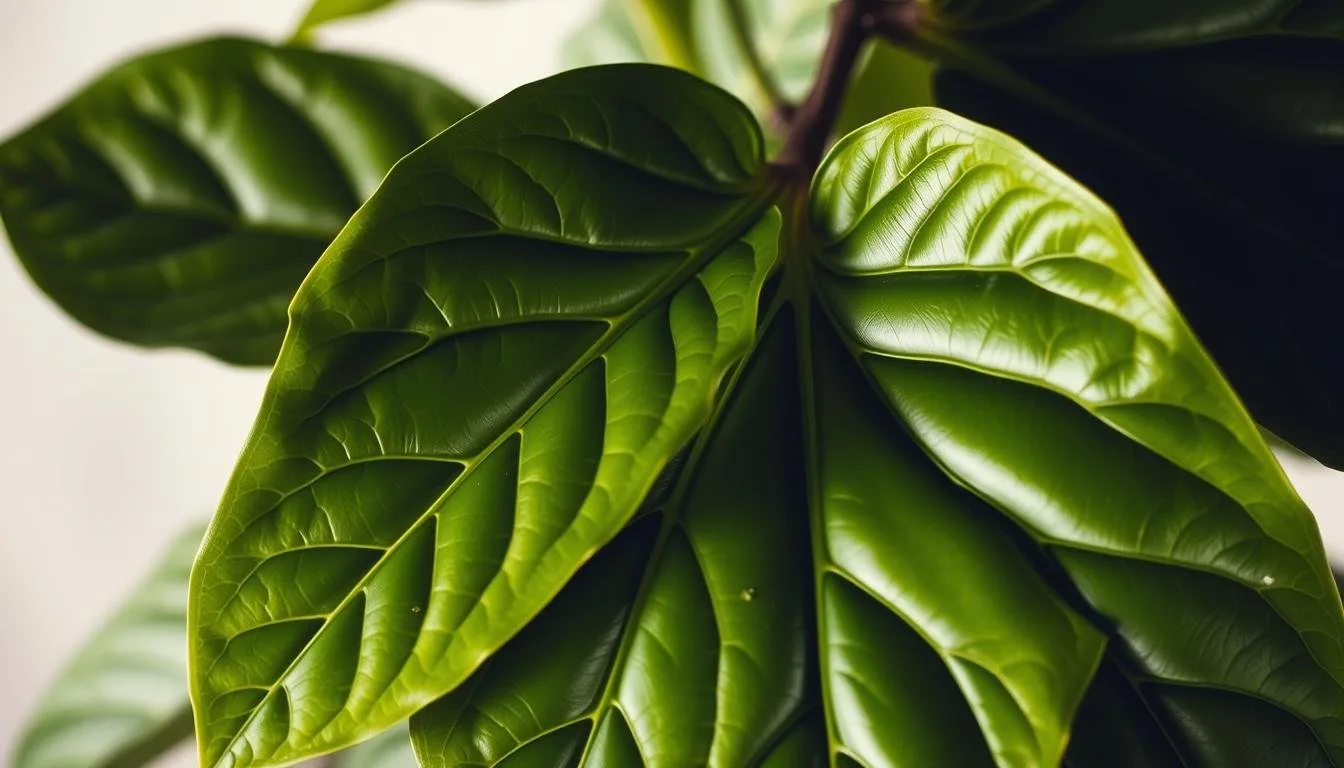
Big leaves need negative space. One floor specimen often carries a room better than five competing mediums. Place upright trees slightly off-center in a corner so leaves clear walkways; rotate a quarter turn monthly so growth stays balanced toward the window.
Pair textural contrast: glossy rubber tree leaves against matte Monstera splits, or vertical bird of paradise paddles behind a low creeping gloriosum on a bench. Avoid crowding humidity lovers beside dry-air heat registers—even if the spot looks perfect on Instagram.
Corner trees vs. juvenile tabletop sizes
Nurseries sell compact cultivars (Ficus lyrata ‘Bambino’, young Xanadu, small Alocasia pots) that fit tabletops for a year before outgrowing the aesthetic. Decide upfront whether you will graduate the plant to a floor corner with a saucer and coaster for weight, or treat it as a temporary stage piece.
For ceiling limits under 8 feet, favor Monstera on a pole, Xanadu mounds, Alocasia, or ruffled fan palm over full-size fiddle leaf figs and majesty palms unless you commit to regular top pruning.
Common Big-Leaf Problems and First Fixes
Brown leaf edges on Calathea, Alocasia, and majesty palm usually trace to low humidity, inconsistent watering, or mineral buildup—not a mysterious deficiency. Fix the environment before fertilizing.
Sudden leaf drop on fiddle leaf fig and rubber tree often follows light change, repotting, or draft. Hold water steady, improve light gradually, and wait one growth cycle before declaring failure.
Yellow lower leaves on Monstera and bird of paradise can be normal senescence of older foliage—or early overwatering if multiple leaves yellow at once and soil stays wet.
Spider mites love dusty, dry big leaves. Inspect undersides with a magnifier; shower small plants or wipe large leaves, then raise humidity and isolate until new growth emerges clean.
Brown edges, leaf drop, or pests—where to start
Read the symptom pattern, not a single leaf. Edges only → humidity or salts. Whole leaves yellowing from bottom up with wet soil → root stress; stop watering and check drainage. Speckled stippling and fine webbing → mites. Oral irritation in pets → remove access and contact your veterinarian regardless of plant label.
Species-specific troubleshooting lives in each LeafyPixels plant hub linked above.
When a Big-Leaf Plant Is the Wrong Choice
Skip the purchase if you have north-facing dim rooms and no grow light budget—most entries here will produce small, solid leaves or slowly decline. Pass on majesty palm and Calathea orbifolia if you will not run a humidifier through winter. Avoid elephant ear and banana if you keep the thermostat below 65°F for long stretches.
Renters with tight doorways should measure pot plus saucer width before buying a mature floor tree you cannot move at lease end. And if you need guaranteed pet-safe floor plants, this list’s showiest aroids are the wrong starting point—choose from the safer palm and banana options, then verify toxicity independently.
Conclusion
Big-leaf houseplants reward rooms that already have bright usable light, stable temperatures, and honest humidity—and they punish impulse buys based on leaf size alone. Start with your window and ceiling, use the comparison table to shortlist two or three species, then match watering style to your habits. Monstera and Dieffenbachia ‘Tropic Snow’ cover most beginners who want drama without conservatory labor; fiddle leaf fig, Alocasia, Calathea orbifolia, and majesty palm are better second projects once you have proven you can keep tropical foliage clean, watered, and dust-free through a dry winter. The right big leaf does not just fill a corner—it makes the whole room feel finished.