Do Banana Peels Fertilize Roses? What to Know
Learn what banana peels can add to rose soil, why they are not a complete fertilizer, and how to use compost without guessing at a nutrient dose.
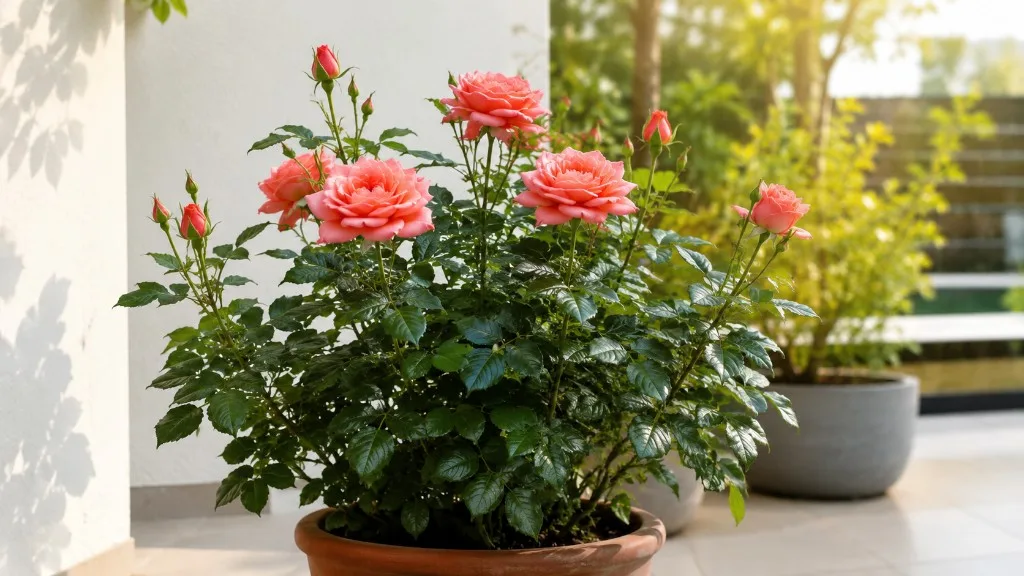
Banana peels contain plant nutrients, including potassium, so it is easy to see why gardeners save them for rose bushes. The practical question is not whether a peel contains useful material; it is whether a particular peel, applied in a particular way, delivers enough available nutrition to meet a rose’s needs. A kitchen scrap does not come with a consistent analysis, dose, or release schedule.
For most gardeners, the sensible answer is to compost banana peels with other organic materials and use the finished compost as a soil amendment. That can recycle nutrients and add organic matter, but it does not replace a soil test or a measured fertilizer when a rose bed needs a specific nutrient. Fresh peel scraps, homemade soak water, and dried peel powder should not be treated as complete rose food or as a shortcut to more flowers.
The short answer: useful compost ingredient, unreliable fertilizer
Banana peels can contribute organic matter and nutrients as they decompose, but they are not a dependable stand-alone fertilizer for roses. Their nutrient content and release rate are not controlled, and a peel does not provide the balanced, labeled analysis that lets you calculate how much nitrogen, phosphorus, and potassium you are applying. One peel near one rose cannot be translated into a reliable feeding rate for a whole bed.
The Royal Horticultural Society’s banana-skin guidance recommends adding peels to compost as their best garden use. It describes them as one part of a broader organic material mix, not as a substitute for a fertilizer program. Compost itself is also variable: what it contains depends on the ingredients and how they were managed.
That distinction matters most when a rose is struggling. If the plant has pale leaves, short stems, or few flowers, tossing more peels at the root zone does not identify the cause or solve it on a schedule. Light, water, drainage, disease, pests, soil pH, and nutrients can all influence growth. Use the peel because you want to compost a food scrap, not because it promises a fast bloom response.
Why potassium is not the whole story
Potassium is an essential plant nutrient, but a rose needs more than potassium to grow. It also needs nitrogen for leafy growth, phosphorus for several energy-transfer and root processes, and smaller amounts of other nutrients. A shortage of one nutrient is not fixed by adding a different one, and the plant’s ability to take up nutrients depends partly on root health and soil conditions.
The label on a commercial fertilizer gives a guaranteed N-P-K analysis. That does not make every bag suitable for every rose, but it lets a gardener apply a known product at a known label rate. A banana peel, even when its chemical composition has been studied, cannot be applied to a garden bed as a standardized dose: peel size, moisture, maturity, soil, and breakdown conditions all differ, and the nutrient still has to become available to roots.
The RHS notes that banana skins contain potassium and other minerals, but they must decompose before those nutrients enter the soil solution in a form roots can absorb. That is a slower biological process, not an immediate feed. The effect of a single peel will also be diluted across a rose’s expanding root zone and surrounding soil.
What N-P-K labels can and cannot tell you
An N-P-K label gives a guaranteed minimum analysis of nitrogen, available phosphate, and soluble potash by weight. It helps you compare fertilizer products and follow a product-specific rate. It does not tell you that a high middle number will produce more flowers, or that a “rose” label is automatically appropriate for every soil.
Compost has a different job. It adds organic matter and may contribute nutrients, but the analysis is not the same from batch to batch. A gardener can improve soil structure and water-holding with finished compost without assuming that its nutrient balance matches the rose’s needs. Think of compost as part of the soil-building plan and a labeled product as a more controlled nutrient input.
Four ways gardeners use banana peels, compared
The method changes what a peel can reasonably do, but none turns it into a calibrated rose fertilizer. A direct application leaves the peel to break down where it lands; a soak produces an unknown liquid; powder still needs to decompose; and a finished compost pile mixes the peel with other materials and gives microbes time to transform them. The table summarizes the difference.
| Form | What it offers | Main limitation | Best role |
|---|---|---|---|
| Fresh peel | Food scrap that will eventually decay | Slow, uneven breakdown; no reliable dose | Add to a managed compost pile |
| Peel-soak water | Water that may contain some dissolved compounds | Concentration is unmeasured and not a complete feed | Do not count it as fertilizer |
| Dried or ground peel | Smaller, storable pieces of the same material | Drying does not create a balanced N-P-K product | Compost it or use sparingly as compost input |
| Finished compost containing peels | Stable organic matter plus variable nutrients | Not a guaranteed substitute for a soil-test-based feed | Use modestly to improve soil |
Raw peels around roses
You can physically bury a chopped peel, but that does not make it a predictable treatment. The peel needs decomposers, moisture, and time; if it is tucked into a small hole in compacted or dry soil, it may break down slowly. A rose’s feeder roots are spread beyond the trunk or crown, so burying a scrap right beside the stem is not a precise way to feed the plant.
An exposed peel can look messy and may attract flies or other scavengers, especially where food waste is not covered. In a container, a fresh peel can be conspicuous and slow to break down in the limited potting volume. If you want to use the peel, a well-managed compost bin is usually tidier and makes the eventual material easier to distribute.
If you still bury a small amount outdoors, chop it into small pieces, place it under soil and mulch rather than on top, keep it away from the rose crown, and treat it as a food scrap that will decompose—not as a one-time fertilizer dose. Avoid repeating the practice every week or piling scraps together at the roots. A rose with a nutrition problem needs diagnosis, not a larger cache of unevaluated waste.
Banana-peel water
Soaking a peel in water is popular because the liquid is easy to pour, but a homemade infusion has no guaranteed nutrient concentration. How much material dissolves depends on peel condition, water volume, time, temperature, and whether the mixture has started to ferment. A cloudy or colored liquid is not evidence that a useful quantity of potassium has moved into it.
In its rose-specific review, Epic Gardening’s banana-peel article explains why a peel should not be mistaken for a complete nutrient program. That practical distinction matters even if a gardener chooses to reuse the soak water. There is no rose-specific label rate, and a homemade soak cannot tell you whether the plant actually needs potassium.
If you water a rose with the liquid, do not use it as a replacement for normal irrigation or for a needed fertilizer. Do not store a sealed batch indefinitely; discard it if it smells foul or shows unwanted growth. For consistent nutrition, a labeled liquid fertilizer diluted exactly as directed is more predictable than a kitchen recipe. For a step-by-step guide to the broader banana-water question, see how banana-peel water works for plants.
Dried peel powder
Drying and grinding a peel reduces its bulk and can make scraps easier to add to compost. It does not convert the peel into a complete fertilizer or remove the need for decomposition. Powder sprinkled over a bed still has to be broken down by soil organisms, and the amount of nutrients available to roots remains difficult to calculate.
Fine particles may break down more quickly than a large intact peel, but “faster” does not mean immediate or balanced. If you make powder at home, store it dry and add small amounts to compost rather than leaving a visible layer on the soil surface. Do not assume a spoonful has the same nutrient content as a spoonful of a commercial fertilizer.
For a rose in a pot, powder is still an uncontrolled input in a small root zone. If the plant is growing well, there is no need to add it. If it is weak, check growing conditions and the potting mix first; then use a product labeled for container roses if a feeding is appropriate.
Finished compost
Finished compost is the most useful route because the peel has been processed with other organic matter instead of being treated as a magic ingredient. Microbes break down plant and food scraps; the resulting compost can add organic matter and some nutrients to garden soil. Washington State University Extension’s backyard-composting guide explains that compost improves soil by helping it hold water and nutrients and by making soil more porous and easier to work.
But compost is an amendment, not automatically a complete fertilizer. A pile made mostly of food scraps does not necessarily have the same nutrient balance as one made with a varied mix of leaves, yard trimmings, and other materials. Finished compost also does not guarantee that a particular rose bed has enough available nitrogen, phosphorus, or potassium.
Spread mature compost as a modest top-dressing around the root zone, leaving a clear gap around the rose crown and stems. If the bed has elevated nutrient levels, adding more compost can be counterproductive; WSU Extension advises testing before adding compost to sites where nutrient accumulation or runoff is a concern. For a broader overview of peel reuse, see ways to use banana peels in the garden.
The useful role banana peels can play in a rose bed
The practical benefit is waste recycling and, after composting, a contribution to soil organic matter—not a direct promise of more blossoms. Compost can make some garden soils easier to work and can help them hold moisture and nutrients. That is valuable over time, especially in a bed that is low in organic matter, but it is not a rescue treatment for a rose with poor drainage or a specific nutrient shortage.
Roses are long-lived shrubs. Their roots explore a broad area, and their seasonal growth depends on local climate, rose type, soil, pruning, sun, water, and disease pressure. A small peel placed in one spot is unlikely to change all of those conditions. Finished compost can be spread across more of the root zone; a tested fertilizer can address a diagnosed nutrient need more precisely.
An established rose growing well in a soil-improved bed may need little supplemental feeding. The RHS rose-growing guide recommends spring mulch with well-rotted organic material and notes that in-ground roses may not need additional feeding unless growth is poor or deficiency is evident. That guidance is specific to its climate and gardening system, but it reinforces a useful principle: improve the root environment and feed in response to need rather than automatically adding scraps or fertilizer.
How to compost peels for rose use
Treat banana peels as one ingredient among many. Chop or tear them so there are smaller pieces for decomposers to work on, then mix them into a compost pile with dry leaves, shredded plain cardboard, or other suitable carbon-rich materials. A pile made only of wet kitchen scraps can compact, smell unpleasant, and decompose poorly; a balanced, aerated mix is more reliable.
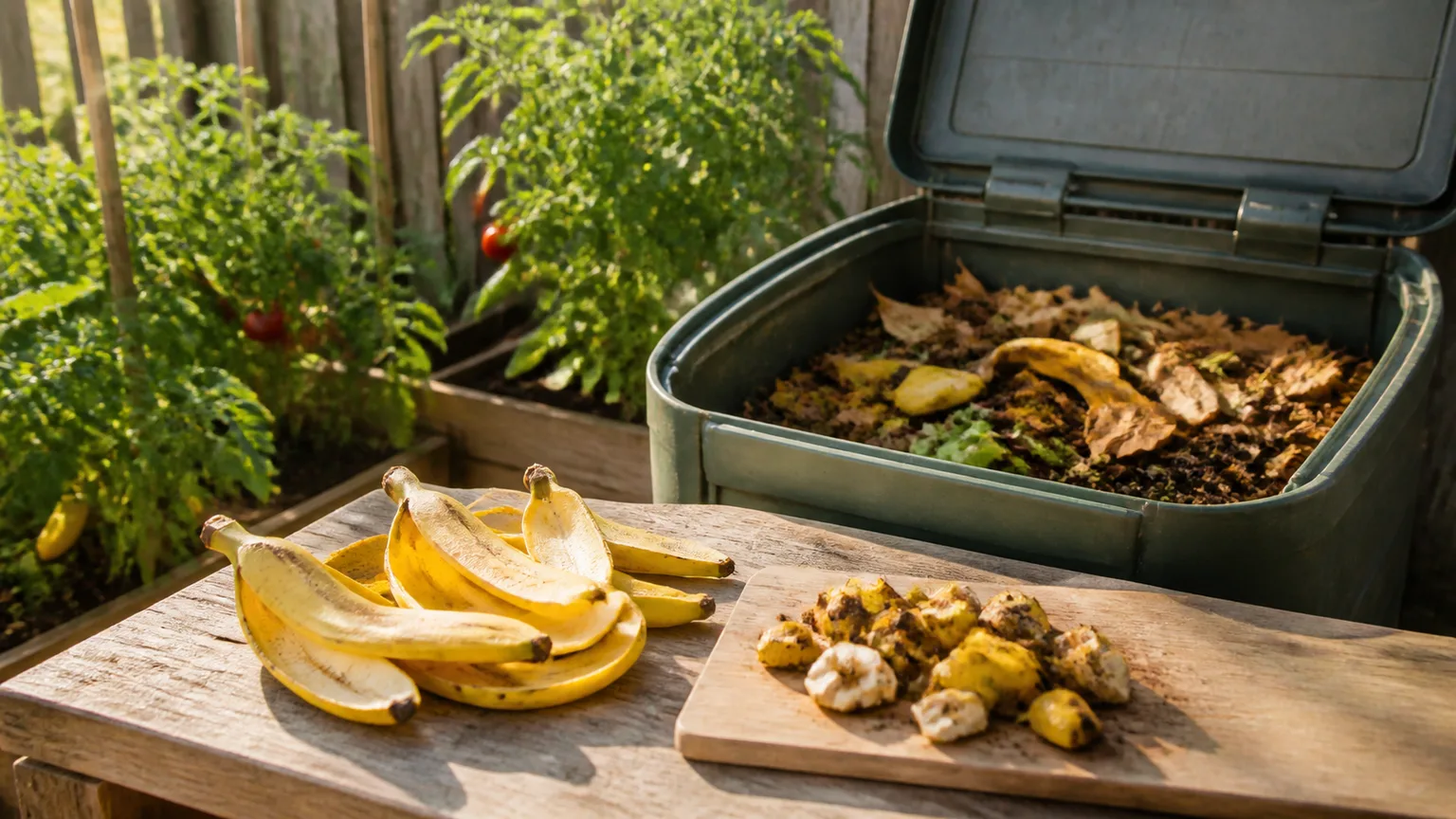
Keep the pile damp like a wrung-out sponge, not saturated, and turn or mix it as needed to restore air. The timing varies with pile size, ingredient mix, moisture, temperature, and how often it is turned. Do not promise yourself a specific number of weeks: a slow pile can take substantially longer than a hot, well-managed one. The goal is stable, dark, crumbly material with no obvious fresh peel fragments, not a calendar deadline.
The RHS recommends chopping banana skins and adding them to compost; Gardening Know How’s composting guide likewise notes that smaller pieces break down more readily and advises composting before using peels around plants. That is a practical way to turn a kitchen scrap into part of a soil amendment without relying on the peel itself to deliver an instant nutrient dose.
Use compost only when it is finished
If you can still identify a fresh peel or the pile smells sour or rotten, give it more time and air before spreading it near roses. Immature compost may keep decomposing after application, and its nutrient behavior is less predictable. A finished pile should smell earthy rather than putrid and should look like a relatively uniform, crumbly material; screening out large fragments makes it easier to use as a top-dressing.
Apply a thin, even layer over the soil beneath the rose’s canopy, without piling it against the crown or canes. Keep the mulch or compost off stems to reduce persistent damp contact and make it easier to inspect the base of the plant. If you already apply a generous amount of compost or manure, avoid stacking another rich amendment and a fertilizer on top without a reason.
What roses need beyond kitchen scraps
Roses need a root zone that supplies air, water, and nutrients over the growing season. The Missouri Botanical Garden’s rose-fertilizing guidance recommends testing soil to check both pH and nutrient content before fertilizing; its guidance describes garden roses as preferring slightly acidic soil, while exact target recommendations and amendments should follow a local soil report. A soil test can prevent the common mistake of adding a nutrient that is already abundant.
Good nutrition cannot compensate for poor siting. The RHS rose guide describes roses as performing well in rich, moist but well-drained soil and notes that many varieties flower in summer, with repeat bloomers extending into autumn. Roses also need adequate light and regular water during dry weather. If roots stay waterlogged, dry out repeatedly, or compete with nearby trees and turf, the rose may grow poorly even when nutrients are present.
This is why “more potassium” is not a universal bloom solution. A healthy rose uses potassium as one part of its nutrition, but flowering also depends on the variety’s bloom habit, light, pruning, age, water, and pest or disease pressure. A rose that naturally flowers in one flush will not become a repeat bloomer because someone buried fruit scraps under it.
Choose fertilizer from evidence, not bloom folklore
If an established rose has persistently weak growth after you have checked light, water, drainage, and pests, test the soil through a local extension service or an accredited laboratory. Read the report before buying a targeted amendment. When the report shows no deficiency and the rose is healthy, continuing with compost mulch and ordinary care may be more appropriate than adding fertilizer.
When you do feed, choose a product whose label permits use on roses or flowering shrubs and apply it at the rate and timing stated on that label. Organic products can still be too concentrated or misapplied; “natural” does not mean risk-free. Avoid mixing several feeds—such as compost, manure, alfalfa, fish emulsion, and a granular product—on the same date simply because each one is described as gentle.
University of Minnesota Extension’s quick guide to fertilizing plants emphasizes matching fertilizer decisions to plant and soil conditions rather than treating fertilizer as a cure-all. The RHS fertilizer guidance also explains that products differ in form and release. For the full seasonal rose schedule, use a rose-specific fertilizing plan and adapt it to your climate and product label.
Garden beds and containers need different decisions
In-ground roses have access to a much larger soil volume, so finished compost can be spread across the bed rather than concentrated in a hole. A soil test is especially useful before repeatedly adding phosphorus-rich products or compost. Follow local recommendations because rainfall, soil type, and the length of the growing season vary across regions.
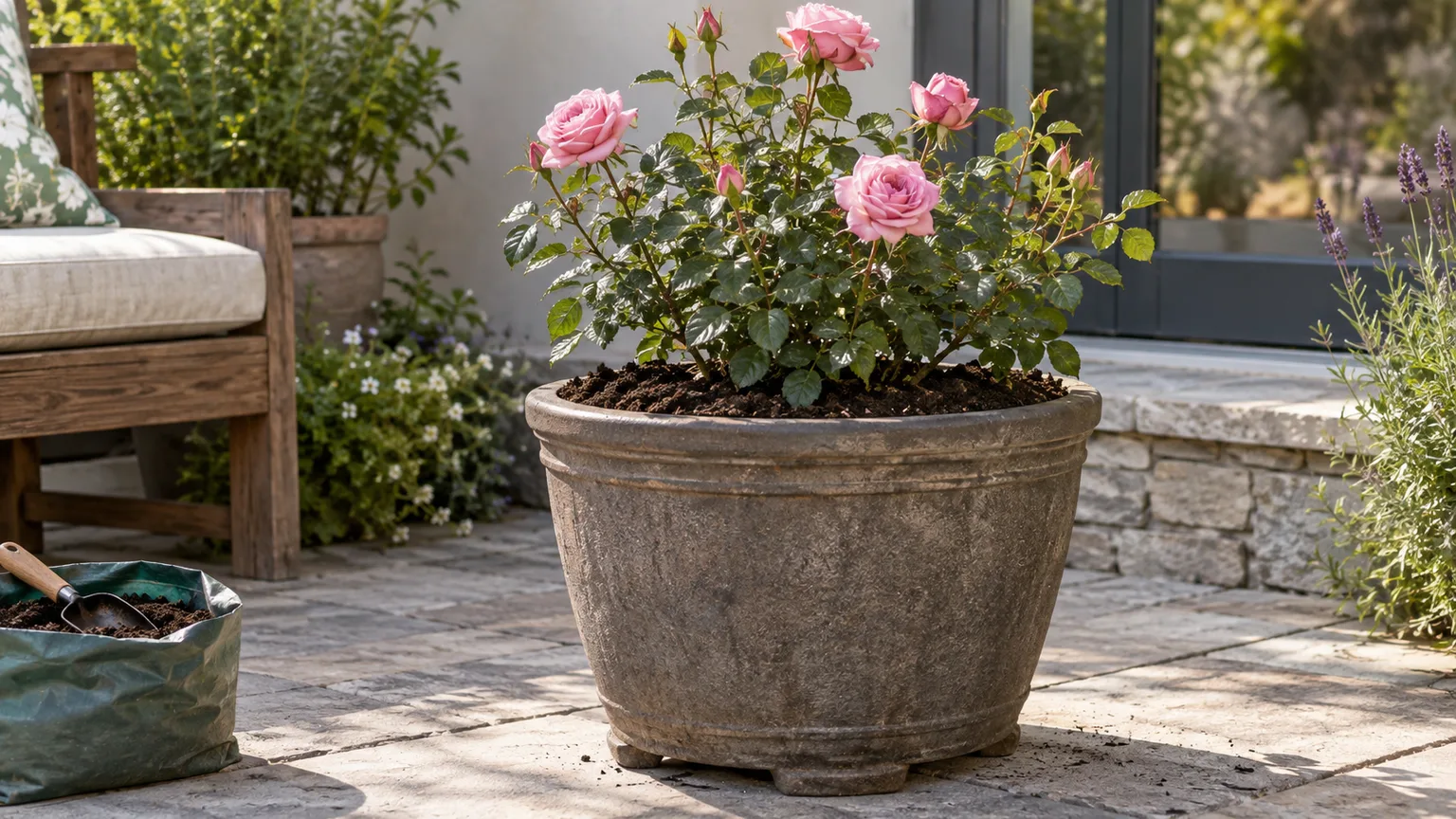
Container roses have a smaller volume of potting mix and are watered more often, which can move nutrients out through the drainage holes. At the same time, a pot has less room to dilute raw scraps, salts, and concentrated amendments. Avoid burying a fresh banana peel or relying on soak water in a container; use a fertilizer labeled for container roses, if needed, and follow its schedule. If you repotted into a mix containing fertilizer, check that mix’s instructions before feeding again.
Compost can be used sparingly on top of a large outdoor container if it is mature, but do not let it obstruct the drainage surface or bury the rose crown. For a compact pot, changing the mix at the appropriate repotting time may be more useful than layering several organic inputs onto old, compacted media.
Diagnose weak growth before feeding
Before adding anything, ask whether the rose is receiving enough sun, whether water reaches the root zone, and whether the soil drains after rain. Inspect both leaf surfaces and stems for pests or disease, and note whether the problem affects new leaves, old leaves, one branch, or the whole plant.
A pattern can help you decide what to investigate, but it does not prove a nutrient deficiency by itself.
Yellow leaves can result from age, drought, excess water, root problems, pests, disease, nutrient imbalance, or pH-related nutrient availability. Few flowers may follow insufficient light, a naturally once-blooming variety, recent transplant stress, pruning at the wrong time, or excessive nitrogen. These causes require different responses; another banana peel will not distinguish them.
Use a soil test if the problem is persistent or if you plan to add a specific nutrient. Take the sample as the lab instructs and avoid including fresh fertilizer granules, compost clumps, or mulch in the sample. If the report identifies an issue, use the local recommendation rather than an internet recipe. If the report is normal, investigate roots, drainage, watering, disease, and rose type before feeding more.

Mistakes to avoid with banana peels
Expecting a quick bloom response is the biggest mistake. A peel has no fixed release time, and mature compost contributes to soil over time rather than acting like a fast-acting, rose-labeled feed. If a rose is actively deficient, a slow kitchen scrap is not a substitute for an evidence-based correction.
Using one ingredient as a complete fertilizer is another. Potassium is only one of the primary nutrients plants need, and banana peels do not guarantee adequate nitrogen, phosphorus, or micronutrients. The same caution applies to other kitchen scraps: they can be compost inputs without being complete fertilizer products.
Putting fresh scraps on the soil surface can create a messy layer and may invite nuisance animals or insects, depending on the garden and local wildlife. Burying a large clump is not a better shortcut; it can decompose unevenly and makes the root zone harder to inspect. Add scraps to a managed bin or cover small additions with an appropriate compost mix.
Stacking amendments can create excess nutrients or salts, particularly in containers and small beds. Compost, manure, granular fertilizer, liquid feed, and homemade infusions all count as inputs. Keep a simple record of what you apply and when; that makes it easier to recognize whether a weak response follows a missed need, overfeeding, or an unrelated plant stress.
A simple decision plan for your rose
Use this quick sequence instead of guessing:
- If the rose is healthy and flowering normally: compost the peel if you like, and continue the care plan that is already working. You do not need to feed a healthy rose simply because a banana peel is available.
- If you want to improve soil: chop peels into a varied, aerated compost pile; wait until the material is mature; then apply a modest top-dressing across the root zone.
- If the rose is weak or leaves look abnormal: check water, drainage, light, pests, disease, and recent changes first. Do not diagnose nutrient shortage from one symptom.
- If a nutrient problem remains plausible: obtain a soil test and follow the local report. Choose one suitable labeled fertilizer only if the evidence or local rose guidance supports it.
- If the rose is in a pot: skip buried scraps and choose a container-appropriate feed only when needed, accounting for fertilizer already present in the potting mix.
This plan gives the peel a useful role without asking it to do a job it cannot do consistently. You can recycle food waste, build soil organic matter, and still make measured nutrition decisions for the rose.
Conclusion
Banana peels can be part of a rose garden’s compost, but they are not a dependable fertilizer on their own. Their nutrients become available as organic matter decomposes, and the amount and timing are too variable to replace a tested, labeled feeding plan. Raw scraps, homemade peel water, and powder are even less predictable, so none should be counted as a complete rose food.
If your rose is thriving, compost the peel and keep caring for the plant as usual. If it is underperforming, look at light, water, drainage, pests, disease, and soil before adding nutrients; then use a soil test and local rose guidance to choose a measured response. That approach makes better use of both the banana peel and the rose.