Sticky Leaves on Snake Plant: Causes, Checks & Fixes
Quick answer
Sticky leaves on Snake Plant are almost always honeydew from sap-sucking pests-mealybugs, scale, aphids, or whiteflies-not normal leaf sap. First step: inspect leaf bases and undersides under bright light, identify the pest, isolate the plant, and wipe sticky residue with a damp cloth before treating the insects with alcohol dabs or insecticidal soap.
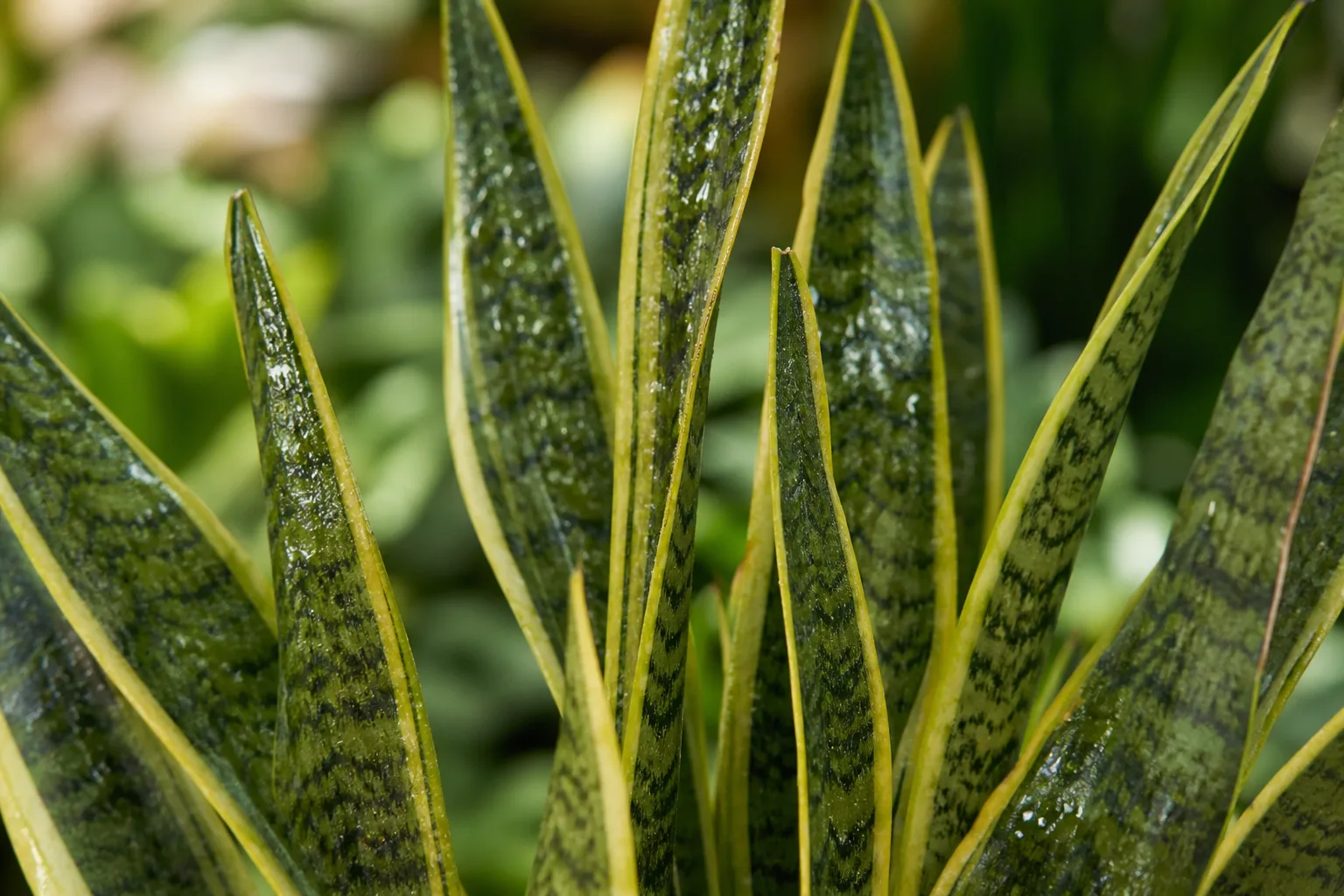
Sticky Leaves on Snake Plant: Causes, Checks & Fixes
This guide covers sticky leaves on Snake Plant. See also the general Sticky Leaves guide, watering, and light pages for this plant.
Sticky Leaves on Snake Plant: Causes, Checks & Fixes
Quick answer
Sticky leaves on Snake Plant are almost always honeydew from sap-sucking pests-mealybugs, scale, aphids, or whiteflies-not normal leaf sap. First step: inspect leaf bases and undersides under bright light, identify the pest, isolate the plant, and wipe sticky residue with a damp cloth before treating the insects with alcohol dabs or insecticidal soap.
Sticky leaves on Snake Plant should be treated as a symptom pointing to an underlying pest, not as a standalone watering or humidity problem. Dracaena trifasciata has broad, upright sword leaves that collect honeydew where sap feeders hide in tight leaf stacks. The useful clues are tacky residue, black sooty mold, which pest body you find, and whether stickiness returns after wiping.
What sticky leaves look like on Snake Plant
Honeydew is a clear to amber, sugary liquid that sap-feeding insects excrete while feeding. UC IPM explains that plant-sucking insects cannot fully digest the large volume of sap they take in, so they excrete the excess as sticky waste. On Snake Plant, honeydew often collects on the broad leaf face, drips onto lower leaves, coats the pot rim, and may reach nearby furniture or window sills.
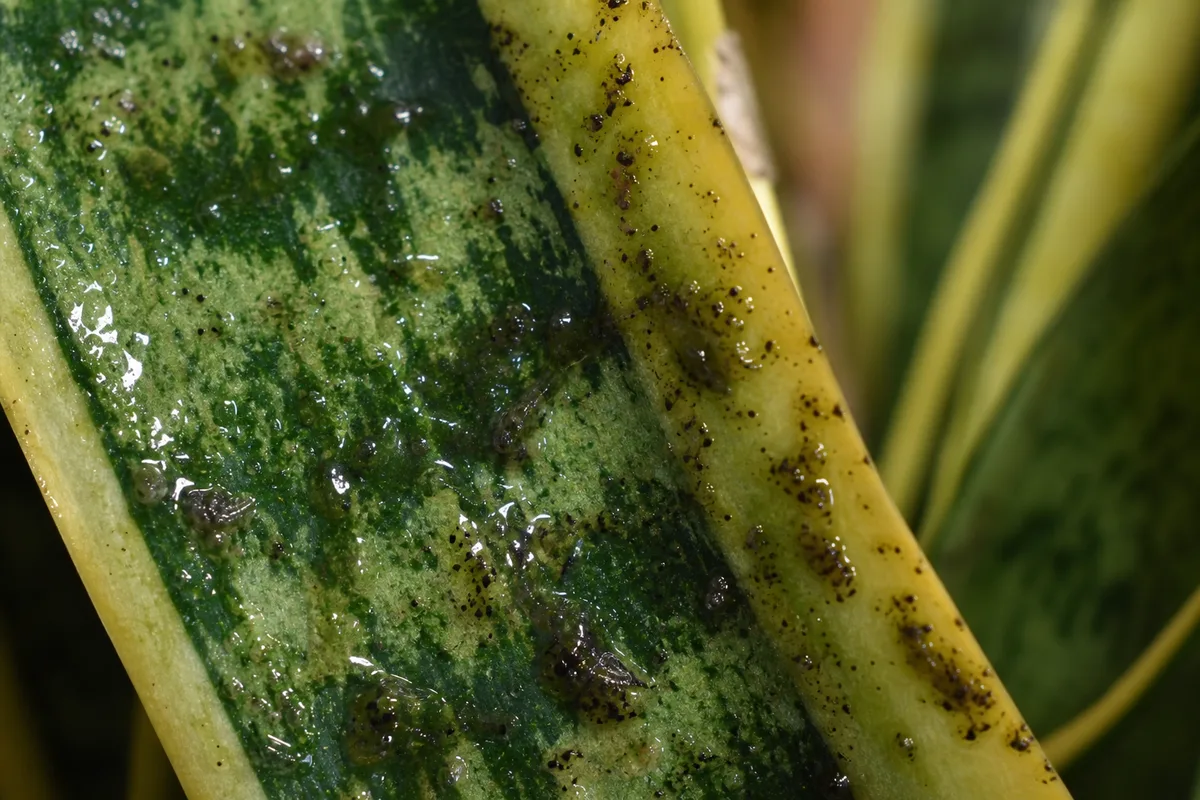
Sticky Leaves symptoms on Snake Plant - compare with healthy tissue on the same plant.
You may notice:
- Leaves that feel tacky or slightly glossy when they should be dry and matte
- Fine black specks or velvety black patches-sooty mold growing on dried honeydew
- Ants running along pot rims, shelves, or leaf bases attracted to the sugar
- Yellowing or distorted new leaves where aphids or thrips feed alongside honeydew producers
- White cottony clusters (mealybugs), tan dome bumps (scale), or tiny flying insects when disturbed (whiteflies)
Snake Plant’s thick leaves do not normally exude sticky sap when healthy. If stickiness appears without pests, consider whether a recently cleared infestation left residue, or whether a neighboring plant above the Snake Plant is dripping honeydew onto its leaves.
Why Snake Plant gets sticky leaves
Sticky leaves are a consequence of sap-feeding pests, not a separate disease. UF/IFAS notes that mealybugs on foliage plants including Dracaena produce honeydew that coats leaves and supports sooty mold fungi. Aphids, soft scale, and whiteflies create the same residue through piercing-sucking mouthparts.
Several Snake Plant habits make honeydew easy to miss early. The plant sits undisturbed for weeks between waterings, so tacky leaf surfaces may go unnoticed until sooty mold blackens them or ants appear. Tight leaf clusters at the crown hide mealybugs and scale where honeydew pools before spreading downward.
Warm indoor conditions allow pests to reproduce year-round without the natural enemies that control them outdoors. New plants, shared watering trays, and leaves brushing against infested neighbors are common entry routes. overwatering on Snake Plant does not cause honeydew, but weak roots from wet mix can make pest damage look worse on slow-growing Snake Plant leaves.
How to confirm the cause
Do not treat stickiness alone-find the pest that produces it.
Work in this order:
- Tack test - run a clean finger along a suspect leaf; honeydew feels sticky even when the leaf looks otherwise normal.
- Newest leaf center - peel adjacent leaves apart gently and inspect bases for mealybugs or scale.
- Leaf undersides - check lower third of each sword leaf for aphids, whiteflies, or scale.
- Shake test - tap the pot lightly; whiteflies fly up briefly and resettle.
- Ant trails - follow ants to the honeydew source on this pot or a neighbor.
- Neighboring plants - inspect anything on the same shelf; honeydew may originate above the Snake Plant.
Rule out lookalikes. Dried hard-water spots feel rough or chalky, not tacky, and wipe off with dry cloth. Spilled fertilizer or soda residue is localized and unrelated to leaf pattern. Fungal leaf spot causes discolored lesions without stickiness. Overwatering causes soft bases and sour soil-not glossy tacky leaf faces.
If you wipe leaves clean and stickiness returns within three to five days, an active pest population remains even if you have not yet spotted it.
First fix for Snake Plant
Identify and isolate the source plant before cleaning every leaf in the room. Move the affected Snake Plant away from neighbors, then wipe honeydew from leaf surfaces with a damp cloth and mild soap if needed. This cleaning step improves visibility for pest inspection and reduces sooty mold spread, but it does not replace insect treatment.
Once visible pests are identified:
- Mealybugs - dab each cluster with 70% isopropyl alcohol on a cotton swab.
- Scale - scrape or dab immobile shells with alcohol, then follow with horticultural oil.
- Aphids - rinse with water or spray insecticidal soap on affected growth.
- Whiteflies - vacuum or wash flying adults; spray undersides with soap or oil.
Make only one primary pest treatment on day one after wiping. Stacking Snake Plant repotting guide, systemic drenches, and heavy pruning simultaneously obscures whether stickiness is resolving.
Step-by-step recovery
Day 1: Isolate plant. Wipe all sticky residue from leaves, pot rim, and saucer. Identify pest type under bright light. Begin targeted contact treatment on visible insects.
Week 1: Repeat alcohol dabs or soap spray per label. Wipe new honeydew each time so you can see whether production is slowing. Check neighboring plants daily.
Week 2: Re-inspect leaf bases and undersides. Add horticultural oil if crawlers or soft-bodied stages persist. Replace sticky traps near the pot if whiteflies were present.
Week 3–4: Continue weekly treatment until two consecutive checks show no new stickiness, no new pest bodies, and no ants. Wash remaining sooty mold from leaves with damp cloth; fungicide is not needed once honeydew stops.
If ants are present, control them only after addressing the honeydew source-ants protect sap feeders from predators. UC IPM notes that managing honeydew-producing insects is the correct path to eliminate sooty mold.
Recovery timeline
Honeydew wipes off immediately, but sooty mold may leave dull patches on old leaves permanently. Expect tackiness to stop within one to two weeks on light infestations once pests are treated. Moderate cases with scale or mealybugs often need three to four weekly cycles before new honeydew stops appearing.
Judge progress by whether wiping stays clean between checks, whether ants disappear, and whether new Snake Plant leaves emerge without stickiness-not by whether decades-old sooty leaves look showroom perfect.
What not to do
Do not mist Snake Plant heavily to “wash off” stickiness without treating pests first-wet leaf crowns invite rot on Snake Plant overview, and RHS guidance warns against watering into the rosette center.
Do not apply fungicide for sooty mold alone. Sooty mold is a cosmetic fungus on honeydew; it returns until sap feeders are gone.
Do not increase watering because leaves look dull. Snake Plant needs bone dry soil between drinks; wet mix adds root stress while you fight pests.
Do not assume stickiness means the Snake Plant itself is “leaking” sap. Healthy Sansevieria leaves are not naturally tacky.
Do not return the plant to a crowded shelf before two clean weekly inspections. Honeydew from a missed mealybug cluster will restart the cycle.
Snake Plant is toxic to cats and dogs. Keep treated plants out of pet reach and ventilate when using soaps or oils indoors.
Causes to rule out
Active sap feeders - mealybugs, scale, aphids, whiteflies (most common cause of sticky leaves).
Old honeydew residue - stickiness from a past infestation already cleared; no live pests on inspection.
Drip from above - honeydew from an infested plant on a higher shelf landing on Snake Plant leaves.
Hard-water spots - chalky, not tacky; on leaf tips more than broad faces.
Spilled substances - localized sticky patches from household products, not uniform leaf coating.
If no pest is found and stickiness does not return after thorough wiping, monitor for two weeks before treating with pesticides.
Lookalike symptom check
Sticky leaves plus yellowing can overlap with overwatering, but overwatering adds soft leaf bases, heavy wet pot, and sour soil smell-without insect bodies or ant trails. Thrips cause silvery streaks and distorted growth; they may coexist with honeydew producers but are not the usual cause of broad tacky leaf surfaces alone.
Compare timing: stickiness that appeared suddenly after a new plant arrived strongly suggests pests. Gradual tip browning without tackiness points to salts or underwatering on Snake Plant instead.
Snake Plant care cross-check
Pest recovery goes faster when baseline care is sound. Snake Plant wants Snake Plant light guide, fast-draining mix, and infrequent watering. UF/IFAS Florida-Friendly guidance notes that sooty mold grows on honeydew from sucking insects like scale and aphids-control the insects first, then clean the leaves.
While treating, keep the plant on its normal dry-down schedule. Avoid repotting into oversized pots or fertilizing stressed plants until stickiness stops and new growth looks firm.
How to prevent it next time
Prevention centers on early pest detection before honeydew spreads:
- Quarantine new plants for two weeks minimum.
- Run a tack test on broad leaves during monthly dust wiping.
- Inspect leaf bases whenever you check soil dryness.
- Keep plants spaced so leaves do not touch neighbors.
- Watch for ants-they often reveal honeydew before you see pests.
- Isolate immediately if any plant in the room develops stickiness.
Clean leaves show pests sooner. On Snake Plant’s wide foliage, a single mealybug cluster is visible under good light if you look at the crown regularly.
When to worry
Escalate when:
- Stickiness returns within days after thorough wiping and treatment.
- Ants farm multiple pots in the same area.
- Sooty mold covers most leaf area and new growth stalls.
- You cannot identify the pest after two detailed inspections-consider extension or nursery help with a sample.
- Three weekly treatment rounds fail to reduce honeydew production.
Sticky leaves alone are low severity, but they signal medium-severity pests that can spread to your wider collection if ignored.
Practical checks
Urgency check
Urgent when tackiness is widespread, ants are active, or honeydew reappears within 72 hours of wiping. A faint sticky spot on one leaf with no pest found warrants monitoring, not panic.
Best inspection order
Newest leaf center, leaf bases at soil line, leaf undersides, pot rim and saucer, neighboring plants, then ant trails-in that order.
Severity note
This issue is marked low as a symptom but often indicates medium-severity underlying pests. Treat the pest, not just the stickiness.
Honeydew confirmation rule
Confirm honeydew with tacky residue plus pest bodies, ants, or recurring stickiness after wipe-not dust or water spots alone.
Conclusion
Sticky leaves on Snake Plant mean honeydew from sap-sucking pests, not a mystery leaf disease. Wipe residue to see clearly, isolate, identify mealybugs/scale/aphids/whiteflies, treat the insect, and monitor until wiping stays clean. Sooty mold clears once honeydew stops. Old leaves may stay dull, but new sword leaves tell you the fix worked.