Scale Insects on Snake Plant: Causes, Checks & Fixes
Quick answer
Scale insects on Snake Plant appear as tan or brown waxy bumps stuck firmly to leaf faces and bases, sucking sap and leaving sticky honeydew. First step: isolate the plant and dab or scrape every visible scale with a cotton swab soaked in 70% isopropyl alcohol, then follow with horticultural oil or insecticidal soap on all leaf surfaces.
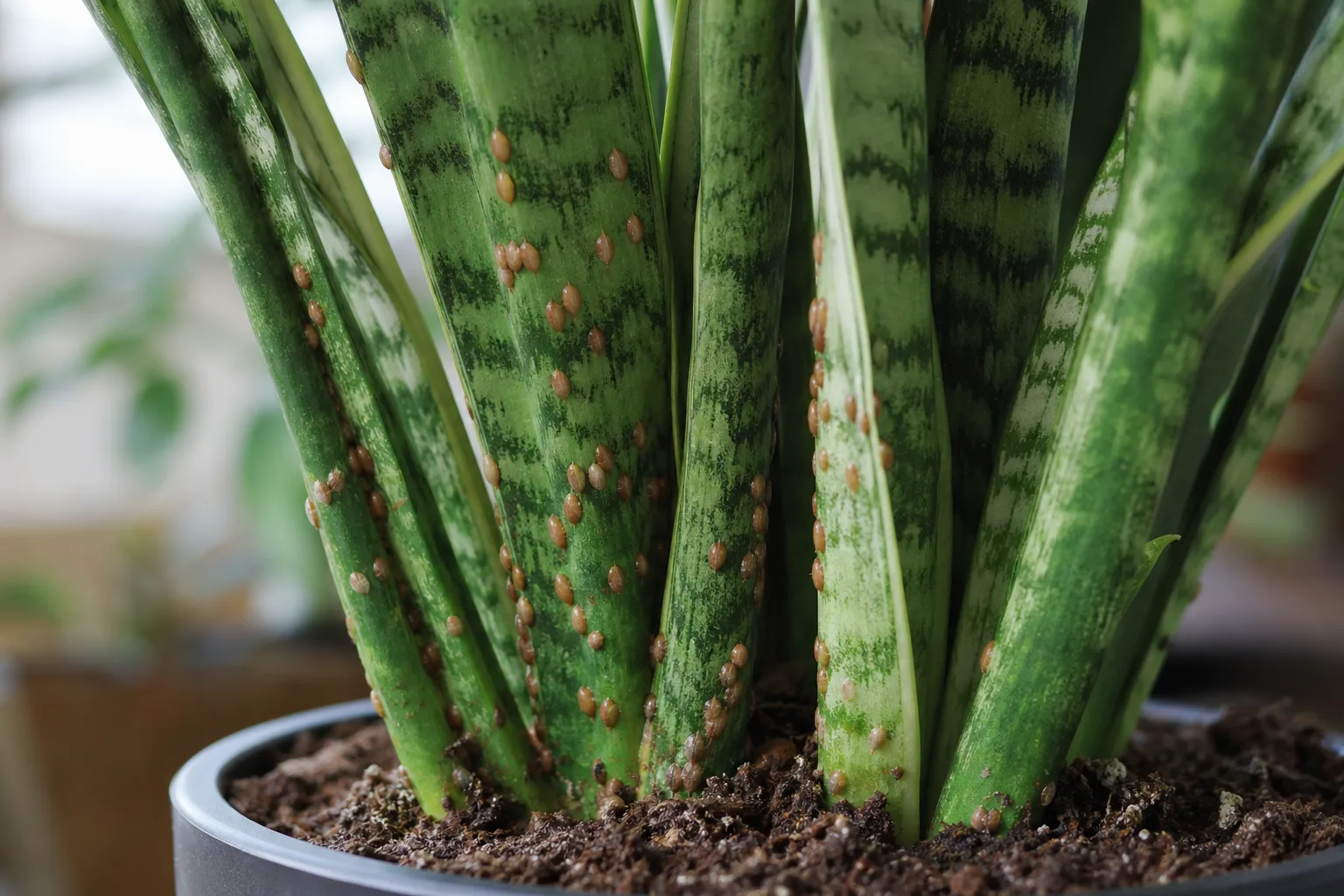
Scale Insects on Snake Plant: Causes, Checks & Fixes
This guide covers scale insects on Snake Plant. See also the general Scale Insects guide, watering, and light pages for this plant.
Scale Insects on Snake Plant: Causes, Checks & Fixes
Quick answer
Scale insects on Snake Plant appear as tan or brown waxy bumps stuck firmly to leaf faces and bases, sucking sap and leaving sticky honeydew. First step: isolate the plant and dab or scrape every visible scale with a cotton swab soaked in 70% isopropyl alcohol, then follow with horticultural oil or insecticidal soap on all leaf surfaces.
Scale on Snake Plant should be diagnosed on the plant itself-not from a generic pest photo. Dracaena trifasciata grows as thick, upright sword leaves that scale insects colonize along midribs, at soil level, and in the narrow gaps between stacked leaves. The useful clues are immobile waxy shells, sticky honeydew, whether crawlers reappear after treatment, and whether neighboring plants show the same pattern.
What scale insects look like on Snake Plant
On most houseplants, scale insects read as small oval or dome-shaped bumps in tan, brown, or black. UC IPM notes that soft scales secrete honeydew and lack a separate waxy cover, while armored scales have a harder shell that resists contact sprays. On Snake Plant, both types often settle on the broad leaf face, along the midrib, at the rhizome where leaves emerge, and occasionally on exposed surface rhizomes above the soil line.
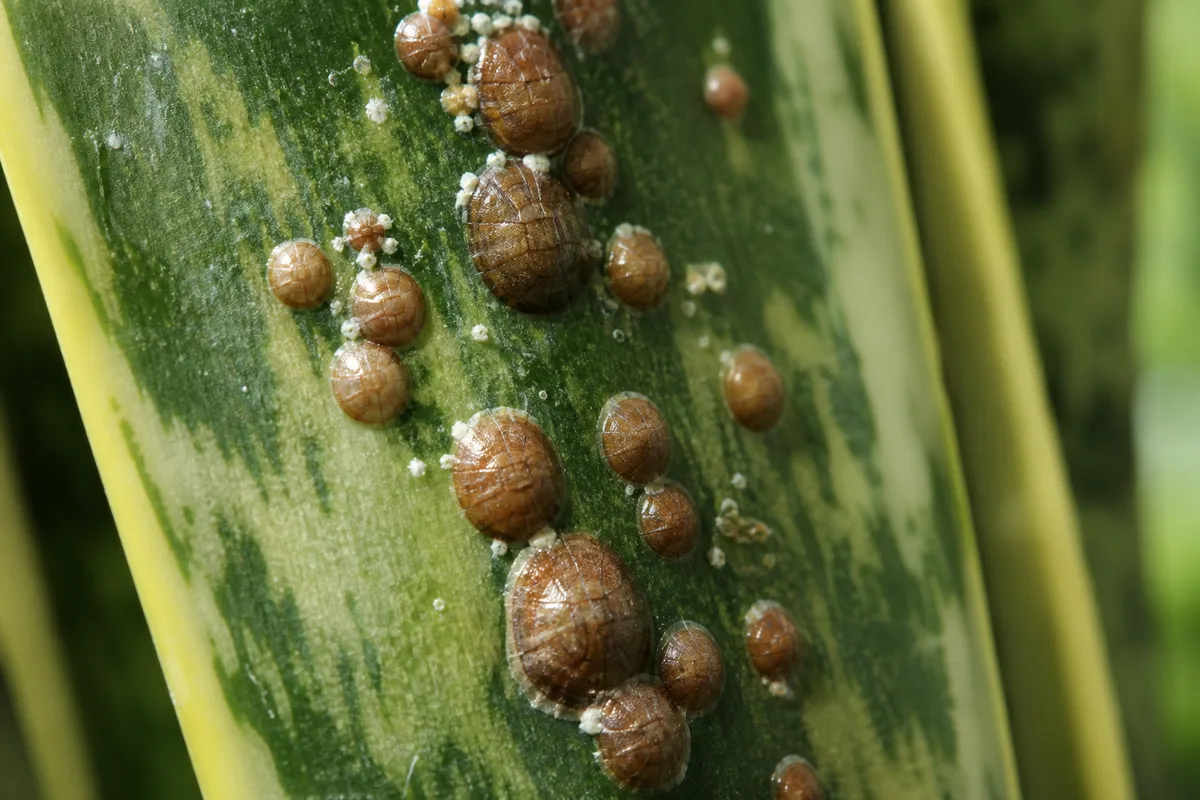
Scale Insects symptoms on Snake Plant - compare with healthy tissue on the same plant.
Snake Plant’s slow growth and long-lived leaves mean scale can sit unnoticed for months. A few flat tan dots can become a crusted band before the plant shows obvious decline. Honeydew-a sticky, carbohydrate-rich residue from sap feeding-may appear on leaf surfaces, the pot rim, or the shelf below before you spot the insects. Black sooty mold can follow, dulling the normally glossy leaf surface and reducing photosynthesis where the coating is thick.
Unlike mealybugs, mature scale do not move once they settle. They look like part of the leaf until you try to flick them off. Crawlers-the tiny mobile nymph stage-are pale and easy to miss without magnification, which is why repeat treatments matter even after visible shells are gone.
Why Snake Plant gets scale insects
Snake Plant is not pest-proof. UF/IFAS lists Dracaena among common foliage hosts for sap-feeding pests indoors, and UC IPM includes Dracaena in houseplant pest guidance where scale management relies on scraping, washing crawlers, and applying horticultural oil or insecticidal soap during vulnerable nymph stages.
Warm, stable indoor temperatures favor year-round scale reproduction, especially when plants lack the outdoor natural enemies that usually keep populations in check. Several Snake Plant habits make inspection easy to skip. The plant tolerates infrequent watering and low light, so it often sits undisturbed in a corner while pests settle on leaf surfaces that look fine from across the room. Tight clumps of leaves shield colonies from casual glances.
Scale usually hitchhike in. They arrive on new plants, reused pots, contaminated tools, or leaves brushing against infested neighbors. Crawlers are tiny and mobile before they settle and grow their protective cover, which is why quarantine and repeat checks matter more than a single treatment pass.
overwatering on Snake Plant does not cause scale directly, but chronically wet mix stresses roots and keeps plants weakened-conditions where sap feeders cause more visible yellowing and stunted new growth on Snake Plant.
How to confirm the cause
Start with bright light and a magnifying glass if you have one. Scale shells are typically one-sixteenth to one-eighth inch across and feel firmly glued to the leaf-unlike lint, mineral dust, or mealybug wax that wipes away more easily.
Work in this order:
- Leaf bases and midribs - scan where thick leaves meet the rhizome and along the central vein on both faces.
- Leaf undersides - check the lower third of each sword leaf where scale often hides from overhead view.
- Soil line and surface rhizomes - look for bumps on any rhizome visible above the mix.
- Sticky residue test - honeydew feels tacky; dried tap-water spots or dust do not.
- Neighboring plants - inspect anything touching this pot or sharing a watering tray.
Rule out lookalikes before treating. White, cottony clusters that dissolve when dabbed with alcohol are mealybugs, not scale. Dry tan leaf tips from fluoride or underwatering on Snake Plant do not produce honeydew. Fungal leaf spots are flat lesions with margins, not raised waxy domes. Edema bumps from overwatering are corky and part of the leaf tissue-they cannot be scraped off.
If you are unsure, try to lift one bump with a fingernail or alcohol swab. Scale shells stay attached or leave a clean scar; mealybugs smear pink or yellow beneath the wax.
First fix for Snake Plant
Isolate the plant immediately-at least arm’s length from other houseplants, ideally in a separate room for two weeks while you treat. The first targeted action is manual removal: scrape or dab each visible scale with a cotton swab soaked in 70% isopropyl alcohol, working leaf by leaf across both faces and bases.
Test alcohol on one leaf first and wait 24 hours to confirm it does not burn the surface-especially on variegated cultivars like ‘Laurentii’. UC IPM recommends scraping scales off, washing crawlers with water, and applying horticultural oil or insecticidal soap when scales are in the small immature nymph stage. Do not pour alcohol into the leaf crown or drench the soil on the first pass; contact treatment on visible shells and crawlers is enough to start.
Make only this correction first. Stacking Snake Plant repotting guide, systemic insecticides, heavy pruning, and fertilizer on the same day makes it harder to know what helped and can stress an already weakened plant.
Step-by-step recovery
Once isolation and alcohol dabs are underway, follow a simple cycle for three to four weeks:
Week 1: Scrape or dab all visible scale. Wipe honeydew from leaves with a damp cloth. Discard swabs and wipe tools with alcohol between plants.
Week 2: Repeat dabs and add a thorough spray of insecticidal soap or horticultural oil on all leaf surfaces, following label rates. Coat leaf bases and edges where shells hide in crevices. Oils smother crawlers that lack heavy armor.
Week 3: Inspect for new bumps. Repeat alcohol on any survivors. If populations dropped but are not gone, apply soap or oil again rather than escalating to harsh broad-spectrum sprays.
Week 4: If the plant is clean, keep it isolated one more week and inspect daily. Move it back only when two consecutive weekly checks show no new shells or sticky residue.
For heavy armored scale crusts that resist dabbing, consider disposing of severely infested lower leaves at soil level after treating the rest of the plant-only if the rhizome remains firm. Systemic soil drenches labeled for indoor scale are a later option when contact treatments fail repeatedly; read labels carefully for Dracaena and indoor use.
Recovery timeline
Existing leaves with sooty mold, yellowing, or pitting from prolonged feeding usually will not look brand new again. Judge progress by whether new growth emerges firm and bump-free, whether honeydew stops appearing, and whether weekly checks find fewer colonies.
Light infestations often stabilize within two to three weekly alcohol-and-oil passes. Moderate cases commonly need three to four weeks. Heavy infestations involving multiple plants may take six to eight weeks of consistent monitoring, and badly compromised leaves may need trimming after the plant is stable.
What not to do
Do not ignore a few tan dots because Snake Plant looks tough. Low visible damage can hide a reproducing colony along leaf bases.
Do not spray random household pesticides indoors without reading the label. Broad-spectrum sprays can harm you, pets, and beneficial insects while missing scale hidden on broad leaf faces.
Do not increase watering to “help” a stressed Snake Plant while treating pests. This species needs the mix bone dry between waterings; wet soil worsens root stress and overlaps with other failure patterns.
Do not repot on day one unless roots are rotting or soil is heavily contaminated with honeydew and ants. Unnecessary repotting spreads crawlers to your work surface and adds stress.
Do not place treated plants back in a crowded shelf before two clean weekly inspections. Crawlers travel short distances but infestations often restart from missed nymphs.
Remember that Snake Plant is toxic to cats and dogs. Keep isolated plants out of reach during treatment, ventilate when using soaps or oils, and wash hands after handling sap or wet leaves.
Causes to rule out
Several problems mimic pest stress on Snake Plant:
Mealybugs - white, cottony wax in leaf axils; smear pink when dabbed with alcohol.
Aphids - soft green or black insects on new growth; mobile and clustered, not dome-shaped shells.
Fungal leaf spot - flat reddish-brown lesions with yellow halos; no honeydew or raised bumps.
Mineral or dust buildup - wipes off dry; no firm shell beneath.
Overwatering - soft leaf bases, sour soil smell, and mushy roots without waxy domes on leaves.
Spider mites - fine webbing and stippled leaves rather than immobile bumps; more common when air is very dry.
If the pattern does not match raised shells plus optional honeydew, use the closest Snake Plant problem guide instead of defaulting to pest spray.
Lookalike symptom check
Scale damage and watering stress can both yellow leaves, but the mechanism differs. Overwatering on Snake Plant softens leaf bases while soil stays wet and roots may smell foul-without waxy bumps on leaf faces. Scale damage more often shows localized tan domes, sticky residue, and sooty mold while soil moisture may be normal.
Compare what you see with the plant’s recent routine: if you watered on schedule but find shells and honeydew, pests are the primary issue. If the pot stayed heavy for weeks and leaves softened at the base, check roots before assuming scale alone.
Snake Plant care cross-check
Effective scale control still depends on sound baseline care. Snake Plant performs best with indirect light, fast-draining gritty mix, and watering only when the soil is dry throughout the pot. RHS guidance for sansevierias stresses free-draining compost and warns that overwatering is the main health issue-meaning Snake Plant overview recovers slowly from combined pest and watering stress.
Cross-check recent changes before a second round of treatments. Did the plant move to a darker corner where inspections stopped? Did a new plant arrive on the same shelf? Align light, drainage, and watering with species needs while you continue weekly pest checks.
How to prevent it next time
Prevention is mostly inspection and quarantine. UC IPM advises examining plants thoroughly before bringing them indoors and considering disposal of chronically infested material on easily replaced specimens rather than fighting heavy scale indefinitely.
Build these habits for Snake Plant:
- Quarantine new purchases for at least two weeks away from existing plants.
- Inspect leaf bases and midribs during every watering check-not just when leaves look wrong.
- Keep pots spaced for airflow; avoid letting leaves rest on neighboring plants.
- Wipe dust from broad leaf surfaces monthly so tan bumps show up sooner.
- Use clean tools between plants when pruning or dividing pups.
- Isolate immediately if any plant in the room develops sticky leaves or brown shells.
A healthy Snake Plant tolerates low pest pressure better than a stressed one, but no cultivar is immune. Catching crawlers before they armored over is the cheapest fix available.
When to worry
Escalate beyond alcohol and soap/oil cycles when:
- New scale shells appear across most leaf bases after three full weekly treatment rounds.
- You find scale on three or more unrelated houseplants in the same space.
- Sooty mold covers most leaf area and new growth fails to emerge.
- Armored crusts encircle multiple leaves and manual removal barely reduces the count.
In severe indoor cases, UC IPM notes that discarding a chronically infested houseplant is sometimes more practical than repeated pesticide applications-especially when the plant is small, common, and easily replaced. That is a last resort, not a first response.
Practical checks
Urgency check
Treat as urgent when honeydew is actively sticky, shells cover multiple leaf bases, or you confirm crawlers on neighboring plants. Slow discovery of a few isolated bumps gives you more time for methodical alcohol dabs.
Best inspection order
For Snake Plant, inspect leaf bases at the soil line, midribs on both faces, spaces between stacked leaves, pot rim and drainage holes, then neighboring plants-in that order-before choosing systemic products or repotting.
Severity note
This issue is marked medium for Snake Plant. That rating is a triage clue, not a guarantee; a large specimen with early detection is easier to save than a small pot with heavy crusted scale and wet rot combined.
Scale confirmation rule
Do not treat as scale until you confirm immobile waxy domes that resist wiping, optional honeydew, or crawlers after alcohol dabs. Dust, edema, and mealybugs require different fixes.
Escalation point
Move to labeled systemic treatment or disposal consideration when three weekly treatment cycles fail to reduce new shells, or when infestation spreads to multiple plants despite isolation.
Conclusion
Scale insects on Snake Plant hide in plain sight as tan or brown bumps on thick sword leaves. Confirm with immobile shells, honeydew, and alcohol dabs; isolate; scrape or dab visible scale; repeat weekly; add soap or oil for crawlers; and keep the plant on its normal dry Snake Plant watering guide while you monitor. Old damaged leaves may stay blemished, but clean new growth tells you the fix is working.
Related tool
Use the Pest Identifier Tool to narrow causes for scale insects on this plant before changing multiple variables at once.