No New Growth on Snake Plant: Causes, Checks & Fixes
Quick answer
No new growth on snake plant is usually winter dormancy, low light, root crowding, or hidden rot stalling new Sansevieria leaves for months beyond normal slow growth. First step: wait through winter; in spring move to brighter indirect light, unpot to check roots, and repot if rhizomes escape drainage holes.
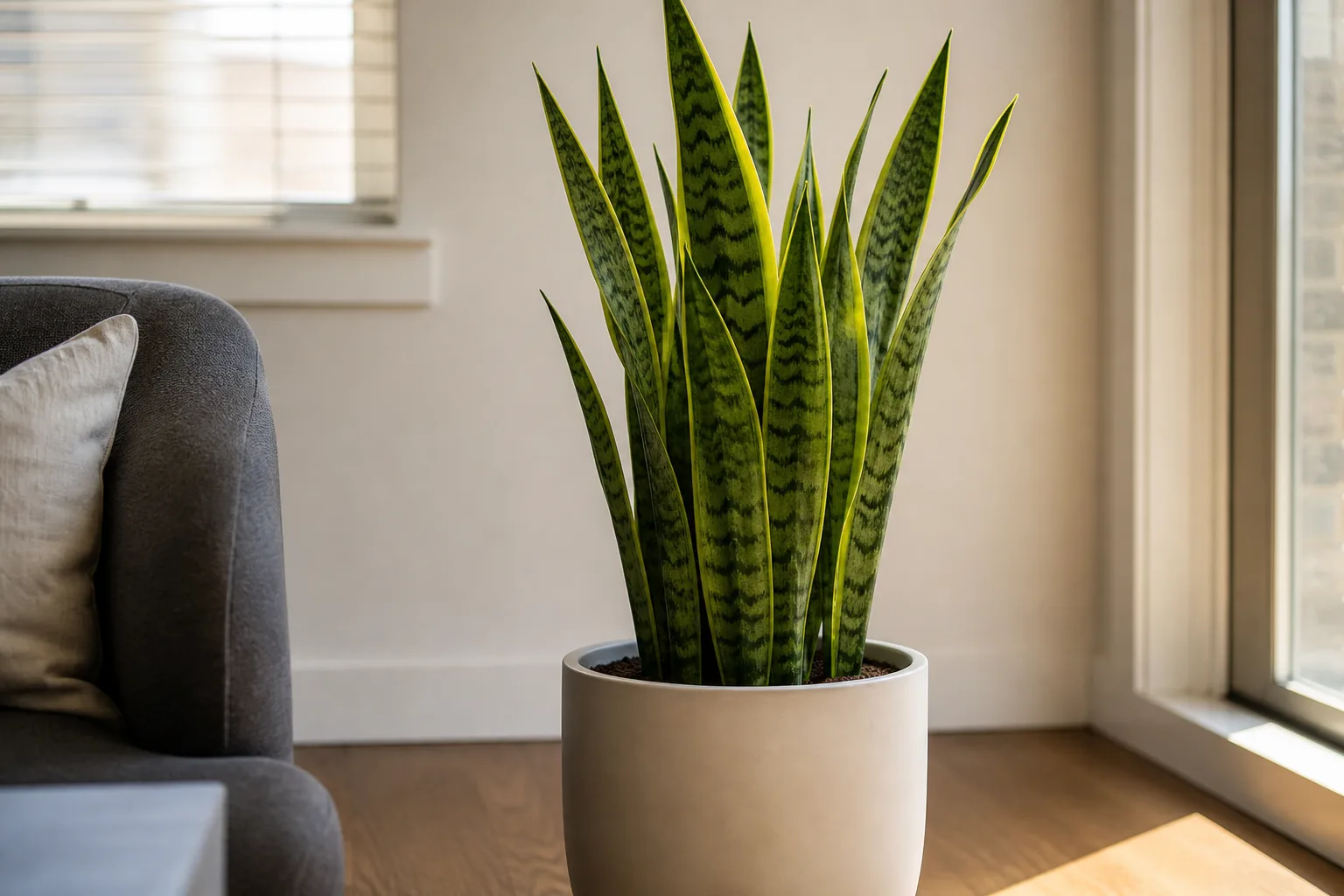
No New Growth on Snake Plant: Causes, Checks & Fixes
This guide covers no new growth on Snake Plant. See also the general No New Growth guide, watering, and light pages for this plant.
No New Growth on Snake Plant: Causes, Checks & Fixes
Quick answer
No new growth on snake plant (Dracaena trifasciata) means zero new upright leaves, pups, or rhizome shoots for many months - beyond the species’ already slow pace. Winter dormancy, low light, severe root crowding, and hidden rot are the usual causes. Existing foliage often looks fine while the plant idles on stored leaf and rhizome reserves.
First step: if it is late fall through early spring, wait - minimal new growth is expected. Once active season returns, move the pot to brighter indirect light, unpot to inspect rhizome firmness, and repot into fresh fast-draining mix if roots circle densely or escape drainage holes. Make one targeted correction before stacking repot, divide, and heavy feed.
Why Snake Plant gets no new growth
Snake plants are inherently slow growers that store water in thick leaves and underground rhizomes. They can look unchanged for months while still healthy - but a complete stall for half a year or more in bright spring and summer usually means a limiting condition, not species-normal patience.
Winter dormancy is the most common innocent cause. As days shorten and indoor temperatures cool, metabolism drops. The plant draws on water stored in fleshy leaves and pushes little to no new tissue until lengthening days return. Owners who bought the plant in summer and see nothing new by January often worry unnecessarily.
Low light stops new leaf production even when old foliage stays green and upright. Snake plants survive dim corners through CAM photosynthesis and stored reserves, but they do not actively add mass without adequate light intensity. A plant that has not produced a new leaf in two years on a dark bookshelf is usually light-limited, not dead.
Root-bound conditions stall pups when rhizomes displace nearly all soil. Water channels through the root mat without hydrating it; the pot dries within days of soaking despite a large leaf mass. With no usable root zone left, new shoots wait until spring Snake Plant repotting guide frees space.
Rot or chronic overwatering suppresses root function silently. Rhizomes turn mushy at the center while outer leaves stay firm for weeks. Growth stops because roots cannot support new tissue - a different problem from dormancy or low light, and one that worsens if you increase watering to “wake the plant up.”
What no new growth looks like on Snake Plant
On snake plant, a true growth stall has a recognizable pattern:
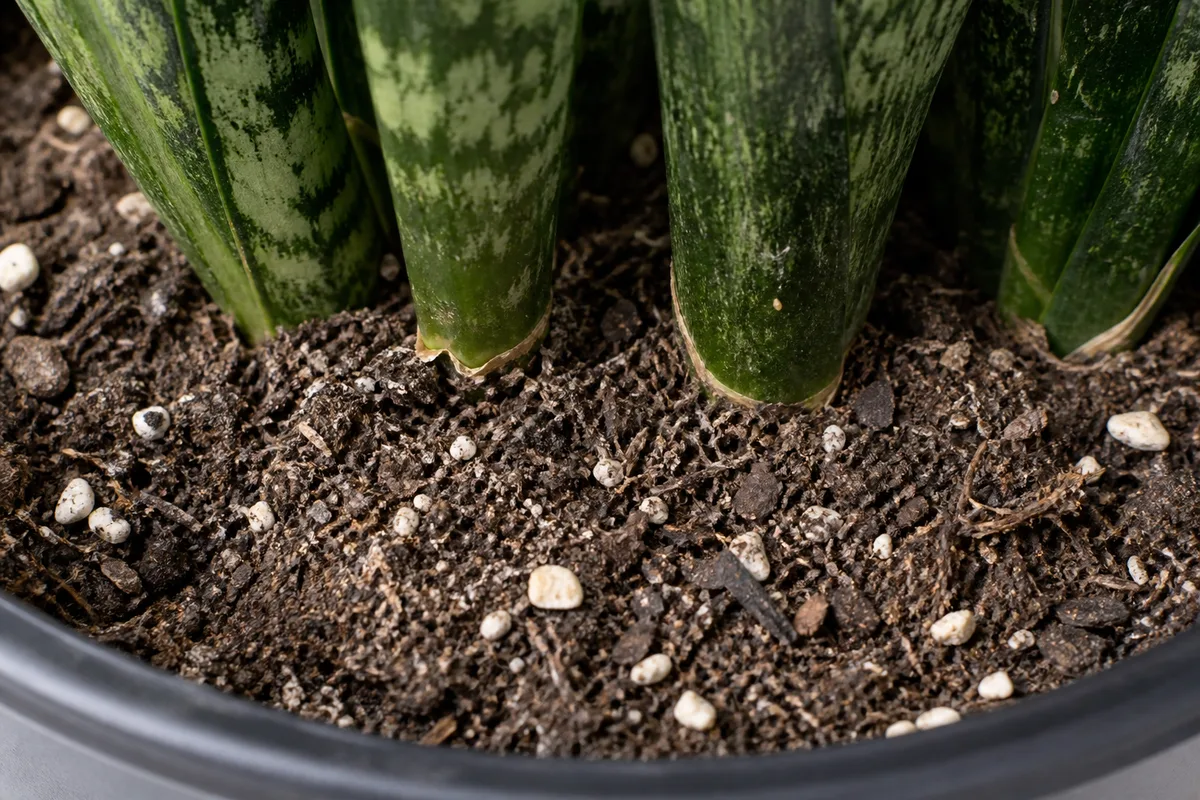
No New Growth symptoms on Snake Plant - compare with healthy tissue on the same plant.
- No new sword-shaped leaf emerging from the rosette center for six or more months through spring and summer.
- No pups swelling at the soil line despite firm, green parent leaves.
- Existing leaves unchanged in height - mature blades do not lengthen to compensate.
- Variegated cultivars may look static; low light can fade stripe contrast over time without obvious yellowing.
- The plant appears structurally solid - unlike decline with spreading yellow or soft bases.
This differs from slow growth (one new leaf every year in moderate light - frustrating but normal) and from leggy growth (thin leaves reaching toward a window). No new growth means the rosette and soil line stay visually frozen.
How to confirm the cause
Work through checks in this order before repotting or feeding:
- Calendar and light. Note the month. Zero new growth from November through February is expected in most homes. From April onward, assess whether the plant sits in Snake Plant light guide or a dim interior spot far from windows.
- Newest leaf age. Compare the youngest leaf to older ones. If the youngest leaf is a year old and no tip is forming at the center, the stall is real - not a slow flush you missed.
- Pot weight and dry-down. Lift after a normal watering cycle. A pot that stays heavy for weeks suggests wet mix and possible root stress. A pot that dries within two to four days after thorough soaking may be severely root-bound.
- Drainage holes. Rhizome tips escaping holes or cracking thin plastic strongly suggest crowding limiting new pups.
- Gentle unpot. Slide the plant out. Firm white or tan rhizomes with some mix remaining point to dormancy or light limits. A solid root cylinder with minimal soil, or mushy black tissue, confirms crowding or rot respectively.
If foliage is firm, pest-free, and the calendar is winter, no new growth is likely normal rest - not an emergency.
First fix for Snake Plant
Wait through winter if the stall aligns with shorter days and cooler indoor temperatures. Do not fertilize or repot heavily during this quiet period.
In spring, when days lengthen:
- Move the pot to the brightest location that avoids scorching direct afternoon sun on the leaves - an east window, a few feet from a filtered west window, or a bright room with daylight.
- Unpot only if the plant has not been repotted in three or more years, roots escape holes, or the mix stays wet for weeks. Inspect rhizome firmness; trim mushy tissue and repot into fresh fast-draining cactus or succulent mix in a pot only one to two inches wider.
- Hold water until the full pot depth is dry. Resume the normal summer rhythm only when the mix is bone dry throughout.
- Apply balanced liquid fertiliser at half strength once or twice through spring and midsummer - only after you see a new leaf tip or pup swelling. Skip feed entirely from fall through winter.
Make the light-and-root check alone first. Do not repot, divide, prune, and fertilise on the same day unless rot is confirmed.
Step-by-step recovery
- Relocate gradually if the plant lived in very low light for years. Move closer to the window over one to two weeks to reduce leaf stress.
- Repot in spring if roots circle densely, escape drainage holes, or mix will not drain. Tease outer circling rhizomes gently; cut only mushy rot. Wait five to seven days before the first water after repot.
- Correct chronic overwatering before expecting new leaves. Let the pot dry fully; if leaf bases soften, unpot and trim rotted rhizome before repotting dry.
- Track one full growing season after corrections. First visible new growth may take four to eight weeks in improved light; rhizome pups can take longer.
- Inspect roots if nothing new appears after a full spring and summer in bright indirect light with correct dry-down watering - hidden rot may be the blocker.
Recovery timeline
Through winter, expect little to no visible change - that pause is normal. After a spring light upgrade or repot, many snake plants push the first new leaf or pup within four to twelve weeks during active season.
Existing leaves do not lengthen significantly once mature. Recovery means new upright foliage from the rosette center or soil-level offsets, not taller old blades. A plant that adds one or two new leaves over a single growing season after correction is on track.
If zero new growth continues through an entire spring and summer in improved bright indirect light with correct watering and light spring feeding, unpot again and inspect for hidden rot or extreme pot bind before adding more fertiliser.
What not to do
Do not flood the plant with water to force growth. Overwatering in low light or winter is a common path to root rot on this drought-tolerant species.
Do not fertilise heavily in fall or winter when the plant is not using nutrients. Salt buildup stresses roots without producing leaves.
Do not repot into a much larger container hoping to jump-start growth. Excess wet soil around a small root mass slows drying and can stall rhizome activity.
Do not assume the plant is dead because it has not changed in months. Firm green leaves with a stable rosette often mean the plant is resting or light-limited - not beyond recovery.
Causes to rule out
| Pattern | Likely cause | First step |
|---|---|---|
| Firm leaves, no new growth, winter months | Normal dormancy | Wait; resume spring care |
| Firm leaves, no growth for 12+ months, dim spot | Low light | Move to bright indirect light |
| No pups, roots at holes, fast dry-down | Root bound | Spring repot 1–2 in. wider |
| Yellow soft bases, wet heavy pot, sour smell | Root rot | Stop water; unpot and trim rot |
| Firm leaves, good light, no growth 6+ months | Species pace or slight under-lighting | Brighten placement; light spring feed |
| Sticky leaves, webbing, distorted tips | Pests | Treat before changing light and feed |
Lookalike symptoms
Normal winter rest. Soil stays dry longer, no new leaves, plant looks unchanged. Healthy tissue, no odor - resume normal care in spring.
Slow growth (separate problem). One new leaf per year in moderate light is species-normal frustration, not a complete stall. No new growth means zero shoots for many months.
Not enough light. Often overlaps but may add thinner new leaves when growth resumes, faded variegation, or lean toward windows. Fixing light addresses both.
Root rot. Soft leaf bases, yellowing from the bottom, sour mix. Growth stops because roots fail - not because the species is resting. Unpot and trim mushy tissue before assuming dormancy.
underwatering on Snake Plant stress. Wrinkled or puckered leaves with crispy tips. The plant is dry, not dormant. Deep water after full dry-down, then reassess whether new growth resumes.
Snake Plant care cross-check
No new growth usually means one core condition is below what Snake Plant overview uses for active leaf production:
- Light: Bright indirect for new leaves; survives low light but adds little to no mass.
- Water: Every two to four weeks in summer, four to six weeks in winter - only when bone dry throughout the pot.
- Soil: Fast-draining gritty mix; terracotta helps dry-down in low-light rooms.
- Feed: Once or twice at half strength in spring and midsummer; none in winter.
- Temperature: Comfortable roughly 18–27°C (65–80°F); protect from cold drafts below about 10°C (50°F).
Snake plants reward patience and bright placement more than frequent intervention. Align seasonal rhythm with reduced winter water and skipped feed, then expect new shoots when days lengthen.
How to prevent no new growth next time
Place new plants where they receive the best indirect light in the room from the start - not where the pot looks best on a dark shelf.
Track seasonal rhythm: reduce water and skip feed in autumn and winter; resume light feeding only when new growth appears in spring.
Repot every two to three years or when roots crack the pot or escape drainage holes - not only when leaves show distress. Slight root confinement is acceptable until soil volume and moisture retention suffer.
Dust leaves occasionally so light reaches the surface efficiently. Rotate the pot a quarter turn monthly for even exposure during the growing season.
When to worry
No new growth alone is low severity for snake plant. Escalate if:
- Leaf bases turn soft or mushy while growth stops.
- Yellowing spreads from older leaves while the pot stays wet.
- New growth appears then collapses - possible rot or pest damage.
- The plant sits in cold below 10°C (50°F) and leaves look dull or damaged.
- Unpotting reveals black mushy rhizomes or a sour smell.
Otherwise, a stable snake plant that has paused through winter or lived in moderate light is often doing what the species does - waiting for better conditions.
Practical checks
Urgency check
Not urgent if foliage is firm and green with no odor, pests, or wet rot signs. Urgent if soft stems, sour soil, or rapid yellowing accompany the stall.
Best inspection order
For snake plant, inspect season and light exposure first, then newest leaf age and center rosette, pot dry-down speed, drainage holes, and root firmness - in that order - before repotting or feeding.
Severity note
This issue is marked low for snake plant. Months without new leaves are often expected in winter or low light - not a death sentence.
No-new-growth escalation point
Inspect roots if no new growth appears after a full spring and summer in improved bright indirect light with correct dry-down watering and light spring feeding.
Conclusion
No new growth on snake plant means the rosette has frozen - usually from winter dormancy, insufficient light, severe root crowding, or hidden rot rather than instant decline. Confirm with the calendar, light level, and a gentle root check; in spring, brighten placement, repot if rhizomes have consumed the pot, and wait one full active season before judging failure. Firm existing leaves plus corrected care often produce the first new sword-shaped leaf or pup within weeks once conditions align.
When to use this page vs other Snake Plant guides
- Snake Plant watering guide - Use for routine moisture checks before assuming no new growth is the main issue.
- Snake Plant problems hub - Browse all 36 common issues on this species.