Leaf Spot Disease on Snake Plant: Causes, Checks & Fixes
Quick answer
Leaf spot on snake plant is usually fungal-Colletotrichum or Fusarium-causing reddish-brown circular spots with yellow halos after leaves stay wet from misting or splashing. Remove affected leaves at soil level, stop wetting foliage, improve airflow, and treat with copper fungicide only if spots keep spreading.
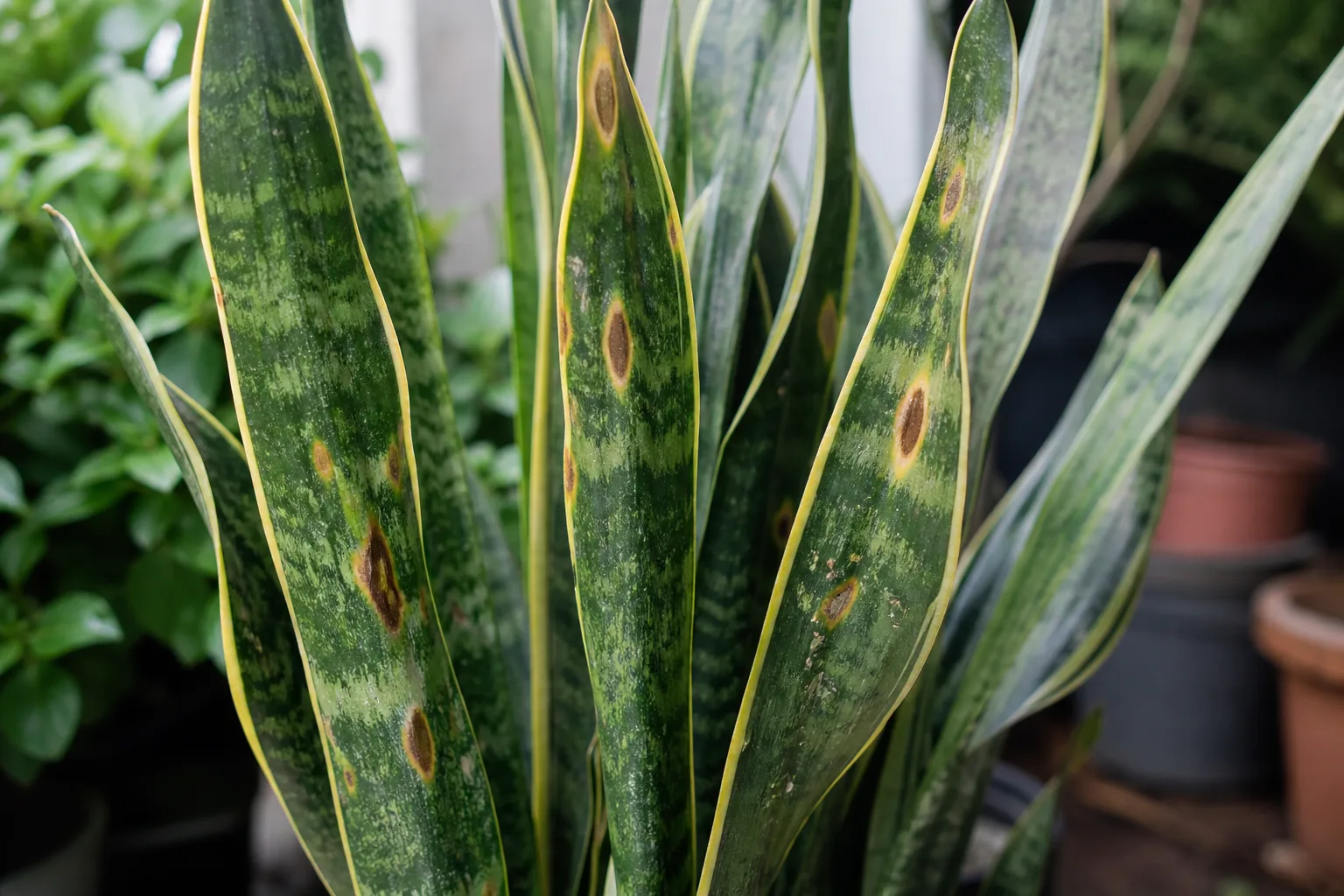
Leaf Spot Disease on Snake Plant: Causes, Checks & Fixes
This guide covers leaf spot disease on Snake Plant. See also the general Leaf Spot Disease guide, watering, and light pages for this plant.
Leaf Spot Disease on Snake Plant: Causes, Checks & Fixes
Quick answer
Leaf spot disease on snake plant (Dracaena trifasciata) is usually fungal-not a watering-schedule mystery. Colletotrichum sansevieriae causes anthracnose with round water-soaked lesions that enlarge into reddish-brown spots with yellow halos; Fusarium species can produce similar reddish-brown foliar spots on Sansevieria. Wet leaves from misting, splashing, or tight spacing trigger outbreaks on this normally dry-leaf species. First step: remove affected leaves at soil level with sterile scissors, stop misting, improve airflow, and keep foliage dry when watering.
Snake plant is built for drought, not damp foliage. When stiff leaves stay wet, fungal spores germinate on the waxy surface and spots coalesce into blighted patches. Confirm the pattern before reaching for fungicide-physical scrapes, cold damage, and sun scorch look different and need other fixes.
Why Snake Plant gets leaf spot disease
Sansevieria species are hosts to several foliar fungi, but anthracnose from Colletotrichum sansevieriae is the most documented leaf-spot pathogen on this genus. California Department of Food and Agriculture notes the fungus causes round water-soaked lesions that enlarge, coalesce, and form brownish-black crusty cankers on leaves-classic anthracnose blight on Sansevieria only.
Fusarium species-including F. oxysporum-also infect Sansevieria leaves in nursery and greenhouse settings, producing reddish-brown spots with yellowish borders that can girdle and kill leaf sections above the lesion. Peer-reviewed surveys from Malaysia document multiple Fusarium species associated with Sansevieria leaf blight, with pathogenic isolates confirmed on S. trifasciata.
Indoor outbreaks usually trace to cultural mistakes, not random bad luck. Owners mist snake plant for humidity, splash leaves when watering, crowd pots on a shelf with no airflow, or let condensation sit on leaves near a cold window. RHS guidance lists overwatering on Snake Plant and poor drainage as main health issues; wet foliage adds a separate entry point for fungi even when roots are fine.
Overhead watering into the center of the rosette traps moisture where thick leaves meet the rhizome. Missouri Botanical Garden advises using well-draining mix and avoiding practices that keep the crown wet-relevant because crown moisture overlaps rot and fungal spread.
Purchased plants can arrive with latent infection. Nursery conditions with overhead irrigation and tight spacing spread Colletotrichum between Sansevieria benches before plants reach your home.
What leaf spot disease looks like on Snake Plant
Fungal leaf spot on snake plant has a distinct dry-lesion pattern:
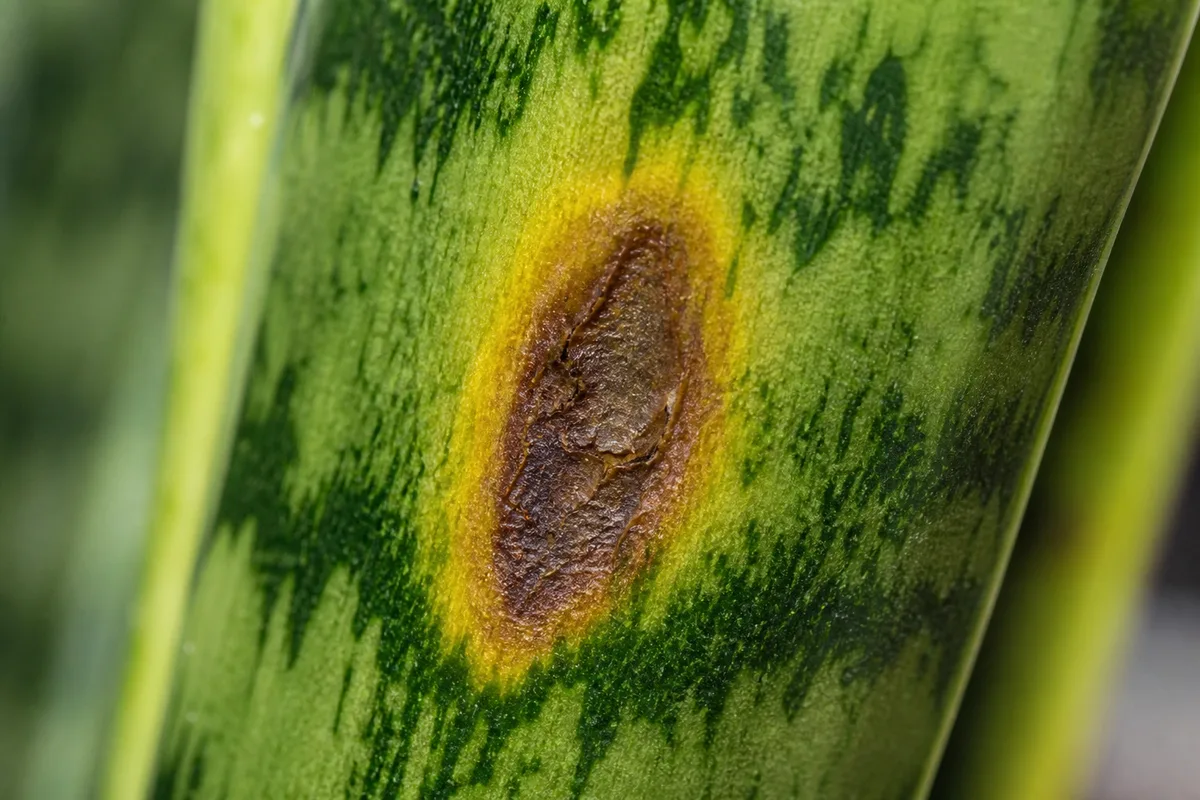
Leaf Spot Disease symptoms on Snake Plant - compare with healthy tissue on the same plant.
- Round or oval reddish-brown to tan spots, often with a yellow halo on green sword-shaped leaves
- Lesions that start small and water-soaked, then dry, darken, and merge into larger blighted areas
- Spots on both mature outer leaves and newer inner leaves if misting continues
- Dry, sunken tissue-not mushy translucent cold injury
- Possible dark crusty centers on advanced anthracnose lesions
- No sticky honeydew (that suggests sap-sucking pests, not fungus)
Cold damage produces soft translucent patches after frost or draft exposure. Sun scorch bleaches or browns window-facing panels. Mealybugs leave white cottony clusters at the base, not circular leaf spots.
How to confirm the cause
Inspect in this order:
- Leaf wetness history - Have you misted, overhead-watered, or splashed leaves recently?
- Spot morphology - Round lesions with halos that enlarge over weeks favor fungus; single mechanical scars stay static.
- Spread pattern - New spots on additional leaves while misting continues confirms active disease.
- Base firmness - Firm rhizome and leaf bases suggest foliar fungus only; mushy bases suggest rot.
- Pests - Rule out scale or thrips scarring with magnification and sticky residue check.
- Collection context - Other Sansevieria nearby with similar spots after shared misting supports Colletotrichum spread.
If spots appeared overnight after moving to direct sun, consider scorch first. If one leaf has a single brown scar after bumping furniture, watch two weeks before fungicide.
Lookalike symptoms to rule out
Edema from overwatering in low light causes corky bumps, not sharp circular halos. Salt and fluoride tip burn affects margins only. Thrips leave silvery streaks and distorted new growth. root rot on Snake Plant yellows whole leaves from the base up with wet sour soil-different from isolated foliar spots.
First fix for Snake Plant
Remove every leaf showing active spots by cutting at soil level with clean, sharp scissors. Sterilize blades between cuts with rubbing alcohol if multiple leaves are affected. Stop misting immediately, space the plant for airflow, and water the soil only when bone dry-keeping stiff foliage dry during the pour. Isolate from other Sansevieria until no new spots appear for four to six weeks.
Do not water into the rosette center. Do not compost infected leaves if you grow other sansevierias outdoors in frost-free climates where pathogens could persist.
Step-by-step recovery
After initial removal and culture change:
- Dry the environment - Run gentle room airflow; avoid humidifiers blowing directly on leaves.
- Adjust watering - Soak soil until drainage runs clear; empty saucer; never leave foliage wet overnight.
- Monitor weekly - Mark existing spots with a photo; any enlargement or new lesions means escalation.
- Apply copper fungicide if spreading - Follow label rates for ornamentals; treat leaf bases and surrounding soil surface only if spots continue on remaining leaves after cultural fixes. Penn State Extension notes fungal leaf spots on indoor plants often require removing infected tissue plus improving conditions.
- Quarantine new growth - Hold off fertilizer until new leaves emerge clean for one full cycle.
Make cultural changes before chemical ones. Fungicide without dry leaves and airflow rarely solves snake plant leaf spot indoors.
Recovery timeline
Removed leaves do not regrow from the same point-snake plant pushes new swords from rhizome pups over time. Mild cases with two to three spotted leaves removed often stabilize within three to four weeks once foliage stays dry. Expect four to eight weeks before you judge new growth clean in spring light.
Advanced blight across most foliage may leave a reduced plant that needs months to pup out again. Severely spotted rosettes with soft crowns need rot assessment, not repeated fungicide alone.
What not to do
Do not mist snake plant to “help humidity”-it invites fungal entry on a species that tolerates dry air. Do not overhead-water leaves. Do not leave infected leaves attached hoping they heal; spores spread on wet tissue.
Avoid stacking Snake Plant repotting guide, systemic fungicide, and heavy pruning the same day. Do not assume spots are sunburn without checking wet-leaf history. Do not reuse pruning tools on healthy plants without sterilizing.
How to prevent leaf spot disease next time
Keep snake plant foliage dry as a default. Water soil when bone dry; pour at pot edge, not into the leaf funnel. Provide Snake Plant light guide and gentle airflow between plants. Wipe dust with a dry or barely damp cloth-not a spray bottle.
Quarantine new Sansevieria purchases for two weeks away from your collection. Avoid buying plants with visible leaf lesions at the nursery. If you propagate leaf cuttings, use sterile tools and do not root cuttings from spotted parent leaves.
Match the species’ drought logic: fast-draining mix, drainage holes, and no saucer standing water. Healthy roots support resistant foliage even though they do not prevent wet-leaf infection alone.
When to worry
Treat spreading leaf spot as medium severity; advanced blight as high. Escalate if:
- Spots enlarge on remaining leaves within two weeks after removal and dry culture
- Most leaves show merging lesions and collapse
- Rhizome or leaf bases soften with foul odor
- Multiple Sansevieria in one room develop spots simultaneously
Those patterns need aggressive removal, possible copper treatment, and root inspection if bases fail-not passive waiting.
Conclusion
Leaf spot on snake plant is a fungal problem tied to wet foliage-Colletotrichum anthracnose and Fusarium leaf blight are the documented pathogens on Sansevieria. Confirm round reddish-brown halos after misting or splashing; fix by removing spotted leaves, drying the culture, and improving airflow; prevent by never misting and keeping water on soil only. Judge recovery by clean new swords, not by spotted old tissue healing in place.
When to use this page vs other Snake Plant guides
- Snake Plant watering guide - Use for routine moisture checks before assuming leaf spot disease is the main issue.
- Snake Plant problems hub - Browse all 36 common issues on this species.