Aphids on Snake Plant: Causes, Checks & Fixes
Quick answer
Aphids on snake plant usually colonize soft new pups, flower stalks, or leaves after the plant moves indoors-not the thick mature blades. First step: isolate the plant, inspect leaf bases and new shoots, and wipe visible aphids with a cotton swab dipped in rubbing alcohol or rinse them off with lukewarm water before reaching for sprays.
Aphids on Snake Plant: Causes, Checks & Fixes
This guide covers aphids on Snake Plant. See also the general Aphids guide, watering, and light pages for this plant.
Aphids on Snake Plant: Causes, Checks & Fixes
Quick answer
Aphids on snake plant usually colonize soft new pups, flower stalks, or leaves after the plant moves indoors-not the thick mature blades. First step: isolate the plant, inspect leaf bases and new shoots, and wipe visible aphids with a cotton swab dipped in rubbing alcohol or rinse them off with lukewarm water before reaching for sprays.
Snake plant (Dracaena trifasciata) is a slow-growing succulent-like houseplant with stiff, upright sword leaves. Aphids are small, soft-bodied sap feeders that prefer tender tissue, so they rarely infest the full height of established foliage. The useful clues are new growth at the soil line, sticky honeydew on leaf bases, and whether nearby plants share the same insects.
Why snake plant gets aphids
Aphids are uncommon on healthy, mature snake plant leaves because the blades are thick, waxy, and slow to produce tender new tissue. Outbreaks usually trace to one of these entry points:
- New pups and rhizome shoots - Offsets emerging from the soil surface are soft and upright, exactly where aphids cluster on tender new growth.
- Outdoor return or new purchases - Plants brought inside after summer or bought from a nursery can carry aphids that spread by crawling or flying to other houseplants.
- Flower spikes - Mature snake plants occasionally bloom indoors. Aphids often gather on flower stalks and young floral tissue while ignoring older leaves.
- Soft growth from heavy feeding - Spring fertilizer or very bright light can push lush new tips. Aphids thrive on lush new growth; overfeeding does not speed a slow species and can invite pests.
- Stressed neighbors - Aphids may start on a softer plant nearby (herbs, pothos, hibiscus brought indoors) and walk to snake plant pups at soil level.
overwatering on Snake Plant does not cause aphids, but wet soil combined with pest stress makes recovery harder. Snake plant stores water in leaves and rhizomes; soggy mix after repeated rinsing is a separate risk you should avoid.
What aphids look like on snake plant
On snake plant, aphids are most visible where tissue is young:
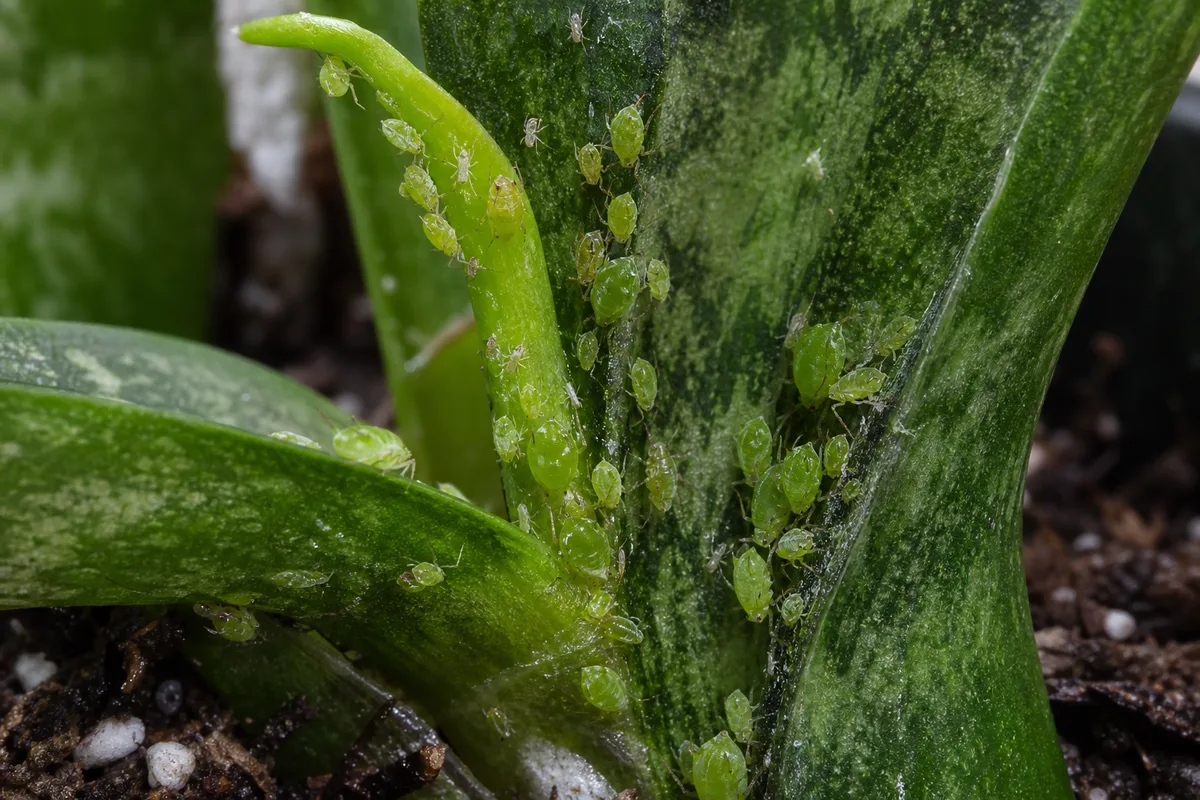
Aphids symptoms on Snake Plant - compare with healthy tissue on the same plant.
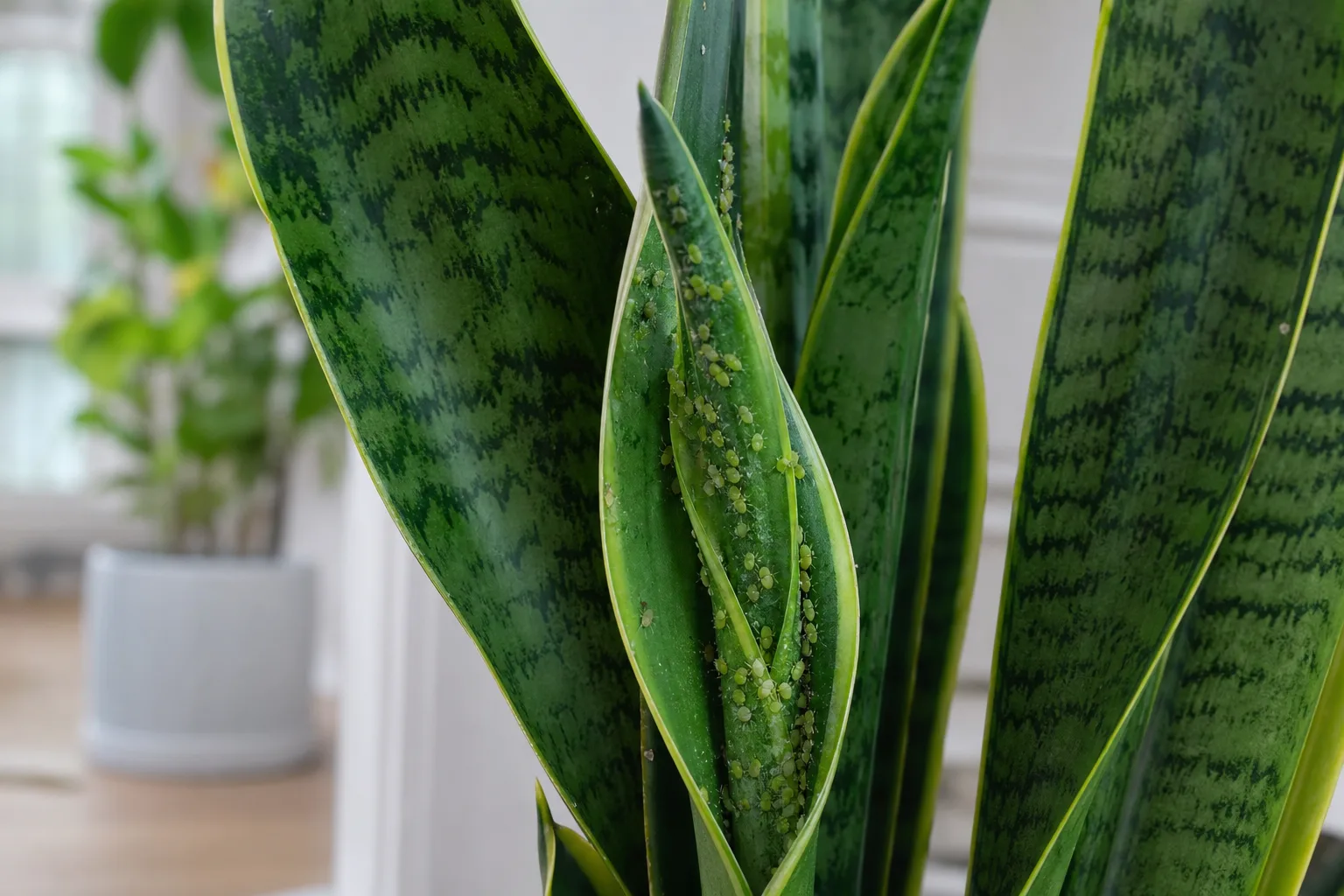
- Soil-line pups - Pinhead-sized green, yellow, black, or pinkish insects packed along the base of new shoots.
- Leaf bases - Sticky, shiny honeydew on lower leaf surfaces or the pot rim; sometimes black sooty mold on honeydew deposits.
- Flower stalks - Clusters on an emerging bloom spike while mature blades stay clean.
- Distorted new tips - Stunted, curled, or twisted young leaves while older swords remain firm and upright.
Mature snake plant leaves are erect, sword-shaped, and deep green. If insects cover stiff 2-foot blades uniformly, double-check that you are not seeing dust, pollen, or another pest.
How to confirm the cause
Work through this order before treating:
- Isolate - Move the plant away from other houseplants. Aphids spread from plant to plant by crawling and flying.
- Inspect new growth first - Crouch at soil level with a light. Check pup bases, rhizome edges, and any flower spike.
- Check undersides of young leaves - Mature blades are thick; focus on the last few inches of new tissue.
- Touch-test the insects - Aphids crush easily and leave a green smear. Mealybugs feel waxy; scale feels hard and stuck.
- Look below the plant - Honeydew on shelves or sticky traps confirms sap-feeding pests.
- Scan neighbors - If one soft-leaved houseplant has aphids, inspect the whole collection.
Confirmed aphids show mobile soft bodies, honeydew, and preference for tender shoots-not uniform speckling across tough old leaves (which points to spider mites or dust).
First fix for snake plant
Isolate, then mechanically remove the insects you can see.
- Slip a plastic bag over the pot and soil to keep mix in place.
- Wipe aphids from pups and leaf bases with a cotton swab moistened with rubbing alcohol. WSU Extension notes this can control light infestations; test one leaf first if you are unsure about sensitivity.
- Alternatively, rinse the plant in a sink or shower with lukewarm water, directing flow at new shoots. Repeat washing regularly because dislodged aphids may climb back.
- Blot excess water from leaves and do not water the pot just because you rinsed the foliage. Let the snake plant stay on its normal dry schedule.
Make this single correction and wait three to five days before escalating to sprays. Stacking alcohol wipes, soap, neem, and Snake Plant repotting guide the same day obscures what worked and can stress a drought-tolerant plant.
Step-by-step recovery
If manual removal is not enough after two rounds:
- Prune only heavily infested soft shoots - Snip distorted pups at the base with clean scissors. Do not strip half the plant; snake plant recovers slowly.
- Apply insecticidal soap - Use a product labeled for houseplants. UF/IFAS notes insecticidal soaps kill soft-bodied pests on direct contact with no residual effect, so coverage must hit the insects. Household soaps are more likely to burn plants than registered insecticidal soaps.
- Test on one leaf - Spray a single pup or leaf section, wait 24 hours, and check for spotting before treating the whole plant.
- Spray in low light - Apply in the evening or away from hot afternoon sun. Avoid treating drought-stressed or overheated plants with soap.
- Repeat every five to seven days - No residual activity means repeat applications until you see no live aphids for two weeks.
- Wipe sooty mold - Once aphids are gone, wash honeydew and mold from leaves with lukewarm water.
For stubborn colonies on large specimens, a forceful water spray can dislodge aphids when coverage is thorough. Keep soil wrapped so the gritty mix does not stay saturated.
Systemic soil drenches (imidacloprid products) can control aphids on houseplants but are a later step-use only when foliar methods fail, follow label directions for indoor use, and keep treated plants away from bees if you summer them outdoors.
Recovery timeline
Snake plant grows slowly, so pest recovery is measured in weeks, not days.
- Days 1–3 - After isolation and wiping, live aphid numbers should drop on visible shoots.
- Week 1–2 - With soap or repeated rinsing, honeydew production should stop and new pups should look clean.
- Week 3–6 - Firm upright new growth confirms the colony is gone. Old leaves with yellow patches or sooty mold may not green up again.
- Months - Replacement pups fill in gaps left by pruned shoots.
If clean new growth appears but old damage persists, the treatment worked-do not keep spraying a pest-free plant.
What not to do
- Do not overwater after rinsing - Wet soil is a bigger long-term threat to snake plant than aphids. Overwatering leads to rot; let the mix dry completely before the next drink.
- Do not use homemade dish-soap mixes - High concentrations burn foliage. Prefer labeled insecticidal soap.
- Do not fertilize while infested - Feeding pushes soft growth that aphids prefer.
- Do not spray outdoors in sun - Soap and oil products can scorch leaves; move to shade if you treat outside.
- Do not ignore neighboring plants - Aphids on a nearby herb or flowering houseplant will reinfest snake plant pups.
- Do not assume pets are safe from treatments - Snake plant is toxic to cats and dogs. Keep alcohol wipes and sprays off surfaces pets chew, and block access during treatment.
Lookalike symptoms on snake plant
| What you see | Likely cause | Quick check |
|---|---|---|
| White cottony clusters in leaf axils | Mealybugs | Waxy, not slimy when crushed |
| Hard brown bumps on blades | Scale | Does not move when flicked |
| Fine webbing and stippled mature leaves | Spider mites | Mites favor dry, dusty foliage-not thick unbroken blades |
| Gray film on soil or lower leaves | Dust or pollen | Wipes off dry; no honeydew underneath |
| Soft mushy leaf bases, sour soil | Overwatering / rot | No insects; base is wet and collapsing |
Aphids stay on soft, new tissue and produce sticky honeydew. If mature swords look speckled but pups are clean, look past aphids.
How to prevent aphids next time
- Quarantine newcomers - Keep new or outdoor-returned plants isolated about a month and inspect weekly before placing them near your snake plant.
- Inspect pups in spring - When offsets emerge, check soil line weekly; early colonies are easy to wipe away.
- Feed lightly - Snake plant needs only light spring and midsummer feeding. Excess nitrogen produces aphid-friendly soft shoots on a plant that does fine with lean care.
- Keep the dry rhythm - Water only when soil is dry through the pot. Fast-draining gritty mix and a stable dry-down cycle match how Snake Plant overview is usually grown indoors.
- Clean honeydew promptly - Sticky residue attracts ants and sooty mold but does not mean the aphids are still active-verify with a live-insect check.
Snake plant care cross-check
Aphid treatment should not upend snake plant basics:
- Light - Snake Plant light guide supports slow steady growth without forcing excessive soft tissue.
- Water - Push your finger deep into the mix; water only when bone dry throughout. Rinsing foliage is not a reason to soak roots.
- Soil - Cactus-succulent mix with perlite and coarse sand drains fast; saturated mix after repeated shower treatments warrants a longer dry spell, not more water.
- Pets - Because the plant is toxic, treat at a height or room pets cannot access, and store alcohol and sprays safely.
If you recently changed watering, light, or fertilizer, note it in your inspection log-but aphids still require direct pest control, not a care tweak alone.
Practical checks
Urgency check
Escalate quickly if winged aphids appear, honeydew spreads to multiple plants, or new pups blacken and collapse. A handful of aphids on one offset is manageable with isolation and wiping.
Best inspection order
New pups at soil line → flower stalk if present → undersides of young leaf tips → neighboring houseplants → sticky surfaces below the pot.
Severity note
This issue is marked medium for snake plant-a triage hint, not a forecast. Thick mature leaves tolerate minor outbreaks better than soft-leaved plants, but aphids can still stunt pups and spread through a collection.
When the first fix fails
If live aphids remain after two mechanical rounds and one careful soap cycle, prune the worst shoots, continue weekly soap for three weeks, and inspect the full houseplant collection. Discard only plants that are mostly soft new growth and heavily coated-mature snake plants with a few clean swords can recover.
Conclusion
Aphids on snake plant are a localized pest problem, not a sign the whole blade is failing. Confirm insects on new pups or flower stalks, isolate the plant, remove what you can by hand, and keep soil on a dry schedule while you treat. Mature leaves may keep blemishes, but firm new offsets tell you the fix worked. Quarantine new plants and inspect spring pups to keep colonies from reaching your slow-growing swords again.
When to use this page vs other Snake Plant guides
- Snake Plant watering guide - Use for routine moisture checks before assuming aphids is the main issue.
- Snake Plant problems hub - Browse all 36 common issues on this species.
- Sticky Leaves on Snake Plant - Different entry point when symptoms overlap with aphids.
- Mealybugs on Snake Plant - Different entry point when symptoms overlap with aphids.
- Spider Mites on Snake Plant - Different entry point when symptoms overlap with aphids.
Related Snake Plant guides
- Snake Plant overview
- Snake Plant watering
- Snake Plant light
- Snake Plant soil
- Sticky Leaves on Snake Plant
- Mealybugs on Snake Plant
- Spider Mites on Snake Plant
- Yellow Leaves on Snake Plant
- Snake Plant problems
Related tool
Use the Pest Identifier Tool to narrow causes for aphids on this plant before changing multiple variables at once.