Wrong Soil Mix on Pothos: Causes, Checks & Fixes
Quick answer
Wrong soil mix on pothos usually means dense, moisture-retentive peat that stays wet too long and suffocates epiphytic roots. First step: unpot, inspect root firmness and mix texture, and repot into light well-draining potting mix amended with perlite.
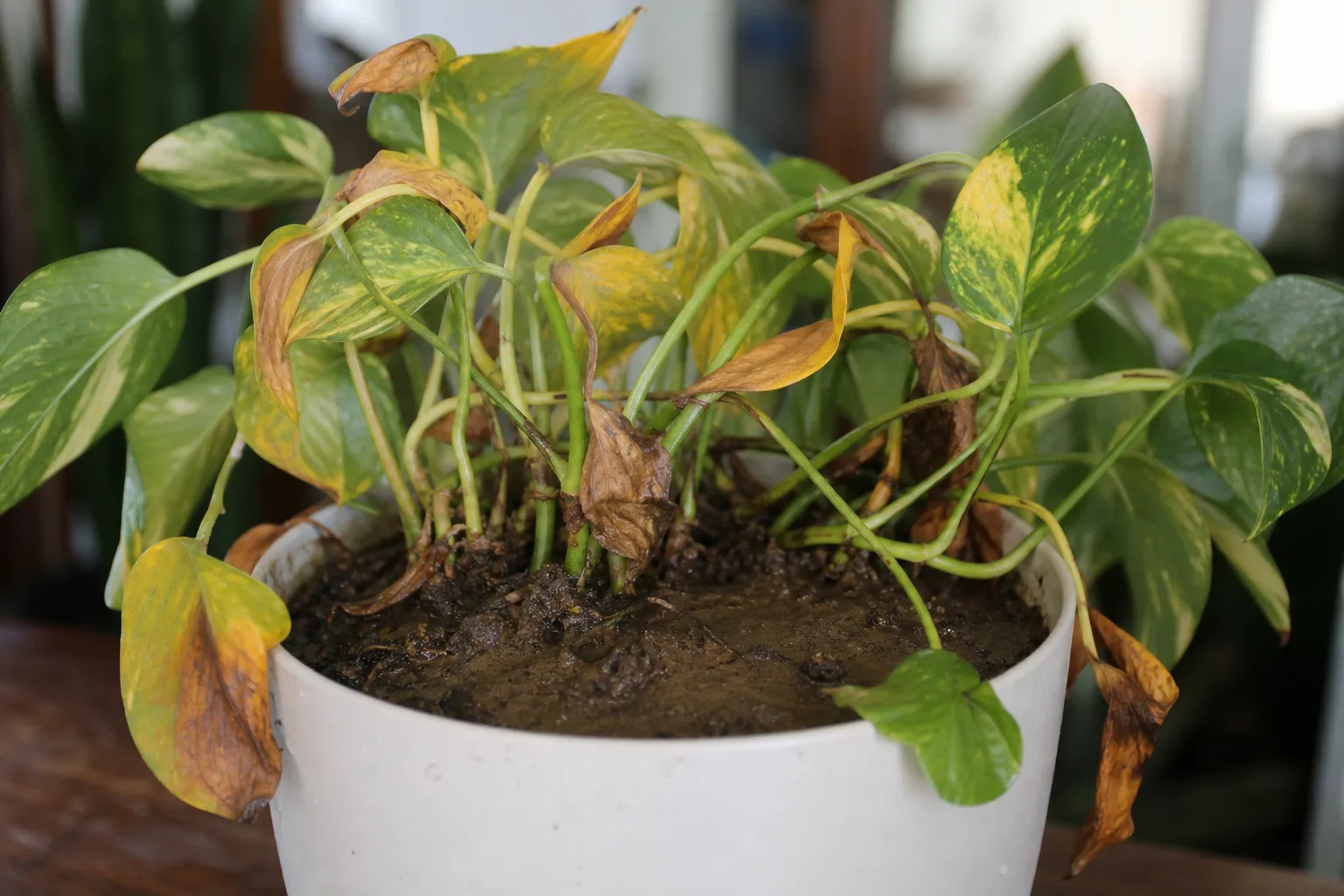
Wrong Soil Mix on Pothos: Causes, Checks & Fixes
This guide covers wrong soil mix on Pothos. See also the general Wrong Soil Mix guide, watering, and light pages for this plant.
Wrong Soil Mix on Pothos: Causes, Checks & Fixes
Quick answer
Wrong soil mix on pothos (Epipremnum aureum) usually means dense, moisture-retentive peat that stays wet too long and suffocates epiphytic roots. First step: unpot, inspect root firmness and mix texture, and repot into light well-draining potting mix amended with perlite.
Pothos is marketed as forgiving, and it is - until the root zone stays anaerobic for weeks. A standard bagged blend built for moisture-loving tropicals can behave like chronic overwatering in a dim office or oversized plastic pot. Symptoms that look like bad watering habits often trace back to substrate that never dries fast enough for this vine’s air-loving roots.
Why pothos gets wrong soil mix
Pothos climbs trees in the wild with roots exposed to air between rains. Indoors it needs a mix that drains quickly and holds structure, not a wet sponge. Most problems start with good intentions and the wrong bag.
Heavy peat or all-purpose moisture-retentive mix is the most common mismatch. Penn State Extension recommends a good quality soilless potting mix that drains well when Pothos repotting guide pothos. Standard peat-heavy blends hold water for days in low light - exactly where pothos uses less moisture and roots sit in low oxygen.
Garden soil or topsoil indoors compacts within weeks, reducing the air pockets roots need. Clemson HGIC notes pothos should be potted in an airy, well-draining soil mix and that root rot follows poorly draining soil. Missouri Extension warns that adding garden soil to potting medium often leads to poor drainage, overwatering, and root diseases. Dense mineral soil also weighs pots down and blocks drainage holes over time.
“Moisture control” or water-retentive labeled soils add polymers and extra coir to stretch time between waterings. That works for ferns; on pothos it slows dry-down and keeps the center of the root ball wet long after the surface looks acceptable.
Pure cactus or succulent mix without amendment is the opposite failure - too fast-draining for a tropical vine in a heated, dry room. Pothos may wilt between waterings, shed leaves, or stall growth when bark-heavy mix dries in hours and never holds gentle moisture at the nodes.
Old, broken-down potting mix compacts after one to two years. Fine peat particles collapse, pore space disappears, and water moves through channels along pot walls while the center stays soggy. Wisconsin Horticulture advises using a well aerated growing medium and allowing the soil surface to dry between waterings - impossible when structure has collapsed.
Oversized pots amplify bad mix. Extra soil volume beyond the root ball stays damp longer. A peat-heavy blend in a decorative planter two sizes too large behaves like standing water at the root zone even with drainage holes.
What wrong soil mix looks like on pothos
Wrong substrate rarely fails on day one. Watch for these patterns together:
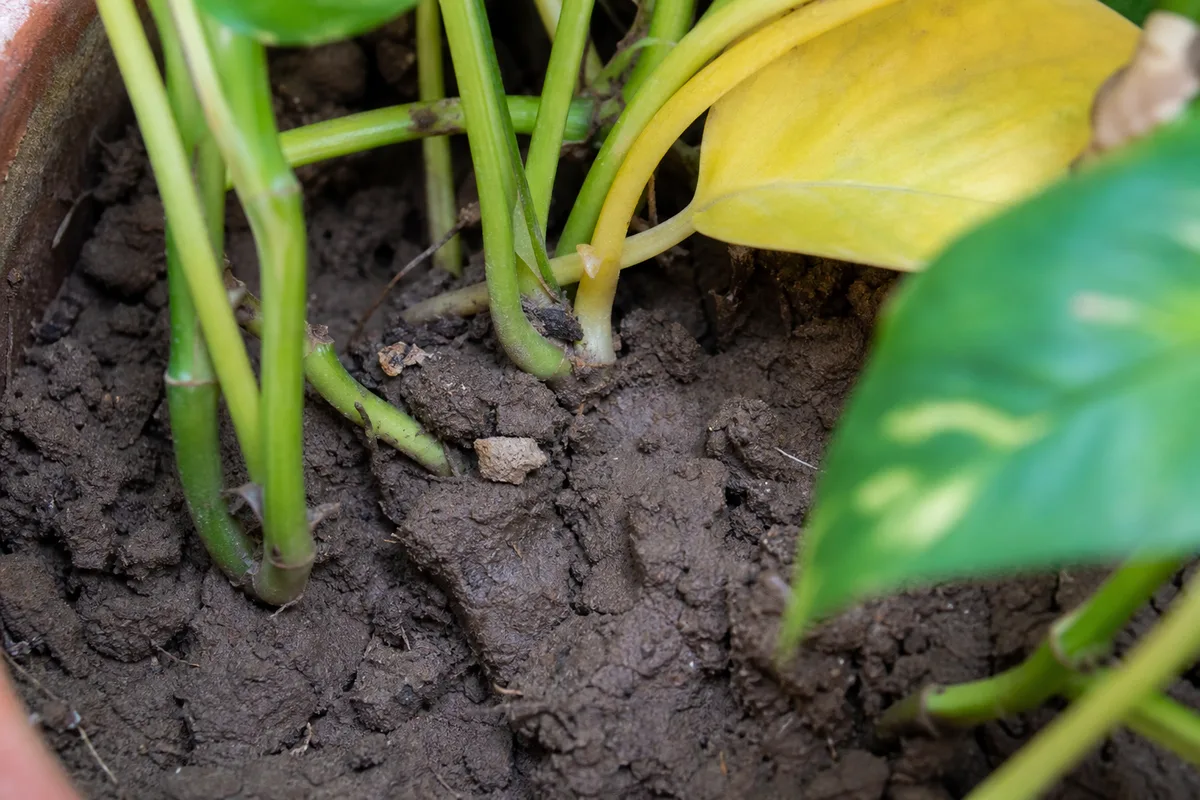
Wrong Soil Mix symptoms on Pothos - compare with healthy tissue on the same plant.
- Pot feels heavy three to seven days after watering while the surface still looks damp
- Mix at 2 inches depth stays wet for more than a week in a typical indoor room
- Water pools on top or runs straight through without soaking in - either compaction or hydrophobic dry peat
- Yellow lower leaves spreading up the vine while soil below remains wet, not dusty dry - plants with wet feet often yellow or drop leaves
- Limp, drooping vines despite damp mix - the wilting paradox of failed roots, not drought
- New leaves stall, emerge small, or lose variegation as growth slows
- Fungus gnats hovering persistently - larvae thrive in constantly moist organic matter
- Sour or musty smell from the drainage hole or when lifting the pot
- White crust on soil surface from salt buildup in dense, slow-flushing mix
Firm leaves with completely dry mix throughout point away from retentive soil failure. Crispy brown tips alone with dry soil suggest water quality or humidity stress, not dense peat.
How to confirm the cause
Do not repot on one yellow leaf. Inspect in this order:
- Dry-down test - After a normal watering, note how many days until the top 2 inches feel dry. If it takes more than seven to ten days in an average room, the mix is likely too retentive for pothos.
- Pot weight - Lift the container. Heavy and wet days after you thought the plant was dry points to water held in fine organic matter.
- Squeeze test - Moisten a handful of current mix and squeeze. If it forms a tight ball that does not crumble when you open your hand, it is too peat-heavy.
- Drainage check - Water until runoff exits the hole. Slow percolation, pooling on top, or instant channeling down the sides confirms texture problems.
- Unpot and inspect - Slide the plant out and smell the root ball. Firm white or tan roots in crumbly, airy mix argue against urgent repot. Dark mushy roots, sour smell, or dense wet muck mean repot now.
If roots are still mostly firm and smell is neutral, you may have caught the problem early. If more than one-third of roots are mushy or stems soften at the base, treat it as advanced rot rescue after moving to better mix.
Lookalike symptoms to rule out
Simple overwatering on adequate mix may fix with schedule change only - confirm texture first. No drainage hole traps water regardless of mix quality; restore exit holes before blaming soil alone. Underwatering gives light pots, dusty dry soil throughout, and limp but firm leaves with crisp edges. Low light slows dry-down and can mimic bad soil; brighter placement helps only if the mix itself drains well.
First fix for pothos
Repot into fresh light well-draining potting mix amended with perlite. Make this one targeted correction before stacking fertilizer, pesticide, or a much larger pot on the same day.
Steps:
- Unpot - Slide the plant out and knock away old compacted mix from roots. Rinse lightly if needed to see tissue clearly.
- Trim damage - Cut away any mushy, black, or hollow root sections back to firm tissue with clean scissors. Trim soft stems at the soil line if rot has climbed the base.
- Mix the new substrate - Combine quality indoor potting soil with perlite until the blend crumbles when squeezed - roughly one part perlite to two or three parts potting mix, adjusted for your room’s humidity and light.
- Repot - Use a clean pot with drainage holes only one to two inches wider than the root ball. Plant at the same depth as before. Do not add a gravel layer at the bottom - it creates a perched water table above coarse material.
- Wait before watering - Let cut surfaces dry and the plant settle for five to seven days if you trimmed roots; three to five days if roots were healthy. Then water thoroughly and empty the saucer.
The goal is a mix where water runs through in seconds and the top 2 inches dry within your normal seven-to-ten-day rhythm in summer, faster in bright light.
Step-by-step recovery after repot
Once in airy mix:
- Place the plant in bright to medium indirect light with airflow so the new substrate dries evenly.
- Resume watering only when the top 2 inches are dry - probe depth, do not rely on surface appearance alone.
- Watch for new firm leaves from nodes over two to four weeks.
- Remove vines that collapse completely; leave mostly green foliage until new growth appears.
- Re-check roots in six to eight weeks if yellowing continues - persistent wet smell means mix may still be too dense or the pot oversized.
Recovery timeline
Healthy pothos moved from dense to airy mix before major rot often stabilizes within two weeks once dry-down normalizes. Mild root damage with mostly firm tissue remaining shows new node growth in two to four weeks. Severe stem-base collapse may require cutting the vine back to healthy nodes and propagating the top - damaged yellow leaves rarely revert.
Judge success by firm stems, neutral-smelling mix, and new leaves - not by old blemishes greening up.
What not to do
Do not water on a calendar while recovering in the same dense mix hoping it dries. Do not fertilize a stressed plant in wet substrate. Do not repot into a larger decorative pot for aesthetics - extra wet soil volume worsens the problem.
Avoid garden soil, pure peat, or moisture-control blends labeled for outdoor beds. Do not add gravel instead of perlite for aeration. Do not assume pothos toughness survives weeks of sour, compacted mix. Wear gloves when handling cut stems - pothos sap contains calcium oxalate crystals irritating to skin.
How to prevent wrong soil mix next time
Refresh compacted mix every one to two years or when dry-down slows noticeably. Use light well-draining potting mix with added perlite, pots with open drainage holes sized to the root mass, and water only when the top 2 inches are dry.
When buying bagged soil, squeeze a moist sample - if it holds a tight ball, add perlite before potting pothos. Match pot size to roots; upsize only one to two inches at repot. Flush salts periodically if you use tap water and fertilizer heavily - scrape white crust and water deeply until excess runs free.
When to worry
Wrong mix in a chronically wet root zone is medium to high severity on pothos. Escalate immediately if:
- Stems collapse or blacken at the soil line
- Soil smells sour while the pot stays heavy
- Black tissue spreads up the vine from the base
- More than one-third of roots are mushy on inspection
- The plant declines within seven to ten days despite surface dry appearance
Early repot into airy mix prevents most losses; delayed action is how tough pothos vines fail in pretty planters with dense substrate.
Conclusion
Wrong soil mix on pothos fails because epiphytic roots need oxygen between waterings, not perpetual moisture in compacted peat. Confirm with dry-down speed, squeeze tests, and root inspection; fix by repotting into perlite-amended well-draining mix; prevent with appropriate substrate, right-sized pots, and depth-based watering. Judge success by firm roots and new leaves from nodes - not by keeping a mix that never dries.
When to use this page vs other Pothos guides
- Pothos watering guide - Use for routine moisture checks before assuming wrong soil mix is the main issue.
- Pothos problems hub - Browse all 39 common issues on this species.