Weak Stems on Pothos: Causes, Checks & Fixes
Quick answer
Weak pothos stems usually mean too little usable light or failing roots-not a simple fertilizer shortage. First step: move the plant to brighter indirect light and pinch a mid-stem-firm but thin points to etiolation; soft tissue near the soil means stop watering and inspect roots.
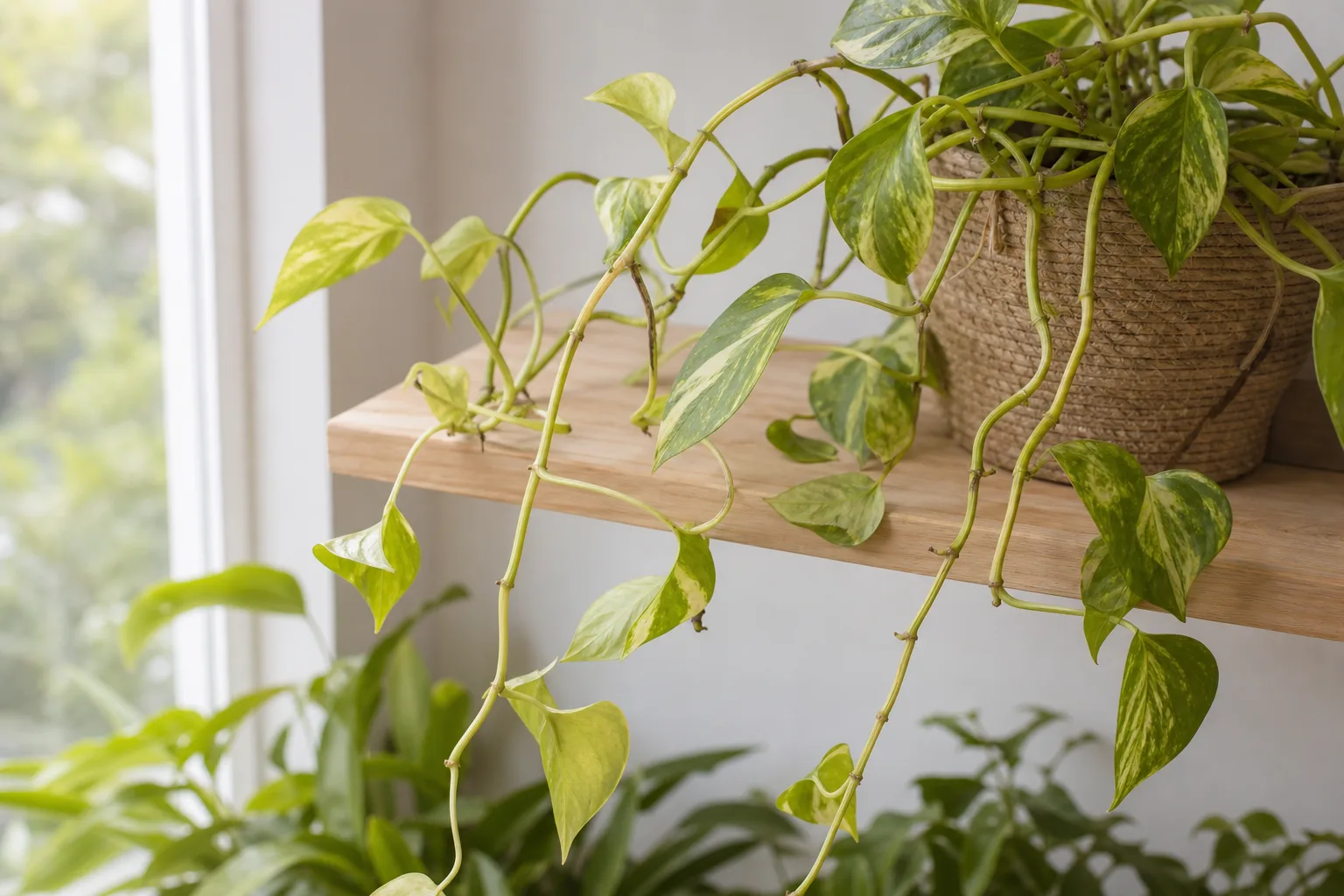
Weak Stems on Pothos: Causes, Checks & Fixes
This guide covers weak stems on Pothos. See also the general Weak Stems guide, watering, and light pages for this plant.
Weak Stems on Pothos: Causes, Checks & Fixes
Quick answer
Weak pothos stems usually mean too little usable light or failing roots-not a simple fertilizer shortage. First step: move the plant to brighter indirect light and pinch a mid-stem-firm but thin points to etiolation; soft tissue near the soil means stop watering and inspect roots.
Pothos (Epipremnum aureum) is a vigorous tropical vine that should produce firm, wiry stems supporting heart-shaped leaves. When vines bend, flop, or feel hollow between nodes, the plant is telling you something about light, roots, or both. Pothos survives dim corners for years, but stems grown in low light stretch thin and lose the structural strength you see on plants near a bright window.
What weak stems look like on Pothos
Weak stems on pothos show up in a few distinct patterns:
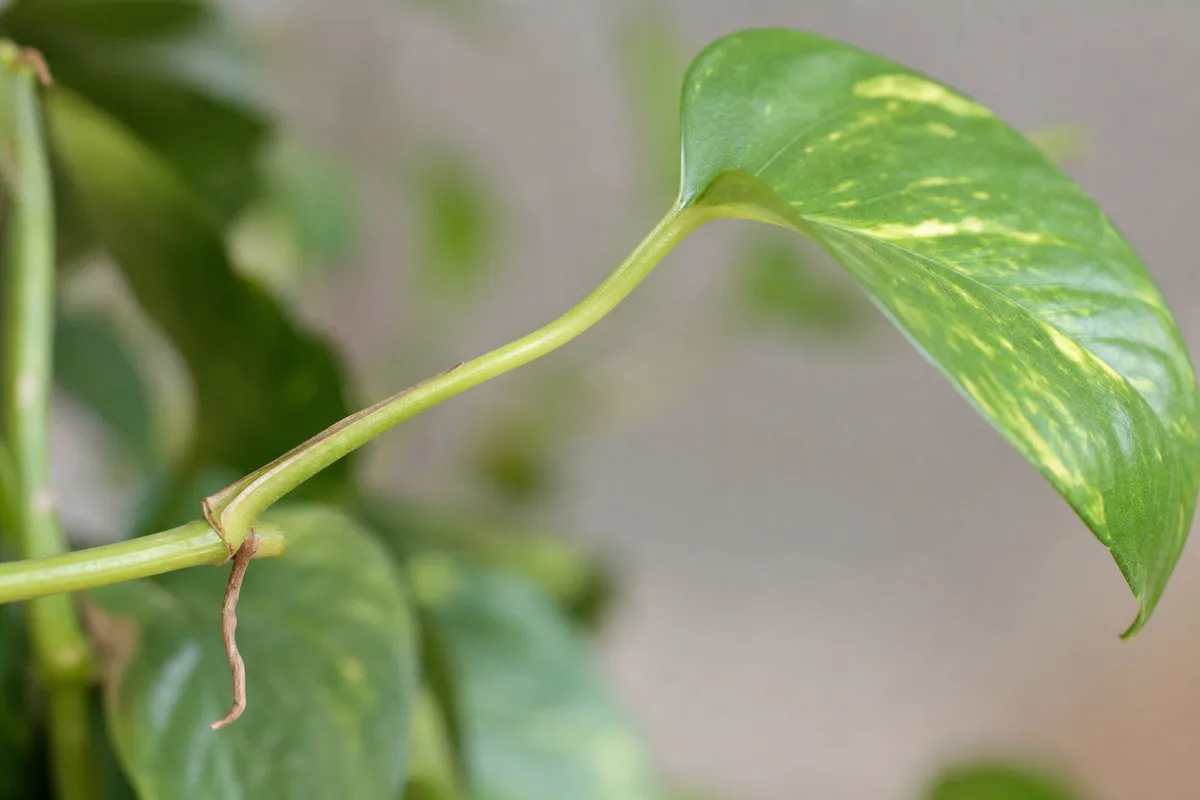
Weak Stems symptoms on Pothos - compare with healthy tissue on the same plant.
- Thin, spindly vines that bend when you lift the pot or adjust a hanging basket
- Long bare sections between leaves, with new foliage only at the tips
- Smaller, paler new leaves on the weakest stems while older leaves still look normal
- One-sided weakness on the side farthest from the window while the window-facing vine stays firmer
- Soft, discolored tissue at the soil line paired with yellowing leaves-different from firm but thin etiolated growth
Healthy pothos stems feel like firm green cord when pinched. They may trail gracefully from a shelf, but they should not feel limp or collapse under their own leaf weight unless the vine is extremely long and unsupported.
Trailing habit is normal. Structural failure is not. A ten-foot golden pothos in good light can hang from a ceiling hook with firm stems throughout. A two-foot vine in a dark hallway may already flop because each internode stretched without building strength.
Why Pothos gets weak stems
Insufficient light is the most common cause. Pothos evolved as an understory climber that grows toward brighter canopy gaps. Indoors, dim placement triggers etiolation-elongated, spindly stems with pale leaves as the plant reaches for light. Extension guidance describes this as stems becoming long and thin with increased space between leaf nodes when light is inadequate.
Pothos tolerates lower light but loses desirable leaf quality over time. Variegated cultivars like Marble Queen and Pearls and Jade fade and produce weaker tissue in dim rooms because they need more light than solid-green types to maintain compact growth.
Overwatering and root rot weaken stems from the base up. Chronically wet soil suffocates roots, and energy stops flowing to stems. Soft, mushy tissue at the soil line with yellow leaves on persistently damp mix points to root failure-not etiolation. Pothos wants soil to dry between waterings; soggy mix is one of the fastest routes to collapsed stems.
Root-bound pots limit the resources available for strong new tissue. When roots circle the container and little fresh mix remains, new stem growth may stay thin even if light is adequate. Soil drying within a day of watering and roots visible through drainage holes are common signals.
One-sided light creates uneven stem strength. Pothos leaves grow toward the light source. Vines on the shaded side stretch and weaken while the bright side stays firmer. Hanging baskets rotated rarely often show this split clearly.
Over-fertilizing in low light can push rapid, weak stem elongation without supporting root development-tall floppy growth that cannot sustain itself. Do not treat weak stems with extra nitrogen before fixing light.
Cool drafts and winter dimness compound the problem. Growth slows when temperatures drop and daylight shortens. Stems that were borderline in October may flop by January without any other care change.
Age and lack of pruning concentrate growth at vine tips. Unpruned pothos puts most new leaves at the ends of long runners, leaving older bare stems that look weak even when the plant is otherwise healthy.
How to confirm the cause
Work through these checks before changing multiple variables at once:
- Stem squeeze test - Pinch mid-vine tissue. Firm and thin suggests etiolation. Soft, brown, or hollow near the base suggests rot or chronic overwatering.
- Light at the pot - Is the plant more than a few feet from a window, under a shelf, or in a north room with no supplement? Compare the weakest vine to the side facing the brightest exposure.
- Soil moisture rhythm - Stick a finger into the top two inches. Does mix stay wet for many days, or dry within hours? Wet stagnation favors rot; ultra-fast drying with crowded roots suggests root-bound stress.
- Root peek - Slide the plant from its pot. White firm roots with airy mix support strong stems. Brown mushy roots, sour smell, or a solid root mat explain weakness regardless of light.
- New growth pattern - Mark a node and check weekly. If brighter placement for two weeks produces tighter internodes on new tissue, light was the limiter. No improvement with firm roots and good light may mean Pothos repotting guide is due.
- Season check - Weakness appearing in late fall may reflect shorter days. Confirm whether stems firmed up last summer in the same spot.
- Pest scan - Mealybugs, scale, and spider mites drain sap and can leave vines limp. Inspect leaf undersides and stem joints before assuming a pure care deficit.
If light improves and new nodes open with shorter gaps within two to three weeks, etiolation was the main issue. If stems soften while soil stays wet, prioritize root diagnosis over light upgrades alone.
First fix for Pothos
Move the plant to brighter indirect light-within a few feet of an east or west window, or several feet back from south-facing glass with sheer curtain protection-and squeeze a stem to decide your next step.
If the stem is firm but thin, leave watering unchanged for now and watch new growth. Brighter exposure stops further weakening. Do not fertilize until you see new nodes forming.
If the stem is soft near the soil line or the mix smells sour, stop watering immediately, remove the pot from any decorative cache without drainage, and unpot to inspect roots. Trim dark mushy tissue, repot into fresh well-draining mix, and wait about a week before watering lightly. Rot recovery comes before light optimization.
Do not repot on day one when stems are merely thin and roots look healthy-that adds stress without fixing etiolation. Do not add fertilizer to floppy vines in a dark corner.
Step-by-step recovery
After the first fix, follow this sequence based on what you confirmed:
- Hold light steady for two weeks - Let the plant respond before moving again. New leaves emerging closer together is your early success signal.
- Prune weak bare vines above a node - Cut long floppy sections back to just above a swollen node. Pothos branches from nodes; bare internodes without leaves will not fill in retroactively.
- Repot if roots are crowded - Choose a container only one to two inches wider with drainage holes. Loosen circling roots gently and use airy potting mix with perlite.
- Stabilize watering - Water when the top one to two inches of mix are dry. Let excess drain fully and empty saucers so roots never sit in stale water.
- Rotate the pot weekly - Balanced light prevents one-sided weak growth on trailing plants.
- Add a grow light if windows are insufficient - Supplemental lighting helps when natural daylight at the pot stays below what compact growth requires.
- Feed lightly only after new growth resumes - Half-strength balanced fertilizer once growth is visible in spring and summer. Skip feeding on stressed or recently repotted plants.
Root rot recovery may require trimming most of the vine back to healthy tissue. Etiolation recovery keeps the existing plant in place with selective pruning.
Recovery timeline
Light upgrade on firm thin stems: First tighter node within two to four weeks during active season. Old stretched sections stay thin permanently; judge success by new tissue only.
After root rot treatment: Two to six weeks before new firm growth appears. Severe rot may require propagating healthy tip cuttings while the base recovers.
After repotting: Expect two to four weeks of quiet while roots settle. Stem strength improves as new roots colonize fresh mix.
Winter weakness: Stems may stay soft-looking until March or April even after a light upgrade. Track spring node spacing rather than January vine firmness.
Signs of improvement: shorter gaps between new leaves, firmer feel when stems are pinched, variegation returning on new foliage, and vines that hold their shape when lifted instead of collapsing.
Lookalike symptoms to rule out
Leggy growth without true weakness - Long vines with firm stems and normal leaf size in bright light may simply need pruning for shape, not a crisis fix.
Normal trailing weight - Very long hanging pothos vines naturally arc downward. Firm stems that bend under length differ from etiolated tissue that feels thin and hollow.
Wilting from underwatering - Dry, crispy mix with limp leaves that perk after watering is a moisture deficit, not etiolation. Stems may feel flexible until rehydrated.
Bacterial wilt - Sudden collapse of entire vines with brown streaking in stems needs isolation and disposal of affected tissue; brighter light alone will not cure it.
Cold damage - Darkened, limp stems after exposure to frost or prolonged cold near a window may not recover. Move to stable warmth and prune dead sections.
Mistakes to avoid
Do not add nitrogen fertilizer to weak stems in low light-that produces more floppy elongation, not strength.
Do not assume a dark bathroom is adequate forever because pothos tolerates low light. Survival and structural vigor are different outcomes.
Do not repot into an oversized container hoping to force sturdier growth. Excess wet soil around a small root ball weakens roots further.
Do not ignore soft stems at the soil line while chasing brighter windows. Rot spreads upward quickly in wet mix.
Do not expect old stretched internodes to thicken after a light upgrade. Only new growth from nodes will look compact.
Do not stack repotting, heavy pruning, and fertilizer in the same week. Change one variable, observe, then adjust.
How to prevent weak stems on Pothos
Place pothos where Pothos light guide reaches the pot for most of the day-not only where the trailing display looks best in the room.
Rotate containers weekly so all sides receive similar exposure and vines do not lean into one-sided weakness.
Water when the top of the mix dries; avoid keeping roots wet in dim corners where the plant uses moisture slowly.
Repot every one to two years before roots form a dense mat that limits new strong tissue.
Prune trailing vines before they become long bare runners with all leaf weight at weak tips.
Provide a moss pole or trellis if you want larger leaves and thicker climbing stems in stronger light.
When to worry
Weak stems alone in an otherwise green plant are usually a care signal, not an emergency. Escalate when:
- Stems turn mushy at the base while soil stays wet
- Yellow leaves spread up the vine during winter or after a recent overwatering spell
- Sour smell rises from the pot when you lift the plant
- No firm new growth appears through an entire warm season after light and repotting fixes
- Pest colonies cover stems despite rinsing and isolation
A firm, pale, thin pothos in a dim office is fixable with light. A soft, yellowing, smelly pothos needs root rescue immediately.
Conclusion
Weak pothos stems almost always trace to light that is too dim for compact growth, roots that are too wet or too crowded, or both. Start by upgrading light and testing stem firmness-that single check separates etiolation from rot. Prune stretched sections back to nodes once conditions improve, because old thin internodes will not regain strength. Track recovery through new node spacing and stem feel, not by waiting for bare vines to magically fill in.
When to use this page vs other Pothos guides
- Pothos watering guide - Use for routine moisture checks before assuming weak stems is the main issue.
- Pothos problems hub - Browse all 39 common issues on this species.