Small Flowers on Pothos: Causes, Checks & Fixes
Quick answer
Pothos blooms are naturally small and unshowy-and most indoor plants never flower at all. First step: confirm whether you are seeing a real spadix-and-spathe inflorescence or harmless aerial root nubs at leaf nodes.
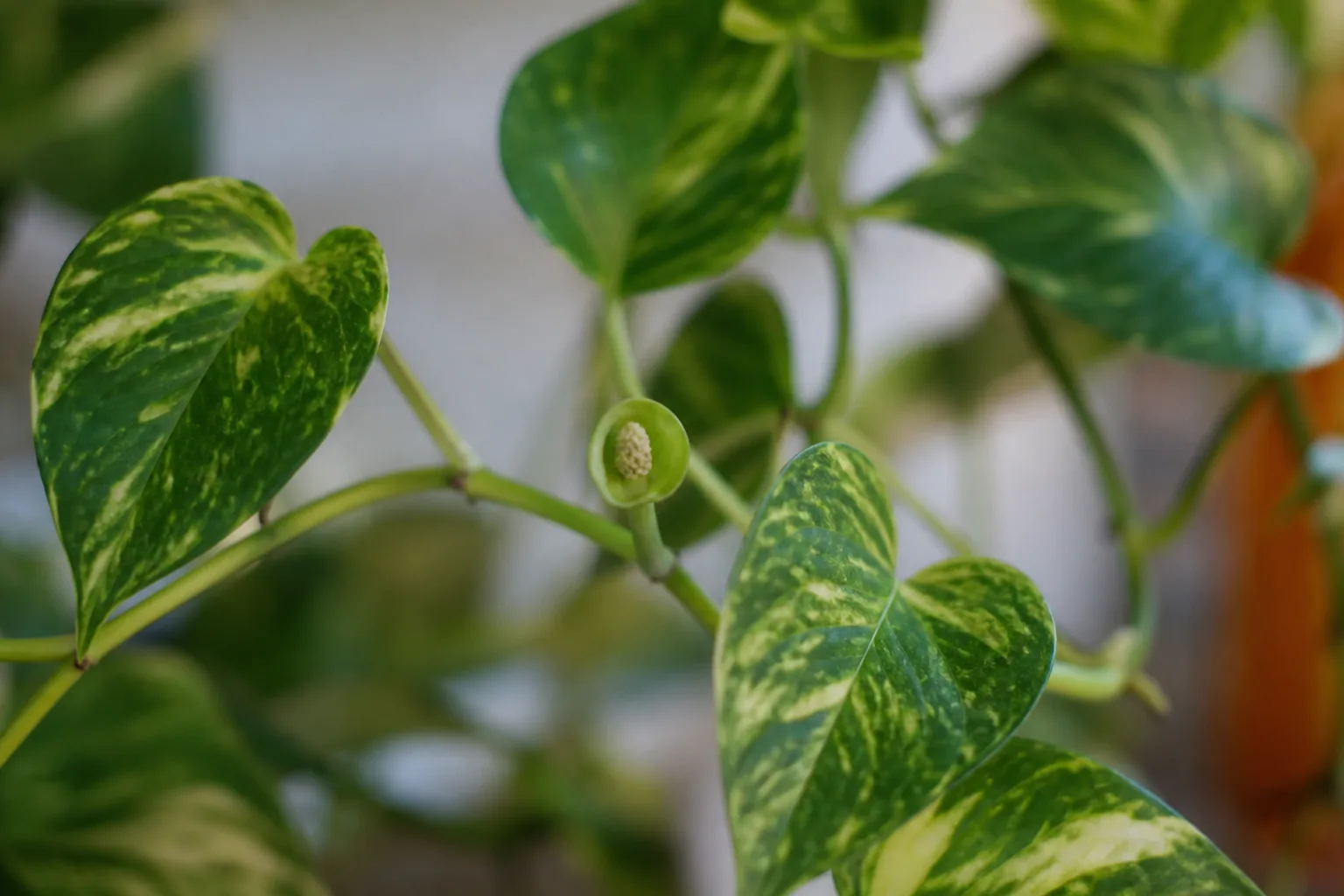
Small Flowers on Pothos: Causes, Checks & Fixes
This guide covers small flowers on Pothos. See also the general Small Flowers guide, watering, and light pages for this plant.
Small Flowers on Pothos: Causes, Checks & Fixes
Quick answer
Tiny “flowers” on pothos are usually not flowers at all-they are aerial root nubs at leaf nodes. If you did see a genuine inflorescence, pothos blooms are naturally modest: a boat-shaped spathe surrounding a stout spadix packed with microscopic florets, nothing like a large ornamental blossom.
First step: identify what you are looking at. Compare the structure against a real Araceae inflorescence (spathe plus spadix) versus a small brown bump at a node. When foliage stays healthy and vines keep growing, small or absent flowers is normal biology-not a care failure worth fixing.
What small flowers look like on Pothos
Pothos (Epipremnum aureum) belongs to the arum family (Araceae), whose “flowers” are inflorescences-not petals on stalks. Understanding that structure explains why blooms look small even when they appear.
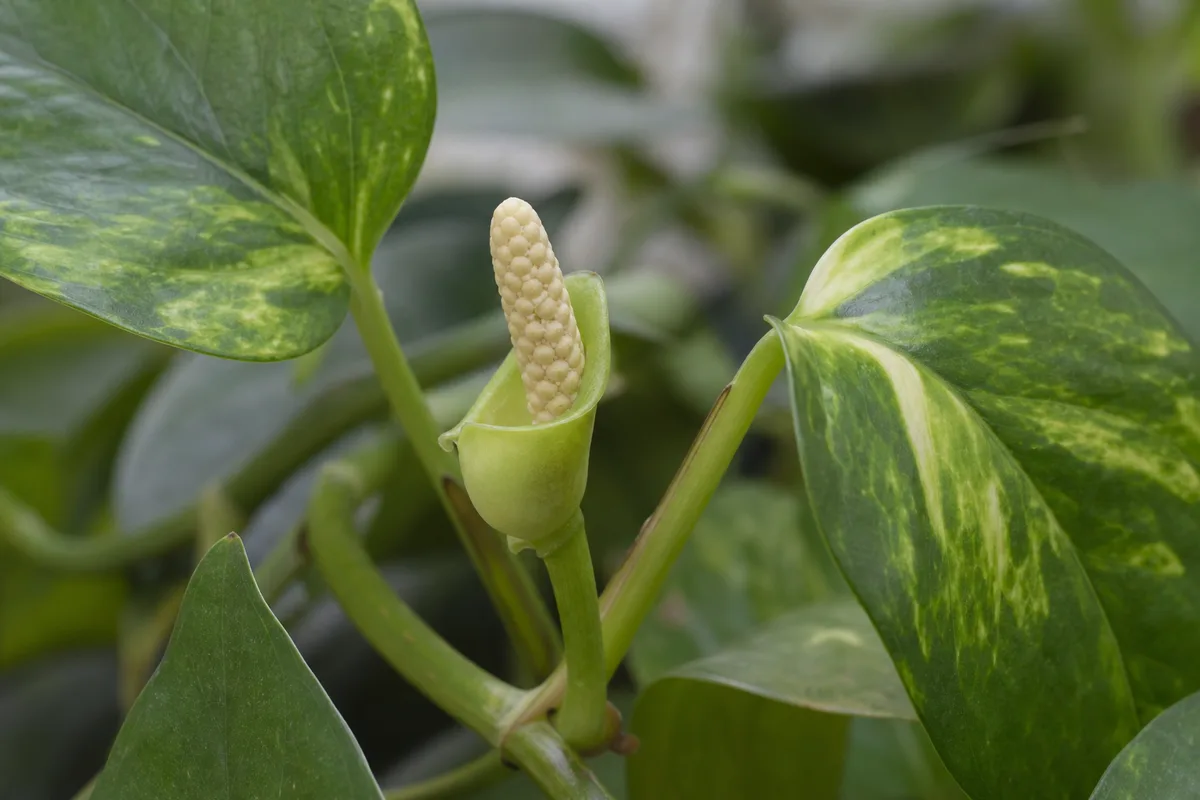
Small Flowers symptoms on Pothos - compare with healthy tissue on the same plant.
Real pothos inflorescences (rare indoors)
When a mature climbing pothos flowers in tropical conditions, NC State Extension describes:
- A spadix-a dense, stout spike of tiny individual florets, shorter than the surrounding bract
- A spathe-boat-shaped, yellow to green or purple, not forming a tube around the spadix
- An overall size that is modest, not showy-research on induced flowering notes prism-shaped micro-florets tightly packed on the spadix
The entire structure may reach several inches, but individual “flowers” remain microscopic. That is normal for this family-not a sign your plant underperformed.
What people usually mistake for small flowers
Aerial root nubs are far more common on indoor pothos. NC State notes that pothos climbs using brown aerial roots that develop at each node. These small tan or brown bumps along stems look like pre-flower buds but are climbing tissue, not reproductive structures.
Peace lily or anthurium confusion can also skew expectations. Those relatives produce larger, more visible spathes indoors. Pothos never matches that display in home cultivation.
Scale insect bumps are another lookalike-hard, immobile shells stuck to stems that do not open into spathes. They warrant pest treatment, not bloom coaching.
Why Pothos has small flowers-or none at all
Indoor pothos stay juvenile, and juveniles do not bloom
Pothos does not flower in cultivation because houseplants grow only the juvenile phase. Wisconsin Horticulture Extension states plainly that flowering occurs only in the mature phase-which container pothos almost never reaches indoors. Without maturity, you will not get full-sized reproductive structures regardless of fertilizer or light tweaks.
Even mature pothos blooms are inherently modest
Araceae inflorescences are designed for insect pollination in tight clusters, not human showiness. When researchers successfully induced flowering in laboratory settings, the spadix bore many small, prism-shaped florets-not large petals. Expecting hibiscus-sized blooms from pothos misunderstands the plant’s architecture.
Genetic shy-flowering limits bloom frequency
Epipremnum aureum is a shy-flowering species with impaired gibberellin biosynthesis-the hormones needed to trigger floral development. Penn State Extension notes pothos rarely flowers even in its native habitat, which is why no commercial pothos hybrids exist. Small or absent blooms reflect genetics, not a missing bloom booster.
Care factors do not shrink flowers that were never going to form
Low light, dry air, and inconsistent watering can stress pothos leaves and roots-but they are not why your indoor pothos lacks large flowers. The reproductive block sits earlier in the life cycle. Chasing “bigger blooms” with phosphorus-heavy fertilizer on a healthy foliage plant risks salt buildup and leaf-margin burn without changing floral outcome.
How to confirm what you are seeing
Work through these checks before changing care:
- Location on the stem - Aerial roots emerge directly at nodes alongside leaves. Inflorescences also arise from the stem but show a distinct spathe wrapping a central spadix, not a single round nub.
- Shape and color - Aerial roots are brown or tan, finger-like, and may lengthen over time. A developing spathe looks like a folded, modified bract-often greenish, yellowish, or purplish-not a hard insect shell.
- Leaf health nearby - Healthy nodes with firm green leaves and active new growth suggest normal aerial roots. Sticky residue, yellowing, or stippling near bumps points to scale or other pests.
- Plant age and size - Indoor pothos in a 6-inch pot after years of care is still juvenile by wild standards. Do not expect mature-phase inflorescences from a trailing basket plant.
- Species check - Confirm the plant is true pothos (Epipremnum aureum), not a blooming anthurium, spathiphyllum, or hoya sold nearby. Each has different floral expectations.
If every node shows only small root bumps and foliage grows steadily, you have a healthy pothos-not a flowering problem.
First fix for Pothos
Stop trying to enlarge flowers and verify the structure is not a pest or root issue.
If bumps are firm aerial roots on healthy stems, leave them alone. They help the vine cling to supports and signal normal growth. No pruning, fertilizer, or Pothos repotting guide is required.
If you genuinely have a rare spathe-and-spadix inflorescence outdoors in a warm climate, accept the modest size as species-normal. Do not apply bloom fertilizer hoping to swell the spadix-it will not work on shy-flowering pothos and can stress foliage.
If bumps are hard, immobile, and scattered with sticky leaves, inspect for scale and treat pests before assuming floral development.
Do not repot, move, or heavily feed a blooming-adjacent plant on day one. Stability matters more than intervention when reproductive structures are present.
Step-by-step: what to do based on what you find
Aerial roots only (most common):
- Confirm new leaves still unfurl every few weeks in warm months.
- Keep Pothos light guide and water when the top 1–2 inches of mix dry.
- Optionally offer a moss pole if you want larger leaves-not flowers.
- Ignore the nubs; they are a feature, not a flaw.
Rare outdoor or greenhouse inflorescence:
- Photograph the spathe and spadix for reference-many growers never see one.
- Maintain stable warmth above 60°F and bright indirect light.
- Hold fertilizer unless leaves show pale new growth after the inflorescence fades.
- Do not expect repeat blooms; spontaneous pothos flowering is extraordinarily rare.
Scale or pest bumps:
- Isolate the plant from neighbors.
- Wipe stems with rubbing alcohol on a cotton swab for small scale clusters.
- Repeat weekly until no new shells appear.
- Resume normal pothos care once pests clear-still with no bloom expectations.
Skip bloom fertilizers entirely for pothos. Clemson Extension recommends balanced houseplant food every other month during active growth-not phosphorus-heavy bloom products aimed at orchids or holiday cacti.
Recovery timeline and realistic expectations
Aerial root nubs: Present continuously on climbing stems; they may lengthen over months if the vine reaches a support. No “recovery” needed.
Actual inflorescence: The spathe may persist several weeks, then brown and dry. The plant returns to foliage growth. Do not expect a second bloom cycle indoors.
After pest treatment: New clean growth within two to four weeks confirms scale removal. Floral structures are unrelated.
Foliage success metric: Judge pothos by new node frequency, leaf size, and variegation quality-not bloom diameter. Penn State describes pothos as vigorous under moderate to bright light when grown for leaves.
You will likely never see a pothos flower indoors. That is not a failure-it is documented biology.
Lookalike symptoms to rule out
Aerial roots vs. flower buds - Roots are brown, node-based, and may extend. Flower buds show a wrapping spathe with a visible central spadix emerging.
Scale insects vs. buds - Scale forms hard, round shells that do not change into bracts; honeydew and sooty mold often follow.
Mealybugs vs. buds - Cottony white clusters in leaf axils, not structured spathes.
Anthurium or peace lily blooms - Large white or colored spathes on different plants with different care. If you wanted showy blooms, those species-not pothos-fit the goal.
Online photos of “pothos flowers” - Many images show other aroids or hormone-induced research specimens. Treat them as exceptions, not home targets.
Mistakes to avoid
Do not apply bloom fertilizer to force larger flowers-pothos lacks the hormonal pathway for reliable flowering, and excess salts burn leaf edges.
Do not prune aerial roots thinking they drain energy from hypothetical blooms. They support climbing and indicate healthy nodes.
Do not repot during any rare inflorescence display hoping to “boost” the plant. Root disturbance stresses pothos without enlarging blooms.
Do not compare pothos to flowering houseplants like hoya or African violet. Different species, different reproductive biology.
Do not mistake sticky pest bumps for floral tissue-treat insects instead of adjusting light.
Do not keep pothos solely for flowers. It is cultivated for glossy, variegated foliage, not ornamental inflorescences.
How to prevent disappointment next time
Choose pothos for trailing leaves, low-maintenance growth, and tolerance of indoor light-not blooms. Wisconsin Extension notes flowering occurs only in mature wild-phase plants, which home pots do not replicate.
Provide bright indirect light, let soil dry between waterings, and feed lightly during spring and summer. A moss pole can encourage larger leaves when given support and adequate light-but still will not produce showy flowers indoors.
If showy blooms matter, add an anthurium or spathiphyllum to the collection and keep pothos for foliage.
When to worry
Small or absent flowers is never urgent on its own. Escalate when:
- Sticky leaves and ant trails suggest honeydew-producing pests, not floral development
- Yellow leaves on wet soil with soft stems point to root rot on Pothos
- No new growth for months in warm weather despite good light-separate health issue
- Bumps grow rapidly with webbing-spider mites, not buds
A pothos covered in aerial root nubs with steady leaf production is thriving-even with zero flowers.
Conclusion
Small flowers on pothos usually means you are seeing aerial roots-or expecting showy blooms from a species that almost never reproduces indoors. Real pothos inflorescences are modest Araceae structures by design, not underdeveloped ornaments. Identify the structure, treat pests if present, and redirect care toward foliage health. When leaves keep coming and stems stay firm, your pothos is succeeding exactly as Pothos overview is meant to perform indoors.
When to use this page vs other Pothos guides
- Pothos watering guide - Use for routine moisture checks before assuming small flowers is the main issue.
- Pothos problems hub - Browse all 39 common issues on this species.