Poor Potting Setup on Pothos: Causes, Checks & Fixes
Quick answer
Poor potting setup on pothos means the container, drainage path, or soil volume does not match how this vine dries out indoors - yellow leaves, fungus gnats, and stalled growth often follow. First step: lift the plant from any cache pot, confirm drainage holes are open, and empty all standing water before changing anything else.
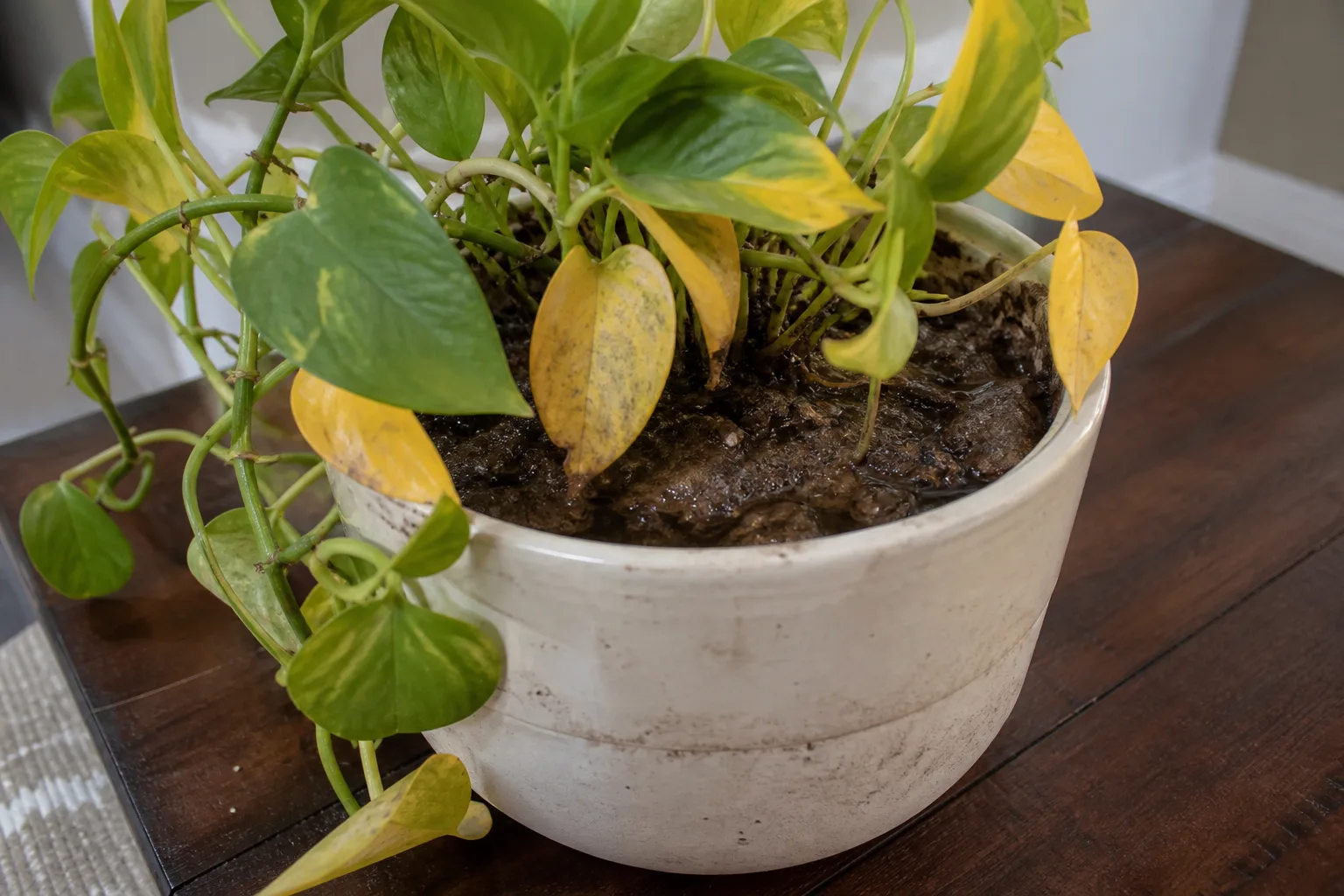
Poor Potting Setup on Pothos: Causes, Checks & Fixes
This guide covers poor potting setup on Pothos. See also the general Poor Potting Setup guide, watering, and light pages for this plant.
Poor Potting Setup on Pothos: Causes, Checks & Fixes
Quick answer
Store-bought pothos almost always arrives in a nursery pot dropped inside a sealed decorative shell - the dominant indoor failure mode for Epipremnum aureum. Long trailing vines look healthy while the root zone sits in a hidden water pool, an oversized wet ring, or dense peat that never dries. Yellow lower leaves, fungus gnats, and the wilting paradox (limp vines on wet soil) follow - and they look like a watering mistake when the real problem is where and how the plant is potted.
First step: lift the plant from any cache pot or saucer, confirm drainage holes are open, and empty all standing water. Do not repot, fertilize, or prune until you know whether water can exit freely and how long the mix stays wet at root depth.
Not sure which problem page fits? Use the comparison table below. This page owns umbrella setup triage - cache pots, wrong size, blocked holes, and heavy mix together. Single-failure deep dives live on sibling guides linked in each row.
Pothos is famously forgiving, but too much water leads to root rot - and a bad pot setup makes every watering act like overwatering even when you pour carefully.
Poor potting setup vs. overwatering vs. sibling problems
Pothos problem pages overlap on wet-soil symptoms. Use this table to pick the right fix before you repot, drill holes, or change your watering calendar.
| If you see… | Likely cause | Container / mix clue | First action |
|---|---|---|---|
| Sealed cache pot, blocked holes, or standing saucer water | Poor potting setup (this page - drainage path) | Runoff trapped in outer shell; holes plugged by roots | Lift from cache; clear holes; empty water → see no drainage hole |
| Holed pot but mix stays wet for weeks | Poor drainage or wrong soil mix | Saucer empties; peat-heavy or compacted medium | Refresh airy mix; confirm holes stay open |
| Pot much wider than root ball; heavy a week after one drink | Pot too large | Wet ring of unused soil around small roots | Downsize or repot snug; see pot-size guide |
| Circling roots; water runs through without wetting | Root-bound undersized pot (setup failure) | Dry-through in minutes; little soil left | Repot one size up with teased roots |
| Holed pot, good mix, but you water on a calendar | Overwatering | Pot lightens when you skip a week | Stop until top 2 inches dry → watering rhythm |
| Sour smell, mushy stems, soft roots | Root rot | Any setup failure left unchecked | Trim decay, dry repot - rot protocol |
What poor potting setup looks like on Pothos
Container problems show up as care failures you cannot fix with a calendar alone.
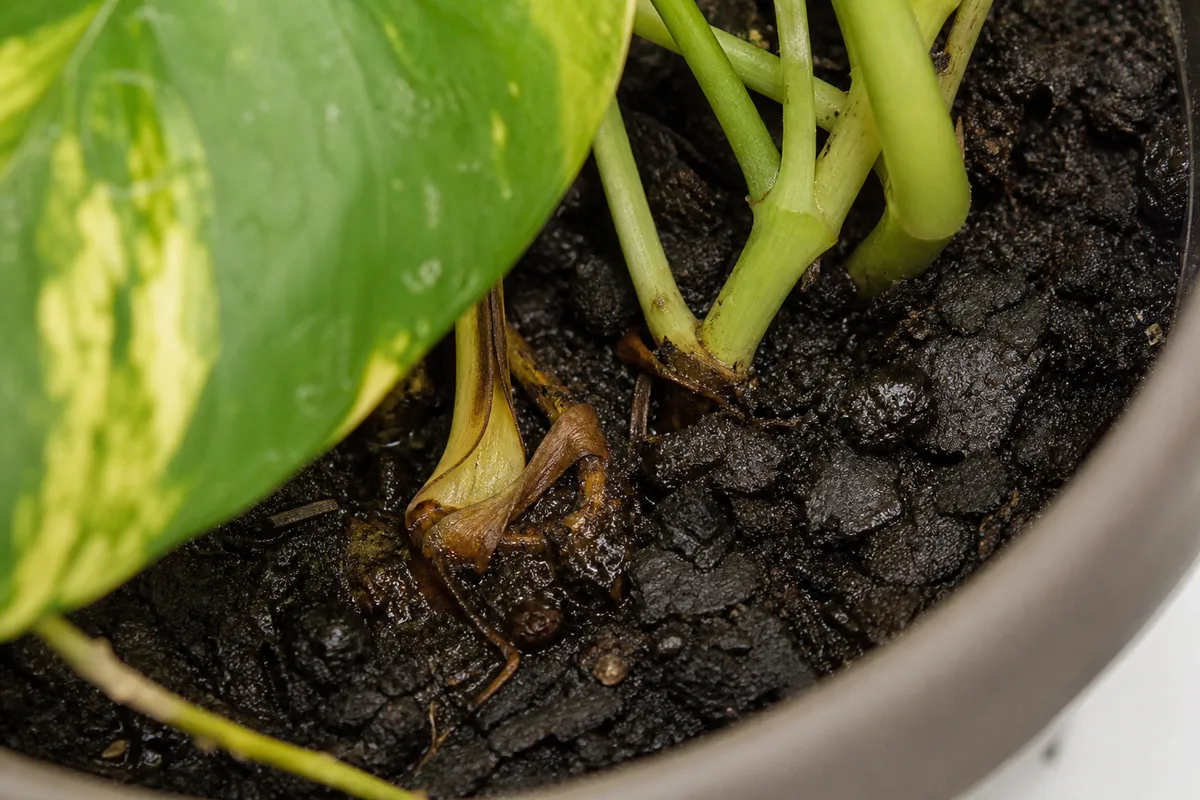
Poor Potting Setup symptoms on Pothos - compare with healthy tissue on the same plant.
Above-ground signs
- Yellow lower leaves while mix at 2 inches depth stays damp for many days
- Limp vines despite wet soil - damaged roots cannot move water even when the mix is saturated
- Fungus gnats hovering over a surface that never fully dries - see fungus gnats on pothos when adults persist after setup fixes
- Stalled new leaves or faded variegation on Marble Queen, Neon, and golden cultivars as root function declines
- Pot weight that stays heavy a week after one moderate watering
- White mold or algae on soil that never gets a dry cycle
Below-ground and container signs
- Roots circling the nursery pot or pushing through drainage holes
- Blocked holes matted with roots, gravel plugs, or decorative pot bases flush against exits
- Wet outer ring of unused soil around a small root ball in an oversized planter
- Sour smell when lifting the pot from a decorative shell
- Hydrophobic channeling in root-bound pots with heavy peat - water runs down the pot wall and out the hole without rewetting the root mass, so the center stays dry while the bottom stagnates
Healthy pothos in a good setup dries predictably: the top 2 inches go dry within about a week in average indoor light, the pot lightens, and new nodes keep producing firm leaves.
Mild vs. severe setup failure
Mild: standing saucer water cleared within a day, slightly oversized pot with firm stems, slow growth but no sour smell.
Severe: cache pot holding runoff 48 hours or more, stems softening at the soil line, wilting on wet mix, or sour odor when you lift the inner pot - escalate toward root rot inspection the same day.
Recovery vignette: A 6-inch nursery pothos in a sealed ceramic cache had saucer water sitting 48 hours after each drink - lower leaves yellowed while vines still trailed 3 feet. After lifting the inner pot, emptying the cache, and probing blocked holes, firm leaves returned within two weeks without repotting. A second plant in a 10-inch decorative pot with a 4-inch root ball needed downsizing into a 6-inch holed container before new node leaves appeared at week six in spring.
Why Pothos gets poor potting setup
Pothos arrives from stores in nursery pots sized for shipping, often dropped straight into sealed decorative containers. That looks polished but hides the most common failure mode - water draining into a reservoir with nowhere to go.
Cache-pot and nursery-to-decorative retail trap
The cache-pot method works only when the inner grow pot has open holes and you lift it out to water, drain completely, and empty the outer shell before returning it. Illinois Extension warns that liner pots must never stand in accumulated water unless the plant is aquatic. A sealed outer pot with a holed liner still fails when runoff pools in the cache - functionally the same as no drainage hole.
Shelf display vs. hanging basket: On a shelf, you can lift the inner pot easily. In a sealed hanging basket, the top of the mix may feel dry while the bottom stays saturated - especially when you water from above without removing the pot. Vines wilt at the tips while lower leaves yellow; wet mix weight in a closed basket accelerates base rot. Treat hanging sealed baskets like cache pots: holed liner, drill exit holes, or repot into a basket with open drainage.
Oversized pots and wet outer zones
Oversized pots surround a modest root ball with a large wet zone. Clemson Extension recommends repotting when roots are visible through drainage holes - jumping several sizes at once leaves excess soil that stays saturated in low light. Pothos vine length masks root-zone problems longer than upright houseplants: a 4-foot trail can look fine while a 4-inch root ball drowns in an 10-inch wet ring. Deep dive: pot too large on pothos.
No drainage / blocked holes
No drainage holes or holes blocked by roots and debris trap water at the bottom. Penn State Extension notes that containers need drainage holes so excess water can exit and the mix does not become waterlogged.
Heavy peat-only mix
Heavy peat-only mix without perlite holds moisture like a sponge. Pothos needs airy, well-draining soil - dense media suffocates roots even with careful watering. See wrong soil mix on pothos when holes are open but heaviness persists.
Root-bound undersized pots
Undersized, root-bound pots cause a different setup failure: circling roots fill the container, water runs straight through without wetting the root mass, and the plant wilts between brief wet spells. Pothos tolerates slight root binding but benefits from spring repot every one to two years when roots exit drainage holes - harmonizing annual and biennial extension guidance into one practical trigger.
Pot material drying differences
Wrong pot material changes drying speed. Unglazed terracotta pulls moisture faster; glazed ceramic and plastic hold it longer. Neither is wrong - but switching from plastic to terracotta (or vice versa) without adjusting your watering rhythm throws off the dry-down cycle you learned on the old container.
How to confirm the cause
Work through this inspection order before repotting:
- Drainage path - Water should exit holes within minutes. Lift the pot from its saucer or cache pot immediately after watering. Standing water underneath confirms trapped runoff.
- Hole condition - Roots matting over holes, gravel plugs, or decorative pot bases flush against holes all block outflow. NC State Extension warns that gravel under soil decreases drainage - do not assume a layer at the bottom fixes a bad setup.
- Pot size vs. root ball - Slide the plant partway out. More than 2 inches of empty wet soil around a small root mass means the pot is too large. Tight circling roots with little soil left mean it is too small.
- Mix texture - Crumbly mix with perlite is appropriate. Dense peat that smears when wet and stays clumped confirms the wrong medium - cross-check pothos soil guidance.
- Pot weight timeline - Note how many days the container stays heavy after one watering. Chronic heaviness in moderate light points to setup, not just frequency.
- Stem base and smell - Firm tissue at the soil line is reassuring. Soft stems or sour odor mean escalate toward unpotting and root inspection.
Lookalike symptoms to rule out
Simple overwatering on a good pot resolves when you dry the mix down - setup problems persist after dry-down because holes, size, or mix still fail. See overwatering on pothos when the container checks out.
Underwatering shows light pots and dusty dry soil throughout, not chronic heaviness.
Low light slows drying but should not cause sour soil if drainage and pot size are correct.
Repotting stress can yellow leaves temporarily - but that follows a recent move, not months in a sealed cache pot. See repotting stress if symptoms started within two weeks of a transplant.
First fix for Pothos
Confirm and clear the drainage path before any other change.
Remove the plant from decorative outer pots. Pour off saucer water. Probe drainage holes with a skewer if flow seems slow. Stop watering until the top 2 inches of mix are dry so you can assess how the current setup actually behaves.
Drill holes vs. nursery liner
| Situation | Best fix |
|---|---|
| Decorative pot you want to keep; can lift inner pot | Holed nursery liner - water at sink, drain fully, empty cache |
| Plant is planted directly in sealed ceramic | Drill drainage holes (masonry bit, slow speed) or repot into holed container |
| Tempered glass or metal vessel | Do not drill - use holed liner inside only |
| Runoff pools in cache after every drink | Empty cache every time - liner alone is not enough |
Only after drainage is verified should you decide whether repotting is needed. If holes were blocked or water was standing, many early cases stabilize once the root zone can breathe - without an immediate transplant.
If unpotting reveals mushy brown roots: switch immediately to the root rot rescue workflow - trim decay, repot into fresh airy mix, and withhold water for about a week. Do not stack repotting, heavy pruning, and fertilizing in the same week.
Step-by-step recovery
When inspection confirms a structural problem - oversized pot, no holes, root-bound nursery container, or heavy mix - repot during active growth. Full seasonal timing and hanging-basket nuances: pothos repotting guide.
- Choose the right container - No more than 2 inches larger in diameter than the current pot. Functional drainage holes are non-negotiable.
- Prepare airy mix - Use quality houseplant potting soil amended with perlite per pothos soil guidance. Avoid garden soil or pure peat.
- Unpot gently - Loosen circling roots on the outer edge; trim only mushy or black tissue. Wear gloves when handling cut roots - pothos contains calcium oxalate crystals that irritate skin and is toxic to cats and dogs if chewed.
- Set depth correctly - Root ball top should sit about an inch below the rim with fresh mix around the sides, not piled on top of the crown.
- Water once thoroughly - Let excess drain fully, then empty the saucer. Avoid overwatering right after repotting - saturated fresh mix on stressed roots adds unnecessary strain.
- Hold off on fertilizer until new growth appears.
If roots are mostly mushy, propagation from healthy stem cuttings above the damage may be more realistic than saving the original root ball - see pothos propagation.
Recovery timeline
Mild setup corrections - clearing cache pot water, opening blocked holes - often show firmer leaves within one to two weeks once the mix dries on a normal cycle. Repotting into proper size and mix typically produces new root tips in two to three weeks and fresh leaves from nodes within four to six weeks in bright indirect light. Timelines vary with home humidity and season; judge by new firm foliage, not calendar weeks alone.
Yellow leaves that already formed usually do not green up again. Judge success by neutral-smelling soil, lighter pot weight between waterings, and new firm foliage - not by old damaged leaves.
Mistakes to avoid
- Repotting into a much larger decorative pot because the vine looks long - extra wet soil around small roots is the classic pothos decline trigger.
- Drilling no holes because “pothos likes moisture” - it tolerates brief dry spells better than chronic wet feet.
- Leaving the nursery pot inside a sealed cache pot forever - empty runoff or use the decorative shell only as a dry display base.
- Adding gravel to the pot bottom thinking it improves drainage - Illinois Extension calls this a drainage myth that leaves soil saturated above the stones.
- Stacking repotting, pruning, and fertilizing in the same week - fix the container first, then adjust care once the plant stabilizes.
- Assuming a bigger pot equals faster growth - pothos in low light uses water slowly; oversized containers stall roots instead.
How to prevent poor potting setup on Pothos
Match pot size to root mass, not vine length. Repot in spring every one to two years when roots exit drainage holes or growth slows - one sentence that covers both extension cadences without contradiction. Use well-draining potting mix with perlite, pots with open holes, and empty saucers within 30 minutes of watering.
For cache-pot displays, treat the inner grow pot as the real home - never let the outer shell become a water reservoir. When upgrading containers, move up one size at a time. Refresh compacted mix before it breaks down into a dense wet plug.
Align daily watering with the pothos watering guide - setup fixes fail if you keep summer frequency through a dim winter room.
When to worry
Treat setup failure as urgent when stems soften at the base, soil smells sour despite cautious watering, or wilting happens on wet mix - those point to active root damage. Mild slow growth in a slightly oversized pot with firm stems gives you time to repot properly before rot sets in.
If most roots are mushy after unpotting, propagation from healthy stem cuttings above the damage may be more realistic than saving the original root ball.
Related Pothos guides
Use this page as umbrella setup triage; follow the link that matches what you found:
- Pothos overview - species care baseline
- Pothos repotting - full seasonal repot procedure
- Pot too large on pothos - oversizing and wet-ring deep dive
- No drainage hole on pothos - sealed pot and cache-pot rescue
- Poor drainage on pothos - holed pot, mix still won’t dry
- Wrong soil mix on pothos - heavy peat failure
- Overwatering on pothos - frequency vs. setup differentiation
- Root rot on pothos - mushy decay escalation
- Fungus gnats on pothos - symptom overlap on wet surface
- Pothos watering - dry-depth rhythm after setup fix
- Pothos soil - perlite mix for repot recovery
- Pothos propagation - salvage when root mass is gone
Conclusion
Poor potting setup on pothos hides in plain sight: a pretty outer pot, a container one size too big, or nursery mix that never dries. The plant’s toughness masks the problem until yellow leaves and gnats appear. Confirm drainage first, size the container to the roots, use airy mix, and let the pot tell you when to water - not the calendar. When mushy roots appear, escalate to root rot protocol before the vines collapse.
How we wrote and verified this guide: Recommendations were checked against Clemson Cooperative Extension, Penn State Extension, NC State Extension, Illinois Extension, and ASPCA references cited inline. Author: sai-ananth. Reviewer: LeafyPixels Review Board. Methodology: plant problem guidance is reviewed against botanical references, extension resources, and LeafyPixels plant-care data before publication. Claims validation: claims-validator-v1 pass with inline external links documented below. Last reviewed: 2026-06-17.