No Drainage Hole on Pothos: Causes, Checks & Fixes
Quick answer
Pothos in a sealed pot traps water at the root zone and leads to root rot even with careful watering. First step: move the plant to a container with open drainage holes-or drill holes-and never let the pot sit in standing water.
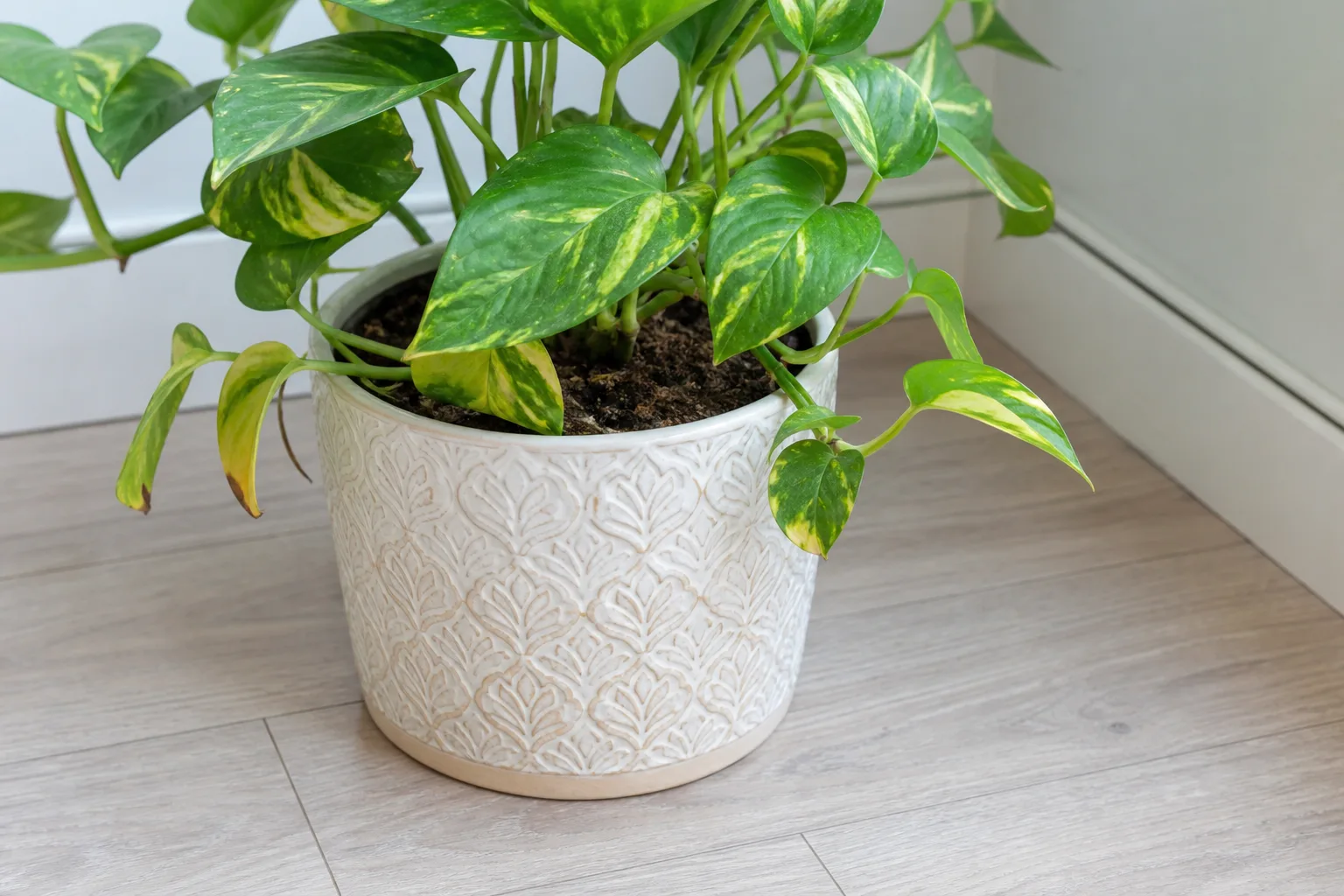
No Drainage Hole on Pothos: Causes, Checks & Fixes
This guide covers no drainage hole on Pothos. See also the general No Drainage Hole guide, watering, and light pages for this plant.
No Drainage Hole on Pothos: Causes, Checks & Fixes
Quick answer
Pothos (Epipremnum aureum) in a pot with no drainage hole traps water at the root zone. Even careful watering and airy mix cannot compensate when excess water has nowhere to exit-roots sit in low-oxygen, stagnant soil where rot fungi thrive. First step: move the plant to a pot with open drainage holes or drill holes in the container bottom, then never let the pot sit in standing water.
Pothos earns its forgiving reputation by tolerating missed drinks and low light, but that toughness masks drainage failure for weeks. Decorative cache pots, sealed ceramic desk planters, and gravel-at-the-bottom setups are common reasons otherwise easy pothos vines yellow, wilt on wet soil, or collapse at the base. Confirm whether you are double-potted with a hidden water pool before trimming leaves or changing fertilizer.
Not sure which problem page fits? Sealed pot with no exit hole → this guide. Holed pot with dense mix that never dries → poor drainage on pothos. Watering too often on an otherwise sound setup → overwatering on pothos.
Is it no drainage, poor drainage, or overwatering?
Pothos problem pages overlap on wet-soil symptoms. Use this table to pick the right fix before you repot or trim roots.
| If you see… | Likely cause | Container clue | First action |
|---|---|---|---|
| No exit path - decorative pot has zero holes, cache pot holds runoff, or holes are fully blocked | No drainage hole (this page) | Water never exits bottom; stagnant pool in outer shell | Drill holes, use nursery liner, or repot into holed pot |
| Holes exist but mix stays wet for weeks | Poor drainage | Saucer emptied; peat-heavy or compacted mix | Refresh airy mix; confirm holes stay open |
| Holed pot, good mix, but you water on a calendar | Overwatering | Pot lightens between drinks when you skip a week | Stop until top 2 inches dry; match watering rhythm |
| Sour smell, mushy stems, >⅓ roots soft | Root rot | Any of the above left unchecked | Trim decay, dry repot - see rot protocol |
| Full saucer left for days | Functional no-drainage | Holes present but plant sits in standing water | Empty saucer within 30 minutes - same rescue as sealed pot |
Why pothos gets harmed without drainage
Epiphyte biology and indoor mix behavior
Pothos is a tropical climbing vine that in nature grows on tree trunks with roots exposed to air between rains. Indoors it needs a mix that dries predictably and a path for water to leave the pot. When a sealed container holds water at the bottom, the center of the root ball stays saturated long after the surface looks acceptable-the same condition that leads to root rot on houseplants.
Heavy peat in sealed pots
Standard moisture-retentive compost holds water for days in a dim room or oversized plastic planter. Pothos uses less water in low light, so a sealed pot plus generous watering keeps roots anaerobic even when you think you are being cautious. A fast-growing summer pothos in bright light drinks more and may show wilt sooner-but both setups rot when water has no exit.
Double-potting and cache pots
An inner nursery pot inside a sealed outer planter works only if you lift the inner pot to water, let it drain completely, and empty the outer shell before returning it. Illinois Extension warns that plants in a pot liner must never stand in water unless they are aquatic-remove the inner pot and drain accumulated water from the outer container every time.
Gravel layer myth
Gravel or pebbles in the bottom of a sealed pot do not create drainage. Illinois Extension calls this a myth: water perches in the soil above the gravel until pore space fills, then excess drains below-stones at the base do little to keep roots out of saturated mix. A pothos in a pot with no hole is trapped regardless of pebbles.
Oversized sealed decorative pots
Extra wet soil beyond the root zone stays damp for weeks. Pothos prefers a slightly snug container; a large decorative planter with no exit hole is one of the fastest routes from healthy vines to mushy roots. Oversized holed pots cause similar wetness-see pot too large on pothos when holes exist but heaviness persists.
Trailing vines and hanging baskets
Long trailing pothos in sealed hanging baskets fail differently from desk cache pots. The top of the mix may feel dry while the bottom stays saturated-especially on long runners where you water from above without lifting the pot. Vines wilt at the tips while lower leaves yellow; the weight of wet mix in a closed basket accelerates base rot. Treat hanging sealed baskets the same as cache pots: holed liner, drill exit holes, or repot.
Variegated cultivars under chronic wetness
Marble Queen, Neon, and other variegated pothos lose variegation in low light and lose contrast when growth stalls from chronic wet feet. Faded variegation with damp mix and no sour smell yet still points toward sealed-pot stress layered on low transpiration-fix drainage before chasing fertilizer.
What problems look like on pothos
Without exit holes, damage follows classic root-rot and overwatering patterns:
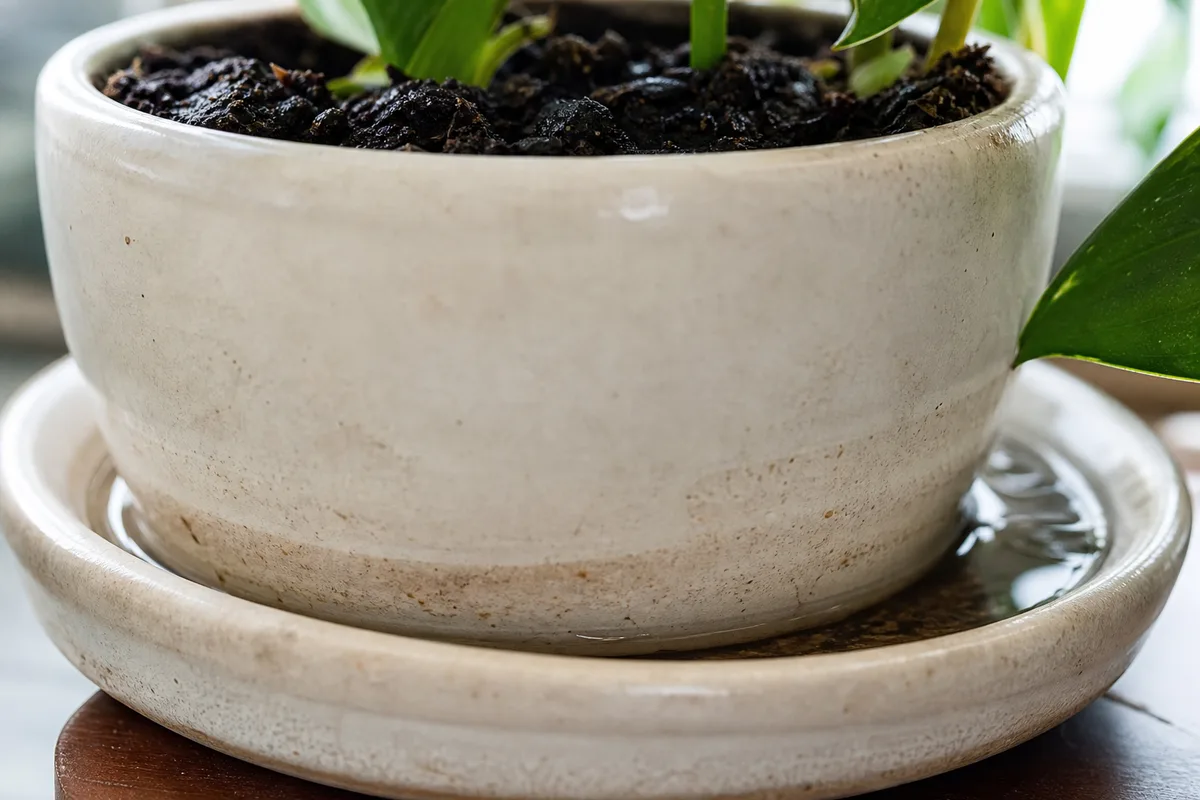
No Drainage Hole symptoms on Pothos - compare with healthy tissue on the same plant.
- Soil at 2 inches depth staying wet many days after one watering
- Pot feeling heavy continuously; sour or musty smell when lifted
- Yellow lower leaves spreading up the vine while mix remains damp
- Limp, drooping vines despite wet soil-the wilting paradox of failed roots
- Soft or darkening stems at the soil line on advanced cases
- White mold or algae on the soil surface from chronic moisture
- Fungus gnats hovering near the pot-larvae thrive in constantly moist peat
- Stalled new leaves and faded variegation as growth slows
Firm leaves with completely dry mix in a holed pot point away from drainage failure. Crispy brown tips alone with dry soil suggest water quality or humidity stress, not sealed-pot rot.
How to confirm the cause
Seven-step inspection checklist
Inspect in this order:
- Pot bottom - Are there open holes? Are they blocked by roots, saucer mat, or decorative feet?
- Double-pot setup - Is water sitting in the outer cache pot after watering?
- Gravel layer myth - Is the plant in a sealed pot with only pebbles at the base?
- Moisture at 2 inches - Does the mix stay wet there for many days after your normal watering rhythm?
- Pot weight and smell - Heavy and sour after a modest drink?
- Stem bases - Soft at soil level while upper leaves still look green?
- Unpot if unsure - Mushy brown roots confirm rot from trapped water regardless of hole debate.
If holes exist but saucer water is never emptied, the functional problem matches no drainage-roots sit in stagnant liquid. Let the well-drained potting medium dry out between watering and pour away water that drains into the saucer or outer pot so the plant does not sit in it for long.
Lookalike symptoms to rule out
Simple overwatering in a holed pot mimics sealed-pot rot but may fix with schedule change only if mix and holes are adequate. Poor drainage from dense mix still rots roots in holed pots, but restoring exit holes remains step one when the container is sealed. Underwatering gives light pots, dusty dry soil throughout, and limp but firm leaves with crisp edges. Low light alone can yellow leaves slowly without sour soil or chronic heaviness.
First fix for pothos
Move the plant to a container with at least one open drainage hole the same day you confirm sealed conditions-or drill holes in the existing pot if material allows.
Drill holes vs. nursery-liner method
| Material | Approach | Caveat |
|---|---|---|
| Plastic | Standard drill bit; one or more bottom holes | Easy; verify runoff exits freely |
| Unglazed terracotta | Masonry bit, slow speed, light pressure | Pre-soak pot optional to reduce crack risk |
| Glazed ceramic | Tile/masonry bit, slow speed, water drip while drilling | Stop if pot vibrates or cracks propagate |
| Glass or metal | Do not drill without proper tools | Use holed nursery pot inside decorative shell only |
| Any sealed decorative pot | Slip plant into nursery liner per Illinois Extension drainage guidance | Lift liner to water and drain; empty cache every time |
Unpot if stems are soft at the base or soil smells sour: trim mushy roots with sterile scissors, air-dry cut surfaces, and repot into fresh airy mix with perlite per the pothos repotting guide. Do not water for about a week after rot rescue repot.
If the plant is still healthy but sitting in a sealed decorative pot, slip it into a nursery pot with holes that lifts out for watering. Decorative foil or plastic wraps without holes should be pierced or removed before watering. Never let the outer pot hold water.
Step-by-step recovery
After drainage is restored:
- Rescue rot if present - Remove all black mushy root tissue; repot into dry well-draining mix; withhold water one to two weeks. Advanced cases: root rot on pothos.
- Water correctly - Soak until water runs from holes; discard saucer water within 30 minutes. Match dry-down rhythm on the pothos watering guide.
- Use appropriate mix - Airy, well-draining soil mix with perlite; not garden soil or dense peat alone.
- Lift when double-potting - Always remove inner pot to water and drain; wipe outer shell dry.
- Monitor weekly - Pot weight, soil smell, firm stems, and new node growth for four to eight weeks.
Make drainage correction before fertilizer, pesticide, or upsizing the pot.
Recovery timeline
Healthy pothos moved from sealed to holed pots before rot often need no root surgery-simply stop pooling water and wait for normal dry-down. Mild rot cases with firm roots remaining stabilize in two to four weeks after trim and dry repot. Severe stem-base collapse may require cutting the vine back to healthy nodes and propagating the top.
Old yellow leaves will not revert; new firm leaves from nodes mark success. On long trailing vines, watch the growing tips-new glossy leaves there confirm the root zone is recovering even when lower yellow foliage stays spent.
What not to do
Do not add gravel instead of holes. Do not assume pothos toughness survives standing water. Do not water on a calendar without checking dry-down after fixing holes. Do not leave full saucers for later.
Do not assume watering less fixes a sealed pot with no exit path-less water still accumulates over time without drainage. Avoid fertilizing a stressed plant in wet mix. Do not repot into a larger sealed decorative pot for aesthetics. Do not rely on fungicide without fixing drainage and removing mushy tissue.
When handling cut stems, wear gloves-pothos contains calcium oxalate crystals that can irritate skin.
How to prevent problems next time
Choose only pots with open drainage holes for pothos, or use the nursery-pot liner method with a dry outer shell. Pair holes with soilless potting mix that drains well and water only when the top 2 inches are dry. Empty saucers after every soak.
When buying decorative pots, drill before planting or keep the plant in a removable inner pot. Confirm holes stay open as roots grow-matting roots can block drainage over years. Refresh compacted mix every one to two years so water moves through the column, not just out the sides.
When to worry
No drainage in a wet root zone is high severity on pothos despite its easy-care label. Escalate immediately if:
- Stems collapse or blacken at the soil line
- Soil smells sour while the pot is heavy
- Black tissue spreads up the vine from the base
- More than one-third of roots are mushy on inspection
- The plant declines within seven to ten days despite surface dry appearance
Shift to the root rot protocol when mushy roots dominate the root ball. Early conversion to holed pots prevents most losses; delayed action is how tough pothos vines fail in pretty planters.
Related Pothos guides
Use this page when the container has no functional exit for water. Follow these links for overlapping symptoms or next steps:
- Pothos overview - species care baseline
- Poor drainage on pothos - holed pot, dense or compacted mix
- Overwatering on pothos - schedule mismatch with adequate holes
- Root rot on pothos - mushy roots and stem softening
- Pothos repotting - trim-and-repot after sealed-pot rescue
- Pothos watering - dry-down rhythm after drainage fix
- Poor potting setup - cache pots, saucers, and liner discipline
Conclusion
Mild sealed-pot fix: healthy vines, firm stems, no sour smell-drill holes or switch to a nursery liner, empty cache water, and let the existing mix dry before the next soak. Judge success by pot weight dropping and new leaves from nodes within two to four weeks.
Severe rot rescue: soft stems, sour mix, or mushy roots-unpot, trim decay, dry repot per the repotting guide, and follow the root rot protocol if more than a third of roots are lost. Propagate healthy vine tips if the base collapses.
Pothos forgives missed waterings far more willingly than it forgives a sealed bottom. Open drainage first-then adjust watering on the watering guide.
How we wrote and verified this guide: Recommendations were checked against NC State Extension, Clemson HGIC, Penn State Extension, Illinois Extension, Missouri Extension, and ASPCA references cited inline. Author: sai-ananth. Reviewer: LeafyPixels Review Board. Methodology: plant problem guidance is reviewed against botanical references, extension resources, and LeafyPixels plant-care data before publication. Claims validation: claims-validator-v1 pass with inline external links documented below. Last reviewed: 2026-06-17.