Exposed Roots on Pothos: Causes, Checks & Fixes
Quick answer
Brown or white nubs along pothos vines are normal aerial roots-not a repot signal. If pale roots sit bare at the soil surface or stiff roots crowd drainage holes, slide the plant out and check whether mix eroded or the root ball is solid; top-dress firm bare roots first, repot only when circling roots have displaced most soil.
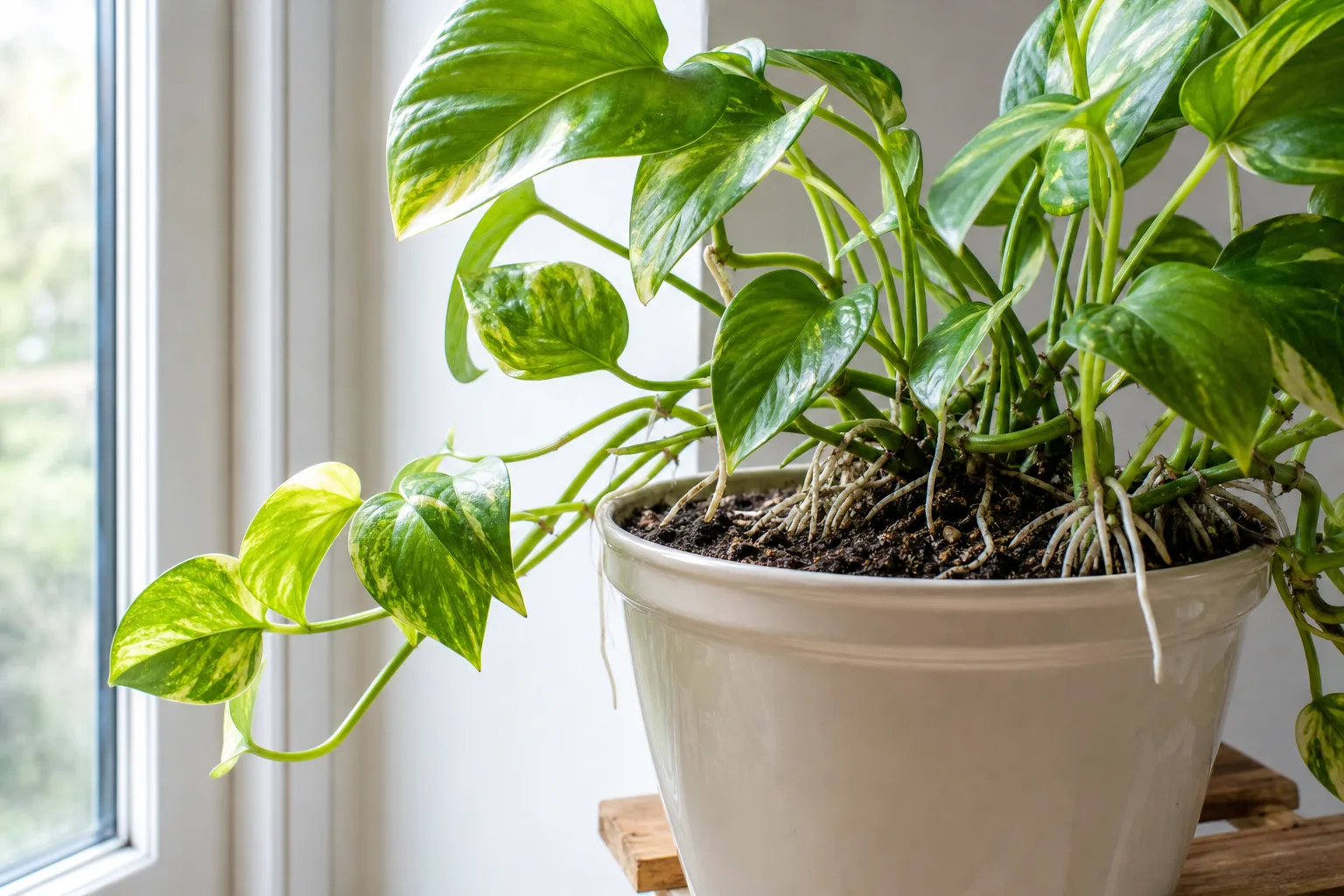
Exposed Roots on Pothos: Causes, Checks & Fixes
This guide covers exposed roots on Pothos. See also the general Exposed Roots guide, watering, and light pages for this plant.
Exposed Roots on Pothos: Causes, Checks & Fixes
Quick answer
Exposed roots on pothos (Epipremnum aureum) often alarm owners because Pothos overview shows roots in two very different places. Small aerial roots at leaf nodes along trailing or climbing vines are normal epiphytic anatomy-not damage. The problem starts when underground roots sit bare at the soil surface, poke from drainage holes in a stiff mat, or feel mushy after mix erodes, settles, or rots away.
First step: locate what you see. Aerial nubs on healthy vines need no emergency repot. Firm pale roots at the pot edge get a light top-dress of dry airy mix. A solid root ball with little soil left needs Pothos repotting guide into a container only one size larger-not because a vine grew a few brown roots.
What exposed roots look like on pothos
Two patterns look like “exposed roots” but mean different things.
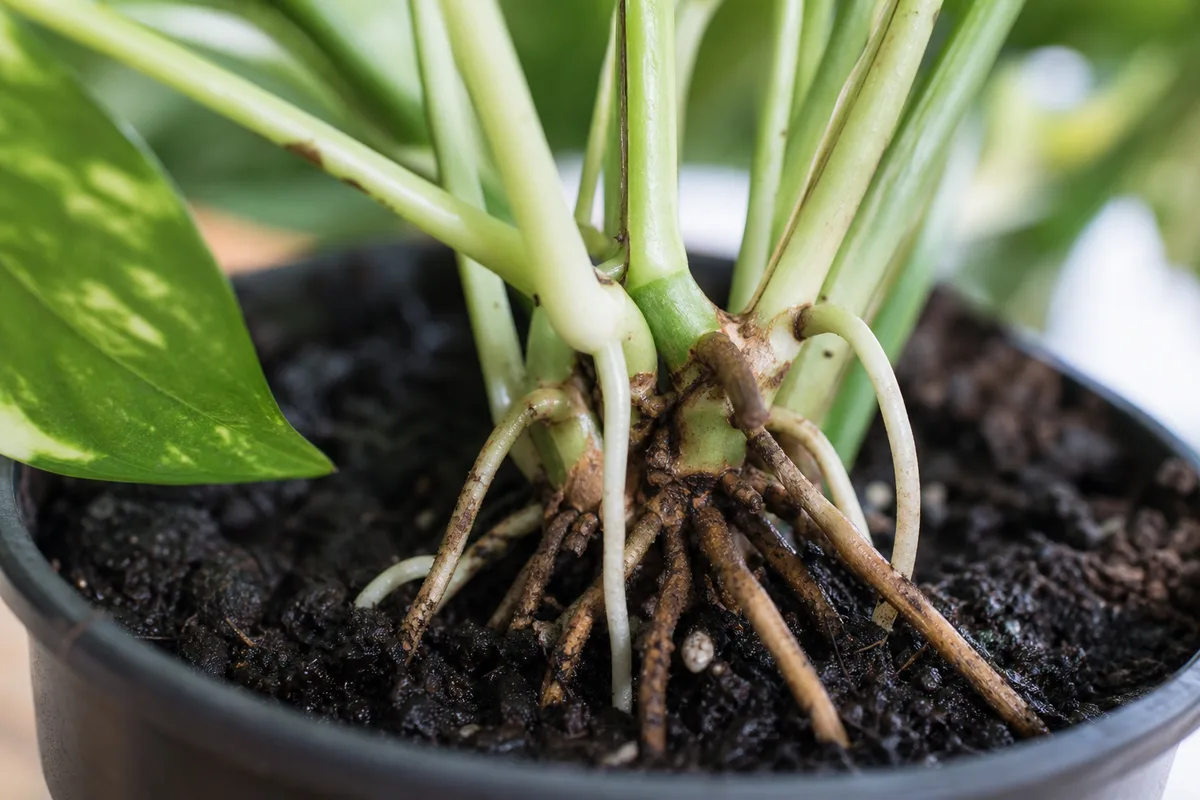
Exposed Roots symptoms on Pothos - compare with healthy tissue on the same plant.
Normal aerial roots on the vine. Green or brown nubbins form at nodes where leaves meet the stem. Penn State Extension notes that pothos develops adhesive aerial roots at each node so vines can climb a moss totem or tree bark in nature. They may lengthen into wiry brown strands on mature plants. Healthy aerial roots feel firm, stay attached to living stems, and are not pests or rot.
Bare roots at the soil line or drain holes. Here the issue is substrate loss or root crowding. You may see white or tan feeder roots circling the pot wall, pushing through holes, or sitting above where mix used to be. After top-watering, lightweight perlite can float toward drain holes and leave a hollow around the crown. In tight pots, fast-growing pothos roots displace soil until only a thin layer covers the mass.
Unhealthy exposed tissue turns brown, translucent, or mushy and may smell sour. Leaves may yellow or wilt even when surface mix feels damp, because damaged roots cannot take up water.
Why pothos roots become exposed
Epipremnum aureum is a tropical climbing vine native to the Solomon Islands. In rainforests it uses aerial roots for grip and supplemental moisture while soil roots anchor the base. That design means visible roots on vines are expected-but the root zone in a pot still needs stable, airy volume around underground feeders.
Mix erosion and settling happen in hanging baskets and shallow pots. Well-draining blends with perlite shift when you water from above, when fine particles wash toward holes, or when peat breaks down over a year or two. Pothos tolerates missed waterings, but repeated flushing without refreshing mix exposes upper roots to dry air.
Root binding displaces soil as white roots fill the container. Clemson HGIC lists roots visible through drainage holes and overcrowded, root-bound plants as clear repot triggers. Pothos grows vigorously in Pothos light guide; a pot that dried every seven to ten days may now empty in two or three days while roots circle inside.
Chronic overwatering exposes roots indirectly. Wet anaerobic mix collapses, fine roots rot, and repeated soaking washes away failed substrate. Root rot follows overwatering or poorly draining soil; mushy decay at the surface often coincides with bare roots and a heavy, sour-smelling pot.
Repotting or rough handling can leave roots sitting higher than before. Disturbing the root ball without replacing lost mix quickly exposes feeders to air and light, which dries fine roots faster than thick aerial strands on the vine.
How to confirm the cause
Work through these checks before repotting or flooding the pot:
- Location - Nubs on vines at leaf nodes are aerial roots. Bare tissue at the pot rim or stiff roots through drain holes is a soil-line problem.
- Texture - Firm white or tan roots vs. brown mush that slips off when touched.
- Soil history - Recent repot, years without top-dress, or mix washing out of a hanging basket?
- Pot weight and smell - Heavy wet pot with sour odor suggests rot; light pot with firm bare roots suggests erosion or binding.
- Wilting pattern - Limp leaves on wet mix point to root damage; slight droop on dry mix may be underwatering instead.
- Vine health above soil - Glossy firm stems and new unfurling leaves vs. soft blackening at the base.
- Growth rate - Stalled new nodes despite good light often overlaps with a root-bound pot that needs space and fresh mix.
If aerial roots are firm on healthy vines and underground roots stay covered, you likely have normal anatomy-not an emergency.
First fix for pothos
Slide the plant partly out of its pot and decide which root type you are seeing before changing anything else.
For normal aerial roots on vines: leave them alone, or gently guide strands toward a moss pole or trellis so roots can attach-the Clemson Extension recommends totem training because aerial roots give the vine support as it climbs. Mist supports lightly in dry rooms; do not bury aerial roots deep in wet mix.
For firm underground roots bare at the soil surface: gently top-dress with fresh dry airy mix-potting soil with extra perlite-keeping the crown at the same depth, not buried deeper under soggy compost. Water once lightly to settle mix, then let the top 2 inches dry before the next drink.
For a solid circling root ball with roots through drain holes: repot in spring or summer into a pot only 1 to 2 inches larger, loosen outer circling roots, and use airy, well-draining mix. Do not jump several pot sizes-excess wet mix around sparse roots invites the rot that exposes roots in the first place.
Make this diagnostic step first before stacking fertilizer, heavy pruning, or fungicide.
Step-by-step recovery
- Inspect drain holes and the soil edge before full unpotting-note color, firmness, and smell.
- If only surface erosion: top-dress bare firm roots; skip full repot unless more than one-third of the root ball was exposed.
- If roots circle tightly or mix is exhausted: repot using fresh well-draining blend and a slightly larger container.
- When repotting, keep the crown at its prior depth; do not pack mix firmly-gently press and water to settle.
- Trim mushy roots back to firm white tissue; wait two to three days before the first light watering if rot was present.
- Place in bright indirect light so the plant uses water predictably after cover.
- Hold fertilizer until new firm leaves or nodes appear.
- If the root mass fails but firm vines with nodes remain, propagate cuttings in water as backup-aerial roots at nodes aid propagation.
Recovery timeline
Firm roots covered before they dry out often stabilize within a few days once mix is reset and watering follows a dry-down rhythm. Erosion fixed early may show new leaves at vine tips within two to three weeks in good light. Rot trimmed at the surface needs three to four weeks before stems regain turgor. Crispy dried feeders rarely regrow-judge success by firm new growth at tips and stable root color, not old yellow leaves alone.
Lookalike symptoms
- Normal aerial roots - Node nubs or brown wiry strands on healthy vines; firm and attached. Expected pothos growth, especially in humid bright rooms.
- Root rot from overwatering - Mushy texture, sour smell, yellow wilting on wet mix; may expose dead roots as soil collapses.
- Underwatering - Light pot, dry mix throughout, limp leaves that perk after one thorough drink-roots not visibly bare at the surface.
- Repotting stress - Drooping starts days after transplant, not gradual erosion over weeks.
- Root-bound drying - Pot empties fast, roots circle inside, sometimes pushing mix up until feeders show-overlaps with exposure but needs repot, not only top-dress.
Mistakes to avoid
Do not repot because a trailing vine grew aerial roots-that is maturity, not crowding. Do not bury long aerial roots deep to hide them; wet mix around stem nodes invites rot. Do not cover mushy rotted roots without trimming first. Do not keep watering because leaves look limp when soil is already wet. Do not upsize into an oversized pot hoping roots will disappear-extra wet volume around a sparse root ball worsens anaerobic conditions. Wear gloves when handling cut stems; pothos tissue contains calcium oxalate crystals irritating to skin and toxic to pets if chewed.
How to prevent exposed roots on pothos
Water gently at the pot edge-not a hard flush on the crown that washes perlite away. Refresh or top-dress mix each year rather than letting peat collapse in place. Repot when roots crowd or emerge from holes, but size up only one step at a time. Allow soil to dry between waterings so mix structure lasts longer. Offer a moss pole early so aerial roots attach above the pot instead of drying on bare furniture.
Pothos care cross-check
Exposed roots often signal a substrate maintenance gap on a fast-growing vine-not instant plant death. If the pot stays heavy for days after top-dress, improve light and drainage before increasing water. Long bare stems with few leaves may mean the plant wants brighter indirect light and pruning, not just more soil around the base.
When to worry
Same-day action if bare roots at the soil line are black and slimy with a soft stem base, or if leaves wilt sharply while mix stays wet. Stable winter exposure on a firm plant is lower urgency if you top-dress before spring growth resumes. Aerial roots on healthy cascading vines alone are not a worry call.
Conclusion
Exposed roots on pothos usually means one of two things: normal adhesive aerial roots on the vines, or displaced airy mix around underground feeders-not automatic repotting. Confirm location and texture, top-dress firm soil-line roots, repot when binding displaces mix, and train aerial structures onto a support where this climber expects to attach-not buried in wet soil at the crown.
When to use this page vs other Pothos guides
- Pothos watering guide - Use for routine moisture checks before assuming exposed roots is the main issue.
- Pothos problems hub - Browse all 39 common issues on this species.